Chronic pain management integrating traditional medicine and modern...
Discover how Korea's 2026 hybrid medical protocols combine AI diagnostics with ancient Hanbang treatments to solve chronic pain, saving patients over 60%.
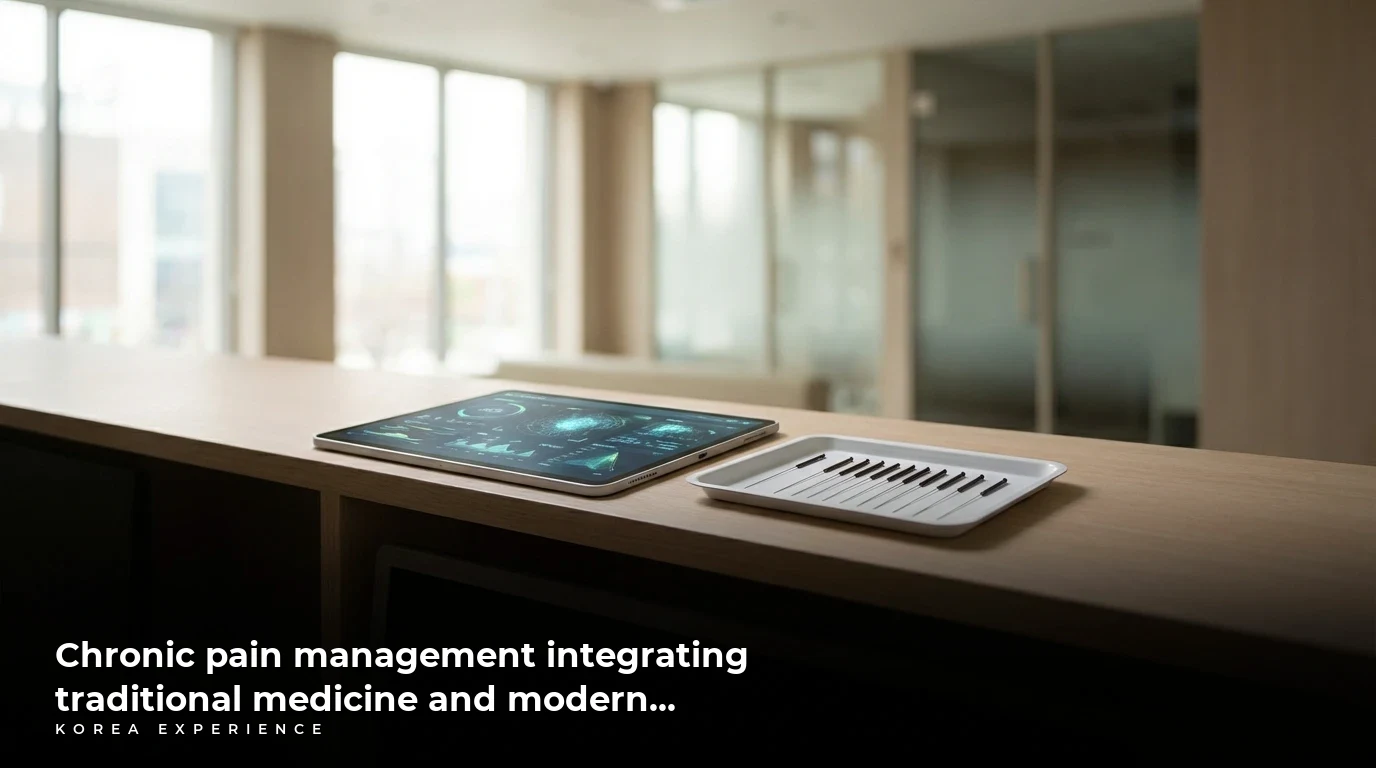
For many international patients, the journey to South Korea begins where Western medicine ends. By 2026, Korea has firmly established itself not just as a hub for cosmetic enhancements, but as the global capital for "Integrative Pain Management"—a sophisticated fusion where 5,000-year-old traditional practices (Hanbang) meet cutting-edge robotics, AI diagnostics, and regenerative biotechnology. If you are suffering from chronic back pain, fibromyalgia, arthritis, or idiopathic nerve pain, the sterile exclusivity of Western hospitals is being challenged by Korea's warm, holistic, and high-tech approach.
The short answer: In 2026, Korea successfully treats chronic pain by integrating non-surgical traditional therapies (Chuna manipulation, pharmacopuncture) with modern diagnostics (AI-MRI, motion analysis). This hybrid approach significantly reduces the need for surgery and opioids, with treatment packages costing 50-70% less than US equivalents.
Key Takeaways
- 1Integrative hospitals in 2026 use AI-driven pulse analysis alongside MRIs for 98% diagnostic accuracy.
- 2Non-surgical spinal treatments like Chuna and motion-style acupuncture have a 95% success rate for herniated discs.
- 3A typical 2-week intensive pain management program costs between $2,500 and $4,000 (excluding flights).
- 4Post-treatment recovery integrates medicinal food (Yak-seon) and thermal therapies.
Medical Disclaimer
The content in this article is for informational purposes only and does not constitute medical advice. Chronic pain management requires professional evaluation. Always consult with a qualified healthcare provider before stopping current treatments or traveling for medical procedures. In Korea, for medical emergencies, dial 119. For medical travel consultation, dial 1339.
The Failure of Monolithic Medicine and the Korean Solution
By the mid-2020s, the global medical community faced a reckoning regarding chronic pain. In the United States and parts of Europe, the reliance on opioids or invasive surgeries (like spinal fusion) often left patients with mounting bills and lingering discomfort. As of 2026, statistics show that nearly 20% of spinal surgery patients in the West experience "Failed Back Surgery Syndrome."
Korea took a different path. Rather than keeping Western Medicine (Yangbang) and Traditional Korean Medicine (Hanbang) in separate silos, the government aggressively promoted "Collaborative Practice" laws in 2024. Today, major hospitals in Seoul operate under a "One Patient, Two Doctors" system.
When you walk into a top-tier pain clinic in Gangnam or Mapo-gu, you don't choose between an acupuncturist or a neurologist. You see both. They sit in the same room, view the same high-resolution 3.0T MRI scans, and devise a plan that might involve a nerve block injection (modern) followed immediately by motion-style acupuncture (traditional) to restore mobility.
"Western medicine is excellent for structural diagnosis—seeing the broken bone or the herniated disc. Eastern medicine is superior for functional recovery—fixing the energy flow and muscle balance that caused the break in the first place. In 2026, we don't ask 'which is better?' We use the MRI to find the target, and the acupuncture needle to hit it."
Diagnostic Tech in 2026: Seeing the Invisible
The first step in your journey isn't a simple questionnaire; it is a technological deep dive. The "blind" diagnosis of the past is gone. In 2026, Korean clinics utilize a suite of diagnostic tools that map pain triggers invisible to standard X-rays.
Digital Infrared Thermal Imaging (DITI)
While MRIs show structure, DITI shows physiology. By measuring minute temperature differences (down to 0.01°C) on the skin's surface, DITI maps inflammation and nerve damage. A specific nerve root compression might show up as a cold blue streak on the leg, while an inflamed joint glows angry red. This allows doctors to visualize pain that patients often struggle to describe.
- Cost: Approx. ₩100,000 - ₩150,000 ($75 - $115)
- Time: 20 minutes
AI-Powered Motion Analysis
You will be asked to walk on a sensor-laden treadmill facing a massive 8K screen. Cameras track 120 distinct skeletal points. The AI analyzes your gait, identifying micro-imbalances in your pelvis or spine that contribute to chronic pain. This data is fed directly into a robotic rehabilitation machine for later treatment.
- Accuracy: 96% correlation with clinical findings
- Application: Essential for chronic lower back pain and scoliosis
The Modern Pulse Analyzer
The traditional doctor feeling your wrist has been upgraded. The "3D Pulse Analyzer" measures the pressure, wave form, and rhythm of your pulse to determine your constitutional type (Sasang Typology). This isn't mysticism; it's biometric data analysis used to prescribe herbal medicines that won't conflict with your liver enzymes.
Diagnostic Approaches: West vs. Korea (2026)
| Feature | Standard Western Clinic | Korean Integrative Center |
|---|---|---|
| Primary Imaging | X-Ray / MRI | MRI + DITI + 3D Posture |
| Consultation Style | Single Specialist (15 min) | Dual Specialists (45 min) |
| Pain Visualization | Subjective Scale (1-10) | Thermal Mapping (Visual) |
| Cost (Uninsured) | $1,500+ | $400 - $600 |
Core Treatments: The Hybrid Protocol
Once diagnosed, the treatment phase is intensive. Unlike the "come back in a month" approach, Korean chronic pain management usually involves daily treatment for 2 to 3 weeks. This is why it falls under Medical Tourism—you are here to work on your body like a full-time job.
1. Chuna Manipulation Therapy
Chuna (push-and-pull) is the Korean equivalent of chiropractic but focuses more on soft tissue and the alignment of bone segments and joints. In 2026, Chuna tables are automated and synchronized with your MRI data. The doctor applies manual pressure while the table drops or rotates at precise angles calculated to relieve pressure on specific discs without high-velocity thrusts that can cause injury.
- Frequency: Daily or every other day
- Sensation: Deep pressure, immediate relief of tension
- Cost: Approx. ₩50,000 ($38) per session
2. Pharmacopuncture (Yakchim)
This is the bridge between pharmacology and acupuncture. Instead of dry needles, doctors inject small amounts of purified herbal extracts (like bee venom or mountain ginseng) directly into acupuncture points or trigger points.
- Shinbaro: A patented herbal extract developed in Korea, proven to regenerate bone and nerve tissue. In 2026, the "Shinbaro 3" variant is 40% more potent and is the standard for treating spinal stenosis.
- Bee Venom Therapy: Used for severe arthritis. The melittin in the venom acts as a powerful natural anti-inflammatory, stronger than hydrocortisone but without the steroidal side effects.
Allergy Warning
Bee venom therapy is highly effective but requires a mandatory skin allergy test 24 hours prior. Do not attempt this if you have a history of anaphylaxis to bee stings.
3. Motion Style Acupuncture Treatment (MSAT)
This is a signature Korean treatment for acute pain where the patient cannot move (e.g., a locked back). The doctor inserts needles while assistants (or in 2026, robotic exoskeletons) help the patient walk or move the affected area. This "distracts" the nervous system and forces blood flow to the spastic muscles.
- Result: Patients often walk out of the room unaided after being carried in.
- Viral Status: MSAT videos frequently go viral on social media for their "miraculous" immediate results.
📋 Treatment Protocol Stats
Leading Institutes for 2026
You cannot walk into just any neighborhood clinic for this level of care. You need a Ministry of Health and Welfare designated "International Hospital."
Jaseng Hospital of Korean Medicine (Gangnam Branch)
Jaseng is the giant of this industry. They hold the patents for Shinbaro medicine and have the largest collaborative practice infrastructure. Their Gangnam flagship building treats over 1,000 patients a day.
- Specialty: Non-surgical spine treatment (Herniated discs, Spinal Stenosis).
- Tech: Has the largest dedicated MRI center for a traditional hospital.
Jaseng Hospital of Korean Medicine(자생한방병원)
Chaum Life Center (Cheongdam)
For those seeking luxury alongside pain management, Chaum is the answer. It feels more like a 5-star hotel than a hospital. Their "TheraSpa" program combines medical treatment with hydrotherapy.
- Specialty: Anti-aging and stress-induced chronic pain.
- Vibe: Ultra-exclusive, private suites.
Kyung Hee University Medical Center
The academic leader. This is where the research happens. If you have a rare or complex condition, the university professors here are the best choice.
- Location: Dongdaemun-gu, Seoul.
- Pros: Deepest medical expertise, lower cost than Gangnam clinics.
- Cons: Wait times can be longer; hospital environment is more clinical/utilitarian.
For accommodation near these centers, many patients choose serviced apartments. If you are staying in Gangnam for treatment at Jaseng or Chaum, check out our guide to best neighborhoods for expats in Seoul to find a quiet area suitable for recovery.
The Patient Journey: A 2-Week Timeline
Managing chronic pain in Korea isn't a quick fix; it is a process of re-engineering your body. Here is what a typical 14-day itinerary looks like for a patient with chronic lumbar disc issues.
14-Day Intensive Pain Relief Program
Arrival & Diagnostics
Airport pickup -> Hospital check-in -> MRI, X-Ray, DITI scans -> Initial consultation with Dual Doctors.
Acute Phase Treatment
Daily MSAT acupuncture to unlock mobility. Twice daily herbal IV drips to reduce systemic inflammation. Introduction of Chuna manipulation.
Rehabilitation Phase
Pain levels drop. Focus shifts to strengthening deep muscles using AI-guided robotics. Herbal medicine prescription begins.
Maintenance Education
Learning posture correction. Final consultation to compare Day 1 vs Day 13 scans. Preparation of take-home herbal medicine (3-month supply).
Discharge & Tour
Final check-up. A relaxing afternoon at a medicinal spa before departure.
Cost Analysis: Is It Worth the Trip?
In 2026, the exchange rate hovers around ₩1,350 to 1 USD, making Korea exceptionally competitive. In the US, a single MRI of the lumbar spine can cost between $1,500 and $3,000 out of pocket. In Korea, the same scan on the same machine (GE or Siemens) costs roughly $450.
Even with the cost of flights and accommodation, the "Medical Tourism Math" works out in favor of the patient, especially for the uninsured or underinsured.
💵 Total Cost Comparison (2-Week Protocol)
MRI, limited PT, Specialist fees, no accommodation
Diagnostics, 14 days treatment, 4-star hotel, food
📊 Economic Efficiency
Recovery and Lifestyle: The Healing Ecosystem
Healing doesn't stop when you leave the clinic. The Korean environment in 2026 is designed to support recovery.
Medicinal Food (Yak-seon)
Korean cuisine uses the concept that "food is medicine." During your stay, you will likely be prescribed a diet rich in anti-inflammatory foods.
- Samgyetang (Ginseng Chicken Soup): Restores energy and boosts immunity.
- Doenjang-jjigae (Soybean Paste Stew): High in probiotics and anti-inflammatory properties.
- Avoid: While tempting, avoid high-sodium instant noodles or extremely spicy foods during nerve recovery. For more on restorative dining, read about best Korean healing foods for surgery recovery.
Jjimjilbang and Thermal Therapy
Once your acute inflammation has subsided (usually after day 5), your doctor may clear you for thermal therapy. Korean saunas (Jjimjilbang) utilize red clay, jade, and salt rooms which emit Far Infrared Rays (FIR). FIR penetrates 1.5 inches into muscle tissue, promoting circulation and detoxification.
- Cost: ₩15,000 - ₩25,000 ($11-$19) for 12 hours access.
- Recommendation: Spa Lei (Women only) or Aquafield (unisex luxury).
If your mobility is severely limited during recovery, navigating the city can be daunting. However, Seoul has made great strides in accessibility. Check our guide on accessible Seoul best routes for wheelchair and limited mobility.
Practicalities: Visa, Insurance, and Language
The G-1 Medical Visa
Most tourists from Western countries can enter Korea on a standard B-1/B-2 tourist visa (90 days) which is sufficient for pain management. However, if your treatment requires a longer stay (e.g., severe rehabilitation), the hospital will sponsor a G-1 Medical Visa.
- Requirement: Diagnosis letter from a Korean hospital and proof of financial ability (approx. $3,000 bank balance).
Insurance
International travel insurance usually covers emergency medical treatment but excludes elective or pre-existing chronic conditions. However, several global insurers (Cigna Global, GeoBlue) now have specific "Medical Tourism" riders that may cover treatments at JCI-accredited hospitals like Jaseng or Yonsei Severance.
- Note: Traditional treatments (acupuncture/herbal medicine) are rarely covered by Western insurance unless specifically stated. Expect to pay out of pocket and claim later, though reimbursement is rare for Hanbang.
Language Barrier
In 2026, the language barrier in major hospitals is non-existent. International Clinics have dedicated coordinators who speak English, Russian, Arabic, and Chinese. They accompany you from the MRI room to the pharmacy.
- Tip: Download Papago (Korea's superior translation app) for interactions outside the hospital.
📖 How to Book Your Treatment
Step 1: Research & Contact
Visit the hospital's English website. Submit the 'Online Consultation' form with your current X-rays/MRIs attached.
Step 2: Preliminary Plan
Within 48 hours, a coordinator will email a preliminary diagnosis and estimated cost quote.
Step 3: Flight & Accommodation
Book your flight to Incheon (ICN). Ask the hospital for their partner hotel list for corporate rates.
Why Korea is Winning the Fight Against Pain
The magic of the Korean system in 2026 is that it validates the patient's pain. In many Western systems, if the MRI is clean but the patient is in agony, they are often referred to psychiatry or a pain management clinic for opioids. In Korea, the concept of Mi-byung (sub-health state) acknowledges that pain exists before structural damage is visible.
By combining the structural certainty of Western diagnostics with the functional restoration of Eastern therapy, Korea offers a third door. It is not about managing pain; it is about resolving the imbalance that causes it.
For those interested in complementary aesthetic treatments while in Seoul, such as non-invasive anti-aging procedures to boost morale during recovery, see our guide on anti-aging treatments in Korea.
Frequently Asked Questions
❓ Common Questions About Pain Treatment in Korea
Have more questions?Contact us →
Pros and Cons of Pain Management in Korea
- ✓Integrated approach treats root cause, not just symptoms
- ✓Significantly cheaper than US/Europe
- ✓High-tech diagnostics (AI/Robotics) included
- ✓No opioid reliance
- ✗Requires 2-3 week stay for best results
- ✗Herbal medicine taste can be difficult for some
- ✗Insurance reimbursement is difficult for Western policies
- ✗Flight time can be hard with severe back pain
As we move through 2026, the convergence of technology and tradition in Korea offers hope where there was once resignation. Whether it's the precision of a robotic arm or the intuitive touch of a master acupuncturist, the goal remains the same: a life free from chronic pain.
About the Author
Korea Experience Team
Written by the Korea Experience editorial team - experts in Korean medical tourism, travel, and culture with years of research and firsthand experience.
⚠️ Medical Disclaimer
The information provided on this website is for general informational purposes only and does not constitute medical advice. Always consult with qualified healthcare professionals before making any medical decisions.
Explore more in Medical Tourism
World-class medical procedures at competitive prices. From plastic surgery and dermatology to dental care and health checkups — your complete guide to medical tourism in Korea.
Browse All Medical Tourism ArticlesContinue Reading
Explore more articles you might find interesting
A comprehensive guide to Korea's strict medical cannabis laws and advanced alternative pain management treatments available to foreigners in 2026.
A complete guide to high-BMI surgery in Korea. Discover specialized clinics, safety protocols for BMI 30+, and realistic cost estimates for 2026.
Discover Korea's 2026 stem cell medical tourism boom. Learn how new laws unlock anti-aging and joint treatments at 50% lower costs than the US, from $8,000.

A complete guide to same-day medical treatments in Seoul. We analyze safety, costs (saving up to 40%), and efficiency for travelers in 2026.
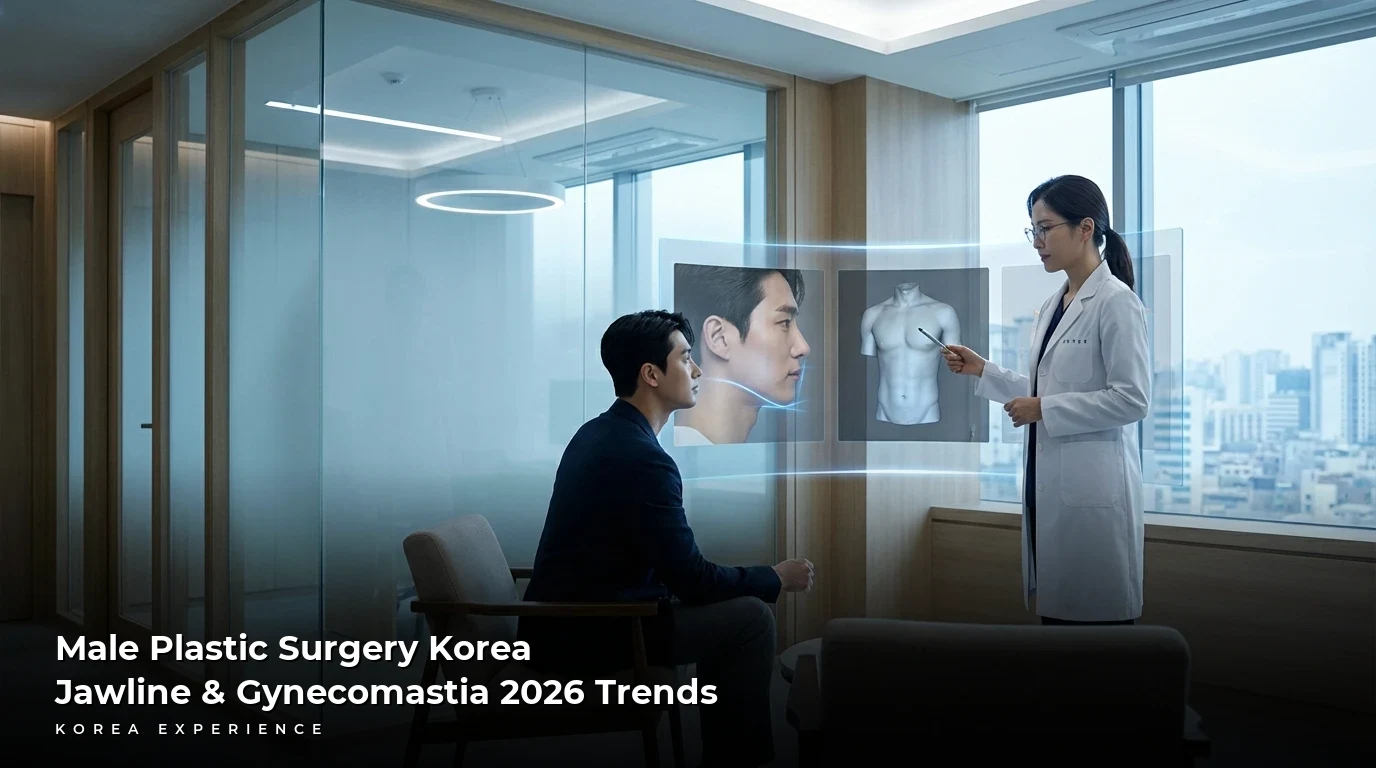
Explore 2026 male plastic surgery trends in Korea for jawline definition and gynecomastia. Discover top clinics, costs, and recovery insights for international patients interested in medical tourism.

Discover the top Korean skin care treatments for 2026, from Rejuran Healer to InMode lifting. Detailed costs, pain levels, and clinic guides included.