Best day trips from Seoul 2026: KTX routes and hidden gems
Discover the top day trips from Seoul for 2026. Includes KTX schedules, costs under ₩50,000, and travel times for Suwon, Nami Island, and the DMZ.
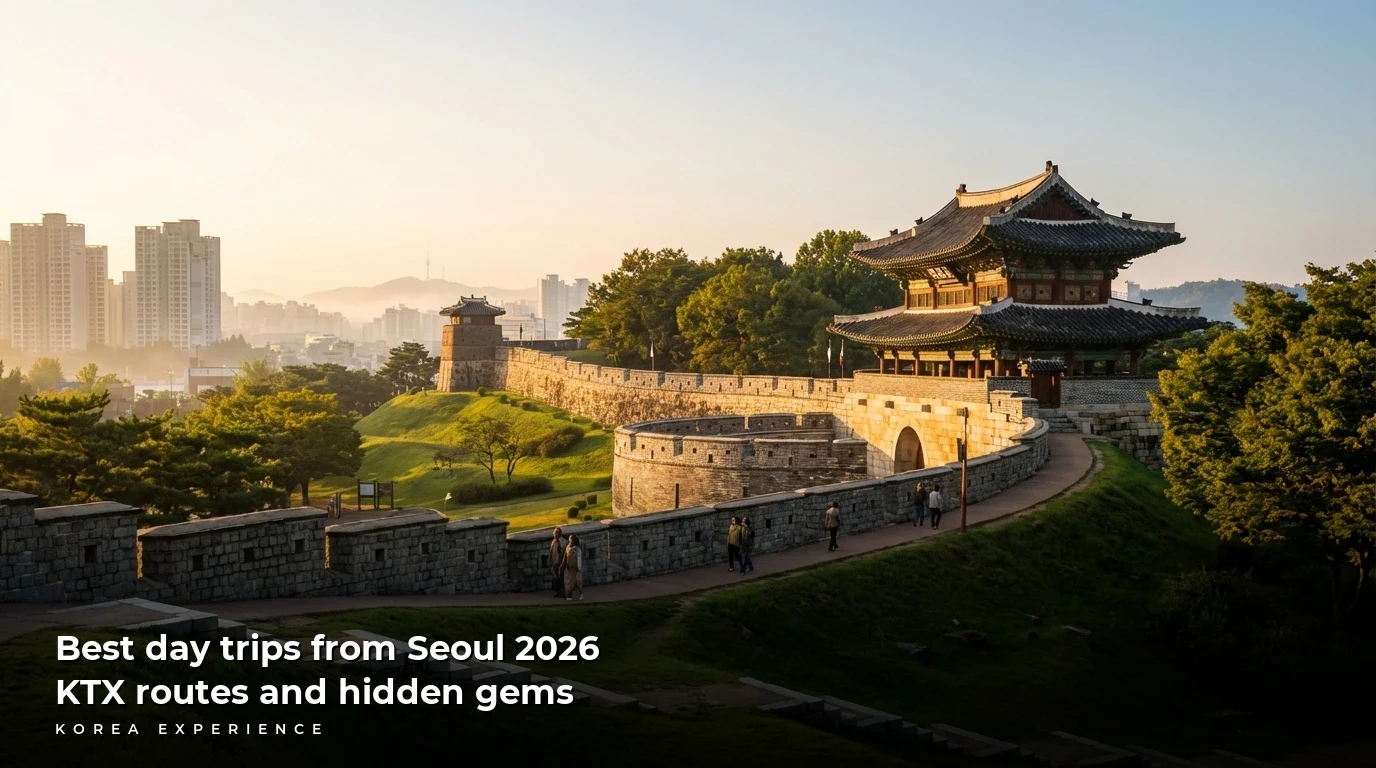
Finding the perfect escape from the bustling capital requires knowing exactly where to go and how to navigate South Korea's rapidly evolving transport network.
The short answer: The best day trips from Seoul in 2026 are Suwon Hwaseong Fortress for history (30 min), Nami Island for nature (60 min), and the DMZ for a unique geopolitical experience. With the expanded KTX-Eum lines, coastal cities like Gangneung are now accessible within 2 hours.
Key Takeaways
- 1Suwon remains the most accessible historical site, reachable via Subway Line 1 in under 60 minutes for less than $3.
- 2The DMZ requires booking at least 3-4 weeks in advance due to stricter 2026 visitor quotas.
- 3The new KTX-Eum trains make East Coast beach day trips to Gangneung viable (2 hours one-way).
While Seoul offers endless entertainment, the true charm of Korea often lies just beyond the city limits. In 2026, the expansion of the GTX-A (Great Train Express) and improved KTX high-speed rail connections have made day tripping easier than ever before. Whether you are seeking UNESCO World Heritage sites, adrenaline-pumping theme parks, or serene coastal views, the Gyeonggi-do and Gangwon-do provinces offer diverse experiences within a 2-hour radius.
This comprehensive guide covers the logistics, costs, and insider tips for the most rewarding day trips, ensuring you maximize your time outside the concrete jungle.
1. Suwon: The Fortress City
Distance: 30km South of Seoul | Travel Time: 30-60 minutes
Suwon is arguably the most convenient day trip from Seoul. It offers a perfect blend of ancient history and modern Korean lifestyle. The centerpiece is the Suwon Hwaseong Fortress, a UNESCO World Heritage site built in the late 18th century by King Jeongjo. Unlike many other historical sites, the fortress wall encircles the heart of the city, allowing you to hike along the 5.7-kilometer perimeter while looking down at the bustling urban life below.
In 2026, Suwon has also become a hotspot for trendy cafes and shopping, particularly around the Haenggung-dong area (often called "Suwon's Garosu-gil") and the massive Starfield Suwon mall, famous for its towering library.
Pro Tip
Buy the "Suwon Hwaseong Tourist Trolley" ticket immediately upon arrival (approx. ₩4,000). The trolley saves you from the steepest parts of the hike and offers an audio guide in English.
How to Get There
- Subway: Take Line 1 from Seoul Station to Suwon Station.
- Cost: Approx. ₩2,000 ($1.50).
- Time: 60 minutes.
- KTX: Take the KTX from Seoul Station to Suwon Station.
- Cost: ₩8,400 ($6.30).
- Time: 30 minutes.
- Recommendation: Take the subway to save money, as the time difference is negligible once you factor in waiting for the train.
What to Do
- Hwaseong Fortress: Walk the walls. Entrance is ₩1,500 ($1.10). Try the traditional archery experience at the Yeonmudae post (₩2,000 for 10 arrows).
- Hwaseong Haenggung Palace: The temporary palace used by the King. It was fully restored in recent years and often hosts martial arts performances at 11:00 AM.
- Flying Suwon: A tethered helium balloon ride that lifts you 150 meters into the air for a panoramic view of the fortress. Rides cost ₩18,000 ($13.50) and last about 15 minutes.
Yeonpo Galbi(연포갈비)
For those interested in seeing how historical sets compare to reality, Suwon is a great primer before visiting other locations mentioned in our guide to historic K-Drama sets.
2. The Gapyeong Circle: Nami Island, Petite France, and Garden of Morning Calm
Distance: 60km East of Seoul | Travel Time: 60-90 minutes
This route is the "Holy Trinity" of Korean day trips. Located in Gapyeong, these three attractions are serviced by a dedicated "Gapyeong City Tour Bus," making it easy to hop on and off between them.
Nami Island (Namiseom) is famous for its tree-lined paths and filming locations for "Winter Sonata." In 2026, the entry visa (ticket) price stabilized at ₩16,000 ($12), which includes the round-trip ferry. For the adventurous, you can take a zipline into the island for ₩49,900 ($38), which includes your entry fee.
Petite France is a French cultural village designed around "The Little Prince." Next to it is the newer Italian Village, featuring Pinocchio-themed exhibits.
The Garden of Morning Calm is a massive arboretum that is spectacular year-round, but especially during the winter "Lighting Festival" (December to March), where millions of LED lights cover the gardens.
Gapyeong Adventure: DIY vs. Tour Package
The Dualism Concept: Experience the best of both worlds — premium luxury moments paired with authentic budget-friendly experiences in one route.
Private Van Tour
Door-to-door service, no waiting for buses, flexible schedule.
ITX Train + City Bus
Take ITX to Gapyeong Station, then use the hop-on-hop-off bus.
If you are a group of 3 or more, the private van is worth the cost to avoid crowded shuttle buses.
Transport Details
- Train: Take the ITX-Cheongchun from Yongsan Station or Cheongnyangni Station to Gapyeong Station.
- Cost: Approx. ₩9,800 ($7.40) one-way.
- Time: 60 minutes.
- Gapyeong City Tour Bus: Pick up outside Gapyeong Station.
- Cost: ₩8,000 ($6) for an all-day pass.
If you are visiting in October or November, the foliage here is unmatched. Check our guide on autumn colors to time your visit perfectly.
3. The DMZ (Demilitarized Zone)
Distance: 50km North of Seoul | Travel Time: 60 minutes
The DMZ remains the most poignant symbol of the Korean War. It is one of the few places in the world where you can witness the tension of a divided nation firsthand.
Important Update for 2026: Due to increased security protocols, the JSA (Joint Security Area—the blue huts where you can step into North Korea) remains intermittently closed to civilians. Most tours currently focus on the Third Tunnel of Aggression, Dora Observatory (where you can look into North Korea's propaganda village), and Dorasan Station.
📖 How to Book a DMZ Tour
Step 1: Choose a Reputable Agency
You cannot visit the DMZ independently. You must book via agencies like Klook, Trazy, or VIP Travel.
Step 2: Book in Advance
Slots for 2026 fill up 3-4 weeks in advance. Do not wait until you arrive in Seoul.
Step 3: Prepare Documents
You MUST bring your physical passport on the day of the tour. Photos or copies are not accepted.
What to Expect
- Cost: Tours range from ₩60,000 to ₩100,000 ($45-$75) depending on inclusions and lunch options.
- The Third Tunnel: You will walk down a steep interception tunnel 73 meters underground. It is physically demanding on the way back up. A monorail option exists but often has long queues.
- Dress Code: Strict conservative dress code applies (no ripped jeans, sandals, or military-print clothing).
4. Gangneung: The Coffee & Coastal Escape
Distance: 230km East of Seoul | Travel Time: 2 hours via KTX
Thanks to the KTX-Eum (high-speed train) line, the East Coast is now a viable day trip. Gangneung offers a completely different vibe from Seoul: wide sandy beaches, a booming coffee culture, and fresh seafood.
Anmok Beach Coffee Street is the highlight, where dozens of cafes line the shore with ocean views. Gangneung is also famous for Sundubu (soft tofu), particularly in the Chodang Soft Tofu Village.
📋 Gangneung Trip Facts
Itinerary for a Day
- Morning: Take the 8:01 AM KTX from Seoul Station to Gangneung Station. Arrive at 10:00 AM.
- Lunch: Taxi to Chodang Tofu Village (approx. ₩7,000 fare) for Gelato Soft Tofu or spicy soft tofu stew.
- Afternoon: Walk to Anmok Beach. Visit a cafe (e.g., BOSSANOVA Coffee Roasters) for a rooftop view.
- Late Afternoon: Visit Ojukheon House (historical site) or the Arte Museum Gangneung (immersive media art).
- Dinner: Taxi to Gangneung Central Market for Dakgangjeong (sweet crispy chicken) and squid sundae.
- Return: Take the 8:30 PM KTX back to Seoul.
East Coast vs. West Coast Day Trips
| Feature | Gangneung (East) | Incheon (West) |
|---|---|---|
| Travel Time | 2 hours (KTX) | 1 hour (Subway) |
| Water Quality | Clear blue, sandy | Mudflats, tidal |
| Vibe | Relaxed resort feel | Urban/Industrial |
| Transport Cost | $45 round trip | $4 round trip |
For seafood lovers, Gangneung rivals Busan in freshness. Compare the options with our Busan Seafood Guide to decide which coastal city fits your palate.
5. Jeonju Hanok Village: The Food Capital
Distance: 200km South of Seoul | Travel Time: 1.5 - 2 hours via KTX
Jeonju is designated as a UNESCO City of Gastronomy. It is the spiritual home of Bibimbap and boasts the largest collection of traditional Hanok houses in Korea (over 700). While many tourists stay overnight, the KTX makes a day trip perfectly feasible.
The Jeonju Hanok Village is compact and walkable. You can rent a Hanok for the day to take photos, eat endless street food, and visit the Gyeonggijeon Shrine, which houses the portrait of the founder of the Joseon Dynasty.
The Food Scene
Jeonju is not for dieting. Key street foods to try in 2026:
- Gilgeoriya Baguette: A crispy baguette hollowed out and stuffed with spicy pork and veggies (₩5,000).
- Choco Pie: The PNB bakery makes massive handmade chocolate pies with strawberry jam and cream (₩2,500).
- Jeonju Bibimbap: Expect to pay around ₩13,000 - ₩15,000 for a high-quality brass bowl serving.
Don't just stick to the main street of the Hanok Village. Cross the bridge to the 'Jaman Mural Village'. It's colorful, quiet, and offers the best elevated views of the Hanok roofs without the crowds.
For a deeper dive into what makes Jeonju's food profile unique compared to other regions, read our analysis of Korean regional flavors.
6. Pocheon Art Valley & Herb Island
Distance: 45km Northeast of Seoul | Travel Time: 1.5 - 2 hours
If you want Instagram-worthy visuals without the historical density of Suwon or the crowds of Nami Island, Pocheon is the answer.
Pocheon Art Valley is a former granite quarry transformed into a culture park. The emerald-green Cheonjuho Lake, cut between sheer granite cliffs, looks otherworldly and was a filming location for the drama "Moon Lovers: Scarlet Heart Ryeo."
Nearby is Herb Island, a massive botanical garden with a European theme. It features a "Santa's Village" open year-round and offers relaxing herbal foot baths—perfect after a day of walking.
Logistics
- Public Transport: This is the tricky part. You must take a bus (No. 3006) from Jamsil Station to Pocheon, then transfer to a local bus (No. 73).
- Total Time: Approx 1 hour 50 minutes.
- Cost: Bus fares total around ₩3,500 ($2.60).
- Admission: Art Valley is ₩5,000; Monorail is ₩4,500 round trip.
Pocheon Day Trip Analysis
- ✓Stunning, unique photography spots
- ✓Significantly fewer foreign tourists
- ✓Relaxing nature atmosphere
- ✗Public transport is complicated (multiple transfers)
- ✗English signage is limited compared to Seoul
- ✗Requires a lot of walking
7. Everland: The Theme Park Giant
Distance: 40km Southeast of Seoul | Travel Time: 1 hour
Run by Samsung, Everland is Korea's largest theme park. It is home to the T-Express, one of the world's steepest wooden roller coasters. In 2026, the park expanded its "Panda World" following the immense popularity of the panda family born in recent years.
The park is divided into zones: American Adventure, Magic Land, European Adventure, and Zootopia. It also hosts incredible seasonal festivals, such as the Tulip Festival in spring and the Rose Festival in early summer.
💵 Everland Ticket Options (2026)
Includes entry + skip-the-line for major rides.
Getting There
- Shuttle Bus: The most convenient method. Dedicated tourist shuttles leave from Hongik Univ., Myeongdong, and Dongdaemun.
- Cost: ₩12,000 ($9) round trip.
- Booking: Must book online via agencies like Daesung Tour or Klook.
- Subway: Take the Everline (Light Rail) to Jeondae-Everland Station.
- Note: It takes significantly longer (approx. 2 hours from central Seoul) and requires multiple transfers.
8. Incheon: Past and Future
Distance: 30km West of Seoul | Travel Time: 60 minutes
Incheon offers a stark contrast between the 19th-century history of Chinatown and the ultra-futuristic architecture of Songdo International Business District.
Start your day at Incheon Station (Line 1, end of the line). Cross the street into Chinatown for Jajangmyeon (black bean noodles)—this is where the dish was invented. Visit the Jajangmyeon Museum (Entry ₩1,000) and the nearby Songwol-dong Fairy Tale Village, a residential area painted with colorful murals.
In the afternoon, take the subway to Central Park Station in Songdo. This smart city features a seawater canal running through a massive park surrounded by skyscrapers. You can rent boats, kayaks, or take the water taxi (₩4,000).
📊 Incheon Chinatown Stats
Planning Your 2026 Trips
When planning these trips, weather plays a crucial role. Korean summers (July-August) are humid and rainy, while winters (January-February) are freezing. Spring (April-May) and Autumn (September-October) offer the best conditions for outdoor walking.
If you are looking for more extended breaks from the city, consider looking into our guide on weekend getaways for overnight options. Also, always ensure you have a T-Money card loaded with at least ₩20,000 before leaving Seoul, as recharging machines can be scarce in rural areas.
❓ Frequently Asked Questions
Have more questions?Contact us →
About the Author
Korea Experience Team
Written by the Korea Experience editorial team - experts in Korean medical tourism, travel, and culture with years of research and firsthand experience.
Explore more in Travel & Tourism
From Seoul's neon-lit streets to Jeju's volcanic landscapes — discover the best of Korea with insider travel tips, itineraries, and seasonal guides.
Browse All Travel & Tourism ArticlesContinue Reading
Explore more articles you might find interesting

Discover 10 secret autumn spots in Korea away from crowds. Includes 2026 peak foliage dates, transport costs, and specific hiking routes for the perfect trip.
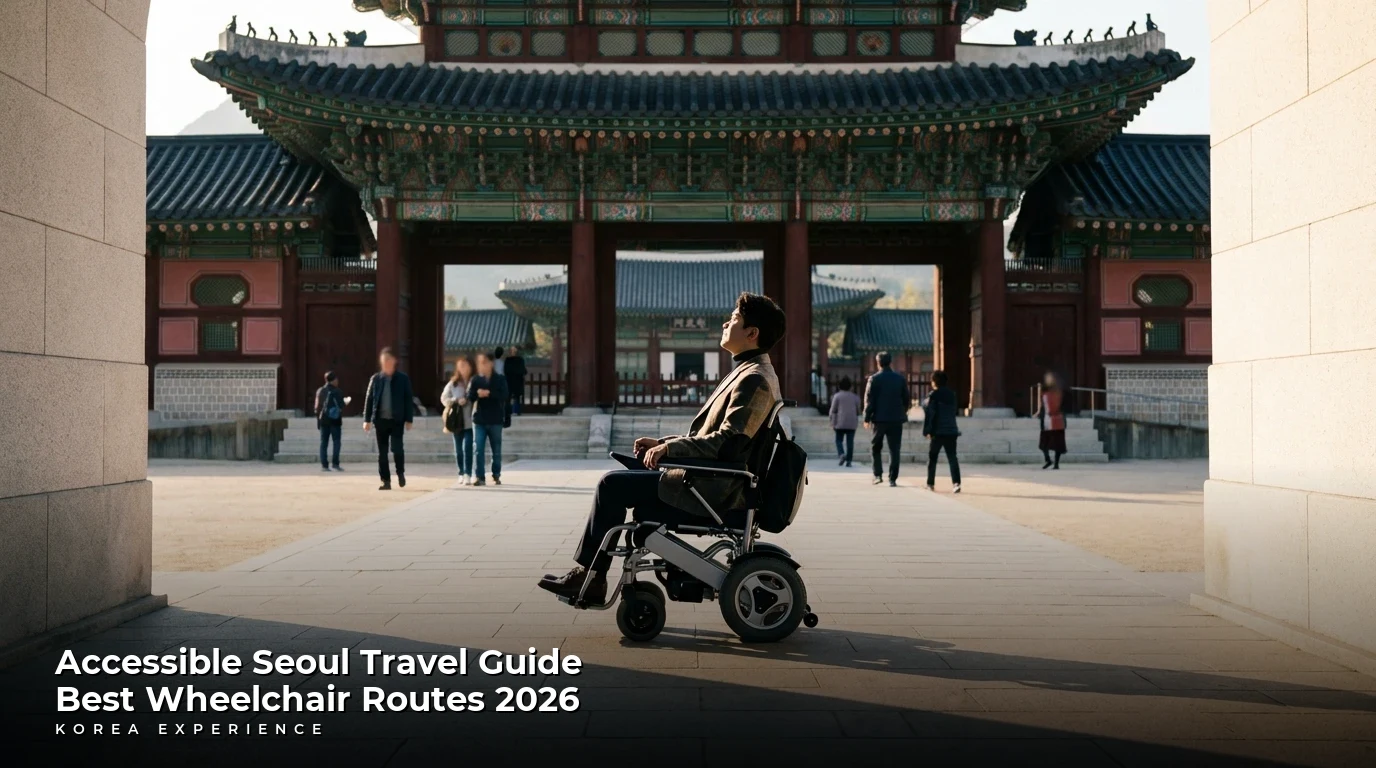
Discover top wheelchair-accessible routes in Seoul for 2026. Includes elevator maps, transport costs, barrier-free hotels, and specialized taxi services.
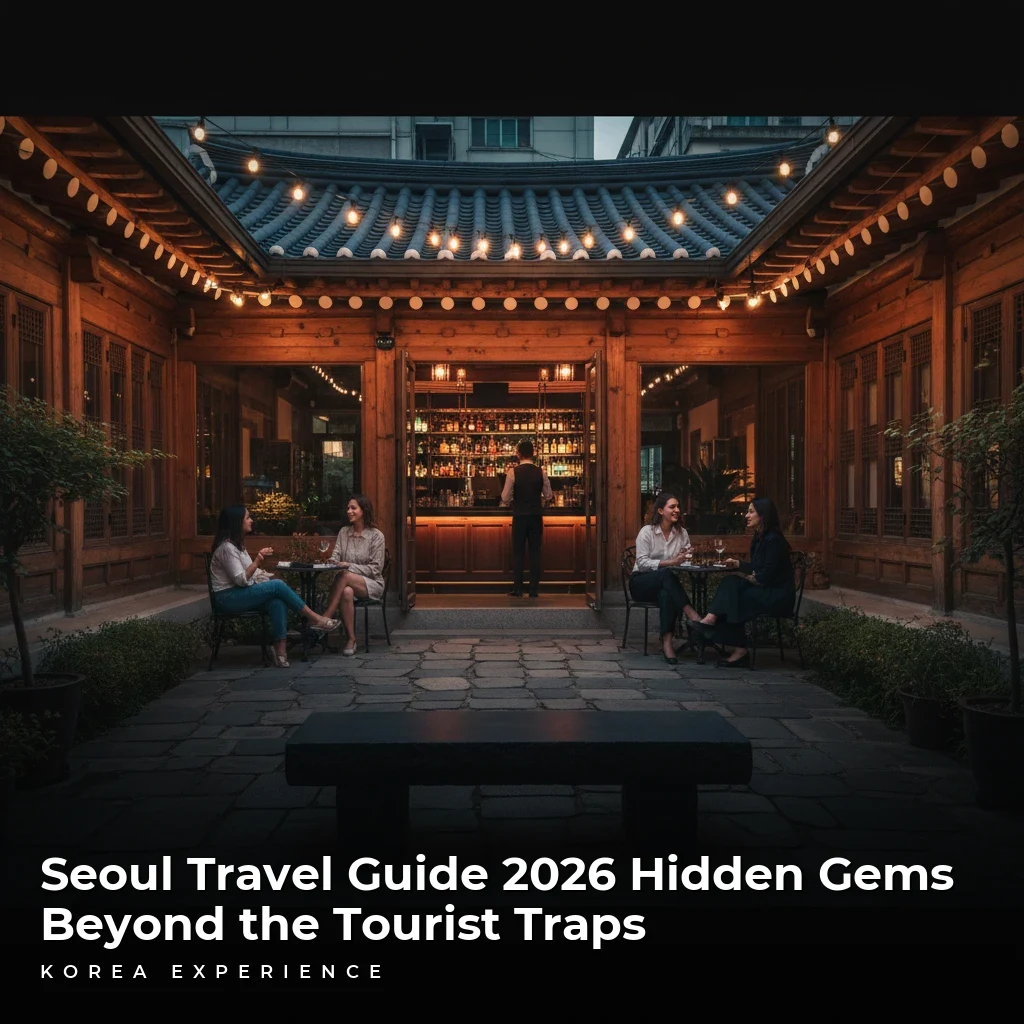
Discover Seoul's best kept secrets for 2026. From Sindang-dong cocktail bars to Mullae art alleys, explore the city like a local. Prices and maps included.

Discover the top luxury glamping sites near Seoul for 2026. Prices from ₩150,000, private jacuzzis, and travel times under 2 hours.
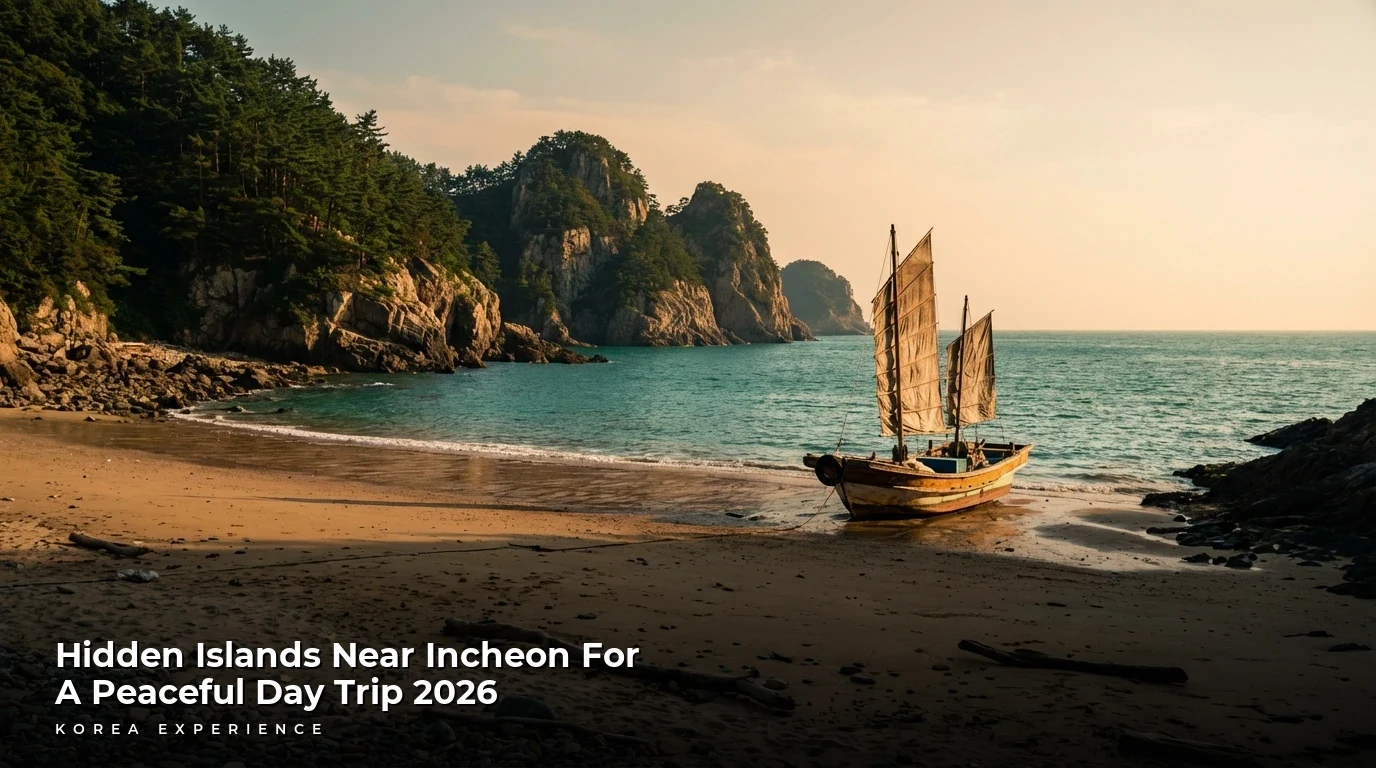
Escape Seoul's crowds to Incheon's hidden islands. Discover Deokjeokdo, Seonjaedo, and more with ferry schedules, ₩50,000 budgets, and travel tips.

Discover the best thrifting in Seoul for 2026. From Dongmyo's $1 piles to Seongsu's vintage boutiques, find hidden gems and luxury brands for under ₩50,000.