Gangneung Coffee Street: Artisan Roasters & Culture
Explore Gangneung Coffee Street's vibrant scene, from its origins to top artisan roasters. Discover unique flavors, learn about Korean coffee culture, and plan your perfect visit
Introduction: Discovering Korea's Caffeine Capital
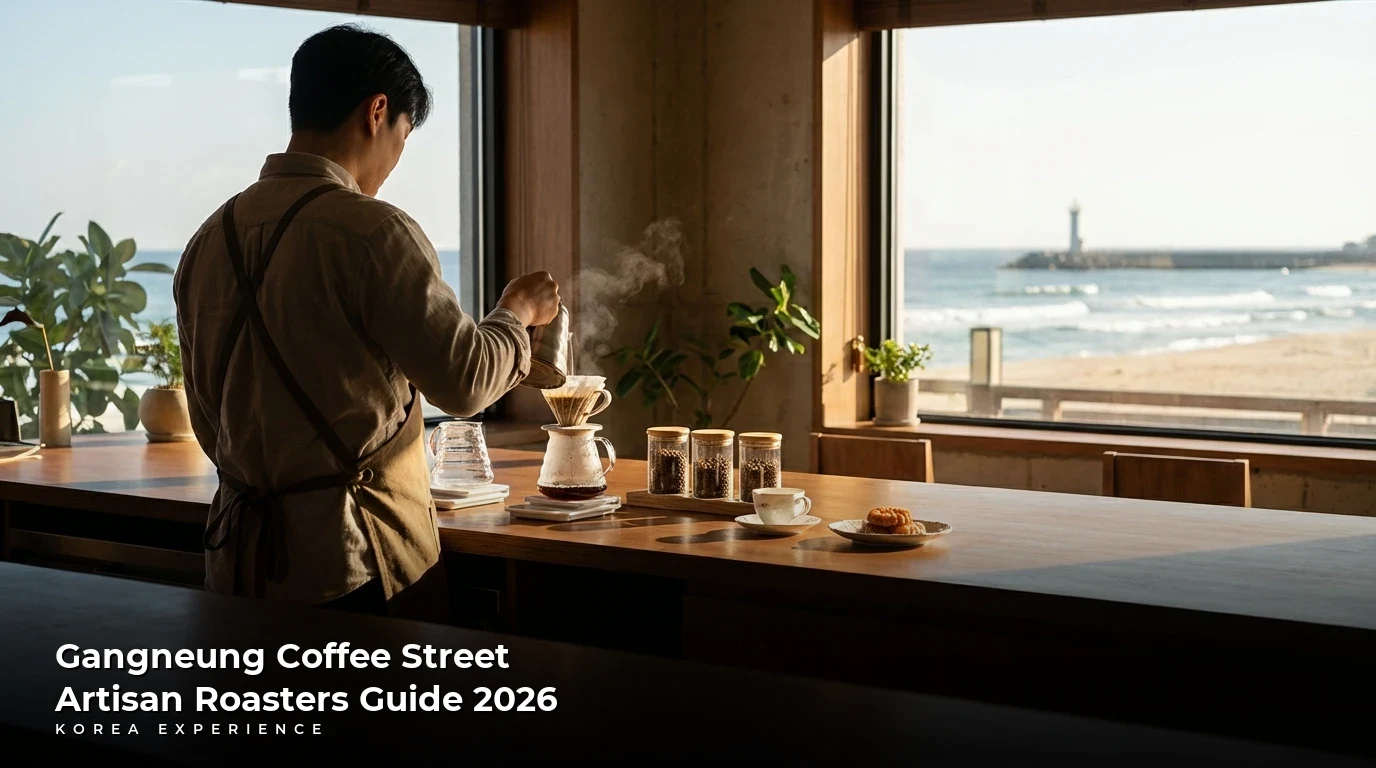
Imagine a place where the rhythmic crash of ocean waves harmonizes with the gentle hum of espresso machines, where the aroma of freshly roasted beans mingles with the salty sea breeze. This isn't a dream; it's Gangneung Coffee Street (Gangneung Keopi Geori), a coastal haven that has firmly established itself as Korea's undisputed coffee capital. For international travelers and expats living in Korea, discovering this vibrant hub of Gangneung Coffee Street artisan roasters offers a unique immersion into a rapidly evolving aspect of Korean culture.
Once a sleepy seaside town on Korea's eastern coast, Gangneung has transformed into a pilgrimage site for coffee connoisseurs, largely thanks to its pioneering roasters and the captivating allure of Anmok Beach. But beyond the picturesque views and charming cafes, what truly sets Gangneung apart is its dedication to specialty coffee, a commitment epitomized by the passionate artisan roasters who meticulously source, roast, and brew exceptional beans.
This comprehensive guide will take you on a detailed journey through Gangneung Coffee Street. You'll learn about its fascinating history, delve into what makes its coffee scene so unique, and get an insider's look at some of the most prominent Gangneung Coffee Street artisan roasters. We'll provide practical tips for planning your visit, explore the broader cultural experiences available, and answer your most pressing questions, ensuring you’re fully equipped to savor every drop of this remarkable destination. Prepare to awaken your senses and dive deep into the heart of Korea's coffee revolution.
The Genesis of Gangneung Coffee Street: A Cultural Phenomenon
The story of Gangneung Coffee Street isn't just about coffee; it's a testament to vision, community, and the surprising power of a single passion to transform an entire region. Its origins can be traced back to a handful of dedicated individuals who, in the early 2000s, saw potential beyond the mass-produced coffee prevalent throughout Korea. These pioneers, often self-taught or trained abroad, began to experiment with roasting their own beans, cultivating a deep appreciation for single-origin coffees and bespoke blends.
Initially, these nascent roasteries were scattered across Gangneung, but a concentration began to form along Anmok Beach (Anmok Haebyeon). This scenic stretch of coastline, already popular for its serene beauty, became the natural backdrop for a budding coffee culture. The first cafes here were simple, often serving as both roasting facilities and cozy spots for locals to enjoy a unique cup. Word-of-mouth spread, drawing curious visitors from Seoul and beyond, eager to taste something different.
The turning point arrived with the city's strategic decision to embrace and promote this burgeoning coffee scene. Recognizing the growing appeal, Gangneung city officials actively supported the development of infrastructure around Anmok Beach, creating a designated "Coffee Street." This included establishing the annual Gangneung Coffee Festival (Gangneung Keopi Chukje), a major event that put the city on the national and international coffee map. The festival, typically held in October, attracts thousands of visitors with barista competitions, bean showcases, tasting workshops, and cultural performances, cementing Gangneung's identity as Korea's coffee heartland.
Today, Gangneung Coffee Street stands as a vibrant testament to this organic growth and strategic cultivation. It's more than just a collection of cafes; it's a cultural landmark, a place where local pride meets global trends, and where the art of coffee roasting is celebrated with an almost reverent dedication. The street has become a model for regional development through cultural tourism, showcasing how a local passion can evolve into a significant economic and social driver.
What Makes Gangneung Coffee Special: Terroir, Techniques, and Passion
While Korea's coffee scene, in general, has exploded, Gangneung's particular charm lies in its unique blend of environmental factors, innovative techniques, and an unwavering passion for the craft. Understanding these elements helps to appreciate the distinct character of Gangneung Coffee Street artisan roasters.
The "Terroir" of Coffee Culture
Unlike wine, coffee doesn't necessarily derive its flavor directly from the local soil in the way a grape does. However, "terroir" in the coffee context can refer to the broader environment and culture that shapes its consumption and preparation. Gangneung's coastal location offers a unique setting:
- Sea Breeze and Ambiance: The fresh, often cool air from the East Sea (Donghae) provides a refreshing contrast to the often bustling city cafes. Many shops offer outdoor seating or large windows overlooking the ocean, creating a relaxing, almost meditative atmosphere that enhances the coffee-drinking experience.
- Slower Pace of Life: Compared to Seoul's frenetic energy, Gangneung offers a more relaxed pace. This tranquility allows for a deeper appreciation of the coffee ritual, encouraging patrons to linger, converse, and truly savor their cup.
- Tourist and Local Blend: The street attracts both serious coffee enthusiasts and casual tourists, creating a dynamic environment where traditional local flavors meet global trends.
Mastering Roasting Techniques
At the core of Gangneung's reputation are its artisan roasters, individuals and teams who treat coffee roasting as both a science and an art form. Their commitment is evident in:
- Bean Sourcing: Many roasters prioritize direct trade relationships with coffee farms around the world, ensuring ethical sourcing and high-quality green beans. They often feature single-origin beans from regions like Ethiopia, Colombia, Guatemala, and Kenya, highlighting their unique characteristics.
- Precision Roasting: Roasting profiles are meticulously developed to bring out the optimal flavors of each bean. This involves careful control of temperature, time, and airflow, often using advanced roasting equipment. The goal is to achieve perfect caramelization and development without burning or under-roasting.
- Small-Batch Production: Most artisan roasters operate on a small-batch basis, allowing for greater control over quality and freshness. This ensures that customers receive beans roasted just days, sometimes hours, before brewing.
- Expert Baristas: The expertise extends beyond roasting. Baristas are highly skilled in various brewing methods, from espresso and pour-over (drip coffee) to cold brew, ensuring each cup is prepared to perfection. They are often knowledgeable about the beans' origins and flavor notes, ready to guide customers.
The Passionate Pursuit of Perfection
What truly distinguishes Gangneung Coffee Street artisan roasters is the deep-seated passion that fuels their craft. It's a dedication that goes beyond mere business:
- Continuous Learning: Roasters and baristas are often engaged in continuous learning, attending workshops, participating in competitions, and experimenting with new techniques and equipment.
- Community and Collaboration: Despite being competitors, there's a strong sense of community among Gangneung's coffee professionals. They often share knowledge, support local events, and collectively contribute to the city's coffee identity.
- Educating the Consumer: Many cafes actively engage with their customers, explaining the bean's origin, the roasting process, and the recommended brewing methods, fostering a more informed and appreciative coffee culture.
This blend of a unique coastal environment, sophisticated roasting techniques, and an enduring passion makes Gangneung a truly special place for coffee lovers, offering an experience that transcends a simple cup of joe.
Spotlight on Artisan Roasters: Must-Visit Cafes on Gangneung Coffee Street
While Gangneung Coffee Street boasts dozens of excellent cafes, a few stand out for their pioneering spirit, exceptional quality, and unique ambiance. These establishments are central to the identity of Gangneung Coffee Street artisan roasters, each offering a distinct experience.
1. Terarosa Coffee (테라로사) - The Pioneer's Legacy
- About: Terarosa is arguably the most famous name in Korean specialty coffee, often credited with igniting the artisan coffee movement in Gangneung. While its main roasting facility and cafe are located slightly inland from Anmok Beach (near Gyeongpo Lake, though they have a branch on the street itself), its influence on Gangneung Coffee Street is undeniable. Terarosa emphasizes direct trade, meticulous roasting, and a rustic, art-gallery-like atmosphere.
- Specialty: Known for its diverse selection of single-origin beans and signature blends. Their "Brazil Fazenda Primavera" or "Ethiopia Yirgacheffe" are consistently excellent. They also offer a fantastic breakfast and brunch menu.
- Vibe: Industrial-chic, spacious, often bustling with energy. It feels more like a grand coffee hall than a small cafe.
- Price Range: Americano/Latte approximately 5,500 - 7,000 Korean Won (KRW). Specialty pour-overs can be 8,000 - 10,000 KRW.
- Location Insight: While the main branch is a short drive from Anmok Beach, their smaller branch on Coffee Street offers a convenient taste of their renowned quality with ocean views.
- Insider Tip: Visit on a weekday morning for a more relaxed experience and easier parking at their larger Gyeongpo Lake location.
2. Bohemian Coffee (보헤미안 커피) - The Master's Touch
- About: Bohemian Coffee is synonymous with the legendary barista Park Yi-choo (Park I-chu), often referred to as the "first generation barista" in Korea. His philosophy of focusing on the pure taste of coffee and educating consumers has shaped the coffee landscape. Bohemian offers a more traditional, almost reverent approach to coffee making. They have several branches, with a notable presence on Coffee Street.
- Specialty: Famous for its hand-drip (pour-over) coffee, personally roasted by Park Yi-choo himself. Their "Bohemian Blend" is a popular choice, as are their rotating single-origin offerings.
- Vibe: Cozy, intimate, and serious about coffee. It often has a quieter, more contemplative atmosphere, perfect for savoring a carefully prepared cup.
- Price Range: Americano/Latte approximately 5,000 - 6,500 KRW. Hand-drip coffee typically 7,000 - 9,000 KRW.
- Location Insight: Look for the distinct, often understated signage. Some branches might require waiting, especially if the master barista is personally serving.
- Insider Tip: Don't be shy to ask the baristas for recommendations based on your taste preferences. They are often incredibly knowledgeable.
3. Parky Coffee (박이추 커피) - A Local Favorite with Character
- About: Another prominent figure in Gangneung's coffee history, Parky Coffee (often associated with the same pioneering spirit as Bohemian, sometimes sharing historical links) offers a warm and inviting atmosphere. Their focus is on delivering high-quality, freshly roasted coffee with a personal touch.
- Specialty: Excellent espresso-based drinks and a good selection of pour-over coffees. They often feature unique seasonal beans and blends that cater to different palates.
- Vibe: Friendly, welcoming, often with a mix of modern and traditional Korean aesthetics. It's a comfortable spot to relax and watch the waves.
- Price Range: Similar to Bohemian, with Americano/Latte around 5,000 - 6,500 KRW and hand-drip options from 7,000 KRW.
- Location Insight: Prominently located on Anmok Beach, offering fantastic ocean views.
- Insider Tip: Grab a window seat early in the morning for spectacular sunrise views over the East Sea while enjoying your coffee.
4. Bossa Nova (보사노바) - Modern Vibes and Ocean Views
- About: While perhaps not as historically "artisan pioneer" as Terarosa or Bohemian, Bossa Nova represents the newer wave of high-quality cafes on Coffee Street. It's celebrated for its stunning architecture, multi-story layout, and incredible panoramic views of Anmok Beach. They maintain high standards for their beans and brewing.
- Specialty: Offers a wide range of coffee, from classic espresso drinks to unique seasonal beverages. Their lattes are particularly popular, often paired with delicious bakery items.
- Vibe: Trendy, spacious, and bright, with a modern, minimalist design. Multiple floors ensure plenty of seating and diverse perspectives of the beach.
- Price Range: Slightly higher, with Americano/Latte around 6,000 - 7,500 KRW, reflecting the prime location and upscale ambiance.
- Location Insight: One of the largest and most visually striking cafes directly on Anmok Beach.
- Insider Tip: Head to the upper floors or rooftop terrace for the best photographic opportunities and ocean vistas.
Comparison Table: Prominent Artisan Roasters on Gangneung Coffee Street
| Cafe Name | Specialty/Focus | Vibe/Atmosphere | Average Price (Americano) | Key Feature |
|---|---|---|---|---|
| Terarosa Coffee | Diverse single-origin, signature blends | Industrial-chic, bustling | 6,000 KRW | Pioneer, extensive menu, large scale |
| Bohemian Coffee | Hand-drip, pure coffee taste | Cozy, serious, traditional | 5,500 KRW | Master barista legacy, meticulous brewing |
| Parky Coffee | Espresso-based, unique seasonal beans | Friendly, welcoming, ocean view | 5,500 KRW | Local favorite, comfortable ambiance |
| Bossa Nova | Espresso, seasonal drinks, bakery | Trendy, spacious, modern | 6,500 KRW | Multi-story, panoramic ocean views |
Beyond the Bean: Experiences and Culture on Coffee Street
Gangneung Coffee Street artisan roasters are the heart of the area, but the experience extends far beyond just drinking coffee. The street itself, and its immediate surroundings, offer a rich tapestry of cultural and leisure activities that complement your caffeine-fueled journey.
Ocean Views and Coastal Charm
Anmok Beach is an integral part of the Coffee Street experience. Its soft sands and the expansive East Sea provide a breathtaking backdrop for your coffee adventure.
- Strolling the Beach: Take a leisurely walk along the shoreline, feel the sand between your toes, and listen to the waves. It's a perfect way to digest your coffee and soak in the serene atmosphere.
- Sunrise Spot: Gangneung is famous for its stunning sunrises. Many cafes open early, allowing you to witness the spectacular dawn over the ocean with a freshly brewed cup in hand.
- Photo Opportunities: The colorful cafes, the iconic "Coffee Street" sign, and the sparkling sea offer countless photo opportunities.
The Gangneung Coffee Festival
As mentioned, the annual Gangneung Coffee Festival (typically in October) is a major highlight. If your visit coincides, it's a must-attend event.
- Barista Competitions: Witness talented baristas showcasing their skills.
- Bean Showcases: Learn about different coffee bean origins, roasting techniques, and flavor profiles directly from roasters.
- Workshops and Tastings: Participate in hands-on workshops, from latte art to home brewing techniques.
- Cultural Performances: Enjoy live music, art exhibitions, and local food stalls.
Coffee-Related Souvenirs and Gifts
Many cafes sell their freshly roasted beans, allowing you to take the taste of Gangneung home with you. You can find:
- Roasted Beans: Whole or ground, often beautifully packaged.
- Drip Bags: Convenient single-serving pour-over bags, perfect for travel or quick brews.
- Coffee Equipment: Some shops offer basic brewing tools, such as pour-over cones or hand grinders.
- Local Crafts: Beyond coffee, you might find small shops selling local artisan crafts, pottery, or seaside-themed souvenirs.
Culinary Delights Beyond Coffee
While coffee is king, Gangneung offers other gastronomic delights:
- Seafood: Being a coastal city, fresh seafood is abundant. Enjoy grilled fish, sashimi (hoe), or hearty seafood stews at local restaurants.
- Chodang Dubu Village (초당두부마을): A short drive from Coffee Street, this village is famous for its traditional handmade tofu, made with pure seawater. Many restaurants serve various tofu dishes, from soft tofu stew (sundubu jjigae) to fried tofu.
- Local Bakeries: Many of the larger cafes on Coffee Street also feature excellent in-house bakeries, offering a tempting array of pastries, cakes, and breads that pair perfectly with coffee.
The overall experience of Gangneung Coffee Street is about more than just a beverage; it's about soaking in a unique blend of natural beauty, culinary excellence, and a passionate, evolving coffee culture.
Planning Your Perfect Coffee Pilgrimage: Practical Tips
To make the most of your visit to Gangneung Coffee Street and its incredible artisan roasters, consider these practical tips designed for international travelers.
Getting There: Accessibility
- From Seoul by KTX: The fastest and most convenient way to reach Gangneung from Seoul is via the KTX high-speed train. The journey from Seoul Station or Cheongnyangni Station to Gangneung Station takes approximately 1.5 to 2 hours.
- From Gangneung Station to Coffee Street:
- Taxi: A taxi ride from Gangneung Station to Anmok Beach (Coffee Street) takes about 15-20 minutes and costs approximately 10,000-15,000 KRW.
- Bus: Several local buses (e.g., Bus No. 200, 202) connect Gangneung Station to Anmok Beach. The ride is slightly longer (around 30-40 minutes) but very affordable (around 1,500 KRW). Use a local mapping app like Naver Maps or Kakao Map for real-time bus information.
- Driving: If you have a car, Gangneung is accessible via expressways, but parking can be challenging, especially on weekends and holidays. Many cafes offer limited parking, and public parking lots fill up quickly.
Best Time to Visit
- Weekdays: For a more relaxed experience with fewer crowds, visit on a weekday. Mornings are particularly serene.
- Off-Peak Season: Spring (April-May) and Autumn (September-November) offer pleasant weather, fewer tourists, and beautiful scenery (cherry blossoms in spring, fall foliage inland).
- Summer (July-August): Can be very crowded due to beach tourism, and temperatures can be high.
- Winter (December-February): Cold, but offers a unique, tranquil beauty with fewer crowds and cozy cafe vibes.
- Gangneung Coffee Festival: If you're a serious coffee enthusiast, plan your trip around the annual Gangneung Coffee Festival (usually in October) for a truly immersive experience.
Navigating the Street
- Walkability: Gangneung Coffee Street along Anmok Beach is highly walkable. Most cafes are situated right along the main road facing the ocean.
- English Information: While some larger cafes may have English menus, smaller ones might not. Having a translation app handy (like Papago) can be very useful. Baristas are generally friendly and often eager to help, even with limited shared language.
- Payment: Credit cards are widely accepted. Cash is also fine.
Ordering Your Coffee
- Common Terms:
- Americano: (Ah-meh-ri-ka-no) - Very popular, often strong.
- Latte: (La-tte) - Milk coffee.
- Cappuccino: (Ka-pyu-chi-no)
- Hand Drip (Pour-over): (Haen-deu Deu-rip) - Often preferred for specialty single-origin coffees.
- Cold Brew: (Kol-deu Beu-ru)
- "Ice" (Ah-ee-seu) or "Hot" (Hot-teu): Specify before the drink name (e.g., "Ice Americano").
- Dietary Restrictions: If you have dairy restrictions, ask for "soy milk" (duyu) or "oat milk" (oteu uyu) if available. Not all cafes will have alternatives.
- Sweetness: Korean coffee often comes unsweetened. Sugar and stirrers are usually available at a self-service station.
Beyond Coffee Street: Exploring Gangneung
- Ojukheon House (오죽헌): A historical site, birthplace of prominent figures Yulgok Yi I and Shin Saimdang.
- Gyeongpo Beach (경포해변) and Gyeongpo Lake (경포호): Beautiful scenic areas perfect for biking or a leisurely stroll.
- Jeongdongjin Beach (정동진 해변): Famous for being a picturesque sunrise spot and home to the unique Sun Cruise Resort.
A well-planned trip allows you to fully appreciate the dedication of Gangneung Coffee Street artisan roasters and the charming city they call home.
Comparison Table: Popular Coffee Brewing Methods
| Brewing Method | Description | Typical Flavor Profile | Recommended for |
|---|---|---|---|
| Espresso | Finely ground coffee, hot water forced through under high pressure. | Concentrated, strong, bold, crema (foam) | Quick energy boost, base for lattes/cappuccinos |
| Hand Drip | Hot water poured slowly over ground coffee in a filter. | Clean, nuanced, aromatic, highlights bean origin | Savoring single-origin flavors, light-bodied coffee |
| Cold Brew | Coarsely ground coffee steeped in cold water for 12-24 hours. | Smooth, low acidity, naturally sweet | Refreshing, less bitter, easy on the stomach |
| French Press | Coarsely ground coffee steeped in hot water, then plunged. | Full-bodied, rich, bold, sediment present | Robust flavor, emphasizes mouthfeel |
Exploring the Wider Gangneung Coffee Scene: Beyond Anmok Beach
While Anmok Beach's "Coffee Street" is the undeniable epicenter, the spirit of Gangneung Coffee Street artisan roasters extends throughout the city. Several other areas and standalone cafes also contribute significantly to Gangneung's coffee reputation, offering different vibes and specialties. Venturing beyond the immediate beachfront can lead to exciting new discoveries.
Gyeongpo Lake Area: A Blend of Nature and Coffee
The area around Gyeongpo Lake (Gyeongpoho), a beautiful natural lake surrounded by walking and cycling paths, is home to some significant coffee establishments, including the original and largest Terarosa Coffee branch.
- Terarosa Coffee (Main Branch): This sprawling complex is more than just a cafe; it often includes an art gallery, a restaurant, and a shop. It offers a distinct experience from the Anmok Beach branch, focusing on a more rustic, industrial aesthetic surrounded by greenery. Here, you can truly appreciate the scale of their roasting operations and selection.
- Smaller Boutique Cafes: Nestled amongst guesthouses and nature trails, you'll find other charming cafes that prioritize unique blends and local ingredients. These often offer a quieter, more contemplative atmosphere, perfect after a stroll around the lake. They might not be "roasters" themselves but often source from local artisans.
Downtown Gangneung: Urban Coffee Culture
The central downtown area of Gangneung, closer to Gangneung Station, also boasts a growing number of independent cafes and roasteries.
- Trendy Cafes: Many modern, minimalist cafes have popped up, catering to a younger, urban crowd. These often feature stylish interiors, unique pastry selections, and experimental coffee drinks. They reflect the latest trends in Korean cafe culture.
- Local Roasteries: Keep an eye out for smaller, independent roasters who may focus on micro-batches or very specific bean profiles. These often have a loyal local following and can offer a more intimate look into the roasting process.
- Specialty Coffee Shops: These places often stock a rotating selection of beans from various Korean and international roasters, allowing you to sample a wide array of flavors.
Beyond the City Limits: Hidden Gems
Even in the more rural or suburban outskirts of Gangneung, you might stumble upon an unexpected coffee gem.
- Countryside Cafes: With scenic drives and beautiful landscapes, some cafes have chosen tranquil, rural settings to open their doors. These often emphasize peace, nature, and a slower pace, pairing excellent coffee with stunning natural views.
- Hanok Cafes: A growing trend in Korea is transforming traditional Korean houses (hanok) into modern cafes. While less common on Coffee Street itself, you might find such establishments outside the immediate Anmok area, offering a unique blend of heritage architecture and contemporary coffee culture.
Exploring these areas beyond the main drag of Anmok Beach offers a deeper understanding of Gangneung's diverse coffee landscape. It highlights that the city's passion for coffee is not confined to one street but permeates its entire identity, making it a true hub for Gangneung Coffee Street artisan roasters and coffee lovers alike. (Internal Link: Discover more hidden gems in our guide to Korea's lesser-known travel destinations).
FAQ: Your Questions About Gangneung Coffee Street Answered
Here are some frequently asked questions to help you plan your visit to Gangneung Coffee Street.
Q1: Is Gangneung Coffee Street only for coffee fanatics, or can general tourists enjoy it too?
A1: Absolutely for general tourists! While coffee fanatics will revel in the artisan roasters and specialized brewing methods, Gangneung Coffee Street offers much more. The beautiful Anmok Beach setting, the vibrant cafe atmosphere, delicious pastries, and the opportunity to experience a unique aspect of Korean culture make it enjoyable for everyone. You don't need to be a connoisseur to appreciate a great cup of coffee with an ocean view.
Q2: What's the average price of a cup of specialty coffee on Gangneung Coffee Street?
A2: The price of coffee varies depending on the cafe and the type of drink. A standard Americano or Latte typically ranges from 5,000 KRW to 7,500 KRW (approximately $4-6 USD). Specialty hand-drip coffees or unique seasonal beverages might cost a bit more, from 7,000 KRW to 10,000 KRW. This is comparable to, or slightly less than, specialty coffee prices in major cities like Seoul.
Q3: Are there any non-coffee options available in the cafes?
A3: Yes, most cafes offer a variety of non-coffee options. You can typically find a selection of teas (herbal, green, black), ades (sparkling fruit drinks), fresh juices, and hot chocolate. Many cafes also have a tempting array of pastries, cakes, and other desserts, making them perfect for a snack or light meal.
Q4: Is it easy to get around Gangneung and Coffee Street without a car?
A4: Yes, it is quite easy. From Gangneung KTX Station, you can take a taxi or a local bus directly to Anmok Beach (Coffee Street). Once on Coffee Street, all the cafes are within easy walking distance of each other along the beach. To explore other parts of Gangneung like Gyeongpo Lake or Ojukheon House, local buses or taxis are readily available and convenient.
Q5: What is the significance of the "artisan roasters" on Gangneung Coffee Street?
A5: The term "artisan roasters" highlights a commitment to quality and craft that goes beyond mass production. It signifies cafes that meticulously source high-quality green beans, employ precise roasting techniques to bring out optimal flavors, and often operate on a smaller, hands-on scale. These roasters are passionate about the entire coffee journey, from farm to cup, and contribute significantly to Gangneung's reputation as a specialty coffee hub, offering unique and carefully crafted coffee experiences.
Conclusion: Savoring the Heart of Korea's Coffee Culture
Gangneung Coffee Street is more than just a collection of cafes; it's a vibrant cultural phenomenon, a testament to passion, innovation, and the power of a perfectly brewed cup. From its humble beginnings to its current status as Korea's coffee capital, this coastal stretch has cultivated an environment where Gangneung Coffee Street artisan roasters flourish, pushing the boundaries of taste and experience.
Your journey to Gangneung offers a unique opportunity to:
- Immerse Yourself in Artisan Quality: Discover the dedication of roasters who meticulously craft each bean, offering unparalleled flavors and unique blends.
- Experience Coastal Tranquility: Pair your coffee with breathtaking ocean views, allowing the serene atmosphere to enhance your sensory experience.
- Connect with Korean Coffee Culture: Witness firsthand the evolution of Korea's specialty coffee scene and the passion that drives its growth.
- Explore Beyond the Cup: Enjoy the vibrant local culture, delicious food, and picturesque landscapes that surround Coffee Street.
Whether you're a seasoned coffee connoisseur or a curious traveler seeking new experiences, Gangneung Coffee Street promises an unforgettable adventure for your palate and your soul. So, plan your trip, embrace the aromas, and prepare to savor the rich, complex heart of Korea's coffee culture. The artisan roasters of Gangneung await to share their craft with you.
About the Author
Korea Experience Team
Written by the Korea Experience editorial team - experts in Korean medical tourism, travel, and culture with years of research and firsthand experience.
⚠️ Medical Disclaimer
The information provided on this website is for general informational purposes only and does not constitute medical advice. Always consult with qualified healthcare professionals before making any medical decisions.
Continue Reading
Explore more articles you might find interesting
Discover Tongyeong's exquisite oyster dishes, from fresh to grilled. This guide covers the best eateries, seasonal insights, and culinary tips for seafood lovers.
Discover the cutting-edge of Korean Fried Chicken in 2026, exploring exciting new flavors, innovative brands, and the evolving Chimaek culture for travelers.
Master the art of Korean BBQ at home in 2026. Discover essential meat cuts, authentic dipping sauces, and expert tips for an unforgettable culinary experience.