Host a Korean BBQ at Home Meat Cuts and Sauces 2026
Master the art of hosting a Korean BBQ at home in 2026 with our guide to essential meat cuts, authentic dipping sauces, and expert grilling tips.
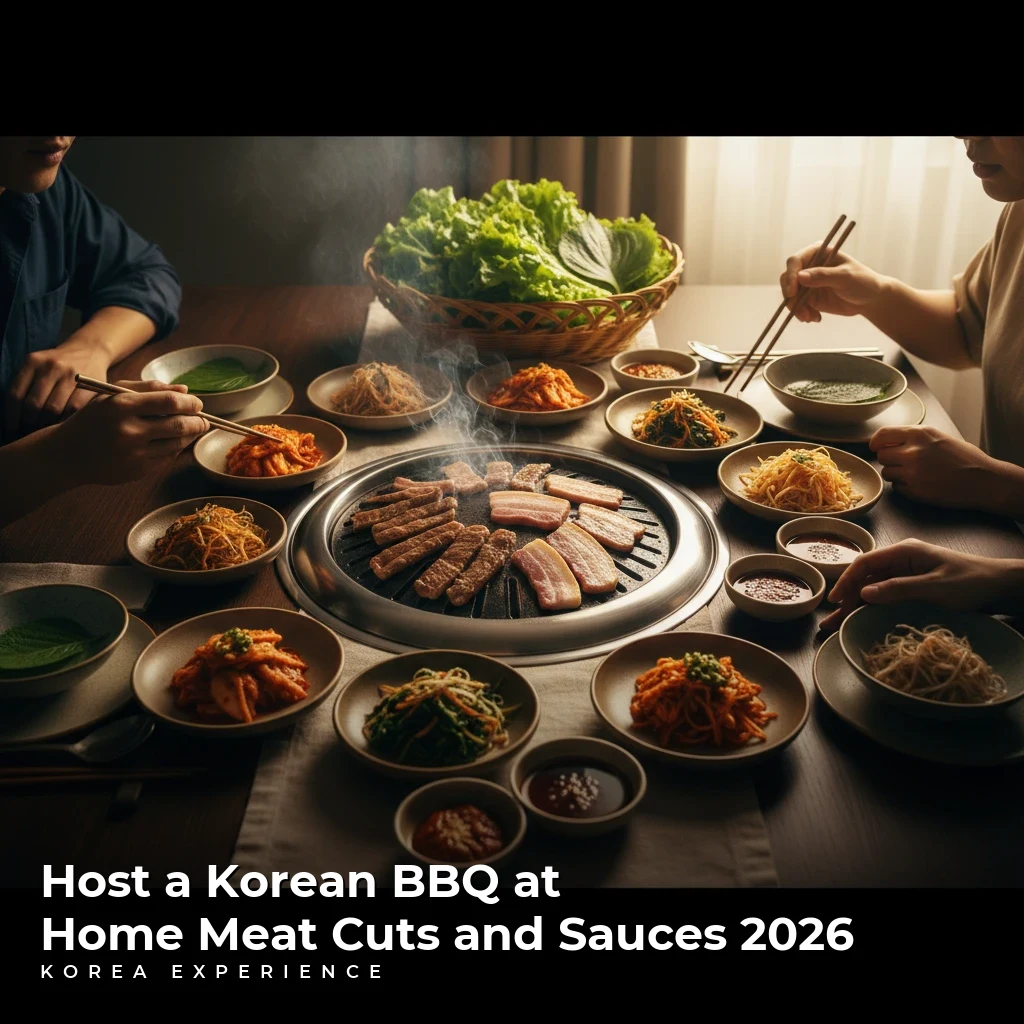
Bringing the vibrant energy of a Seoul grill house into your own dining room is one of the most rewarding culinary experiences you can curate for friends and family. As we move through 2026, the global fascination with Korean culture has evolved from a trend into a staple of international dining, yet many enthusiasts still hesitate to replicate the experience at home. Hosting a Korean BBQ (K-BBQ) is not just about cooking meat; it is a communal ritual that emphasizes "Jeong"—a deep emotional connection built through shared experiences.
Contrary to popular belief, you do not need an industrial ventilation system or a restaurant-grade table to pull this off successfully. With the right preparation, specific meat cuts, and authentic dipping sauces, you can create a sensory journey that rivals top establishments in Gangnam or Itaewon. The secret lies in the procurement of ingredients and the architecture of the table setting.
In this comprehensive guide, we will dismantle the process of hosting a Korean BBQ at home. We will cover everything from sourcing 2026's most popular meat cuts to mixing the perfect dipping sauces that balance salinity, sweetness, and heat. Whether you are in New York, London, or Sydney, this guide ensures your home grill session is authentic, delicious, and unforgettable.
Related reading: Best Korean BBQ Restaurants in Seoul 2026 Ultimate Guide.
Key Takeaways
- 1Plan for 250 grams (0.55 lbs) of total meat per guest to ensure abundance
- 2Essential equipment includes a portable butane stove ($25-40 USD) and a sloped grill pan
- 3The holy trinity of sauces—Ssamjang, Gireumjang, and Gochujang—is non-negotiable for authenticity
Essential Equipment for the Home Setup
Before buying the first strip of pork belly, you must establish the proper stage for your grilling performance. The beauty of Korean BBQ is that it is cooked at the table, live, while you eat. This requires specific gear to ensure safety and efficiency.
In 2026, the market for home grilling equipment has expanded significantly. You generally have two options: an electric grill or a portable butane gas stove. For the most authentic "fire" taste, a butane stove is superior. These units are compact, measuring roughly 34cm by 28cm, and provide the intense, direct heat necessary to render fat quickly.
Learn more in our comprehensive guide to Best Korean BBQ Restaurants Seoul Gangnam Edition.
📋 Equipment Checklist
If you opt for the butane route, ensure you purchase a specialized Korean BBQ grill plate. These differ from standard frying pans because they feature a domed center and a drainage channel for grease. This design is crucial; without it, your meat will boil in its own fat rather than sear. A quality cast-aluminum grill plate typically costs between $35 and $60 online.
Ventilation is Critical
Even with a smokeless electric grill, cooking fatty meats like pork belly generates significant smoke and airborne grease particles. Always open windows on opposite sides of the room to create a cross-breeze at least 15 minutes before you start cooking. If possible, set up a portable fan near the window to exhaust the air outward.
The Meat: Selecting the Best Cuts
The soul of any Korean BBQ is the meat. Unlike Western barbecue, which often relies on heavy smoking and large roasts, Korean BBQ focuses on smaller, bite-sized cuts grilled quickly. In 2026, butchers in major international cities are increasingly familiar with Korean terminology, but knowing exactly what to ask for is essential.
Pork: The King of Korean BBQ
While beef is prized, pork is the undisputed champion of the Korean grill due to its high fat content and affordability.
Samgyeopsal (Pork Belly): This is the most iconic cut. It is uncured bacon, strictly fresh pork belly. You want three distinct layers of meat and fat.
- Thickness: Ask for "gui" (grilling) cut, which is approximately 8mm to 10mm thick.
- Serving Size: This is heavy meat. Calculate about 150 grams per person if this is your main protein.
- Cost: In 2026, average prices range from $12 to $18 per kilogram depending on the region.
Moksal (Pork Neck/Shoulder): For those who find belly too fatty, Moksal is the perfect alternative. It has intense marbling but a meatier bite. It must be sliced slightly thinner than the belly, around 6mm to 7mm, to ensure it cooks through without drying out.
💵 Pork Cut Comparison (2026)
The classic choice. Melts in your mouth.
Great flavor with less grease.
Beef: The Premium Experience
Beef is traditionally a luxury item in Korea, often reserved for special occasions or corporate dinners ("hoesik").
Chadolbaegi (Thinly Sliced Brisket): These are paper-thin curls of frozen brisket. They are popular because they cook in seconds—literally 10 to 15 seconds per side. This is an excellent "starter" meat to get people eating while thicker cuts cook.
- Preparation: Buy this pre-sliced from an Asian market; it is nearly impossible to slice this thin at home without a commercial deli slicer.
- Volume: A standard tray is usually 300g, perfect for sharing among 2-3 people as an appetizer.
Galbi (Short Ribs): There are two main styles:
- LA Galbi: Cut across the bones (flanken style). Best for marinating.
- Wang Galbi: The meat is butterflied away from the bone into a long strip.
- Cost: Beef short ribs have seen price increases, averaging $35 to $50 per kilogram in 2026 for USDA Prime or equivalent grades.
Deungsim (Ribeye): For a steakhouse feel, go for Ribeye. In Korea, high-quality beef (Hanwoo) is prized for its snowy marbling. When buying locally, look for the highest marbling score possible (Prime or Wagyu). Cut it into bite-sized cubes after searing both sides on the grill.
"When buying Samgyeopsal, look for a pale pink color in the meat and stark white fat. If the fat looks yellow or the meat is dark red, it is not fresh. Also, avoid 'shaved' pork belly for BBQ; that is for stews. You need the thick 8mm cut to get that crispy outside and juicy inside texture."
Marinades: To Season or Not to Season?
A common misconception is that all K-BBQ meat is marinated. In reality, purists prefer Saeng (fresh, unseasoned) meat for pork belly and high-quality beef to taste the natural flavors. However, marinated short ribs (Yangnyeom Galbi) are a crowd favorite that you should include for variety.
The classic marinade relies on a balance of soy sauce, sugar (or fruit puree like Asian pear), garlic, and sesame oil. The Asian pear is the secret weapon; it contains an enzyme called calpain that tenderizes the meat fibers effectively within 4 to 6 hours.
📖 Master Galbi Marinade
Step 1: Blend Aromatics
Blend 1/2 onion, 4 cloves garlic, and 1/4 Asian pear until smooth.
Step 2: Mix Liquids
Combine puree with 1 cup soy sauce, 1/2 cup brown sugar, 2 tbsp sesame oil, and 2 tbsp rice wine (mirin).
Step 3: Marinate
Pour over meat and massage well. Refrigerate for at least 6 hours, ideally overnight.
The Dipping Sauces (The Trinity)
If the meat is the body of the meal, the sauces are the spirit. You cannot host a credible Korean BBQ without these three dipping options. In 2026, most ingredients are available at standard grocery stores, but the mixing ratios are key.
1. Ssamjang (Wrap Sauce)
This is the most crucial sauce. It is savory, slightly spicy, and nutty. It is applied to the meat inside a lettuce wrap.
- The Mix: 2 parts Soybean Paste (Doenjang) + 1 part Chili Paste (Gochujang).
- Enhancements: Add minced garlic, a drizzle of sesame oil, some honey, and chopped green onions.
- Yield: A 200g tub of store-bought Ssamjang costs about $4, but homemade tastes significantly fresher.
2. Gireumjang (Oil & Salt Dip)
This is the simplest yet most transformative sauce, particularly for non-marinated beef and pork belly.
- The Mix: 1 tablespoon of high-quality toasted sesame oil + 1 teaspoon of sea salt + a pinch of black pepper.
- Why it works: The salt enhances the meat's flavor, while the oil prevents the lean cuts from tasting dry.
3. Cham-sos (Sweet Onion Soy Sauce)
This is a lighter, thinner sauce often served with sliced onions or shredded cabbage. It cuts through the grease of the pork belly.
- The Mix: 2 tbsp Soy Sauce + 1 tbsp Vinegar + 1 tbsp Sugar + 1 tbsp Water + Wasabi (optional).
Sauce Pairing Guide
| Sauce | Best For | Flavor Profile | Spiciness |
|---|---|---|---|
| Ssamjang | Pork Belly Wraps | Savory/Nutty | Mild (1/5) |
| Gireumjang | Beef/Mushrooms | Salty/Nutty | None (0/5) |
| Gochujang | Plain Rice/Veggies | Spicy/Sweet | Medium (3/5) |
The Supporting Cast: Banchan and Vegetables
You do not need to prepare 12 different side dishes (Banchan) like a royal court banquet. For a home BBQ, focus on high-impact, acid-heavy sides to cleanse the palate between fatty bites.
Kimchi: Serve two types if possible: standard Napa cabbage Kimchi (sour/fermented is better for grilling) and cubed radish Kimchi (Kkakdugi).
- Grilling Tip: Put old, sour Kimchi directly on the lower end of the grill plate. As the pork fat renders and drips down, it fries the Kimchi, creating a delicacy that is arguably better than the meat itself.
Ssam (Wrap Vegetables): Red leaf lettuce is the standard vehicle for wraps. However, to impress guests in 2026, include Perilla Leaves (Kkaennip). They have a distinct minty-basil flavor that pairs incredibly well with pork.
- Quantity: Buy 2-3 heads of lettuce and 2 packs (approx 40 leaves) of Perilla for a group of 4.
- Preparation: Wash these thoroughly and shake dry 30 minutes before serving. Wet lettuce dilutes the sauce.
Pajeori (Scallion Salad): This is a salad made entirely of thinly shredded green onions dressed in soy sauce, vinegar, sesame oil, and chili powder (Gochugaru). It provides a fresh, spicy kick.
- Prep Time: 10 minutes.
- Cost: A bunch of scallions costs under $2.
Banchan Strategy: Buy vs. Make
- ✓Store-bought Kimchi saves weeks of fermentation time
- ✓Pickled radish (Ssam-mu) is cheap and hard to replicate perfect texture
- ✓Focusing effort on meat quality yields better ROI
- ✗Store-bought scallion salad is never crisp; must be made fresh
- ✗Homemade Ssamjang has a depth commercial tubs lack
- ✗Fresh vegetables cost 30% less when prepped at home vs pre-cut
Drinks Pairing: Soju and Beyond
No K-BBQ is complete without the proper beverages. The high fat content of the meal demands alcohol that cuts through the richness.
Soju: The clear, distilled spirit is the national drink of Korea.
- Serving: It must be served ice cold. Place bottles in the freezer for 15 minutes before serving.
- Varieties: While "Fresh" soju (approx 16.5% ABV) is standard, 2026 trends show a resurgence of zero-sugar varieties and premium distilled soju (24% ABV) which has a cleaner finish.
- Price: Imported bottles usually cost $4 to $7 depending on local taxes.
Somaek (Soju + Beer): This is a popular cocktail bomb. The "Golden Ratio" is generally 3 parts beer to 1 part soju. Use a light lager (Korean brands like Cass or Terra, or international equivalents like Heineken or Miller).
Makgeolli (Rice Wine): A milky, sparkling rice wine. It pairs well with spicy food but can be heavy. Serve this in bowls, not shot glasses.
📊 Consumption Metrics
Execution: The Timeline of a Dinner Party
Hosting this meal requires orchestration. Unlike a roast where the oven does the work, you are managing a live fire. Here is how to pace the evening for a 7:00 PM start time.
Hosting Timeline
Vegetable Prep
Wash lettuce/perilla. Slice garlic and peppers. Plate the Banchan.
Sauce & Table
Mix sauces. Set the table with individual dipping bowls. Open windows.
Meat Plating
Take meat out of fridge. It grills better if not ice cold. Arrange beautifully.
Heat On
Guests arrive. Fire up the grill. Start with unmarinated beef first.
Pork & Kimchi
Switch to pork belly. Place kimchi on the grill to fry in the fat.
The Rules of the Grill
- Beef First, Pork Second: Always start with beef (like brisket or ribeye). It leaves less residue. Pork belly creates grease and char that can ruin the delicate flavor of beef if cooked after.
- Unmarinated First, Marinated Last: Marinated meat (Galbi) contains sugar. Sugar burns. If you cook this first, your pan will be black and smoking within 10 minutes. Save the sweet, sticky ribs for the grand finale.
- Don't Flip Constantly: For pork belly, let it sear until golden brown (approx 3-4 minutes) before flipping. You want a crust.
- The Cut: Do not cut the meat until it is cooked on both sides. Cutting raw meat on the grill is difficult and results in uneven cooking. Use kitchen shears, not a knife.
Post-BBQ Care
Once the last piece of Galbi is consumed, you will be left with a greasy pan and a room that smells like delicious smoke.
- The Smell: Light a beeswax candle or boil a pot of water with lemon slices and cinnamon sticks to neutralize the air.
- The Pan: Do not pour hot grease down the drain. Let it solidify in the pan or pour it into a tin can/jar to throw away. Soak the pan in hot water and baking soda to break down the char.
Hosting a Korean BBQ at home in 2026 is an accessible luxury. It breaks down the formal barriers of Western dining, encouraging guests to interact, cook for one another, and construct their perfect bites. By focusing on quality fresh ingredients and mastering the simple trio of sauces, you can transport your guests to Seoul for a fraction of the price of a flight.
❓ Frequently Asked Questions
Have more questions?Contact us →
About the Author
Korea Experience Team
Written by the Korea Experience editorial team - experts in Korean medical tourism, travel, and culture with years of research and firsthand experience.
Explore more in Food & Dining
Korean BBQ, street food, Michelin restaurants, and regional specialties — your ultimate guide to eating well in Korea.
Browse All Food & Dining ArticlesContinue Reading
Explore more articles you might find interesting
Master the art of dining in Seoul with our essential 2026 guide to Korean restaurant phrases, etiquette, and digital ordering systems.
Discover authentic dining spots in Seoul with our guide to hidden gem restaurants locals recommendations, featuring prices and locations.
Discover the savory history of Jajangmyeon in Incheon Chinatown. Explore the origins, top restaurants like Gonghwachun, and the Jajangmyeon Museum.
Discover the best Halal Korean food and Muslim-friendly restaurants in Seoul. From BBQ to street food, explore our 2026 travel guide.
A complete guide to finding the best Heuk-dwaeji BBQ on Jeju Island. We review top restaurants, pricing, and authentic dining tips for 2026.
Explore Gyeongju traditional cuisine historic recipes. Discover royal Silla Dynasty dishes, famous ssambap alleys.