How to find remote work opportunities in Korea 2026
A complete guide to securing remote work and navigating the digital nomad lifestyle in South Korea under the 2026 visa regulations.
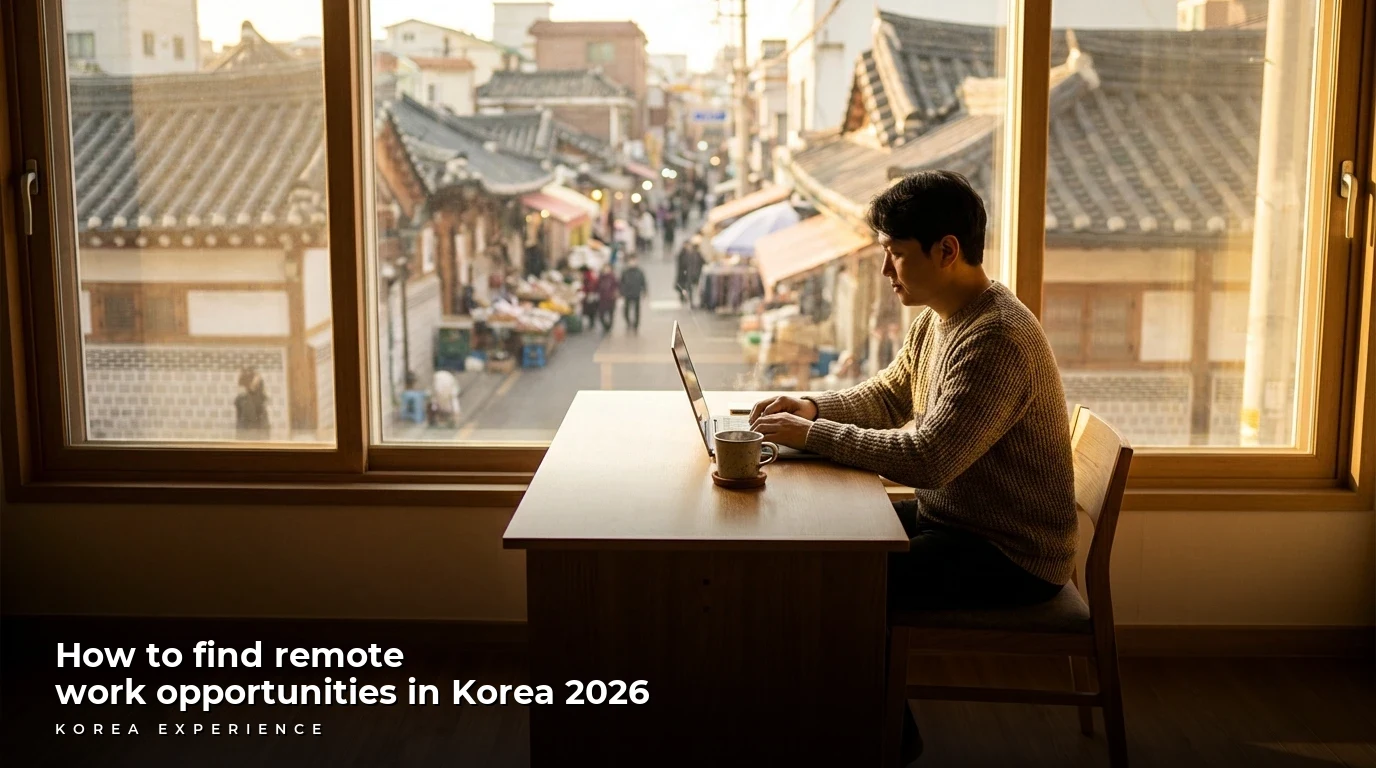
Finding remote work opportunities in Korea has evolved from a niche aspiration into a streamlined, government-supported reality in 2026. With the solidifiction of the "Workcation" visa (F-1-D) and South Korea's unrivaled digital infrastructure, the peninsula has become a top-tier destination for digital nomads. Whether you are bringing a job from your home country or seeking employment with a forward-thinking Korean tech company, success requires understanding the specific legal frameworks, cultural nuances, and logistical realities of the Korean market.
Key Takeaways
- 1The F-1-D Workcation Visa requires an annual income of approximately ₩85 million ($65,000 USD).
- 2Internet speeds in Seoul average 200+ Mbps, making it the fastest major city for remote work globally.
- 3Time zone management is critical; Seoul is UTC+9, requiring early mornings for Europe or late nights for North America.
The Remote Work Landscape in Korea: 2026 Update
As of early 2026, South Korea has aggressively positioned itself as Asia's premier digital nomad hub. The government's initiative to attract global talent has resulted in a 40% increase in coworking spaces across major cities compared to 2023. While the traditional corporate culture in Korea remains office-centric, the sector open to international remote workers has expanded significantly.
You might also enjoy our article about D visa student visa and part time work rules guide.
The primary avenue for most foreigners is "importing" their job. This means maintaining employment with a company based in the US, Europe, or elsewhere, and performing that work physically from Korea. However, a growing sector of Korean startups, particularly in Gangnam and Pangyo (Korea's Silicon Valley), are hiring remote international talent for development, marketing, and global expansion roles.
You might also enjoy our article about Korean work culture office etiquette for foreigners maste....
📊 Digital Nomad Growth 2026
Understanding the Legal Framework: The Workcation Visa
To work remotely in Korea legally for more than 90 days, you generally need the Digital Nomad (Workcation) Visa, officially known as the F-1-D. Introduced largely in 2024 and refined in 2026, this visa allows you to stay for up to one year, renewable for a second year.
For more details, check out our guide on Korean work culture what foreigners need to know.
The critical distinction is that this visa does not allow you to take up local employment with a Korean company for a monthly salary in Won unless you switch to a specific work visa (E-7). It is strictly for generating income from abroad.
For more details, check out our guide on Volunteer opportunities for English speakers in Seoul.
Financial Requirements
To qualify, applicants must prove an annual income double the Korean GNI per capita. In 2026, this threshold sits at approximately ₩85 million (roughly $64,000 - $66,000 USD, depending on exchange rates). You must also hold private health insurance with coverage of at least ₩100 million for emergency treatment and evacuation.
📖 How to Apply for the F-1-D Visa
Step 1: Gather Financial Proof
Obtain certified bank statements and tax returns proving 85M+ annual income.
Step 2: Secure Insurance
Purchase travel medical insurance covering ₩100M for the full duration of stay.
Step 3: Visit Embassy/Consulate
Submit application at your local Korean consulate if abroad, or Immigration Office if already in Korea on a tourist waiver.
Step 4: Registration
Once in Korea, visit an Immigration Office within 90 days to get your Alien Registration Card (ARC).
Tax Residency Alert
Spending more than 183 days in Korea within a tax year may make you a tax resident. While the F-1-D visa exempts you from paying Korean income tax on foreign-sourced income initially, regulations can be complex. Always consult a tax professional regarding double taxation agreements between Korea and your home country.
Bringing Your Job vs. Finding a Job
The strategy for finding remote work opportunities in Korea splits into two distinct paths: maintaining foreign employment or finding a Korea-based remote role.
Path A: The Global Remote Worker
This is the most common path. You utilize global job boards like We Work Remotely, FlexJobs, or LinkedIn to secure a position that is "Work from Anywhere." When pitching this to an employer, highlight Korea's infrastructure. With 98% 5G coverage and 24-hour safe access to workspaces, you are less likely to experience downtime here than in almost any other digital nomad destination.
Path B: The Korean Startup Ecosystem
If you are looking for a job with a Korean company that allows remote work, you need to look at specific platforms. While giants like Samsung or Hyundai require office presence, the startup sector in Seoul is different. Sites like Wanted and RocketPunch are the go-to platforms for tech jobs.
In 2026, the demand for "Global Expansion Managers," "English Content Marketers," and "Full Stack Developers" remains high. Salaries for these roles in Korea range typically between ₩45 million to ₩80 million for mid-level positions, which is lower than US standards but offers a high quality of life locally given the lower cost of living compared to cities like New York or London.
Job Source Comparison
| Feature | Global Remote Job | Korean Tech Remote |
|---|---|---|
| Salary Potential | $60k - $120k USD | ₩45M - ₩90M ($35k-$70k) |
| Visa Requirement | F-1-D (Nomad) | E-7 (Foreign Professional) |
| Work Culture | Western/Asynchronous | Hierarchical/Sync-heavy |
| Language Need | English Only | English + Basic Korean |
Best Cities for Remote Work in 2026
While Seoul is the capital, the remote work infrastructure has decentralized. Traveling between these hubs is efficient; the KTX train reaches speeds of 300 km/h, connecting Seoul to Busan in just 2.5 hours.
Seoul: The Hyper-Connected Hub
Seoul remains the top choice for networking. The city is dense, with over 9.7 million people. The sheer number of cafes with power outlets and high-speed Wi-Fi is staggering—roughly one every 50 meters in commercial districts.
📋 Seoul Quick Facts
Busan: The Ocean Office
Busan offers a more relaxed vibe with lower costs. The "Workation Center" in Busan Station opened in late 2024 and serves as a major hub. Rents here are approximately 20-30% lower than Seoul. You can find ocean-view officetels near Haeundae Beach for around ₩600,000 per month with a ₩5 million deposit.
Jeju Island: The Nature Retreat
Jeju has become the "Silicon Island" of Korea. It is a 1-hour flight from Seoul (tickets average 50,000 - ₩80,000). The internet speed even in rural Jeju rentals rarely drops below 100 Mbps.
"If you choose Jeju, rent a car. While Seoul has amazing public transit, Jeju's bus system can mean waiting 40 minutes between connections. Remote workers in Jeju usually cluster in Aewol or Seogwipo to stay close to cafes and community."
Workspace Infrastructure: Coworking and Cafes
Korea's "Study Cafe" and "Share Office" culture is sophisticated. In 2026, you are not limited to Starbucks.
Dedicated Coworking Spaces
Brands like SparkPlus and FastFive dominate the local market, often outcompeting WeWork. They offer "Lounge Passes" specifically for remote workers who don't need a fixed desk but want access to multiple branches across the city. A typical monthly hot-desk membership costs between ₩300,000 and ₩450,000.
Cafe Culture
It is socially acceptable to work in a cafe for 2-3 hours if you order a drink. However, for a full 8-hour shift, you should order at least two items or move locations. The average Americano costs ₩4,500 in independent cafes and 1,500 - ₩2,000 in budget chains like Mega Coffee or Paik's Coffee.
Five Spot (FastFive Lounge)(파이브스팟)
💵 Workspace Cost Comparison (Monthly)
Gangnam location, beer on tap
Access to 20+ locations in Seoul
Housing for the Remote Worker
Finding accommodation in Korea involves understanding the unique deposit system known as "Bo-jeung-geum." Unlike Western countries where a deposit is 1-2 months' rent, Korean deposits can range from 5 million to ₩20 million for a standard studio, known as an "Officetel."
Officetels
These are dual-purpose buildings (office + hotel) ideal for remote work. They almost always come with built-in desks, high-speed internet ports, and appliances. A standard 25-square-meter officetel in a central area like Mapo-gu rents for ₩900,000 per month with a ₩10 million deposit.
Co-living Spaces
For those staying 3-6 months, co-living brands like Episode or Celib are excellent. They require lower deposits (usually 1-₩3 million) and include utilities and gym access. The trade-off is a higher monthly rent, often exceeding ₩1.2 million.
Accommodation Options
- ✓Officetels are quiet and private
- ✓Co-living offers instant community
- ✓Airbnb is bill-free
- ✗Officetels require huge deposits
- ✗Co-living rooms are often small (15sqm)
- ✗Airbnb is 2x market price
Managing Time Zones and Logistics
The biggest operational challenge for finding and keeping remote work in Korea is the time zone. Korea Standard Time (KST) is UTC+9.
If your company is in New York (EST), there is a 13 to 14-hour time difference. This means a 9:00 AM meeting in New York is 10:00 PM or 11:00 PM in Seoul. Conversely, working with London (GMT) involves a 9-hour difference, meaning your workday starts around 4:00 PM or 5:00 PM Seoul time.
A Day in the Life: US East Coast Schedule
Wake Up & Brunch
Enjoy Seoul's cafe culture while the city is active.
Gym & Errands
Gyms are empty; great time for shopping.
Start Work
Login as New York wakes up (7:00 AM EST).
Clock Out
Seoul is quiet; 24h convenience stores for snacks.
Internet Reliability
Korea rarely experiences outages. If you are doing critical video calls, a tethered connection to your 5G phone is a viable backup. 5G data plans with unlimited throttling usually cost around ₩69,000 per month.
Networking and Community
Isolation is a risk for remote workers. Fortunately, the expatriate community is vibrant. In 2026, the primary platforms for networking are:
- Meetup.com: Active for language exchange and hiking.
- Slack Communities: "Seoul Startups" is the largest English-speaking tech community in Korea.
- KakaoTalk Open Chats: Search for "Digital Nomads Seoul" to find real-time group chats.
Attending events is crucial. Coworking spaces often host "Happy Hours" on Fridays, usually involving Chimaek (Fried Chicken and Beer), with costs running about ₩25,000 per person for a shared meal.
Navigating Challenges
While finding opportunities is easier than ever, retention requires adaptation. The banking system can be frustrating for foreigners. Installing "ActiveX" security programs is still required for some banking portals, though mobile banking apps like Toss and KakaoBank have made this easier for residents with ARCs.
Furthermore, verify your employer's policy on data security. Some Western companies block IP addresses from abroad. You may need a dedicated VPN or a corporate-approved travel router. A high-quality VPN subscription costs roughly $12 USD (₩16,000) per month and is an essential investment.
❓ Frequently Asked Questions
Have more questions?Contact us →
About the Author
Korea Experience Team
Written by the Korea Experience editorial team - experts in Korean medical tourism, travel, and culture with years of research and firsthand experience.
Explore more in Living in Korea
Everything expats and long-term visitors need to know — from visa requirements and housing to banking, healthcare, and daily life tips.
Browse All Living in Korea ArticlesContinue Reading
Explore more articles you might find interesting
Unlock your dream of living and working remotely in South Korea with the F-1-D Digital Nomad Visa 2026. This guide covers eligibility, application, and life in Korea.
Unlock Korea's remote work potential with our guide to the Digital Nomad Visa. Discover eligibility, detailed requirements, and the step-by-step application process.
The ultimate 2026 guide to remote work in Jeju Island. Discover 500Mbps cafe speeds, top coworking spaces, and living costs for digital nomads.
Master the F-5 visa application in 2026. Detailed guide on income, KIIP, and documents for securing permanent residency in South Korea.

A complete guide to buying property in South Korea in 2026. Learn legal requirements, Jeonse gap investing, tax rates, and visa opportunities.
Complete guide to working in Korea on D-2 and D-4 visas. Learn hourly limits, permit applications, and strict regulations for 2026 student employment.