Unlocking jeong culture: 2026 guide to Korean traditional markets
Discover why market vendors give free food. Learn how to navigate 24000 stalls in 2026 using WOWPASS and experience the 16 percent sales boom firsthand.
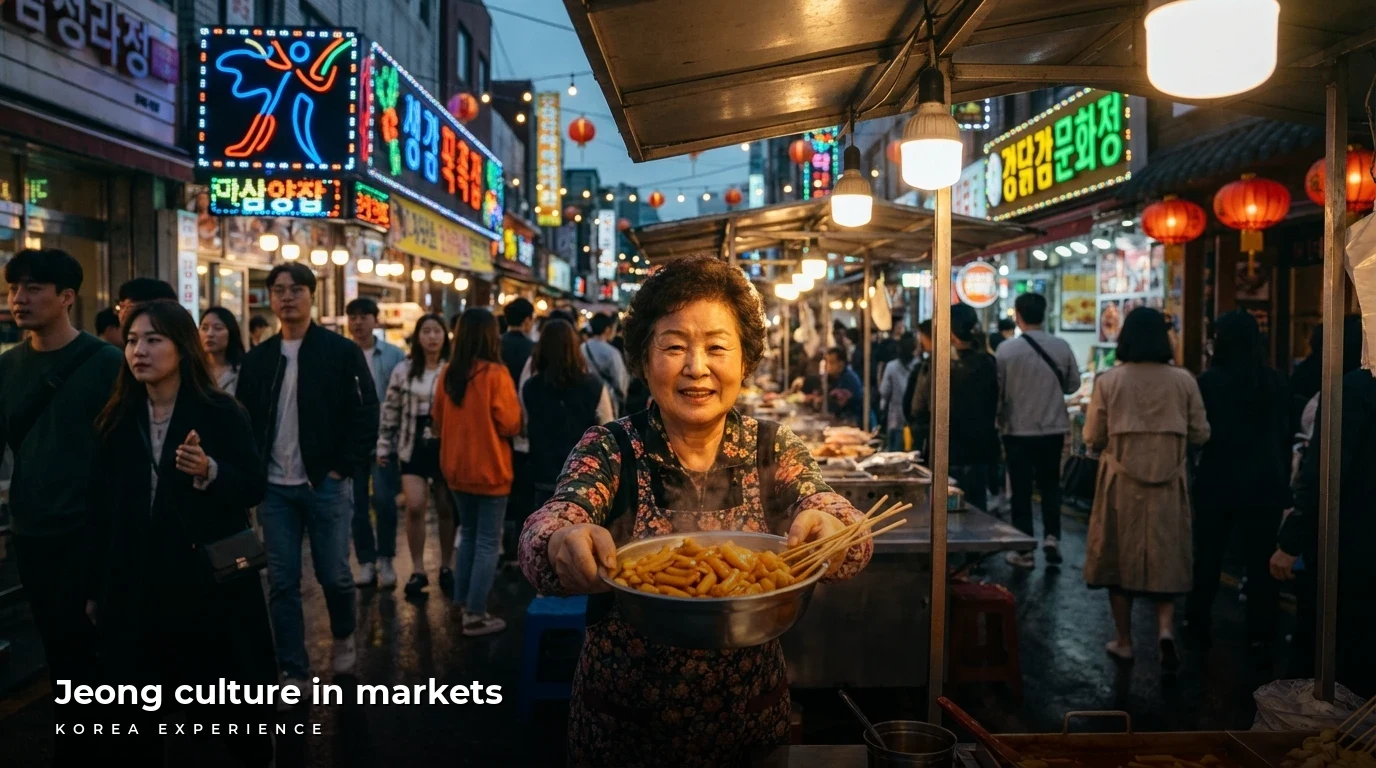
So, you have just landed in Seoul. You are jet-lagged, hungry, and you have managed to stumble your way into a brightly lit traditional market. You nervously point at a plate of steaming mandu, hand over a crumpled 5,000 Won bill, and brace yourself for a standard transaction. But instead of just giving you what you paid for, the vendor—a smiling grandmother with a visor and colorful floral arm-sleeves—sneaks an extra dumpling onto your plate. She pats your hand, nods warmly, and shoos you away to eat.
Congratulations, my friend. You have just experienced Jeong.
Wondering why that sweet market vendor just handed you three extra dumplings for free with a warm smile? That is Jeong—Korea's invisible superpower of human connection—and trust me, it is the absolute best part of exploring Seoul's bustling street food markets. In a rapidly modernizing society where convenience often trumps connection, the traditional markets remain the beating heart of authentic Korean culture.
Key Takeaways
- 1Jeong is the unspoken Korean love language of caring for others, physically translating to Deom in markets—the magical tradition where vendors give you extra free food.
- 2Despite their popularity with tourists, over 24,000 traditional market stalls sit vacant nationwide, meaning your travel budget directly helps save a century-old way of life.
- 3You can bypass the dreaded No ARC or No Korean Phone Number block by getting a WOWPASS card at the airport, letting you tap-to-pay like an absolute local.
- 4Market etiquette requires cash for small purchases, two-handed exchanges for respect, and a polite smile to unlock the best local experiences.
📋 Quick Facts
The Magic Of Jeong And Why It Makes Korean Markets Special
Here is the thing about Jeong: you will not find a perfect English translation for it in any dictionary. Academics will tell you it stems from ancient Confucian values of harmony, respect, and collective responsibility. But on the streets of Korea, it is much simpler and much more profound. It is the invisible, unbreakable thread of human connection. It is a deep, unspoken affection, selflessness, and communal warmth. In a hyper-modern, digital, and sometimes isolating world, Jeong is the quiet promise that you are not alone.
It is the bus driver telling you to hold on tight, the friend who remembers your favorite coffee order without asking, or the hiker who shares their massive feast of mountaintop snacks with you just because you happen to be standing near them. If you want to dive deeper into how these unspoken social contracts dictate daily life, check out our comprehensive guide on Unwritten Social Rules in South Korea: A 2026 Expat Guide.
But in Korea's traditional markets, Jeong takes on a very physical, very delicious form. It is called Deom. Deom is the beautiful, long-standing market tradition of giving a little extra as a sign of goodwill and trust. When a vendor throws in a free handful of green onions with your lettuce, or scoops an extra ladle of spicy rice cake sauce onto your plate, that is Deom. They are not trying to upsell you. They are not running a corporate promotion. They are showing you Jeong.
Honestly, it is this specific cultural warmth that makes visiting Korean markets so incredibly addicting. You are not just engaging in a financial transaction; you are participating in a web of relationships. Many foreigners learn this the hard way during their first month in Korea. Coming from a Western transactional culture, it is easy to try and refuse the extra freebies, thinking it is a scam or that you will be charged later. Do not do that! Refusing Deom is basically refusing a hug. Just smile, bow your head slightly, say a loud and happy thank you, and enjoy the warmth of a culture that truly believes food is meant to be shared.
This communal dining aspect is a stark contrast to the rising trend of eating alone. While the markets celebrate shared abundance, modern Korea is also adapting to solo lifestyles. If you are traveling by yourself and want to balance market feasts with quiet solo meals, our Hon-bap Guide: How to Eat Alone in Korea Like a Local in 2026 offers great insights into navigating both worlds.
The Background Story From Joseon Dynasties To 2026
To really appreciate the chaotic, beautiful energy of these markets today, you need to understand what they have been through. Make no mistake, Korean traditional markets are survivors. We are talking about institutions with roots going all the way back to 490 AD in Gyeongju during the reign of King Soji, where they served as the absolute center of regional news and commerce.
Fast forward to the modern era. After Korea's liberation, permanent markets like Dongdaemun and Namdaemun ushered in a golden age. These places were the beating heart of the community. Vendors haggled, shouted, swapped stories, and traded everything from fresh squid to silk garments. It was loud, it was messy, and it was glorious.
But then, the 1990s and 2000s hit. Supermarkets moved in. Department stores became the ultimate status symbol. And most recently, the absolute juggernaut of Korean e-commerce—apps that deliver literally anything to your door by 7:00 AM the next day—threatened to wipe out the traditional market entirely. This relentless drive for speed and efficiency is deeply ingrained in the national psyche. To understand why delivery apps took over so quickly, you have to look at the cultural need for speed, which we cover extensively in Understanding Pali-Pali Culture: Why Korea Can't Slow Down in 2026.
By the mid-2020s, the situation was looking pretty grim. Daily visitors hit a decade low, and a staggering 24,000 market stalls sat completely vacant nationwide. Younger Koreans viewed the markets as outdated, dusty places only their grandparents cared about. It genuinely looked like Jeong and Deom might get replaced by prime delivery subscriptions. E-commerce retail share had skyrocketed to 59 percent, leaving physical vendors struggling to survive.
Gwangjang Market Opens
Korea's first permanent traditional market opens its doors, establishing a historic trading center in Seoul.
Tongin Market Established
Originally set up as a public market for Japanese residents, it evolved into a vibrant Korean hub post-liberation.
Sangnam Market Modernization
The massive five-day flea market in Changwon is transformed into a permanent, multi-story modern facility.
Gwangjang Overcharging Scandal
A viral video exposes a vendor overcharging tourists, sparking nationwide crackdowns and pricing reforms.
Climate Card Launch
Seoul introduces the unlimited transit Climate Card, revolutionizing how locals travel, though tourists still prefer WOWPASS.
K-Culture Souvenir Boom
Sales of traditional Korean cultural products hit record highs of 16.1 billion won, heavily boosted by global media hits.
But then, something fascinating happened. K-culture exploded globally, and nostalgia hit the local youth. Driven by massive international hits and the ongoing legacy of Korean cinema, millions of tourists began flooding into Seoul wanting authentic experiences, not just shiny malls. Suddenly, the government realized they were sitting on cultural goldmines. They started pouring budget into revitalization projects. They installed weather-proof roofs, modernized the parking lots, and launched initiatives to offer massive cashback incentives for shopping locally.
By 2026, the markets are experiencing a bizarre, beautiful renaissance. Sales of traditional goods have hit record highs, and market transaction counts have rebounded significantly with a 16 percent recent revenue bump. Yes, they are still fighting against the ease of online shopping, but they have carved out a new identity. They are living museums where you can eat century-old recipes, experience the warmth of Deom, and touch the very fabric of Korean history. Every won you spend here is not just buying you a snack; it is actively funding the survival of Jeong.
Breaking Down Your Options Which Market Is Right For You
So, you are hyped about experiencing Jeong, but Seoul is massive. Where do you actually go? Let us break down the Big Three options that travelers absolutely need to know about. Depending on your travel style, one of these is going to be your perfect match.
| Feature | Gwangjang Market | Tongin Market | Mangwon Market |
|---|---|---|---|
| Cost | Moderate (Can add up fast) | Budget (Super budget-friendly) | Budget (Very affordable) |
| Processing Time | 2-3 hours (Huge and crowded) | 1-2 hours (Smaller, quick lunch) | 1.5 hours (Plus Han River time) |
| Duration | Open 8:30 AM to 11:00 PM | 11:00 AM to 3:00 PM (Cafe hours) | 10:00 AM to 9:00 PM (Avoid Mondays) |
| Requirements | Cash is still king at older stalls | Must buy brass coins to participate | WOWPASS or cash |
| Best For | Hardcore foodies, late-night drinking | History buffs, families, DIY lunch | Trendy travelers, Han River picnics |
| 2026 Changes | Stricter pricing rules to stop scams | Upgraded cafe seating, English menus | More digital payment kiosks |
The Heavyweight Champion Gwangjang Market
If you have seen the famous street food documentaries, you already know Gwangjang. Established in 1905, it is the oldest continually functioning market in South Korea. It is an absolute beast. If you are a hardcore foodie who wants to dive headfirst into sensory overload, this is your spot. You are coming here for two things: thick, crispy mung bean pancakes deep-fried in oil, and sweet, savory raw beef topped with a raw egg yolk.
The Catch: Gwangjang is famously chaotic. It gets an estimated 65,000 visitors a day. At lunchtime or on weekends, you will literally be fighting for elbow room on a tiny wooden bench. Also, because it is so tourist-heavy, the Jeong here can sometimes feel a bit rushed. If you only have three days in Seoul and want the most iconic photos, go here.
The Time Traveler Lunch Tongin Market
If you love history, DIY activities, or are traveling with kids, Tongin Market is a massive hidden gem. Located just west of Gyeongbokgung Palace, this market is famous for its Brass Coin Lunchbox. You exchange 5,000 won for a stack of ancient-style brass coins, and you wander the market spending one to two coins at a time to build your perfect lunch tray.
The Catch: It is small. You can walk from one end to the other in ten minutes. The famous dish here is oil tteokbokki, which is polarizing—some love the crispy texture, some think it is too greasy. But for a sheer, unadulterated dose of cute cultural immersion, Tongin is unbeatable.
The Trendy Local Favorite Mangwon Market
This is the ultimate local favorite, and trust me on this one. Located in Mapo-gu near the hipster mecca of Hongdae, Mangwon is where actual young Koreans go. The vibe is incredibly vibrant but much less overwhelming than Gwangjang. You will find classic Jeong mixed with modern twists—think traditional croquettes, wildly flavored sweet fried chicken, and trendy cafes hidden down side streets.
The Catch: Most snack stalls take Mondays off. But if you go on a Friday afternoon, load up on cheap street food, and walk fifteen minutes to the Han River for a sunset picnic? You have just achieved the ultimate Seoul experience.
Pros
- ✓Mangwon Market vibe is incredibly local, offering authentic Jeong without overwhelming tourist crowds.
- ✓Prices are extremely fair because it caters to locals living in the hip Mapo-gu district.
- ✓Location is perfect—walking distance to the Han River for an epic sunset picnic.
Cons
- ✗The Monday Curse means most of the really good snack stalls take Mondays off.
- ✗Space is tight, requiring an awkward shoulder-shuffle past aggressive shopping carts on weekends.
- ✗Fewer seating areas compared to Tongin, meaning you will be eating standing up or walking to a park.
The Complete How To Navigating The Market Like A Pro
Alright, let us get practical. Walking into a bustling Korean market can feel like stepping onto a different planet. The smells are intense, the vendors are shouting to attract customers, and there are colorful things frying in vats of oil that you probably cannot identify. Here is your step-by-step game plan to conquer the market, fill your stomach, and soak up that sweet Jeong culture.
📖 How to Master the Brass Coin Lunchbox at Tongin Market
Step 1: Find the Customer Service Center
Walk into Tongin Market and look for the Customer Service Center and the Dosirak Cafe. Hand over your modern Korean Won and get ancient Joseon-style brass coins in return.
Step 2: The Great Food Hunt
Take your plastic tray and brass coins and wander the alleyway. Look for stalls with the Copper Coins Accepted sign. Walk the whole length first to see what looks good.
Step 3: Embrace the Deom
As you point to what you want, smile, say hello, and watch the magic happen. The older Korean women will often load your tray up with a little extra food than you paid for.
Step 4: Head Back to the Cafe to Feast
Once your tray is ridiculously heavy and you are out of coins, head back to the Dosirak Cafe. Buy rice and soup here, sit down, mix and match your side dishes, and enjoy.
The Golden Rule of Cash vs Card
While the rest of Korea is basically living in the year 2035 with digital payments, traditional markets are a bit of a time warp. You absolutely need to bring cash. Yes, many stalls are upgrading to take credit cards, especially after government pushes to modernize, but for small items under 5,000 won, handing over a card is still considered a bit of a faux pas. Go to an ATM beforehand and break your large bills. Having a stack of 1,000 and 5,000 won notes makes you the ideal customer.
The Art of the Approach
When you find a stall that looks good, do not be shy. The vendors appreciate confidence. Step right up and offer a polite greeting. Even if you totally butcher the pronunciation, they will love that you tried. Point clearly to what you want. Hold up your fingers for how many portions. If you are nervous about the language barrier, technology can be your best friend. Read our guide on Ordering Food at Korean Traditional Markets Using Papago (2026) to learn how to use translation apps seamlessly without offending the vendors.
What to Actually Eat
Do not fill up at the very first stall you see! Market eating is a marathon, not a sprint. Start with something light, like mini seaweed rice rolls. Then move on to the heavier stuff. Grab a skewer of fish cake and make sure to drink the hot broth out of the paper cup—it is free and unlimited! Next, share a massive mung bean pancake or some sweet and spicy fried chicken. Finish off with a freshly fried sweet pancake filled with brown sugar and nuts.
Say Thank You and Receive the Deom
Here is where the magic happens. When you pay, hand your cash over using two hands—it is a crucial sign of respect in Korea. Smile and express your gratitude. If the vendor is chatting with you, or if they just like your vibe, this is the exact moment they will slip an extra piece of chicken into your cup, or hand you an extra fish cake. Accept it graciously, bow your head slightly, and enjoy the feeling of being part of the community. That is Jeong in action.
Do not ever try to haggle over food prices in Korean markets—it is actually considered kind of rude nowadays. Instead, build a quick rapport with a smile and a few Korean words. The vendors will naturally give you Deom, which is way better than saving fifty cents anyway!
The Stuff Nobody Tells You Tourist Traps And Payment Hacks
Let us get real for a second. Traveling in Korea is incredibly safe and amazing, but there are some edge cases, exceptions, and massive frustrations that nobody warns you about until you are stranded on a street corner in Seoul.
The Dark Side of the Market Overcharging
Look, as much as I love talking about Jeong, not every single vendor is an angel. In late 2023, Gwangjang Market was rocked by a massive controversy. A viral video showed a vendor charging a tourist group 15,000 won for a painfully tiny plate of assorted pancakes, then aggressively pushing them to order more and flat-out refusing credit cards. It was a national embarrassment that threatened to ruin the image of traditional markets entirely.
The good news? The Gwangjang Market Merchants Association stepped in aggressively. They handed out suspensions, mandated fixed pricing, and started standardizing portions. By 2026, the situation has vastly improved. But my pro tip remains: Always confirm the price before you sit down. If a menu does not have prices listed, politely move to the next stall.
No Korean Phone or ARC? Here is What To Do
This is critical for tourists visiting Korea in 2026. You will quickly realize that to use almost any local app for food delivery, taxis, or online shopping, you need an Alien Registration Card and a Korean phone number to verify your identity. It is incredibly frustrating to be locked out of the local digital infrastructure.
The ultimate solution is to get a WOWPASS or a NAMANE card the second you land at Incheon Airport. WOWPASS is a total lifesaver. You insert your home currency straight into the kiosk, and it dispenses a prepaid local debit card loaded with Korean Won. It works at almost every modern stall and convenience store, and it has a transit chip built right in for the subway. NAMANE is similar, but you can customize the front of the card with your own photo. Having one of these cards means you can tap-to-pay your way through the markets without ever worrying about foreign transaction declines!
Trust the Local Seniors
Always look for the stalls with the longest lines of Korean seniors, not tourists. If you see a group of grandpas day-drinking rice wine at 11 AM next to a tiny stall, that is unequivocally the best food in the entire market. Trust the grandpas. They have been eating there for forty years, and they know exactly where the highest quality ingredients and the most generous Deom can be found.
Frequently Asked Questions
❓ Frequently Asked Questions
Have more questions?Contact us →
Conclusion Your Action Plan
So, what is your game plan for your first 24 hours in Seoul? Here is exactly what you need to do. First, land at Incheon, grab your bags, and march straight to a kiosk to issue your WOWPASS. Load it up, but make sure you also hit an ATM to withdraw about 50,000 Won in crisp paper cash.
Next, skip the massive, overwhelming crowds of Gwangjang on day one. Instead, head over to Mangwon Market. Take your time wandering the stalls, soak in the sights and smells, and grab some incredible sweet fried chicken. Smile warmly, hand your cash over with two hands, and I guarantee you will catch a glimpse of that famous Jeong culture. When you score your first piece of Deom—that extra free bite of food—you will understand exactly why these historic markets are the true, beating heart of South Korea. Now go out there and eat!
Sources:
- Matador Network - Finding Jeong in South Korea - Anecdotes and explanations of experiencing Jeong and food-sharing in Korea.
- Sungkyun Times - Data on 24,000 vacant stores, history of markets, and explanations of Jeong culture.
- CIEE Study Abroad - Essential details on WOWPASS, NAMANE, and navigating Korea without an ARC.
- Korea Times - 2026 data on the K-culture souvenir boom and traditional goods sales.
- Asiae News - Background on the 2023 Gwangjang Market overcharging controversy and merchant association responses.
About the Author
Korea Experience Team
Written by the Korea Experience editorial team - experts in Korean medical tourism, travel, and culture with years of research and firsthand experience.
Explore more in K-Culture
K-Pop, K-Drama, traditional arts, and modern culture — dive deep into the cultural phenomena that have captivated the world.
Browse All K-Culture ArticlesContinue Reading
Explore more articles you might find interesting
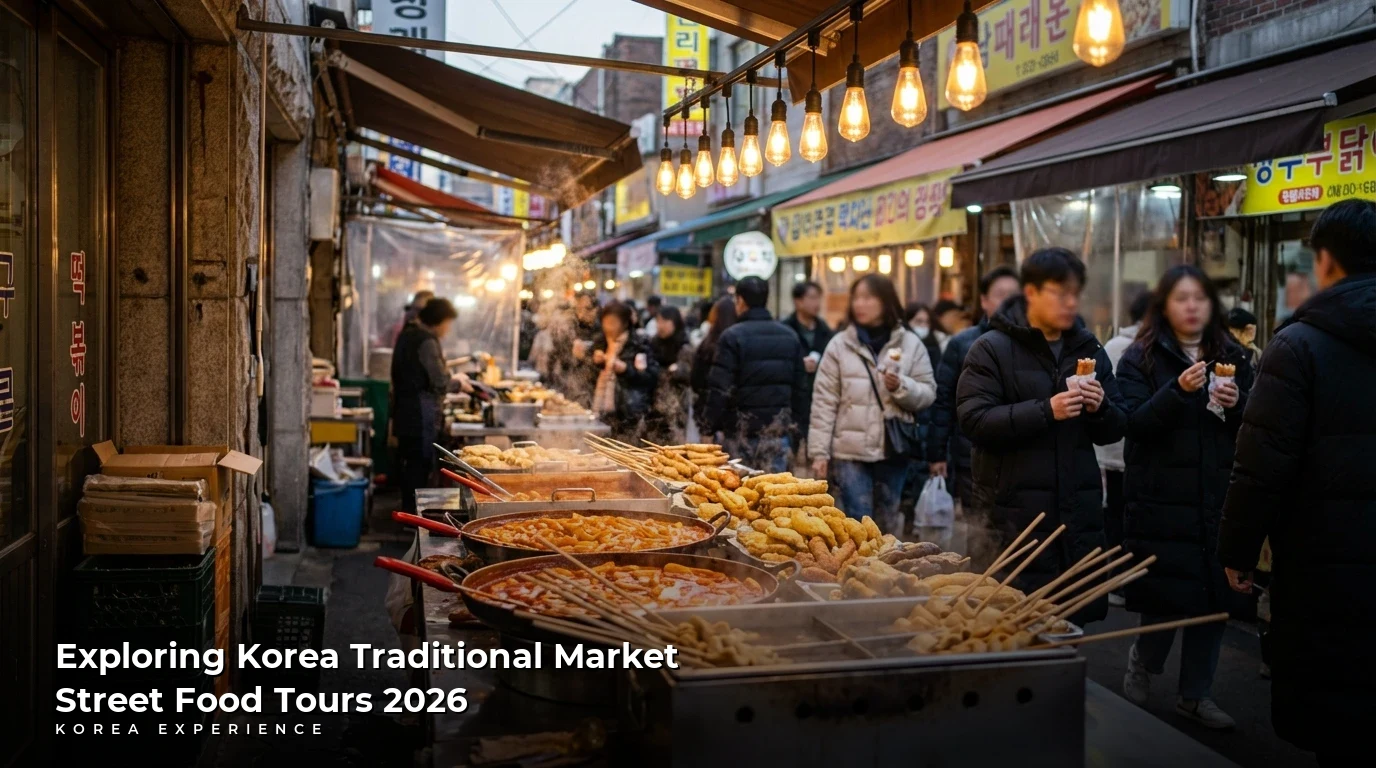
The ultimate guide to Korean street food markets in 2026. Discover prices, best tours, hidden stalls, and essential etiquette for travelers.
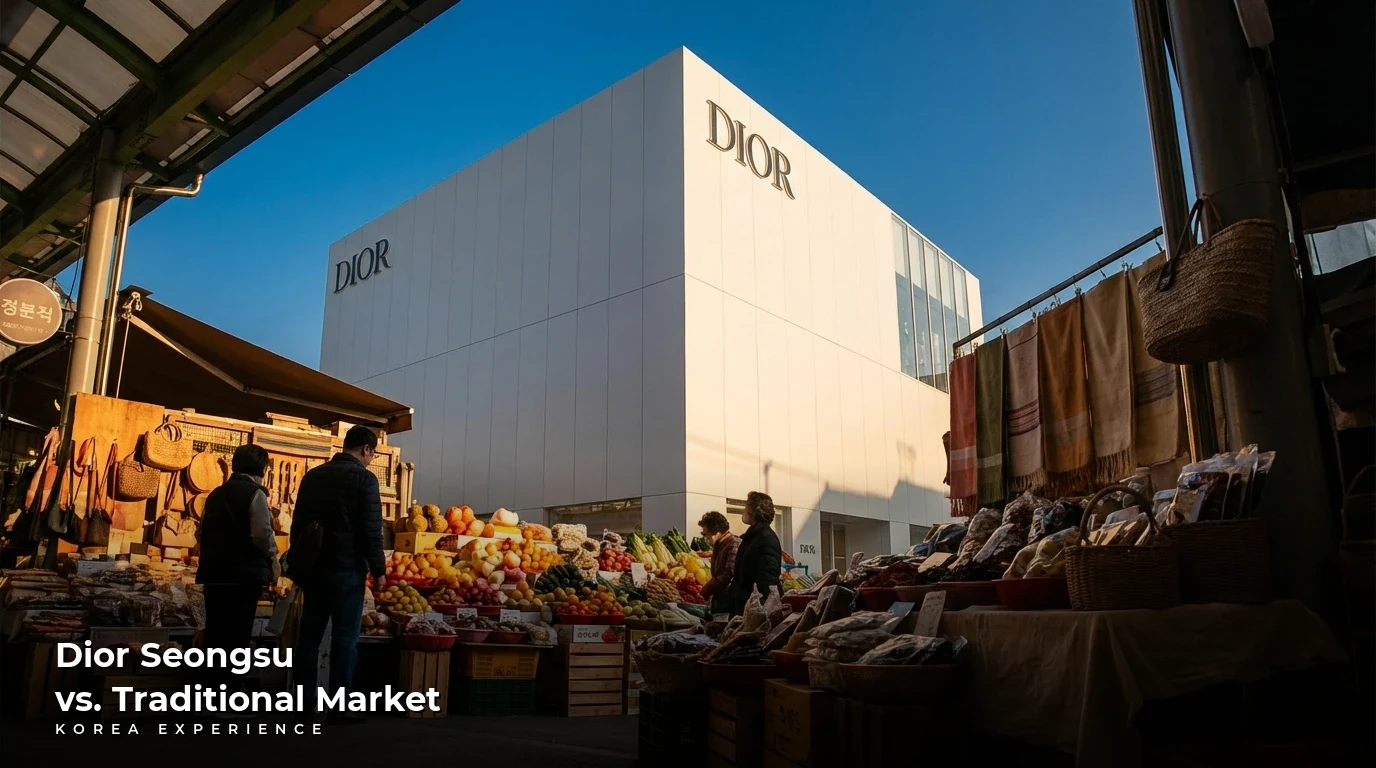
Discover how to mix a $15 Dior Seongsu latte with a $3.80 market pancake in 2026. Master the WOWPASS and Climate Card to conquer Seoul on any budget.

Navigate Gwangjang and Namdaemun safely with this 2026 guide. Discover why 99% of red sauces contain wheat and find safe eats from $2.20.
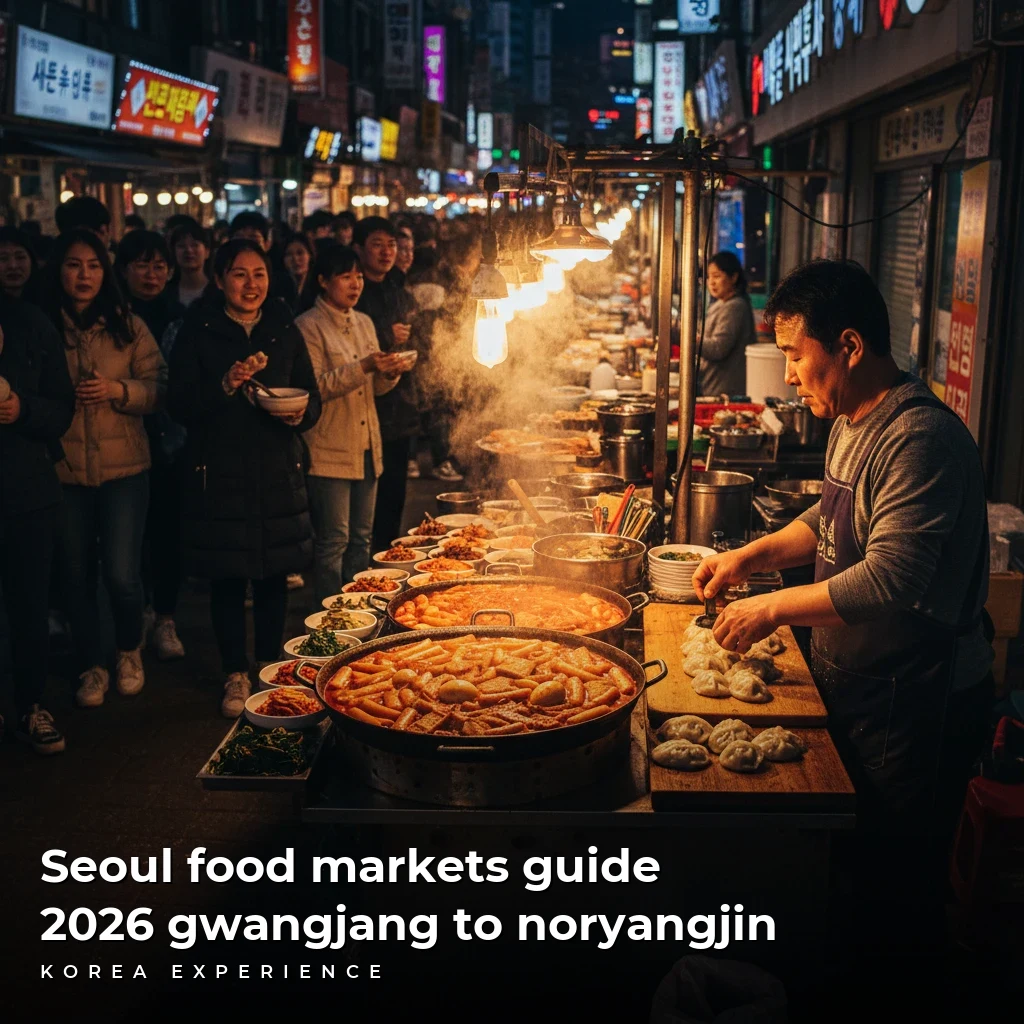
The ultimate 2026 guide to Seoul traditional markets. Discover prices, hidden stalls, and expert tips for Gwangjang, Noryangjin, and local favorites.
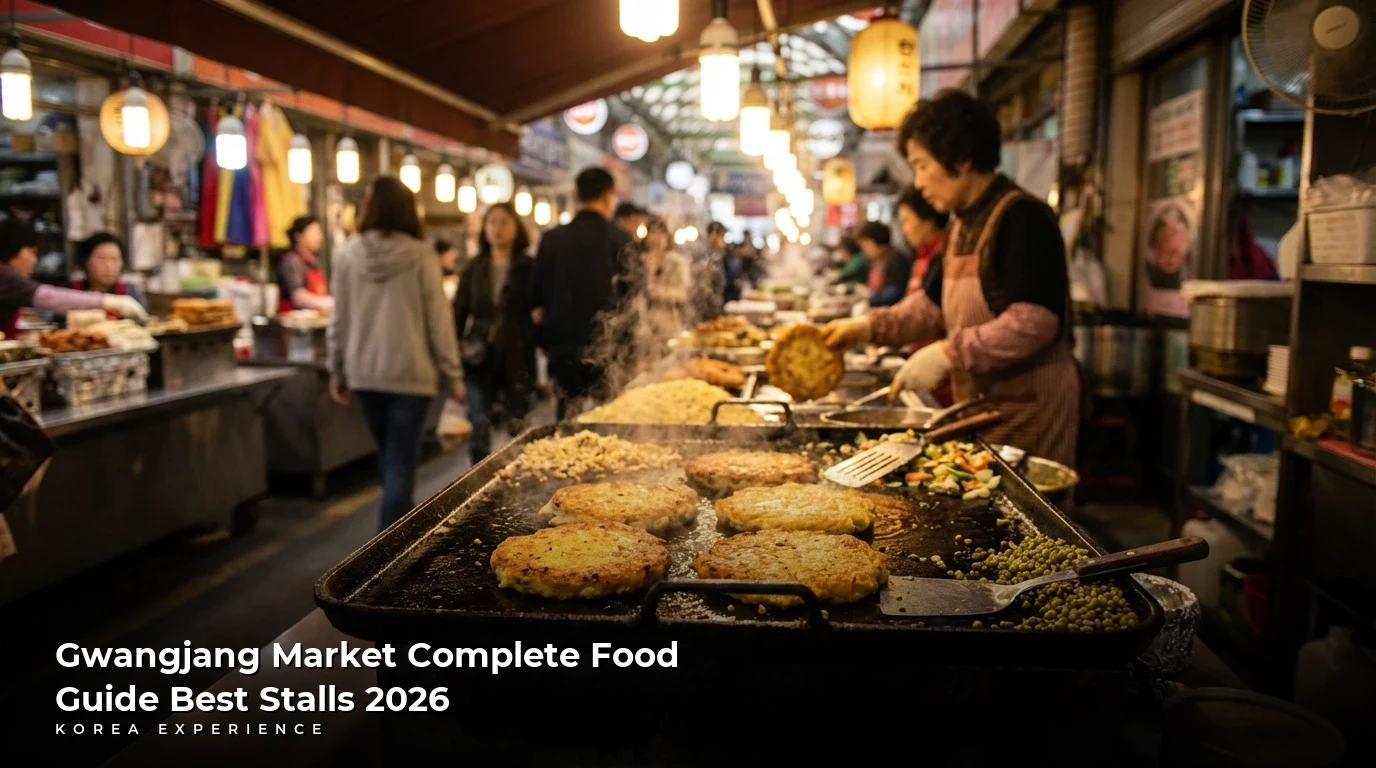
Discover the ultimate Gwangjang Market food guide featuring top stalls, prices, operating hours, and local tips for Seoul's oldest traditional market.
Discover how to style modern hanbok in 2026. Learn where to buy stunning pieces for under $150 and get 100 percent free entry to Seoul palaces.