Korean Drinking Culture: Soju, Makgeolli & Pocha Guide 2026
Unlock Korea's vibrant drinking culture with our 2026 guide to Soju, Makgeolli, essential etiquette, delicious Anju, and the best Pocha experiences.
Navigating the dynamic social scene of South Korea is an experience unlike any other, and at its heart lies a rich, often misunderstood, drinking culture. For international travelers and expats, understanding Korean drinking etiquette, the types of alcohol, and where to enjoy them is key to unlocking deeper connections and creating unforgettable memories. Beyond the neon glow of Seoul's bustling streets and the aroma of sizzling barbecue, there's a world where shared drinks foster camaraderie, business deals are sealed, and friendships are forged.
This comprehensive guide, tailored for 2026, aims to demystify Korean drinking culture, focusing on its most beloved beverages—Soju and Makgeolli—and the quintessential drinking establishment, the Pocha. You'll learn not just what to drink, but how to drink it, where to go, and what delicious food to pair it with. Prepare to immerse yourself in the warmth, generosity, and unique customs that define Korean nights out.
Understanding Korean Drinking Culture: The Basics & Etiquette
Korean drinking culture is deeply rooted in collectivism and respect. It's less about getting intoxicated and more about fostering social bonds, showing deference, and sharing experiences. As a foreigner, understanding these unwritten rules will enhance your interactions and earn you respect among your Korean companions.
The Importance of Hierarchy and Respect
Age and seniority play a significant role. Always be mindful of who is older or holds a higher position, as this dictates specific etiquette rules.
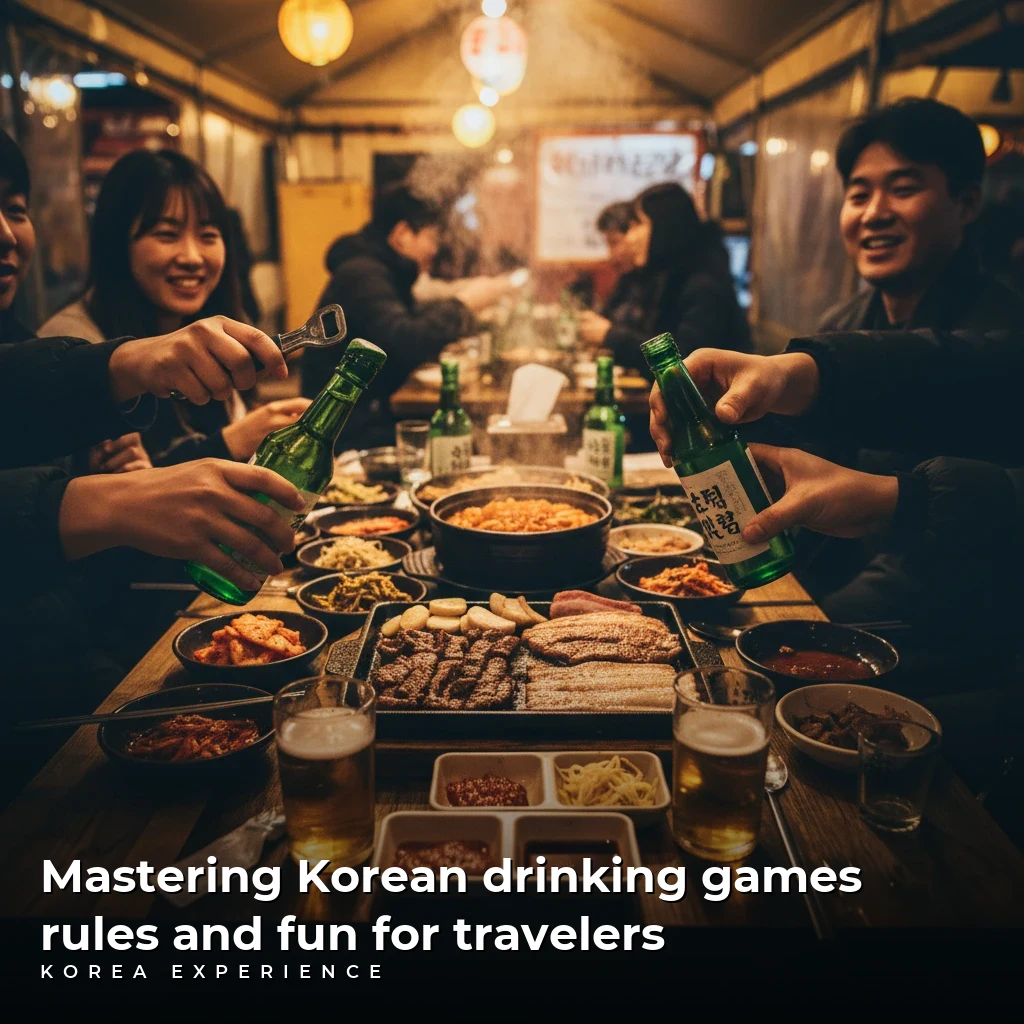
- Pouring for Others: The most fundamental rule. Never pour your own drink. Always offer to pour for others, starting with the eldest or highest-ranking person at the table. Use both hands when pouring, especially for elders, as a sign of respect. Keep an eye on glasses and refill them as soon as they are empty.
- Receiving a Drink: When someone pours for you, especially an elder, receive your glass with both hands. This shows gratitude and respect.
- Drinking Posture: If you are drinking with elders or superiors, it is customary to turn your head away slightly and cover your mouth with one hand when taking your first sip. This is a gesture of modesty and respect, avoiding direct eye contact while drinking.
- The First Drink: The first shot or sip is usually taken together, often after a toast. It's polite to participate, even if you only take a small sip.
- Never Refuse a Drink (Politely): While it's generally impolite to outright refuse a drink, you can politely decline by saying you're not feeling well, or that you've had enough, or suggesting a non-alcoholic alternative. However, for the first few rounds, it's best to participate if comfortable.
The Art of the Toast: "Geonbae" and "Jjan"
Toasting is an integral part of Korean drinking.
- Geonbae (건배): The most common toast, meaning "cheers" or "bottoms up." It's typically used for group toasts.
- Jjan (짠): An informal "clink" sound or toast, often used among friends or peers.
- Individual Toasts: Occasionally, someone might initiate an individual toast, sharing a brief sentiment before drinking. Always raise your glass and make eye contact.
Pacing Yourself and Group Dynamics
Korean drinking sessions can be long and involve multiple rounds and venues.
- Somaek (소맥): A popular mix of Soju and Beer (Maekju). Learn how to make it (often a 1:3 Soju to beer ratio, though it varies) as you'll likely be asked to. It's smoother than straight Soju and a common way to kick off a night.
- "One Shot" Culture: While not always mandatory, the phrase "one shot" means to finish your drink in a single gulp. It's more common with Soju and less so with beer or Makgeolli. Gauge the mood of the group.
- Round System: Drinks and food are typically ordered in rounds, and someone, usually the eldest or host, will pay for the entire round. It's customary to offer to pay, but often the offer will be graciously declined. You might pay for a later round or treat the group to coffee afterwards.
Soju: Korea's Iconic Spirit
Soju (소주), often referred to as "Korean vodka," is the country's national spirit and an indispensable part of its social fabric. Transparent, potent, and surprisingly versatile, Soju has evolved from a traditional distilled liquor to a modern cultural phenomenon.
History and Production
Originating in the 13th century during the Mongol invasion, Soju was traditionally made from distilled rice. Today, most commercial Soju is distilled from various starches like tapioca, sweet potato, and wheat, often filtered through bamboo charcoal for a clean finish. Its alcohol content typically ranges from 16-25% ABV, making it considerably less potent than Western vodka.
Popular Soju Brands and Flavors (2026)
The green bottle remains ubiquitous, but the market has diversified significantly.
- Chamisul (참이슬): Produced by HiteJinro, this is arguably the most popular brand, known for its smooth, clean taste. "Fresh" (참이슬 후레쉬) is a lighter option.
- Chum-Churum (처음처럼): Lotte Chilsung's main competitor, often marketed as having a softer, smoother profile due to alkaline water.
- Good Day (좋은데이): Popular for its slightly sweeter taste and lower alcohol content (around 16.9% ABV).
- Fruit-Flavored Soju: A massive trend that continues into 2026. Flavors like grapefruit (자몽), peach (복숭아), green grape (청포도), and strawberry (딸기) are incredibly popular, especially among younger drinkers and those new to Soju. These usually have lower alcohol content (around 12-14% ABV).
- Premium Soju: Brands like Hwayo (화요) and Andong Soju (안동소주) offer higher-end, traditionally distilled Soju, often with higher alcohol content (up to 40% ABV) and a more complex flavor profile. These are typically enjoyed neat or on the rocks, not as shots.
How to Drink Soju
- Chilled: Soju is always served chilled, never at room temperature.
- Soju Glass: Served in small, shot-glass-sized cups.
- Shots or Sips: While "one shot" is common, it's perfectly acceptable to sip your Soju, especially if you're not accustomed to strong alcohol.
- With Anju: Soju is almost never drunk without Anju (안주) – accompanying food. More on this later!
- Somaek: As mentioned, mixing with beer is a very popular way to enjoy Soju, making it lighter and effervescent.
Approximate Soju Prices (2026)
- Convenience Store: 2,000 - 2,500 KRW per bottle for standard green bottle Soju. Fruit Soju might be slightly more.
- Restaurant/Bar (Pocha): 5,000 - 7,000 KRW per bottle. Premium Soju can range from 20,000 KRW upwards.
Makgeolli: The Fermented Rice Wine Renaissance
Makgeolli (막걸리), a traditional Korean alcoholic beverage, has experienced a massive resurgence in popularity. This milky, effervescent rice wine offers a softer, sweeter, and often healthier alternative to Soju, appealing to a wider demographic.
History and Production
Makgeolli is one of Korea's oldest alcoholic drinks, traditionally consumed by farmers and the working class due to its nutritional value and affordability. It's made by fermenting rice, water, and Nuruk (a fermentation starter). The fermentation process gives it a cloudy, unfiltered appearance and a slightly sweet, tangy, and subtly bitter taste, often with a hint of fizz. Its alcohol content typically ranges from 6-8% ABV.
Varieties and Flavors (2026)
The Makgeolli market has become incredibly diverse.
- Classic Makgeolli: The traditional version, often served in a plastic bottle, with a creamy, refreshing texture. Popular brands include Kooksoondang (국순당) and Jangsoo (장수).
- Regional Makgeolli: Many regions boast their own unique Makgeolli, often using local specialty rice or ingredients. For example, some may have a more pronounced sourness, others a richer body.
- Infused Makgeolli: Similar to fruit Soju, fruit-infused Makgeolli (e.g., chestnut, corn, grape, peach) is a growing trend, offering sweeter and more approachable options.
- Craft Makgeolli: A burgeoning scene of smaller breweries experimenting with traditional and modern techniques, often producing Makgeolli with unique flavor profiles, longer fermentation times, or specialized ingredients. These are often found in dedicated Makgeolli bars or traditional Korean restaurants.
How to Drink Makgeolli
- Chilled and Shaken: Always served chilled. Before pouring, gently shake the bottle to mix the sediment at the bottom, which contains much of its flavor and milky texture.
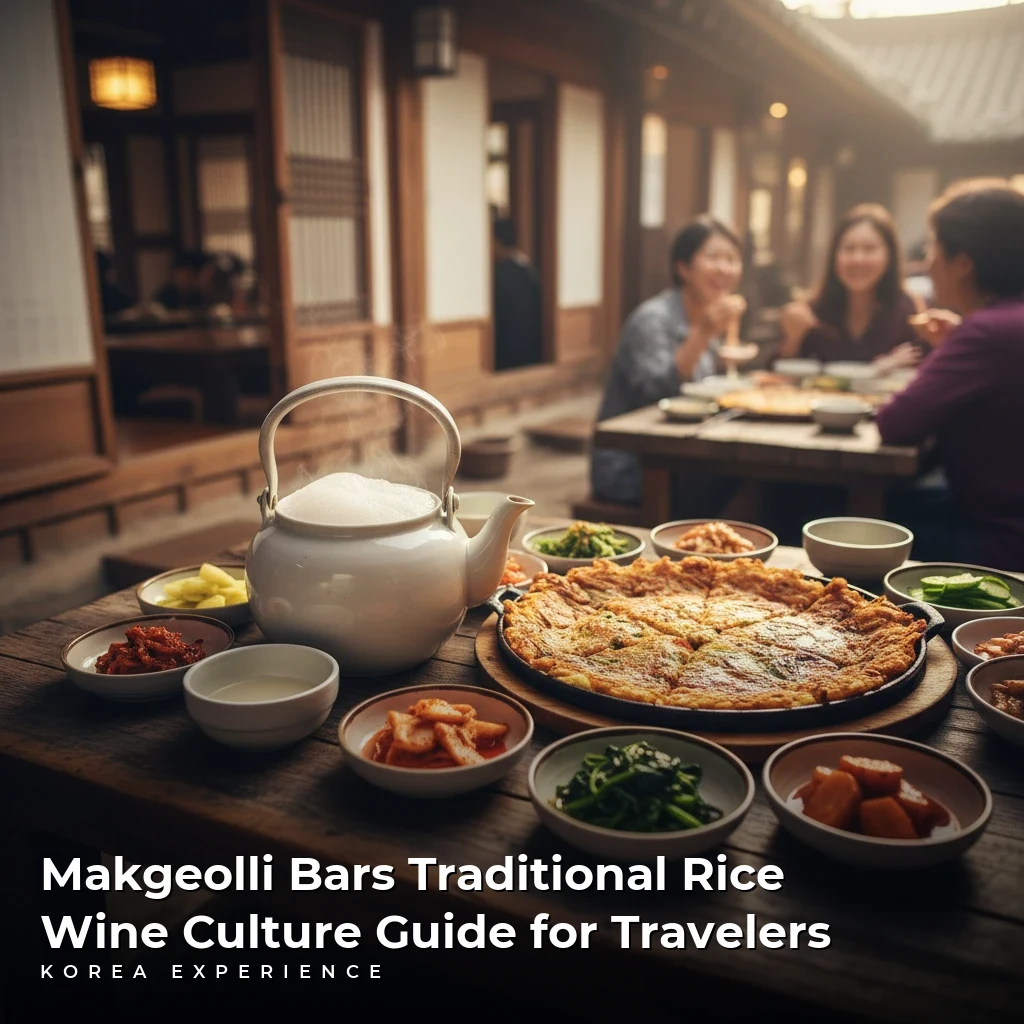
- Traditional Bowls: Makgeolli is traditionally served in small ceramic or metal bowls (사발, sabal), not glasses.
- Communal Serving: Often poured from a large kettle (주전자, jujeonja) into individual bowls, fostering a communal drinking experience.
- With Anju: Like Soju, Makgeolli pairs wonderfully with Anju, especially savory pancakes (Jeon) and spicy dishes.
Approximate Makgeolli Prices (2026)
- Convenience Store/Supermarket: 1,200 - 2,500 KRW per bottle for standard brands.
- Restaurant/Bar (Makgeolli specialist): 5,000 - 15,000 KRW per bottle, depending on the brand and whether it's a craft variety.
Soju vs. Makgeolli: A Comparison
| Feature | Soju | Makgeolli |
|---|---|---|
| Type | Distilled spirit | Fermented rice wine |
| Appearance | Clear, transparent | Milky, cloudy |
| Alcohol Content | 16-25% ABV (standard), 12-14% (fruit), 40% (premium) | 6-8% ABV (standard) |
| Taste Profile | Clean, crisp, slightly sweet/bitter, potent | Sweet, tangy, subtly bitter, often fizzy |
| Texture | Smooth, watery | Creamy, sometimes gritty (from rice sediment) |
| Typical Pairing | Meats (BBQ), stews, spicy dishes, fried chicken | Pancakes (Jeon), Tofu Kimchi, light snacks |
| Serving | Small shot glasses, often in Somaek | Ceramic/metal bowls, communal kettle |
| Social Context | All occasions, shots, group toasts | Relaxed, traditional settings, casual meals |
Other Popular Korean Alcoholic Beverages
While Soju and Makgeolli dominate, Korea offers a range of other interesting alcoholic drinks.
Beer (Maekju, 맥주)
Korean beer, or Maekju, has come a long way. While Hite and Cass remain the dominant brands, the craft beer scene has exploded.
- Major Brands: Cass, Hite, Terra (HiteJinro), Kloud (Lotte Chilsung), OB Lager (Oriental Brewery). These are light lagers, often described as refreshing.
- Craft Beer Scene (2026): Seoul, Busan, and other major cities boast numerous craft breweries and pubs offering IPAs, stouts, ales, and unique Korean-inspired brews. Look for places like Magpie Brewing Co., The Booth, and various local microbreweries.
- Chimaek (치맥): The iconic pairing of fried chicken (치킨, chikin) and beer (맥주, maekju) is a must-try. It's a staple of casual dining and late-night snacks.
Cheongju (청주)
Cheongju is a clear, refined rice wine, similar to Japanese sake but with its own distinct Korean character. It's often sweeter and less acidic than Makgeolli, with a higher alcohol content (around 13-15% ABV). Baekseju (백세주), a popular medicinal rice wine infused with ginseng and other herbs, is a common type of Cheongju, believed to offer health benefits. It's usually enjoyed chilled, sometimes warmed, and often paired with traditional Korean cuisine.
Bokbunja-ju (복분자주)
This is a vibrant, sweet-tart wine made from Korean black raspberries (Bokbunja). With an alcohol content typically around 15-19% ABV, it's known for its deep red color and is often praised for its supposed health benefits, particularly for men. It's often enjoyed with grilled meats or as a dessert wine.
Anju: The Essential Food Pairings
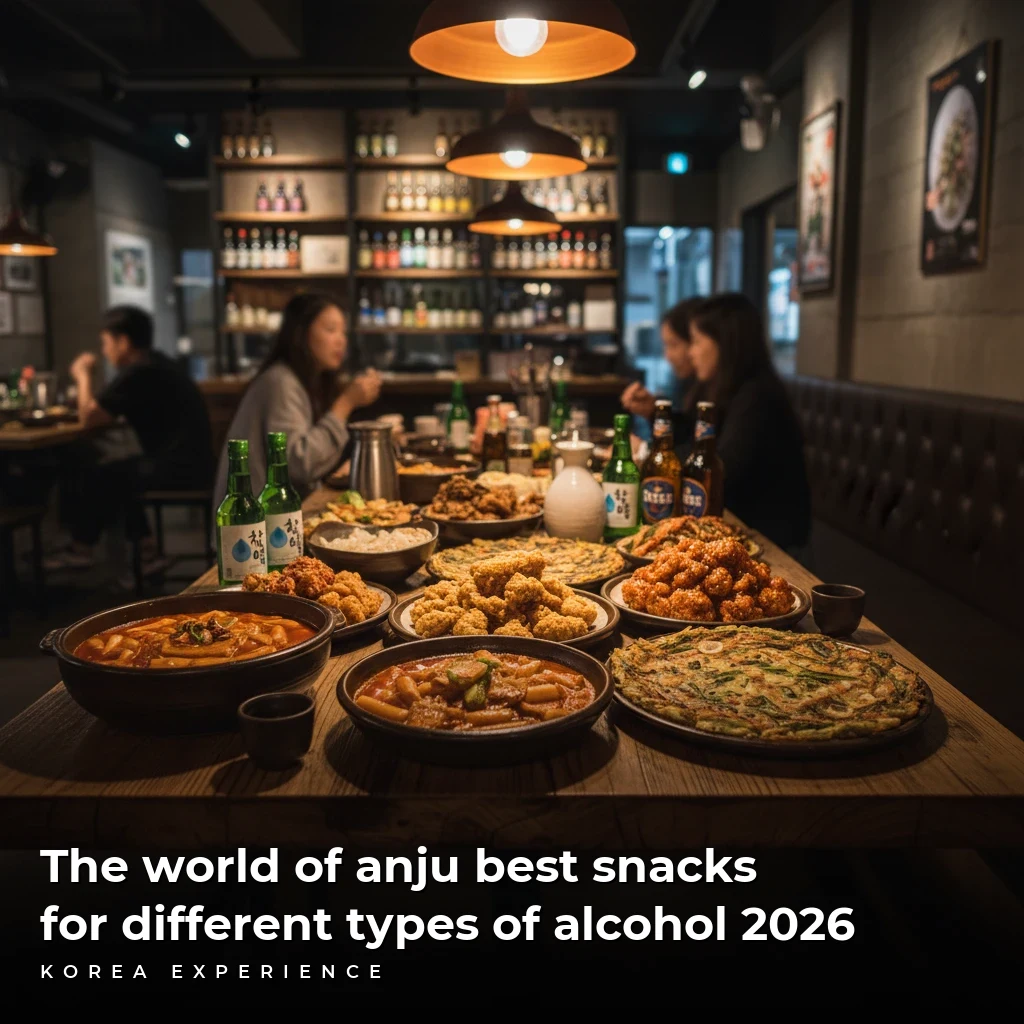
In Korean drinking culture, Anju (안주) is not just a snack; it's a crucial component of the drinking experience. It's rare to drink without Anju, and the selection is as diverse as the drinks themselves. Good Anju can mitigate the effects of alcohol, enhance flavors, and prolong social gatherings.
Classic Soju Pairings
- Samgyeopsal (삼겹살): Grilled pork belly. The fatty, savory meat cuts through Soju's sharpness perfectly.
- Jjigae (찌개): Hearty stews like Kimchi Jjigae (kimchi stew), Budae Jjigae (army base stew), or Sundubu Jjigae (soft tofu stew). The warmth and spice are incredibly comforting with Soju.
- Tteokbokki (떡볶이): Spicy rice cakes. The intense heat is a common choice, especially among younger crowds.
- Bossam (보쌈) / Jokbal (족발): Boiled pork slices (Bossam) or pig's trotters (Jokbal), served with wraps and condiments. The rich flavors are excellent with Soju.
- Odeng-tang (오뎅탕) / Eomuk-tang (어묵탕): Fish cake soup. A light, warm, and comforting option, especially in Pocha.
Ideal Makgeolli Companions
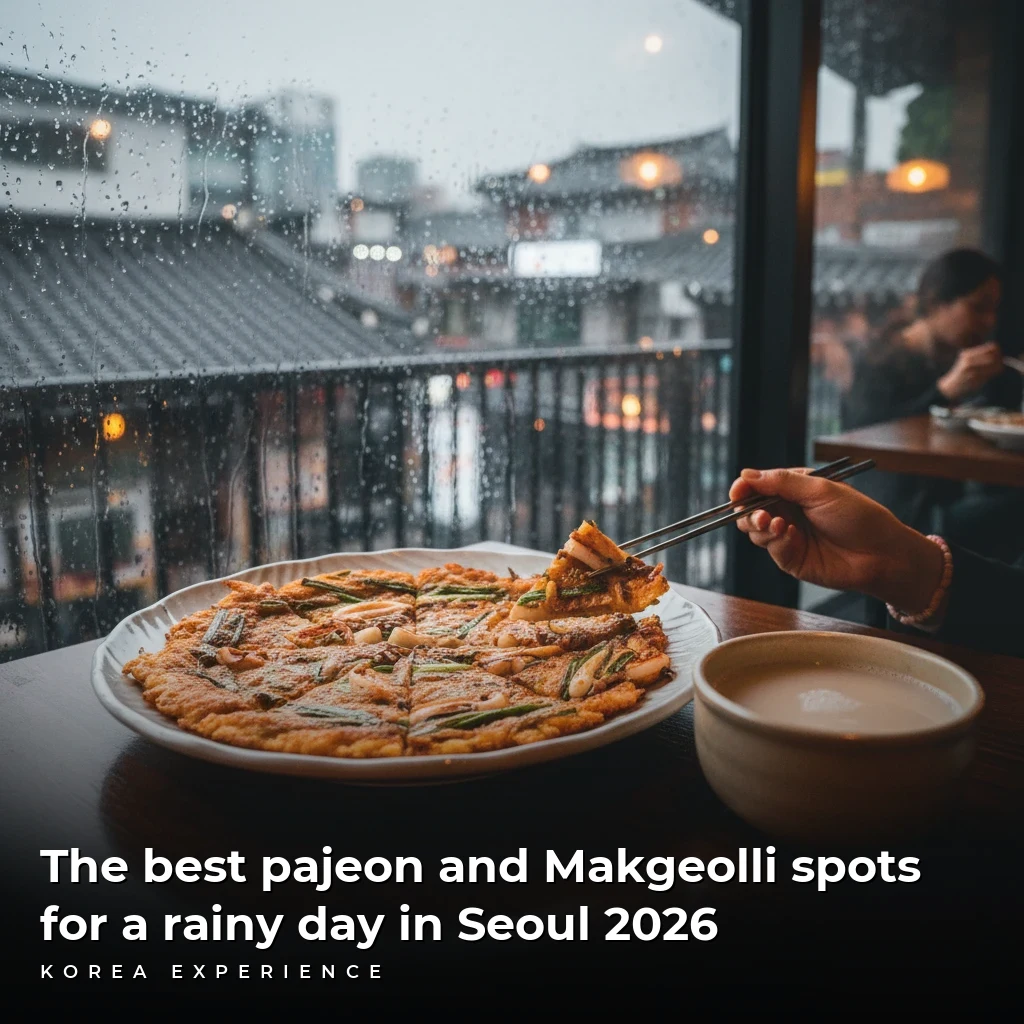
- Pajeon (파전) / Haemul Pajeon (해물파전): Savory pancakes, especially green onion pancake or seafood pancake. The crispy, savory texture is a match made in heaven for Makgeolli's creaminess.
- Kimchi Jeon (김치전): Kimchi pancakes, spicy and tangy.
- Dubu Kimchi (두부김치): Steamed tofu served with stir-fried kimchi and often pork. The clean tofu and spicy kimchi are a simple yet perfect pairing.
- Bindae-tteok (빈대떡): Mung bean pancakes, often found in traditional markets. Crispy, hearty, and satisfying.
- Gopchang (곱창): Grilled intestines, a rich and flavorful option for Makgeolli.
Universal Anju for Any Drink
- Fried Chicken (치킨): The ultimate crowd-pleaser, perfect with beer (Chimaek) but also enjoyable with Soju or Makgeolli.
- Dried Squid / Dried Pollack: Simple, savory, and chewy snacks, often served with a gochujang-mayo dipping sauce.
- Fresh Fruit: A lighter, refreshing option, especially with fruit-flavored Soju or Makgeolli.
Pocha & Beyond: Where to Experience Korean Drinking Culture
Where you drink is as important as what you drink. From bustling street stalls to trendy bars, Korea offers a variety of venues to immerse yourself in its drinking culture.
Pocha (포차): The Heart of Casual Drinking
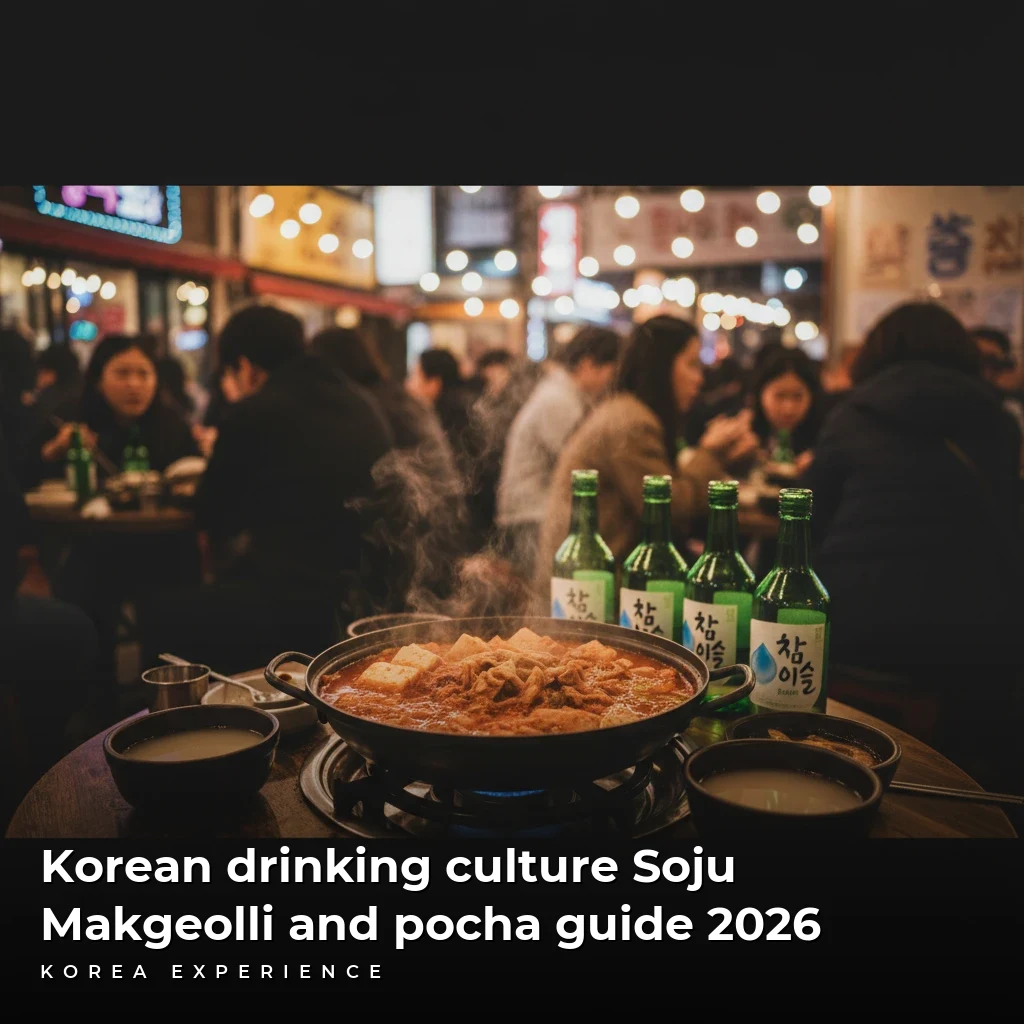
Pocha, short for Pojangmacha (포장마차), literally meaning "covered wagon," are tented street stalls or casual indoor establishments. They embody the quintessential Korean casual drinking experience.
- Atmosphere: Lively, bustling, often a bit gritty but always full of energy and chatter. They offer a sense of nostalgia and raw authenticity.
- Food: Anju is the star here. Expect a wide array of affordable, delicious, and often spicy dishes like Odeng-tang, Tteokbokki, Gyeran-jjim (steamed egg), Dakbal (spicy chicken feet), and various stir-fried dishes.
- Drinks: Primarily Soju and beer, sometimes Makgeolli.
- Finding Them: Historically, actual street tents were common, but in 2026, many "Pocha" are now permanent indoor establishments designed to mimic the street stall vibe. You can find dense concentrations in areas like Jongno 3-ga (종로3가), Euljiro (을지로), and bustling nightlife districts like Hongdae (홍대) and Gangnam (강남). Look for red or orange tent-like facades.
Other Popular Drinking Establishments
- Hof (호프): A Western-style pub focusing on beer, often serving fried chicken and other lighter Anju. More relaxed than a Pocha, good for group gatherings.
- Soju Bang (소주방): Soju-centric bars, often more modern and stylish than traditional Pocha, with a wider menu of fusion Anju dishes.
- Makgeolli Bars (막걸리집): Specializing in Makgeolli, these establishments often offer a wide selection of regional and craft Makgeolli, paired with traditional Anju like Jeon and Dubu Kimchi. Areas like Samcheongdong (삼청동) and traditional markets often have excellent ones.
- Gopchang / Samgyeopsal Restaurants: Many Korean BBQ restaurants are also popular drinking spots, with Soju flowing freely alongside grilled meats.
- Izakayas (이자카야): Japanese-style pubs, highly popular in Korea, offering a diverse menu of small dishes (similar to Anju) and a wide range of alcoholic beverages, including Soju and beer.
- Norebang (노래방): Karaoke rooms are often rented for several hours and include an option to order drinks (Soju, beer) and some basic snacks. A classic Korean after-dinner activity.
Types of Drinking Establishments & Typical Experience
| Establishment Type | Vibe | Primary Drinks | Typical Anju | Price Range (Anju/Drink) |
|---|---|---|---|---|
| Pocha | Lively, casual, authentic | Soju, Beer | Odeng-tang, Tteokbokki, Dakbal, stir-fries | Low to Mid |
| Hof | Relaxed, group-friendly | Beer, Soju | Fried Chicken, dried snacks | Mid |
| Soju Bang | Modern, stylish | Soju, Beer | Fusion Anju, stews | Mid to High |
| Makgeolli Bar | Traditional, cozy | Makgeolli (varieties) | Jeon, Dubu Kimchi, traditional dishes | Mid |
| K-BBQ Joint | Social, engaging, delicious | Soju, Beer | Grilled meats (Samgyeopsal, Galbi) | Mid to High |
| Norebang | Energetic, entertaining | Soju, Beer | Fruit plates, dried snacks | Mid |
Navigating Social Drinking & Safety
Korean drinking culture is generally safe and friendly, but it's essential to be mindful of your limits and the environment.
Practical Tips for a Smooth Night Out
- Pace Yourself: Korean drinking sessions can be long. Don't feel pressured to keep up with seasoned drinkers. It's okay to sip slowly or opt for less potent drinks.
- Hydrate: Drink water between alcoholic beverages. Most establishments will provide water bottles or self-serve water.
- Eat Anju: Always pair your drinks with food. This slows down alcohol absorption and keeps you nourished.
- Know Your Way Home: Plan your transportation in advance. Taxis are abundant, and ride-sharing apps like Kakao T are widely used. Public transport (subway, bus) is excellent but stops running around midnight.
- Stay with Your Group: Especially in crowded areas, stick with your friends or colleagues.
- Be Aware of "Second Rounds": It's common for a group to move to a "second round" (이차, icha) at a different establishment (e.g., from BBQ to a Hof or Norebang). If you're tired, it's acceptable to politely excuse yourself.
- Don't Drive Under Influence: Korea has strict drunk driving laws. Never attempt to drive after drinking.
Common Korean Phrases for Drinking
- "Geonbae!" (건배!): Cheers!
- "Jjan!" (짠!): Clink! (Informal cheers)
- "One Shot!" (원 샷!): Bottoms up!
- "Deureukyeo!" (들이켜!): Drink up!
- "Jal masyeosseumnida." (잘 마셨습니다): I drank well (thank you for the drink).
- "Suwolgwae." (수월하게): Drink smoothly.
- "Hana Deo!" (하나 더!): One more!
- "Jal meogeosseumnida." (잘 먹었습니다): I ate well (thank you for the food).
- "Gwaenchanayo." (괜찮아요): It's okay / I'm fine. (Useful if you need to decline another drink politely).
FAQ: Your Korean Drinking Culture Questions Answered
Q1: Is it rude to refuse a drink in Korea?
A1: While traditionally it can be seen as impolite, especially from an elder, it is perfectly acceptable to politely decline a drink if you truly can't or don't want to drink more. You can say "Gwaenchanayo, jeoneun gwaenchanayo" (It's okay, I'm fine) or "Bae burreoyo" (I'm full/had enough). Sometimes, claiming you're "not feeling well" or "on medication" works. Avoid aggressive refusal.
Q2: How much does a night out drinking typically cost in Korea?
A2: This varies widely. A casual night at a Pocha with a few bottles of Soju and some Anju could be around 20,000-40,000 KRW per person (approx. $15-30 USD in 2026, depending on exchange rates). A multi-round evening involving a nicer restaurant, a Hof, and perhaps Norebang could easily go upwards of 70,000-100,000 KRW (approx. $50-75 USD) per person, especially if you're with a smaller group or ordering premium items.
Q3: Can I drink alone in Korea?
A3: Absolutely. While Korean drinking culture emphasizes communal drinking, it's common to see people enjoying a solo meal with a bottle of Soju or Makgeolli, particularly in more casual eateries or at home. Many bars also accommodate solo drinkers. However, the cultural experience is often amplified when shared.
Q4: Are there specific age restrictions for drinking alcohol in Korea?
A4: Yes. The legal drinking age in South Korea is 19 years old (based on the Korean age system, which means it applies from January 1st of the year you turn 19, regardless of your birth month). Always carry your ID (passport for foreigners) as you may be asked to show it, especially in bars and clubs.
Q5: What is the significance of the "turning away" etiquette when drinking?
A5: Turning your head away and covering your mouth when drinking, especially when drinking with elders or superiors, is a gesture of deep respect and humility. It implies that you are not directly exposing your "unrefined" act of drinking to someone of higher status. While not strictly mandatory with peers, it's a good practice to observe and mimic when in the presence of respected individuals, particularly older Koreans.
Conclusion: Embrace the Korean Spirit
Korean drinking culture is a vibrant, intricate tapestry woven with threads of tradition, respect, and camaraderie. From the sharp bite of Soju to the creamy comfort of Makgeolli, each sip tells a story, and every shared Anju builds a bond. As you explore the bustling Pocha and charming Makgeolli bars, remember to engage with an open mind and a respectful attitude.
By understanding the etiquette, knowing your drinks, and embracing the communal spirit, you'll not only enjoy delicious food and beverages but also gain a deeper appreciation for Korean society. So, go forth, explore, and don't be afraid to raise a glass and shout "Geonbae!" Your adventure into the heart of Korea's social scene awaits.
For more tips on Korean street food or navigating Seoul's nightlife, be sure to check out our other guides!
About the Author
Korea Experience Team
Written by the Korea Experience editorial team - experts in Korean medical tourism, travel, and culture with years of research and firsthand experience.
⚠️ Medical Disclaimer
The information provided on this website is for general informational purposes only and does not constitute medical advice. Always consult with qualified healthcare professionals before making any medical decisions.
Continue Reading
Explore more articles you might find interesting
Explore the rich, diverse world of Korean fermented foods beyond the popular trio. Discover lesser-known culinary treasures, their history, health benefits, and where to find them.
Discover the iconic flavors of Sokcho, South Korea, with our in-depth guide to local specialties: fresh Sokcho Squid and the unique Abai Sundae.
Unlock the world of Soju: discover top brands, ideal food pairings, and cultural tips for an authentic Korean drinking experience in 2026.