Korean mask dance drama where to watch best venues 2026
Discover the best venues to watch Korean Mask Dance Drama (Talchum). From Andong Hahoe Village to Seoul's theaters, find schedules and ticket info.
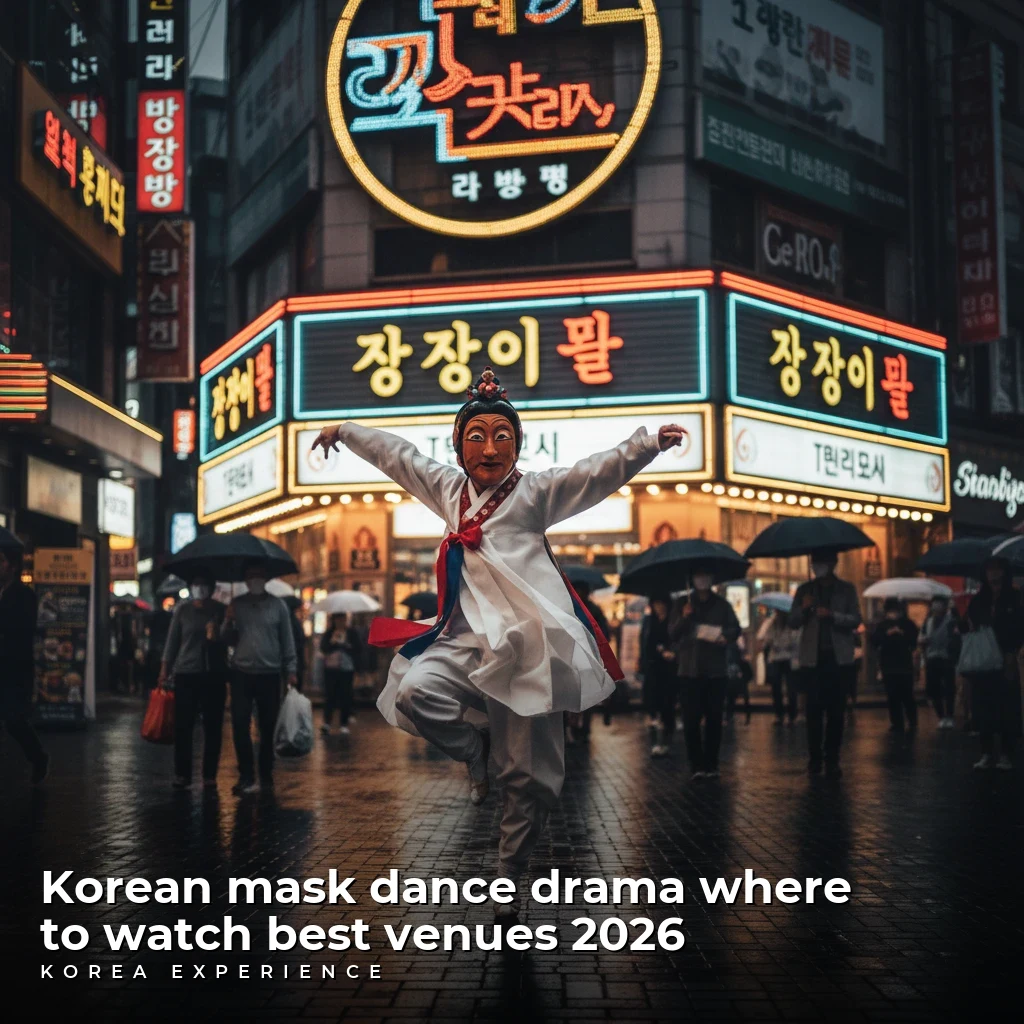
The rhythmic clashing of the kkwaenggwari (small gong) cuts through the air, signaling the start of a performance that has captivated audiences for centuries. Korean Mask Dance Drama, known locally as Talchum, is not merely a dance; it is a vibrant, satirical, and energetic theatrical tradition that offers a window into the soul of historic Korea. Designated as a UNESCO Intangible Cultural Heritage of Humanity in November 2022, Talchum has seen a resurgence in popularity among international visitors seeking authentic cultural experiences.
Related reading: Best K-Pop concert venues in Seoul ultimate guide.
For the modern traveler, however, finding high-quality performances can be a challenge. Unlike K-Pop concerts or royal palace tours, information on Talchum schedules is often fragmented or available only in local languages. Whether you are staying in the heart of Seoul or venturing into the countryside, witnessing a live performance is a highlight of any Korean itinerary.
For more details, check out our guide on How to attend live K-Drama tapings ticket info guide.
In this comprehensive guide, we will explore exactly where to watch Korean Mask Dance Drama, from polished theater performances in the capital to rustic, open-air shows in historic villages. We will break down the costs, travel times, and cultural context you need to fully appreciate this dynamic art form.
You might also enjoy our article about K-Drama Convenience Store Dinner Guide for Travelers in K....
Key Takeaways
- 1Andong Hahoe Village offers the most authentic open-air experience (free with entry)
- 2Seoul's National Gugak Center provides premium indoor performances year-round
- 3Performances typically last 60-90 minutes and often include audience participation
What is Talchum?
Talchum combines "Tal" (mask) and "Chum" (dance). Historically, it was a form of social satire where commoners mocked the aristocracy (Yangban) and exposed social injustices, all while hidden behind colorful, exaggerated masks.
The Significance of Talchum in 2026
Since its inclusion on the UNESCO list, the infrastructure for viewing Talchum has improved significantly. There are currently 18 distinct types of mask dances preserved across the peninsula, ranging from the lion dances of Bukcheong to the acrobatic jumps of Bongsan.
Unlike Western theater, where there is a clear division between the stage and the audience, Talchum relies on Yeollin Pan—an open space where the boundary is blurred. It is common for performers to address the audience directly, inducing cheers (called Chuimsae) that become part of the rhythm.
Statistics from the Cultural Heritage Administration show that visitor attendance at traditional performing arts venues increased by 22% in 2025, driven largely by the "K-Heritage" tourism boom. This means booking in advance is more important than ever.
Top Venues in Seoul: Accessibility and Comfort
For most travelers, Seoul serves as the primary base. Fortunately, the capital offers several world-class venues where you can experience Talchum without leaving the city limits. These venues are ideal for those who prefer comfortable seating, subtitles, and climate control.
1. National Gugak Center (Seocho-gu)
The National Gugak Center is the premier institution for traditional Korean music and dance. Their "Saturday Performance of Korean Music and Dance" series is legendary. Located near the Seoul Arts Center, this complex is massive, spanning over 54,000 square meters.
The performances here are highly polished. While you might lose the gritty, dusty atmosphere of a village market, you gain acoustic perfection and stunning lighting design. Shows here typically run for 70 to 80 minutes.
National Gugak Center(Gungnip Gugakwon)
📋 National Gugak Center Stats
2. Seoul Namsan Gukakdang (Chungmuro)
Nestled in Namsangol Hanok Village, this venue offers a more intimate setting. The theater is built in the traditional Hanok style but features a modern underground performance hall that naturally amplifies sound. This is an excellent choice if you want to combine a visit to Namsan Tower with a cultural show.
The distance from Myeongdong is less than 1.5 kilometers, making it walkable for many tourists. The theater seats approximately 300 people, ensuring that every seat provides a clear view of the intricate mask details.
The acoustics at Namsan Gukakdang are entirely natural (unamplified) for many shows. Sit in the front three rows if you want to hear the performers' breathing and subtle vocalizations—it adds a layer of intensity you miss with microphones.
3. Korea House (Jung-gu)
For a comprehensive cultural evening, Korea House offers a dinner-and-show package. Established in 1957, it is a government-run venue designed to showcase Korean culture to dignitaries and tourists. The performance usually includes a variety of arts, including Pansori (musical storytelling) and a segment of Talchum (often the Bongsan style).
The dinner features Royal Court Cuisine, with prices ranging from ₩50,000 to over ₩150,000 depending on the menu course selected. The performance alone is usually priced around ₩50,000.
💵 Korea House Options
Royal cuisine course included
1-hour highlight show
The Authentic Experience: Andong Hahoe Village
If you are willing to travel outside of Seoul, Andong Hahoe Village offers the "Holy Grail" of mask dance experiences: The Hahoe Byeolsingut Talnori. This specific dance has been performed in the village for over 800 years.
Andong is located approximately 190 kilometers southeast of Seoul. Thanks to the KTX-Eum (high-speed train), the journey now takes just over 2 hours, making it a viable day trip or, better yet, an overnight stay.
Why Andong?
Unlike the theater versions, the performance here takes place in a dedicated open-air arena within a living UNESCO World Heritage village. The energy is raw, earthy, and communal. The audience surrounds the sandy stage, and the interaction is palpable.
📊 Andong Hahoe Performance Stats
Performance Schedule and Logistics
The permanent performance venue at Hahoe Village hosts shows regularly. As of 2026, the standard schedule runs from March to December.
- Days: Tuesday through Sunday (Closed Mondays).
- Time: 14:00 (2:00 PM).
- Duration: 60 minutes.
- Cost: The performance itself is free; you only pay the admission fee to enter Hahoe Village (₩5,000 for adults).
📖 How to Get to Andong Hahoe Village from Seoul
Step 1: Book KTX-Eum
Book a ticket from Cheongnyangni Station (Seoul) to Andong Station. Cost is approx ₩25,000.
Step 2: Arrival in Andong
Exit Andong Station and look for the bus stop directly across the street.
Step 3: Bus 246
Take Bus No. 246 to Hahoe Village. The ride takes about 40-50 minutes.
Regional Varieties: Where to Go for Specific Styles
While Andong is the most famous, Korea has roughly 13 major types of mask dances protected as National Intangible Cultural Properties. If you are a deep enthusiast, you might want to seek out these specific regional variations.
Yangju Byeolsandae (Gyeonggi Province)
Located just north of Seoul in Yangju City, this style is known for its sophisticated dance movements and biting satire of apostate monks.
- Distance from Seoul: ~30km.
- Venue: Yangju Byeolsandae Norimadang.
- Best Time: May and October festivals.
- Accessibility: Accessible via Seoul Subway Line 1 (Yangju Station), then a 15-minute bus ride.
Bongsan Talchum (Seoul/Hwanghae)
Originally from the Hwanghae province in what is now North Korea, this style is famous for its energetic movements and the iconic lion dance. Since the division of Korea, the preservation association is based in Seoul.
- Key Feature: The masks are grotesque and colorful, with deep furrows.
- Venue: Often performed at the Seoul Nori Madang (near Lotte World) or National Gugak Center.
Tongyeong Ogwangdae (South Coast)
"Ogwangdae" means "Performance of Five Clowns." This style is native to the southern coastal city of Tongyeong. It is less about religious ritual and more about pure social satire.
- Travel: 4.5 hours from Seoul by bus.
- Venue: Tongyeong Intangible Cultural Asset Preservation Hall.
- Vibe: Very cynical, sharp dialogue, focusing on the plight of the common man.
Major Mask Dance Styles Compared
| Feature | Andong Hahoe | Bongsan | Yangju |
|---|---|---|---|
| Origin | Village Ritual | Marketplace | Urban Professional |
| Movement | Soft & Curved | High & Vigorous | Refined & Complex |
| Key Mask | Smiling Yangban | Lion | Dark-faced Monk |
The Andong Mask Dance Festival: The Ultimate Event
If you are planning your trip for autumn, you simply cannot miss the Andong International Mask Dance Festival. Held annually in late September or early October, this is a massive celebration spanning 10 days.
The festival attracts performing groups not just from Korea, but from over 20 countries including Thailand, Indonesia, and Japan. The entire city of Andong transforms into a stage.
- Scale: Over 1 million visitors annually.
- Venue: Mask Dance Park (downtown Andong) and Hahoe Village.
- Ticket Price: General admission to the festival grounds is often free, but main stage performances cost around 7,000 to ₩10,000.
Festival Pro Tip
During the festival, accommodation in Andong sells out 2-3 months in advance. If you cannot find a hotel in Andong, look for stays in nearby Yeongju or plan to take the late train back to Seoul or Daegu.
Understanding the Drama: A Viewer's Guide
To enjoy Talchum, you don't need to be fluent in Korean, but understanding the archetypes helps immensely. The plots are episodic rather than linear, meaning the show is a collection of skits rather than one long story.
Key Characters to Watch For
- The Yangban (Nobleman): Usually portrayed as arrogant, foolish, or physically deformed (representing their twisted morality). They are the butt of the joke.
- Malttugi (The Servant): The hero of the common people. He carries a whip and uses witty wordplay to humiliate the nobleman. His mask is often dark, large, and grotesque to intimidate the masters.
- The Apostate Monk: Represents religious corruption. He often falls to temptation, drinking alcohol or seducing women.
- Bune (The Flirt/Concubine): In Andong style, she has a fixed, oval, smiling mask. She represents the complex gender dynamics of the Joseon era.
Watching Without Subtitles
- ✓Focus on physical comedy and dance movements
- ✓More immersive participation in the crowd energy
- ✓Forces you to interpret body language
- ✗Miss the nuances of the satirical wordplay
- ✗Might lose track of specific character relationships
- ✗Cultural references may go over your head
The Music
The dance is driven by a band called Samulnori or a larger ensemble. Pay attention to the Janggu (hourglass drum). The drummer often interacts with the dancers, providing sound effects for their movements. If a character takes a big step, the drum strikes a loud accent.
Practical Information for Travelers
Ticket Booking and Prices
For venues in Seoul like the National Gugak Center, tickets can be booked online via global platforms like Interpark Ticket or Klook. However, for smaller venues or regional performances, tickets are often sold on-site.
- Average Cost: ₩20,000 - ₩50,000 for theater shows.
- Free Options: Seoul Nori Madang (outdoors near Lotte World) offers free traditional performances on weekends from April to October, usually at 3:00 PM.
- Discounts: Seniors (65+) and those wearing Hanbok (traditional dress) often receive 20-50% discounts at government-run venues.
Etiquette
While Western theater demands silence, Talchum encourages noise—at the right times.
- Do: Shout "Jalhanda!" (You're doing great!) or "Eolsigu!" (Yippee!) when the rhythm picks up.
- Do: Clap along with the beat.
- Don't: Use flash photography during indoor performances (it endangers the dancers).
- Don't: Walk onto the performance area (Madang) unless invited by the performers at the end for the communal dance.
A Perfect 'Culture Day' Itinerary in Seoul
Gyeongbokgung Palace
Watch the Changing of the Guard
Lunch in Bukchon
Traditional Bibimbap or Samgyetang
Talchum Performance
National Gugak Center Show
Museum Visit
Explore the Museum of Gugak
Expert Tips for the Best Experience
Having attended dozens of these performances, here are some granular details that can elevate your experience.
1. The Weather Factor Outdoor performances (like at Andong or Seoul Nori Madang) are strictly weather-dependent. Korea's monsoon season runs from late June to late July. During this time, always opt for indoor venues like the National Gugak Center or Namsan Gukakdang. The humidity in July can reach 80-90%, making outdoor viewing uncomfortable.
2. The "Madang" vs. Proscenium If you have a choice, always choose a "Madang" style venue (arena seating) over a proscenium stage (movie theater style). Talchum was designed for 360-degree viewing. Seeing the back of the mask or the interaction between the dancer and the musicians behind them adds depth.
3. Souvenirs Authentic masks are expensive. A high-quality carved wooden mask from Andong can cost between ₩150,000 and ₩500,000. Cheap plastic replicas are available for ₩10,000, but if you want a true keepsake, look for "Hahoe Tal" certified by local artisans. The "Yangban" mask is the most popular souvenir.
Warning: Transport Time
If traveling to Andong for a day trip, be aware that the last KTX back to Seoul often leaves around 20:00 or 21:00. Missing this train means a 3-4 hour bus ride or an overnight stay. Always book your return ticket in advance.
Conclusion
Watching a Korean Mask Dance Drama is more than just entertainment; it is an act of time travel. It connects you to the humor, struggles, and resilience of the Korean people. Whether you choose the polished convenience of a Seoul theater or the dusty authenticity of Hahoe Village, the beating drums and laughing masks promise an unforgettable afternoon.
As we move through 2026, the preservation of these arts relies on active participation. By buying a ticket and shouting "Eolsigu!" you are helping to keep this UNESCO heritage alive.
❓ Frequently Asked Questions
Have more questions?Contact us →
About the Author
Korea Experience Team
Written by the Korea Experience editorial team - experts in Korean medical tourism, travel, and culture with years of research and firsthand experience.
Explore more in K-Culture
K-Pop, K-Drama, traditional arts, and modern culture — dive deep into the cultural phenomena that have captivated the world.
Browse All K-Culture ArticlesContinue Reading
Explore more articles you might find interesting
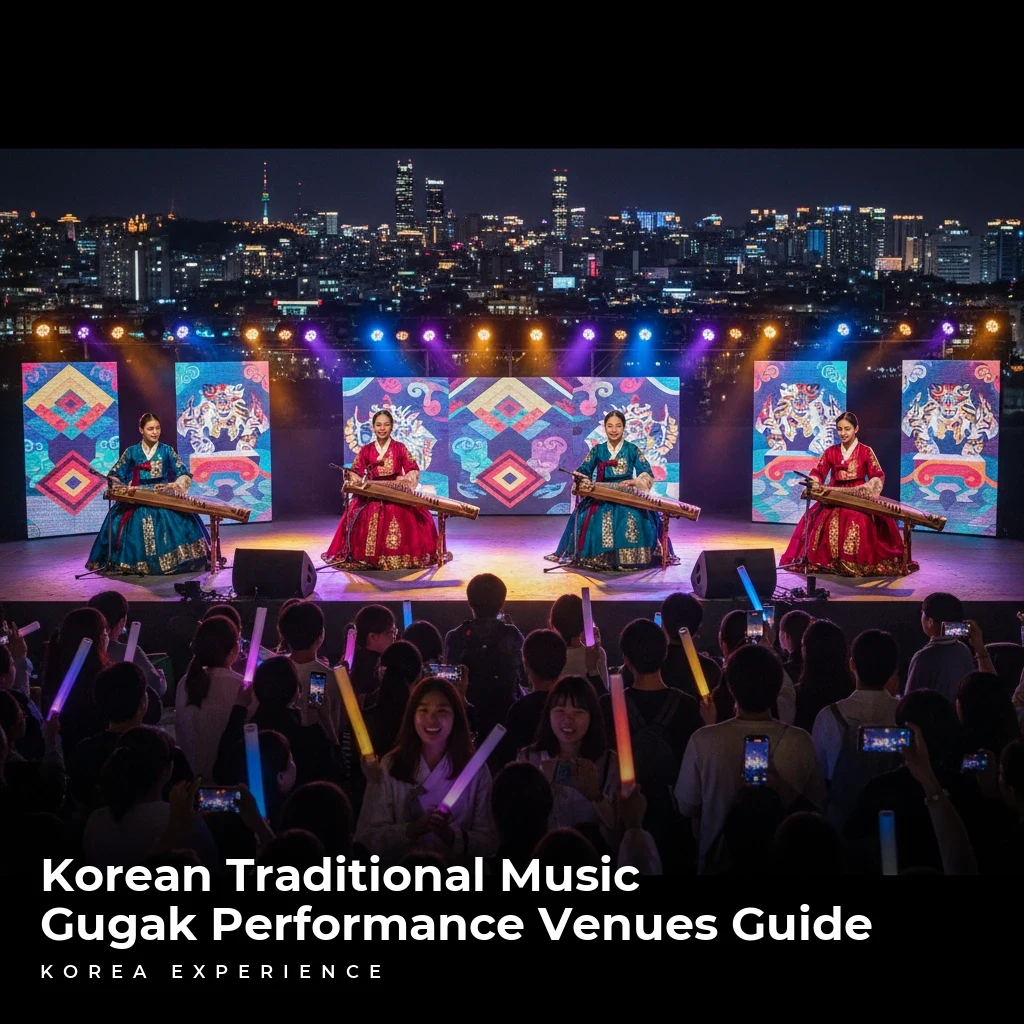
Discover the best venues for Gugak performances in Seoul. From royal palaces to modern theaters, find ticket info, etiquette, and top cultural experiences.
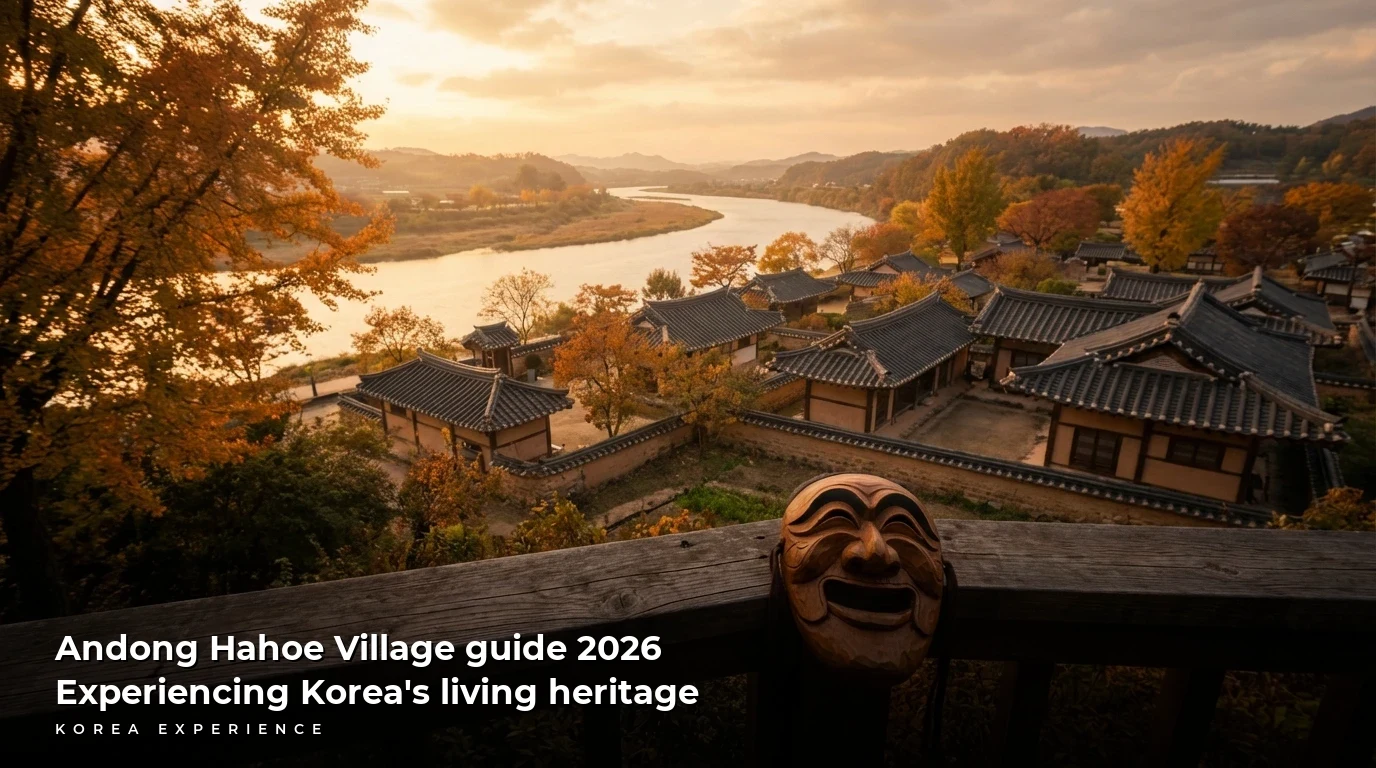
Complete 2026 guide to Andong Hahoe Village including KTX schedules, hanok stay costs (avg ₩120,000), mask dance times, and best local food spots.
Discover the best Stand Up Comedy In Seoul English Shows. From open mics in Itaewon to pro gigs in Gangnam, find schedules, prices, and venue details.
Discover the best K Pop dance classes for beginners in Seoul. From 1MILLION to YGX, find prices, locations, and booking tips for cover dance studios.
Discover the best locations, schedules, and etiquette for K Pop Random Play Dance events in Seoul. A comprehensive guide for spectators and dancers.
Discover the best art house theaters in Seoul. From Cinecube to KOFA, find indie films with English subtitles and unique cultural experiences.