Korean work culture what foreigners need to know 2026
Discover essential insights into Korean work culture in 2026. From hierarchy and etiquette to salaries and visa types, master the professional landscape.
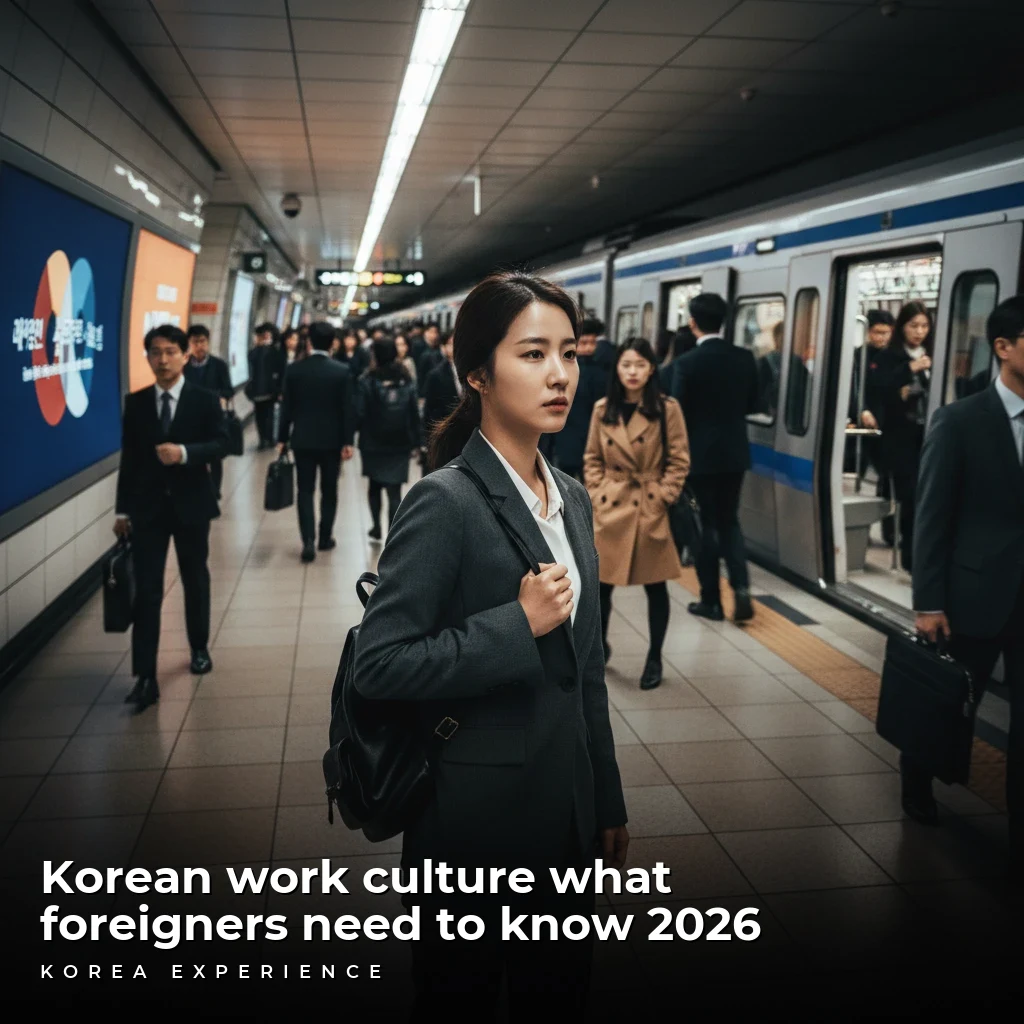
Navigating the professional landscape in South Korea has always been a complex journey of decoding unspoken rules and navigating rigid hierarchies. However, as we settle into 2026, Korean work culture is undergoing a significant transformation. The clash between traditional Confucian values and the progressive demands of the "MZ Generation" (Millennials and Gen Z) has created a unique hybrid environment. For international talent looking to build a career in Seoul, Busan, or Incheon, understanding these nuances is no longer just helpful—it is essential for survival and success.
You might also enjoy our article about Korean work culture office etiquette for foreigners maste....
For more details, check out our guide on Credit cards in Korea which banks accept foreigners 2026 ....
You might also enjoy our article about D visa student visa and part time work rules guide.
You might also enjoy our article about Finding an apartment in Korea complete guide for foreigners.
Whether you are a digital nomad eyeing the new Workcation Visa or an executive transferring to a Chaebol (family-owned conglomerate), the rules of engagement have shifted. While respect remains the cornerstone, the rigid 60-hour work weeks are slowly yielding to flexible hours and remote work options, driven by government legislation and global corporate standards.
Key Takeaways
- 1Strict hierarchy dictates professional interactions, but 2026 sees a rise in 'nim' culture to flatten titles.
- 2The 52-hour work week is legally enforced, though actual office time often averages 45-50 hours including passive overtime.
- 3Team dinners (Hoesik) are evolving; lunch gatherings are replacing 30% of mandatory late-night drinking sessions.
The Foundation: Hierarchy and Nunchi
At the heart of Korean work culture lies Confucianism, which emphasizes harmony through hierarchy. In 2026, despite modernization, age and rank still determine the flow of communication. Understanding the dynamic between Sunbae (senior) and Hoobae (junior) is the first step to integration.
The concept of Nunchi—the ability to gauge the mood of a room and act accordingly—is your most valuable soft skill. It is often described as "eye-measure." For example, if your team leader's cup is empty during a meeting, Nunchi dictates you refill it without being asked.
"In 2026, many startups are adopting English names to bypass hierarchy, but don't be fooled. If you are in a traditional company, never leave the office before your manager without asking. Even if your work is done at 6:00 PM, wait until 6:15 PM or until they signal it is okay to leave."
Addressing Colleagues
While English-speaking environments are more relaxed, using proper titles is critical. In a standard Korean firm, you refer to colleagues by their Title + Name, or just Title.
- Sajang-nim (President/CEO)
- Bujang-nim (General Manager)
- Gwajeang-nim (Manager)
Standard business cards usually list these titles clearly. Printing a box of 200 high-quality business cards typically costs around 25,000 to ₩40,000 ($18-$30 USD) and takes about 24 hours.
Working Hours: The 52-Hour Rule vs. Reality
South Korea has historically been known for having some of the longest working hours in the OECD. The government's enforcement of the 52-hour work week (40 standard hours + 12 hours overtime) has been a major point of contention and adaptation.
As of 2026, the strict enforcement has softened slightly in certain sectors like R&D and semiconductor manufacturing to allow for "flexible averaging" of hours over a month. However, for most office workers, the official clock runs from 9:00 AM to 6:00 PM.
📋 Work Hour Realities
Despite the law, the "face time" culture persists. It is estimated that the average office worker in Seoul actually spends about 10 hours per day at the workplace, including lunch and breaks, often staying until 7:30 PM or 8:00 PM to show dedication. Public transport remains crowded during these extended rush hours, with subway fares in Seoul holding steady at a base rate of approximately ₩1,500 ($1.10 USD) for distances within 10km.
The 'Nun-chi' Overtime
Even if overtime isn't explicitly requested, leaving exactly at 6:00 PM can be perceived as lacking commitment in conservative firms. This is known as "Nun-chi Ya-geun" (overtime out of social pressure).
Hoesik Culture: Dining and Drinking
Hoesik (company dinners) serves as a team-building exercise where hierarchies are supposedly softened (though not eliminated). In the past, this involved heavy drinking until past midnight. In 2026, the trend has shifted significantly due to younger workers prioritizing work-life balance.
While the "Cha" system (Round 1: Dinner, Round 2: Bar, Round 3: Karaoke) still exists, many companies now opt for "Cultural Hoesik" involving movie screenings or lunch buffets. However, if you are invited to a traditional evening Hoesik, attendance is strongly recommended for relationship building.
📖 How to Survive a Traditional Hoesik
Step 1: Seating Arrangement
Wait to be seated. The seat furthest from the door is for the highest-ranking person. Sit opposite or near them if invited, but usually, juniors sit near the door.
Step 2: Pouring Drinks
Never pour your own drink. Hold your glass with two hands when receiving. Pour for seniors with two hands (one hand supporting the bottle or your elbow).
Step 3: Drinking Etiquette
Turn your head away from the senior when taking a sip. This is a sign of respect.
The cost of a standard pork belly (Samgyeopsal) dinner with soju typically runs about 45,000 to ₩60,000 ($33-$45 USD) per person, usually covered by the company card (Beop-ka). If the night extends to a taxi ride home, expect to pay around 15,000 to ₩25,000 ($11-$19 USD) for a 10km late-night journey in Seoul.
Salaries and Cost of Living in 2026
Compensation in Korea varies wildly depending on the industry and company size. The "Dualism" in the Korean market is stark: large conglomerates (Chaebols like Samsung, LG, Hyundai) pay significantly more than Small and Medium-sized Enterprises (SMEs).
For 2026, the minimum wage is set at approximately ₩10,350 ($7.60 USD) per hour. However, foreign professionals are rarely on minimum wage contracts.
💵 Monthly Salary Comparison (Net)
Includes bonuses (up to 30% of salary)
Housing allowance + school fees included
📊 Living Costs 2026
It is important to note that severance pay is mandatory for any employee who has worked more than one year. This is equivalent to one month's salary for every year worked.
Business Etiquette and Manners
Korea is a high-context culture. How you present yourself is often as important as what you say.
The Art of the Business Card
The exchange of business cards (Myeongham) is a ritual. It happens at the very beginning of a meeting.
- Stand up.
- Present your card with two hands, ensuring the text faces the recipient.
- Receive their card with two hands.
- Study it for 5-10 seconds to show interest.
- Place it on the table in front of you, arranged by seating order. Never put it immediately into your pocket or wallet.
Dress Code
While tech companies in Pangyo (Korea's Silicon Valley) embrace casual wear (jeans and hoodies), traditional districts like Yeouido (Finance) and Gangnam still require business formal or smart casual. A decent custom-tailored suit in Itaewon or Gangnam will cost between 450,000 and ₩800,000 ($330-$590 USD).
Elevator Etiquette
In a crowded elevator, the junior person stands by the controls to hold the door. The senior person stands at the back. If you are entering with a client, hold the door and let them enter first.
Employment Types and Visas
For foreigners, your visa status dictates your work life. The immigration laws have been updated in late 2025 to attract more global talent.
The Visa Landscape
- E-7 (Special Occupation): The most common visa for professionals. It is tied to your employer. If you quit, you must find a new job within a specific timeframe (usually 1-3 months) or leave the country.
- F-Series (F-2-7, F-5, F-6): These are resident visas not tied to a specific employer, offering the most freedom.
- Workcation / Digital Nomad Visa: Introduced recently, allowing foreigners to stay for up to 2 years while working for an overseas company.
Visa Features 2026
| Feature | E-7 (Sponsored) | Digital Nomad | F-2-7 (Points) |
|---|---|---|---|
| Sponsor Required | ✅ | ❌ | ❌ |
| Can Change Jobs | ❌ | N/A | ✅ |
| Income Req (Annual) | Market Rate | ~₩85M | Points Based |
| Duration | 1-3 Years | 1-2 Years | 1-5 Years |
To qualify for the Digital Nomad visa, you must prove an annual income of roughly ₩85 million (approx $63,000 USD), which is twice the Gross National Income (GNI) per capita.
Vacation and Leave
The standard paid time off (PTO) in Korea starts at 15 days per year for the first year of employment. For every two years of service thereafter, one extra day is added.
However, actually taking this leave can be tricky. It is culturally difficult to take two consecutive weeks off unless it is for a honeymoon or a serious medical issue. Most Koreans take "summer vacation" in late July or early August for 3-5 days.
Annual Leave Cycle
Monthly Accrual
1 day off for every month worked (11 days total max).
Full 15 Days
15 days grant credited. Unused days from year 1 may expire.
Accrual Increases
1 extra day added every 2 years (Max 25 days).
Public holidays (Red Days) account for about 11-15 days a year. Since 2022, the substitute holiday system ensures that if a holiday falls on a weekend, the following Monday is often a day off.
Workspaces and Locations
Where you work determines your lifestyle. Seoul is decentralized into three main business districts, usually 30-45 minutes apart by subway.
- Gwanghwamun/City Hall (CBD): Traditional, diplomatic, media, and finance.
- Yeouido (YBD): Banking, politics, and broadcasting.
- Gangnam (GBD): Tech, luxury retail, and multinational corporations.
For remote workers, co-working spaces have exploded in popularity.
SparkPlus Gangnam(스파크플러스 강남점)
A hot desk in a premium co-working space averages 350,000 to ₩500,000 ($260-$370 USD) per month.
Pros and Cons of Working in Korea
Working in Korea is intense, rewarding, and challenging. It is not for the faint of heart, but the rapid career growth and dynamic environment are unmatched.
Working in Korea 2026
- ✓World-class infrastructure and internet speeds (10Gbps avail).
- ✓Safety: Working late is safe, with 24/7 amenities everywhere.
- ✓Dynamic networking: Relationships move fast in density.
- ✗Rigid hierarchy can stifle creativity in traditional firms.
- ✗Air quality: Spring dust seasons require masks.
- ✗Limited vacation flexibility compared to Europe/NA.
The 'Ppalli-Ppalli' Culture
"Ppalli-Ppalli" means "Hurry, Hurry." Expect emails to be answered within minutes, and requests to be fulfilled immediately. Speed is a proxy for competence in Korea.
Finding a Job
Networking remains the most effective way to find high-level positions. However, digital platforms are essential.
- LinkedIn: Essential for MNCs and startups.
- PeoplenJob: The #1 site for foreign companies in Korea hiring bilingual staff.
- Saramin / JobKorea: Requires fluent Korean; used for local firms.
Headhunters are very active in Seoul. They typically charge the company 15-20% of the candidate's annual salary, so their services are free for you.
Conclusion
The Korean workplace in 2026 is a fascinating blend of the old and the new. While the ghosts of strict Confucian hierarchy linger, a new wave of pragmatism and global awareness is reshaping the office. By mastering the art of Nunchi, respecting the etiquette, and understanding the data behind the costs and benefits, you can not only survive but thrive in this hyper-dynamic economy.
❓ Frequently Asked Questions
Have more questions?Contact us →
About the Author
Korea Experience Team
Written by the Korea Experience editorial team - experts in Korean medical tourism, travel, and culture with years of research and firsthand experience.
Explore more in Living in Korea
Everything expats and long-term visitors need to know — from visa requirements and housing to banking, healthcare, and daily life tips.
Browse All Living in Korea ArticlesContinue Reading
Explore more articles you might find interesting
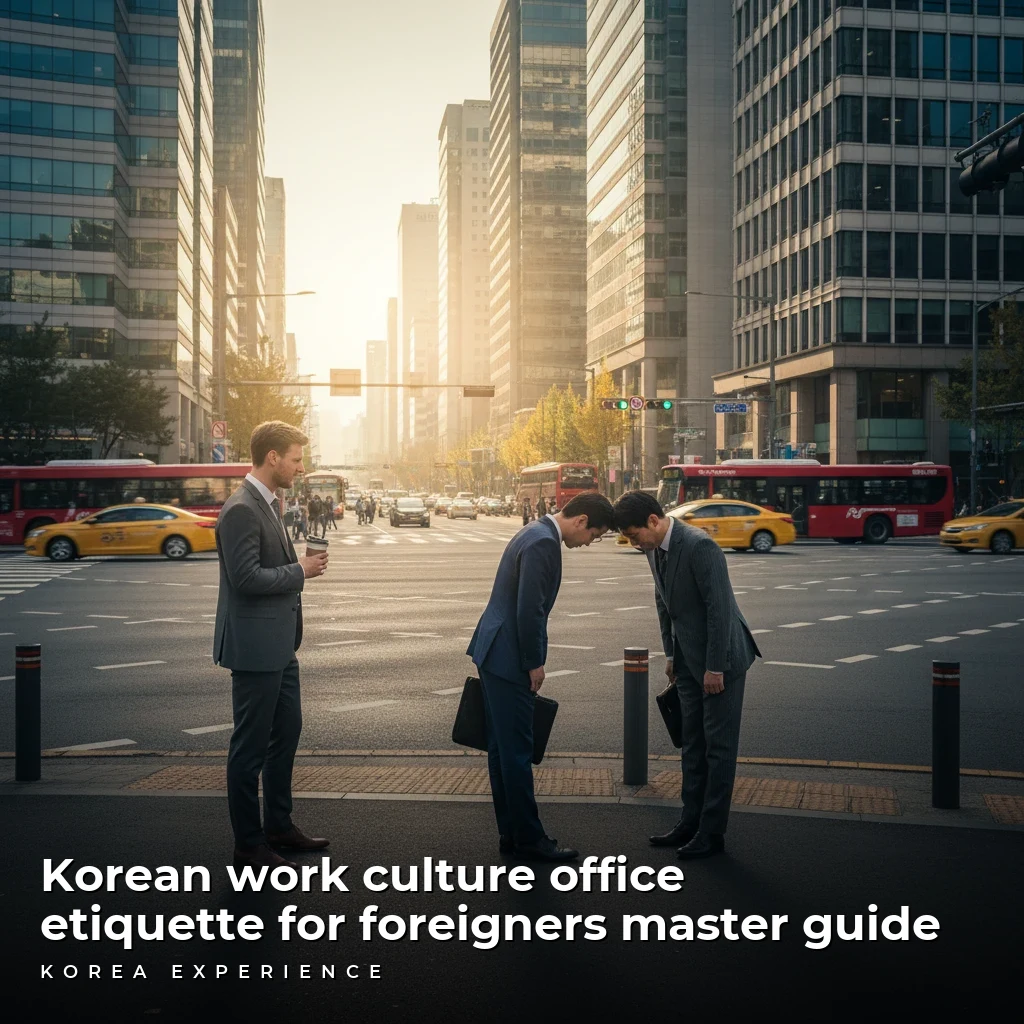
Master the nuances of Korean work culture with our comprehensive guide on office etiquette, hierarchy, and business customs for international professionals.

Master the art of Somaek with our 2026 guide to the perfect Korean beer and soju mix. Discover the golden ratio, best brands, and essential drinking etiquette.
Discover the soul of Korean cuisine through its soups. A complete 2026 guide to Kimchi Jjigae, Doenjang Jjigae, and essential dining etiquette.
Master the fast-paced Pali-Pali culture in South Korea's workplaces. Essential guide for expats & international professionals in 2026.
Master the banking system in South Korea with our step-by-step guide on documents, account types, and overcoming transaction limits for expats.

Master Korean cooking with our 2026 guide to essential pantry items. Discover the must-have sauces, spices, and ingredients for authentic flavors.