Recycling in Korea a complicated guide for new expats 2026
Master the complex South Korean recycling system with our comprehensive 2026 guide covers bags, fines, food waste, and schedules.
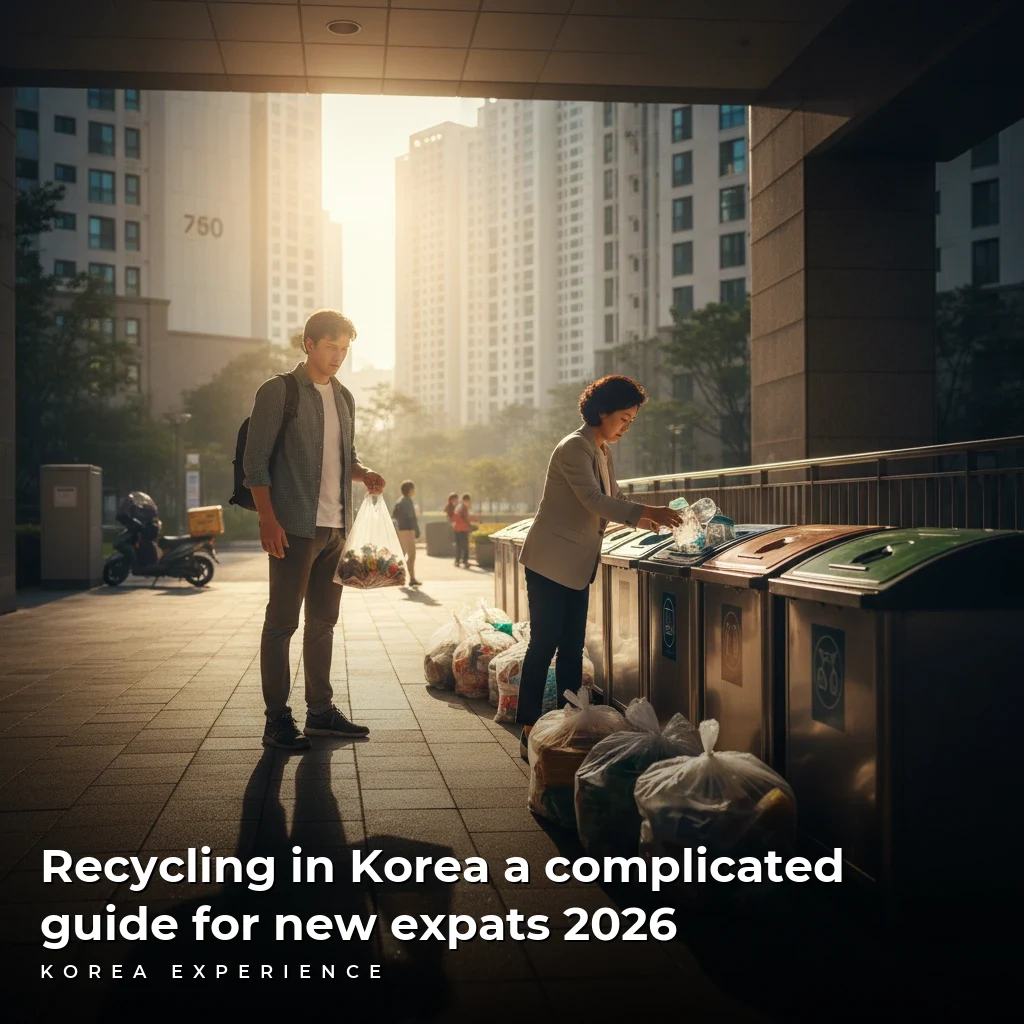
Moving to South Korea comes with many culture shocks, but few are as immediately practical and potentially frustrating as the waste management system. If you have just arrived in Seoul or Busan in 2026, you might find yourself staring at a pile of trash, confused by an array of colorful bags and strict collection times. You are not alone; even locals sometimes struggle with the evolving regulations.
Korea boasts one of the world's most rigorous recycling infrastructures. It is not merely a suggestion here; it is a legal requirement strictly enforced by surveillance and fines. The "Jongnyangje" (Volume-Based Waste Fee System), introduced in 1995, has evolved into a high-tech operation involving RFID food waste bins and transparent PET bottle mandates. Failing to comply can result in your trash being left on the curb—or worse, a fine arriving in your mailbox.
Related reading: How to Recycle in Korea 2026.
This guide is your definitive handbook for 2026, breaking down every bag color, disposal time, and sorting rule to keep your household running smoothly and your wallet safe from penalties.
Related reading: Best neighborhoods for expats in Seoul.
Key Takeaways
- 1You must buy specific district-issued trash bags from local convenience stores; using standard grocery bags triggers fines.
- 2Food waste is weighed and charged separately, often requiring specific RFID cards or yellow bags depending on your building.
- 3Transparent PET bottles must be separated from other plastics; remove all labels and compress them before disposal.
- 4Trash disposal hours are generally restricted to evenings (8:00 PM - 5:00 AM) in villa districts, while apartments have 24/7 designated areas.
The Golden Rule: The Jongnyangje System
The foundation of Korean waste management is the "Pay-As-You-Throw" system. Unlike many Western countries where waste collection is covered by general municipal taxes, in Korea, you pay for the waste you generate by purchasing specific government-issued bags.
You might also enjoy our article about Best weekend getaways for expats to beat city burnout.
The philosophy is simple: the more you throw away, the more you pay. This policy has been incredibly effective, raising the national recycling rate to nearly 60% as of 2026. However, for a new expat, this means you cannot simply toss a black garbage bag onto the street.
Learn more in our comprehensive guide to Changing visa status while in Korea guide for expats.
📋 Standard Trash Bag (General Waste) Facts
District Specificity
It is critical to understand that trash bags are district-specific (Gu-specific). A standard waste bag purchased in Gangnam-gu cannot be used in Mapo-gu. The district name is printed clearly on the bag. If you move across district lines, you must exchange your remaining bags at the community center or purchase "transfer stickers" to validate them in your new neighborhood.
Warning: Geo-Fencing Bags
Do not try to use a bag from a different district. Sanitation workers will not collect it, and you may be tracked down via CCTV or address labels found inside the trash. The fine for illegal dumping starts at roughly ₩100,000 ($75 USD).
1. General Waste (Ilban Ssseuregi)
General waste goes into the standard white (or sometimes pink/blue depending on the city) bags. These are for items that are not recyclable and not food waste.
What Goes In?
- Used tissues, napkins, and diapers.
- Bones (chicken, beef, pork) and clam shells.
- Eggshells and tea bags.
- Dirty plastic wrap or foil that cannot be cleaned.
- Broken ceramics or glass (wrap these in newspaper first to prevent tearing the bag).
If you are living alone, a 10-liter bag is usually sufficient for a week. Families often opt for the 20-liter size. As of 2026, the price for a 20-liter bag in Seoul averages around ₩490, a slight increase from previous years to cover rising incineration costs.
"Many expats mistakenly put eggshells and chicken bones in food waste. This is the most common error. If an animal cannot easily eat it, it goes in General Waste. Think of the pigs! Food waste is processed into animal feed."
2. Food Waste (Eumsikmul Ssseuregi)
Disposing of food waste is often cited as the most unpleasant task for new residents. In Korea, food waste is processed into animal feed or fertilizer, so it must be kept separate from general trash.
The "Pig Rule"
The general rule of thumb is: Can a pig eat this?
- YES (Food Waste): Leftover rice, noodles, vegetable trimmings, fruit skins (soft ones like apple/banana), meat scraps.
- NO (General Waste): Bones, hard shells (walnut, clam, oyster), eggshells, tea bags, onion skins, garlic skins, and fruit pits (peach, avocado).
Disposal Methods
There are two main systems, depending on where you live:
- Special Bags (Yellow): Common in villas and older neighborhoods. You buy yellow food waste bags (usually 2L or 3L sizes, costing about 140-₩200). You fill them and leave them in a designated roadside bin.
- RFID Smart Bins: Standard in modern apartments and newer officetels. You tap a card (or key fob), the lid opens, you dump the food (without any plastic bag), and the machine weighs it. You are billed monthly through your maintenance fees.
📊 Food Waste Statistics 2026
RFID Bins vs. Food Waste Bags
- ✓Pay exactly for the weight you toss
- ✓No smelly bags rotting in your kitchen
- ✓More sanitary and pest-free
- ✗Requires a designated RFID card
- ✗Machine malfunctions can happen
- ✗You must carry a bucket downstairs to dump it
3. Recycling (Jaehwalyong)
Recycling in Korea is free—you do not need to buy special bags for it. However, the labor required to sort it is the "cost" you pay. You must use clear plastic bags so collectors can see the contents, or place items in designated building bins.
The "Clean and Dry" Mandate
In 2026, enforcement on "dirty recycling" is stricter than ever. A pizza box with grease stains is not recyclable; it is general trash. A plastic cup with coffee residue is trash. You must rinse everything.
Categories
- Paper (Jong-i): Newspapers, books, flattened cardboard boxes. Staples and tape must be removed.
- Glass (Yuri): Beer bottles, juice bottles. Tip: Soju and Beer bottles can be returned to large supermarkets for a deposit refund (₩100 to ₩130).
- Cans (Kaen): Aluminum and iron cans. Compress them if possible.
- Plastics (Peul-la-seu-tik): Shampoo bottles, yogurt cups.
- Vinyl (Binil): Wrappers, plastic bags, bubble wrap. This must be collected separately from rigid plastic.
The Transparent PET Bottle Rule
Since late 2021, clear PET bottles (like mineral water bottles) have their own strict category.
- Step 1: Finish the liquid.
- Step 2: Remove the label (labels go in vinyl).
- Step 3: Crush the bottle flat.
- Step 4: Screw the cap back on (to keep it crushed).
- Step 5: Place in the specific "Transparent PET" bin.
📖 How to Prepare Recyclables
Step 1: Empty & Rinse
Remove all food residue. Liquids ruin the recycling process.
Step 2: Remove Labels
Peel off plastic labels from bottles and containers.
Step 3: Separate Materials
Do not mix vinyl (wrappers) with rigid plastic containers.
Step 4: Compress
Flatten boxes and crush cans/bottles to save space.
4. Large Waste (Daehyeong Pye-gimul)
Disposing of furniture, suitcases, or electronics requires a different process. You cannot leave a broken chair next to the trash bags; it will not be taken, and you will be fined.
The Sticker System
You must purchase a disposal sticker from your local community center (Dong office) or, increasingly common in 2026, via district mobile apps or websites.
- Measure the item.
- Buy the corresponding sticker.
- Attach the sticker to the item.
- Place the item in the designated pickup zone on the scheduled date.
💵 Large Waste Disposal Costs (Seoul Avg)
Standard single size
With or without wheels
Free Appliance Pickup
For large electronics (fridges, washing machines, TVs over 1 meter), the government operates a free pickup service. Visit 15990903.or.kr or call 1599-0903. They will come to your home and take it for free, provided the unit is intact (motor/compressor not removed).
Housing Types: Apartments vs. Villas
Your recycling experience is heavily dictated by your housing type. This is one of the biggest lifestyle differentiators in Korea.
Apartments (Apateu)
Apartment complexes are the easiest for recycling. They have a dedicated recycling station (usually in the parking lot or behind the building) managed by security guards.
- Schedule: Often once a week (e.g., every Thursday), though newer luxury complexes have 24/7 designated bin rooms.
- Ease: High. You just carry your sorted bins downstairs and dump them into the large communal sacks. Security guards often supervise and help.
Villas and Officetels (Studio Flats)
This is where it gets complicated. Most "Villas" (low-rise brick buildings) do not have a management office.
- Schedule: Strict curb-side pickup times. Usually, you place bags out between 8:00 PM and midnight, Sunday through Thursday. No collection on Saturday nights.
- Location: You place the bags directly on the street in front of your building.
- Risk: If you put trash out at 10:00 AM, cats may tear the bags, or neighbors may complain, leading to fines.
Apartment vs. Villa Recycling
| Feature | Apartment Complex | Villa / One-room |
|---|---|---|
| Collection Time | Specified Day or 24/7 | Sunset to Sunrise Only |
| Food Waste | RFID Auto-Bin | Yellow Bags in Street Bin |
| Supervision | Security Guard | CCTV / Self-policed |
Zero Waste Options & Refill Stations
As of 2026, the zero-waste movement in Korea has matured significantly. Seoul now boasts over 150 "Refill Stations" where you can buy detergents, shampoos, and soaps by weight, reducing your plastic output.
Almang Market(알맹상점)
Penalties: The Cost of laziness
Korea takes enforcement seriously. Illegal dumping (Mudantu-gi) is monitored by CCTV cameras, often equipped with motion sensors that issue voice warnings when you approach a trash pile.
Local districts also employ elderly residents to sort through unbagged or improperly sorted trash to find identifying information (shipping labels on boxes, envelopes) to issue fines.
📊 Fines Breakdown
A Timeline for New Arrivals
If you have just landed, here is your roadmap to handling your first week of waste.
First Week Recycling Roadmap
Buy Bags
Go to the nearest CU or GS25. Buy a bundle of 10L General Waste bags and 2L Food Waste bags.
Locate Bins
Walk around your building. Look for the designated pile spot or the RFID food bin.
Setup Home
Set up 3 bins inside your home: General, Recycling, and Food (airtight is best).
First Drop
Wait until after sunset (8 PM). Double-check your sorting. Drop bags at the designated spot.
Conclusion
Navigating the Korean recycling system in 2026 is admittedly a chore for newcomers. The level of detail required—removing a plastic label from a bottle, rinsing a yogurt cup, and scanning an RFID card for leftover rice—can feel overwhelming compared to systems in other countries.
However, once you establish a routine, it becomes second nature. You will likely find yourself becoming more conscious of your consumption habits. The "hassle" of recycling acts as a deterrent to buying unnecessary packaging. By following these rules, you are not just avoiding fines; you are participating in a civic effort that keeps Korea’s dense cities remarkably clean and livable.
❓ Frequently Asked Questions
Have more questions?Contact us →
About the Author
Korea Experience Team
Written by the Korea Experience editorial team - experts in Korean medical tourism, travel, and culture with years of research and firsthand experience.
Explore more in Living in Korea
Everything expats and long-term visitors need to know — from visa requirements and housing to banking, healthcare, and daily life tips.
Browse All Living in Korea ArticlesContinue Reading
Explore more articles you might find interesting
Master the strict South Korean recycling system. Learn about sorting categories, specific colored bags, disposal schedules, and how to avoid heavy fines.
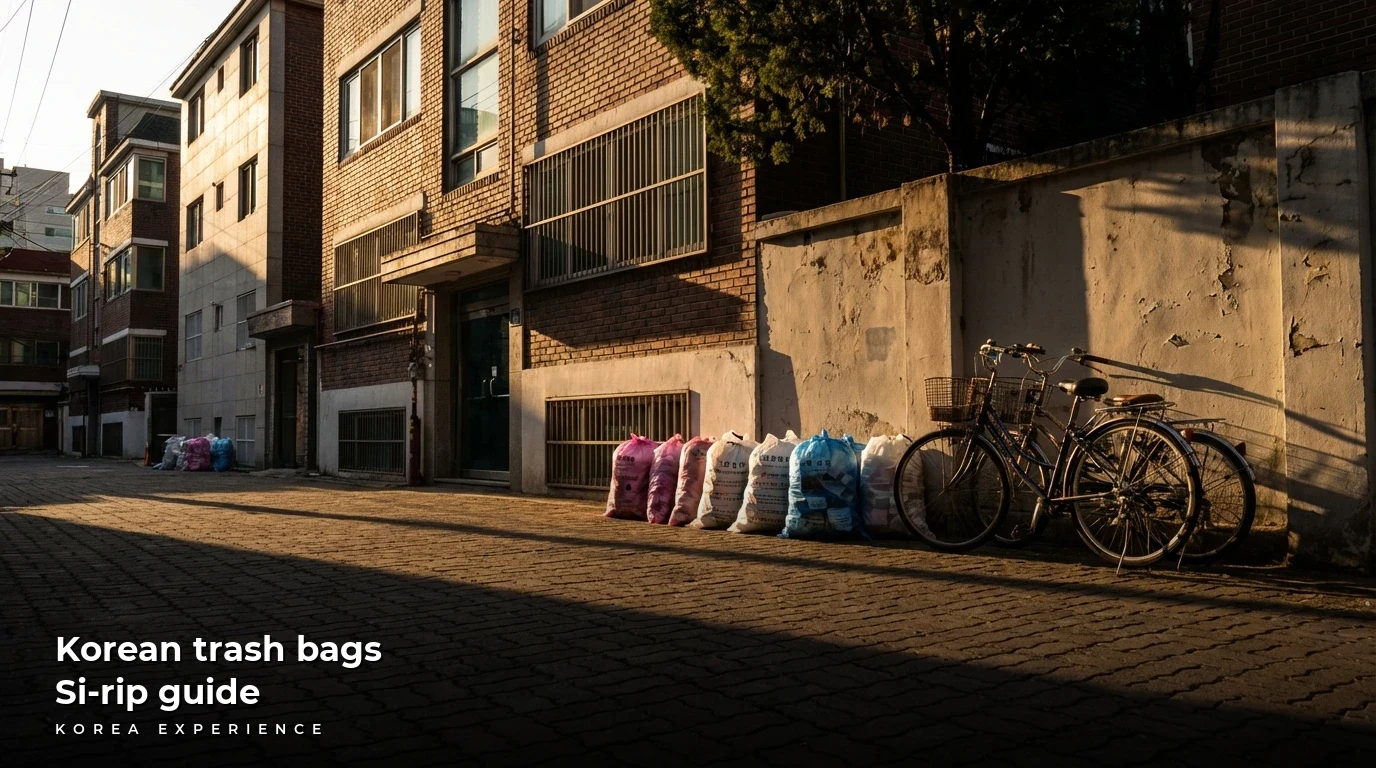
Master the 2026 Korean trash system to avoid 100,000 KRW fines. Learn bag prices, sorting rules, and how to recycle 60% of waste like a local.
The short answer? Korea's recycling system is incredibly strict—you need to separate everything from food waste to clear PET bottles, and if you mess it up.

Master the banking system in South Korea with our step-by-step guide on documents, account types, and overcoming transaction limits for expats.

A complete guide to South Korea's National Health Insurance (NHI) for expats. Covers premiums, enrollment, hospital visits, and 2026 cost updates.
Master the art of the Korean visa run in 2026. Comprehensive guide on routes, costs, immigration risks, and re-entry tips for long-term travelers.