Public library services for foreigners free books and media 2026
Unlock free access to books, media, and digital resources at Korean public libraries.
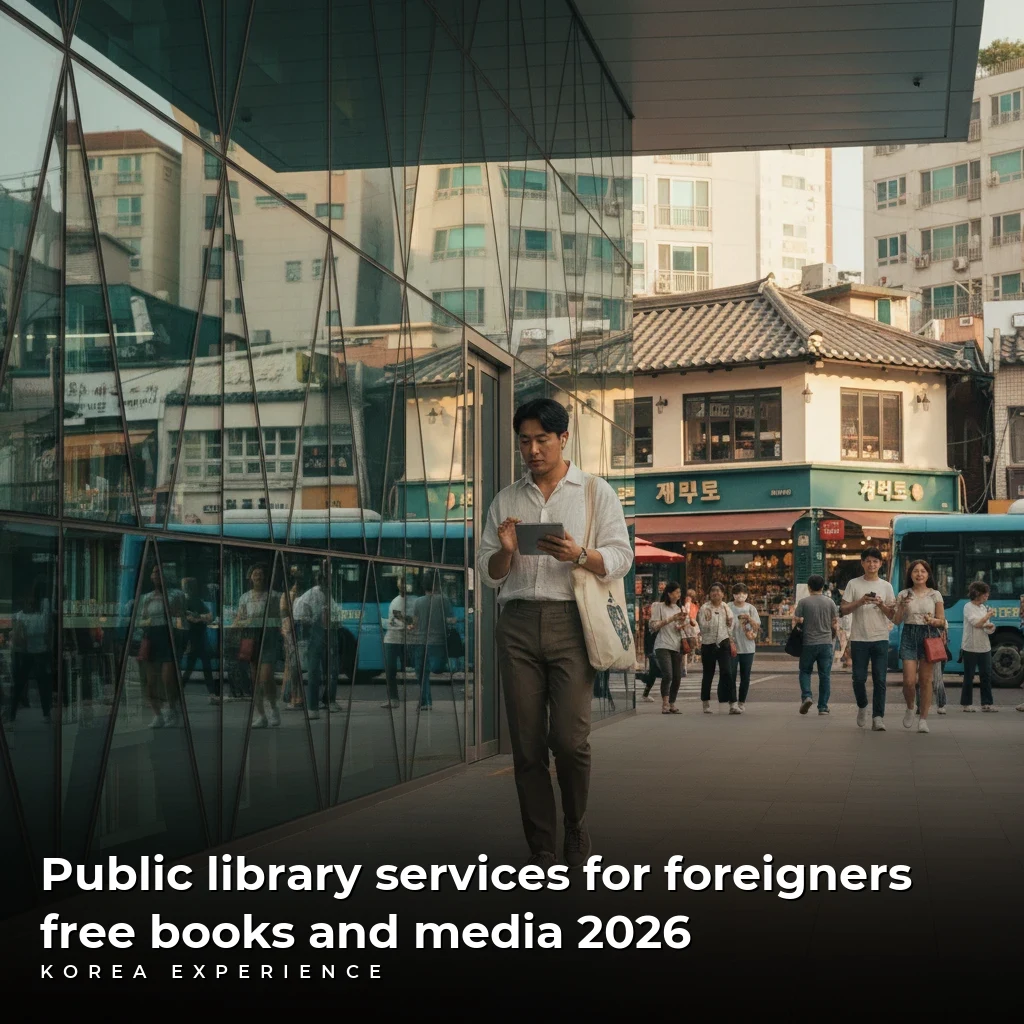
South Korea’s public library system has undergone a massive digital transformation over the last decade, and by 2026, it stands as one of the most accessible and high-tech networks in the world. For international residents and long-term travelers, these libraries are not just repositories of books; they are vital community hubs offering free high-speed Wi-Fi, co-working spaces, multimedia streaming, and cultural programs.
While the perception might be that Korean libraries are strictly for Korean speakers, the reality is vastly different. The government has invested heavily in "Global Zones" and foreign language collections to support the growing international population, which topped 2.5 million residents earlier this year. Whether you are looking for the latest English bestseller, a quiet place to study, or free access to expensive design software, the local library is an underutilized goldmine.
For more details, check out our guide on Credit cards in Korea which banks accept foreigners 2026 ....
Key Takeaways
- 1Foreign residents with a Residence Card (ARC) can join for free
- 2Standard loan periods are 14 days with a 7-day renewal option
- 3U-Library services allow book pickup at 500+ subway stations
Why Korea's Library System is World-Class
The Korean library infrastructure is defined by its density and connectivity. As of 2026, there are over 1,250 public libraries across the nation, meaning most urban residents live within a 10-minute walk or short bus ride of a facility. Unlike many Western systems that may struggle with funding, Korean libraries are aggressively modernized, often featuring robotic baristas, automated book sanitizers, and expansive media centers.
You might also enjoy our article about Finding an apartment in Korea complete guide for foreigners.
For the foreign community, the primary appeal lies in cost efficiency. Accessing English books in Korea can be expensive, with imported paperbacks often costing between 25,000 to ₩35,000 (approx. $18-$25 USD) at major bookstores like Kyobo or Aladin. Public libraries bridge this gap entirely for free. Furthermore, the integration of the "Smart Library" system allows users to reserve books via an app and pick them up from automated lockers at subway stations and community centers 24 hours a day, bypassing operating hours entirely.
Related reading: Korea phone plans and sim cards for foreigners.
📊 Library Network 2026
Eligibility and Registration Process
To borrow physical materials, you generally need to be a registered resident. However, even short-term visitors can usually enter public libraries, read books on-site, and use the Wi-Fi without a membership.
For more details, check out our guide on Korean banking apps best user interface for foreigners.
For full borrowing privileges, you must possess a Residence Card (formerly known as the ARC). In 2026, the integration between the Immigration Office database and library systems is nearly seamless, allowing for instant identity verification at many major branches.
📖 How to Register for a Library Card
Step 1: Visit the Website
Go to the website of your local district (Gu) library or the Seoul Metropolitan Library. Sign up for an online account first.
Step 2: Visit in Person
Bring your Residence Card (ARC) to the library information desk during operating hours (usually 09:00-18:00 on weekdays).
Step 3: Verify & Issue
The staff will verify your online account against your ID. They will issue a physical plastic card and help you link the mobile card app.
Step 4: Download the App
Download the 'Libro' or specific district library app to use your mobile card for borrowing and entry gates.
Residency Verification
Most libraries require your Residence Card address to match the district (Gu) where the library is located. However, Seoul operates a consolidated system (Seoul Citizens Card) that grants access to almost all municipal libraries regardless of your specific neighborhood.
Top Libraries for Foreigners in Seoul
While every neighborhood has a branch, certain facilities are specifically curated to assist international residents, boasting larger collections of English, Chinese, and Japanese literature.
Seoul Metropolitan Library (City Hall)
Located in the former City Hall building, this is the flagship library of the capital. It holds the largest collection of general foreign books and offers a stunning reading room that overlooks Seoul Plaza.
Seoul Metropolitan Library(Seoul Tuseokwan)
Starfield Library (Coex Mall)
While famous for its 13-meter tall bookshelves and Instagram popularity, many expats don't realize you can actually sit and read here. However, it functions more as an open reading space than a traditional lending library. It is bustling, noisy, and perfect for casual reading rather than deep study.
Mapo Central Library
Located near Hongdae and World Cup Stadium, this massive complex is a favorite among younger expats. It features a specialized "English Library" section for children and young adults, plus incredible media facilities including recording studios which can be rented for nominal fees (around ₩5,000 per hour).
Don't overlook the National Assembly Library in Yeouido. It was previously very strict, but in 2026, they have relaxed access for foreigners. The digital resources there are unmatched, and the view of the Han River from the cafeteria is the best kept secret in the city for a cheap lunch (approx. ₩5,500).
The U-Library and Smart Delivery System
The most convenient feature for working professionals is the Ubiquitous Library (U-Library) system. If a book you want is located at a branch 10 kilometers away, you don't need to travel there. You can request it online and have it delivered to a smart locker at your nearest subway station or community center.
As of 2026, the delivery fee is typically free for the first 2-3 books or a nominal ₩1,500 for inter-district delivery. The turnaround time is remarkably fast, usually taking 1 to 2 business days.
U-Library Borrowing Process
Search & Request
Find the book on the library app and select 'Smart Locker Pickup'.
Notification
Receive a KakaoTalk message when the book arrives (usually within 24-48 hours).
Pickup
Scan your mobile library card at the kiosk to open the locker. Available 24/7.
Return
Return the book to the same locker or any branch in the network.
Digital Resources and Media
Korean libraries have aggressively pivoted to digital content. Your library membership grants you access to various e-book platforms. The most common for English content is OverDrive (Libby), which many district libraries subscribe to. This allows you to borrow Kindle-compatible e-books and audiobooks without leaving your apartment.
Furthermore, major libraries provide access to "Wavve" (a Korean streaming service similar to Netflix) and "Watcha" on designated computers within the media rooms. This is excellent for expats trying to improve their Korean listening skills through cinema.
Physical vs. Digital Services
| Feature | Physical Branch | Smart Library (Kiosk) | Digital/E-Book |
|---|---|---|---|
| Operating Hours | 09:00 - 18:00/22:00 | 24/7 | 24/7 |
| ID Required | Mobile/Card | Mobile/Card | Login Only |
| Selection Size | Large (50k+ items) | Limited (Capacity) | Medium (Digital licenses) |
| Cost | Free | Free | Free |
Borrowing Limits and Rules
Understanding the rules is crucial to maintaining your privileges. The standard lending policy across most of Seoul and Gyeonggi-do is uniform, though specific numbers can vary slightly by district.
- Loan Limit: Typically 5 to 7 books per library card.
- Loan Period: 14 days (2 weeks).
- Renewals: One extension is usually allowed for an additional 7 days, provided no one else has reserved the book.
- Returns: You can return books to the automated return chutes outside the library 24/7.
- Late Fees: Korea generally does not charge monetary fines. Instead, they use a "suspension" system. If you return a book 3 days late, your borrowing privileges are suspended for 3 days.
📋 Standard Borrowing Rules
Study Rooms and Co-Working Spaces
For freelancers and students, coffee shop bills add up quickly. A latte in Gangnam averages ₩6,000. Over a month, daily café working can cost nearly ₩200,000. Public libraries offer a free alternative with "Reading Rooms" (Yeollamsil).
These are silent study halls with individual desks, power outlets, and gigabit Wi-Fi. In 2026, seat reservation is almost entirely digital. You scan your card at a kiosk in the lobby or use the library app to reserve a specific seat number for a 4 to 6-hour block, which can be extended if there is no waiting list.
Library vs. Café for Working
- ✓Completely free high-speed Wi-Fi
- ✓Ergonomic chairs and desks
- ✓Silent atmosphere for focus
- ✓Access to printers and scanners
- ✗Cannot take calls (must step out)
- ✗No food or flavored drinks allowed
- ✗Strict silence enforced
- ✗Seat reservation required
Specialized Libraries: Design, Music, and Travel
Beyond the general public libraries, Korea hosts specialized libraries funded by corporations like Hyundai Card. While these are not "public" in the government sense, they are iconic landmarks accessible to foreigners, often requiring a specific credit card or a simple app download (Hyundai Card DIVE app).
The Hyundai Card Design Library in Gahoe-dong and the Music Library in Hannam-dong offer curated experiences. The Music Library, for instance, allows you to listen to rare vinyl records on high-end turntables. Note that these venues often have strict capacity limits and may require waiting in line on weekends, with wait times averaging 30-45 minutes during peak hours.
💵 Specialized Library Access
Government funded, open to all residents
Requires Hyundai Card or Dive App + ID
Regional Services: Outside of Seoul
If you are living outside the capital, the services are equally robust.
Busan: The Busan Library in Sasang-gu is an architectural marvel that opened in the early 2020s. It features an extensive collaborative space and hosts frequent cultural exchanges for expats.
Incheon: The Songdo International Library (Songdo Library) caters to the massive international community near the university global campuses. Their English collection is arguably one of the best per capita in the country.
Sejong City: The National Library of Korea, Sejong, is a stunning building designed to look like a swooping page of a book. It is the central hub for government policy research but remains open to the public with vast open spaces.
Inter-City Loan System
The "Chaek Bada" (Book Sea) service allows you to borrow books from libraries in other cities if your local library doesn't have them. There is usually a shipping fee of approximately 1,500 to ₩2,000 per usage, but it grants you access to the entire national inventory.
Practical Tips for Using the Library
- Bring Headphones: While media rooms provide headphones, they are often basic. If you plan to watch movies or listen to lectures, bring your own noise-canceling gear.
- Dress in Layers: Korean libraries are climate-controlled, but the heating in winter can be intense (often set around 24°C/75°F), while summer air conditioning can be quite chilly.
- Use the Lockers: Most libraries have day-use lockers for free or a ₩100 coin deposit. This is useful if you want to go for lunch without hauling your laptop and books.
- Print/Copy Services: Payment for printing is rarely cash these days. You will need a T-Money card or credit card to pay at the kiosk. Black and white prints average ₩50 per page; color is around ₩300.
Many foreigners don't know about the 'Hope Book' (Huimang Doseo) program. If our library doesn't have a specific English book you want, you can request we buy it. If approved, we purchase it, and you get first dibs on borrowing it. We approve about 70% of requests if the book is recent and educational.
Navigating the Stacks: The Classification System
Korean libraries use the Korean Decimal Classification (KDC) system, which is a variation of the Dewey Decimal System used in the West. This can be confusing for first-timers.
- 000: General Works
- 100: Philosophy
- 300: Social Sciences
- 400: Natural Sciences
- 800: Literature
Crucially for expats, 840 is Anglo-American Literature. However, many libraries separate foreign language books into a distinct "Global Zone" or "Foreign Books" section to make browsing easier. Always check the library map or ask the information desk for the "O-Guk-Eo" (Foreign Language) section.
Conclusion
By 2026, the Korean public library system has solidified itself as an essential resource for the international community. It offers substantial financial savings on books and workspaces while providing a window into Korean culture through its events and architecture. Whether you are a student needing a quiet desk, a parent looking for English storybooks, or a professional needing a printer, the library is your free, welcoming third space in the bustling city.
❓ Frequently Asked Questions
Have more questions?Contact us →
About the Author
Korea Experience Team
Written by the Korea Experience editorial team - experts in Korean medical tourism, travel, and culture with years of research and firsthand experience.
Explore more in Living in Korea
Everything expats and long-term visitors need to know — from visa requirements and housing to banking, healthcare, and daily life tips.
Browse All Living in Korea ArticlesContinue Reading
Explore more articles you might find interesting
A practical guide to finding public restrooms in South Korea, covering subway stations, malls, accessible facilities, and navigation tools.
Unlock your dream of living and working remotely in South Korea with the F-1-D Digital Nomad Visa 2026. This guide covers eligibility, application, and life in Korea.
A comprehensive guide to the top Korean banking apps for expats in 2026, ranking UX, English support, and digital remittance features.
Unlock Korea's remote work potential with our guide to the Digital Nomad Visa. Discover eligibility, detailed requirements, and the step-by-step application process.
Unlock access to rare K-pop, K-drama, and K-beauty limited-edition merchandise in Korea without needing a fan club membership.
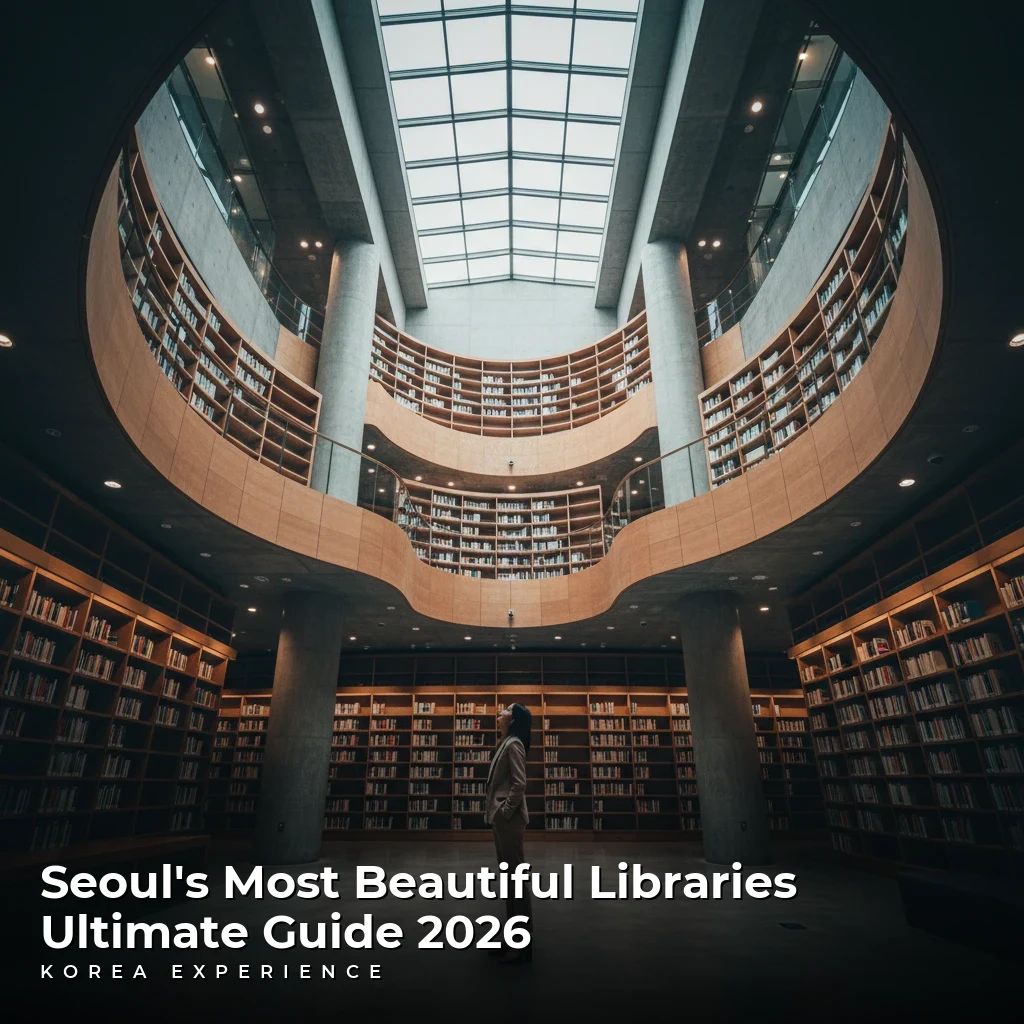
Discover Seoul's stunning libraries in 2026. From the 13m shelves of Starfield to hidden Hanok gems. Free entry details and photo spots included.