Korea Recycling Guide Sorting Rules and Fines Explained
Master the strict South Korean recycling system. Learn about sorting categories, specific colored bags, disposal schedules, and how to avoid heavy fines.
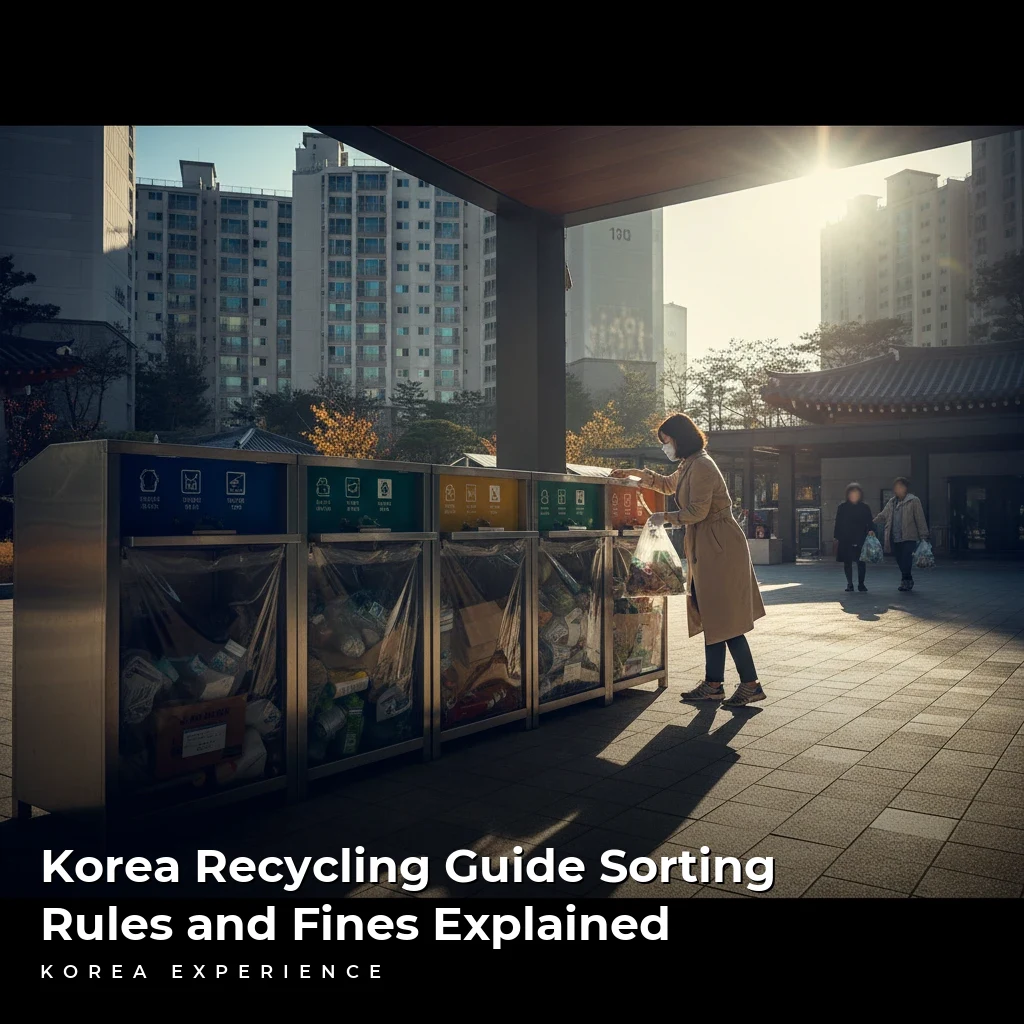
Moving to South Korea comes with a distinct learning curve, and surprisingly, one of the steepest challenges for new arrivals is mastering the art of taking out the trash. Unlike many Western countries where recycling is a casual suggestion, South Korea operates one of the most rigorous and successful waste management systems in the world. The system, known as Jongnyangje (Volume-Based Waste Fee System), requires residents to purchase specific district-issued bags for general waste and strictly sort recyclables into detailed categories.
Failing to adhere to these rules isn't just a social faux pas; it can result in significant financial penalties and uncollected rubbish rotting on your doorstep. However, once you understand the logic behind the colors and categories, it becomes a seamless part of daily life. This comprehensive guide will walk you through every aspect of recycling in Korea, from distinguishing between food waste and general trash to using high-tech disposal machines.
For more details, check out our guide on Buying property in Korea foreign ownership rules guide.
Key Takeaways
- 1You must buy district-specific standard bags (20L averages ₩490) for general waste
- 2Fines for illegal dumping or improper sorting start at ₩100,000
- 3Food waste must be separated unless it is hard matter like bones or shells
The Jongnyangje System: Volume-Based Waste Fees
Introduced in 1995 to reduce pollution and encourage recycling, the Volume-Based Waste Fee System forces residents to pay for the trash they generate. You cannot simply use black plastic bags or grocery sacks for your garbage. You must purchase government-issued standard plastic bags.
For more details, check out our guide on Crypto in Korea Exchanges and Regulations Explained.
The revenue from these bag sales covers the cost of collection and incineration or landfill management. According to 2024 government statistics, this system has helped Korea achieve a recycling rate of over 86% for municipal waste, one of the highest in the OECD.
You might also enjoy our article about D visa student visa and part time work rules guide.
📋 Trash Bag Specifications
Buying the Right Bags
You can purchase these bags at local convenience stores (CU, GS25, 7-Eleven) or supermarkets like Lotte Mart and EMart. However, there is a catch: bags are district-specific. A standard garbage bag purchased in Gangnam-gu cannot be used in Mapo-gu. The district name is printed on the bag, and sanitation workers will refuse to collect bags from outside their jurisdiction.
Related reading: Jeonse vs wolse Korean rental system explained.
Prices vary slightly by district, but generally, a 10-liter standard garbage bag costs around ₩250 ($0.19 USD), while a 20-liter bag costs approximately ₩490 ($0.37 USD). For larger households, 50-liter bags are available for about ₩1,250 ($0.95 USD).
Relocation Warning
If you move to a new district (Gu), you cannot use your old trash bags. However, you can visit your local community center (Dong office) to get "transfer stickers" that validate your old bags for the new district.
General Waste (Ilban Ssseugi)
General waste is anything that cannot be recycled and is not food waste. This goes into the standard white (sometimes pink or yellow, depending on the region) district bags.
Common items for General Waste include:
- Tissues and used paper towels (even if wet)
- Wooden chopsticks
- Rubber gloves
- Broken ceramics or mirrors (wrapped in newspaper for safety)
- Diapers and sanitary pads
- Bones, hard shells, and tea bags (often confused for food waste)
If you are living in a villa or standalone house, you typically place these bags outside your building between 8:00 PM and 5:00 AM. Apartment complexes have designated dumpsters where you can drop these bags off at any time.
Food Waste (Eum-sik-mul): The Trickiest Category
Korea takes food waste recycling very seriously because processed food waste is often repurposed into animal feed or compost. Therefore, the "Golden Rule" of food waste in Korea is: If an animal can eat it, it is food waste. If an animal might choke on it, it is general waste.
💵 Disposal Cost Comparison
Pay per bag usage
Average monthly cost for 1-person household
What is NOT Food Waste?
Many foreigners accidentally face fines because they put the following items in the food waste bin. These items must go into the General Waste bag:
- Bones: Chicken, beef, pork, and fish bones.
- Shells: Eggshells, clam shells, crab shells, walnut shells.
- Pits: Hard seeds from peaches, apricots, or avocados.
- Tea/Coffee: Tea bags, coffee grounds, and herbal medicine dregs.
- Vegetable Skins: Onion skins, garlic skins, and corn husks (these are too fibrous for animal feed).
How to Dispose of Food Waste
The method depends on your housing type:
- Special Bags: Yellow or orange bags purchased at convenience stores (distinct from general waste bags). A 2-liter food bag costs roughly ₩190.
- RFID Bins: Common in modern apartments. You scan a card, the bin opens, you dump the food (without a bag), and the machine weighs it. You are billed monthly based on the weight (approx. ₩35 per kg).
- Designated Buckets: In some older neighborhoods, you buy a plastic bucket, put a payment sticker (chip) on it, and leave it out for collection.
During the humid Korean summer, food waste rots in hours, causing fruit flies and terrible smells. Many locals keep a small designated container for food waste in their freezer. You simply freeze the waste until disposal day. It's odorless and hygienic!
Recyclables (Jae-hwal-yong): Sorting Rules
Recycling in Korea is free—you do not need to buy special bags. However, the labor cost is yours; you must sort everything meticulously. If you are in a villa, you typically use clear plastic bags or place items in designated netting provided by the district. In apartments, you carry your items to the recycling station and separate them into large communal bins.
1. Paper and Cardboard
Boxes must be flattened completely. Crucially, you must remove all plastic tape, shipping labels, and metal staples. The penalty for unflattened boxes or boxes with non-paper materials attached can be a refusal of collection.
- Newspapers: Stacked and tied.
- Books: Remove plastic covers.
- Cartons: Milk cartons should be rinsed, opened flat, and dried.
2. Plastics (The "Vinyl" vs. "Plastic" Distinction)
Korea distinguishes between rigid plastics and soft plastics (wrappers/films).
- Vinyl (Binyeol): This includes ramyeon wrappers, snack bags, plastic grocery bags, and bubble wrap. These must be clean. If a ramyeon packet has red chili paste stains inside, it is General Waste, not Vinyl.
- Plastic (Peulas-tik): Shampoo bottles, detergent containers, yogurt cups. Rinse them thoroughly.
📖 How to Recycle PET Bottles (Transparent)
Step 1: Empty and Rinse
Ensure there is no liquid residue inside the bottle.
Step 2: Remove Label
Tear off the plastic label wrapper. Since December 2020, this is mandatory.
Step 3: Crush and Cap
Crush the bottle to save space and screw the cap back on tight.
Step 4: Separate Bin
Place in the specific 'Transparent PET' bin, not the general colored plastic bin.
3. Glass and Cans
- Glass: Remove caps (caps usually go to metal or plastic). Rinse out residue. Do not put broken glass here (broken glass goes in a special PP sack for construction waste).
- Cans: Aluminum and iron cans. Empty, rinse, and crush if possible. Butane gas canisters (common for portable stoves) must have a hole punched in them to release gas before disposal to prevent explosions.
Waste Sorting Matrix
| Item | Category | Preparation | Disposal Method |
|---|---|---|---|
| Pizza Box | General Waste | If greasy/stained | Standard Bag |
| Clean Box | Paper Recycle | Remove tape | Paper Bin |
| Chicken Bone | General Waste | Remove meat | Standard Bag |
| Water Bottle | Clear PET | Remove label | Clear PET Bin |
Apartment vs. Villa: The Dual Experience
The ease of recycling in Korea depends heavily on where you live. About 51% of Koreans live in apartments (high-rise complexes), while the rest live in villas (low-rise brick buildings) or standalone houses.
The Apartment (Apart-eu) Experience
Apartments are the "easy mode" of Korean recycling.
- Centralized Station: There is a dedicated recycling area within the complex, often near the security office or parking lot.
- Frequency: Some apartments allow recycling disposal 24/7. Others designate one day a week (e.g., every Tuesday from 6 AM to 9 PM).
- Security Guards: The Gyeongbi-ajeossi (security guard) often monitors the area. While this ensures cleanliness, they will scold you immediately if you throw a dirty container into the wrong bin.
The Villa Experience
Villas are "hard mode."
- Curbside Collection: You place bags directly on the street in front of your building.
- Strict Schedule: There is no 24/7 option. You must put trash out only after sunset (usually 8 PM) and before sunrise. Putting trash out during the day creates clutter and can lead to fines.
- Designated Days: Different recyclables are collected on different days. For example, Monday might be for Plastics, while Wednesday is for Paper. Missing the window means keeping the trash in your house for another week.
Living Situation: Waste Management
- ✓Apartment: Often 24/7 disposal access
- ✓Apartment: RFID food waste bins prevent smells
- ✓Villa: No maintenance fees for waste management
- ✗Villa: strict collection days/times
- ✗Villa: buying individual food waste bags is messy
- ✗Apartment: Strict monitoring by guards
Penalties and Fines: The Cost of Non-Compliance
South Korea utilizes a surveillance-heavy approach to enforce recycling laws. CCTV cameras are often pointed directly at waste disposal areas in villa neighborhoods to catch illegal dumpers. In some districts, officials will actually open illegally dumped black bags to find receipts or mail that identify the culprit.
Financial Consequences
The fines are not trivial. Under the Wastes Control Act, fines can be levied for various infractions.
- Mixing Food in General Waste: Approximately ₩100,000 ($75 USD).
- Illegal Dumping (No official bag): ₩200,000 ($150 USD).
- Burning Trash: Up to ₩1,000,000 ($750 USD).
- Disposing Outside Designated Time: ₩100,000 ($75 USD).
Recently, the government has introduced "Bounty Hunter" programs (Paparazzi system) where citizens can report illegal dumping via smartphone apps. If you capture video evidence of someone dumping trash illegally, you can receive a reward of up to 20% of the fine imposed.
📊 Enforcement Stats
Disposing of Large Waste (Oversized Items)
What do you do with a broken suitcase, an old mattress, or a fan? You cannot put these in bags. These are classified as Daeryong Pye-gimul (Large Waste).
To dispose of these, you must pay a fee to the district office.
- Offline: Visit your local community center (Dong office) or a designated mart. Tell them what you are throwing away (e.g., "King size mattress"). You pay the fee (ranging from ₩2,000 for a fan to ₩15,000 for a bed) and receive a sticker. Stick it on the item and place it outside.
- Online: Visit your district office's website (e.g., Gangnam-gu Office). Navigate to the waste section, pay by credit card, print the certificate, and tape it to the item.
- App: Apps like "Yeogiro" (여기로) allow you to upload a photo, pay via mobile, and get a code to write on the item.
Large Waste Disposal Process
Identify Item
Determine size and type (e.g., Chair, Suitcase)
Purchase Sticker
Buy via Community Center, Website, or App
Attach & Place
Attach sticker visibly and move item to pickup zone
High-Tech Recycling: Earning Money Back
Korea is pushing towards a circular economy with AI-driven recycling robots called "Nephron" or "Superbin." These machines are located at community centers, parks, and subway stations.
Here is how it works:
- Bring clean, label-free PET bottles or aluminum cans.
- Insert them one by one into the machine's port.
- The AI analyzes the item. If accepted, it crushes it.
- You earn 10 points (₩10) per item.
- Once you accumulate 2,000 points, you can convert it to cash sent to your bank account.
This gamification has made recycling popular among students and the elderly. However, there is usually a daily limit (often 30 to 50 items per person) to prevent hoarding.
Superbin (Nephron) Station(수퍼빈 네프론)
Common Mistakes to Avoid
Even seasoned expats make mistakes. Here is a checklist to ensure you stay penalty-free:
- The Ramyeon Packet Error: Do not put dirty ramyeon packets in vinyl recycling. If it is stained red, it is general trash.
- The Pizza Box Error: If the box has grease stains, tear off the clean lid to recycle and put the greasy bottom in general trash.
- The Mirror/Ceramic Error: Glass recycling is for bottles only. Mirrors, ceramic plates, and window glass are non-recyclable. For small amounts, wrap them in newspaper and put them in the general trash. For large amounts, buy a specialized non-combustible waste sack (PP sack) from a hardware store.
- The Battery Hazard: Never throw batteries in general trash (fire hazard). Every convenience store and apartment mailroom has a dedicated battery disposal box.
Medicine Disposal
Do not flush unused medication or throw it in the trash, as it contaminates the water supply. Take old pills and syrups to any pharmacy (Yak-guk). They have specific bins for medical waste incineration.
Why is Korea So Strict?
South Korea is a small peninsula with high population density (51 million people) and very limited natural resources. Landfill space is scarce. In the 1990s, the country faced a waste crisis. The implementation of the Jongnyangje system was a survival necessity, not just an eco-trend.
The country imports 97% of its energy resources. By aggressively recycling, Korea reduces the need for raw material imports. For example, the high-quality clear PET bottles collected separately are turned into long fibers to make clothing and bags, creating a high-value domestic industry.
Understanding this context helps alleviate the frustration of washing yogurt cups at 11 PM. You aren't just following a rule; you are participating in a system designed to keep a resource-poor, densely populated country sustainable.
Conclusion
Recycling in Korea is undeniably complex initially. The array of bags, the strict sorting rules, and the fear of fines can be overwhelming for newcomers. However, the system is logically consistent. Once you form the habit—rinsing bottles immediately, freezing food waste, and keeping a supply of district bags—it becomes second nature.
By respecting these rules, you contribute to the cleanliness of your neighborhood and the sustainability of your host country. Plus, you avoid the embarrassing experience of having your trash bag rejected by the sanitation workers and left with a "violation" sticker for all your neighbors to see.
❓ Frequently Asked Questions
Have more questions?Contact us →
About the Author
Korea Experience Team
Written by the Korea Experience editorial team - experts in Korean medical tourism, travel, and culture with years of research and firsthand experience.
Explore more in Living in Korea
Everything expats and long-term visitors need to know — from visa requirements and housing to banking, healthcare, and daily life tips.
Browse All Living in Korea ArticlesContinue Reading
Explore more articles you might find interesting
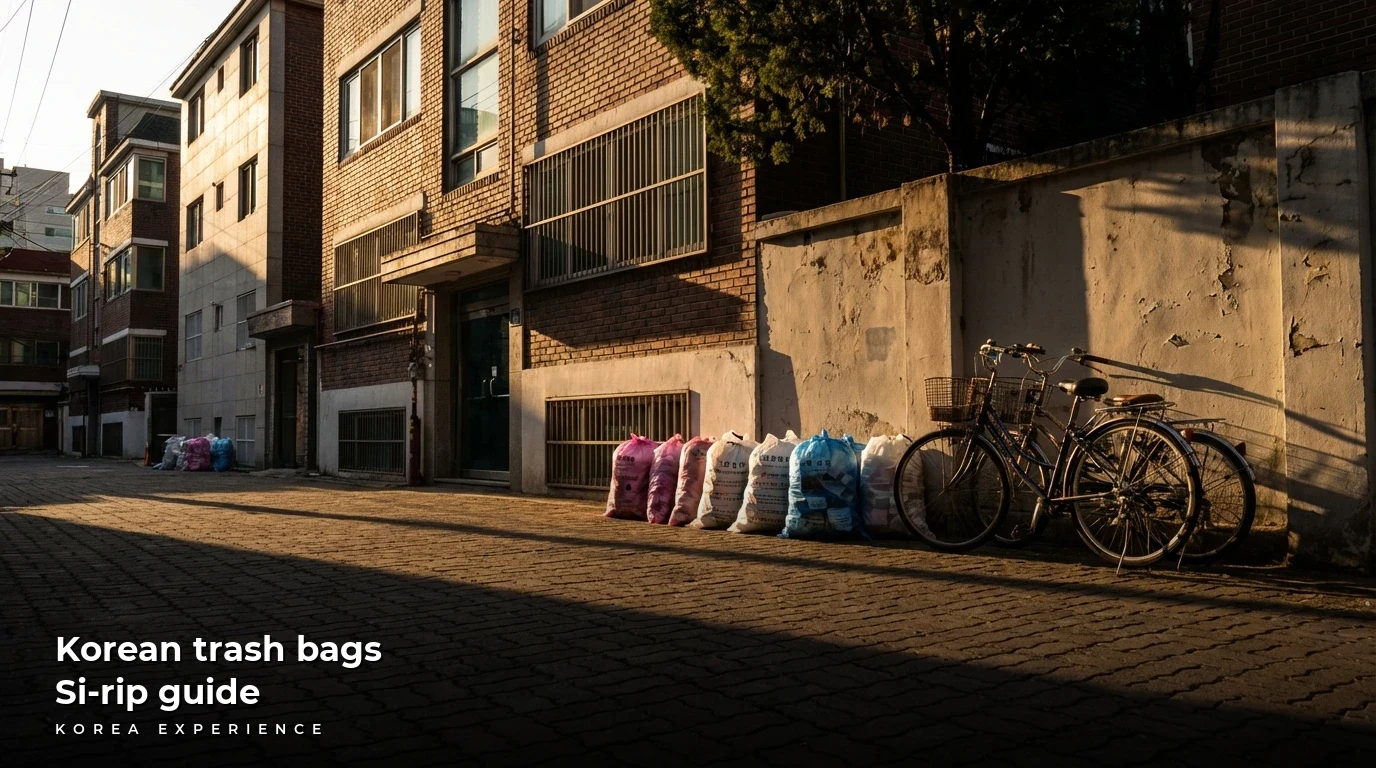
Master the 2026 Korean trash system to avoid 100,000 KRW fines. Learn bag prices, sorting rules, and how to recycle 60% of waste like a local.
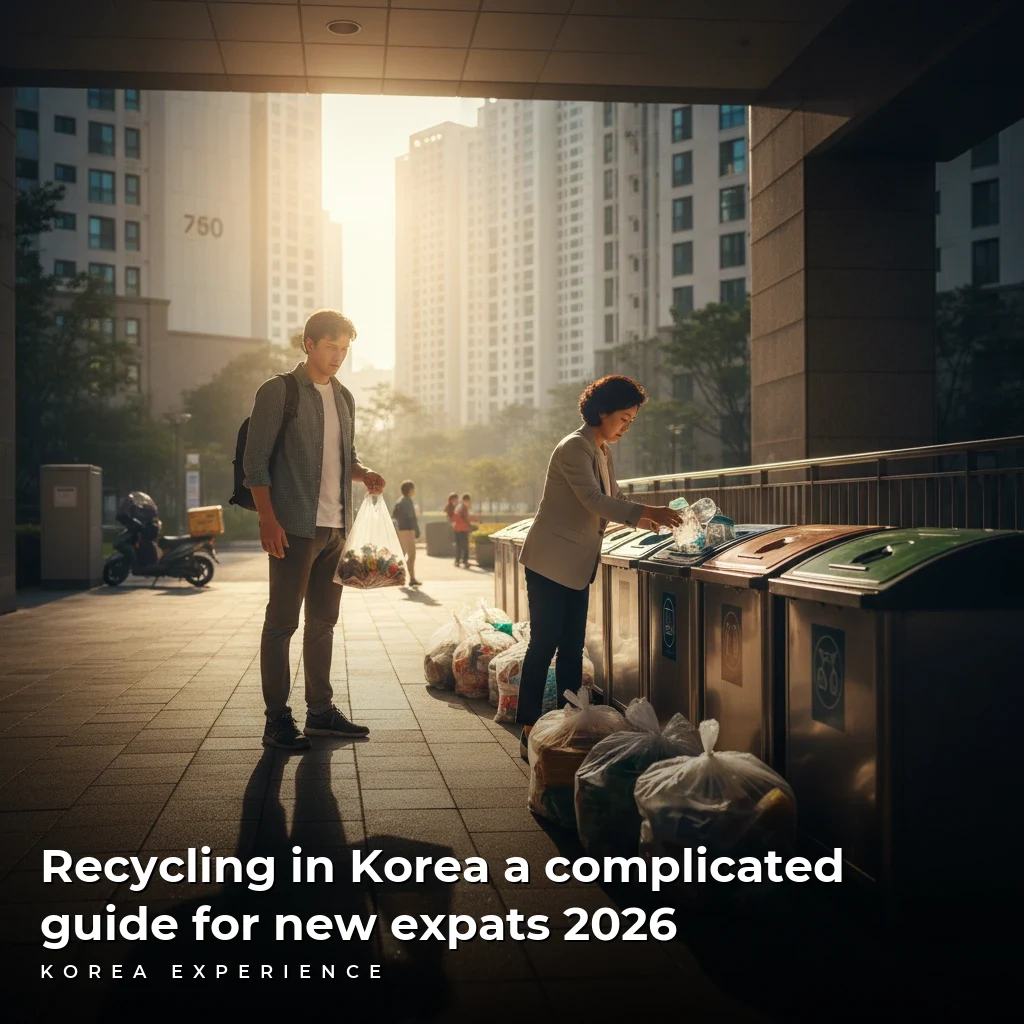
Master the complex South Korean recycling system with our comprehensive 2026 guide covers bags, fines, food waste, and schedules.
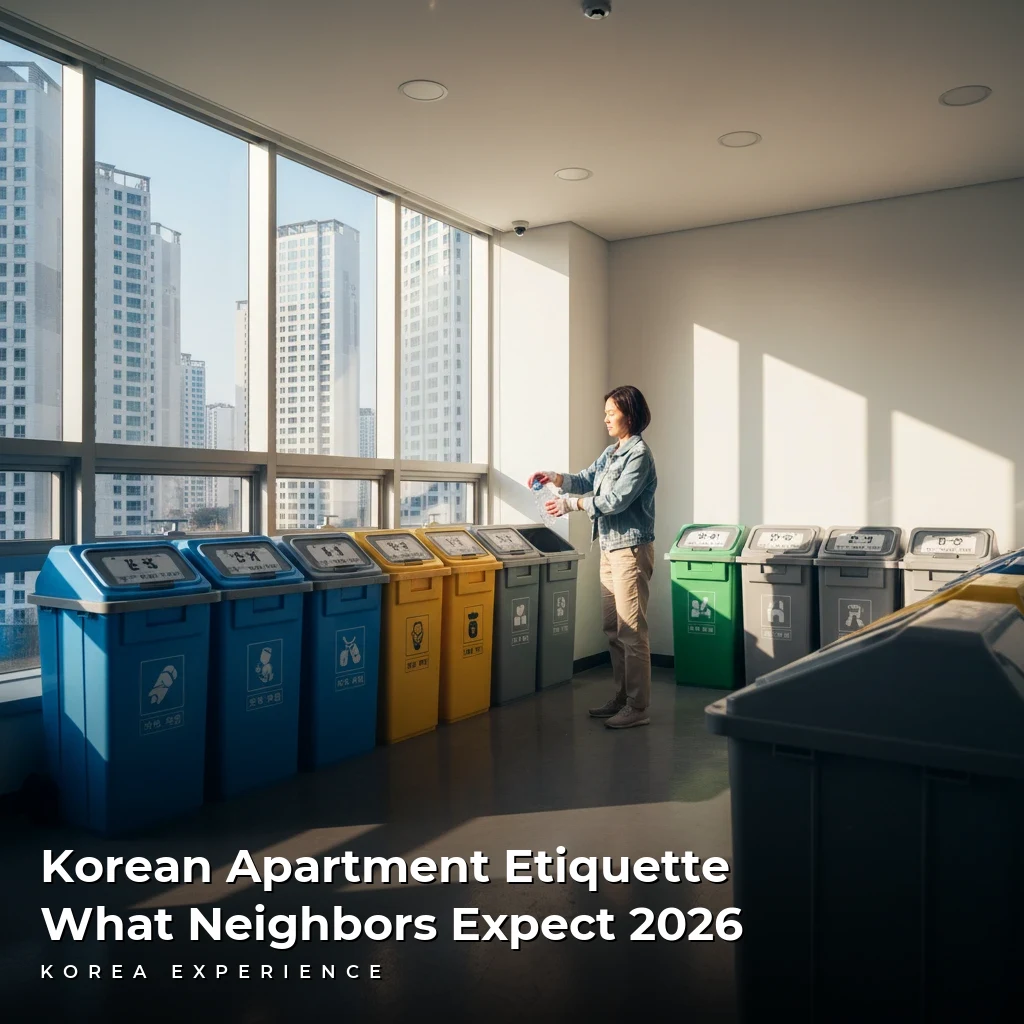
Master Korean apartment etiquette in 2026. From strict recycling rules to noise control, learn how to be the perfect neighbor in Korea.
Learn how to find compatible Global ATMs in South Korea, navigate fee layers, avoid the DCC trap, and manage foreign card limits.
Master Korean apartment heating controls. Learn essential ondol terms, how to set room vs. floor temperature, and safe practices for energy efficiency.
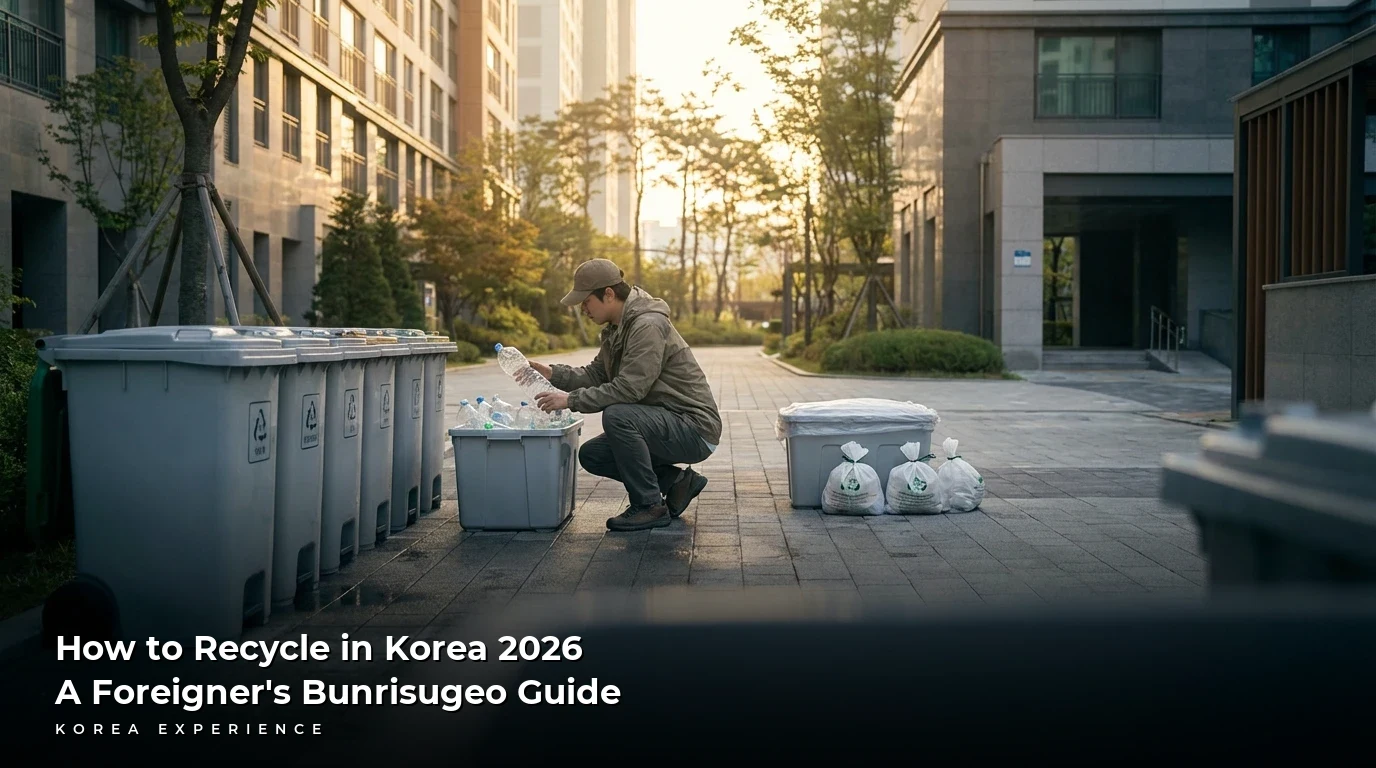
The short answer? Korea's recycling system is incredibly strict—you need to separate everything from food waste to clear PET bottles, and if you mess it up.