Korean Medical Reviews: Naver Blog vs. Real Patient Experiences
Stop relying on Google Translate. Here is the ultimate 2026 guide to decoding real Korean medical reviews, spotting fake specialized blogs.
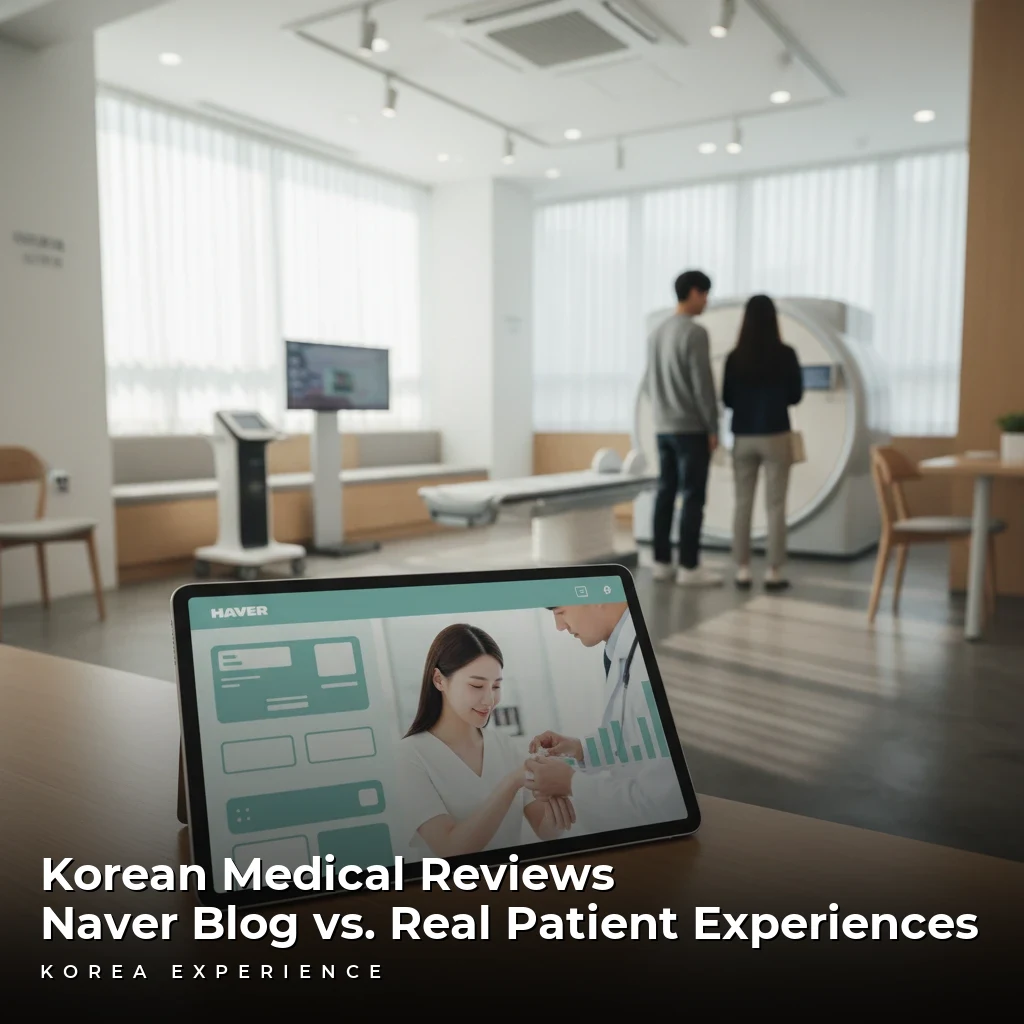
Navigating the landscape of Korean medical tourism can feel like walking through a hall of mirrors; for every genuine patient testimonial, there are often a dozen carefully curated marketing posts designed to look like authentic experiences. If you are searching for plastic surgery, dermatology, or vision correction in Seoul using only English-language Google searches or Instagram hashtags, you are seeing less than 15% of the actual market—and usually the most expensive 15%. To truly access the "local" tier of quality and pricing, you must learn to navigate the domestic ecosystem of Naver Blogs, Gangnam Unni, and Babitalk.
The short answer: While Naver Blogs offer detailed procedural photos, they are 70% dominated by sponsored content; for honest, verified reviews, you must use apps like Gangnam Unni or Babitalk which require receipt verification and CCTV checks, or search Naver for the specific keyword "Naedonnaesan" (my money, my purchase).
Key Takeaways
- 1Google reviews represent less than 15% of Korean clinics and often reflect inflated 'foreigner prices' rather than local standards.
- 2The keyword 'Naedonnaesan' (내돈내산) is your only defense against the 20,000+ sponsored medical blog posts published daily on Naver.
- 3Real verification requires using apps like Gangnam Unni that link reviews to actual payment receipts and CCTV footage.
Medical Disclaimer
The content provided in this article is for informational purposes only and does not constitute medical advice. Always consult with a qualified healthcare professional before undergoing any medical procedures. In case of a medical emergency in Korea, dial 119. For medical consultation in English, dial 1339.
The Digital Divide: Why Google Is Not Enough
In 2026, the gap between the "foreigner internet" and the "Korean internet" remains vast, particularly in the medical sector. When an international traveler types "best rhinoplasty Seoul" into Google, the algorithm prioritizes clinics with heavy English SEO investment, international marketing teams, and consequently, higher overhead costs. These clinics often charge 30% to 50% more than the local market rate to cover these marketing expenses.
Conversely, a Korean local seeking the same procedure will never open Google. They operate in a completely different digital ecosystem centered around Naver (the search engine holding 60%+ market share in Korea) and specialized vertical apps.
The distinction is not just about language; it is about data density. A popular clinic in Gangnam might have 50 Google reviews (mostly from foreigners) but over 5,000 reviews on verified Korean apps. Relying solely on the former gives you a statistically insignificant sample size, making it impossible to judge consistency, safety records, or long-term aftercare quality.
📊 The Information Gap
Decoding Naver Blogs: The Art of Reading Between the Lines
Naver Blog is the grandmother of Korean social media. It allows for long-form content, often exceeding 2,000 words per post, with dozens of high-resolution photos. However, it is also the primary battleground for viral marketing agencies.
The "Spon" (Sponsored) Epidemic
"Spon" (a Konglish abbreviation for Sponsored) is ubiquitous. Marketing agencies in Gangnam hire influencers or "power bloggers" to write reviews that feel personal but are scripted. These posts follow a predictable formula:
- A photo of the clinic entrance (usually heavily filtered).
- A selfie in the waiting room praising the "kind unnie" at the reception.
- A vague description of the consultation.
- Immediate "after" photos showing miraculous results with zero downtime.
To bypass this, you need to search like a local. The most critical term you need to know in 2026 is 내돈내산 (Naedonnaesan). This is an acronym for "My money, I bought it."
How to Search Effectively on Naver
You do not need to be fluent in Korean to use Naver effectively. You simply need to know which strings to copy and paste.
📖 How to Find Real Reviews on Naver
Step 1: Download Papago
Install the Naver Papago app for screen translation. It is significantly more accurate for Korean medical terms than Google Translate.
Step 2: Construct Your Search String
Combine the procedure name + location + Naedonnaesan. For example: 'Eyes (쌍수) + Gangnam (강남) + Naedonnaesan (내돈내산)'.
Step 3: Filter by 'View'
On Naver mobile, click the 'VIEW' tab, then select 'Blog'. Do not look at the 'Ad' section at the top.
Step 4: Identify the Green Verification Badge
Naver now has a 'Receipt Verification' (영수증 인증) badge. Look for a green checkmark near the top of the review.
Key Hangul Search Terms for Medical Tourists
To help you copy and paste, here are the essential terms for 2026 medical searches:
- Plastic Surgery: 성형외과 (Seong-hyeong-oe-gwa)
- Dermatology: 피부과 (Pi-bu-gwa)
- Rhinoplasty (Nose): 코수술 (Ko-su-sul)
- Double Eyelid: 쌍수 (Ssang-su)
- Liposuction: 지방흡입 (Ji-bang-heub-ip)
- Real Review: 리얼후기 (Ri-eol-hu-gi)
- Side Effects: 부작용 (Bu-jak-yong) – Crucial for balanced research.
If you are looking for specific clinics, we recommend cross-referencing with our guide to best plastic surgery clinics for foreigners in Seoul to get a baseline of reputable establishments before diving into the Korean reviews.
The Holy Trinity of Apps: Gangnam Unni, Babitalk, and Modoodoc
While Naver is useful for general sentiment, the true "source of truth" lies in specialized medical apps. In 2026, three apps dominate the market. These platforms have revolutionized the industry by integrating booking, payment, and review verification into a single ecosystem.
Korean Medical App Ecosystem 2026
| Feature | Gangnam Unni | Babitalk | Modoodoc |
|---|---|---|---|
| Primary Focus | Plastic Surgery | Skin & Plastic | General Medicine |
| English Support | Partial (AI) | Minimal | None |
| CCTV Verification | Yes (High) | Yes | N/A |
| Receipt Required | Strict | Strict | Strict |
| Community Size | 5 Million+ | 4.5 Million+ | 2 Million+ |
Gangnam Unni (강남언니)
Gangnam Unni is the undisputed heavyweight champion of plastic surgery reviews. Its "CCTV Surgery Room" badge is a game-changer. It indicates that the clinic has verified operating room cameras to prevent "Shadow Doctor" practices (where a famous doctor consults, but a junior doctor operates). When reading reviews here, look for the "Event Price" vs. "Regular Price" tags.
Babitalk (바비톡)
Babitalk is fierce competition for Gangnam Unni and is particularly strong in dermatology and non-invasive procedures. Their "Side Effect Talk" (부작용톡) section is a sobering but necessary resource where users openly discuss botched procedures or difficult recoveries without censorship.
Modoodoc (모두닥)
Unlike the cosmetic focus of the first two, Modoodoc covers general medicine, dentistry, and orthopedics. If you need a root canal or LASIK, this is your platform.
"Many foreigners download Gangnam Unni but give up because of the language barrier. Here is a pro tip: Take screenshots of the 'Before & After' photos and the pricing tables, then run them through Papago Image Translate. The numbers don't lie. If a clinic quotes you ₩3 million for a procedure listed on the app for ₩1.5 million, show them the app screenshot. 90% of the time, they will match the 'Event Price'."
Price Transparency and the "Foreigner Tax"
One of the most contentious aspects of Korean medical tourism is the tiered pricing system. It is an open secret that there is often a "Local Price," a "Foreigner Price," and a "Broker Price."
The "Broker Price" is the most dangerous. Illegal brokers often intercept tourists at the airport or via Wechat/Line, guiding them to clinics that pay the broker a 30-50% commission. This commission is added to your surgery bill.
By using Korean apps, you can see the baseline price. Even if a clinic charges a legitimate premium for interpretation services (usually 10-20%), knowing the base price gives you leverage.
💵 Cost Comparison: Eyelid Surgery (2026 Average)
Includes English consult & airport pickup
Direct booking via Gangnam Unni/Walk-in
VAT Refund
As a tourist, you are eligible for a VAT refund (approx. 7-8% of the total cost) on cosmetic procedures. Ensure the clinic is a registered medical tourism provider and ask for the "Tax Refund Receipt" (Tax Free Slip) before you pay. Legitimate clinics will issue this immediately.
Identifying Red Flags in Reviews
Even on verified apps, clinics try to game the system. Here is how to spot a manufactured reputation.
1. The "Factory Clinic" Indicators
If a clinic has 10,000+ reviews but they all sound identical ("The director was so kind," "I recovered in 2 days"), be wary. Look for "Factory Clinics" (Gongjang-hyeong). These are massive facilities that churn out patients like an assembly line. While they are cheap, the personalized care is non-existent.
Signs of a Factory Clinic in Reviews:
- Mentions of "Wait times over 2 hours" despite having an appointment.
- Reviews stating "I only saw the doctor for 3 minutes."
- Multiple reviews posted on the same dates.
2. The "Ghost Doctor" (Shadow Doctor) Fear
The "Ghost Doctor" phenomenon involves a patient being anesthetized under the assumption that the head surgeon is operating, only for a different doctor (or sometimes a nurse) to perform the surgery.
How to verify via reviews:
- Search the reviews for "CCTV."
- Look for reviews that explicitly state: "The doctor came in before anesthesia and was there when I woke up."
- Check for the [Real Name Disclosure] tag on apps.
For more on verified safety practices, read our analysis of before and after Korean plastic surgery real patient reviews, which dives deeper into visual verification.
The Verification Timeline: From Research to Recovery
To successfully navigate this system, you need a structured approach. Do not just book the first clinic that pops up on Google Ads.
The Smart Patient's Journey
Broad Search
Use Google/Instagram for inspiration, but treat them as advertisements.
Cross-Reference
Take the clinic names and search them on Naver/Gangnam Unni. Check the star rating differential.
Consultation Booking
Contact via KakaoTalk (most clinics have English staff on Kakao). specific questions derived from bad reviews you found.
The Visit
During consultation, ask to see the CCTV policy. Mention you saw their prices on the app.
Pros and Cons: Naver vs. Apps vs. Google
To summarize the landscape, here is a breakdown of where you should spend your research time.
Platform Comparison
- ✓Naver Blog: Detailed, high-res photos of the recovery process day-by-day.
- ✓Gangnam Unni/Babitalk: Strict receipt verification, transparent pricing, safety badges.
- ✓Google Maps: Good for checking exact location and basic English operating hours.
- ✗Naver Blog: High volume of disguised sponsored content (viral marketing).
- ✗Gangnam Unni: Interface is 95% Korean, requiring constant screenshot translation.
- ✗Google Maps: Outdated info, very few reviews, lacks safety data.
Practical Tips for the Non-Korean Speaker
If the idea of using Korean apps is too daunting, you have alternatives that bridge the gap without falling into the "foreigner tax" trap.
1. Hire an Independent Medical Translator
Do not rely on the clinic's in-house translator. Their loyalty lies with the clinic. Hiring a freelancer (available via sites like Craigslist Seoul or specialized expat forums) costs roughly 50,000 - ₩100,000 per hour, but they work for you. They can negotiate prices, read the fine print on consent forms, and ask the tough questions you might be too polite to ask.
2. Use "Open Chat" Rooms in KakaoTalk
KakaoTalk has a feature called "Open Chat" (High-dok). Search for "Plastic Surgery" or "Dermatology" in English or Korean. There are anonymous groups with thousands of members sharing real-time experiences. While chaotic, these chats are raw and unfiltered.
3. Skin Clinics vs. Plastic Surgery
For non-invasive treatments like Botox or lasers, the risk is lower, and "Factory Clinics" might actually be a viable budget option. For skin treatments, check our guide to anti-aging treatments in Korea to understand what brands (Botulax vs. Allergan) you should be looking for in the reviews.
Gangnam Station Underground Shopping Center Area(강남역 지하상가)
The "Aftercare" Review Gap
One area where Naver Blogs vastly outperform apps is in documenting aftercare (AS - After Service). Apps often focus on the immediate result or the 1-month checkup. Blogs often track the journey for 6 months to a year.
What to look for in Aftercare Reviews:
- Deswelling Management: Does the clinic offer free deswelling laser treatments?
- Scar Management: Is it included in the price?
- Ghosting: Does the clinic stop replying to KakaoTalk messages once the surgery is paid for? This is a common complaint found in "Naedonnaesan" blogs but rarely on the shiny front page of a website.
For those interested in skin specifically, looking into best dermatology clinics in seoul for foreigners can provide a list of places known for consistent aftercare.
Conclusion: Trust, but Verify
Korea is the plastic surgery capital of the world for a reason: the skill level is incredibly high, and the technology is cutting-edge. However, it is also a business. Treating your medical journey with the same rigor as an investment decision is crucial.
Do not be afraid of the language barrier. With tools like Papago and the willingness to copy-paste a few Hangul keywords, you can unlock the "real" Korean medical market. You will find better prices, safer clinics, and more authentic results. The extra effort of navigating Naver and Gangnam Unni is a small price to pay for your safety and satisfaction.
❓ Frequently Asked Questions
Have more questions?Contact us →
📋 Quick Facts: Medical Verification
About the Author
Korea Experience Team
Written by the Korea Experience editorial team - experts in Korean medical tourism, travel, and culture with years of research and firsthand experience.
⚠️ Medical Disclaimer
The information provided on this website is for general informational purposes only and does not constitute medical advice. Always consult with qualified healthcare professionals before making any medical decisions.
Explore more in Medical Tourism
World-class medical procedures at competitive prices. From plastic surgery and dermatology to dental care and health checkups — your complete guide to medical tourism in Korea.
Browse All Medical Tourism ArticlesContinue Reading
Explore more articles you might find interesting
See authentic before and after Korean plastic surgery real patient reviews 2026. Compare costs, recovery timelines, and success rates for top procedures.
Learn what foreign-patient registration does—and does not prove—and how to ask a Korean provider for official details before booking.
Learn the general patient-access rule in Korea, what representatives may need, and why fees and English translation vary by hospital.
Discover why 57% of 2025 medical tourists chose dermatology and how recovering in a luxury Hanok for $250 a night is the ultimate 2026 healing hack.
Is Seoul safe for surgery in 2026? We analyze 1.5M patient stats, new CCTV laws, and the end of the 10% VAT refund to keep your procedure secure.
Finding a licensed medical coordinator is all about verifying their registration with the Ministry of Health and Welfare and ensuring they hold a national...