Prp vs pdo thread lift natural face rejuvenation options
Compare PRP and PDO thread lifts in Korea with costs, recovery times, and results. A detailed guide for medical tourists seeking natural rejuvenation.
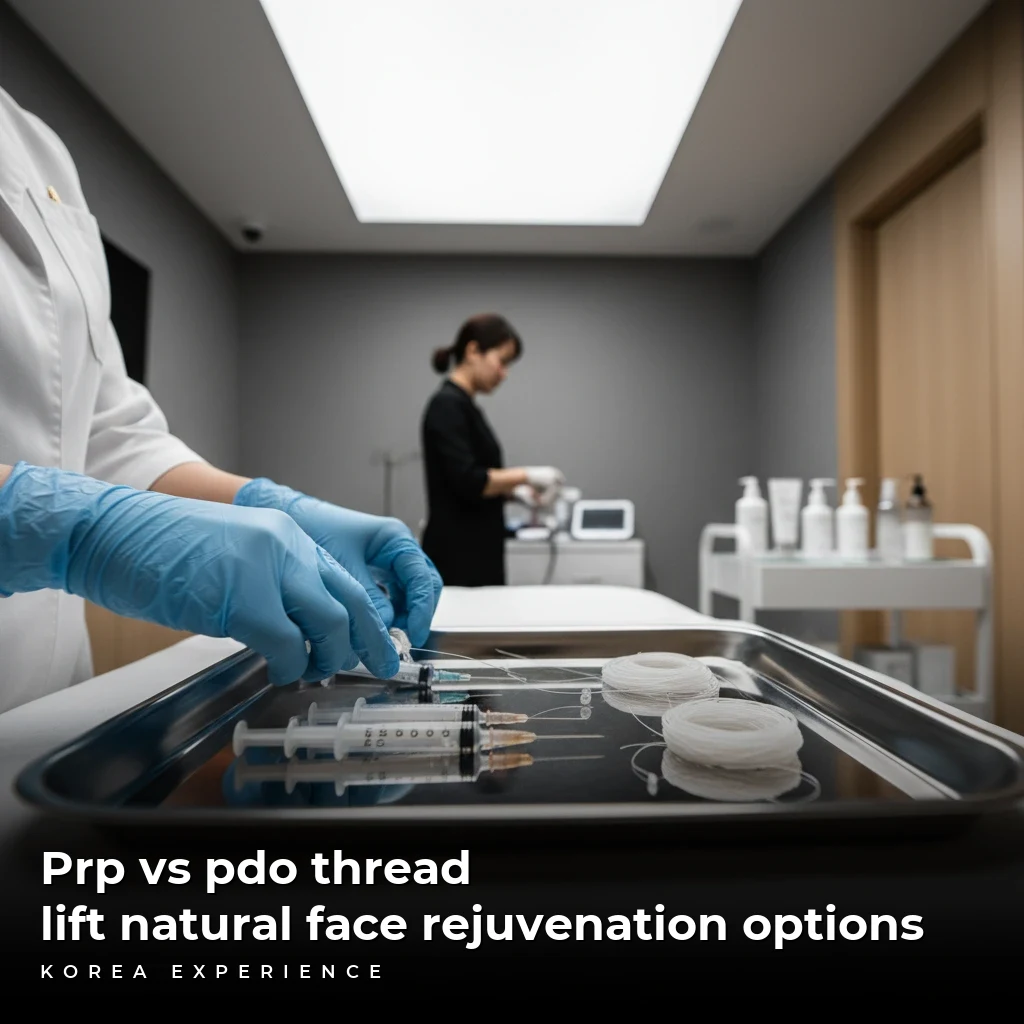
When considering natural face rejuvenation options in South Korea, the two most frequently debated non-surgical treatments are PRP (Platelet-Rich Plasma) therapy and PDO (Polydioxanone) thread lifts. While both fall under the umbrella of "natural" because they stimulate your body's own collagen production rather than relying solely on synthetic fillers, they serve fundamentally different purposes. PRP is primarily a skin quality and texture treatment designed to rejuvenate from the cellular level, whereas PDO thread lifts are structural treatments designed to physically lift sagging tissue and redefine facial contours.
The short answer: PRP utilizes your own blood plasma to boost collagen and improve skin texture with minimal downtime (1-2 days), making it ideal for glow and fine lines. PDO threads use dissolvable sutures to physically lift sagging skin and define jawlines, requiring 1-2 weeks of recovery but offering immediate, dramatic structural changes.
Key Takeaways
- 1PRP costs ₩150,000-400,000 per session; PDO threads range from ₩80,000-150,000 per thread
- 2PRP focuses on skin texture and 'glass skin' glow; PDO focuses on lifting sagging tissue
- 3Korea offers advanced 'combination therapies' combining both for under $1,500 USD
Medical Disclaimer
The content in this article is for informational purposes only and does not constitute medical advice. Always consult with a board-certified dermatologist or plastic surgeon. In Korea, medical emergencies can be reported to 119. For medical consultation help in English, call 1339.
Understanding the basics: What are these treatments?
Before booking a flight to Seoul, it is crucial to understand exactly what occurs during these procedures. South Korea is the global capital of aesthetic innovation, often performing these treatments with proprietary techniques that differ from Western practices.
What is PRP (Platelet-Rich Plasma)?
Often marketed as the "Vampire Facial," PRP involves drawing a small amount of your own blood (typically 10-20ml), spinning it in a centrifuge at high speeds (usually around 3,000 RPM for 10 minutes) to separate the red blood cells from the plasma. The resulting gold-colored plasma is rich in platelets and growth factors.
In Korean clinics, this plasma is then re-injected into the skin using a mesotherapy gun or microneedling device. The growth factors trigger a healing response, stimulating collagen and elastin production. It is the ultimate "natural" filler because 100% of the material comes from your own body.
What is a PDO Thread Lift?
PDO (Polydioxanone) is a biodegradable polymer that has been used in cardiac surgery sutures for decades. In a thread lift, these sutures are inserted into the subcutaneous layer of the skin using a cannula or needle.
There are two main mechanisms at play here:
- Mechanical Lift: Barbed or cogged threads physically grab the skin tissue and pull it upwards, providing an instant lift against gravity.
- Biological Stimulation: As the threads dissolve over 6 to 8 months, they provoke a "foreign body reaction" that stimulates neocollagenesis (new collagen formation) along the path of the thread, maintaining the lift even after the thread is gone.
📊 Procedure Popularity in Korea
The Korean advantage: Why travel for this?
You might wonder why you should travel 10+ hours to Seoul for procedures available in Los Angeles or London. The answer lies in volume, expertise, and price point. A typical dermatologist in Gangnam may perform 10 to 15 thread lifts per day, whereas a Western counterpart might perform that many in a month. This high volume leads to exceptional manual dexterity and specific techniques that minimize bruising.
Furthermore, Korean clinics often utilize "cocktail" treatments. It is rare to get just PRP. You will likely be offered a package that includes a deep pore cleanse, the PRP injection, a cryotherapy cooling session, and a modeling mask to finish—all for a price lower than the injection alone in the US.
For a broader look at the anti-aging landscape, check out our guide on anti-aging treatments in Korea.
Detailed breakdown: PRP therapy in Korea
In Korea, PRP is often referred to as "Jaga-hyeol" (Self-blood) therapy. It is heavily favored by those seeking the famous "Chok-chok" (dewy/moist) look.
The process
The entire visit usually takes about 60 to 90 minutes.
- Cleansing: Thorough double cleansing of the face.
- Numbing: Application of a topical anesthetic cream (lidocaine) for 20-30 minutes.
- Blood Draw: A nurse draws about 20ml of blood from your arm.
- Centrifuge: The blood is spun while you wait.
- Injection: The doctor uses either a manual syringe or a specialized injector gun (like the DermaShine Pro) to inject the plasma into the dermis.
- Aftercare: A cooling sheet mask and LED light therapy are applied to reduce redness.
📖 The PRP Journey
Step 1: Consultation & Numbing
Skin analysis followed by 30 mins of numbing cream.
Step 2: Blood Draw & Spin
15-20ml drawn from arm; processed in 10 mins.
Step 3: Injection Phase
Micro-injections across the face. Mild discomfort.
Pain and recovery
Pain is subjective, but most patients rate PRP injections a 3 or 4 out of 10 with numbing cream. The "injector guns" used in Korea use suction to pull the skin up before the needle enters, which significantly reduces pain signals.
Recovery Data:
- Immediate: Face will look red and slightly swollen, similar to a sunburn.
- 24 Hours: Redness subsides; pin-point bruising may be visible.
- 48 Hours: Makeup can be applied; skin looks normal.
- Results: Visible "glow" starts at 1 week; peak collagen results at 4-6 weeks.
Detailed breakdown: PDO thread lift in Korea
Thread lifts are more invasive than PRP but offer structural changes that injectables cannot achieve. Korean doctors are famous for the "Fox Eye" lift and the V-line jaw contouring using threads.
Types of threads used
- Mono Threads: Smooth threads without barbs. These don't lift; they tighten. Dozens (sometimes 50+) are inserted in a mesh pattern to thicken crepey skin.
- Cog/Barb Threads: These have hooks that latch onto tissue to physically pull. Used for jawlines and cheeks.
- Screw/Twisted Threads: Used to add volume to sunken areas like nasolabial folds.
Pro Tip: The 'Mint' Lift
Ask specifically for "Mint Threads" (Minimally Invasive Nonsurgical Thread). This is a patented Korean brand of molding cog threads widely considered the gold standard for lifting strength and durability.
The procedure
This is a sterile procedure requiring a strict aseptic environment.
- Design: The doctor marks the entry and exit points on your face with a white pencil while you are sitting upright.
- Anesthesia: Unlike PRP, this requires local anesthesia injections (lidocaine shots) at the entry points, which stings for about 10 seconds.
- Insertion: A cannula (blunt-tip needle) carrying the thread is guided under the skin. You will feel pressure and a strange "crunchy" sensation, but it should not be sharp pain.
- Tightening: The cannula is removed, leaving the thread. The doctor pulls the exposed ends to engage the barbs, lifting the face.
- Trimming: Excess thread is trimmed.
Pain and recovery
Pain during the procedure is managed well, but the recovery is more significant than PRP.
- Immediate: You will look "pulled" or tight. Puckering (dimpling) of the skin is possible but usually resolves in a week.
- Swelling: Peaks at day 2-3.
- Sensations: You may feel sudden "zings" or electric shocks for 2 weeks if you open your mouth too wide.
- sleeping: You must sleep on your back for 2 weeks to avoid putting pressure on the threads.
Comparative analysis: Which is right for you?
To help you decide, we have broken down the specific attributes of each treatment. This section is critical for setting expectations.
PRP vs PDO: Feature Comparison
| Feature | PRP Therapy | PDO Thread Lift |
|---|---|---|
| Primary Goal | Skin Texture & Glow | Structural Lift & Contour |
| Downtime | 1-2 Days | 1-2 Weeks |
| Pain Level (1-10) | 3 (Mild) | 5 (Moderate pressure) |
| Result Longevity | 6-12 Months (with maintenance) | 12-18 Months |
| Anesthesia | Topical Cream | Local Injection |
The synergy effect
Many medical tourists opt for both. This is often called the "Full Face Rejuvenation Package." The logic is simple: Threads lift the sagging structure, while PRP improves the quality of the skin draping over that structure. If you do both, threads are usually done first, followed by PRP in the same session or a few days later, as the growth factors can actually speed up the healing of the thread insertion points.
For those planning a comprehensive trip, timing is everything. If you are combining this with sightseeing, check out our guide on booking medical consultations in Korea to manage your schedule.
Cost analysis: Korea vs. Western pricing
One of the primary drivers for medical tourism is cost. Below is a breakdown of average prices in Seoul (specifically the Gangnam/Apgujeong districts) compared to US averages in 2026. Note that prices fluctuate based on exchange rates; assume roughly ₩1,350 to 1 USD.
💵 Cost Comparison (2026 Estimates)
Using premium Mint threads (8-10 threads)
Includes cleansing & mask
Additional Context: In the US, a single PRP session often costs $800+, and a thread lift can range from $2,500 to $4,000. In Korea, you are often paying 30-40% of that price.
- Tax Refund: Don't forget that cosmetic procedures in Korea are eligible for a VAT refund (approx. 7-8% of the total cost). You will receive a receipt at the clinic to scan at the airport kiosks before departure.
Finding the right clinic
Seoul has over 500 aesthetic clinics in the Gangnam district alone. Navigating this can be overwhelming.
Location strategy
The highest concentration of reputable clinics is found near Gangnam Station (Exits 10, 11, 12) and Sinsa Station (Garosu-gil area). Sinsa tends to be slightly more boutique and upscale, while Gangnam Station has larger, high-volume "factory" style clinics that are cheaper but less personalized.
"Avoid clinics that only advertise via heavy discount banners on the subway. The best clinics for foreigners are those that have dedicated English interpreters on staff, not just a receptionist who speaks basic English. Look for 'Board Certified Plastic Surgeon' or 'Dermatologist' certifications in the lobby—general practitioners can legally do these procedures, but specialists are safer."
When researching, look for specific doctors rather than just brand names. Check if they are members of the Korean Association of Plastic Surgeons. For a curated list of top spots, refer to our article on best Korean skin clinics in Gangnam.
The recovery timeline: Planning your trip
If you are coming to Korea for these treatments, you cannot fly home immediately after a thread lift.
Medical Trip Itinerary
Arrival & Consultation
Land at Incheon. Check into hotel. Afternoon consultation.
Procedure Day
Morning procedure. Rest in hotel. Order porridge delivery.
Light Recovery
Shopping/Cafes (wear a mask/hat). Avoid saunas or heavy sweating.
Follow-up & Departure
Quick check-up to ensure threads are settled. Fly home.
Dietary Tips for Recovery: Korean culture places high importance on food for healing. After your procedure, visit a "Juk" (porridge) restaurant like Bonjuk. Pumpkin porridge (Hobak-juk) is famous in Korea for reducing facial swelling. Read more about this in our guide to best Korean healing foods for surgery recovery.
Ideal candidates: Who should choose what?
Not everyone is a candidate for threads. If you have excessive skin laxity (very loose skin), a thread lift will not provide a sufficient result and a surgical facelift might be necessary. Conversely, if you are 25 and just want a "snatched" look, threads might be overkill and cause unnecessary scar tissue.
PDO Thread Lift Analysis
- ✓Immediate visible lift
- ✓Stimulates long-term collagen
- ✓Dissolvable (not permanent)
- ✓Cheaper than surgical facelift
- ✗Risk of dimpling or asymmetry
- ✗Downtime of 1-2 weeks
- ✗Not suitable for heavy skin
- ✗Temporary (12-18 months)
Ideal Candidate for PRP:
- Ages 25-45.
- Concerns: Dullness, fine lines, acne scarring, large pores.
- Skin Type: Any, but excellent for thin, dry skin.
Ideal Candidate for PDO Threads:
- Ages 30-55.
- Concerns: Mild to moderate sagging in jowls, nasolabial folds, or drooping brows.
- Skin Type: Needs enough skin thickness to hide the threads. Very thin skin may show thread ridges.
Important safety considerations
While Korea is safe, medical tourism carries risks.
- Ghost Doctors: In larger clinics, ensure the doctor consulting you is the one performing the procedure.
- Product Authenticity: You have the right to ask to see the package of the threads or the PRP kit before it is opened.
- Flying: It is generally safe to fly 48 hours after threads, but the cabin pressure can increase swelling and discomfort. Wait 5-7 days if possible.
Conclusion
Choosing between PRP and PDO thread lifts depends entirely on your goals. If you want the famous Korean "glass skin" and preventative aging, PRP is your answer. If you need to turn back the clock on gravity and sharpen your jawline without surgery, PDO threads offer a high-value solution in Seoul.
For many travelers, the best approach is a consultation upon arrival. Korean doctors are known for their honest (sometimes brutally so) assessments and will tell you exactly which modality will suit your facial structure.
❓ Frequently Asked Questions
Have more questions?Contact us →
About the Author
Korea Experience Team
Written by the Korea Experience editorial team - experts in Korean medical tourism, travel, and culture with years of research and firsthand experience.
⚠️ Medical Disclaimer
The information provided on this website is for general informational purposes only and does not constitute medical advice. Always consult with qualified healthcare professionals before making any medical decisions.
Explore more in Medical Tourism
World-class medical procedures at competitive prices. From plastic surgery and dermatology to dental care and health checkups — your complete guide to medical tourism in Korea.
Browse All Medical Tourism ArticlesContinue Reading
Explore more articles you might find interesting
A detailed guide comparing FUE and FUT hair transplants in Seoul, including 2026 price data, recovery timelines, and success rates for medical tourists.
Compare Airbnb and recovery hotels for medical tourism in Korea. Discover costs, safety features, and amenities for your post-surgery stay.
Comprehensive guide to vaginal rejuvenation in Seoul 2026. Compare costs (saving 30-50%), English-speaking clinics, laser treatments, and surgical options.
Compare Ultherapy, Thermage, and Shurink costs and results. Discover why Seoul offers treatments at 30-50% less than global rates with our 2026 guide.
Explore the ultimate guide to Mint and Silhouette Soft thread lifts in Korea for 2026 Learn about procedures costs clinics and recovery
Comprehensive guide to mental health resources for medical tourists in Korea. Find English-speaking counselors, recovery centers, and costs in 2026.