Retirement planning for long term expats in south Korea
A comprehensive guide to pensions, visas, healthcare, and housing for expats planning to retire in South Korea. Secure your future in the Land of Morning Calm.
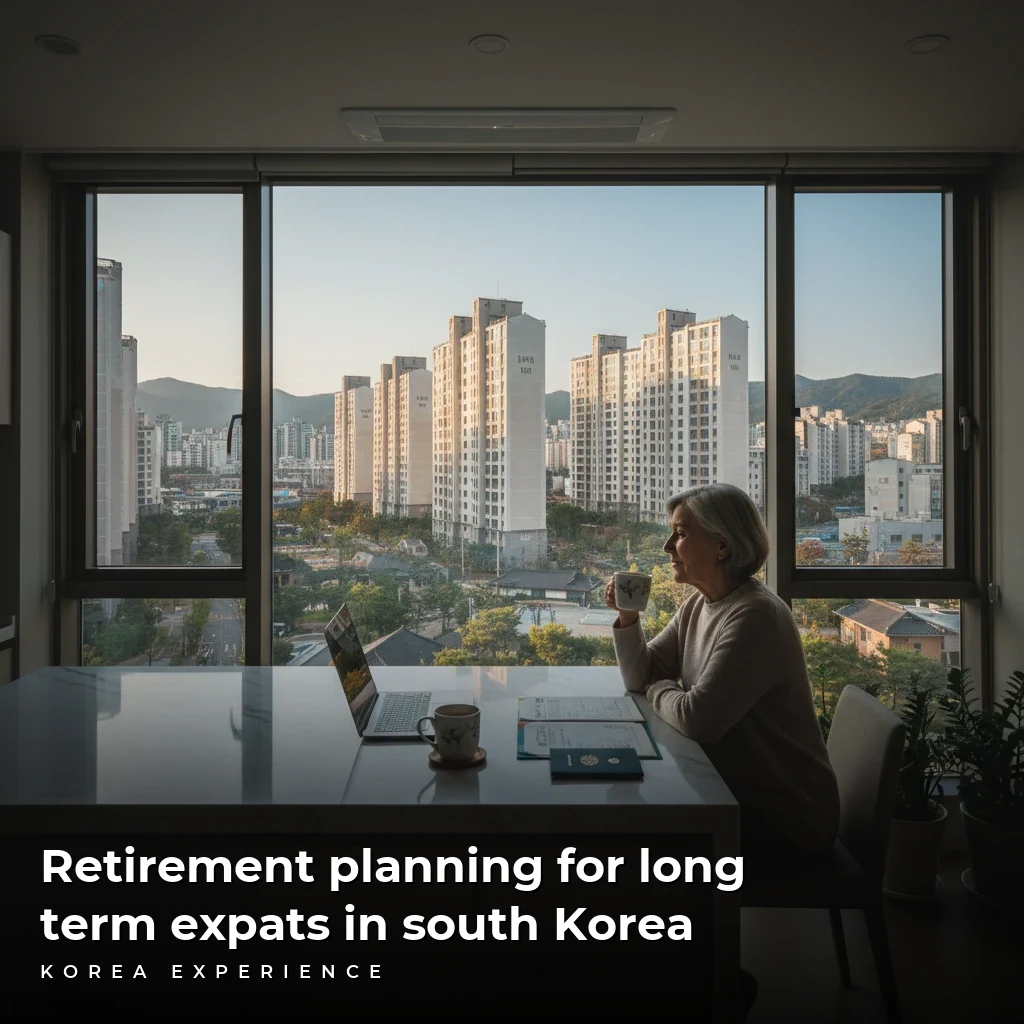
Retiring in South Korea was once considered an anomaly for Western expats. The traditional trajectory involved teaching English or working corporately for a few years before returning "home" to settle down. However, the paradigm has shifted. With South Korea’s world-class healthcare system, safe streets, and vibrant lifestyle, a growing number of long-term residents are choosing to make the peninsula their permanent home post-retirement.
Retirement planning for expats in Korea is a complex puzzle involving visa stability, the National Pension Service (NPS), private annuities, and navigating a unique housing market. Unlike retiring in Southeast Asia, Korea is not a budget destination; it is a premium lifestyle choice that requires strategic financial planning. To retire comfortably in Seoul as a couple, financial experts estimate a necessary monthly income of approximately 3.5 million to ₩4.5 million, assuming housing is already secured.
For more details, check out our guide on Best Korea SIM Cards for Long-Term Travelers Beyond Airpo....
Whether you are a university professor, a corporate executive, or a business owner, understanding the nuances of the Korean retirement ecosystem is critical to ensuring your golden years are as comfortable as your working ones.
Related reading: Getting a post paid phone plan without a long term contract.
Key Takeaways
- 1Permanent Residency (F-5 Visa) is virtually mandatory for secure retirement, requiring strict income thresholds around ₩85 million.
- 2The National Pension Service (NPS) covers expats, but lump-sum refunds upon departure often disqualify you from future monthly payouts.
- 3Silver Towns (senior housing) require deposits ranging from 300 million to ₩900 million with monthly fees of 1.5 to ₩4 million.
The Foundation: Securing Your Legal Status
Before discussing finances, we must address the most critical hurdle: the visa. You cannot simply "retire" in Korea on a tourist visa or standard work visa. Korea does not currently offer a specific "Retirement Visa" like Thailand or Malaysia. Therefore, long-term expats must secure Permanent Residency (F-5).
Learn more in our comprehensive guide to Korean pension refund guide 2026 for foreigners and expats.
The F-5 Permanent Residency Route
The F-5 visa is the gold standard for retirees. It allows you to stay in Korea indefinitely without a sponsoring employer and gives you access to the local job market if you choose to work part-time.
For more details, check out our guide on Retiring in Korea Long Term Visa Guide for Seniors.
There are several pathways to the F-5, but the most common for long-term residents is the F-5-10 (for those with a Bachelor's degree who have lived in Korea for 5+ years) or the F-5-1 (General Permanent Residency).
Path to Permanent Residency
Standard Work Visa (E-7/E-2)
Maintain continuous residence and good tax standing.
F-2-7 or F-2-99
Transition to a resident visa based on points or long-term stay.
F-5 Application
Apply for Permanent Residency once income exceeds 2x GNI.
The financial barrier for the F-5 is significant. As of 2026, applicants generally need to prove an annual income of double the Gross National Income (GNI) per capita. With the GNI per capita hovering around ₩44 million, you are looking at an income requirement of roughly ₩88 million in the previous tax year.
Visa Maintenance Warning
Even with an F-5 visa, you must re-enter South Korea at least once every two years to maintain your status. Failure to do so results in the immediate cancellation of your Permanent Residency.
Financial Pillars: The National Pension Service (NPS)
The National Pension Service (NPS) is the bedrock of retirement income in Korea. As an employee, you contribute 4.5% of your monthly salary, and your employer matches that 4.5%, for a total of 9%.
To Lump-Sum or Not?
Many expats are familiar with the "Lump-sum Refund," which allows citizens of certain countries (like the US, Canada, and Australia) to collect all their contributions plus interest when they leave Korea.
However, if you plan to retire in Korea, you should not take the lump-sum refund. To qualify for a monthly pension payout, you must have contributed to the NPS for a minimum of 10 years (120 months).
- Vesting Period: 10 Years
- Pension Age: Currently 63, rising to 65 by 2033.
- Payout Calculation: Based on your average income over your working life and the national average income.
📊 NPS Contribution Limits (2026 Est.)
If you are from a country with a Social Security Agreement with Korea (like the USA, UK, or Germany), your years of coverage in your home country may count toward the 10-year minimum requirement in Korea (totalization), though the payout amount is calculated pro-rata.
Understanding the Replacement Rate
The income replacement rate of the NPS has been declining. It is currently targeting around 40% of your pre-retirement income, assuming a 40-year contribution history. For most expats with only 15-20 years of contributions, the NPS alone will not sustain a comfortable lifestyle. You can expect a monthly payout ranging from ₩400,000 to ₩900,000 depending on your income level.
Building Wealth: Private Pensions (IRP) and Tax Breaks
Because the NPS is insufficient for a "premium" lifestyle, you must utilize the third pillar of the Korean pension system: the Individual Retirement Pension (IRP).
The IRP Advantage
An IRP is a tax-deferred retirement account similar to a 401(k) or IRA in the United States. Expats with alien registration numbers are fully eligible to open these accounts at any major Korean bank (Shinhan, Woori, KEB Hana, etc.) or securities firm.
Why open an IRP?
- Tax Credits: You receive a tax credit of 13.2% (or 16.5% if total income is under ₩55 million) on contributions up to ₩9 million per year. This is an immediate return on investment.
- Compound Growth: Investment gains within the IRP are tax-deferred until withdrawal.
- Severance Pay: When you leave a job, your severance pay (roughly one month's salary for every year worked) must be deposited into an IRP if you are under age 55.
📖 How to Maximize Your IRP
Step 1: Open Account
Visit your bank or use their app to open an IRP account. Bring your ARC.
Step 2: Contribute Monthly
Set up an automatic transfer of ₩750,000/month to hit the ₩9 million annual cap.
Step 3: Invest Wisely
Don't leave cash idle. Invest in TDFs (Target Date Funds) or S&P 500 ETFs listed on the KRX.
"Many expats mistakenly leave their IRP contributions in cash or low-interest bonds earning 1-2%. You must log in to your banking app and actively select ETFs or mutual funds. The difference between a 2% return and a 7% market return over 15 years is hundreds of millions of Won."
Healthcare: The Jewel of Korean Retirement
One of the primary reasons expats choose to stay is the National Health Insurance Service (NHIS). For retirees, the peace of mind provided by affordable, high-quality care is unmatched.
NHIS for Retirees
Once you stop working, you switch from an "Employee Subscriber" to a "Regional Subscriber." Your premium will no longer be split with an employer. Instead, it is calculated based on your income + assets (property/cars).
- Average Regional Premium: For a retiree owning a modest apartment and having some pension income, expect to pay between ₩150,000 and ₩300,000 per month.
- Coverage: Outpatient visits cost 3,000–₩5,000. Surgeries and major procedures are covered at 80–90% (or more for critical illnesses like cancer, where coverage hits 95%).
Long-Term Care Insurance
Korea has a mandatory Long-Term Care Insurance system for the elderly, which is automatically bundled with your health insurance. This covers services like nursing homes, bath visits, and home help if you become incapacitated due to age-related illness (dementia, stroke, etc.).
The cost is roughly 12.81% of your health insurance premium. If your health insurance is ₩200,000, the long-term care add-on is about ₩25,600.
📋 Medical Costs for Seniors
Housing: The "Silver Town" Revolution
Housing is the largest variable in your retirement budget. While many expats rent via Wolse (monthly rent + deposit), retirees often prefer stability. The concept of "Silver Towns" (senior living complexes) has exploded in popularity.
These are not nursing homes; they are high-end apartment complexes with attached medical clinics, cafeterias, gyms, and social clubs, specifically for those over 60.
Cost of Silver Towns
Silver Towns operate on a large deposit system.
- Location: Usually on the outskirts of Seoul (Gyeonggi-do) or near major hospitals.
- Entry Deposit: ₩300 million to ₩900 million (refundable upon exit).
- Monthly Fees: 1.5 million to ₩4 million (covers meals, utilities, maintenance).
The Classic 500(더 클래식 500)
Dualism in Housing
If a Silver Town is out of budget, the traditional Jeonse (large lump-sum deposit, no rent) system is an option, though it carries risk if the landlord defaults.
💵 Retirement Housing Comparison (Monthly Cost)
Includes 60 meals/mo, maid service, utilities
Rent + maintenance only (Gyeonggi-do area)
Cost of Living: Forecasting Your Budget
Inflation in Korea has been steady, particularly in food prices. As of 2026, a "comfortable" retirement budget looks significantly different than it did in 2020.
Geographic Arbitrage
Living in Seoul is expensive. Moving just 30-60 minutes out to cities like Suwon, Bundang, or Gimpo can reduce housing costs by 30-40% while maintaining access to the Seoul subway network. Alternatively, moving to Busan or Gangneung offers a coastal lifestyle at a reduced cost.
Monthly Budget for Couple (2026 Estimates)
| Category | Seoul (Gangnam) | Gyeonggi (Bundang) | Busan (Haeundae) |
|---|---|---|---|
| Housing (Rent) | ₩2.5M | ₩1.5M | ₩1.2M |
| Groceries/Food | ₩1.2M | ₩1.0M | ₩900k |
| Healthcare/Ins | ₩400k | ₩400k | ₩400k |
| Leisure/Misc | ₩1.0M | ₩800k | ₩700k |
Total Estimated Monthly Spend:
- Seoul: ~₩5.1 Million
- Gyeonggi: ~₩3.7 Million
- Busan: ~₩3.2 Million
Estate Planning and Inheritance Tax
This is the section most expats overlook, often with disastrous consequences. South Korea has one of the highest inheritance tax rates in the world, topping out at 50% for estates over ₩3 billion.
The Residency Trap
If you are a tax resident of Korea when you die, your worldwide assets (not just those in Korea) may be subject to Korean inheritance tax.
- Exemptions: There is a basic deduction of roughly ₩500 million (or up to ₩1 billion if leaving everything to a spouse).
- Implication: If you own a house in your home country worth $1 Million USD (approx. 1.4 Billion ₩) and you die while a resident of Korea, your heirs could face a massive Korean tax bill on that foreign property.
Retiring in Korea: The Verdict
- ✓World-class, affordable healthcare
- ✓Extremely low crime rate
- ✓Excellent public transport infrastructure
- ✓Active senior culture
- ✗Punitive inheritance tax rates
- ✗High deposit requirements for housing
- ✗Rising cost of fresh produce
- ✗Air quality issues in spring
Making the Decision
Retiring in Korea is a commitment to a high-density, high-convenience lifestyle. It requires diligent saving, specifically utilizing the IRP system to offset the modest NPS payouts. It also demands a clear legal strategy regarding your visa status well before you reach retirement age.
For the long-term expat who has built a life, friendships, and perhaps a family here, the infrastructure for a safe and healthy retirement is excellent. Just ensure your financial house is in order before you hang up your hat.
❓ Frequently Asked Questions
Have more questions?Contact us →
About the Author
Korea Experience Team
Written by the Korea Experience editorial team - experts in Korean medical tourism, travel, and culture with years of research and firsthand experience.
Explore more in Living in Korea
Everything expats and long-term visitors need to know — from visa requirements and housing to banking, healthcare, and daily life tips.
Browse All Living in Korea ArticlesContinue Reading
Explore more articles you might find interesting
A comprehensive guide to long-term stay options for retirees in South Korea, including investment visas, costs, and healthcare access.

Master the art of the Korean visa run in 2026. Comprehensive guide on routes, costs, immigration risks, and re-entry tips for long-term travelers.

The comprehensive step-by-step guide for moving to South Korea in 2026. Covers visas, housing, banking, and detailed costs for a seamless transition.

Secure a Korean post-paid SIM without the 2-year commitment. A complete guide to MVNOs, identity verification, and flexible mobile plans for expats.
Compare Goshiwons and Officetels for short-term stays in Korea. We analyze costs, comfort, and contracts to help you choose the best housing option.
Master the complex South Korean recycling system with our comprehensive 2026 guide covers bags, fines, food waste, and schedules.