How to Recycle in Korea 2026: A Foreigner's Bunrisugeo Guide
The short answer? Korea's recycling system is incredibly strict—you need to separate everything from food waste to clear PET bottles, and if you mess it up.
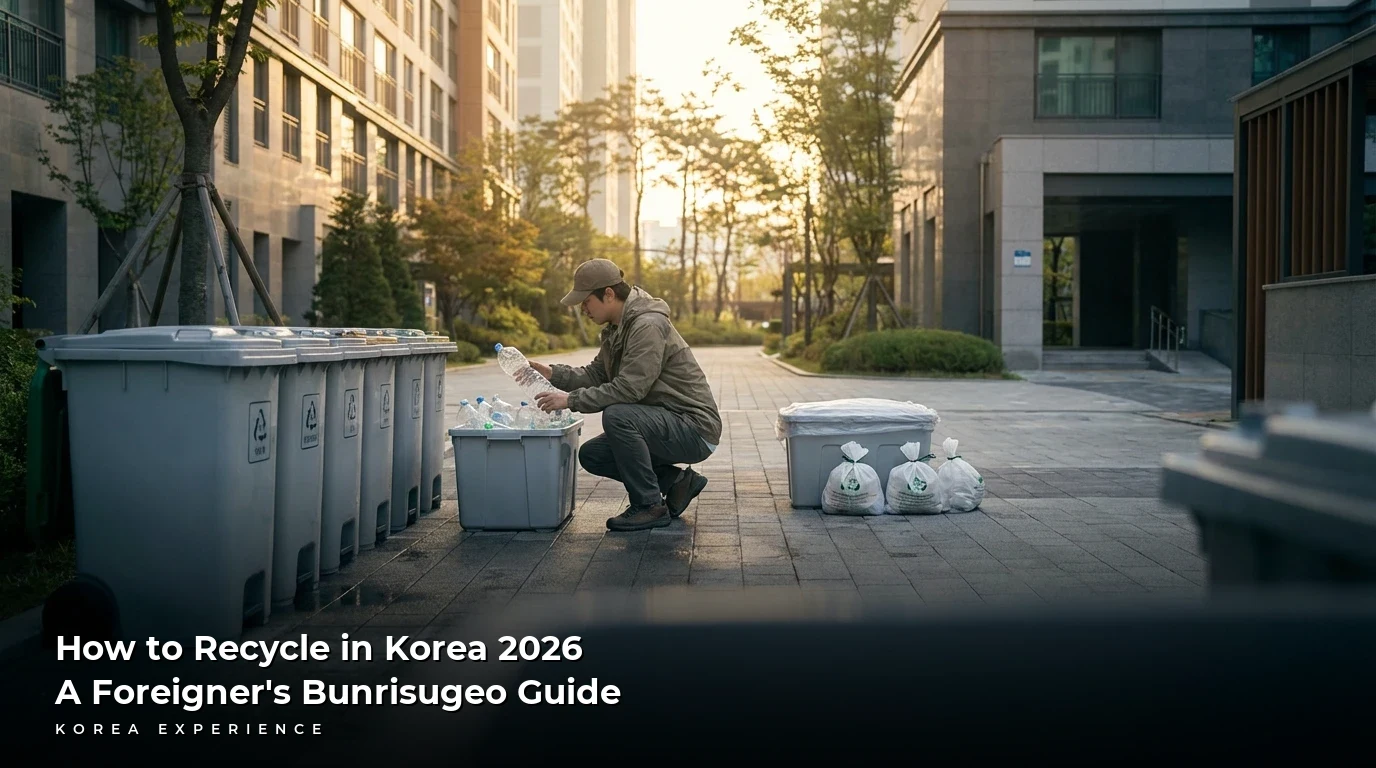
So, you've just moved into your new Korean apartment, and you're staring at a collection of bags, bins, and mysterious recycling instructions in a language you don't fully understand. Welcome to Bun-ri-su-geo (분리수거)—Korea's famously meticulous waste separation system. The short answer is: Korea has one of the world's highest recycling rates (65%+), and they got there by making everyone sort their trash into 5-10 different categories. Mess it up, and you could face fines. Get it right, and you'll feel like an environmental hero.
For the official rules and penalty structure, see our guide to recycling rules in Korea including sorting and penalties.
Still looking for a place? Start with our guide to finding apartments with English-friendly real estate apps.
Recycling is just one aspect of apartment life. Learn about Korean apartment etiquette.
Key Takeaways
- 1The short answer is: Korea's waste system is based on the 'polluter pays' principle. You must buy district-specific plastic bags for general waste, and food waste follows the 'Animal Edibility Rule'—if a pig can't digest it, it's not food waste.
- 2Here's the number that matters: The recycling rate hit 65.77% in 2022, compared to just 29% in 1997. That's the highest among OECD nations, and it happened because of strict separation requirements.
- 3The 2026 update you need to know: As of January 1, all bottled water must be 'Murabel' (label-free) to improve recycling purity. You'll see bottles with info printed on the cap or accessible via QR code.
📋 Korean Recycling Quick Facts
The Foundation: Jongnyangje (Volume-Based Waste Fee)
The backbone of Korea's waste system is Jongnyangje (종량제)—the volume-based waste fee introduced in 1995. Here's how it works: you must purchase government-certified plastic bags for general waste from your local convenience store or supermarket. The revenue from these bag sales funds local waste collection.
Key rules:
- Bags are district-specific. Seoul bags won't work in Busan.
- Sizes range from 3L to 100L (though 100L is being phased out for worker safety).
- Using the wrong bag or disposing at unapproved times = fines up to ₩1,000,000.
- Disposal times: typically 20:00 to midnight on designated days.
Korea's Waste Management Evolution
Jongnyangje Introduced
Volume-based waste fee system launches, driving 47% reduction in per capita waste.
The Starting Point
Landfill at 63.85%, recycling at just 29.04%. Crisis-level conditions.
RFID Food Waste
Smart bins with weighing systems introduced in major cities.
Record Recycling
Recycling hits 65.77%, landfill drops to 10.23%. OECD's highest rate.
Murabel & 10% rPET
Label-free bottles mandatory; beverage producers must use 10% recycled PET.
The Categories: What Goes Where
Waste Categories Explained
| Category | What Goes In | Container/Method | Common Mistakes |
|---|---|---|---|
| General Waste | Non-recyclable items | District-specific bag | Wrong district bag |
| Food Waste | Edible by animals | Yellow bag or RFID bin | Including bones/shells |
| Clear PET | Water/soda bottles only | Separate stream (2026) | Labels still attached |
| Mixed Plastics | Other plastic containers | Transparent bag | Food residue inside |
| Paper/Cardboard | Boxes, newspapers | Bundled or folded | Tape still attached |
| Glass | Bottles (unbroken) | Return for deposit | Mixing with ceramics |
General Waste (일반쓰레기)
Non-recyclable items destined for incineration or landfill. Must go in district-specific bags. Most Seoul districts use white or transparent bags; other cities vary.
Food Waste (음식물쓰레기)
This is where Korea gets strict. The rule is the "Animal Edibility Test": if a pig can eat and digest it, it's food waste. If not, it's general waste.
NOT food waste (goes to general waste):
- Large bones (cow, pig, chicken)
- Shells (clams, oysters, crabs)
- Hard pits (peach, mango)
- Onion/garlic skins
- Eggshells
- Tea bags, coffee grounds
Many apartments now have RFID-equipped smart bins that weigh your food waste and charge you digitally—resulting in 41-51% reduction in food waste generation.
Recyclables
Clear PET: Rinse, flatten, cap. As of 2026, most bottles are "Murabel" (label-free), so no label removal needed.
Mixed Plastics: HDPE, LDPE, PP, PS, PVC containers. Must be clean and residue-free.
Paper: Cardboard boxes must have tape and labels removed, then flattened. Paper cups and milk cartons are high-grade paper with separate bins.
Metal Cans: Rinse and flatten. Butane/spray cans must be punctured safely before disposal.
Glass: Return beer and soju bottles to convenience stores for ₩100-130 deposit refund. Broken glass, mirrors, and ceramics are NOT recyclable.
📖 How to Properly Dispose of Waste in Your Korean Apartment
Step 1: Buy the Right Bags
Go to your nearest GS25, CU, or supermarket and buy your district's official garbage bags. Ask for 'Jong-nyang-je bong-tu' (volume-based bags). Get 10L or 20L for general waste and yellow bags for food waste.
Step 2: Set Up Your Sorting System
Create separate containers in your home: one for general waste, one for food waste, one for plastics, one for paper/cardboard, and small bags for PET bottles and cans.
Step 3: Apply the 'Pig Test' to Food
Before tossing something in food waste, ask: 'Could a pig eat this?' If yes, food waste. If no (bones, shells, pits, onion skins), general waste.
Step 4: Know Your Disposal Schedule
Check with your building manager or look for posted signs. Most buildings have designated spots and times (usually 20:00-midnight). Some have 24/7 RFID bins.
The 2026 Changes You Need to Know
2026 Murabel (Label-Free) System
- ✓Simplified Sorting: No more peeling off stubborn labels from water bottles. The 2026 mandate means all bottled water comes label-free.
- ✓Higher Recycling Quality: Removing labels eliminates a major source of contamination, resulting in purer recycled PET.
- ✓Less Plastic Waste: Estimated 2,270 metric tons of label plastic eliminated annually from the waste stream.
- ✗Finding Product Info: You'll need to check the bottle cap or scan a QR code for product details—slightly less convenient.
- ✗Transition Period: Until January 2027, single bottles at small retailers may still have labels during the grace period.
- ✗Confusion for Tourists: Less visible branding can make it harder to identify what you're buying.
Mandatory Recycled Content (10% rPET) Starting January 2026, major beverage producers (Coca-Cola Korea, Lotte Chilsung, Jeju Samdasoo) must ensure at least 10% of their PET feedstock comes from recycled sources. This will increase to 30% by 2030.
Toy Recycling For the first time, 18 categories of plastic toys are now under mandatory recycling obligations. Previously, toys were just incinerated.
Extended Producer Responsibility (EPR) "Difficult to recycle" packaging now faces 30% surcharge (up from 20%), while "highest recyclability" products can get 50% fee reductions.
The biggest mistake expats make is treating all plastics the same. In 2026, clear PET bottles have their own dedicated stream separate from other plastics. If you're throwing your water bottles in with detergent containers, you're actually contaminating the recycling batch.
Large Waste and Electronics
For furniture, mattresses, or large appliances, you need to follow a different process:
- Report to your district office (Gu-cheong) online or in person
- Purchase a sticker (₩1,000-₩15,000 depending on item size)
- Attach the sticker and place the item at the designated spot
- Wait for collection (usually within 1-3 days)
Apps like Baegi (빼기) and Yeogiro (여기로) let you upload a photo, get an instant quote, and pay via mobile. You receive a digital code to write on the item if no physical sticker is available.
Free Electronic Recycling: Large home appliances (refrigerators, TVs, air conditioners) can be collected for free through the Ministry of Environment's "Visiting Collection Service." Small appliances are also free if you dispose of 5+ at once.
Pro Tip: The 'Nephron' AI Recycling Robot
Look for SuperBin's 'Nephron' machines in your neighborhood. These AI-driven reverse vending machines accept clear PET bottles and aluminum cans, giving you 10-15 points per item. At 2,000 points, you can cash out to your bank account. It's free money for recycling!
Warning: Hazardous Waste
Batteries, fluorescent bulbs, and expired medications are HAZARDOUS WASTE. Never put them in regular trash. Find dedicated collection boxes in apartment basements, community centers, or subway stations. Medications should be returned to pharmacies.
No Korean Phone/ARC? Here's What To Do
Language Barrier: Call the 120 Dasan Seoul Call Center (press 9 for foreign languages). They offer professional assistance in English, Chinese, Japanese, Vietnamese, and Mongolian. Apps: Most recycling apps require Korean verification, but the SuperBin Nephron machines work without an account—just insert bottles and get a receipt.
❓ Frequently Asked Questions
Have more questions?Contact us →
Your First Week Action Plan
Day 1-2: Buy bags
- Visit your local convenience store
- Buy district-specific general waste bags (10L or 20L)
- Buy yellow food waste bags if your building doesn't have RFID bins
- Get clear bags for recyclables
Day 3-4: Set up sorting
- Get small bins/bags for each category
- Post the "Pig Test" reminder on your fridge
- Find your building's disposal area and schedule
Day 5-7: Practice and adjust
- Take your first bag to the disposal area
- Watch what your neighbors do (Koreans are excellent recyclers)
- Ask your building manager if you have questions (or use 120 hotline)
Korea's recycling system seems overwhelming at first, but once you get the hang of it, it becomes second nature. You'll find yourself automatically rinsing containers and removing labels without thinking. And honestly? There's something satisfying about knowing that 96.8% of your food waste is being turned into animal feed, compost, or biogas instead of rotting in a landfill.
Welcome to the world of Bun-ri-su-geo—you've got this!
Sources
- Ministry of Environment (Korea) - 2026 Murabel regulations and EPR updates.
- Seoul Metropolitan Government - Jongnyangje system and district bag requirements.
- Korea Environment Corporation - Food waste recovery statistics and RFID bin data.
- SuperBin (Nephron) - AI recycling robot locations and point redemption.
- 120 Dasan Call Center - Multilingual support for waste disposal questions.
About the Author
Korea Experience Team
Written by the Korea Experience editorial team - experts in Korean medical tourism, travel, and culture with years of research and firsthand experience.
Explore more in Living in Korea
Everything expats and long-term visitors need to know — from visa requirements and housing to banking, healthcare, and daily life tips.
Browse All Living in Korea ArticlesContinue Reading
Explore more articles you might find interesting
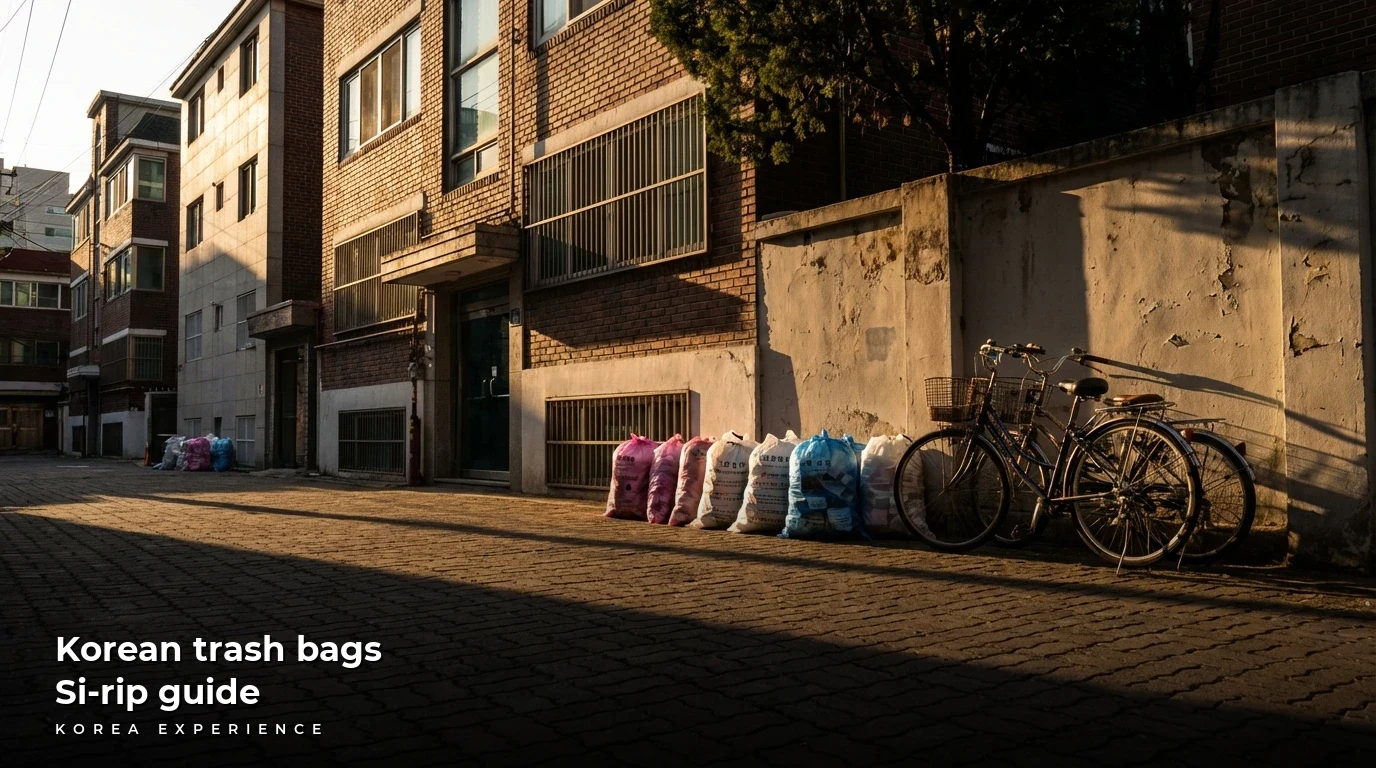
Master the 2026 Korean trash system to avoid 100,000 KRW fines. Learn bag prices, sorting rules, and how to recycle 60% of waste like a local.
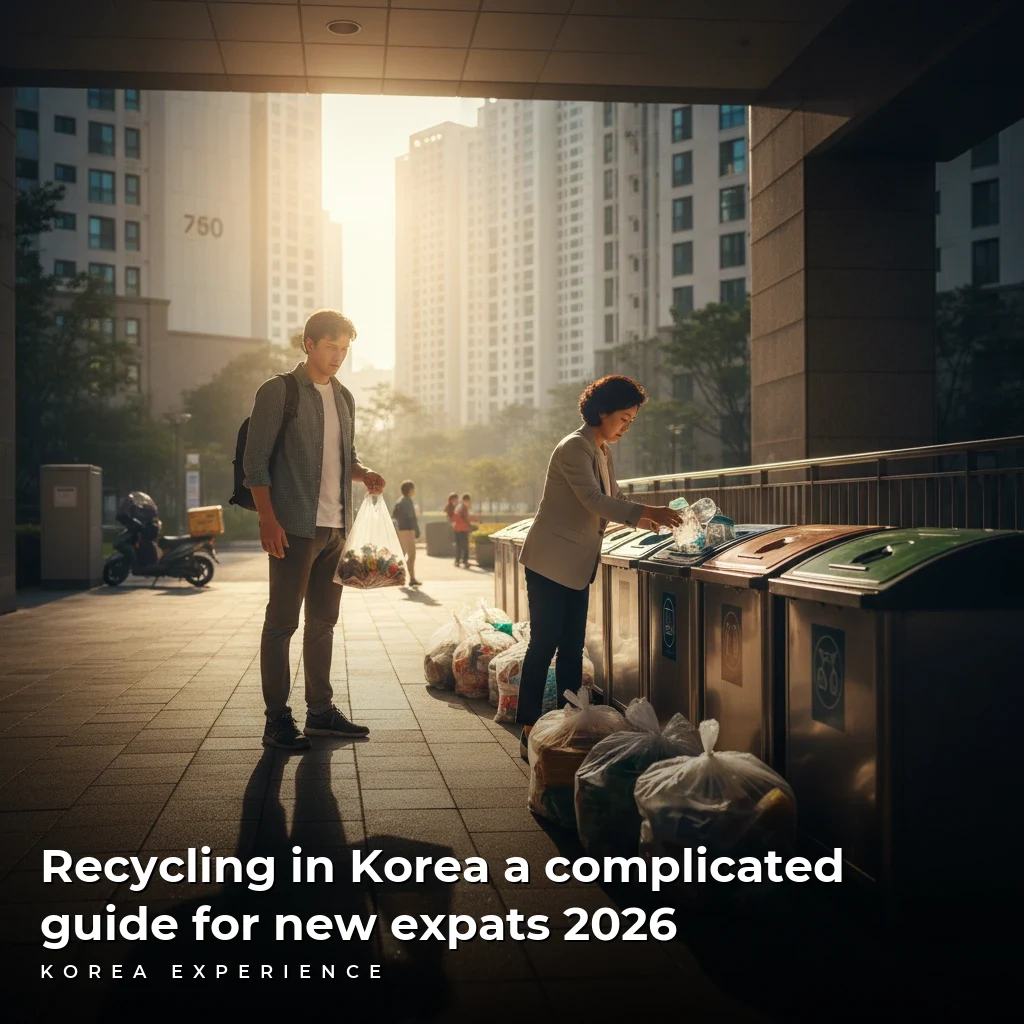
Master the complex South Korean recycling system with our comprehensive 2026 guide covers bags, fines, food waste, and schedules.
The short answer? Gwangjang remains the king of value for traditional eats.
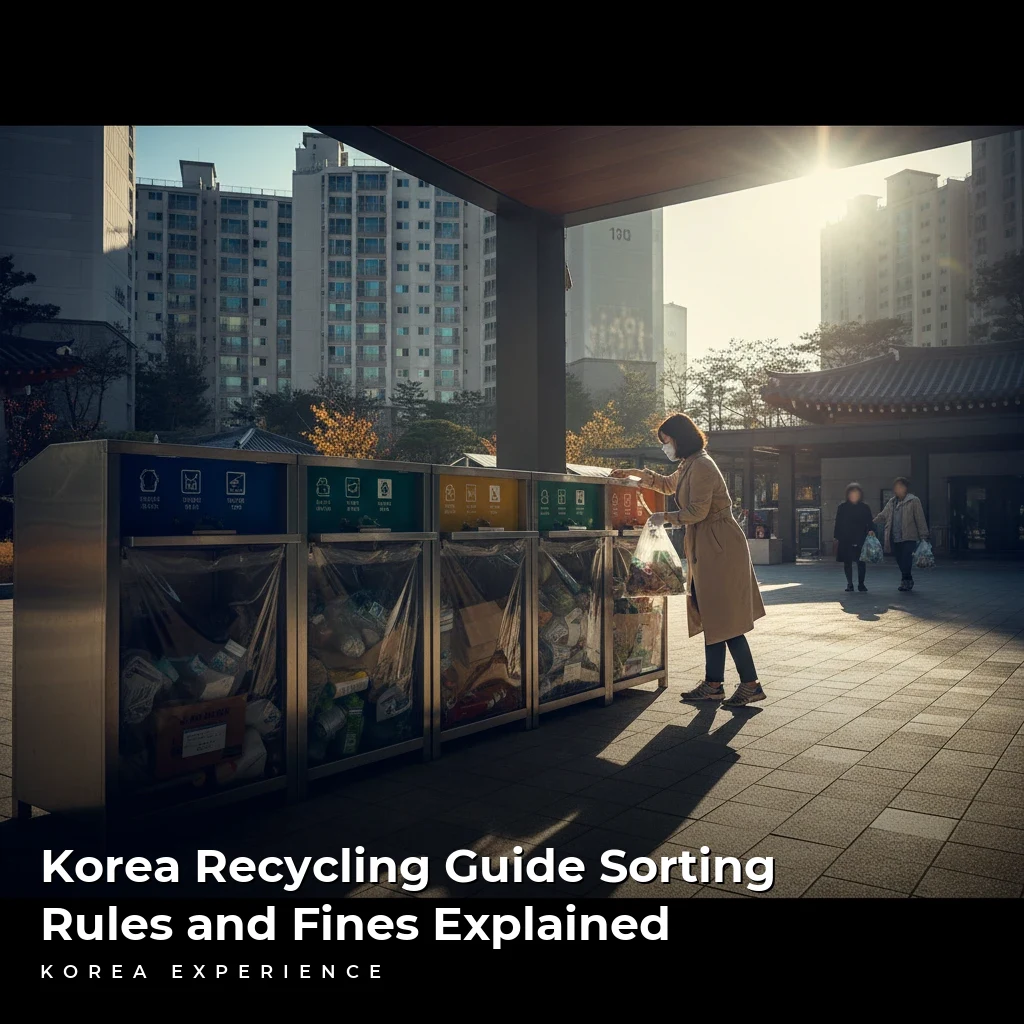
Master the strict South Korean recycling system. Learn about sorting categories, specific colored bags, disposal schedules, and how to avoid heavy fines.
The short answer is that you absolutely do not need a Korean phone number or an ARC to book the country's best meals—you just need the specific 'CatchTable...
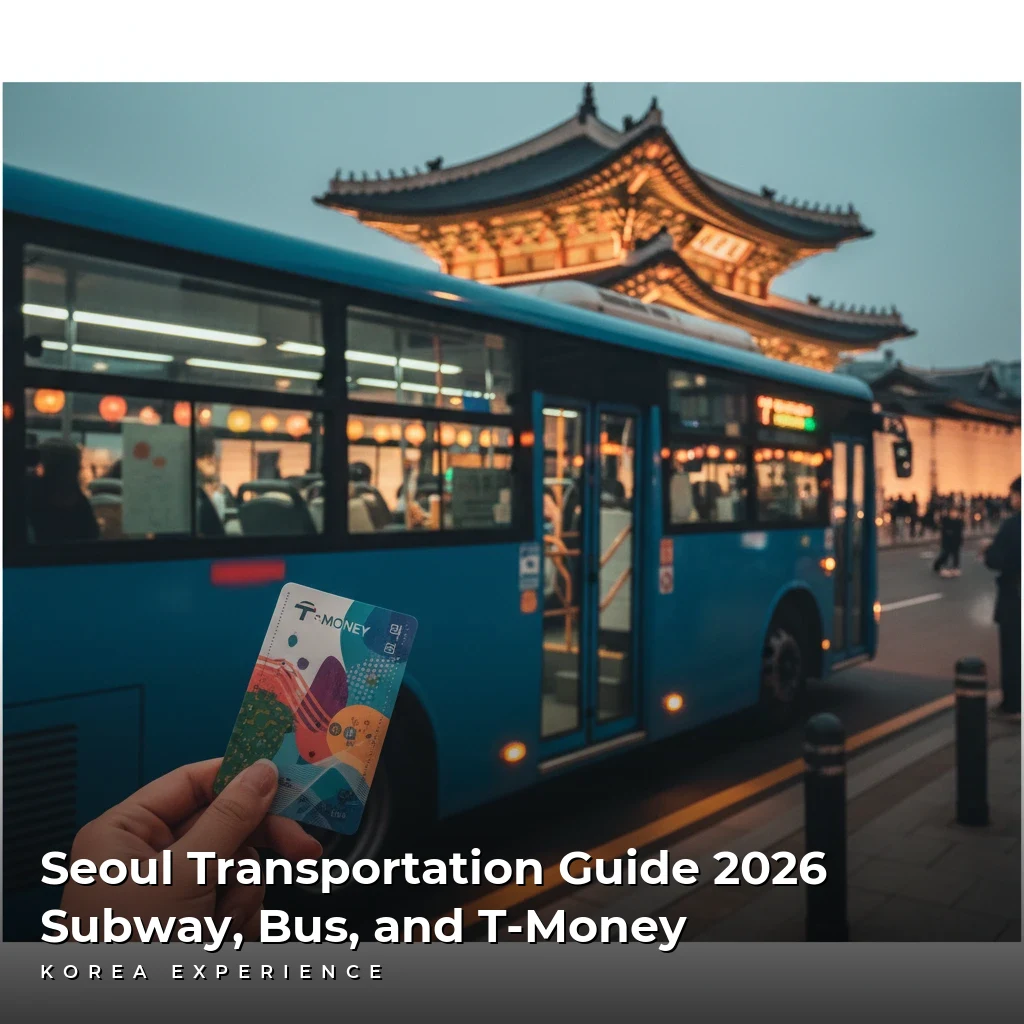
Master Seoul's 2026 transit system. From the Climate Card saving you ₩62,000 to new AREX schedules, here is everything tourists need to navigate like a local.