The Art of Somaek How to Make the Perfect Beer-Soju Mix
Master the iconic Korean Somaek beer and soju mix with our 2026 guide. Discover ratios, techniques, etiquette, and where to enjoy this social drink in Korea.
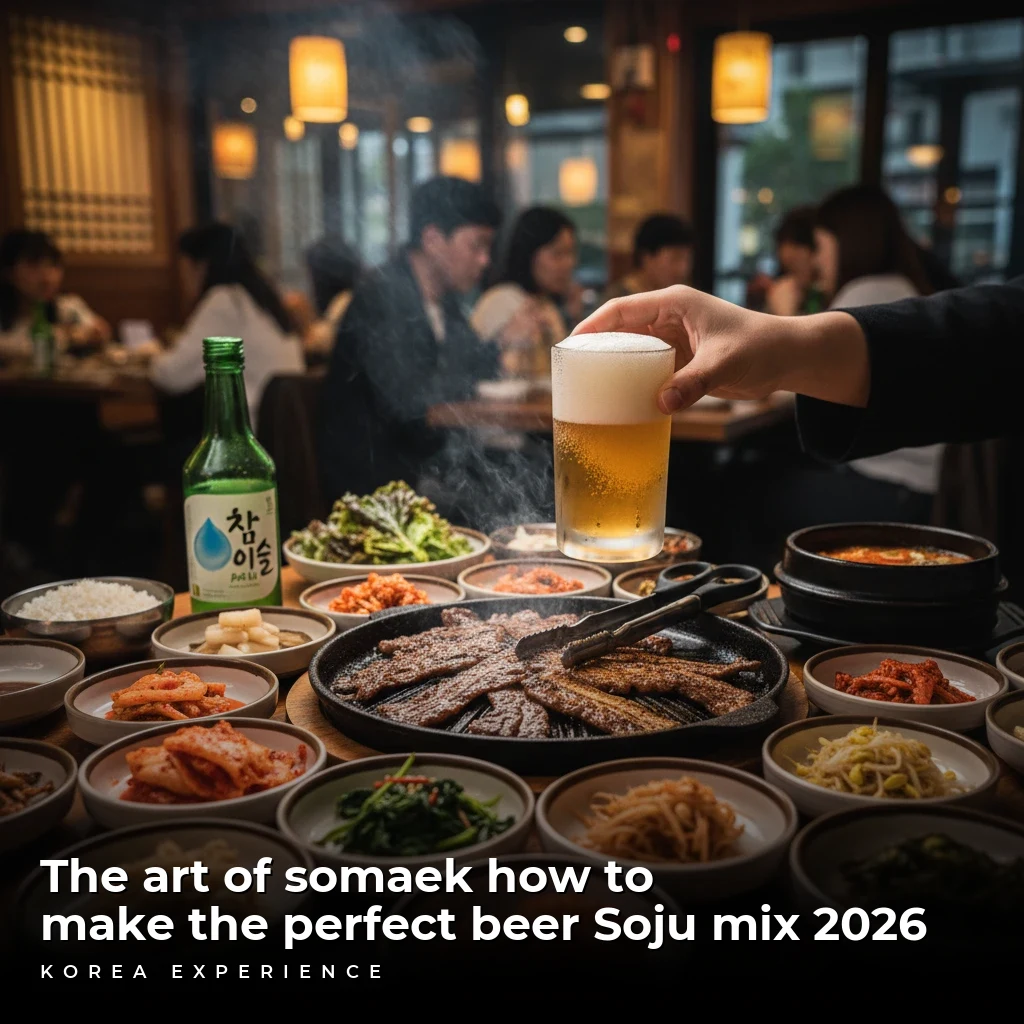
The Art of Somaek: How to Make the Perfect Beer-Soju Mix 2026
Stepping into Korea's vibrant nightlife or gathering for a casual meal with friends, you're bound to encounter a familiar ritual: the creation of Somaek. This iconic Korean concoction, a simple yet profoundly social blend of soju and beer, is more than just a drink; it's a cultural cornerstone, a symbol of camaraderie, and an essential part of the Korean experience. For international travelers and expats eager to immerse themselves in local customs, mastering the art of Somaek is a badge of honor.
However, despite its seemingly straightforward nature, crafting the perfect Somaek (pronounced "so-maek") is often elusive. Many attempts lead to an unbalanced mix, a flat texture, or simply a missed opportunity to truly appreciate its unique appeal. Are you pouring too much soju? Not enough beer? Or perhaps you're missing the crucial technique that creates that satisfying fizz?
This comprehensive guide, updated for 2026, will demystify the art of Somaek. We'll explore its fascinating history, delve into the ideal ingredients and essential tools, provide step-by-step instructions for various mixing techniques, and arm you with the insider knowledge on Korean drinking etiquette. By the end, you'll not only be able to confidently prepare your own Somaek but also understand the cultural nuances that make it such a cherished part of Korean social life, elevating your next Korean dining or drinking experience. Get ready to impress your friends and savor one of Korea's most beloved alcoholic beverages like a true local.
What is Somaek? A Cultural Deep Dive into Korea's Favorite Mix
Somaek is a portmanteau of "soju" (Korea's national liquor, a clear, distilled spirit typically made from rice or other starches) and "maekju" (the Korean word for beer). Together, they form a potent, effervescent, and surprisingly smooth beverage that has become synonymous with Korean social gatherings. It's the ultimate icebreaker, a celebratory toast, and a comforting companion during long conversations.
The Origins of a Korean Icon
While the exact origins of Somaek are shrouded in the mists of anecdotal history, its rise to prominence is undeniably tied to the late 20th and early 21st centuries. As Korea industrialized and its economy boomed, soju became more widely accessible and affordable. Concurrently, the popularity of light, crisp lagers grew. The combination likely emerged from pragmatic ingenuity in workplaces and military barracks, where people sought to temper the harshness of soju with the refreshing effervescence of beer.
Initially, it was a practical way to extend one's drinking capacity or make soju more palatable. Over time, however, it evolved into a deliberate art form, with specific ratios and mixing techniques becoming part of the shared cultural knowledge. Today, Somaek is a deeply ingrained tradition, a testament to the Korean spirit of communal enjoyment and resilience.
More Than Just a Drink: Somaek's Social Significance
In Korea, drinking is often a communal activity, deeply woven into the fabric of social interaction and relationship building. Somaek perfectly embodies this ethos. It's rarely consumed alone; instead, it's shared among friends, colleagues, and family members. The act of mixing Somaek itself can be a performance, a gesture of care, or a playful competition.
- Bonding and Camaraderie: Sharing Somaek fosters a sense of unity. Pouring for others, especially elders or superiors, shows respect and builds rapport.
- Stress Relief and Celebration: After a long day of work, a Somaek with colleagues (often during a "hoe-sik" or company dinner) is a common way to unwind and de-stress. It's also a staple at celebrations, from birthdays to promotions.
- Cultural Immersion: For foreigners, learning to make and enjoy Somaek is a direct gateway into understanding and participating in Korean social dynamics. It's a conversation starter, a bridge between cultures, and an unforgettable experience.
The cultural significance of Somaek extends beyond mere consumption; it's a ritual that strengthens social ties, facilitates communication, and creates lasting memories. Understanding this context enriches every sip of your perfectly mixed Somaek.
The Essential Ingredients: Choosing Your Components for Excellence
The foundation of an outstanding Somaek lies in selecting the right soju and beer. While the concept is simple – mix soju and beer – the nuances of each component greatly influence the final taste, strength, and overall experience. For the ideal Somaek, you generally want lighter, crisper options that complement each other without overpowering.
Soju Selection: Navigating the Green Bottles
Soju, with its iconic green bottle, is the heart of Somaek. Traditional soju is a clear, neutral-tasting spirit, but variations exist. For Somaek, most Koreans prefer the standard, unflavored varieties.
- Chamisul Fresh (참이슬 후레쉬): Perhaps the most popular soju brand, Chamisul Fresh is known for its clean, crisp taste and slightly lower alcohol by volume (ABV) compared to its "Original" counterpart (typically around 17-18%). Its mildness makes it an excellent choice for Somaek, allowing the beer's flavor to come through without being masked by a strong alcoholic bite.
- Chum Churum (처음처럼): Meaning "like the first time," Chum Churum is another strong contender. It's often marketed for its smooth, soft taste, attributed to alkaline water in its distillation process. With an ABV similar to Chamisul Fresh, it also blends seamlessly into Somaek, offering a slightly different, equally pleasant mouthfeel.
- Jinro Is Back (진로이즈백): A retro-packaging sensation, Jinro Is Back has gained immense popularity for its slightly lower ABV (around 16%) and an even smoother, cleaner finish, reminiscent of older soju styles. This makes it an incredibly versatile and forgiving option for Somaek, particularly for those who prefer a less alcoholic or less assertive taste.
- Flavor Profiles to Avoid (for traditional Somaek): While flavored sojus (grapefruit, green grape, plum, etc.) are popular for standalone drinking, they are generally not used for Somaek. Their strong artificial flavors tend to clash with beer, creating an unharmonious mix. Stick to the classic clear varieties for an authentic Somaek experience.
Beer Selection: The Golden Partner
The beer in Somaek plays a crucial role in providing carbonation, a refreshing taste, and diluting the soju's potency. Light, crisp, and less hoppy lagers are universally preferred, as they don't overpower the delicate soju flavor.
- Hite (하이트): A long-standing favorite, Hite is a classic Korean pale lager. It's known for its light body, clean finish, and moderate carbonation, making it a reliable choice that provides a refreshing balance without introducing strong bitter notes.
- Cass Fresh (카스 후레쉬): Often considered the most popular beer for Somaek, Cass Fresh boasts a very crisp, slightly sweet, and highly refreshing profile. Its high carbonation is key to the satisfying fizz and aroma that characterizes a well-made Somaek. Many Koreans swear by Cass for its ability to cut through the soju and create a lively mix.
- Terra (테라): A relatively newer entrant, Terra has quickly gained a large following. It's marketed as a premium lager made with Australian malt, offering a slightly richer but still clean taste with excellent carbonation. It's a fantastic choice for those looking for a slightly more robust beer flavor that still plays well with soju.
- OB Golden Lager (OB 골든라거): While slightly less common than Cass or Hite, OB Golden Lager offers a smooth, clean taste with a decent malt backbone. It's another solid option that contributes to a balanced Somaek.
The Importance of Carbonation: Regardless of the brand, high carbonation in the beer is vital. It provides the effervescent "kick" and helps to carry the aroma, making the Somaek feel fresh and lively. Flat beer results in a flat Somaek.
Table 1: Popular Soju Brands for Somaek
| Brand Name | Average ABV | Key Taste Profile | Ideal For |
|---|---|---|---|
| Chamisul Fresh | 17-18% | Clean, crisp, neutral | Classic, balanced Somaek |
| Chum Churum | 16.5-17.5% | Smooth, soft, mellow | Softer, gentler Somaek |
| Jinro Is Back | 16-16.9% | Very clean, exceptionally smooth, light | Beginners, lighter Somaek |
| Soju Original | 20-21% | Stronger alcoholic taste, more robust | Stronger Somaek, experienced drinkers |
Table 2: Ideal Beer Brands for Somaek
| Brand Name | Beer Style | Key Characteristic | Best For |
|---|---|---|---|
| Cass Fresh | Pale Lager | Very crisp, high carbonation, refreshing | Lively, effervescent Somaek |
| Hite | Pale Lager | Light body, clean finish, moderate carbonation | Balanced, smooth Somaek |
| Terra | Premium Lager | Richer malt notes, excellent carbonation | Slightly bolder, complex Somaek |
| OB Golden Lager | Pale Lager | Smooth, clean, slight malt sweetness | Reliable, easy-drinking Somaek |
The Tools of the Trade: Gear for the Perfect Mix
While you can technically make Somaek with any glass and a spoon, having the right tools can significantly enhance the experience, making the mixing process smoother, more precise, and even a little theatrical.
The Somaek Glass: Iconic and Practical
The ideal Somaek glass isn't just any glass; it's specifically designed for the mix.
- Dimensions: These glasses are typically slightly wider than a standard soju shot glass but narrower than a beer glass, perfectly sized to hold one shot of soju and then be filled with the appropriate amount of beer. They usually hold around 200-300ml.
- Markings: Many Korean establishments use glasses with subtle lines or markings that indicate the "golden ratio" for Somaek (e.g., a line for the soju level, another for the beer). These are incredibly helpful for consistent mixing.
- Material: Often made of sturdy glass, these glasses are designed to withstand enthusiastic mixing and clinking during a "Geonbae" (cheers!).
- Where to find them: You can often buy Somaek glasses at Korean supermarkets or online specialty stores that import Korean goods. When in Korea, simply ordering Somaek at a restaurant or Pocha will typically get you the correct glassware.
The Somaek Bomb Dropper/Stirrer
This is where the fun and a bit of performance come in. The technique of dropping the soju into the beer (or stirring vigorously) is what often creates the satisfying "bomb" effect – a sudden burst of carbonation and mixing.
- The Spoon or Chopstick: The most common and accessible tool. A long-handled spoon or a pair of chopsticks can be used to balance the soju shot glass on the rim of the beer glass. A sharp tap on the rim of the beer glass or directly on the spoon handle causes the soju to plunge into the beer, creating the iconic Somaek fizz.
- Somaek Mixer Tool (Somaek Mal-yi): For those serious about their Somaek, specialized tools exist. These can range from simple plastic stirrers with a flat end designed to vigorously whisk the soju and beer, to more elaborate devices that hold the soju glass and facilitate a controlled drop. Some even incorporate a spring mechanism to create extra foam. These are often found in novelty stores or larger supermarkets in Korea.
- Why it matters: The rapid mixing generated by these tools isn't just for show. It helps to thoroughly combine the soju and beer, activating the beer's carbonation and creating a consistent taste and texture throughout the drink.
Essential Accessories: Ice and Pitchers
While Somaek is traditionally enjoyed without ice to maintain its carbonation, there are instances where these accessories become useful.
- Ice: If you prefer your drinks extremely cold, or if you're drinking in a particularly warm environment, a small amount of ice can be added to the beer glass before adding the soju. Be mindful that ice will dilute the drink as it melts and can slightly flatten the carbonation.
- Pitchers: When serving a large group, preparing Somaek in a pitcher (usually a beer pitcher, often called a "maekju picheo") is common. This ensures consistency across all servings and saves time. After combining the soju and beer in the pitcher, give it a gentle stir with a long spoon or stirrer to mix without overly flattening the beer.
Having the right tools not only makes the Somaek creation process more enjoyable but also helps achieve that perfectly blended, effervescent drink that's so beloved in Korea. Don't be afraid to experiment with different tools to find your preferred method.
Mastering the Mix: Step-by-Step Somaek Recipes
The heart of Somaek artistry lies in its preparation. While the basic concept is simple, achieving the "perfect" Somaek involves understanding ratios and mastering specific mixing techniques. There's no single right way, but rather preferred methods that cater to different tastes and occasions.
The "Golden Ratio" Theory
The ideal Somaek ratio is highly debated, but a widely accepted starting point is often referred to as the "golden ratio" of 7 parts beer to 3 parts soju (7:3). This ratio strikes a balance, diluting the soju's intensity while allowing its unique character to blend smoothly with the beer's refreshment. However, personal preference reigns supreme:
- For a lighter Somaek: Lean towards 8:2 (more beer, less soju).
- For a stronger kick: Opt for 6:4 (more soju, less beer).
- Expert Tip: Most standard soju shot glasses hold approximately 50ml. This makes it easy to measure. For a typical Somaek glass (200-300ml), one shot of soju is a good starting point, filling the rest with beer.
Method 1: The "Drop and Pop" (Classic Bomb Somaek)
This is the most popular and theatrical method, perfect for individual servings and creating an immediate, effervescent mix.
- Prepare your Glass: Use a clean, dry Somaek glass (or a similar sturdy glass).
- Pour the Beer: Fill the glass approximately 70-80% full with your chosen cold beer (e.g., Cass Fresh or Terra). Leave some space at the top.
- Add the Soju: Pour one shot of soju into a separate soju shot glass.
- Position the Soju: Carefully place the soju shot glass inside the beer glass, resting it on the rim of the beer glass or suspending it slightly above the beer using chopsticks or a long spoon balanced across the beer glass's rim. The goal is for the soju glass to be partially submerged or just touching the beer, poised to drop.
- The "Bomb" Moment: With a sharp, decisive tap, either on the rim of the beer glass directly below the soju glass, or on the handle of the spoon/chopsticks holding the soju glass, cause the soju shot glass to fall into the beer. This sudden impact creates a vigorous reaction, causing the beer to fizz up and mix instantly with the soju.
- Serve Immediately: The Somaek is now perfectly mixed and should be consumed while still highly effervescent.
Method 2: The "Layered Somaek" (Visual Appeal)
This method results in a visually appealing drink with distinct layers before mixing, offering a slightly different drinking experience.
- Prepare your Glass: Start with a clean Somaek glass.
- Pour the Beer: Fill the glass about 70-80% full with cold beer.
- Create the Layer: Take your shot glass of soju. Carefully and slowly pour the soju over the back of a spoon (held upside down) that is resting just above the surface of the beer. This technique helps the denser soju to layer on top of the beer, creating a visible separation.
- Mix Before Drinking: Unlike the "Drop and Pop," the layers in a layered Somaek will eventually mix on their own, but it's best to give it a gentle stir with a spoon or simply sip it until the layers combine for the full Somaek effect. This method is less about the immediate "bomb" and more about the gradual blending or visual aesthetic.
Method 3: The "Pitcher Perfection" (For Groups)
When entertaining a crowd, making individual Somaeks can be cumbersome. This method ensures consistency for multiple servings.
- Choose a Pitcher: Select a clean beer pitcher.
- Calculate Ratios: Determine how many individual servings you want to make. For example, if you're aiming for 5 Somaeks, and each Somaek typically uses 1 soju shot and the rest beer, then you'd add 5 shots of soju and the corresponding amount of beer (e.g., 5 soju shots + beer to fill 5 glasses).
- Pour Soju First: Add the required number of soju shots to the pitcher.
- Add Beer: Slowly pour the cold beer into the pitcher. Pouring slowly helps to minimize excessive foaming.
- Gentle Stir: Using a long stirrer or spoon, gently stir the mixture a few times. Avoid vigorous stirring, which can quickly flatten the beer. The goal is to combine the liquids, not to create a massive head of foam.
- Serve: Pour into individual Somaek glasses and enjoy!
The "Somaek Bomb Tower" (Advanced Party Trick)
This is a fun, albeit advanced, technique for parties, involving a chain reaction of Somaek bombs.
- Setup: Line up several Somaek glasses in a row, each filled with beer.
- Elevate Soju: Place a soju shot glass, filled with soju, on the rim of the first beer glass. Then place another soju shot glass (empty) on top of the first soju glass. Continue this, creating a tower of soju glasses.
- The Domino Effect: Once the tower is built across multiple beer glasses, tap the last soju shot glass in the tower. This should trigger a domino effect, causing all the soju shots to fall into their respective beer glasses, creating a dramatic, simultaneous "bomb" effect.
- Caution: This requires practice and a steady hand. Ensure the glasses are stable to prevent spills and breakages.
Experiment with these methods to find what works best for you and your company. Remember, the goal is not just to mix drinks, but to create a shared, enjoyable experience.
Somaek Etiquette and Insider Tips: Do's and Don'ts
Drinking in Korea is steeped in tradition and etiquette, and Somaek is no exception. Understanding these unwritten rules will not only show respect for Korean culture but also enhance your social interactions.
Pouring Etiquette: Respect and Tradition
The act of pouring drinks for others is highly significant in Korea.
- Two Hands for Elders/Superiors: Always use two hands when pouring a drink for someone older or of higher status. One hand supports the pouring bottle (soju or beer), and the other gently touches your pouring arm or wrist.
- Receive with Two Hands: Similarly, when receiving a drink, especially from an elder or superior, hold your glass with two hands.
- Never Pour Your Own: It's considered impolite to pour your own drink, particularly at the beginning of a gathering. Wait for someone to pour for you, and reciprocate by pouring for others. This is a fundamental aspect of communal drinking.
- Keep Glasses Full: Keep an eye on your companions' glasses and offer to refill them when they are nearly empty. This shows attentiveness and care.
- The First Pour: The most senior person at the table usually initiates the first round of pours, often for everyone present.
Drinking Etiquette: Cheers and Turns
Beyond pouring, how you drink your Somaek also conveys respect.
- Geonbae! (건배!): The Korean equivalent of "cheers!" Raise your glass and make eye contact. It's often followed by a collective shout and a clinking of glasses.
- Turning Away from Elders: When drinking in the presence of someone significantly older or of higher status, it's customary to slightly turn your head and body away from them when taking a sip. This gesture shows deference.
- Finishing Your Drink: When someone pours a drink for you, especially the first one, it's polite to finish it before putting your glass down. You don't have to chug it, but showing appreciation by drinking it is good form.
- Pacing: While Somaek can go down easily, it's stronger than it tastes. Pace yourself, especially during long social gatherings. It's perfectly acceptable to slow down your drinking or decline a refill if you've had enough.
Pairing Somaek with Food: Anju (안주)
Somaek is rarely consumed on its own; it's almost always accompanied by "Anju" – Korean drinking snacks or dishes specifically designed to be eaten with alcohol. The right Anju enhances the Somaek experience.
- Chimaek (치맥): The ultimate pairing of fried chicken (chi-kin) and beer (maek-ju). The greasy, savory chicken cuts through the effervescence of Somaek beautifully.
- Tteokbokki (떡볶이): Spicy rice cakes, often served with fish cakes and a gochujang-based sauce, offer a fiery counterpoint that the refreshing Somaek can temper.
- Pajeon (파전) / Kimchijeon (김치전): Savory pancakes, especially green onion pancake or kimchi pancake, provide a textural and flavorful contrast that pairs well with the crispness of Somaek.
- Sundubu Jjigae (순두부찌개): A soft tofu stew, often spicy, provides a hearty and comforting accompaniment, especially in colder weather.
- Dried Squid and Peanuts: A classic, simple Anju found in many HOFs (beer halls) and Pocha (street pubs).
- Internal Link Opportunity: "For a deeper dive into Korean culinary delights that pair perfectly with Somaek, explore our comprehensive guide to Korean street food and traditional dining experiences."
Practical Tips for a Smooth Experience
- Hydrate: Soju can lead to hangovers. Drink water alongside your Somaek to stay hydrated.
- Pace Yourself: Somaek's easy drinkability can be deceiving. Its alcohol content adds up quickly.
- Don't Be Afraid to Ask: If you're unsure about etiquette, politely ask your Korean companions. They will appreciate your effort to understand their culture.
- Embrace the Experience: More than just the drink, Somaek is about the shared laughter, conversations, and memories created around the table. Relax and enjoy the moment.
By following these guidelines, you'll not only master the art of making Somaek but also seamlessly integrate into the rich and welcoming Korean drinking culture.
Exploring Somaek in Korea: Where to Enjoy Your Creation
While you can certainly make Somaek at home, experiencing it in Korea's diverse drinking establishments adds another layer to its charm. From bustling street-side tents to private karaoke rooms, the atmosphere profoundly influences the Somaek experience.
Pocha (포차): Authentic Street-Side Charm
- Atmosphere: Pocha, short for "pojangmacha," are iconic Korean tented street stalls or casual indoor pubs with a similar rustic vibe. They offer a quintessential Korean drinking experience – lively, often loud, and incredibly authentic. They are perfect for friends gathering after work or for late-night food and drink.
- Menu: Pocha typically serve a wide array of delicious Anju, from Tteokbokki and Sundae (Korean blood sausage) to various grilled skewers and stir-fries.
- Recommended For: Immersive cultural experience, budget-friendly options, late-night bites.
- Locations: You'll find dense concentrations of Pocha in popular nightlife districts like Jongno (종로), Hongdae (홍대), and Gangnam (강남) in Seoul, as well as in major cities across Korea. Look for the red or orange tented structures that light up the night.
HOFs (호프): Casual Beer Halls and Pubs
- Atmosphere: HOFs are relaxed, Western-style beer halls or pubs that are ubiquitous across Korea. They offer a more comfortable, often air-conditioned, environment than Pocha, making them suitable for longer conversations and group gatherings.
- Menu: While beer is central, HOFs also serve soju and an extensive menu of Anju, including favorites like Chimaek (fried chicken and beer), French fries, fruit platters, and dried snacks. Many also offer their own unique fusion dishes.
- Recommended For: Group hangouts, diverse Anju options, comfortable seating, watching sports on TV.
- Locations: HOFs are virtually everywhere. Popular chains like "Beer Ganjeon" or "BHC Chicken & Beer" are common, but local, independent HOFs offer their own unique charm. Just look for the word "HOF" or "맥주" (maekju/beer) in the signs.
Noraebang (노래방): Singing and Sipping
- Atmosphere: Noraebang, or private karaoke rooms, are an integral part of Korean entertainment. They provide a private, soundproof space where friends, family, or colleagues can sing their hearts out. It's common to order Somaek and Anju directly to your room.
- Menu: Most Noraebang offer a selection of drinks, including soju, beer, and soft drinks, along with simple Anju like dried snacks, instant ramen, or fruit.
- Recommended For: Fun group activities, celebrating special occasions, letting loose with friends.
- Locations: Noraebang are found in almost every commercial district. Many are multi-story establishments, especially prevalent in areas like Myeongdong (명동), Sinchon (신촌), and universities districts.
At Home: Recreating the Experience
- Atmosphere: For a more intimate setting, making Somaek at home is a fantastic way to practice your mixing skills and share the culture with friends.
- Menu: Pair your homemade Somaek with your own Korean cooking or easily available snacks.
- Recommended For: Casual gatherings, learning to mix, budget-friendly option.
- Locations: Your own kitchen or living room! Most Korean supermarkets and even convenience stores carry a good selection of soju and beer suitable for Somaek.
Table 3: Best Places to Enjoy Somaek in Korea
| Venue Type | Atmosphere | Recommended For | Typical Anju Pairings |
|---|---|---|---|
| Pocha (포차) | Lively, rustic, authentic street vibe | Cultural immersion, late-night eats | Tteokbokki, Sundae, grilled skewers |
| HOF (호프) | Casual, comfortable, pub-like | Group hangouts, diverse food options | Chimaek, French fries, fruit platters |
| Noraebang (노래방) | Private, energetic, karaoke-focused | Fun parties, letting loose, celebrations | Dried snacks, instant ramen, fruit |
| At Home | Intimate, relaxed, personal | Practicing, casual gatherings | Homemade Korean dishes, store-bought snacks |
Each of these venues offers a unique backdrop for enjoying Somaek, allowing you to tailor your experience to your mood and company. No matter where you choose to enjoy it, Somaek promises a memorable taste of Korean social life.
Frequently Asked Questions About Somaek
Q1: Is Somaek very strong?
A1: The strength of Somaek depends heavily on the soju-to-beer ratio you use. Soju typically has an alcohol by volume (ABV) of 16-25%, while Korean beers are usually around 4-5%. A common Somaek ratio of 7:3 (70% beer, 30% soju) results in a drink with an ABV roughly between 7-10%, making it stronger than most beers but generally less potent than wine or mixed cocktails. It's often described as deceptively smooth, so it's important to drink it slowly and pace yourself.
Q2: Can I use flavored soju for Somaek?
A2: While flavored sojus (like green grape, grapefruit, or plum) are very popular for drinking on their own, they are generally not recommended for traditional Somaek. Their strong, artificial sweetness and fruit flavors tend to clash with the beer, creating an unbalanced and often unpleasant mix. For an authentic and well-balanced Somaek, stick to classic, unflavored soju varieties like Chamisul Fresh or Chum Churum.
Q3: What's the best beer to soju ratio for Somaek?
A3: The "golden ratio" often cited is 7 parts beer to 3 parts soju (7:3). This provides a good balance, where the soju adds a kick without overpowering the beer's refreshing taste. However, this is a matter of personal preference. Beginners might start with an 8:2 ratio for a lighter drink, while those seeking a stronger taste might go for 6:4. Experiment to find your perfect balance!
Q4: What food pairs best with Somaek?
A4: Somaek pairs wonderfully with a variety of Korean drinking snacks, known as "Anju." Classic pairings include Chimaek (fried chicken and beer), Tteokbokki (spicy rice cakes), Pajeon (savory pancakes like green onion or kimchi pancake), and Sundubu Jjigae (soft tofu stew). The refreshing and effervescent nature of Somaek helps to cut through the richness and spice of these dishes, making for a perfect culinary synergy.
Q5: Is it rude to mix my own Somaek in a restaurant or bar?
A5: Generally, it's not considered rude to mix your own Somaek in a casual Korean restaurant, Pocha, or HOF. In fact, it's an expected part of the drinking culture, and many places will even provide the necessary soju shot glasses and beer for you to do so. The act of mixing Somaek is often a social ritual. However, always remember the pouring etiquette: offer to pour for your companions, especially elders or superiors, rather than just focusing on your own drink.
Conclusion: Master the Somaek, Master the Korean Experience
The art of Somaek is far more than just mixing two alcoholic beverages; it's an immersive dive into the heart of Korean social culture. From understanding the nuanced choices between soju and beer brands to mastering the dynamic "Drop and Pop" technique, every step in crafting the perfect Somaek contributes to a richer, more authentic Korean experience.
You've learned that the "golden ratio" of 7:3 is a great starting point, but personal preference is key. You now know the cultural significance behind pouring and drinking etiquette – the respect shown with two hands, the subtle turn away from elders, and the importance of never pouring your own drink. Furthermore, you're equipped with insider knowledge on where to best enjoy your Somaek, whether it's the bustling charm of a Pocha, the casual comfort of a HOF, or the energetic privacy of a Noraebang.
So, the next time you find yourself with a green bottle of soju and a cold can of Cass or Terra, don't just pour. Embrace the ritual, practice your technique, and toast to new friendships and unforgettable memories. Mastering Somaek is a tangible way to connect with Korean traditions and enjoy your time in this fascinating country to its fullest.
Actionable Takeaways:
- Choose Wisely: Opt for unflavored soju (Chamisul Fresh, Chum Churum, Jinro Is Back) and light, crisp lagers (Cass Fresh, Hite, Terra).
- Practice Your Ratio: Start with 7 parts beer to 3 parts soju, then adjust to your taste.
- Master a Technique: Learn the "Drop and Pop" for individual servings or the "Pitcher Perfection" for groups.
- Embrace Etiquette: Pour for others with two hands, receive with two hands, and turn away from elders when drinking.
- Pair with Anju: Enhance your Somaek with classic Korean drinking snacks like Chimaek or Tteokbokki.
Now, go forth and craft your perfect Somaek! Geonbae! (Cheers!)
About the Author
Korea Experience Team
Written by the Korea Experience editorial team - experts in Korean medical tourism, travel, and culture with years of research and firsthand experience.
⚠️ Medical Disclaimer
The information provided on this website is for general informational purposes only and does not constitute medical advice. Always consult with qualified healthcare professionals before making any medical decisions.
Continue Reading
Explore more articles you might find interesting
Explore Korea's most enchanting romantic date night restaurants. From Seoul's hidden gems to Busan's coastal delights, find the perfect spot for your special evening.
Unlock Korea's vibrant drinking culture with our 2026 guide to Soju, Makgeolli, essential etiquette, delicious Anju, and the best Pocha experiences.
Discover the ultimate guide to group dining in Korea, featuring the best restaurants and practical tips for large parties to ensure an unforgettable culinary journey.