Table etiquette in Korea why you should not pick up your rice bowl
Master Korean dining rules and learn why lifting your rice bowl is a cultural taboo. Essential guide for travelers in 2026.
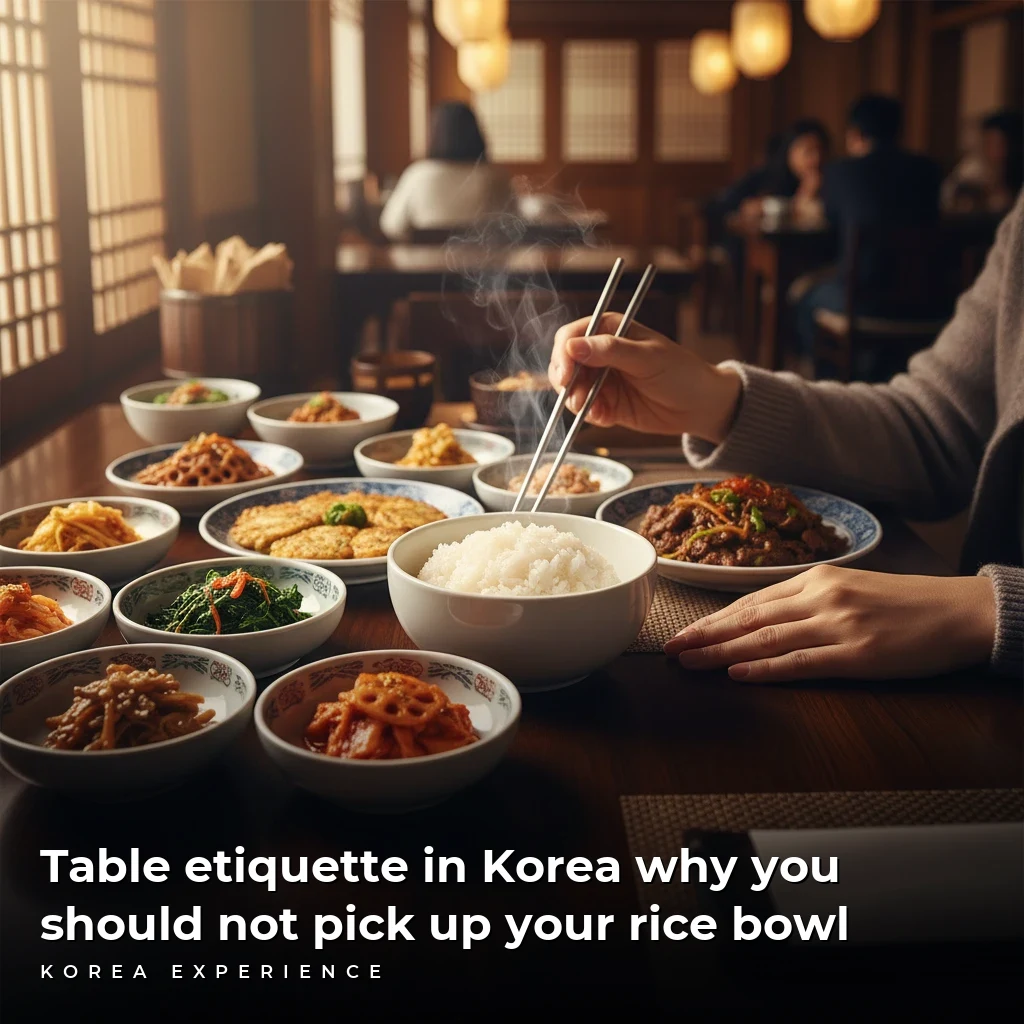
Dining in South Korea is a communal symphony of sizzling grills, endless side dishes, and precise social rules. For the uninitiated traveler arriving in Seoul in 2026, the atmosphere can be electrifying, but the etiquette can feel like a minefield. While Korean locals are generally forgiving of foreigners, mastering the nuances of table manners—specifically the "Rice Bowl Rule"—distinguishes a tourist from a culturally respectful traveler.
The most common mistake Western travelers make is instinctively lifting their rice bowl to their mouth to eat. In Japan or China, this is acceptable and even encouraged. In Korea, however, it is considered rude. This comprehensive guide will explore why the bowl stays down, how to navigate the metal chopsticks, and everything you need to know to dine like a local in 2026.
Learn more in our comprehensive guide to Korean drinking etiquette pouring and toasting guide.
Key Takeaways
- 1Never lift your rice bowl; leave it on the table and use your spoon.
- 2The eldest person at the table must lift their utensils first before you begin.
- 3Korean chopsticks are metal and flat, requiring roughly 30% more grip strength than wood.
- 4Tipping is not required and can be refused; service is included in the price.
The Golden Rule: Why the Rice Bowl Stays Down
In Korean dining culture, the rice bowl (bap-gonggi) must remain on the table throughout the meal. Lifting the bowl to your mouth is historically associated with the behavior of beggars or uneducated classes who had to eat quickly on the move. In a dignified setting, you bring the food to you using utensils, rather than bringing the vessel to your mouth.
For more details, check out our guide on Korean Rice Dishes Bibimbap Dolsot Kongnamul Bap Guide.
This distinction is rooted in the utensils themselves. Unlike other East Asian countries that primarily use chopsticks for rice, Koreans use a long-handled spoon (sujeo) specifically for rice and soups. The average Korean spoon handle is approximately 21 to 22 centimeters long, providing ample reach from the table to your mouth without the need to lift the bowl.
You might also enjoy our article about Makgeolli Bars Traditional Rice Wine Culture Guide for Tr....
Cultural Context
Do not confuse Korean etiquette with Japanese etiquette. In Japan, lifting the bowl is polite. In Korea, keep the bowl planted firmly on the table. Only lift your bowl if you are drinking the last dregs of a broth-heavy soup, and even then, use discretion.
The Physics of Dining
From a practical standpoint, Korean tables are set with heavy stainless steel bowls. A standard stainless steel rice bowl retains heat significantly longer than ceramic or plastic. In 2026, most restaurants serve rice at approximately 65°C to 75°C (149°F-167°F). Holding a conductive metal bowl at this temperature is uncomfortable, further enforcing the rule to leave it on the table.
Mastering the Iron Chopsticks (Cheot-garak)
If you have visited a Korean restaurant, you have noticed the chopsticks are unique. They are made of metal (stainless steel or silver) and are flat, not round. Legend states that silver chopsticks were originally used by royalty in the Baekje Kingdom (18 B.C. – 660 A.D.) to detect arsenic in food, as the silver would tarnish upon contact with poison.
Today, stainless steel is the standard. These utensils are heavier and more slippery than their bamboo counterparts. The average set of metal chopsticks weighs about 45 to 50 grams, compared to 15 grams for wooden ones.
📋 Utensil Facts 2026
Handling Tips for Beginners
Because the chopsticks are flat, they require a different grip.
- Don't Squeeze: Tensing your hand causes cramps. The flat shape prevents rolling, so a lighter grip works well.
- The Spoon Dynamic: Use the spoon for rice and soups. Use chopsticks for side dishes (banchan) and grilled meats.
- No Dual Wielding: Do not hold the spoon and chopsticks in the same hand simultaneously. When using one, rest the other on the table or a ceramic rest.
"Many foreigners try to eat rice with metal chopsticks. It's frustrating and inefficient. Embrace the spoon! It allows you to scoop rice dipped in stew broth—a flavor combination we call 'Guk-bap' style. It is the most satisfying way to eat."
The Hierarchy of Eating: Age Matters
Confucianism still deeply influences modern Korean society, and nowhere is this more visible than at the dinner table. The hierarchy is determined by age and social status.
When you sit down at a restaurant—whether it's a high-end BBQ spot in Gangnam or a humble stew shop in Jongno—you must identify the eldest person.
- Start: No one eats until the eldest person lifts their spoon.
- Finish: You should ideally not finish your meal before the eldest. If you finish early, place your spoon in the bowl to signal you are pausing, then place it on the table when the elder finishes.
- Pacing: A typical Korean business lunch lasts about 45 to 60 minutes. Dinner can extend to 2 hours.
📊 Demographics & Dining
Drinking Etiquette: Pouring and Receiving
Alcohol, particularly Soju and Beer (Maekju), is intrinsic to Korean social dining. In 2026, the price of a standard bottle of Soju in a restaurant averages ₩5,500 to ₩6,000 ($4.10 - $4.50 USD), while beer averages ₩6,000 to ₩7,000 ($4.50 - $5.20 USD).
There is a precise choreography to drinking:
- Never Pour Your Own: It is considered bad luck. Always pour for others, and wait for them to pour for you.
- Two Hands Rule: When pouring for an elder or superior, support your right arm with your left hand. When receiving, hold your glass with two hands.
- Turn Away: When drinking with an elder, turn your head slightly away from them to show respect.
📖 How to Receive a Drink Properly
Step 1: Hold the Glass
Cup the glass with your right hand and support the bottom with your left palm.
Step 2: Receive the Pour
Wait until the glass is full. Do not drink while they are pouring.
Step 3: The Toast
Clink glasses (rim lower than the elder's) and say 'Gun-bae!' (Cheers).
Step 4: Drink
Turn your upper body or head 45 degrees away from the elder, cover your mouth with your hand, and drink.
Common Dining Scenarios and Costs in 2026
Seoul's dining landscape varies wildly from budget street food to Michelin-starred luxury. Understanding the cost and etiquette for different venues helps you plan your trip.
Korean BBQ (Gogi-guip)
This is the most interactive dining experience. You will cook your own meat on a grill built into the table.
- Serving Size: Meat is ordered by weight. A standard serving is 150g to 180g per person.
- Minimum Order: Most places require a minimum order of 2 servings (approx. 300g), even if you are dining alone.
- Grill Safety: The charcoal or gas grills reach temperatures exceeding 200°C (392°F). Keep personal items at least 30cm away from the center.
💵 Korean BBQ Cost Comparison (Per Person)
Top-tier native Korean beef, marble score 1++
Standard pork belly dinner with sides
Hanjeongsik (Full Course Meal)
Hanjeongsik is a traditional full-course meal characterized by an array of side dishes.
- Table Layout: Expect 12 to 20 different small dishes covering every inch of the table.
- Etiquette: Do not try to clear every plate. It is polite to taste everything, but finishing every single side dish might signal to the host that they didn't provide enough food (though in modern restaurants, this just leads to refills).
Tosokchon Samgyetang(토속촌 삼계탕)
The Side Dish (Banchan) Culture
One of the best features of Korean dining is Banchan—the side dishes. These are free and unlimited in 95% of restaurants.
- Refills: If you want more Kimchi, simply raise your hand and say "Yeogi-yo" (Over here) or press the call button on the table. Point to the empty dish and say "Deo Ju-se-yo" (Please give more).
- Sharing: Banchan are communal. In 2026, hygiene awareness is high. While family members share freely, in business settings, use a clean serving utensil if provided, or ensure your chopsticks are clean before picking from a communal plate.
The Scissor Rule
At BBQ or noodle restaurants, the server will bring large scissors. These are for cutting meat or long noodles (Naengmyeon). Do not be alarmed; they are kitchen shears, sanitized and essential for eating.
Payment and Tipping
This is the easiest part of Korean dining etiquette, yet often confusing for Americans.
- No Tipping: Tipping is not expected and can sometimes be seen as insulting (implying the owner isn't paying their staff enough). The price on the menu is the final price.
- Tax: VAT (10%) is almost always included in the menu price.
- How to Pay: You generally do not pay at the table. Locate the bill (often clipped to the table divider or left on the table), take it to the register near the exit, and pay there.
Payment Methods 2026
| Method | Acceptance Rate | Convenience | Notes |
|---|---|---|---|
| Credit Card (Visa/Master) | 99% | High | Accepted everywhere except street stalls |
| T-Money Card | 40% | Medium | Mostly convenience stores & fast food |
| Cash (₩) | 100% | Medium | Essential for street markets |
| Mobile Pay (Apple/Samsung) | 95% | High | Very common in Seoul |
Taboos to Avoid Strictly
While the "Rice Bowl" rule is the topic of this article, there are two other behaviors that are considered grave faux pas.
- Sticking Chopsticks in Rice: Never stick your chopsticks vertically into a bowl of rice. This resembles the incense burnt during ancestral rites (funerals) for the deceased. It is considered extremely ominous.
- Blowing Your Nose: blowing your nose at the dinner table is considered disgusting. If you eat spicy food and your nose runs, dab it gently with a tissue or excuse yourself to the restroom.
The Typical Dining Journey
Seating
Wait to be seated. Locate call button.
Preparation
Pour water, distribute wet wipes, set spoons on napkins.
Dining
Eldest starts. Use spoon for soup/rice. Bowl stays on table.
Payment
Take bill to front counter. Bow slightly when leaving.
Navigating Dietary Restrictions
In 2026, Seoul is more accommodating to vegetarians and vegans than a decade ago, but challenges remain. Many soups contain anchovy broth or beef powder even if no meat is visible.
- Vegetarian: Look for "Chae-sik" (Vegetarian) restaurants.
- Halal: Itaewon district (approx. 5km from City Hall) has the highest concentration of Halal-certified restaurants.
- Allergies: Always carry a card written in Korean stating your allergies.
Dining in Seoul: Pros and Cons
- ✓No tipping culture saves money
- ✓Free unlimited water and side dishes
- ✓High-speed service (food arrives in 5-10 mins)
- ✗Communal dishes can be tricky for germaphobes
- ✗Spicy food levels can be intense
- ✗Vegetarian options are limited in traditional spots
Conclusion
Dining in Korea is about community and respect. By keeping your rice bowl on the table, using two hands to pour drinks, and waiting for elders to start, you show a deep appreciation for the culture. The food in Korea—from the ₩2,000 street food skewers to the ₩150,000 royal court cuisine—is best enjoyed when you blend in with the rhythm of the restaurant.
Remember, in 2026, while technology has advanced (expect robot servers in many BBQ joints), the core traditions of the table remain unchanged. Eat heartily, drink responsibly, and keep that rice bowl grounded.
❓ Frequently Asked Questions
Have more questions?Contact us →
About the Author
Korea Experience Team
Written by the Korea Experience editorial team - experts in Korean medical tourism, travel, and culture with years of research and firsthand experience.
Explore more in Food & Dining
Korean BBQ, street food, Michelin restaurants, and regional specialties — your ultimate guide to eating well in Korea.
Browse All Food & Dining ArticlesContinue Reading
Explore more articles you might find interesting
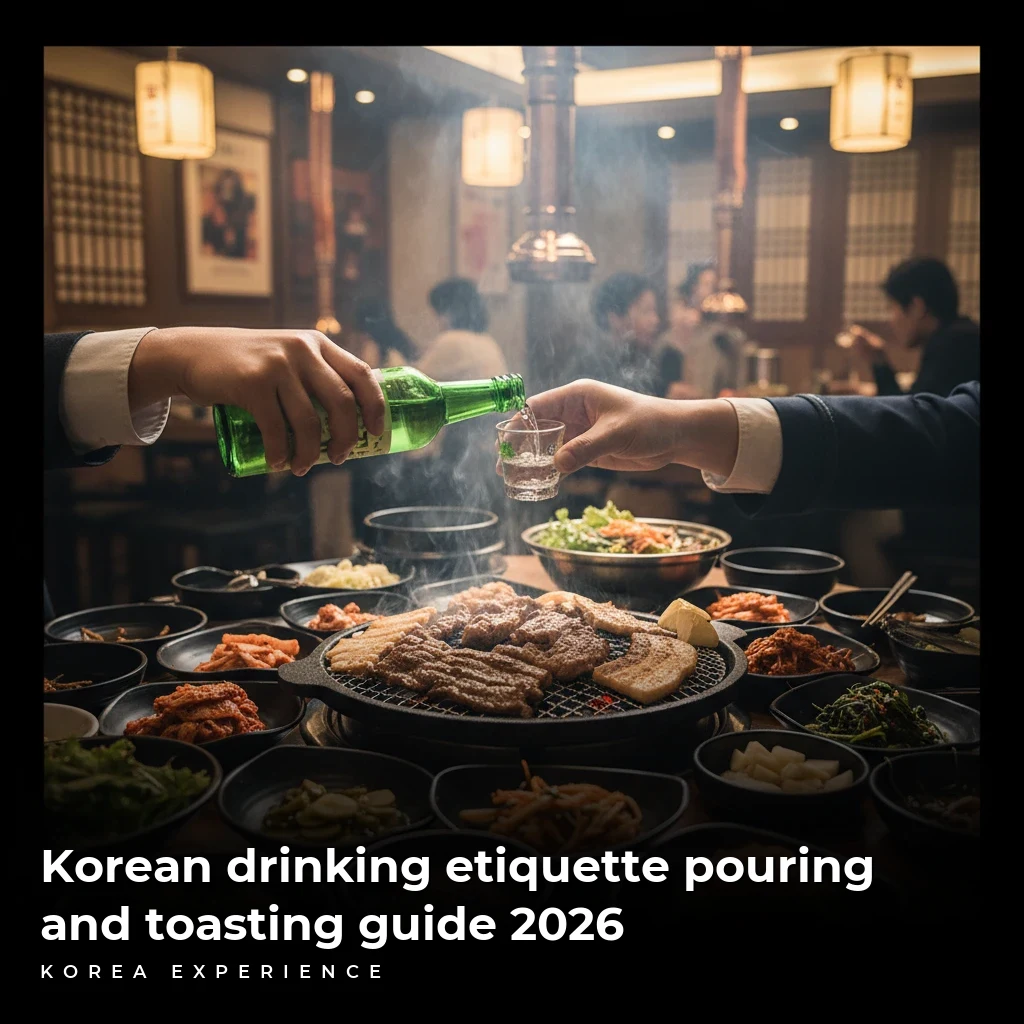
Master Korean drinking etiquette pouring and toasting rules. Learn the essential customs, from the two-hand pour to the senior turn.
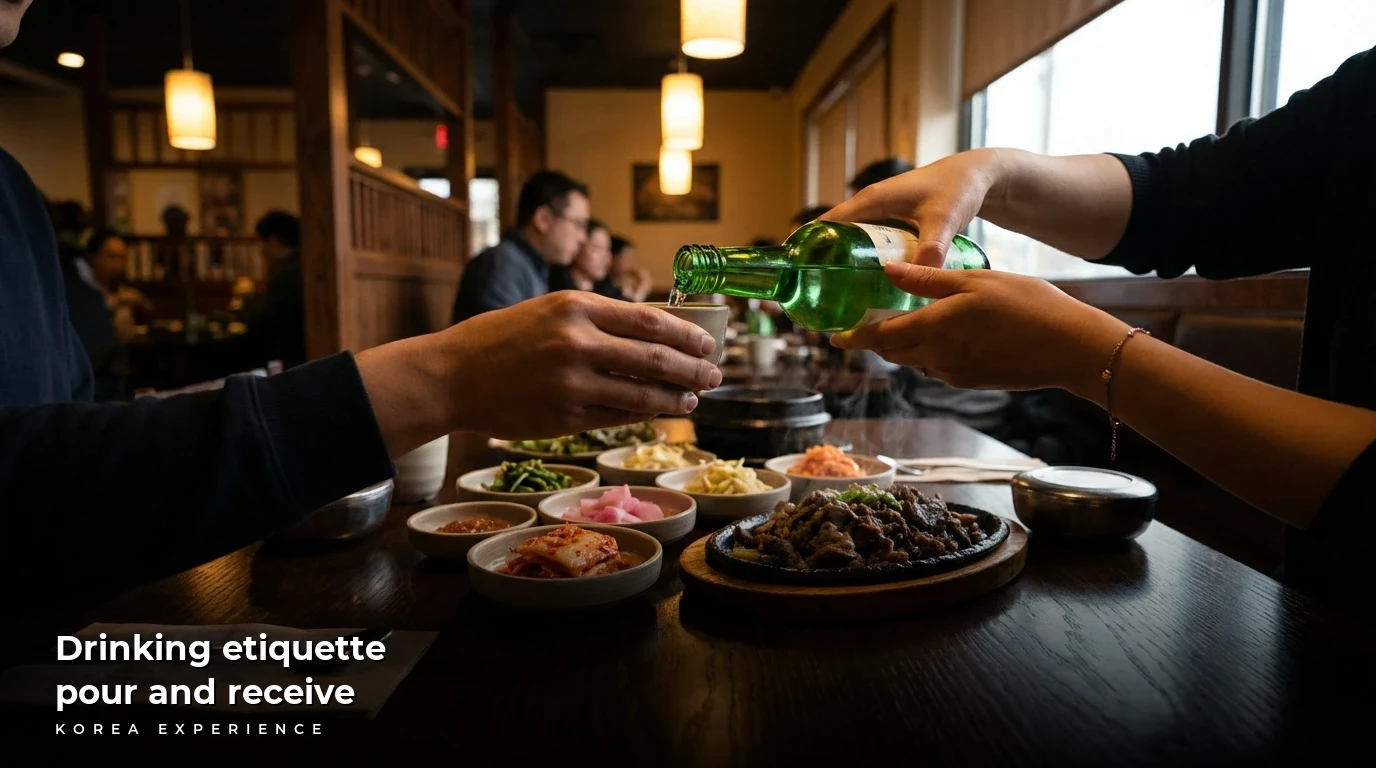
Master the two-hand tuck and polite turn. Learn why soju costs 7,000 KRW in 2026 and how to avoid the 50% refill rule mistake in this essential guide.
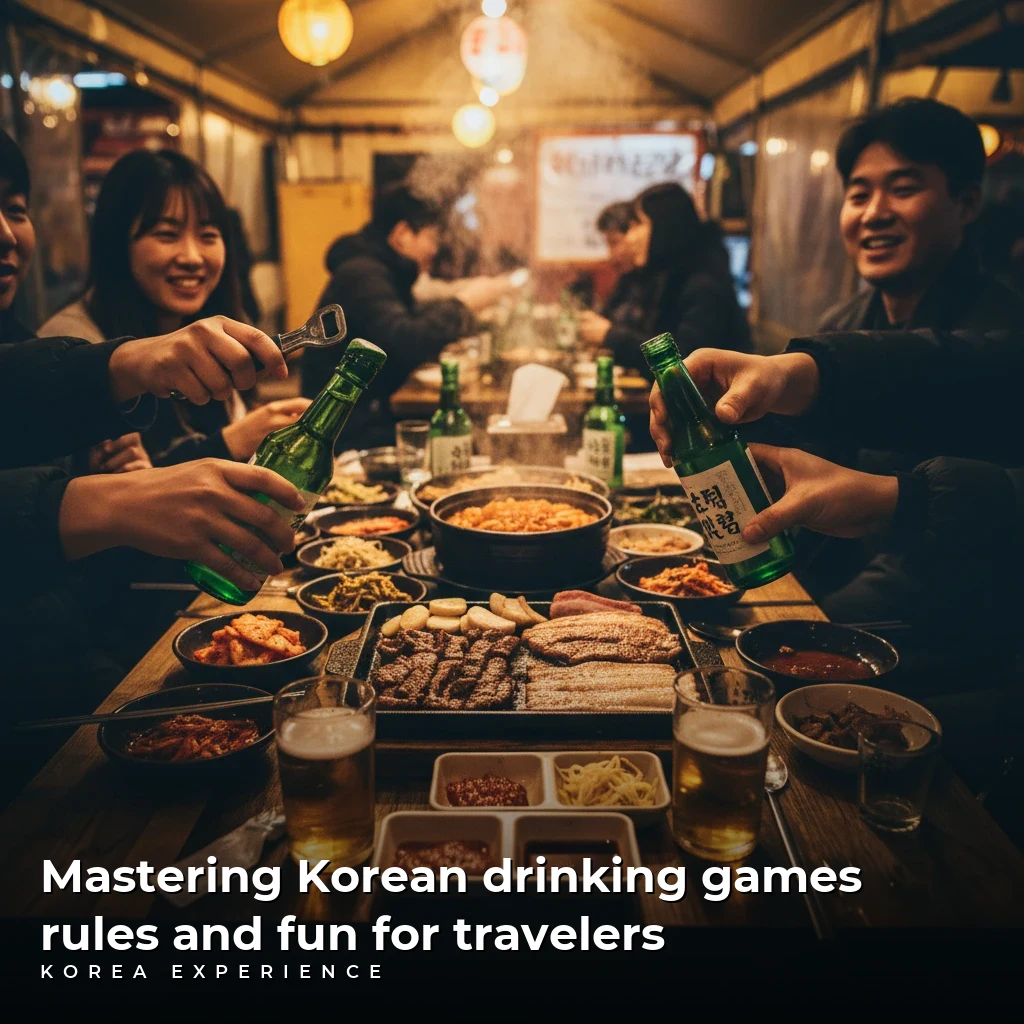
The ultimate guide to Korean drinking games rules, etiquette, and culture. Learn how to play Titanic, Soju Cap, and more like a local expert.
Master the art of dining in Seoul with our essential 2026 guide to Korean restaurant phrases, etiquette, and digital ordering systems.
Master the art of Korean convenience store dining. Learn viral recipes, budget tips, and how to eat like a local in Seoul.
Master the art of Korean tea etiquette with our 2026 guide to Darye including best teahouses brewing steps and cultural insights for travelers