The world of anju best snacks for different types of alcohol 2026
Discover the ultimate guide to Korean Anju culture in 2026. Learn how to pair Soju, Beer, and Makgeolli with the perfect snacks for an authentic experience.
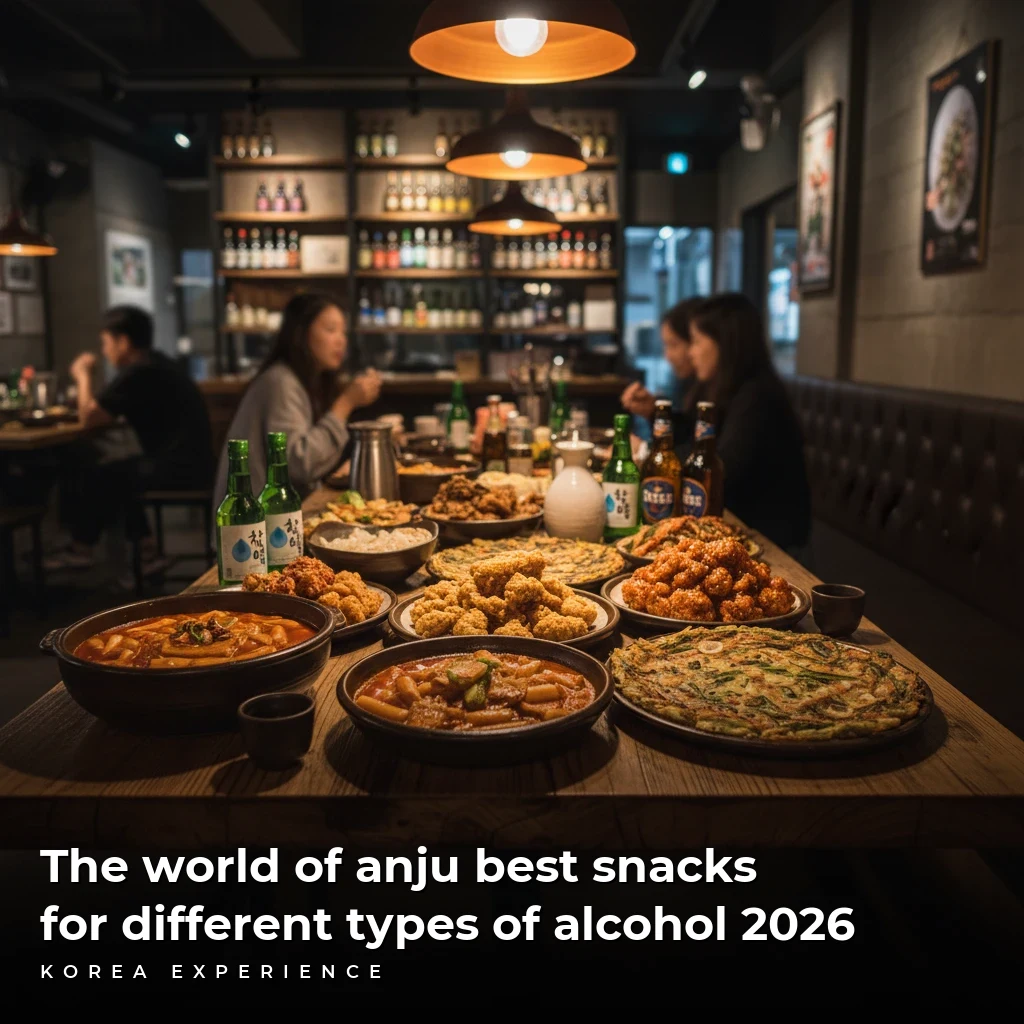
In South Korea, alcohol is rarely enjoyed in isolation. It is almost always accompanied by food. This isn't just a suggestion; it is a cultural imperative known as Anju. The word technically refers to food consumed with alcohol, but to locals, it represents the essential harmony between the drink and the dish. In 2026, the landscape of Korean dining has evolved, blending traditional customs with modern fusion trends, yet the core philosophy remains unchanged: you must never drink on an empty stomach.
Related reading: Korean Drinking Snacks Anju Pairing Guide for Travelers.
For more details, check out our guide on Korean bar snacks pairing food with drinks guide.
For more details, check out our guide on Soju brands comparison taste and alcohol content guide.
You might also enjoy our article about Ultimate Soju guide 2026 top brands and best food pairings.
For the international traveler, navigating the world of Anju can be as complex as it is delicious. The pairing logic is rooted in balancing textures, temperatures, and spice levels. A fiery soup calms the harsh burn of spirits, while greasy, fried textures complement the carbonation of cold lagers. Understanding these pairings is the key to unlocking the true "Korean Experience" and surviving a night out in Seoul, where social gatherings often last 4 to 6 hours and span multiple venues.
Whether you are seated in a plastic-tented Pocha in Jongno or a high-end Gastropub in Hannam-dong, knowing your Anju elevates you from a tourist to an insider. This guide explores the definitive pairings for 2026, supported by updated pricing and local etiquette.
Key Takeaways
- 1Soju requires savory soups or fatty pork to neutralize its high alcohol bite
- 2Korean Fried Chicken (Chimaek) remains the #1 beer pairing with 20,000+ shops in Seoul
- 3Rainy days are culturally designated for Makgeolli and Jeon (pancakes)
The Philosophy of Korean Drinking Culture
To understand Anju, one must first respect the sheer volume of the dining industry here. As of 2026, Seoul boasts over 85,000 licenced establishments serving alcohol, with a density of one venue every 40 meters in popular districts like Hongdae and Gangnam. The concept of Sok-puri (soothing the stomach) dictates that food should protect your digestive system from the alcohol, allowing for prolonged social bonding.
Cultural Insight
In Korea, it is considered rude to pour your own drink. You must pour for others and wait for them to pour for you. When receiving a drink from an elder, hold your glass with two hands to show respect.
Soju: The National Spirit and Its Savory Partners
Soju is the undisputed king of Korean liquor. Sold in iconic green bottles, traditional diluted soju has an ABV (Alcohol By Volume) ranging from 16% to 17.5% in 2026. It is crisp, slightly sweet, and chemically sharp. Because it cuts through grease and cleanses the palate, it demands Anju that is heavy, spicy, or rich in protein.
1. Samgyeopsal (Grilled Pork Belly)
The quintessential pairing. The fatty richness of the pork belly coats the stomach, while the alcohol cuts through the grease. A standard serving of Samgyeopsal (150g-180g) costs between ₩16,000 and ₩20,000 in Seoul as of early 2026.
📖 How to Eat Samgyeopsal Like a Local
Step 1: Grill
Cook the meat until golden brown on both sides. Don't flip too often.
Step 2: Wrap
Place a piece of meat on a lettuce leaf. Add garlic, ssamjang (paste), and kimchi.
Step 3: The Shot
Take a shot of Soju with your companions.
Step 4: The Bite
Immediately put the entire wrap in your mouth. Do not bite it in half.
2. Kimchi Jjigae (Kimchi Stew)
When the night progresses, Koreans switch to "soup anju." A boiling pot of Kimchi Jjigae, often priced around ₩18,000 for a large communal pot, provides heat and salt to balance the alcohol. The capsaicin in the stew is believed to kickstart the metabolism, helping process the alcohol.
Eunju's Kitchen(은주네 부엌)
3. Hoe (Raw Fish/Sashimi)
For a lighter option, raw fish is preferred. Unlike Japanese Sashimi, Korean Hoe is often dipped in Chojang (vinegar chili paste) rather than soy sauce. A platter for two typically costs ₩50,000 to ₩80,000 depending on the fish variety. The clean taste of the raw fish pairs exceptionally well with the clean finish of Soju.
📋 Soju Stats 2026
Maekju: The Golden Era of Chicken and Beer
Maekju (Beer) in Korea has transformed significantly over the last decade. While mass-market lagers like Cass, Terra, and Kelly still dominate the turnover—accounting for 70% of consumption—craft beer and high-end lagers are rising. The universal truth remains: Beer requires fried food.
The Phenomenon of Chimaek (Chicken + Maekju)
Chimaek is more than a meal; it's a national pastime. The combination works because the high carbonation of Korean lagers scrubs the palate clean of the heavy batter and frying oil, preparing you for the next bite.
In 2026, the average delivery time for a box of chicken in Seoul is just 35 minutes, a testament to the logistical efficiency of the food network.
💵 Fried Chicken Price Comparison 2026
Gold Olive Oil fried, large portions
Traditional taste, often whole chicken
Nogari and Dried Snacks
When you are too full for chicken but still want beer, you go to a "Nogari Hof." These are casual beer halls serving dried pollack, squid, and peanuts. A plate of dried nogari costs as little as ₩2,000 to ₩5,000. It is chewy, savory, and usually served with a mayonnaise and soy sauce dip mixed with chopped chili peppers.
"If you visit a Hof (beer hall), order the 'Mameun-anju' (dried snack platter). It usually comes with unlimited popcorn or crackers. It's the most economical way to drink beer in Seoul, costing less than ₩15,000 for a group snack."
Makgeolli: Tradition, Rain, and Pancakes
Makgeolli is a fermented rice wine that appears milky and tastes sweet, tangy, and slightly carbonated. It has an ABV of 6-9%. Culturally, it is inextricably linked to rainy days. The sound of rain hitting the ground resembles the sound of batter frying in oil, triggering a Pavlovian response in Koreans to seek out Jeon (pancakes).
Jeon (Korean Pancakes)
Whether it is Haemul Pajeon (Seafood Green Onion Pancake) or Kimchijeon (Kimchi Pancake), the oiliness is essential. Makgeolli is thick and coats the mouth, while the crispy texture of the Jeon provides contrast.
The famous "Jeon Alley" near Gongdeok Station has over 15 vendors operating 24 hours a day, serving baskets of fried goodness for approximately ₩18,000 per mixed basket.
Makgeolli: Fresh vs. Pasteurized
- ✓Fresh (Saeng) has live cultures
- ✓Better taste complexity
- ✓Less hangover due to probiotics
- ✗Short shelf life (10-30 days)
- ✗Must be kept refrigerated
- ✗Risk of leaking if shaken in transit
Dubu Kimchi (Tofu and Stir-fried Kimchi)
For those avoiding deep-fried foods, blanched tofu served with stir-fried pork and kimchi is the classic alternative. It is protein-rich and considered a "healthy" Anju.
The Highball Revolution and Modern Fusion
Entering 2026, the "Highball" trend has solidified its place in Korean drinking culture. Initially popularized by Japanese izakayas, Korean bars have adopted the highball using traditional liquors.
Earl Grey Highballs & Traditional Spirit Mixes
Bars now mix Hwayo (premium soju) or Andong Soju with tonic, ginger ale, or Earl Grey syrup. These sweeter, lighter drinks pair well with "Fusion Anju" like Cream Pasta Tteokbokki or Gambas Al Ajillo.
📊 Highball Market Growth
Practical Guide: Costs and Logistics
Travelers often underestimate the cost of a full night out because the per-item cost seems low, but the multi-round culture adds up.
The "Cha" System (Rounds)
- 1-Cha (Dinner): Soju + BBQ. (Approx ₩35,000 per person)
- 2-Cha (Pub): Beer + Chicken or Fries. (Approx ₩20,000 per person)
- 3-Cha (Home or Karaoke): Canned drinks + Snacks. (Approx ₩15,000 per person)
A Typical Friday Night Timeline in Gangnam
Dinner & Soju
Korean BBQ Restaurant
Move to 2-Cha
Hof or Izakaya for lighter snacks
Noraebang (Karaoke)
Singing helps digest the food
Taxi Home
Use KakaoTaxi app (Red peak hours)
Late Night Transport Warning
Between 23:00 and 01:00 in districts like Gangnam and Itaewon, hailing a street taxi is nearly impossible. Ensure you have the Kakao T or Uber app installed. The base fare for late-night taxis in 2026 is approximately ₩6,800.
Convenience Store Anju: The Solo Drinker's Paradise
Not every night requires a restaurant. The trend of Hon-sul (drinking alone) has led convenience stores like CU, GS25, and 7-Eleven to stock high-quality vacuum-packed Anju.
Top 3 Convenience Store Picks for 2026:
- Fire-grilled Intestines: Spicy, chewy, and microwaves in 90 seconds (₩8,900).
- String Cheese & Crab Sticks: The classic light pairing for beer (₩2,500).
- Instant Fish Cake Soup: Just add hot water. Perfect for finishing a bottle of Soju (₩3,500).
Venue Comparison
| Feature | Restaurant | Pocha (Tent) | Convenience Store |
|---|---|---|---|
| Avg Price (Anju) | ₩25,000 | ₩18,000 | ₩7,000 |
| Atmosphere | Formal/Buzzing | Loud/Rough | Quiet/Solo |
| Toilet Quality | Good | Poor/Public | N/A (Public) |
Hangover Cures: The Final Anju
The cycle of Anju isn't complete without the cure the next morning. Haejang-guk literally means "soup to chase a hangover."
- Bean Sprout Soup (Kongnamul-gukbap): Light, clear, and full of asparagine to break down acetaldehyde.
- Spicy Beef Soup (Yukgaejang): Heavy and spicy to sweat out the toxins.
- Condition/Dawn 808: Pharmaceutical drinks sold at convenience stores. In 2026, these cost about ₩5,500 per bottle and are often consumed before drinking starts.
"If you feel sick after drinking Soju, drink 'Choco Milk' from the convenience store before you sleep. It is a famous local remedy that coats the stomach better than water."
Conclusion
The world of Anju is a window into the Korean soul. It emphasizes sharing, balance, and the joy of eating. In 2026, while prices have shifted and tastes have modernized to include highballs and fusion dishes, the fundamental rule remains: good alcohol deserves good food. Whether you are dipping sashimi in chojang or tearing apart a savory pancake on a rainy day, you are participating in a ritual that binds Korean society together.
So, when you raise your glass for a "Geonbae" (Cheers), make sure your chopsticks are ready for the Anju that follows.
❓ Frequently Asked Questions
Have more questions?Contact us →
About the Author
Korea Experience Team
Written by the Korea Experience editorial team - experts in Korean medical tourism, travel, and culture with years of research and firsthand experience.
Explore more in Food & Dining
Korean BBQ, street food, Michelin restaurants, and regional specialties — your ultimate guide to eating well in Korea.
Browse All Food & Dining ArticlesContinue Reading
Explore more articles you might find interesting
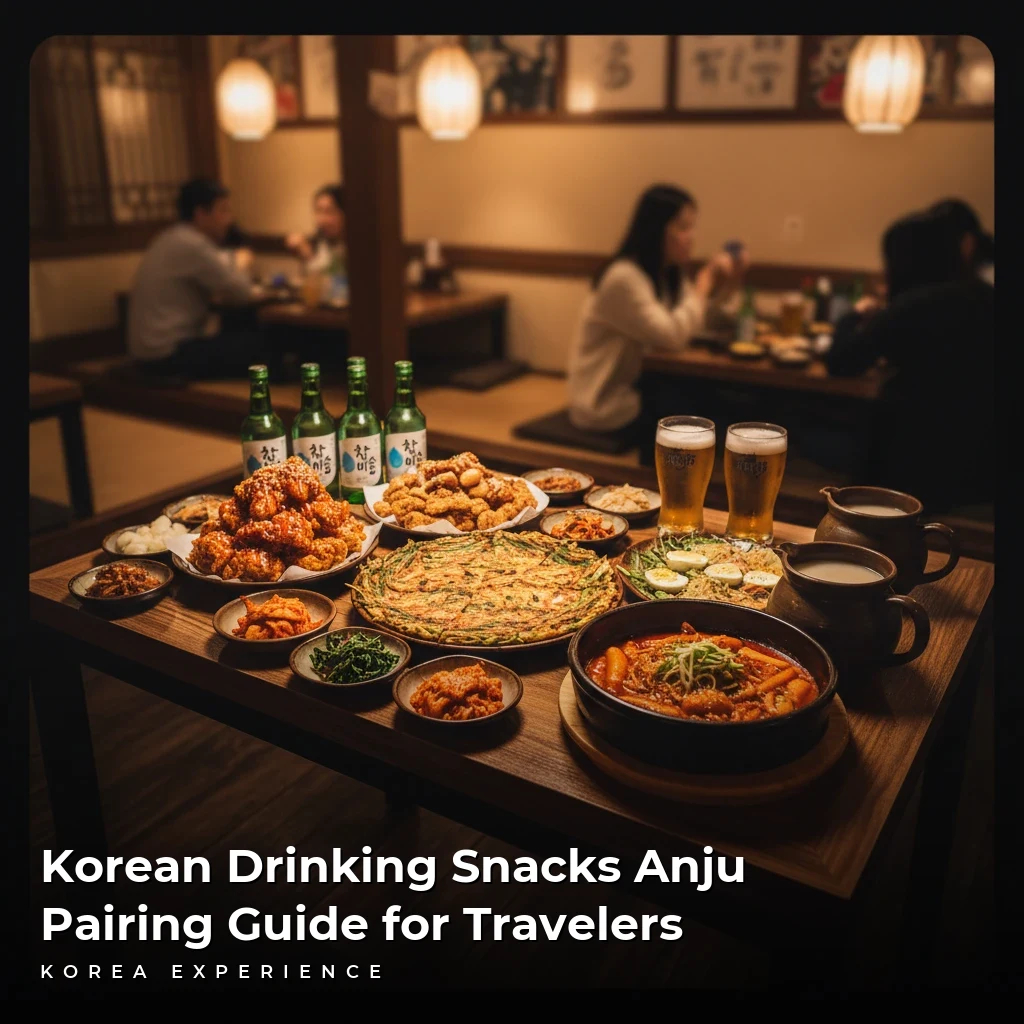
Master the art of Korean Anju pairings with our expert guide to Soju, Makgeolli, and Beer snacks for the ultimate local dining experience
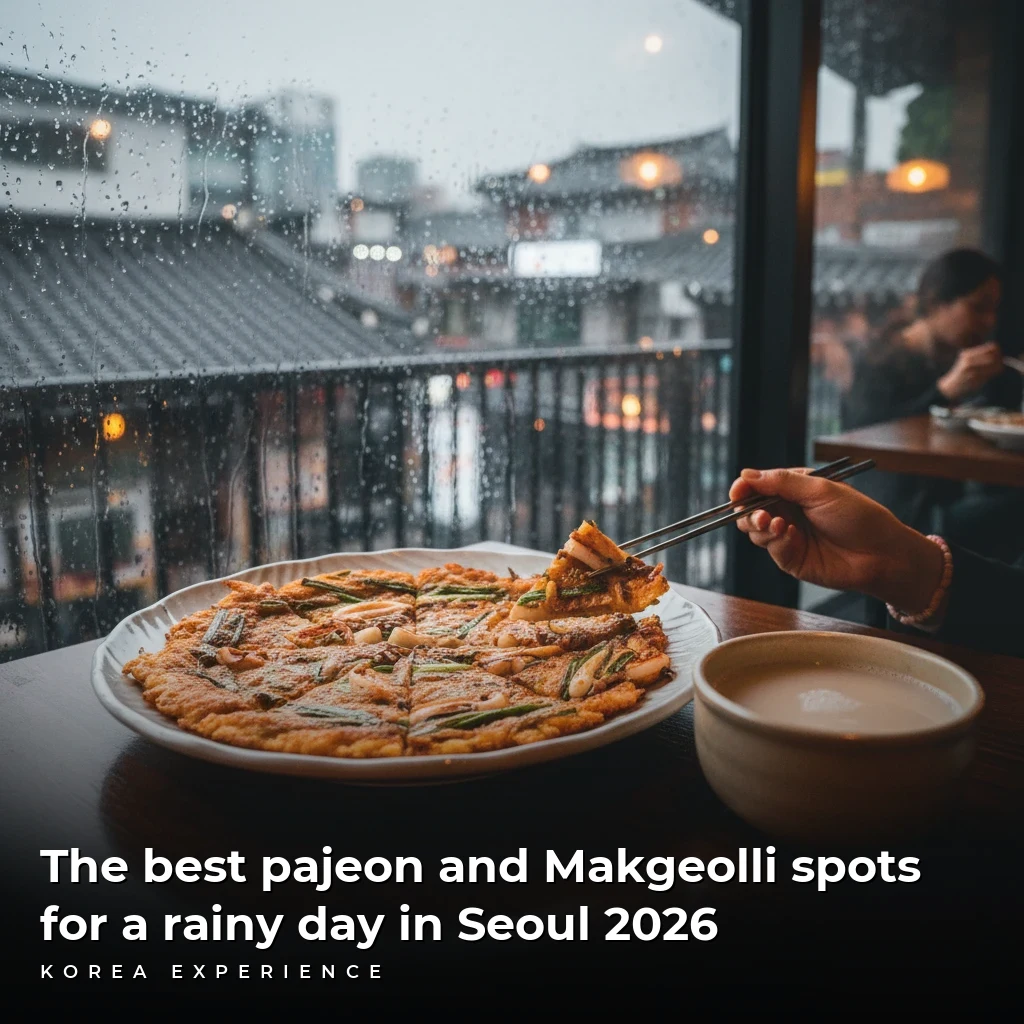
Discover the ultimate guide to savory pancakes and rice wine in Seoul. Top spots, craft brews, and local tips for a perfect rainy day experience.
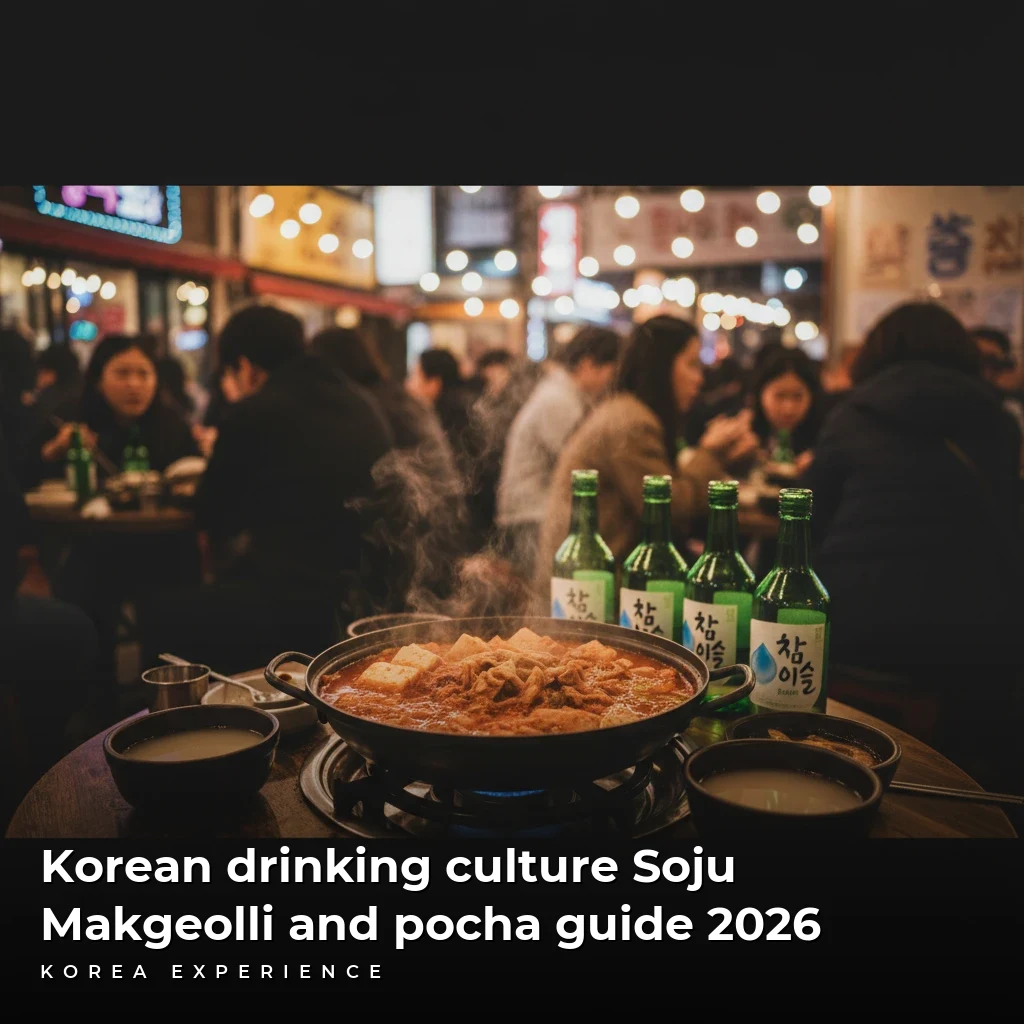
The ultimate 2026 guide to Korean drinking culture. Discover top Soju brands, best Makgeolli bars, and how to navigate Seoul Pocha streets like a local.

Discover top makgeolli brewery tastings in Korea for 2026. Learn how to book premium 12 percent ABV craft flights from 30,000 KRW without a local phone number.
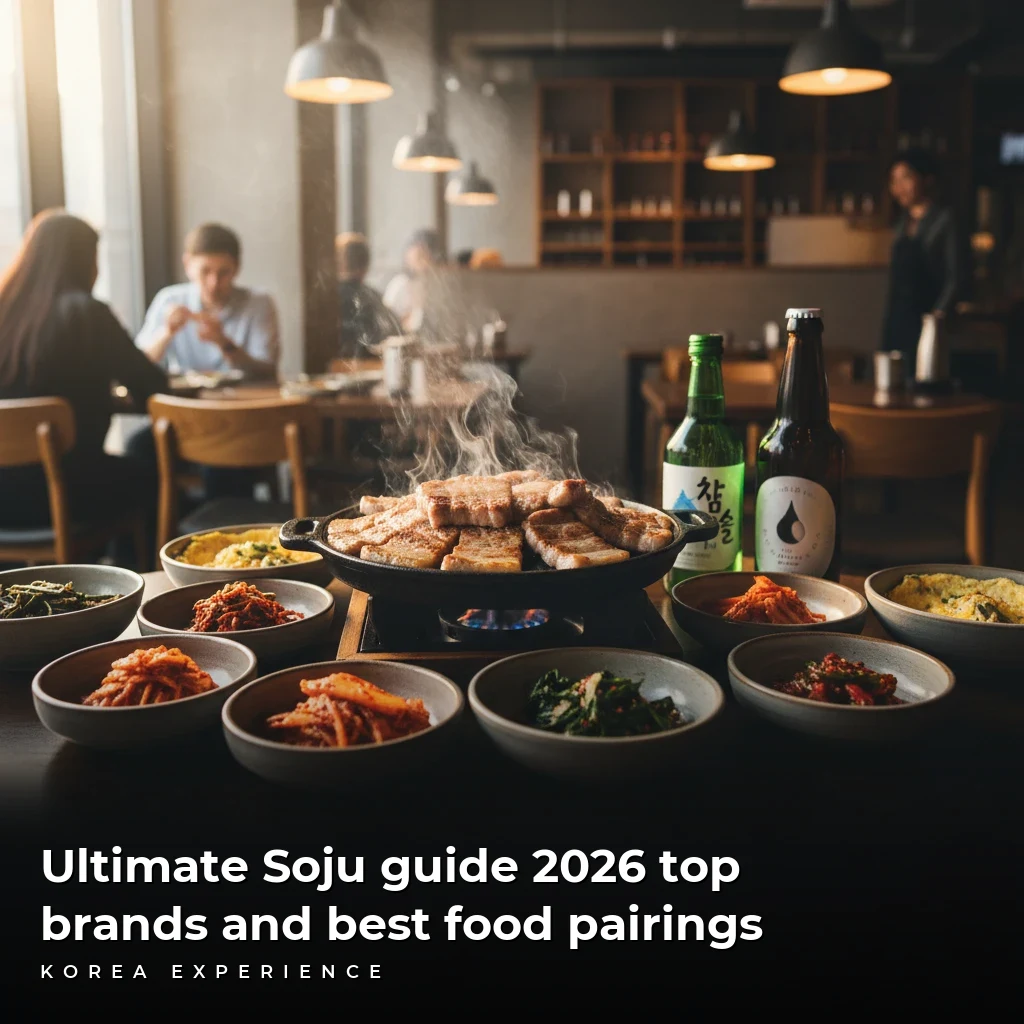
Discover the best Korean soju brands for 2026, from premium craft bottles to classic green caps, plus essential etiquette and perfect food pairings.
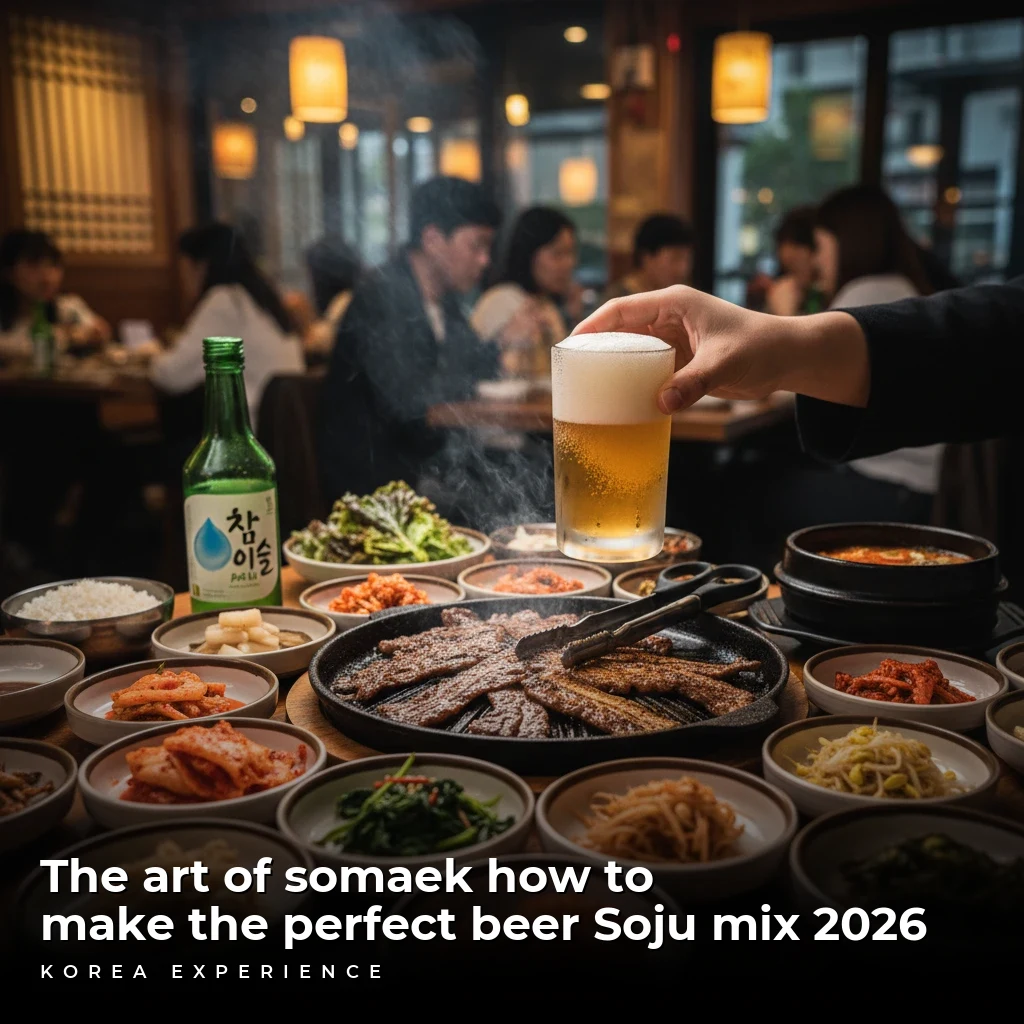
Master the art of Somaek with our 2026 guide to the perfect Korean beer and soju mix. Discover the golden ratio, best brands, and essential drinking etiquette.