The evolution of Korean fried chicken new flavors and brands 2026
Explore the 2026 landscape of Korean Fried Chicken. From robot-chef innovations to truffle-infused luxury flavors, discover the top brands and trends.
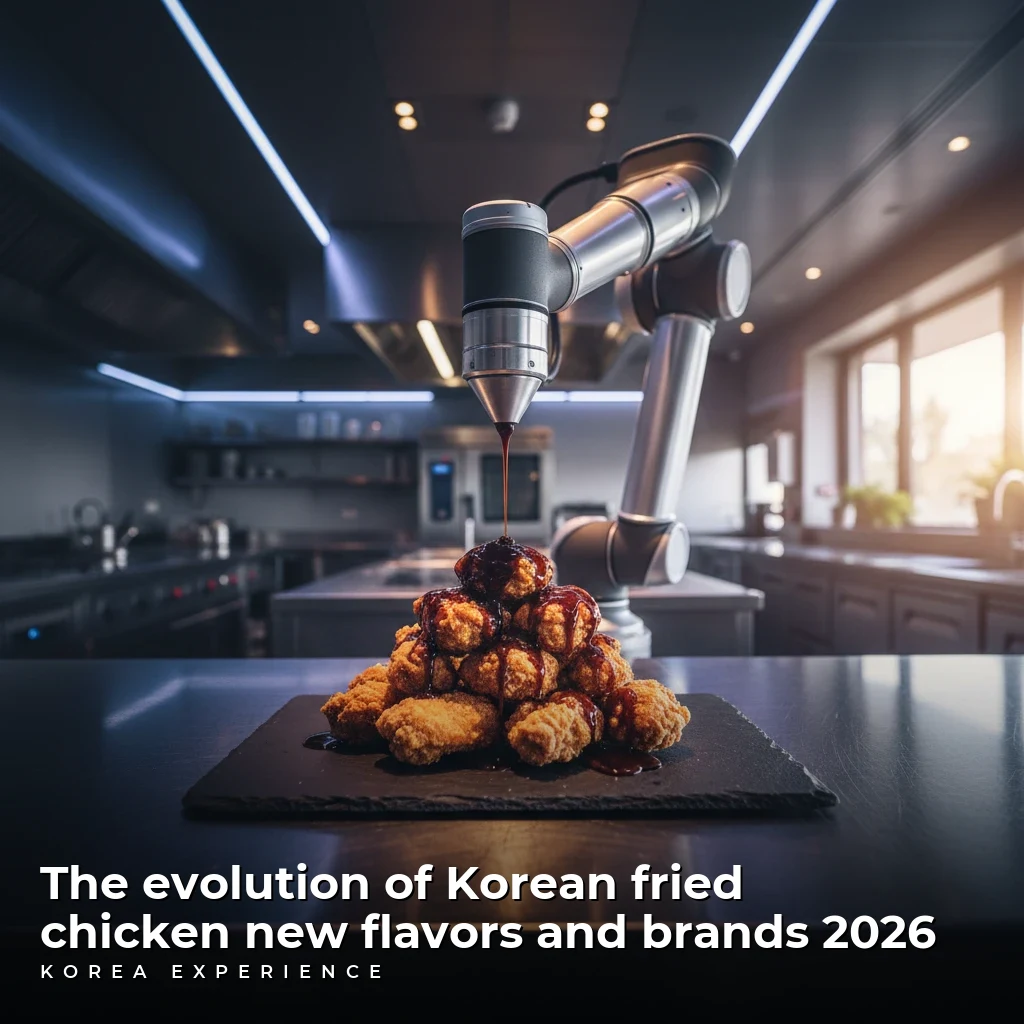
Korean Fried Chicken (KFC) has long been a global ambassador for Korean cuisine, but the landscape in 2026 has transformed far beyond the classic sweet-and-spicy archetypes of the past decade. As travelers return to Seoul and Busan this year, they are discovering a high-tech, flavor-forward ecosystem where robotic precision meets culinary artistry. The humble fried chicken has elevated its status from a late-night snack to a premium dining experience, incorporating luxury ingredients and health-conscious cooking methods.
Learn more in our comprehensive guide to Best Korean fried chicken places in Seoul 2026 guide.
You might also enjoy our article about Korean chicken culture yangnyeom vs fried the ultimate guide.
Learn more in our comprehensive guide to A guide to Korean regional flavors Jeolla-do vs Gyeongsan....
You might also enjoy our article about Chuncheon Dakgalbi Street Guide South Korea Spicy Chicken....
The evolution is palpable the moment you step into a modern chicken franchise. Gone are the days of greasy, dimly lit pubs. Today, you are just as likely to eat crispy bird in a minimalist, cafe-style interior or a high-tech automated kiosk center. With the market valuation of the Korean chicken industry hitting record highs this year, brands are competing fiercely on innovation.
Key Takeaways
- 1Robot-operated kitchens ensure consistent crispiness and reduced wait times by 20%
- 2Luxury flavors like Black Truffle and Basil Pesto are dominating 2026 menus
- 3Gluten-free rice batter and oven-baked options now account for 35% of orders
The 2026 Flavor Landscape: Beyond Yangnyeom
In 2026, the flavor profiles of Korean Fried Chicken have diversified significantly. While the classic Yangnyeom (sweet and spicy) and Soy Garlic remain staples, the "New Tro" (New + Retro) and "Premium Fusion" trends have introduced sophisticated palates to the masses.
The Rise of Luxury Ingredients
The most striking change is the "premiumization" of flavors. Brands like Puradak and the revitalized Kyochon have introduced menus featuring ingredients previously reserved for fine dining.
- Black Truffle Mayo: This has become the standout flavor of 2026. Using real truffle oil imported from Italy, this creamy sauce provides an earthy depth that cuts through the grease. It typically costs ₩24,000 ($18 USD) per whole chicken, a 15% premium over standard flavors.
- Basil Pesto & Cherry Tomato: Catering to the brunch crowd, this lighter option pairs crispy skin with fresh basil pesto. It is particularly popular in the Gangnam and Seongsu districts, where daily sales average 150 orders per store.
- Rosé Tteokbokki Chicken: Building on the Rosé sauce craze of the early 2020s, this combines creamy tomato sauce with spicy gochujang. It is often served with fried rice cakes and glass noodles, creating a heavy, satisfying meal that averages 3,200 calories for a sharing platter.
Pro Tip
When ordering "Rosé" flavors, ask for the sauce on the side (jjik-meok) if you prefer your chicken to stay crispy for longer than 20 minutes. The heavy cream sauce can soften the batter quickly.
The "Ma-Vengers" (Mala + Avengers)
The Mala (Sichuan numbing spice) trend has not died; it has evolved. In 2026, "Mara-Mat" chicken is less about pure heat and more about the aromatic balance of spices. Major chains now offer adjustable spice levels, ranging from Level 1 (mild tingle) to Level 5 (sweat-inducing). A standard Mala Chicken order costs approximately ₩23,000, and roughly 40% of orders in university districts like Hongdae are for this spicy variant.
Flavor Profile Comparison 2026
| Feature | Classic Yangnyeom | Truffle Mayo | Mala Fusion |
|---|---|---|---|
| Spice Level | Mild-Medium | None | High |
| Price (Avg) | ₩21,000 | ₩24,000 | ₩23,000 |
| Best Pairing | Lager Beer | Red Wine/Highball | Soju |
Tech-Driven Dining: Robot Chefs and Smart Kiosks
Perhaps the most visible evolution in 2026 is the widespread adoption of robotic automation in kitchens. Labor shortages and the demand for consistency have pushed major franchises to adopt robotic frying arms.
The Robot Chicken Phenomenon
Brands like "Robert Chicken" (a play on 'Robot') have rapidly expanded, boasting over 300 locations nationwide. These robots manage the frying basket with mathematical precision, shaking the chicken exactly 50 times during the cooking process to aerate the batter and ensure maximum crunch.
- Consistency: The oil temperature is maintained strictly at 170°C (338°F) with zero fluctuation, which is difficult for human cooks to manage during peak hours.
- Speed: Automation has reduced the average serving time from 25 minutes to 18 minutes, a significant improvement for hungry travelers.
- Hygiene: With fewer humans in the kitchen, the risk of cross-contamination drops significantly.
📊 Automation Impact 2026
Health-Conscious Options: The "Well-Being" Chicken
Health is a major driver in 2026. The "O-Dak" (Oven Chicken) market segment has grown by 25% year-over-year. Tourists looking for lighter options will find plenty of choices that don't sacrifice flavor.
Gluten-Free and Rice Batters
To cater to international dietary needs and health trends, many brands now offer "Ssal-Dak" (Rice Chicken). This batter is made from 100% domestic Korean rice flour, creating a texture that is crunchier than wheat flour but absorbs 30% less oil.
Air-Fried and Roast Innovation
Goobne Chicken, the leader in oven-roasted chicken, has introduced a new line of "Basak" (Crispy) oven chicken that mimics the texture of deep-fried chicken using high-pressure air convection. A whole roasted chicken typically contains about 1,100 calories, compared to 2,000+ calories for a deep-fried version, making it a guilt-free late-night option.
📋 Health Metrics
Top Brands to Watch in 2026
The Korean chicken market is a mix of resilient legacy giants and aggressive newcomers. Here is a breakdown of the brands you will see on every street corner.
The Big Three (Legacy)
- BHC: Famous for "Bburinkle" (cheese powder chicken). In 2026, they launched a "Spicy Bburinkle" that has become a viral hit. They have over 2,000 stores across Korea.
- BBQ: Known for using 100% Extra Virgin Olive Oil. Their "Golden Olive" remains the gold standard for basic fried chicken. A whole Golden Olive chicken costs ₩23,000.
- Kyochon: The soy-garlic master. In 2026, they revamped their flagship stores into "Kyochon 1991" dining pubs, offering craft beer pairings.
The Disruptors (New & Trending)
- Puradak: Known as the "Prada of Chicken." They package their chicken in dust bags resembling luxury handbags. Their "Black Aglio" (garlic soy) is deep and savory. Positioning themselves as a premium brand, they charge around ₩25,000 per bird.
- 60 Chicken: Famous for the marketing promise of only frying 60 chickens per vat of oil to ensure cleanliness. They have gained massive trust among families.
- Robert Chicken: The leader in automation. Their stores are futuristic, often featuring tablet ordering at every table and serving robots.
💵 Brand Price Comparison
Includes dust bag packaging & premium pickles
Best value, primarily burger/boneless focus
The Chimaek Culture: Beer and Highballs
"Chimaek" (Chicken + Maekju/Beer) is the lifeblood of Korean socializing. However, by 2026, the beverage landscape has shifted. While a cold draft lager (typically Cass or Terra, costing ₩5,000 for 500cc) is still king, the "Highball" has taken over the younger demographic.
Earl Grey Highballs and Yuzu Highballs are now standard menu items at chicken franchises. These sweet, refreshing cocktails cut through the richness of the fried batter perfectly. Expect to pay between ₩8,000 and ₩10,000 for a highball.
Don't ignore the side dishes. In 2026, 'Cheese Balls' are almost mandatory with your order. A set of 5 cheese balls usually costs ₩5,000. Also, try the 'Fried Chicken Skin' if available—it's the perfect crunchy beer snack for just ₩4,000.
Practical Guide: How to Order Like a Local
Ordering chicken in Korea involves specific terminology that can be confusing for first-timers.
The "Bone" vs. "Boneless" Debate
- Bone-in (Ppyeo): Considered the tastier option by purists as the meat near the bone is juicier.
- Boneless (Sunsal): More convenient and less messy. In 2026, boneless orders almost always incur a surcharge of 2,000 to ₩3,000.
The "Ban-Ban" (Half and Half)
Indecision is solved by the "Ban-Ban" system. You can almost always order half original fried and half seasoned (sauced). This creates the perfect balance of crispy and savory.
📖 How to Order Delivery to Your Hotel
Step 1: Download the App
Use Baedal Minjok (Baemin) or Coupang Eats. Both have English support in 2026.
Step 2: Select Menu
Choose 'Ban-Ban' (Half/Half) for the best experience. Add 'Cheese Balls' as a side.
Step 3: Payment
Select 'Meet and Pay' (cash or card) if you don't have a Korean domestic card registered in the app.
Step 4: Receive
Delivery drivers (riders) are fast. Be ready in the lobby if your hotel restricts room access.
Recommended Locations for 2026
While delivery is convenient, visiting a flagship store provides a superior atmosphere. Here are two distinct experiences in Seoul.
Kyochon Pilbang(교촌필방)
Robert Chicken Gangnam(롸버트치킨 강남점)
Pros and Cons of Dining In vs. Delivery
Korea offers one of the world's best delivery infrastructures, but is it always the best choice for chicken?
Dine-in vs. Delivery
- ✓Chicken is served immediately at peak crunchiness
- ✓Access to unlimited pickled radish and macaroni snacks
- ✓Great social vibe with draft beer
- ✗Wait times can be 40+ minutes on Friday nights
- ✗Delivery fee saves travel time but costs ₩4,000
- ✗Some specialized flavors don't travel well (soggy batter)
The Future of Flavor
As we move through 2026, the trend is shifting towards "Hyper-Localization." Brands are releasing regional specialties—such as Jeju Mandarin Sauce Chicken or Gapyeong Pine Nut Chicken—available only in those specific provinces. This encourages "Chicken Tourism," where enthusiasts travel specifically to try limited-edition flavors.
Furthermore, plant-based alternatives have improved drastically. Major chains now offer "Alternative Meat" nuggets that are indistinguishable from the real thing in texture, catering to the growing vegan population in Seoul. These sets usually cost ₩19,000, making them competitively priced against real chicken.
The Evolution of KFC Trends
Chimaek Boom
Global fame via K-dramas. Dominance of Fried & Soy Garlic.
Sweet & Spicy
Rise of sprinkles, cheese powder, and Rosé sauces.
Tech & Luxury
Robot kitchens, Truffle flavors, and Gluten-free options.
Final Thoughts
In 2026, Korean Fried Chicken is more than just food; it is a dynamic cultural product that reflects Korea's speed, innovation, and obsession with trends. Whether you are grabbing a ₩4,000 chicken cup from a street vendor in Myeongdong or sitting down for a ₩30,000 truffle chicken platter in Cheongdam, the experience is undeniably world-class.
For travelers, the key is to experiment. Do not just stick to the original fried. Try the basil pesto, brave the Mala spice, or enjoy the guilt-free crunch of oven-baked rice chicken. The evolution of KFC is ongoing, and 2026 is the most delicious year yet.
❓ Frequently Asked Questions
Have more questions?Contact us →
About the Author
Korea Experience Team
Written by the Korea Experience editorial team - experts in Korean medical tourism, travel, and culture with years of research and firsthand experience.
Explore more in Food & Dining
Korean BBQ, street food, Michelin restaurants, and regional specialties — your ultimate guide to eating well in Korea.
Browse All Food & Dining ArticlesContinue Reading
Explore more articles you might find interesting
Discover the rise of zero sugar soju in Korea. We explore top brands, calorie counts, and the healthy pleasure drinking culture sweeping Seoul in 2026.
Discover the delicious dilemma of Korean chicken culture Yangnyeom vs Fried. Compare flavors, prices, and history in this ultimate foodie guide.
Discover the ultimate list of Seoul fried chicken spots for 2026. From crispy garlic flavors in Euljiro to premium Gangnam eateries, find your perfect crunch.

Explore Seoul's largest vintage market with our 2026 guide. Find luxury brands for ₩5,000, navigate 600+ stalls, and discover hidden boutiques.
Discover the best Jeonju Bibimbap restaurants with our expert guide. Explore historic eateries, authentic flavors, and essential travel tips.
Discover how traditional Korean Hanbok evolved from Joseon dynasty attire to 2026 global streetwear trends, including rental tips and shopping guides.