Andong Hahoe Village guide 2026: Experiencing Korea's living heritage
Complete 2026 guide to Andong Hahoe Village including KTX schedules, hanok stay costs (avg ₩120,000), mask dance times, and best local food spots.
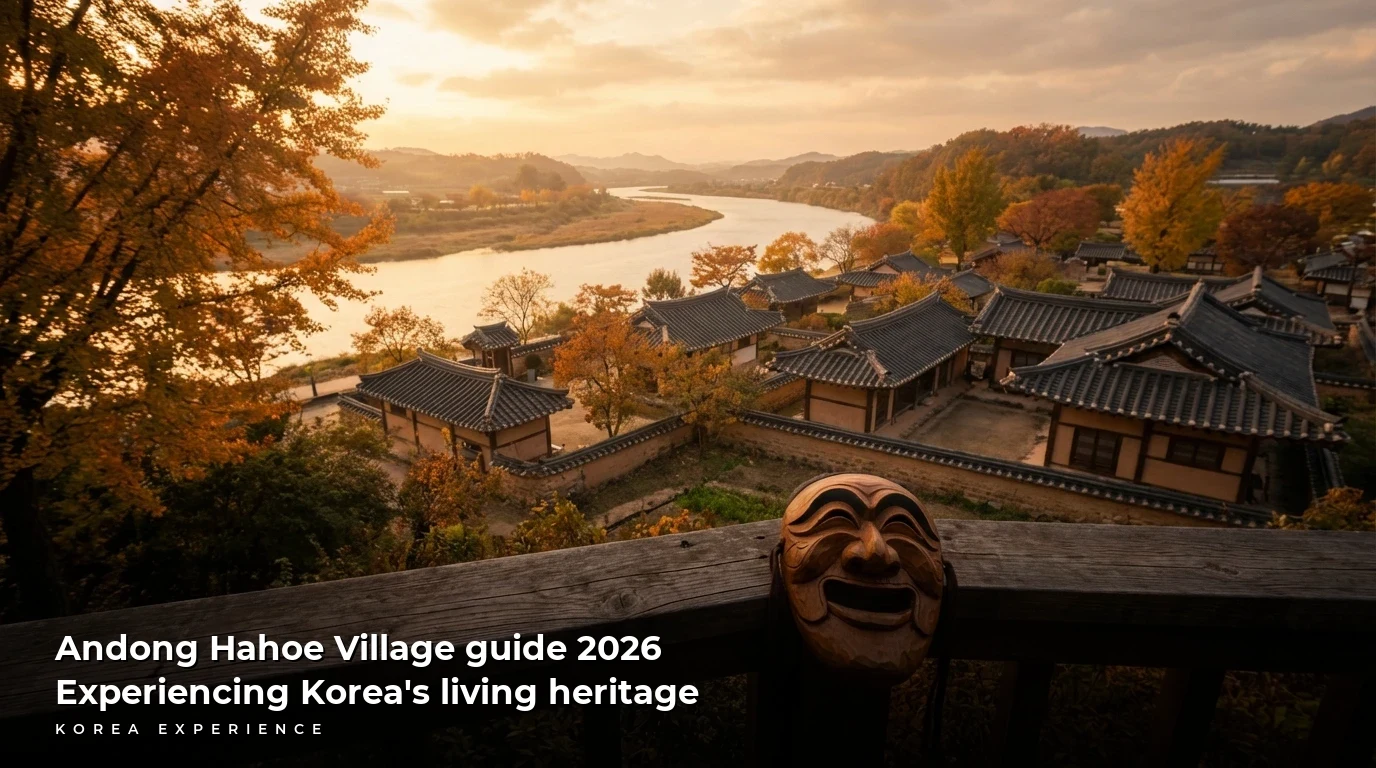
Andong Hahoe Village is often mistaken for a museum or a film set, but it is something far more rare: a living, breathing community that has maintained its architectural and cultural integrity for over 600 years. Located approximately 180 kilometers southeast of Seoul, this UNESCO World Heritage site is home to the Ryu clan of Pungsan, who still reside in the tile-roofed nobility houses and thatched-roof commoner dwellings that cluster within the S-shaped bend of the Nakdong River. For travelers in 2026, visiting Hahoe offers a distinct counterpoint to the neon-lit futurism of Seoul—a chance to step into a Joseon Dynasty landscape that hasn't just been preserved, but is actively lived.
The short answer: Andong Hahoe Village is a 600-year-old clan village best reached via the KTX-Eum train (2 hours from Seoul), offering authentic hanok stays, the famous Mask Dance performance (daily at 2 PM), and signature dishes like Andong Jjimdak.
Key Takeaways
- 1Direct KTX-Eum trains run from Seoul Cheongnyangni to Andong in just 2 hours
- 2The Hahoe Mask Dance is performed daily at 2 PM (free with village admission)
- 3Authentic Hanok stays range from ₩80,000 to ₩400,000 per night in 2026
Why Hahoe Village Matters in 2026
While South Korea rushes toward the future, Hahoe Village holds the line for the past. Unlike the Korean Folk Village in Yongin, which is a reconstructed open-air museum populated by actors, Hahoe is a residential space. As of January 2026, approximately 230 residents across 127 households call this village home. This authenticity was the primary reason Queen Elizabeth II visited in 1999 to celebrate her 73rd birthday, and why her son, Prince Andrew, returned in 2019.
The village's layout is dictated by Pungsu-jiri (Korean Feng Shui). It is shaped like a lotus flower floating on water, surrounded by the Nakdong River on three sides. This unique geography has protected it from invasions and modernization alike. The village is also the birthplace of renowned scholars of the Joseon period, including Ryu Un-ryong and Ryu Seong-ryong, the latter being a Prime Minister who served during the Imjin War (1592-1598).
📊 Village Demographics 2026
When you walk the dirt paths of Hahoe, you are walking through a genealogical chart made of wood and stone. The tile-roofed houses (waga) at the center were for the aristocratic yangban class, while the thatched-roof houses (choga) radiating outward housed the servants and commoners. This visible class structure, preserved intact, is unique even within Korea.
Getting to Andong: The KTX-Eum Revolution
Access to Andong has improved dramatically with the full operation of the KTX-Eum (EMU-260) line. In the past, the journey from Seoul was a grueling 4-hour bus ride or a slow train. In 2026, it is a streamlined, comfortable commute that makes even day trips possible, though we highly recommend staying overnight.
From Seoul to Andong
The primary departure point is Cheongnyangni Station in eastern Seoul.
- Train Type: KTX-Eum (high-speed electric train).
- Duration: Approximately 2 hours and 3 minutes.
- Frequency: 7-8 times daily.
- Fare: Approximately ₩25,100 (Economy) / ₩35,100 (First Class).
Booking Tip
Book your KTX tickets via the Korail Talk app or Let's Korail website 2 weeks in advance for weekend travel in spring or autumn. Seats sell out quickly during the Mask Dance Festival season.
From Busan to Andong
Travelers coming from the southern coast have different options.
- Bus: From Busan Central Bus Terminal (Nopo-dong) to Andong Terminal.
- Duration: 2 hours 30 minutes.
- Cost: ₩17,000 - ₩22,000 depending on bus class.
From Andong Station to Hahoe Village
Once you arrive at the ultra-modern Andong Station (which was relocated and expanded recently), you are still about 25 kilometers from the village.
- Bus: Take Bus No. 210 from the station or terminal.
- Interval: Every 60 minutes.
- Cost: ₩1,500 (use your T-Money card).
- Taxi: A taxi ride takes about 30-40 minutes and costs roughly ₩25,000 - ₩30,000.
The Journey: Seoul to Hahoe
Depart Cheongnyangni
Board the KTX-Eum train
Arrive Andong Stn
Exit and head to bus stop
Bus 210
Scenic ride through the countryside
Hahoe Village
Purchase ticket and shuttle to entrance
Admission and Logistics
Before entering the village proper, you will arrive at the ticket office and marketplace area. Private cars are not allowed inside the village unless you have a confirmed accommodation booking that provides a vehicle pass.
- Admission Fee (2026): ₩5,000 for adults, ₩2,500 for teenagers, ₩1,500 for children.
- Shuttle Bus: A free shuttle bus runs from the ticket office to the village entrance (1.2km distance) every 10 minutes. Walking takes about 15-20 minutes and is pleasant in autumn.
- Luggage Storage: Available at the tourist information center near the ticket office (lockers cost ₩1,000 - ₩2,000 depending on size).
Cultural Immersion: Things to Do
Exploring Hahoe is less about checking off sights and more about soaking in the atmosphere. However, several key spots provide the framework for your visit.
1. The Hahoe Mask Dance (Hahoe Byeolsingut Talnori)
This is the absolute highlight of any trip to Andong. Designated as an Intangible Cultural Heritage, this dance drama originated in the 12th century as a ritual to appease local spirits. Unlike court dances which were refined and restrained, this village dance is satirical, mocking the arrogance of the ruling class (aristocrats and scholars) and the corruption of monks.
- Venue: Hahoe Mask Dance Performance Hall (located before the shuttle bus zone).
- Time: Daily at 2:00 PM (check seasonal schedules; often closed Mondays in winter).
- Duration: 60 minutes.
- Cost: Free (included in village admission).
- Language: Performed in Korean, but screens usually display English, Chinese, and Japanese subtitles. The physical comedy transcends language barriers.
Sit in the center section, slightly back. The performers often interact with the audience in the front row, which is fun, but for the best view of the mask angles and dance movements, the 5th or 6th row center is ideal.
2. Man-song-jeong Pine Forest
Planted along the riverbank by Ryu Un-ryong in the 16th century, this forest of Mansong (10,000 pines) serves a dual purpose: it acts as a windbreak against the harsh river winds and completes the feng shui of the village by screening the rugged cliff face opposite. It is a serene walking path that stretches for about 400 meters along the sandy beach.
3. Buyongdae Cliff
Across the river from the Pine Forest looms Buyongdae, a 64-meter high cliff. The name means "Lotus Cliff." While you can admire it from the village, the best experience is climbing it for a panoramic view of the S-shaped village layout.
- Ferry: A small traditional boat ferries visitors across the river.
- Cost: ₩5,000 round trip (cash only usually).
- Operation: Subject to water levels and weather.
- Hike: Once across, it's a short but steep 10-minute hike to the top. The view of the tile roofs interlocking like puzzle pieces is the definitive photo of Andong.
4. Historic Houses
Several major houses are open to the public, though many remain private residences.
- Chunghyodang: The head house of the Ryu clan, built in memory of Ryu Seong-ryong. It displays his writings and relics.
- Yangjindang: The oldest house in the village, representing unique architectural styles from the early Joseon period.
For those interested in how these locations relate to popular media, many visitors recognize the architecture from historical dramas. You can read more about historic K-Drama sets to see how Hahoe compares to filming locations.
Staying in a Living Heritage: Hanok Accommodations
Staying overnight in Hahoe Village is a magical experience. Once the day-trippers leave around 6:00 PM, the village falls into a profound silence, illuminated only by the moon and faint streetlamps.
💵 Hanok Stay Comparison 2026
High-end service, private yellow mud sauna, breakfast included
Authentic room in a resident's house, shared bathroom likely
Luxury: Rakkojae Hahoe
For those seeking comfort without sacrificing aesthetics, Rakkojae offers a premium experience. Their rooms feature en-suite modern bathrooms (a rarity in traditional houses), fine linens, and a traditional jjimjilbang (sauna).
- Price: ₩300,000 - ₩500,000 per night.
- Booking: Must book 2-3 months in advance.
Authentic: Bukchondaek
This is a 200-year-old house that offers a "scholar's lifestyle" experience. It is grand, imposing, and deeply historical.
- Price: ₩250,000 - ₩400,000 depending on the wing.
- Experience: Includes history talks by the owner (descendant of the Ryu clan).
Budget: Minbak (Homestays)
Many residents rent out small rooms. These are often ondol style (sleeping on the floor with heated mats). Be prepared for small spaces and potentially separate bathroom facilities in the courtyard.
- Price: ₩60,000 - ₩100,000.
- How to book: Many are on major booking platforms now, or can be booked via the Andong tourism website.
If you are interested in wearing traditional clothing during your stay to enhance the photos, check our Hanok rental guide for tips on etiquette and styles, although rentals are more common in Seoul than inside the village itself.
The Culinary Landscape: What to Eat
Andong is a heavyweight in the Korean culinary scene. The food here is salty, spicy, and deeply traditional.
1. Andong Jjimdak (Braised Chicken)
You cannot visit Andong without eating Jjimdak. This dish consists of chicken braised in a soy-based sauce with glass noodles, potatoes, carrots, spinach, and dried chili peppers. It is savory, slightly sweet, and packs a spicy kick.
- Where: The "Marketplace" area before the ticket booth has over a dozen restaurants serving this.
- Cost: Large plate (serves 3-4) is around ₩35,000 - ₩40,000.
- Recommendation: If you are heading back to the city center, visit the "Andong Old Market Jjimdak Street" for the most authentic experience. For detailed recommendations, see our specific guide on Andong Jjimdak best restaurants.
2. Gan-godeungeo (Salted Mackerel)
Before refrigeration, fish had to be heavily salted to survive the transport from the coast to inland Andong. This preservation method created a local delicacy. The mackerel is grilled to a crispy perfection.
- Cost: Set meal ~₩15,000 per person.
3. Heotjesabap
This translates to "fake memorial ceremony rice." In Confucian tradition, specific foods are prepared for ancestor worship (jesa). The scholars of Andong enjoyed these dishes so much they began making them even when there was no ceremony. It is a type of Bibimbap served with soy sauce instead of gochujang, accompanied by jeon (pancakes) and soup.
- Flavor profile: Mild, earthy, and refined.
Solbat Sikdang(솔밭식당)
4. Andong Soju
Unlike the green-bottle soju found in convenience stores (diluted ethanol), Andong Soju is distilled from rice and ages gracefully. It typically ranges from 20% to 45% ABV.
- Souvenir: A bottle of 45% Park Jae-seo Andong Soju costs about ₩35,000 and makes an excellent gift.
Itineraries: Planning Your Time
Depending on your schedule, you can experience Hahoe in a rushed afternoon or a leisurely weekend.
Andong Experience: The Day Tripper vs. The Scholar
The Dualism Concept: Experience the best of both worlds — premium luxury moments paired with authentic budget-friendly experiences in one route.
The Scholar (Overnight)
Stay at Rakkojae, private boat to Buyongdae, fine dining Heotjesabap
The Day Tripper
Bus 210 arrival, walk the village, watch mask dance, eat street food
The Scholar route allows you to see the village without the crowds—highly recommended for photographers.
Suggested 1-Day Itinerary (Fast Paced)
- 10:30 AM: Arrive at Hahoe Village.
- 11:00 AM: Walk through the Pine Forest and take the boat to Buyongdae Cliff.
- 12:30 PM: Lunch (Andong Jjimdak) at the marketplace.
- 02:00 PM: Watch the Mask Dance Performance.
- 03:30 PM: Tour the Ryu Seong-ryong House.
- 04:30 PM: Take the bus back to Andong Station.
- 05:00 PM: Quick stop at Woryeonggyo Bridge before train.
Nearby Attractions
If you have extra time, Andong has more to offer beyond the village walls.
Dosan Seowon
A 40-minute drive from the city center, this Confucian academy was established by Toegye Yi Hwang in 1574. It is architecturally stunning and serene.
- Admission: ₩1,500.
Woryeonggyo Bridge (Moonlight Bridge)
The longest wooden footbridge in Korea (387 meters). It is spectacular at night when illuminated.
- Activity: Moonboats (electric donuts boats) are available for rent here (₩28,000 for 30 mins).
Byeongsan Seowon
Located just 15 minutes by car from Hahoe Village, this is often considered the most beautiful Confucian academy in Korea due to its architecture that frames the river and cliffs like a painting.
Transport Warning
Public transport between Hahoe Village and Byeongsan Seowon is infrequent. If you want to visit both in one day without a car, check the bus schedule meticulously or budget for a taxi (approx ₩15,000).
Best Time to Visit
Andong has a humid continental climate, meaning four distinct seasons.
- Spring (April-May): Cherry blossoms line the road to the village. The weather is mild (15°C - 20°C).
- Autumn (September-November): The peak season. The Andong Mask Dance Festival takes place in late September/early October. The foliage is breathtaking.
- Summer (June-August): Hot and humid. The lotus flowers are in bloom, but walking the unshaded village paths can be exhausting (30°C+).
- Winter (December-February): Quiet and cold (-5°C). The thatched roofs covered in snow are picturesque, but many outdoor activities (like the ferry) may pause.
For a broader look at weather patterns across the peninsula, consult our guide on the best time to visit Korea.
Budget Breakdown for a Weekend Trip (Per Person)
Planning a 2-day, 1-night trip from Seoul in 2026? Here is a realistic budget estimation based on double occupancy.
📋 Weekend Budget Estimates (2026)
This budget assumes a mid-range Hanok stay and sharing taxi costs. Backpackers taking the bus and staying in hostels in the city center could reduce this to around ₩150,000.
Pros and Cons of Visiting Hahoe
Is Andong Hahoe Village Right for You?
- ✓Authentic history: Real residents, real houses, not a set.
- ✓UNESCO status guarantees preservation and quality.
- ✓The Mask Dance is world-class cultural entertainment.
- ✓Food is exceptional (Jjimdak origin point).
- ✗Logistics: Requires specific train/bus timing.
- ✗Crowds: Can be overwhelming on weekends/holidays.
- ✗Walking: Dirt paths can be muddy; not fully wheelchair friendly.
- ✗Nightlife: Zero nightlife inside the village; it is dead quiet.
Frequently Asked Questions
❓ Common Questions About Visiting Andong
Have more questions?Contact us →
Conclusion
Andong Hahoe Village in 2026 remains a testament to the resilience of Korean tradition. It is a place where the 21st century feels distant, replaced by the rhythms of nature and the weight of history. whether you are watching the satirical drama of the mask dance or simply sitting on the wooden maru of a Hanok listening to the wind in the pine trees, Hahoe offers a connection to the "Land of Morning Calm" that is increasingly hard to find in the modern metropolis.
If you are planning your wider Korean adventure, don't forget to check our guides on other cultural experiences like Hanbok rentals to prepare for your trip. Andong is waiting to welcome you—not as a tourist in a museum, but as a guest in a home that has stood for six centuries.
About the Author
Korea Experience Team
Written by the Korea Experience editorial team - experts in Korean medical tourism, travel, and culture with years of research and firsthand experience.
Explore more in Travel & Tourism
From Seoul's neon-lit streets to Jeju's volcanic landscapes — discover the best of Korea with insider travel tips, itineraries, and seasonal guides.
Browse All Travel & Tourism ArticlesContinue Reading
Explore more articles you might find interesting
Discover the best venues to watch Korean Mask Dance Drama (Talchum). From Andong Hahoe Village to Seoul's theaters, find schedules and ticket info.
Discover 5 authentic Hanok villages beyond Bukchon. Explore Eunpyeong, Jeonju, and Andong with full price guides, travel times, and stay tips for 2026.
Discover the ultimate checklist of 50 essential Korean dishes, from street food to royal cuisine, including prices, spicy levels, and best spots for 2026.
Explore Suwon Hwaseong Fortress in 2026. A complete guide to the 5.7km wall, King Jeongjo's history, Flying Suwon costs (₩20,000), and famous Galbi spots.
Discover the top 15+ English-friendly temple stays in Korea. From Seoul to mountains, learn booking tips, costs (₩50k-80k), and schedules for 2026.
Discover Seoul's best winter spots for 2026. From ₩1,000 skating at City Hall to luxury spas, find temperatures, costs, and festivals in this complete guide.