Danyang paragliding guide 2026: Soaring over the S-curve river
Experience the thrill of Danyang paragliding in 2026. Costs range from ₩80,000 to ₩150,000 for a 10-minute flight over the Han River's famous S-curve.
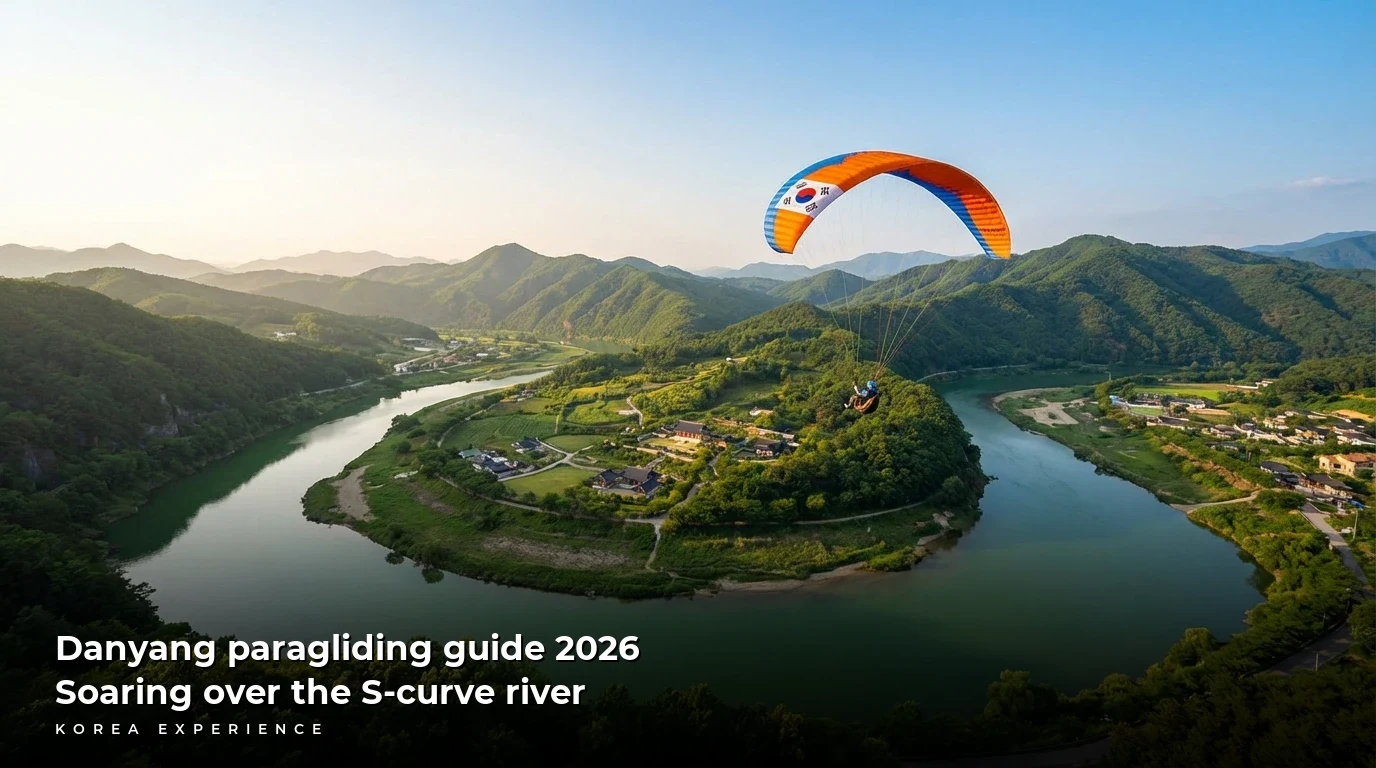
Standing at the edge of a cliff 600 meters above sea level, your heart pounds in rhythm with the wind rushing up the mountain face. Below you, the Namhan River winds in a perfect "S" shape, embracing the town of Danyang like a ribbon. This isn't just a scenic viewpoint; it is the runway for one of South Korea's most exhilarating travel experiences. Danyang has solidified its reputation as the paragliding capital of Korea, attracting over 1 million visitors annually to its skies. Whether you are an adrenaline junkie or a nervous first-timer, flying here offers a perspective of the Korean peninsula that no hiking trail can match.
The short answer: Danyang is Korea's premier paragliding destination due to its unique geography and consistent wind conditions. In 2026, a standard flight costs between ₩80,000 and ₩90,000, takes about 10-15 minutes, and is accessible via a 1.5-hour KTX train ride from Seoul followed by a short taxi or pickup service.
Key Takeaways
- 1Paragliding operates year-round, but spring and autumn offer the clearest views
- 2Average flight cost is ₩85,000 for a basic course, including GoPro video
- 3The KTX-Eum train from Cheongnyangni to Danyang takes just 80 minutes
- 4Weight limit is typically 100kg, though some companies accommodate up to 120kg
Why Danyang is the Paragliding Capital of Korea
While you can paraglide in Yangpyeong, Boryeong, and Jeju Island, Danyang holds a specific allure that makes it the undisputed leader in the industry. The geography here is technically perfect for non-motorized flight. Danyang is situated in a basin surrounded by Sobaeksan, Woraksan, and Geumsusan mountains. This topography creates a natural bowl that shields the area from strong gusts while funneling consistent thermals up the slopes of Mt. Yangbangsan and Mt. Dusan.
The "S-Curve" scenery is the main selling point. The Namhan River loops dramatically around the town, creating a peninsula-like formation that looks spectacular from the air. In 2026, there are approximately 15 to 20 active paragliding companies operating from the two main launch sites: Yangbangsan (664m) and Dusan (600m).
Geography Fact
The unique topography of Danyang allows for flyable days approximately 300 days per year, significantly higher than the national average of 200 days for other flight sites.
Because of this high volume of traffic, the safety standards and infrastructure in Danyang are incredibly developed. The take-off zones are paved or covered in artificial turf, and the landing zones along the riverbank are spacious and well-maintained.
Getting to Danyang from Seoul
In 2026, accessibility to Danyang has never been better. The introduction of the KTX-Eum (high-speed train) has cut travel time significantly compared to the older Mugunghwa trains.
By Train (Recommended)
The most efficient way to reach Danyang is by taking the KTX-Eum from Cheongnyangni Station or Seoul Station (fewer departures).
- Departure: Cheongnyangni Station (Seoul)
- Arrival: Danyang Station
- Duration: Approx. 1 hour 20 minutes
- Cost: ₩18,300 (Economy) / ₩25,600 (First Class)
- Frequency: Trains run roughly every hour.
Once you arrive at Danyang Station, you are about 15 minutes away from the paragliding sites. Most paragliding companies offer free pickup service from the station if you book in advance.
By Bus
- Departure: Dong Seoul Bus Terminal (Gangbyeon Station, Line 2)
- Arrival: Danyang Intercity Bus Terminal
- Duration: 2 hours 30 minutes
- Cost: Approx. ₩15,000
- Note: Buses can be subject to traffic, especially on weekends.
Transport Options: Seoul to Danyang
| Feature | KTX-Eum (Train) | Intercity Bus | Car Rental |
|---|---|---|---|
| Time | 1h 20m | 2h 30m | 2h 30m+ |
| Cost (One way) | ₩18,300 | ₩15,000 | ₩80,000+ (Gas/Toll) |
| Comfort | High | Medium | High |
| Convenience | Station pickup available | Terminal is central | Best for flexibility |
For those considering driving, check out our guide on buying a used car in Korea or renting options, as having a vehicle allows you to explore the remote temples nearby.
The Flight Experience: What to Expect
The process is streamlined and professional. Here is the step-by-step breakdown of how a typical flight operates in 2026.
📖 Your Paragliding Journey
Step 1: Arrival & Check-in
Arrive at the base camp (top of the mountain). Fill out a safety waiver and store your bags in lockers.
Step 2: Gearing Up
Put on a full-body flight suit over your clothes. These protect you from wind and dirt. Knee pads and helmets are mandatory.
Step 3: Safety Briefing
Meet your tandem pilot. They will explain the takeoff: 'Don't jump, just run.'
Step 4: The Takeoff
The pilot inflates the wing. You will feel resistance. Keep running forward until your feet naturally lift off the ground.
Step 5: The Flight
Enjoy 10-15 minutes of soaring. The pilot will use a GoPro to take photos and videos of you.
Step 6: The Landing
On approach, stand up (legs down) to land on your feet, or lift legs to slide on the harness protector, depending on pilot instruction.
Choosing Your Course: Normal vs. Dynamic
Most companies offer two distinct flight styles. This is a crucial decision for your experience.
-
Normal (Basic) Course: This is a gentle, sightseeing flight. The pilot focuses on stability, allowing you to take photos and enjoy the view. It is perfect for those prone to motion sickness or looking for a relaxing experience.
- Duration: 7–10 minutes (weather dependent).
- Price: ~₩85,000.
-
Dynamic (Extreme) Course: Once you are at a safe altitude, the pilot performs acrobatic maneuvers. Expect deep spirals, wingovers, and g-forces that feel like a roller coaster without tracks. It is thrilling but can cause nausea if you have a weak stomach.
- Duration: Similar airtime, but more intense descent.
- Price: ~₩120,000.
If you want the Dynamic course but aren't sure about your stomach, tell your pilot "Lite Dynamic." We can do softer spirals that give a thrill without making you dizzy. Also, don't eat a heavy meal 1 hour before flying!
Costs and Booking in 2026
Prices have stabilized in 2026 after some fluctuations in previous years. While you can walk in, booking in advance is highly recommended, especially on weekends (Saturdays typically sell out 2 weeks in advance).
💵 2026 Flight Price Comparison
Longer flight (20m+) + Dynamic maneuvers
Includes GoPro video & gear rental
Where to Book:
- Naver Booking: Often offers the best localized discounts (5-10% off). Requires a Korean phone number or Naver ID.
- Klook / Trazy: Best for English speakers. The price is usually bundled with transportation or includes clear English instructions.
- Direct Website: Many companies like "Para 1st" or "Danyang Paragliding" have websites, but English support varies.
Video Files
Almost all packages include the GoPro video file. They will transfer it directly to your smartphone immediately after landing. Ensure you have at least 2GB of free space on your phone before you fly!
Best Time to Visit
Danyang is beautiful year-round, but the experience changes drastically with the seasons.
- Spring (April - June): This is widely considered the best time. The cherry blossoms along the river are blooming, and the air is crisp but not freezing. Thermals are consistent, allowing for longer flights.
- Autumn (September - November): The most visually stunning time. The mountains surrounding the river turn into a tapestry of red, orange, and gold. For more on seasonal travel, check our guide to autumn colors and best hiking spots.
- Summer (July - August): It is hot and humid. While the wind is okay, the haze can obscure the view, and waiting on the mountain in 30°C+ (86°F+) heat can be draining. Rain during monsoon season frequently cancels flights.
- Winter (December - February): Spectacular snowscapes, but freezing cold. You must wear thermal layers. Flights are often shorter due to lack of thermal updrafts.
📋 Flight Conditions Guide
Cafe Sann: The Famous Bakery Above the Clouds
No guide to Danyang paragliding is complete without mentioning Cafe Sann (카페산). Located right next to the paragliding launch pad on Mt. Dusan, this industrial-chic bakery cafe is famous for its bread and its "Instagrammable" terrace.
Even if you aren't flying, many people drive up just for the coffee and the view. Watching the colorful gliders launch while sipping an Iced Americano (₩6,000) is a quintessential Danyang experience.
Cafe Sann(카페산)
Nearby Attractions: A Full Day Itinerary
Paragliding only takes about 2 hours total (including transport up the mountain and prep). To make the trip worth the travel time from Seoul, you should explore the surrounding area. Danyang is part of the "North Chungcheong" region, known for its slow-paced, nature-focused tourism.
For adventure lovers, check out our broader guide on adventure travel including rafting and rock climbing for more ideas in this region.
1. Mancheonha Skywalk
A short distance from the landing site, this observatory sits on a cliff 90 meters above the river. It has a glass floor that lets you look straight down.
- Entrance Fee: ₩3,000 (You get a ₩3,000 local gift certificate back to spend in Danyang).
2. Dodamsambong Peaks
Three stone peaks rising out of the middle of the Namhan River. It is Danyang’s #1 scenic spot. Legend says a scholar's wife turned away from him, forming the rocks.
3. Gugyeong Traditional Market
This is where you eat. Danyang is famous for garlic. The soil here is limestone-rich, making the garlic sweeter and firmer.
- Must-try: Garlic Dakgangjeong (Sweet crispy chicken), Garlic Tteokgalbi (Beef patties), and Black Garlic Bread.
Danyang Day Trip: Sky & Soil
The Dualism Concept: Experience the best of both worlds — premium luxury moments paired with authentic budget-friendly experiences in one route.
The Flight (VIP)
Dynamic course + comprehensive video
Market Lunch
Garlic dumplings and noodle soup
Splurge on the flight, but save on food by eating at the incredible Gugyeong Market.
Safety Statistics and Regulations
Safety is the number one concern for first-time flyers. Korea has strict regulations governing leisure aviation.
- Certification: All tandem pilots must be licensed by the Korea Paragliding Association. They undergo rigorous training and must log hundreds of solo hours before flying with passengers.
- Maintenance: Gliders (wings) are inspected regularly. A paraglider wing generally has a lifespan of 300-500 hours of UV exposure before it is retired.
- Insurance: By law, all registered companies must have liability insurance covering passengers.
📊 Safety Record 2026
Weight and Age Restrictions
Weight: Most companies have a strict limit of 100kg (220lbs). Passengers between 100kg-120kg may fly but often have to pay a surcharge (approx ₩20,000) for a larger wing and expert pilot assignment. Age: Generally ages 4 to 80. If the child can follow instructions (run/stand), they can fly.
What to Wear and Bring
The temperature drops by about 0.6°C for every 100m of elevation. At 600m up, and moving at 30km/h, it gets chilly.
- Footwear: Running shoes or sneakers are mandatory. No flip-flops, heels, or slip-on shoes (they will fall off).
- Clothing: Pants are recommended even in summer (to prevent harness chafing). In winter, wear windproof gloves.
- Glasses: If you wear glasses, bring a strap. Most pilots provide oversized goggles that fit over glasses, but contacts are safer.
- Sunscreen: You are closer to the sun, and there is zero shade. For the best protection, see our guide on Korean sunscreens.
Making a Weekend of It
If you want to stay overnight, Danyang offers a mix of old-school resorts and modern pensions.
- Sono Moon Danyang: The largest resort in the area. It has a water park (Ocean Play) and is very family-friendly.
- Guesthouses near the landing strip: Many "Factory" style guesthouses (e.g., Factory G. Ssang) cater specifically to young travelers and paragliders. They often host BBQ parties at night.
For digital nomads or those needing to work remotely before flying, check out our insights on best coworking spaces to see if you can manage a work-cation, though Danyang's cafe Wi-Fi is generally excellent.
Conclusion
Danyang offers a rare blend of adrenaline and serenity. The moment your feet leave the ground and the noise of the running fades into the sound of wind against nylon, you understand why humans have always dreamed of flight. The view of the S-curve river, glittering under the sun, is an image that stays with you long after you land.
Whether you are ticking off a bucket list item or looking for a unique date idea, Danyang in 2026 remains the gold standard for paragliding in East Asia. The infrastructure is safe, the pilots are pros, and the garlic chicken waiting for you at the market is the perfect post-flight reward.
❓ Frequently Asked Questions
Have more questions?Contact us →
About the Author
Korea Experience Team
Written by the Korea Experience editorial team - experts in Korean medical tourism, travel, and culture with years of research and firsthand experience.
Explore more in Travel & Tourism
From Seoul's neon-lit streets to Jeju's volcanic landscapes — discover the best of Korea with insider travel tips, itineraries, and seasonal guides.
Browse All Travel & Tourism ArticlesContinue Reading
Explore more articles you might find interesting

Discover the ultimate digital nomad guide to Korea for 2026. Compare top coworking spaces, cafe etiquette, workation visas, and monthly budgets.
Discover top Korean language schools and traditional craft workshops for 2026. From pottery to K-Pop dance, find prices and booking details for deep immersion.
Comprehensive 2026 guide to DMZ tours from Seoul. Includes booking tips, JSA status updates, dress codes, and price comparisons starting at ₩55,000.
Discover Korea's top coastal cycling routes. From the 234km Jeju Fantasy Path to the East Coast trail, get maps, rental costs, and itinerary tips.
Compare DMZ Tunnel tours ($50) vs JSA Panmunjom ($120). Discover the best Korean border experience, booking rules, and passport requirements for 2026.
Planning a trip for Korea's 2026 cherry blossoms? Here is the full forecast, from Jeju's March 22nd bloom to Seoul's April 4th peak, plus top viewing spots.