English speaking clinics in Seoul complete list and medical guide 2026
A comprehensive guide to English-speaking medical facilities in Seoul. Includes wait times, 2026 pricing, insurance details, and the top 15 clinics for expats.
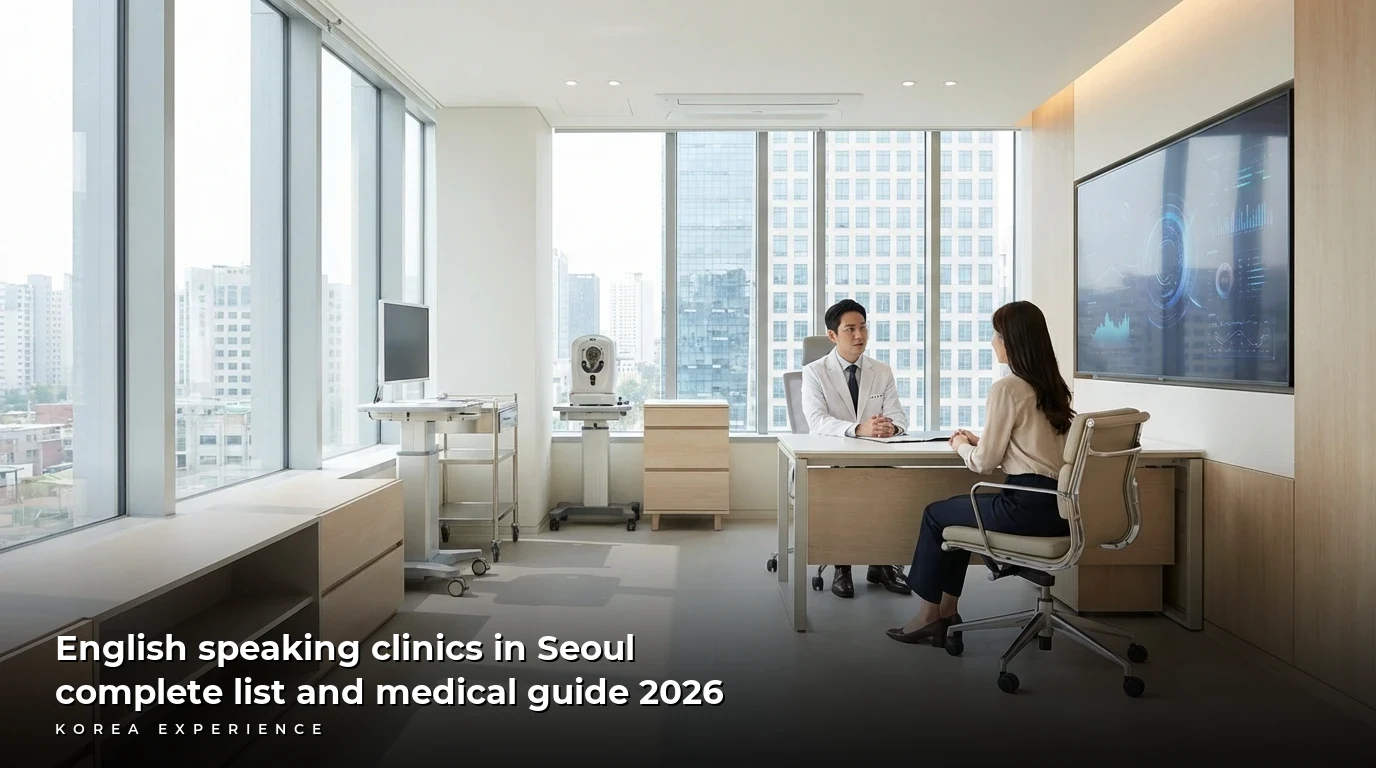
Finding medical care in a foreign country can be daunting, but Seoul possesses one of the most efficient and high-quality healthcare systems in the world. If you are looking for English-speaking clinics in Seoul, the most reliable options are the "International Healthcare Centers" (IHC) located within major university hospitals, followed by specialized private clinics in expat-friendly districts like Itaewon and Gangnam.
The short answer: For serious conditions, visit Severance Hospital (Sinchon) or Asan Medical Center, as both have dedicated English departments with 24/7 emergency services. For minor ailments (colds, prescriptions), the International Clinic in Itaewon or Seoul Central Clinic offer faster, walk-in friendly service with fluent English-speaking staff.
Key Takeaways
- 1University hospitals charge higher fees (approx. ₩50,000-100,000 consult) but offer full English interpretation
- 2Local clinics in Itaewon/Gangnam are faster for minor issues with consults around ₩30,000
- 3Always carry your Passport or Alien Registration Card (ARC) for registration
- 4Korean pharmacies (Yakguk) are excellent first stops for mild symptoms
Understanding the Korean medical system for foreigners
Before diving into the specific list of clinics, it is crucial to understand how the system works in 2026. South Korea operates on a two-tier system for international patients: the National Health Insurance Service (NHIS) for residents and full-cost payment for short-term travelers (unless covered by travel insurance).
If you are a tourist, you will likely pay the "International Patient" rate, which is approximately 100% to 130% of the NHIS base rate. However, compared to US or Western European healthcare costs, Seoul remains incredibly affordable. A standard consultation with a specialist at a top-tier hospital generally costs between $40 USD and $90 USD (₩55,000 - ₩120,000) without insurance.
📊 Healthcare Efficiency 2026
Medical Disclaimer
The information provided in this guide is for educational purposes only. If you are experiencing a medical emergency in Korea, dial 119 immediately for an ambulance. English service is available.
Top university hospitals with international healthcare centers
The "Big 5" hospitals in Seoul are world-renowned. They all operate dedicated International Healthcare Centers (IHC) specifically designed to separate foreigners from the general patient population to bypass language barriers. These centers handle registration, billing, and translation, escorting you to specialists if necessary.
1. Severance Hospital (Yonsei University Health System)
Located in Sinchon, near Yonsei University, this is arguably the most popular hospital for Western expats and students. Founded in 1885 by an American missionary, it has deep roots in Western medicine. The International Health Care Center here is staffed by doctors who are not just fluent in English but are often board-certified in the US.
Severance Hospital International Health Care Center(세브란스병원 국제진료센터)
Why choose Severance? It is the most "foreigner-friendly" in terms of atmosphere. The signage is perfectly bilingual, and the waiting area for the International Center feels like a private lounge. In 2026, they introduced a streamlined app for appointment booking that works with international phone numbers.
2. Asan Medical Center (AMC)
Consistently ranked as the #1 hospital in Korea, Asan is located in the eastern part of Seoul (Songpa-gu). It is massive, resembling a small city. Their International Healthcare Center is extremely efficient, treating over 20,000 international patients annually.
- Best for: Complex surgeries, cancer treatment, and organ transplantation.
- Language Support: English, Chinese, Russian, Arabic, Mongolian.
- Average Cost: Initial consultation starts at roughly ₩70,000 ($52).
- Location: 10-minute walk (or shuttle) from Jamsillaru Station (Line 2).
If you visit Asan, do not be intimidated by the size. Go straight to the International Center on the 3rd floor of the New Building. You skip the main registration queues entirely.
3. Samsung Medical Center (SMC)
Located in Irwon-dong (Gangnam area), SMC is a high-tech facility owned by the Samsung group. It is known for its paperless system and rapid diagnostics. The environment is modern and feels more like a high-end hotel than a hospital.
- Best for: Comprehensive health check-ups and Galaxy-speed diagnostics.
- Distance: 5 minutes from Irwon Station (Line 3).
- Phone: +82-2-3410-0200.
4. Seoul St. Mary’s Hospital
Located in Banpo (near the Express Bus Terminal), this is a Catholic university hospital that is highly favored by the diplomatic community. It is excellent for ophthalmology and hematopoietic stem cell transplantation.
- Accessibility: Directly connected to Express Bus Terminal Station (Lines 3, 7, 9) via underground passage, making it the most weather-proof option during monsoon season.
University Hospital Comparison 2026
| Feature | Severance (Sinchon) | Asan (Songpa) | Samsung (Gangnam) |
|---|---|---|---|
| English Fluency | Native/High | High | High |
| Location Vibe | University Town | River Park | Quiet Residential |
| Consult Fee (Est) | ₩60,000 | ₩70,000 | ₩65,000 |
| Sat Hours | Morning only | Limited | Morning only |
Primary care and expat-friendly clinics
For a sore throat, mild food poisoning, or a prescription refill, you do not need a university hospital. In fact, going to a "tertiary" hospital for a minor cold will result in higher fees due to Korean medical triage laws. Instead, visit these primary care clinics renowned for English service.
1. International Clinic (Itaewon)
Located in the heart of the expat district, this clinic has been a staple for decades. The head doctor is fluent in English and accustomed to Western medical practices and bedside manner.
International Clinic(국제의원)
2. Seoul Central Clinic (Hannam-dong)
Situated near the UN Village, this clinic serves the diplomat and foreign executive community. Dr. Lyuh speaks perfect English and offers comprehensive primary care, including pediatric services.
- Location: Across from the Volvo building in Hannam-dong.
- Specialty: Internal medicine, minor trauma, dermatology consultations.
- Wait Time: usually under 30 minutes with an appointment.
3. Soon Chun Hyang University Hospital (Hannam/Itaewon)
While technically a university hospital, its location in Hannam-dong makes it the de-facto emergency room for the expat community in Itaewon. Their IHC is very active.
- Emergency: This is the best place to go if you are in Itaewon/Hannam and have an urgent issue at 2 AM.
- English Level: High in the IHC; moderate in the general ER (but translation services are available).
For those living further south or needing specialized care, you might want to check our guide on best neighborhoods for expats in Seoul to see which clinics are closest to your potential home.
Specialized clinics: Dental and Dermatology
Korea is a global hub for aesthetic and dental treatments. These clinics often have better English coordinators than general hospitals because they cater heavily to medical tourists.
English-Speaking Dental Clinics
Korean dental care is high quality and significantly cheaper than in North America. A scaling (cleaning) typically costs ₩15,000–₩60,000 ($11–$45).
- The Oaks Dental Clinic (Gangnam): Extremely popular with foreigners. Staff are fluent in English. They specialize in rapid veneers and implants.
- Hus-hu Dental Clinic (Apgujeong): Known for aesthetic dentistry and orthodontics. They offer direct billing for TRICARE (US Military insurance).
- A Plus Dental Clinic (Apgujeong): A large facility with specialists for root canals and implants under one roof.
Dermatology (Skin Clinics)
If you are looking for skin treatments, you are spoilt for choice. However, not all "factory" clinics speak good English.
- TengTeng Skin Clinic: Located in Gangnam, famous for handling acne and laser treatments for foreign skin types.
- Renewme Skin Clinic: With multiple branches (Hongdae, Jamsil, Gangnam), they have a dedicated English website and interpreters.
For a deeper dive into skin treatments, read our detailed article on best dermatology clinics in Seoul for foreigners.
💵 Estimated Medical Costs 2026 (Non-Insured)
Includes interpretation service fees
Full spine or brain scan
Prescriptions, colds, minor issues
How to use a Korean hospital: A step-by-step guide
Navigating a Korean hospital can be confusing due to the sheer volume of patients. Efficiency is key here. Here is exactly how to handle a visit to a large University Hospital International Center.
📖 Hospital Visit Walkthrough
Step 1: Appointment
Call or email the International Healthcare Center at least 3 days in advance. Walk-ins are possible but wait times can exceed 2 hours.
Step 2: Registration
Go directly to the International Center, NOT the main desk. Present your Passport or ARC. You will fill out a basic medical history form in English.
Step 3: Consultation
A nurse will weigh you and check vitals. You will then see the doctor. Consultations are fast—usually 5-10 minutes. Have your symptoms written down clearly.
Step 4: Payment & Pharmacy
Pay at the International desk. They will give you a prescription slip. Take this to an external pharmacy (Yakguk) usually located just outside the hospital grounds.
The Pharmacy (Yakguk) Experience
When you leave the hospital, look for signs saying "약" (Yak). Hand them your prescription.
- Packet System: You won't get bottles of pills. You get paper strips with small packets, each containing the exact mix of pills for morning, lunch, and dinner.
- Cost: Prescription drugs are regulated and affordable. A typical course of antibiotics and anti-inflammatories costs under ₩20,000 ($15).
Insurance and Payment Methods
This is the most common stress point for travelers.
Travel Insurance
Most Korean hospitals do not accept direct billing from international travel insurance companies for outpatient care (under $500).
- You pay upfront: Cash or Credit Card (Visa/Mastercard are accepted everywhere).
- Get documents: Ask the International Center for a "Medical Certificate" (diagnosis) and "Receipt" in English. They are used to this request.
- Claim later: You submit these to your insurer back home.
Exception: For inpatient (hospitalization) or very expensive procedures (over $1,000), hospitals like Severance and Asan often work with major providers (Cigna, Aetna, BlueCross) for direct billing guarantees.
National Health Insurance (NHIS)
If you have an Alien Registration Card (ARC) and have lived in Korea for more than 6 months, you are likely enrolled in NHIS.
- Benefit: You pay the local rate.
- Cost: A clinic visit drops from ₩30,000 to approx. ₩4,000-₩6,000.
- Card: You don't need the physical card; just give them your ARC number.
For those planning a longer stay, ensuring you have connectivity is vital for receiving appointment reminders. Check our guide on best Korea SIM cards for long-term travelers.
Payment Tip
Always pay with a credit card that has no foreign transaction fees. Keep the paper receipt; the digital banking notification is often not enough for insurance claims.
Emergency Services: 119 vs 1339
If you face a crisis, know these numbers.
- 119: Ambulance and Fire. It is free. They have English interpretation, though it may take 30 seconds to connect a translator. The ambulance will take you to the nearest ER, not necessarily the one you want.
- 1339: Korea Disease Control and Prevention Agency (KDCA) Call Center. They provide medical advice and can tell you which hospitals are open near you (vital on weekends or holidays).
📋 Emergency Quick Stats
Weekend and Holiday Care
Most clinics close on Sundays. However, major university hospital ERs are open 24/7. For non-emergency needs on a Sunday/Holiday:
- Search for "Moonlight Children's Hospital" (Dalbit Children's Hospital) if you have kids—they open late.
- Use the Naver Maps app and search "Hospital," then filter by "Open."
- Pharmacies usually operate on a rotation system where at least one in the district remains open.
Pros and cons of medical tourism in Seoul
Is it worth getting treated here while traveling?
Medical Experience in Seoul
- ✓World-class technology and modern equipment
- ✓Significantly lower costs compared to US/Europe
- ✓High efficiency with minimal waiting times
- ✓Excellent integrated systems (X-rays done instantly)
- ✗Consultations can feel rushed (3-5 minutes)
- ✗Doctors can be direct/blunt about weight or appearance
- ✗Upfront payment required for travelers
- ✗Strict separation between prescribing (doctor) and dispensing (pharmacist)
Timeline of a typical medical tourist journey
If you are coming specifically for treatment (e.g., a check-up or minor surgery), here is how the timeline usually looks.
Medical Trip Timeline
Booking
Contact IHC via email. Send existing records.
Settling In
Check into hotel. Ensure transport card is ready.
Consultation & Tests
Visit hospital. Blood work and scans are usually done same-day.
Results Review
Follow-up appointment to discuss findings and treatment.
Documentation
Collect English receipts and medical certificates before flying.
Accessible healthcare
Seoul is making strides in accessibility, but older local clinics can still be challenging with stairs. University hospitals, however, are fully compliant with barrier-free standards. If you have mobility concerns, university hospitals are the safer bet over small private clinics in older buildings. For more on navigating the city with mobility issues, see our guide on accessible Seoul best routes for wheelchair and limited mobility.
Specialized Mental Health Services
Finding English-speaking mental health support can be harder than physical health support. However, several clinics cater to the international community:
- Seoul Counseling Center (Gangnam): Offers therapy in English with US-licensed psychologists.
- Adaptable Human Solutions (Mapo): Focuses on expat adjustment issues.
- Yonsei Severance Psychiatry: Has English-speaking psychiatrists who can prescribe medication (psychologists in Korea usually cannot prescribe).
Conclusion
Seoul offers a medical environment that is fast, high-tech, and surprisingly affordable. While the language barrier can be a hurdle in smaller neighborhood clinics, the network of International Healthcare Centers at major hospitals like Severance, Asan, and Samsung ensures that you can receive world-class care in English.
Whether you are here for a quick trip or settling in as an expat, knowing where to go before you get sick is the best insurance you can have. Keep the 1339 number saved, download Naver Maps, and rest assured you are in safe hands.
❓ Frequently Asked Questions
Have more questions?Contact us →
About the Author
Korea Experience Team
Written by the Korea Experience editorial team - experts in Korean medical tourism, travel, and culture with years of research and firsthand experience.
⚠️ Medical Disclaimer
The information provided on this website is for general informational purposes only and does not constitute medical advice. Always consult with qualified healthcare professionals before making any medical decisions.
Explore more in Medical Tourism
World-class medical procedures at competitive prices. From plastic surgery and dermatology to dental care and health checkups — your complete guide to medical tourism in Korea.
Browse All Medical Tourism ArticlesContinue Reading
Explore more articles you might find interesting
A complete guide to finding English-speaking therapy in Seoul. Covers costs, insurance, top clinics, and mental health resources for expats in 2026.
Comprehensive guide to vaginal rejuvenation in Seoul 2026. Compare costs (saving 30-50%), English-speaking clinics, laser treatments, and surgical options.
A comprehensive guide to FFS, VFS, and top surgery in Seoul for 2026. Includes costs, recovery times, and clinic recommendations for international patients.
A complete guide to requesting English medical records in Korea. Costs, processing times, and legal requirements for travelers and expats in 2026.
A comprehensive guide to the top English-speaking skin clinics in Seoul, comparing prices, treatments, and booking processes for international visitors.
The complete 2026 guide to emergency medical care in Seoul. Find the best international hospitals, ER costs, and English-speaking services for travelers.