Fertility treatments IVF in Korea success rates and international...
South Korea offers world-class IVF with 50-60% success rates for under-35s at 30% of US costs. Here is the complete guide to clinics, costs, and care.
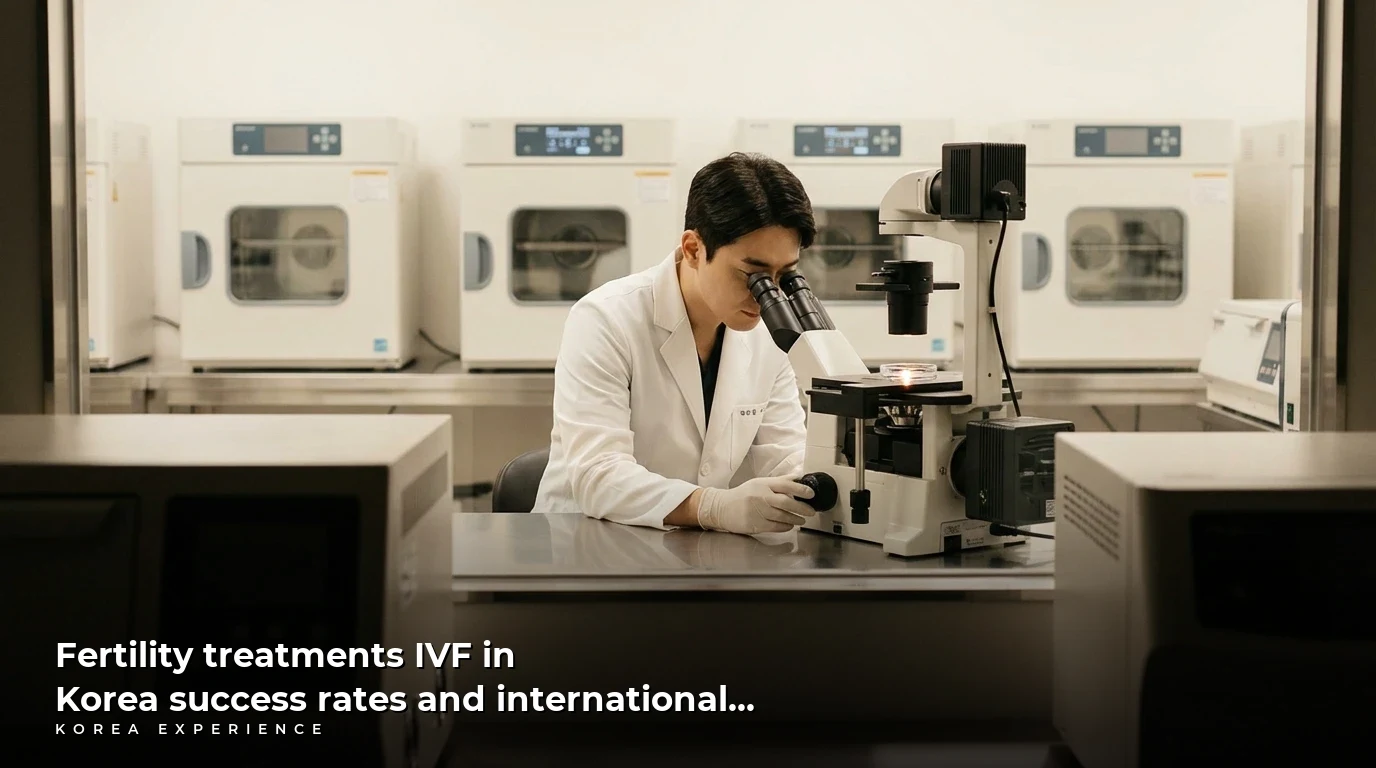
South Korea has firmly established itself as a global leader in reproductive medicine, offering fertility treatments and IVF with success rates that rival or exceed those in the United States and Europe, often at a fraction of the cost. In 2026, international patients flock to Seoul for advanced procedures like Preimplantation Genetic Testing (PGT) and time-lapse embryo monitoring, with average success rates hovering around 55-60% for women under 35 and roughly 25-30% for women over 40. The combination of cutting-edge technology, highly skilled specialists, and a strictly regulated medical environment makes Korea a top destination for fertility tourism.
The short answer: In 2026, fertility treatments in Korea offer a 50-60% success rate for patients under 35, costing approximately $4,000 to $7,000 USD per cycle (excluding medication), which is roughly one-third of the price in the US.
Key Takeaways
- 1Success rates for women under 35 average 55-60% per cycle in top Seoul clinics
- 2Average IVF cycle cost is $4,000-$7,000 USD, compared to $20,000+ in the USA
- 3Legal marriage is currently required for IVF treatment in Korea; surrogacy is illegal
- 4Most international patients need to stay in Korea for 2 to 3 weeks for a full cycle
Why choose Korea for fertility treatments in 2026?
The decision to travel abroad for medical treatment is significant, especially for something as sensitive as fertility. In 2026, South Korea continues to attract thousands of international patients annually for In Vitro Fertilization (IVF) and egg freezing. The primary drivers are the "Three A's": Accessibility, Affordability, and Advanced Technology.
Korean clinics are equipped with state-of-the-art laboratories that utilize AI-driven embryo selection and advanced cryopreservation techniques. Furthermore, the efficiency of the Korean medical system means wait times are virtually non-existent compared to the 3-6 month waiting lists often found in the UK or Canada. Most clinics in the Gangnam and Songpa districts of Seoul have dedicated International Healthcare Centers with English, Russian, Chinese, and Mongolian coordinators who assist with everything from airport pickups (approx. 60 minutes from Incheon) to accommodation booking.
📊 2026 Fertility Statistics
Understanding success rates by age and procedure
When researching "Fertility treatments IVF in Korea success rates and international patient care 2026," it is crucial to look at age-stratified data. Success rates in Korea are reported transparently and monitored by the government.
As of early 2026, the clinical pregnancy rates per embryo transfer at major university hospitals and specialized fertility centers in Seoul are as follows:
- Women under 30: 60% - 65%
- Women 30-35: 50% - 55%
- Women 35-39: 35% - 40%
- Women 40-42: 20% - 25%
- Women over 42: 5% - 10%
It is important to note that these figures represent clinical pregnancy (heartbeat detection). The "take-home baby" rate is generally slightly lower due to the natural risk of miscarriage. However, Korean clinics are aggressive in using PGT-A (Preimplantation Genetic Testing for Aneuploidies) to screen embryos for chromosomal abnormalities before transfer, which significantly reduces miscarriage rates and improves efficiency for older patients.
Many Western patients are surprised by how quickly we proceed. In Korea, we can often start stimulation on Day 2 or 3 of your cycle immediately after your arrival. We use high-resolution ultrasound that detects follicles as small as 2mm, allowing for very precise medication adjustments.
Detailed cost breakdown: Korea vs. Global
One of the most compelling reasons to choose Korea is the cost structure. While prices have risen slightly due to global inflation, Korea remains significantly cheaper than North America. In 2026, the government actively regulates medical pricing to prevent price gouging of international patients.
A standard IVF cycle in the US can easily exceed $20,000 USD, excluding medications. In contrast, a similar protocol in Seoul costs between ₩4,500,000 and ₩9,000,000 ($3,200 - $6,500 USD), depending on the complexity (e.g., ICSI, assisted hatching).
Here is a comparative look at the costs involved.
💵 Fertility Treatment Cost Comparison (2026)
Base cost often excluding specialized labs
Storage fees usually extra ($500/yr)
Includes scans, retrieval, and transfer
Includes 5 years of storage
Note: Prices are estimates and fluctuate based on the exchange rate (approx. ₩1,400 = 1 USD in this calculation) and specific clinic protocols.
Additional costs to consider
Travelers must budget for more than just the medical procedure.
- Medications: $500 - $1,500 USD (Hormone injections are significantly cheaper in Korea).
- Accommodation: $50 - $150 USD per night for a 2-3 week stay.
- Living Expenses: $30 - $50 USD per day for food and transport.
For advice on budgeting your stay, check our guide on the cost of living in Seoul vs Busan, which outlines daily expenses for short-term residents.
Eligibility and legal requirements
This is the most critical section for international patients. Korea has strict bioethics laws regarding who can receive fertility treatments.
The Golden Rule: You must be a legally married couple to undergo IVF or IUI (Intrauterine Insemination) in South Korea.
Legal Restrictions
As of 2026, IVF and IUI treatments in Korea are legally restricted to married couples (heterosexual). Single women and unmarried couples (including those in domestic partnerships) cannot receive sperm donation or IVF treatment. Surrogacy is also illegal. You must present an Apostilled marriage certificate translated into Korean or English.
If you are a single woman looking to freeze your eggs, this IS permitted. You can undergo the stimulation and retrieval process and freeze your oocytes for future use. However, you cannot fertilize them (create embryos) using sperm donor services in Korea until you are legally married.
Top fertility clinics in Seoul
Seoul is home to some of the world's largest and most advanced fertility centers. Most are located in the Gangnam, Seocho, or Songpa districts.
1. CHA Fertility Center (Gangnam & Seoul Station)
CHA is arguably the most famous fertility brand in Korea, with a massive international network including hospitals in Los Angeles and Australia. They are pioneers in egg freezing (Oocyte Banking) and have one of the largest databases of success rates. Their Seoul Station branch is specifically designed for medical tourists, located just 45 minutes via AREX train from Incheon Airport.
CHA Fertility Center Seoul Station(차병원 난임센터)
2. Maria Fertility Hospital
Maria Fertility Hospital performs the highest volume of IVF cycles in Korea. They are known for being cost-effective while maintaining high standards. They have multiple branches, with the Sinseol-dong branch serving as the headquarters. They are often praised for their specific expertise in "natural cycle" IVF or mild stimulation protocols for women with low ovarian reserve.
3. SNUH (Seoul National University Hospital)
As Korea's leading university hospital, SNUH takes on the most difficult cases, including patients with complex medical histories or recurrent implantation failures. While the process here can feel more "clinical" and less service-oriented than private centers like CHA, the medical expertise is top-tier.
For those planning their trip, deciding between a specialized clinic or a university hospital is a key decision. You can read more about booking strategies in our article on booking medical consultations in Korea.
The IVF journey: A step-by-step timeline
For an international patient, an IVF cycle usually requires a stay of approximately 15 to 21 days in Korea. It is possible to split this into two trips, but one longer trip is recommended to reduce stress and flight costs.
International IVF Patient Journey
Remote Consultation
Send medical records, hormone tests, and marriage cert via email.
Arrival & Initial Scan
Arrive on Day 2 or 3 of your period. Baseline ultrasound and blood work.
Ovarian Stimulation
Daily hormone injections. Ultrasound monitoring every 2-3 days.
Egg Retrieval
Sedated procedure to collect eggs. Husband provides sample same day.
Embryo Transfer
Transfer of day 3 or day 5 blastocyst. Remaining embryos frozen.
Post-procedure care and departure
After the transfer, patients are usually advised to rest for 24-48 hours. Most doctors allow patients to fly home 2-3 days after the transfer. The pregnancy blood test (Beta-hCG) is done 10-14 days after transfer, usually back in your home country.
Combining Western science with Eastern care
A unique aspect of fertility treatment in Korea is the integration of traditional Korean medicine (Hanbang). Many patients choose to undergo acupuncture or take herbal medicines to improve blood flow to the uterus and reduce stress before and during the IVF cycle.
While Western doctors focus on the hormones and mechanics, Eastern medicine focuses on the "warmth" of the womb. It is common to see clinics offering "womb warming" therapies.
Hanbang Synergy
If you plan to use herbal medicine, inform your IVF specialist. Some herbs can interact with hormones. However, acupuncture for stress relief is widely accepted and encouraged by many Western-trained Korean doctors.
If you are interested in holistic recovery, you might want to explore Korean healing foods for surgery recovery, which covers traditional soups and teas beneficial for post-procedure strength.
Accommodation and logistics for medical tourists
Staying in Seoul for 3 weeks requires comfortable accommodation. Since IVF involves frequent clinic visits (sometimes every other day), staying near your chosen clinic is vital.
- Gangnam/Yeoksam Area: Best for CHA Gangnam and Maria Fertility. High concentration of serviced apartments.
- Seoul Station Area: Best for CHA Seoul Station. Excellent transport links but fewer residential "home-like" stays.
When choosing where to stay, consider the trade-offs between a hotel and a rental apartment. Our guide on Airbnb vs recovery hotels breaks down the pros and cons specifically for medical patients who need a sterile and quiet environment.
📋 Logistics Checklist
Language barriers
While doctors speak excellent English, nursing staff might not. Translation apps like Papago are essential. The International Healthcare Centers provide interpreters who will accompany you into the examination room, ensuring clear communication regarding dosage instructions and test results.
Challenges and considerations
Despite the high success rates, there are challenges to consider.
IVF in Korea: Pros and Cons
- ✓Success rates 10-15% higher than global average
- ✓Cost is roughly 30% of US prices
- ✓No waiting lists; immediate treatment
- ✓Advanced time-lapse embryo monitoring standard
- ✗Strict legal requirement for marriage
- ✗Male partner must be present for retrieval
- ✗Cultural communication style can be direct/blunt
- ✗Flying 12+ hours can be stressful during treatment
The "Pali-Pali" (Hurry-Hurry) culture of Korea applies to medicine too. Appointments are fast. You may not get 30 minutes to chat about your feelings with the doctor; the focus is on efficiency and results.
How to prepare for your trip in 2026
- Contact Clinics Early: Start emailing 3 months prior.
- Get Your Records: Have your local hormon panel (AMH, FSH, LH, E2) and HSG (hysterosalpingogram) results ready.
- Apostille Your Marriage Certificate: This is non-negotiable.
- Visa: Apply for a Medical Tourism Visa (C-3-3) if your country does not have a visa-waiver agreement, or if you plan to stay longer than 90 days (though IVF rarely takes that long).
For some spiritual peace of mind before the procedure, some travelers visit fortune tellers to pick "lucky dates" for transfer. While scientifically unproven, it is a deep part of the culture. You can read about my experience with fortune telling in Korea.
Frequently Asked Questions
❓ Common Questions About IVF in Korea
Have more questions?Contact us →
Final thoughts
South Korea represents a beacon of hope for many couples struggling with infertility. The combination of medical excellence, affordability, and safety makes it a premier destination in 2026. While the legal requirements are strict regarding marriage, for those who qualify, the level of care is unmatched.
📖 Getting Started with IVF in Korea
Step 1: Research & Select Clinic
Choose between CHA, Maria, or University hospitals based on your case complexity.
Step 2: Virtual Consultation
Send medical history and confirm protocol.
Step 3: Book Flights & Stay
Arrive 1 day before your cycle starts.
By preparing your documents, understanding the timeline, and managing expectations regarding the fast-paced medical culture, you can navigate your fertility journey in Korea with confidence.
About the Author
Korea Experience Team
Written by the Korea Experience editorial team - experts in Korean medical tourism, travel, and culture with years of research and firsthand experience.
⚠️ Medical Disclaimer
The information provided on this website is for general informational purposes only and does not constitute medical advice. Always consult with qualified healthcare professionals before making any medical decisions.
Explore more in Medical Tourism
World-class medical procedures at competitive prices. From plastic surgery and dermatology to dental care and health checkups — your complete guide to medical tourism in Korea.
Browse All Medical Tourism ArticlesContinue Reading
Explore more articles you might find interesting
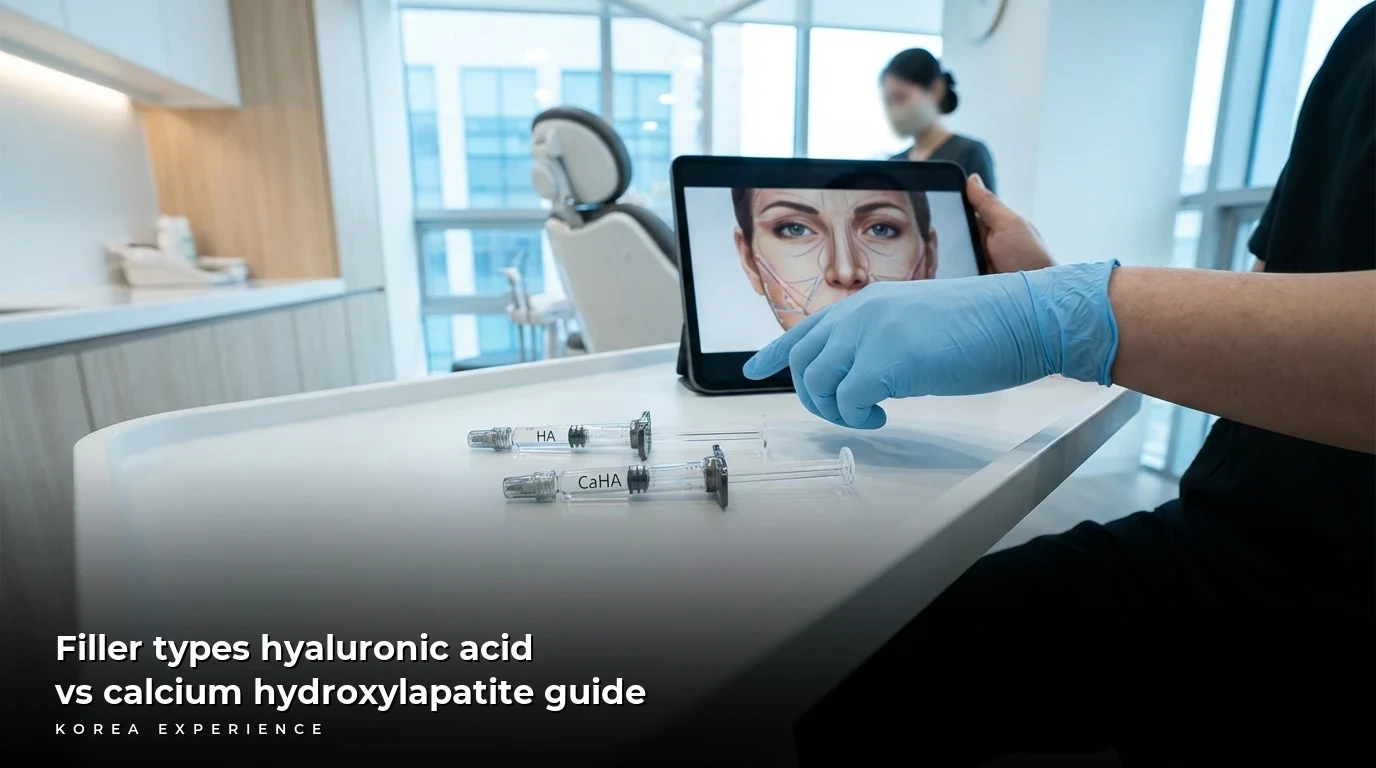
Compare HA and CaHA fillers for your medical tourism trip to Korea. Discover costs, longevity, and expert advice for procedures in Seoul.
Compare costs, recovery timelines, and longevity of fat grafting vs fillers in Seoul. Find out which facial volume treatment fits your needs and budget.
Understand the crucial safety timeline for flying after plastic surgery in Korea. Learn about risks, recovery, and essential tips for a smooth return journey.
Explore ethnic rhinoplasty in Korea, where advanced techniques meet cultural sensitivity to enhance your nose while preserving unique facial identity.
Comprehensive guide on flying after surgery in Korea. Learn safe timelines, DVT prevention, and doctor-approved tips for your flight home in 2026.
A comprehensive guide to English-speaking medical facilities in Seoul. Includes wait times, 2026 pricing, insurance details, and the top 15 clinics for expats.