Korean Street Food Classics Tteokbokki Hotteok Sundae Guide
Discover the holy trinity of Korean street food. Essential guide to Tteokbokki, Hotteok, and Sundae including best spots, prices, and eating tips.
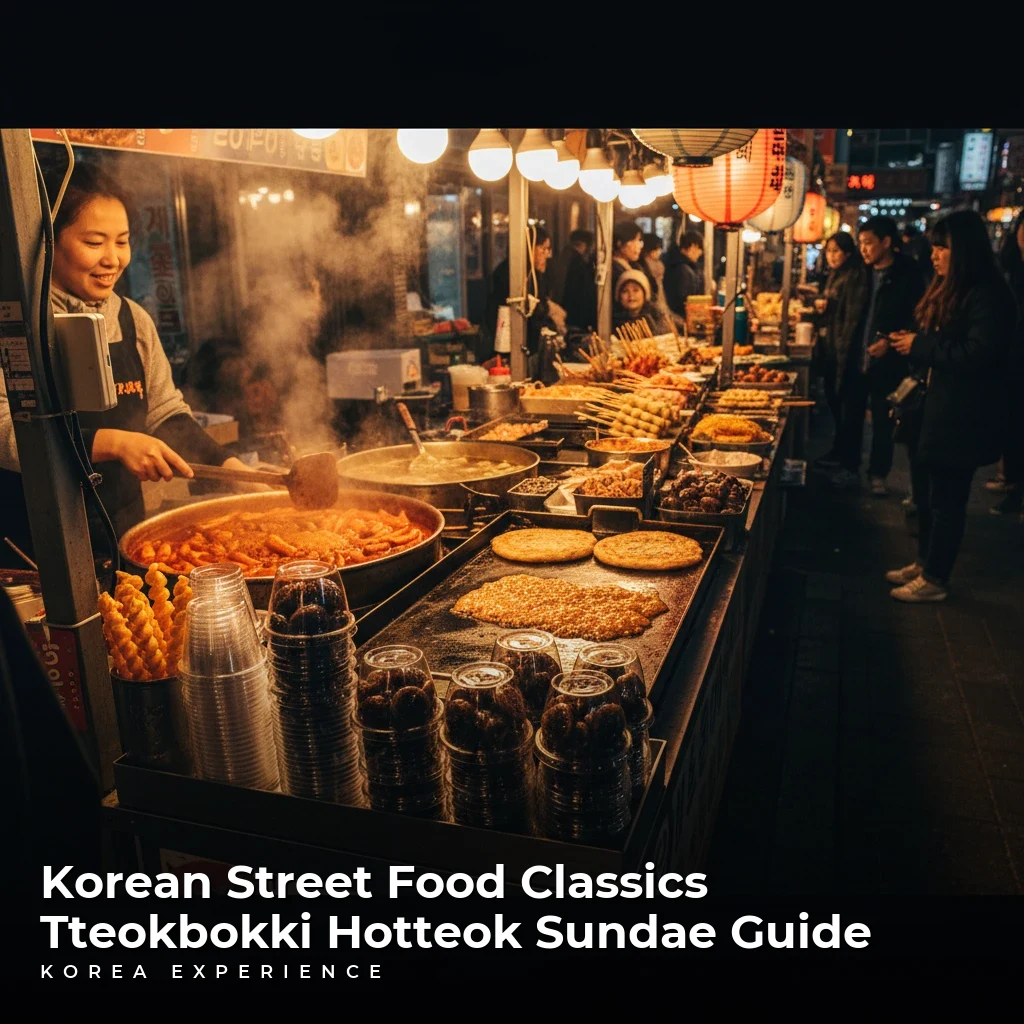
The vibrant orange tarps of a Pojangmacha (street tent) are as iconic to the Korean landscape as the ancient palaces that stand behind them. For international travelers, the sensory overload of steam rising into the cold air, the rhythmic chopping of scissors, and the pungent aroma of spicy pepper paste is the true welcome to Korea. While the culinary scene in Seoul has evolved into a powerhouse of Michelin stars and fusion dining, the heart of the nation's food culture remains firmly planted on the sidewalk.
At the core of this street food ecosystem lies a "Holy Trinity" that every visitor must experience: Tteokbokki (spicy rice cakes), Sundae (blood sausage), and Hotteok (sweet filled pancakes). These three dishes represent the savory, the textural, and the sweet pillars of Korean snacking. This guide provides a comprehensive deep dive into these classics, moving beyond the surface level to offer practical, data-driven advice for your gastronomic journey.
Key Takeaways
- 1The Tteokbokki-Sundae-Tempura combo costs roughly 10,000 to ₩12,000 ($7-9 USD)
- 2Most street stalls open after 2:00 PM and close around 11:00 PM daily
- 3Cash is still king at smaller stalls; always carry 1,000 and ₩5,000 bills
The Street Food Ecosystem: Understanding Pojangmacha
Before diving into the specific dishes, it is crucial to understand the venue. A Pojangmacha is a tented street stall. In Seoul alone, there are over 3,000 registered street food vendors, with the highest concentration found in the districts of Jongno-gu and Jung-gu. These distinct zones are regulated by the city, ensuring a hygiene standard that is generally rated Grade A or B by local health authorities.
You might also enjoy our article about Chuncheon Dakgalbi Street Guide South Korea Spicy Chicken....
Street food in Korea is not just a meal; it is a fast-paced cultural ritual. The average turnover time for a customer at a standing stall is approximately 12 to 15 minutes. This efficiency is what makes it the preferred dining option for students and office workers rushing between appointments.
📊 Street Food Economy
When you approach a stall, you will notice a specific layout. The center is usually dominated by a massive rectangular pan of simmering Tteokbokki. To one side, a steamer holds the Sundae, and to the other, a vat of oil fries the tempura. This ergonomic setup allows the "Auntie" (Imo) to serve a combination plate in under 45 seconds.
Learn more in our comprehensive guide to Exploring Korea Traditional Market Street Food Tours.
Tteokbokki: The Spicy King of Street Food
Tteokbokki is the undisputed king of Korean street food. It consists of cylindrical rice cakes cooked in a thick sauce made from gochujang (chili paste) and gochugaru (chili powder). The texture is the primary draw—a sensation known in Korean as jjolgit-jjolgit, meaning pleasantly chewy and elastic.
The Evolution and Varieties
While the spicy red version is famous globally, Tteokbokki was originally a non-spicy dish served in the royal court, known as Gungjung Tteokbokki, seasoned with soy sauce and beef. The modern spicy iteration appeared in the 1950s after the Korean War and exploded in popularity during the 1970s.
You might also enjoy our article about Korean street food guide 30 foods to try.
Today, you will encounter two main types of rice cakes:
- Wheat Cakes (Mil-tteok): Softer, absorb sauce faster, and maintain texture longer.
- Rice Cakes (Ssal-tteok): Chewier, denser, and made from 100 percent glutinous rice.
📋 Tteokbokki Specs
Regional Variations and Modern Twists
In 2026, the trend has shifted slightly toward "Rose Tteokbokki," which incorporates cream or milk into the spicy sauce to temper the heat, catering to a broader international palate. However, the street classic remains the red, spicy standard.
Related reading: Sokcho squid and abai Sundae the ultimate food guide.
If you travel 325 kilometers southeast to Busan, the style changes. The sauce becomes deeper red, using more starch syrup for a thicker, sweeter consistency, and the rice cakes are significantly larger—often requiring scissors to cut before eating.
Pro Tip: The Broth Hack
When eating Tteokbokki at a stall, you are entitled to unlimited warm broth (Odeng-gukmul). Look for paper cups near the fish cake skewer section. It is self-service and acts as a perfect palate cleanser for the spice.
Sundae: The Misunderstood Masterpiece
Often intimidating to Western travelers, Sundae (pronounced soon-deh) is a blood sausage that shares little in common with the ice cream dessert of the same spelling. It is made by steaming cow or pig intestines stuffed with various ingredients. The most common street version, Dangmyeon Sundae, is filled primarily with glass noodles (vermicelli), barley, and pork blood.
Flavor Profile and Texture
Contrary to expectations, street Sundae does not have a strong metallic or "bloody" taste. The glass noodles dominate the flavor profile, making it mild, savory, and slightly earthy. The texture is soft with a slight bounce from the casing. A standard serving weighs approximately 250 to 300 grams and costs between 4,500 and ₩5,000.
Sundae Varieties
| Type | Filling | Texture | Best Region |
|---|---|---|---|
| Dangmyeon (Street) | Glass Noodles | Bouncy/Soft | Seoul (Everywhere) |
| Abai (Traditional) | Glutinous Rice/Veg | Dense/Rich | Sokcho |
| Ojing-eo | Squid Body | Chewy/Seafood | Gangwon Province |
The Liver and Lungs Debate
When you order Sundae, the vendor will ask, "Naejang seokkeo juseyo?" (Shall I mix in the innards?). This refers to the steamed liver (dense, dry) and lungs (spongy, chewy) served alongside the sausage. If you are a beginner, it is safe to decline, but the liver provides a rich contrast to the lighter noodle sausage.
How you dip your Sundae reveals where you think you are. In Seoul, we dip it in chili-flavored salt. In Busan, they use Ssamjang (bean paste). In Jeolla province, they use Cho-jang (vinegar chili paste). Try the Seoul style first—it enhances the savory notes without overpowering the subtle flavors.
Hotteok: The Sweet Finale
After the fiery heat of Tteokbokki and the savory depth of Sundae, Hotteok serves as the dessert course. It is a sweet pancake made from wheat flour, water, milk, sugar, and yeast. The dough is allowed to rise for several hours, often sitting in a warm corner of the stall for 3 to 4 hours to develop elasticity.
The Cooking Process
The vendor tears off a handful of dough, stuffs it with a mixture of brown sugar, cinnamon, and crushed nuts, and places it on a greased griddle heated to approximately 180 degrees Celsius. Using a circular metal press, they flatten the ball into a disc, frying it until the outside is golden crisp and the sugar inside melts into a scorching syrup.
📖 How to Eat Hotteok Safely
Step 1: Receive the Cup
The vendor will hand it to you in a paper cup folded in half. Do not touch the pancake directly; it is over 80°C on the surface.
Step 2: The Nip
Bite a tiny hole in the top corner to release the steam. Do not bite into the center yet.
Step 3: The Wait
Wait 30-60 seconds. The syrup inside is essentially molten lava.
Step 4: Enjoy
Eat slowly, letting the syrup drain onto the dough as you bite.
Seasonal Availability and Pricing
Unlike Tteokbokki which is a year-round staple, Hotteok is distinctly seasonal. While tourist areas sell them all year, neighborhood stalls typically only operate from October to April. The price has risen due to inflation; what was once ₩1,000 is now typically 2,000 to ₩2,500 in 2026.
Specialty versions include the Ssiat Hotteok (Seed Hotteok) famous in Busan, which is cut open after frying and stuffed with sunflower seeds, pumpkin seeds, and almonds. This adds a crunchy texture and nutritional density, raising the calorie count from roughly 230 to nearly 350 calories per pancake.
Strategic Eating: Where to Go
Not all street stalls are created equal. For the best experience, you must choose your location based on your priorities: authenticity, variety, or convenience.
1. Gwangjang Market (The Authentic Hub)
Located in Jongno-gu, this is the oldest traditional market in Seoul. The central corridor is a dense grid of food stalls.
- Best for: The classic atmosphere and "Mayak Kimbap" (addictive seaweed rolls) alongside Tteokbokki.
- Crowd Factor: Very High. Expect to wait 15-20 minutes for a seat on weekends.
- Transit: Jongno 5-ga Station (Line 1), Exit 8. Walk 100 meters.
Gwangjang Market Central Aisle(광장시장)
2. Myeongdong Street Food Alley (The Tourist Buffet)
While purists critique Myeongdong for being commercialized, the variety is unmatched. The main street stretches 400 meters and transforms into a food market after 4:00 PM.
- Best for: Variety. You can find Tteokbokki alongside grilled lobster, tornado potatoes, and egg bread.
- Price Premium: Expect to pay 20-30% more than neighborhood stalls. Tteokbokki here averages 5,000 to ₩6,000.
- Transit: Myeongdong Station (Line 4), Exit 6.
3. Tongin Market (The Unique Experience)
Located west of Gyeongbokgung Palace, this market is famous for "Oil Tteokbokki" (Gireum Tteokbokki). Instead of being boiled in sauce, the rice cakes are stir-fried in chili oil until crispy.
- Best for: Culinary adventurers seeking texture over sauce.
- Dosirak Café: You can buy a lunchbox tray and pay with brass coins (yeopjeon) to sample foods from different stalls.
- Transit: Gyeongbokgung Station (Line 3), Exit 2. Walk 500 meters.
Budgeting for Your Feast
Street food is meant to be affordable, but costs can accumulate if you are sampling multiple items. Below is a comparative breakdown of costs for a standard itinerary for two people in 2026.
💵 Street Food Budget (For 2 People)
1 Tteokbokki, 1 Sundae, 2 Hotteok
Street Food Dining
- ✓Incredibly fast service (under 2 mins)
- ✓Authentic local atmosphere
- ✓Customizable spice levels at some stalls
- ✗Standing room only (tiring)
- ✗Limited vegetarian options
- ✗Hygiene varies by stall (look for gloved hands)
How to Order Like a Local
The barrier to entry for street food can feel high due to language differences, but the process is highly visual.
The Street Food Process
Approach & Scan
Stand near the food you want. If eating there, take a spot near the counter.
Order or Point
Say 'Tteokbokki hana' (One Tteokbokki). Or simply point and hold up one finger.
Self-Serve Broth
While the auntie plates your food, grab a paper cup and fill it with broth.
Eat & Pay
Eat standing up. Pay at the end. Hand cash directly to the auntie or place it in the designated money basket.
The "Combo" Culture
If you visit a franchise street food restaurant (like Jaws Tteokbokki or Mimine), you will often see "Set Menus." A common term is "Tteok-Twul-Sun," which is an abbreviation for Tteokbokki, Twigim (Tempura), and Sundae. This set typically costs around 13,000 to ₩15,000 and serves 2-3 people comfortably.
Spiciness Warning
The red color of Tteokbokki can be deceiving. The brightness comes from the pepper powder, not necessarily the heat level. However, if you see the sauce is a dark, maroon crimson, it likely contains Capsaicin extract and will be extremely spicy. Ask "Mae-wo-yo?" (Is it spicy?) before ordering.
Hygiene and Safety Considerations
A common concern for travelers is food safety. South Korea enforces strict food safety laws. Street vendors in regulated zones (like Myeongdong and Gwangjang) are subject to periodic inspections.
However, to be safe:
- Turnover is Key: Eat where the locals are eating. High turnover means the food hasn't been sitting out.
- Look for Steam: Ensure your Sundae or Tteokbokki is taken directly from the steaming pot, not a side plate.
- Summer Caution: Be more cautious with Sundae during the humid months of July and August, as the blood content spoils faster than the rice cakes.
Conclusion
Tteokbokki, Sundae, and Hotteok are more than just caloric intake; they are a lens through which to view Korean history and daily life. Tteokbokki represents resilience and evolution, transforming from a royal dish to a commoner's staple. Sundae represents resourcefulness, utilizing every part of the animal to create nourishment. Hotteok represents the simple joys of warmth in a country known for its biting winters.
Whether you are standing under a yellow tarp in the rain in Hongdae or navigating the crushed crowds of Gwangjang Market, these flavors will anchor your memories of Korea. Remember to carry cash, bring an appetite, and never be afraid to ask for a little extra broth.
❓ Frequently Asked Questions
Have more questions?Contact us →
About the Author
Korea Experience Team
Written by the Korea Experience editorial team - experts in Korean medical tourism, travel, and culture with years of research and firsthand experience.
Explore more in Food & Dining
Korean BBQ, street food, Michelin restaurants, and regional specialties — your ultimate guide to eating well in Korea.
Browse All Food & Dining ArticlesContinue Reading
Explore more articles you might find interesting
Discover the ultimate checklist of 50 essential Korean dishes, from street food to royal cuisine, including prices, spicy levels, and best spots for 2026.
The ultimate guide to street food in Seoul for 2026. Discover prices, best markets like Gwangjang, and must-eat snacks from hotteok to tteokbokki.
Discover the best Busan night markets in 2026. From Bupyeong Kkangtong's street food to Haeundae's seafood, find prices, hours, and transport tips.
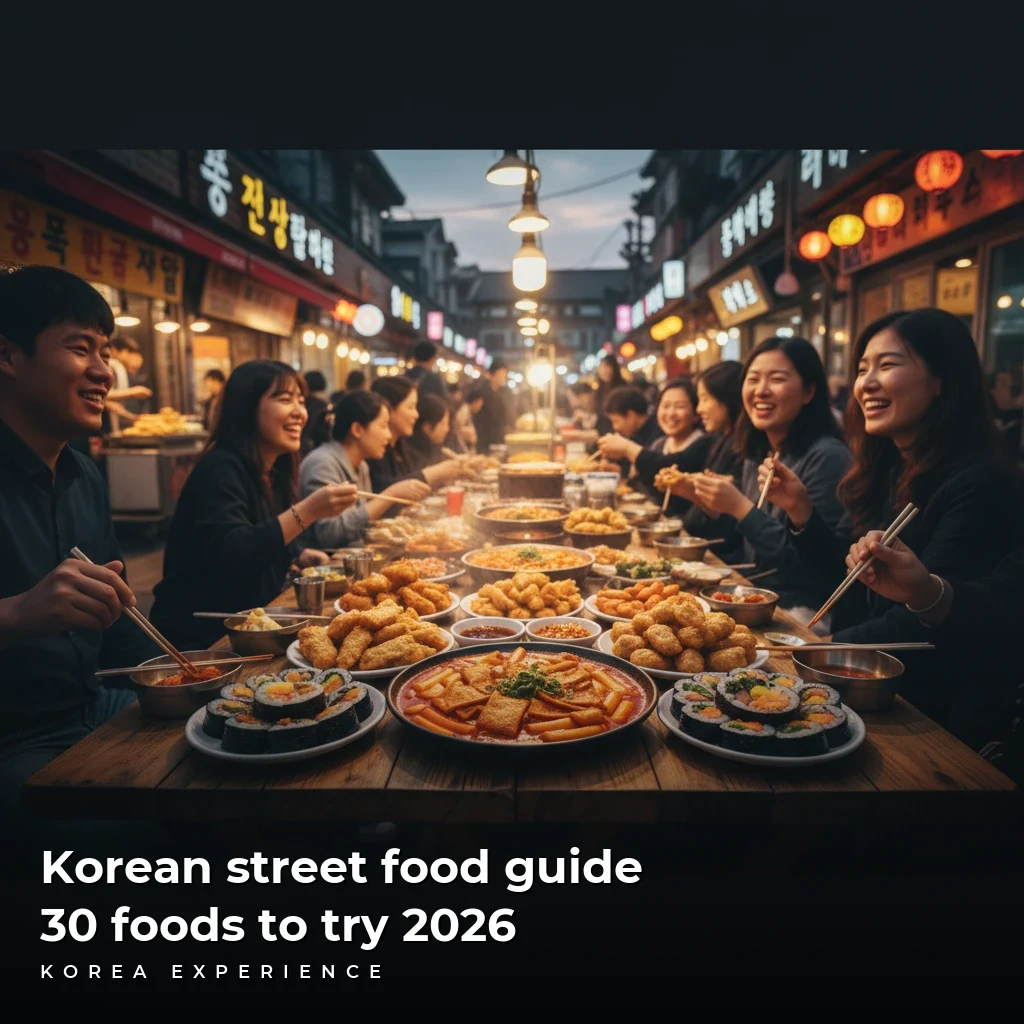
Discover the ultimate list of 30 must-try Korean street foods for 2026, from classic spicy rice cakes to trendy fusion snacks, with prices and local tips.
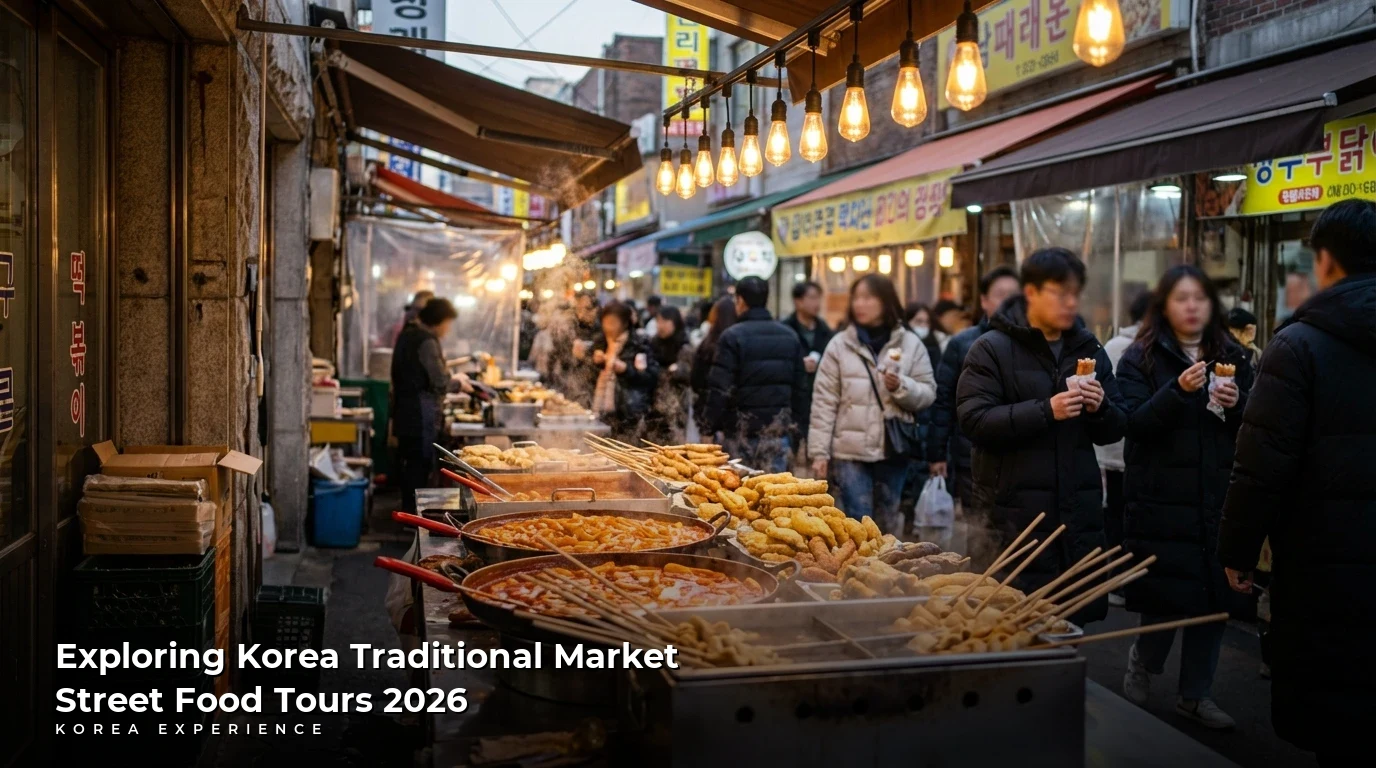
The ultimate guide to Korean street food markets in 2026. Discover prices, best tours, hidden stalls, and essential etiquette for travelers.
Explore the best of Myeongdong in 2026. Discover top K-beauty flagship stores, trendy fashion boutiques, and street food prices starting at ₩4,000.