H 1 Working Holiday Visa Korea Complete Guide 2026
Everything you need to know about the South Korea Working Holiday Visa. Eligibility, application steps, costs, and finding a job in Seoul.
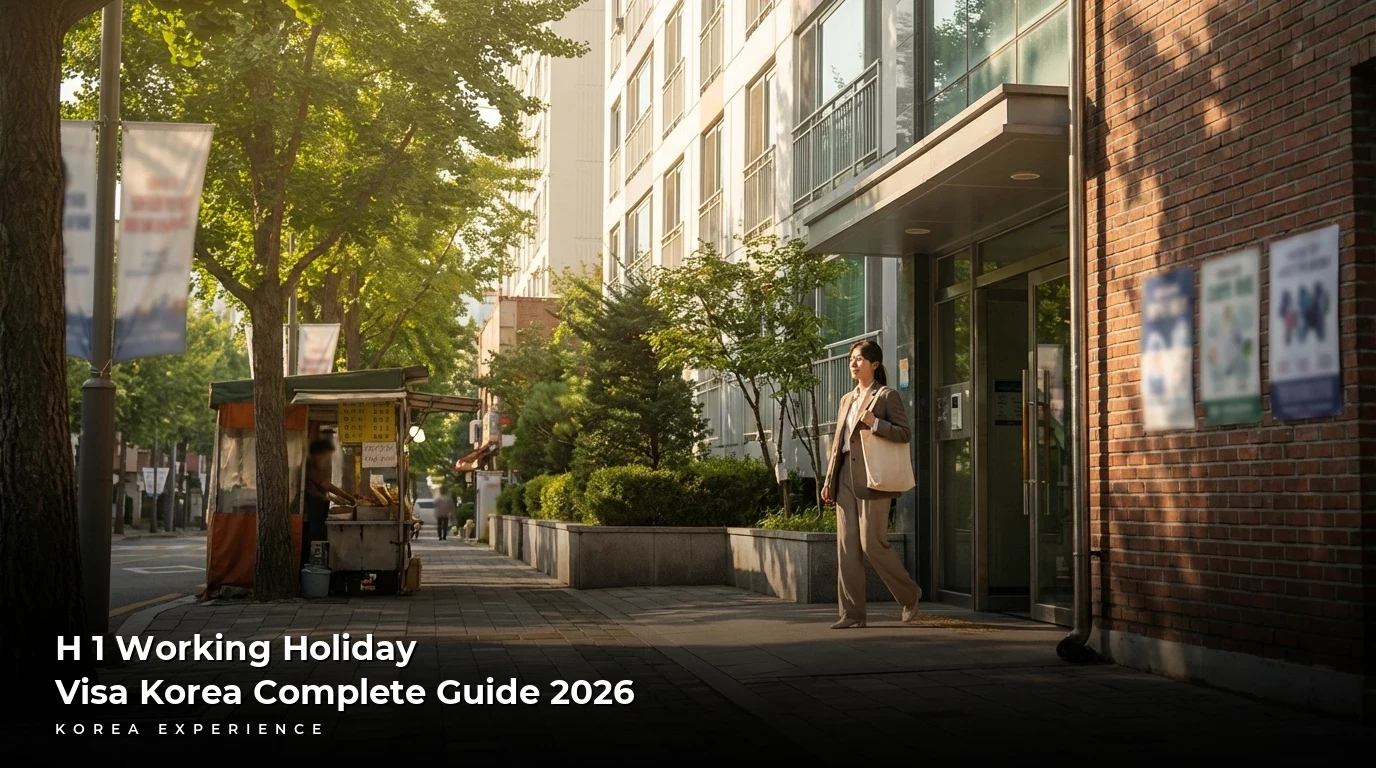
For many international travelers, the dream of living in South Korea extends far beyond a two-week vacation. The allure of neon-lit streets in Gangnam, the serenity of ancient palaces, and the dynamism of K-culture has led to a surge in long-term visitors. If you are between the ages of 18 and 30 (or 35 for select nationalities), the H-1 Working Holiday Visa is your golden ticket to experiencing life on the peninsula for a full year.
This visa allows young people from 25 participating countries to reside in South Korea for up to 12 months, with the legal ability to work part-time to supplement their travel funds. Unlike a student visa or a strict employment visa, the H-1 offers a unique balance of freedom and cultural immersion. However, the bureaucratic hurdles can be daunting. From proving your financial stability to navigating the local immigration office for your Alien Registration Card (ARC), the process requires meticulous planning.
Learn more in our comprehensive guide to Changing visa status while in Korea guide for expats.
Key Takeaways
- 1Eligibility is strictly 18-30 years old (up to 35 for UK, Canada, Australia, etc.)
- 2You must prove funds of at least ₩3,000,000 (approx. $2,250 USD) in savings
- 3English teaching and entertainment jobs are strictly prohibited on this visa
- 4You must apply for an Alien Registration Card (ARC) within 90 days of arrival
Understanding the H-1 Visa
The H-1 Visa is designed primarily for tourism, with work being a secondary privilege to cover travel expenses. It is based on bilateral agreements between South Korea and partner nations. As of January 2026, the quota for most countries ranges from 200 to 4,000 participants annually per country, meaning spots can fill up quickly in popular regions like France or Canada.
For more details, check out our guide on D 10 Job Seeker Visa After Graduation in 2026 Guide.
The core philosophy of this visa is "travel first, work second." This distinction is crucial because immigration officers scrutinize your "Activity Plan" to ensure you intend to tour the country rather than work full-time in a corporate setting. The maximum stay is generally 12 months from the date of entry, and unlike other visas, it usually cannot be extended (with very specific exceptions for U.S. citizens regarding duration).
For more details, check out our guide on D 10 Job Seeker Visa Korea 2026 Complete Application Guide.
📊 Visa Statistics 2026
Eligibility Requirements
Before booking a flight to Incheon International Airport (ICN), you must verify that you meet the strict criteria set by the Ministry of Justice. The requirements are generally consistent, though local embassies may request slight variations in documentation.
You might also enjoy our article about D visa student visa and part time work rules guide.
Age Restrictions
The standard age range is 18 to 30 years old at the time of application. This means you must submit your application before your 31st birthday. However, recent bilateral updates have expanded this for certain nations. Citizens of the United Kingdom, Canada, Australia, and New Zealand can now apply up to age 35.
Citizenship and Residence
You must hold a valid passport from a partner country and, crucially, you must be physically present in your home country when applying. You cannot typically apply for an H-1 visa while already in Korea on a tourist visa, nor can you apply from a third country. Your passport must have at least 6 months of validity remaining, though 12+ months is highly recommended to cover your entire stay.
Financial Solvency
You must prove that you can support yourself initially. The standard requirement is a bank statement showing a minimum balance of ₩3,000,000 (approximately 2,250 USD / 2,100 EUR / 1,800 GBP). The statement usually needs to be issued within the last 30 days.
Return Ticket Requirement
In addition to the ₩3 million savings, you must either possess a return flight ticket or prove you have additional funds to buy one. This usually adds another ₩1,000,000 ($750 USD) to your required total. It is safer to show a total balance of around $4,000 USD to avoid any scrutiny.
Criminal Record and Health
A clean criminal record check (issued within the last 3 months) is mandatory. It typically requires an apostille or consular verification. Additionally, a medical exam is often required to prove you are free of tuberculosis and other infectious diseases.
The Application Process Step-by-Step
Navigating the application process takes time. Most applicants spend about 4 to 6 weeks gathering documents before their embassy appointment. The processing time at the embassy varies from 5 to 14 business days.
📖 How to Apply for H-1 Visa
Step 1: Check Quota & Eligibility
Visit your local Korean Embassy website to ensure the annual quota hasn't been filled for your country.
Step 2: Medical & Criminal Checks
Request a federal criminal background check and get a medical exam. Get the background check apostilled immediately as this takes the longest (2-4 weeks).
Step 3: Draft Travel Plan
Write a 1-2 page 'Activity Plan' detailing which cities you will visit and how you will budget your trip. Emphasize tourism over work.
Step 4: Bank Statements
Visit your bank to get an official stamped balance statement. It must be in English or translated/notarized.
Step 5: Embassy Appointment
Submit your application form, passport, photo (3.5cm x 4.5cm), fee, and documents to the embassy.
Writing the Activity Plan
This is often where applicants get stuck. The immigration officer wants to see that you are genuinely interested in Korean culture. Your plan should look like a travel itinerary.
- Months 1-3: Arrival in Seoul, language classes at a university, visiting Gyeongbokgung Palace.
- Months 4-6: Travel to Busan via KTX (2.5 hours, approx ₩59,800), exploring Haeundae.
- Months 7-9: Visiting Jeju Island, hiking Hallasan.
- Months 10-12: Cultural experiences in Gyeongju, preparing for departure.
Do not write "I want to work at a bar in Hongdae for 12 months." Instead, write "I plan to work part-time occasionally to experience local work culture and fund my travels to Jeju."
Financial Breakdown: What It Costs
Moving to Korea is not cheap. While the cost of living in Seoul is lower than New York or London, the upfront costs are significant. You should budget at least 2,000 USD for your first month's expenses, excluding your flight.
💵 Initial Setup Costs (First Month)
Goshiwon living, public transport, convenience store meals
One-room deposit, reliable internet, dining out, cafe hopping
Housing deposits are the biggest shock for newcomers. While a "Goshiwon" (exam study room) requires no deposit, a standard studio apartment ("One-room") typically requires a deposit (Key Money) ranging from 5,000,000 to ₩10,000,000 ($3,750 - $7,500 USD). This money is returned when you move out, but you must have it upfront.
Arriving in Korea: The First 90 Days
Once you land at Incheon Airport, the clock starts ticking. You have 90 days to register for your Alien Registration Card (ARC), now officially called the Residence Card. Without this card, you cannot sign a phone contract, open a bank account, or sign a housing lease.
The ARC Process
The ARC is your primary ID. You must make a reservation at the Immigration Office that holds jurisdiction over your neighborhood (Gu).
- Find Housing: You need a lease agreement to apply.
- Book Appointment: Visit the HiKorea website. Slots fill up 3-4 weeks in advance.
- The Visit: Bring your passport, application form, color photo (3.5cm x 4.5cm), proof of residence, and ₩30,000 in cash.
- Wait: It takes about 3 to 5 weeks for the card to be issued.
If you can't find an appointment at immigration before your visa expires, check the website at 7:00 AM or late at night. People cancel, and slots open up. Also, print the "Confirmation of Visa Issuance" immediately; you can use this paper to open a limited bank account at Hana Bank before your physical card arrives.
Getting Connected: SIM Cards
Until you get your ARC, you will need a prepaid SIM. A 30-day prepaid SIM with unlimited data typically costs around 45,000 to ₩60,000 ($35-$45 USD). You can pick these up at the airport (Level 1 arrivals hall) or in Hongdae/Myeongdong. Once you have your ARC and a bank account, you can switch to a postpaid plan which is significantly cheaper (around ₩35,000/month for decent data).
Working in Korea: Restrictions and Opportunities
The H-1 visa has specific limitations on employment. The government strictly regulates the industries you can enter to protect the local job market and visa integrity.
Prohibited Jobs
You generally cannot work as:
- Language Instructor (requires E-2 Visa).
- Journalist/Editor (requires E-5 Visa).
- Full-time regular employee in a specialized field (requires E-7).
- Entertainment, host/hostess bars, or any adult industry roles.
- Medical, legal, or other licensed professions.
Strict Warning on Teaching
It is illegal to teach English on an H-1 visa, even as a private tutor. If caught, you face heavy fines (often exceeding ₩2,000,000), immediate deportation, and a ban from re-entering Korea. If you want to teach, you must apply for an E-2 visa.
Allowed Jobs
Most working holiday makers find employment in the service sector.
- Hospitality: Staff at Guesthouses or Hostels.
- Food & Beverage: Cafes, Restaurants, Bars (non-entertainment).
- Tourism: Tour guide assistants, content creators (freelance limits apply).
- Labor: Light manufacturing or agriculture (specific restrictions apply).
The maximum working hours vary by nationality. Generally, you are limited to 25 hours per week. However, some nationalities may have different allowances based on their specific MOU (Memorandum of Understanding). Always verify the current limit with the immigration office (Call 1345).
Finding a Job
The minimum wage in Korea for 2026 is approximately ₩10,030 per hour (around $7.50 USD). While this isn't high, it is sufficient to cover basic living expenses if you work the maximum allowed hours.
Popular platforms for finding foreigner-friendly jobs include:
- Craigslist Seoul: Good for bar/restaurant work.
- Albamon / AlbaHeaven: The biggest Korean job sites (requires Korean language skills).
- Facebook Groups: "Working Holiday Korea" and "Jobs in Seoul" groups are very active.
Job Platform Comparison
| Feature | Craigslist | Albamon | Facebook Groups |
|---|---|---|---|
| Language | English | Korean | Mixed |
| Job Type | Bar/Cafe/Model | All Service Jobs | Networking |
| Competition | High | Moderate | High |
Accommodation Options
Seoul offers a spectrum of housing, but space is a premium commodity. The sheer density of the city—over 16,000 people per square kilometer—means apartments are compact.
Goshiwon (Livingtel)
These are tiny rooms (approx. 5-8 square meters) originally designed for students studying for exams.
- Price: 350,000 - ₩600,000/month.
- Pros: No deposit, bills included, free rice/kimchi/ramen usually provided.
- Cons: Extremely small, shared bathroom (unless you pay for "ensuite"), claustrophobic.
One-Room (Studio)
The standard for young Koreans. A self-contained studio with a kitchenette and bathroom.
- Price: 500,000 - ₩900,000/month + Management Fee (50,000-₩100,000).
- Deposit: 5,000,000 - ₩10,000,000 (The higher the deposit, the lower the rent).
- Pros: Private, comfortable, your own space.
- Cons: High initial cost, 1-year contract usually required.
Share House
A room in a larger apartment shared with others.
- Price: 450,000 - ₩700,000/month.
- Deposit: Usually 2 months' rent.
- Pros: Social, larger living area, often international mix.
- Cons: House rules, potential roommate conflicts.
📋 Housing Quick Facts
Budgeting for Life in Seoul
Seoul can be incredibly affordable or very expensive depending on your lifestyle. A local meal (Gimbap or Bibimbap) can cost 5,000 to ₩9,000, while a western pasta dish might cost ₩18,000.
Transport
Public transport is world-class.
- Subway/Bus Base Fare: ~₩1,500 (using T-Money card).
- Transfers: Free up to 4 times within 30 minutes.
- Taxi Base Fare: ~₩4,800 (prices rise at night).
- Climate Card: In 2026, Seoul offers unlimited transit passes for approx ₩65,000/month.
Food & Drink
- Coffee: ₩1,500 (Mega Coffee/Paik's) to ₩5,000 (Starbucks).
- Beer: ₩5,000 per pint in a pub; 4 cans for ₩12,000 at convenience stores.
- Groceries: Fruit is expensive. An apple can cost ₩2,000. Local vegetables are cheap.
Mangwon Market(망원시장)
Pros and Cons of the H-1 Visa
Is a working holiday in Korea right for you? It is an adventure, but not a vacation.
The H-1 Experience
- ✓Immersive cultural experience you cannot get as a tourist
- ✓Low crime rate and incredibly safe streets, even at night
- ✓Excellent public transport and convenience (24/7 stores)
- ✓Opportunity to learn the Korean language in context
- ✗Work culture can be intense and hierarchical
- ✗Wages are low relative to the cost of western food/goods
- ✗Air quality (fine dust) can be poor in spring
- ✗Language barrier is significant outside tourist areas
Making the Most of Your Year
To truly enjoy your H-1 visa, you need to step out of the "foreigner bubbles" like Itaewon and Hongdae. Korea is 70% mountainous, and the countryside offers a completely different vibe.
Seasonal Travel
- Spring (April): Cherry blossoms in Jinhae (4 hours from Seoul).
- Summer (July/Aug): Surfing in Yangyang (2 hours by bus).
- Autumn (Oct/Nov): Hiking Seoraksan National Park for fall foliage.
- Winter (Jan/Feb): Skiing in Pyeongchang or ice fishing in Hwacheon.
Your H-1 Journey Timeline
Settling In
Get ARC, bank account, find housing, explore neighborhood.
Finding Rhythm
Start part-time job, make local friends, language exchange.
Exploration
Use savings to travel to Busan, Gyeongju, or Jeonju.
Wrap Up
Close bank accounts, terminate phone contract, claim pension refund (if applicable).
Final Thoughts
The H-1 Working Holiday Visa is a challenging but rewarding path. It forces you to grow, adapt, and navigate a culture that is both hyper-modern and deeply traditional. With roughly ₩3,000,000 in the bank and an open mind, you can have the year of a lifetime. Just remember: book your ARC appointment early, don't teach English illegally, and eat as much Korean BBQ as your budget allows.
❓ Frequently Asked Questions
Have more questions?Contact us →
About the Author
Korea Experience Team
Written by the Korea Experience editorial team - experts in Korean medical tourism, travel, and culture with years of research and firsthand experience.
Explore more in Living in Korea
Everything expats and long-term visitors need to know — from visa requirements and housing to banking, healthcare, and daily life tips.
Browse All Living in Korea ArticlesContinue Reading
Explore more articles you might find interesting
Unlock your dream of living and working remotely in South Korea with the F-1-D Digital Nomad Visa 2026. This guide covers eligibility, application, and life in Korea.
Discover if you need a K-ETA for South Korea in 2026 with our complete guide covering costs, application steps, and new rules for 112 eligible countries.
A complete guide to South Korea F-6 and F-3 family visas. Learn income thresholds, document lists, and application steps for expats.
Master the E-7 visa process for Korea. Learn eligibility, GNI salary rules, and application steps for 2026 to secure your career in Seoul.
Complete guide to the 2026 F-2 resident visa in South Korea. Learn points requirements, income thresholds, and application steps for long-term residency.
Everything you need to know about medical tourism insurance for Korea in 2026, covering complications, costs, provider comparisons, and claim procedures.