Korea medical tourism packages: What is included in 2026
A complete breakdown of Korea medical tourism packages for 2026. Discover costs, inclusions from surgery to accommodation, and hidden fees.
Medical Disclaimer
The information provided in this guide is for educational purposes only and does not constitute medical advice. Always consult with a qualified healthcare professional before undergoing any medical procedures. For medical emergencies in Korea, dial 119. For medical consultation and interpretation services, dial 1339.
Korea medical tourism packages typically include a bundled service offering: the primary medical procedure (surgery, treatment, or checkup), professional medical interpretation, airport transfers, and occasionally accommodation or recovery care services. In 2026, the definition of these packages has expanded to include "concierge" elements, such as visa processing support (specifically for the C-3-3 medical visa), tax refund assistance (approx. 7-10% return on eligible procedures), and post-operative aftercare management. Unlike all-inclusive vacation resorts, however, flights and daily meals are rarely included in standard medical packages unless you are booking a premium VIP tier service, which can cost upwards of $20,000 USD.
The short answer: Standard Korea medical tourism packages in 2026 include the procedure cost, 1:1 medical interpretation, and airport logistics, bundling these for a 10-15% savings compared to booking separately; however, medication and flights are almost always excluded.
Key Takeaways
- 1Packages typically bundle procedure costs with interpretation and transport, saving roughly 15% vs. booking separately.
- 2The 10% VAT refund is a standard inclusion for cosmetic procedures, processed at the airport upon departure.
- 3Most basic packages exclude pharmacy medication costs and compression garments (approx. $100-200 extra).
Understanding the Structure of Korean Medical Packages
South Korea has solidified its position as a global leader in medical tourism, attracting over 500,000 international patients annually as of 2025. The efficiency of the system relies heavily on "agencies" and "international centers" within hospitals that package services to make the journey seamless for foreigners.
When you see a "Medical Tourism Package" advertised for 2026, it is rarely a fixed product like a box of cereal. It is usually a modular service agreement. The complexity ranges from a simple 2-hour dermatology visit to a comprehensive 14-day plastic surgery journey.
📊 Medical Tourism Growth
1. The Core Medical Component
This is the anchor of the package. In 2026, pricing transparency is strictly enforced by the Korean government. The medical portion covers:
- Pre-op Consultation: Comprehensive analysis (CT scans, X-rays, or 3D skin analysis). A standalone CT scan can cost between 50,000 and ₩150,000, but is included here.
- The Procedure: The surgery or treatment itself, including anesthesia fees (local or sedation). General anesthesia often incurs an additional surcharge of 200,000 to ₩500,000 if not explicitly bundled.
- Doctor's Fee: The surgeon's honorarium.
2. The Logistics Component (Concierge)
This is where the "package" value proposition lies. Navigating Seoul's complex transit system immediately after surgery is difficult.
- Airport Transfer: A private limousine van or black sedative from Incheon International Airport (ICN) to your hotel or clinic. The distance is roughly 60-70km, taking about 70-90 minutes. A standard taxi costs approx. ₩70,000, while private transfer services value this at ₩150,000.
- Interpretation: This is critical. By law, medical consent forms must be fully understood. Packages provide a dedicated coordinator who speaks your language fluent native-level (English, Chinese, Russian, Japanese, etc.). Standalone interpreters charge roughly ₩50,000 per hour; packages offer unlimited support during clinic hours.
Pro Tip: Interpretation
Check if your package includes "medical" interpretation or just "general" interpretation. Medical interpreters in Korea must complete specific government-certified training. Ensure your coordinator is certified to avoid miscommunication during technical consultations.
detailed Breakdown by Package Type
Different medical specialties offer vastly different package structures. A dental implant package looks nothing like a full-body makeover package.
A. Plastic Surgery & Aesthetic Packages
These are the most common and comprehensive. They are designed for stays ranging from 7 to 14 days, as stitches are usually removed 7 days post-op.
-
Inclusions:
- Priority booking (skipping the 2-3 month waitlist for popular surgeons).
- One night of hospitalization (if required, e.g., for breast augmentation or facial contouring).
- Deswelling treatments: SmartLux therapy, hyperbaric oxygen chambers (usually 3-5 sessions valued at ₩100,000 each).
- Pumpkin juice: A traditional Korean remedy for swelling, often provided by the box (30 pouches).
-
Exclusions:
- Prescriptions: Antibiotics and painkillers must be bought at a pharmacy. Expect to pay 30,000 to ₩80,000 depending on the duration.
- Compression Garments: Essential for liposuction or breast surgery. These cost between 100,000 and ₩200,000.
For those interested in specific procedures, you can read our guide on best plastic surgery clinics for foreigners in Seoul to understand the baseline costs before packaging.
B. Dermatology & Skin Care Packages
These are shorter, often labeled as "One-Day Beautification" packages.
- Duration: 3 to 5 hours.
- Typical Cost: $500 to $2,000 USD.
- Inclusions:
- VISIA Skin Analysis.
- Combination treatments (e.g., Ulthera + Botox + Skin Booster).
- Tax Refund Slip (Immediate deduction or airport refund).
- Exclusions:
- Transport is rarely included for single-day treatments unless the total spend exceeds roughly ₩3,000,000 ($2,200 USD).
📋 Dermatology Package Facts
If you are looking for specific skin clinics, check out our insights on best dermatology clinics in Seoul for foreigners.
C. Comprehensive Health Checkups
Korea is famous for its efficient "Executive Health Screenings." These are extremely popular with visitors from the USA and Russia due to the cost-efficiency.
- Cost: ₩500,000 (Basic) to ₩4,000,000 (VIP).
- Inclusions:
- Head-to-toe analysis: MRI, MRA, CT, Endoscopy (gastroscopy/colonoscopy), and blood work (50+ markers).
- Porridge (Juk) meal after fasting.
- English report delivered via email within 7-10 days.
- The Experience: It works like a factory line. You move from station to station, completing a full checkup that would take weeks in other countries, in just 3 to 4 hours.
Accommodation: The "Recovery House" vs. Hotel
One of the biggest variables in a medical package is accommodation. Does the package include a hotel, or are you on your own?
Accommodation Options in Packages
| Feature | Partner Hotel | Recovery Guesthouse | Hospital Ward |
|---|---|---|---|
| Cost (per night) | $150-$300 | $50-$100 | Included (1 night) |
| Privacy | High | Medium | Low |
| Medical Bed | No | Adjustable | Yes |
| Nurse Visits | No | On-site staff | 24/7 |
1. Partner Hotels
Large clinics in Gangnam typically have corporate rates with nearby 4-5 star hotels (e.g., Novotel, Dormy Inn).
- Distance: Usually within a 5-10 minute walk or a short taxi ride.
- Package Perk: The "Corporate Rate" usually saves you 20-30% off the Booking.com price.
- Inclusion: Breakfast is often soft/liquid diet friendly upon request.
2. Recovery Guesthouses
These are specialized accommodations often run by medical agencies.
- Location: Often in Gangnam-gu (Yeoksam, Sinsa, Nonhyeon areas).
- Perks: They have recliner beds (crucial for rhinoplasty recovery to sleep elevated), humidifiers, and unlimited ice packs.
- Community: You meet other patients recovering, which provides emotional support.
For a detailed comparison on where to stay, read our guide on Airbnb vs recovery hotels for medical tourists.
The Financials: Fees and Refunds
When you receive a quote for a "Package," it is vital to understand the pricing model.
Agency Fee vs. Direct Booking
If you book through a medical tourism agency (facilitator):
- Legality: They must be registered with the KHIDI (Korea Health Industry Development Institute).
- Cost: In the past, agencies marked up prices. In 2026, the model has shifted. Agencies often charge the same as the hospital walk-in price, taking their commission from the hospital's marketing budget (15-20%).
- Value: If the price is the same, the agency adds value by throwing in the airport transfer and interpretation for free.
💵 Cost Comparison: Rhinoplasty Package
Surgery + Airport Pickup + 3 Hotel Nights + Interpretation.
The Tax Refund (Tax Refund for Cosmetic Surgery)
Foreign tourists staying less than 90 days are eligible for a VAT refund on cosmetic procedures.
- Rate: 10% of the surgical cost.
- Process: The clinic provides a "Certificate of Selling Medical Service for Overseas Patient." You scan this at the kiosk in Incheon Airport or Gimpo Airport before departure.
- Inclusion Status: The refund is your money back. Some shady packages might say "Tax Free" and pocket the refund themselves. Always demand the refund slip.
Step-by-Step Guide to Booking a Package
Booking a medical package is more involved than booking a hotel room. It requires medical clearance.
📖 How to Book a Medical Package
Step 1: Online Consultation
Send photos and medical history via WhatsApp/Line/KakaoTalk. Receive a rough estimate.
Step 2: Deposit Payment
Pay 10% of the estimated cost to secure the surgery date. This is usually non-refundable.
Step 3: Visa & Flight
Secure your K-ETA or C-3-3 Medical Visa. Send flight itinerary to the agency for pickup coordination.
Step 4: Arrival & Face-to-Face
Meet the surgeon. The surgical plan is finalized, and final payment is made.
Specialized "Wellness" Packages
Beyond surgery, Korea offers "Wellness" packages that combine traditional medicine with modern relaxation. These are particularly popular in regions like Daegu and Jeju Island.
Hanbang (Traditional Korean Medicine) Packages
- Location: Often centered around Dongdaemun or regional wellness centers.
- Inclusions:
- Pulse diagnosis and Sasang constitution analysis.
- Acupuncture and Moxibustion sessions.
- Personalized herbal medicine (brewed and shipped to your home country, shipping fees of roughly ₩100,000 usually apply).
- Tea therapy sessions.
These packages focus on chronic fatigue, anti-aging, and skin health from the inside out. For those interested in non-invasive anti-aging, our article on anti-aging treatments in Korea covers modern alternatives.
Gangnam Medical Tour Center(강남메디컬투어센터)
Pros and Cons of All-Inclusive Packages
Is it better to bundle, or should you DIY your medical trip?
Medical Packages vs. DIY Booking
- ✓Seamless logistics: You don't worry about finding a taxi with bandages on.
- ✓Price protection: Fixed quotes prevent add-on charges.
- ✓Accountability: Agencies advocate for you if complications arise.
- ✗Less flexibility: You are tied to the agency's partner clinics.
- ✗Accommodation quality: 'Recovery Houses' can feel clinical compared to a luxury hotel.
- ✗Upfront commitment: Deposits are stricter with packages.
The "Aftercare" Component: What happens when you fly home?
A critical missing piece in many budget packages is long-distance aftercare. In 2026, premium packages include "Digital Follow-up."
- Video Calls: Scheduled check-ins at 1 month, 3 months, and 6 months post-op.
- Emergency Channel: A 24/7 chat line if you suspect infection or complications.
- Revision Insurance: Some high-end packages ($15,000+) include an insurance policy that covers the cost of revision surgery and flight if the initial result is medically botched within 1 year.
Many patients forget about the 'Fit-to-Fly' certificate. If you have had facial bone surgery or extensive liposuction, airlines may deny boarding without a doctor's note stating it is safe to fly due to cabin pressure. A good package coordinator ensures this document is issued 48 hours before your flight.
Timeline: The Typical Patient Journey
To help you visualize the inclusions, here is a timeline of a typical Rhinoplasty (Nose Job) package duration of 7 days.
7-Day Rhinoplasty Journey
Touchdown
VIP Van pickup at Incheon. Check-in to hotel. CT Scan and final consultation at clinic.
The Procedure
Surgery (2-3 hours). Recovery room stay. Discharge to hotel with pumpkin juice and meds.
Deswelling
Hotel rest. SmartLux deswelling laser treatment at clinic (included). Shampoo service (hair washing).
Unveiling
Cast and stitch removal. Final check by surgeon. Tax refund paperwork issued.
Flying Home
Private van to airport. Tax refund claim at kiosk. Flight home.
Hidden Costs to Watch Out For
Even in "All-Inclusive" packages, the definition of "All" has limits. Be prepared for these out-of-pocket expenses:
- Food: Unless you are an inpatient (hospitalized), you buy your own food. Budget ₩30,000/day for delivery apps like Coupang Eats or Baemin.
- Blood Tests: Pre-op blood tests are usually included, but if you have a specific condition (e.g., thyroid issues) requiring extra panels, there is a surcharge (approx. ₩50,000).
- Bank Fees: Wiring a deposit internationally incurs SWIFT fees. The receiving bank in Korea also charges a fee. You are usually responsible for covering both to ensure the full deposit amount arrives.
Shopping and Tourism Add-ons
While here, you will likely shop for beauty products. Many packages now provide "VIP Vouchers" for duty-free shops like Lotte or Shilla Duty Free. These vouchers can give you 5-15% discounts or additional freebies.
- Popular purchase: Post-procedure skincare (Cica creams, sunscreen).
- Recommendation: Check our guide on best Korean sunscreen guide to know what to buy for sensitive, post-laser skin.
Frequently Asked Questions
❓ Frequently Asked Questions
Have more questions?Contact us →
Final Thoughts: Is a Package Right for You?
In 2026, the Korea medical tourism landscape is more mature and transparent than ever. Packages offer peace of mind, specifically regarding the language barrier and logistics, which are the two biggest stressors for international patients. If you value convenience and safety over strict budget minimization, a package is highly recommended. However, for seasoned travelers familiar with Seoul and basic Korean, a "DIY" approach might offer more flexibility.
Whatever route you choose, ensure your provider is a registered medical tourism facilitator. Safety is the ultimate luxury.
About the Author
Korea Experience Team
Written by the Korea Experience editorial team - experts in Korean medical tourism, travel, and culture with years of research and firsthand experience.
⚠️ Medical Disclaimer
The information provided on this website is for general informational purposes only and does not constitute medical advice. Always consult with qualified healthcare professionals before making any medical decisions.
Explore more in Medical Tourism
World-class medical procedures at competitive prices. From plastic surgery and dermatology to dental care and health checkups — your complete guide to medical tourism in Korea.
Browse All Medical Tourism ArticlesContinue Reading
Explore more articles you might find interesting
Complete guide to obtaining a C-3-3 or G-1-10 medical visa for Korea. Includes 2026 financial requirements, agency lists, and processing times.
A complete guide to insurance reimbursement for medical tourism in Korea. Learn about coverage limits, VAT refunds, and claim success rates in 2026.
Comprehensive guide to paying for medical procedures in Korea.
Don't risk your safety. Learn how to verify board certifications, spot ghost doctors, and navigate the 2026 medical tourism laws with our 10-step safety guide.
Discover the top-rated rhinoplasty clinics in Gangnam, Seoul. Expert reviews, pricing, before/after results, and everything you need to know for a successful nose job in Korea.
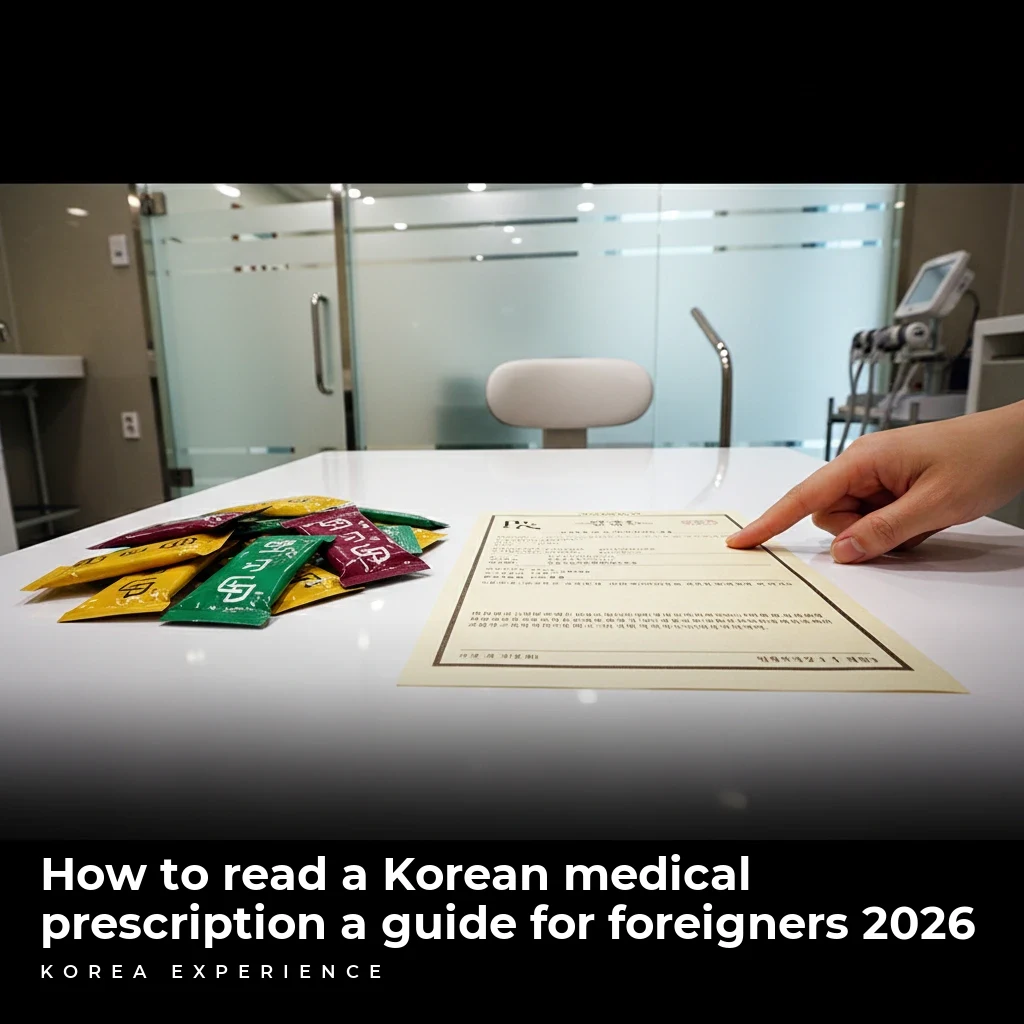
Decode your Korean medicine packets with our comprehensive 2026 guide. Learn to read dosage instructions, identify pills, and understand pharmacy costs.