How to verify Korean clinic credentials and red flags to avoid in 2026
Don't risk your safety. Learn how to verify board certifications, spot ghost doctors, and navigate the 2026 medical tourism laws with our 10-step safety guide.
Finding a clinic in South Korea can feel overwhelming, but verifying credentials is actually a structured process if you know where to look. To verify a Korean clinic immediately, you should cross-reference the clinic's registration number on the "Visit Medical Korea" portal (run by the Korea Health Industry Development Institute), check for the Board Certified Plastic Surgeon logo (a specific square emblem with the Taegeuk mark), and ensure the clinic is registered to accept foreign patients. Do not rely solely on Instagram before and after photos; instead, look for the surgeon's name on the Korean Association of Plastic Surgeons (KAPS) "Search a Surgeon" tool.
The short answer: You must verify that the surgeon is a "Specialist" (Jeonmon-ui) rather than a General Practitioner by reading the Korean signage laws, checking the KAPS database for board certification, and confirming the clinic holds a valid license for attracting foreign patients from the Ministry of Health and Welfare.
Key Takeaways
- 1Only 2,500 surgeons in Korea are actual Board Certified Plastic Surgery Specialists; the rest are generalists.
- 2Illegal 'Ghost Surgery' is best avoided by demanding CCTV footage access, which is your legal right as of late 2023.
- 3A 'Consultation Only' fee should rarely exceed ₩50,000 ($38) unless detailed scans are involved.
- 4Legitimate clinics for foreigners must hold a Medical Charity & Disease Control registration certificate.
Understanding the Landscape of Korean Medical Tourism
South Korea remains the plastic surgery capital of the world, with over 130,000 foreign patients visiting specifically for aesthetic procedures in 2025 alone. However, the sheer density of clinics—particularly in the Gangnam district, where over 500 clinics operate within a 2.5-kilometer radius—creates a "paradox of choice" that can be dangerous for the uninformed.
While the technical skills in Korea are unrivaled, the marketing machinery is aggressive. The difference between a world-class medical experience and a botched procedure often comes down to administrative due diligence. In 2026, the Korean government has tightened regulations significantly to protect medical tourists, but enforcement relies heavily on the patient knowing their rights.
📊 Clinic Saturation Stats
The most critical distinction you must understand is the difference between a "Specialist" and a "General Practitioner" performing cosmetic work. In Korea, any doctor with a medical license can legally perform plastic surgery. However, a General Practitioner has only completed 6 years of medical school. A Board Certified Specialist has completed those 6 years, plus a 1-year internship, 4 years of residency specifically in plastic surgery, and passed strict board exams—totaling a minimum of 11 years of training.
Step 1: Decoding the Signage (The First Visual Check)
Before you even step inside a clinic or book a flight, you can often verify the doctor's credentials just by looking at the Korean name of the clinic. Korean medical law is incredibly strict about how clinics can name themselves on their physical signs and websites.
This is a "hidden" verification method that 90% of foreigners miss because of the language barrier.
The "Specialist" Signage
If the doctor is a Board Certified Specialist, the sign will read: [Doctor's Name/Clinic Name] Plastic Surgery Clinic (Korean: OOO Seong-hyeong Oeg-wa Ui-won)
In this case, the words "Plastic Surgery" (Seong-hyeong Oeg-wa) come before the word "Clinic" (Ui-won). This indicates the owner and head doctor are specialists.
The "Generalist" Signage
If the doctor is a General Practitioner performing plastic surgery, the sign legally MUST read: the clinic name Clinic / Subject: Plastic Surgery (Korean: OOO Ui-won Jin-ryo Gwa-mok Seong-hyeong Oeg-wa)
Here, the word "Clinic" (Ui-won) comes first. The words "Plastic Surgery" are relegated to a smaller subtitle or a section that says "Medical Subject: Plastic Surgery." If you see the clinic name followed immediately by "Ui-won" and then the specialty listed separately, you are likely not dealing with a board-certified specialist in that field.
Language Hack
Take a screenshot of the clinic's Korean name from their website footer. Use Google Lens or Papago to translate it. If the text "Jin-ryo Gwa-mok" (Medical Subject) appears before "Plastic Surgery," it is not a specialist clinic.
Step 2: Digital Verification via Official Portals
In 2026, digital verification is easier than ever, but you must use the correct government-sanctioned portals. Third-party aggregate sites often operate on commission models and may prioritize clinics that pay for higher listings.
Using the KAPS Website (Plastic Surgery Only)
The Korean Association of Plastic Surgeons (KAPS) maintains the most reliable database. They have an English version, but the Korean version is often more up-to-date.
📖 How to Verify a Surgeon on KAPS
Step 1: Access the Portal
Go to prs.or.kr (the official KAPS site). Look for the 'Search a Surgeon' or 'Member Search' function.
Step 2: Input the Name
Enter the surgeon's name. It is best to use their Korean name (Hangul) if possible. You can usually find this on the clinic's 'About Us' page.
Step 3: Check the Status
A valid result will show the doctor's photo, license number, and the clinic they are currently affiliated with.
Step 4: No Result?
If no result appears, they are either not a board-certified plastic surgeon (they might be an ENT or Dermatologist doing plastic surgery) or they are not a member of the association in good standing.
Verify the "Medical Institution for Foreign Patients" License
It is illegal for a clinic to market to and treat foreign patients without being registered with the Ministry of Health and Welfare. This registration requires the clinic to carry malpractice insurance and have a designated dispute resolution process.
You can verify this on the Visit Medical Korea website (health.kr). A clinic without this license is operating in a "grey zone" for tourists. If you have a dispute with an unlicensed clinic, the government's ability to help you is significantly limited.
For those interested in general skin treatments rather than invasive surgery, the verification process is similar but focuses on dermatology boards. You can read more about selecting the right skin clinic in our guide to best dermatology clinics in Seoul for foreigners.
Step 3: The "Ghost Doctor" Phenomenon and How to Avoid It
"Ghost Surgery" refers to a fraudulent practice where the famous head doctor (the one you consulted with) puts you under anesthesia, and then a different doctor—often a novice, a dentist, or even a nurse—enters the room to perform the actual surgery. This is criminal fraud, yet it persists due to the high volume of surgeries scheduled at "factory" clinics.
In 2026, the primary defense against this is the Mandatory CCTV Law. Since late 2023, all operating rooms in Korea performing surgeries under general anesthesia or sedation must have CCTV installed.
Your Rights Regarding CCTV
- Right to Record: You have the legal right to request that your surgery be recorded.
- Right to Verify: You have the right to verify the footage if you suspect malpractice.
- Retention Period: Clinics are required to keep this footage for at least 30 days.
Red Flag Alert
If a clinic refuses your request to have the CCTV on during surgery, or claims the cameras are "broken" or "for internal security only," walk away immediately. This is the single biggest red flag for ghost surgery risks.
Factory Clinics vs. Boutique Clinics
Understanding the operational model of the clinic is crucial for safety.
- Factory Clinics: Large, multi-floor hospitals. They spend millions on marketing. They are efficient but process patients like an assembly line. The risk of shadow doctors is statistically higher here because the "star" doctor cannot physically perform the 10+ surgeries booked under their name daily.
- Boutique (Private) Clinics: Run by 1 or 2 representative doctors. The doctor who consults is the doctor who cuts. They usually handle only 2-3 major surgeries a day.
Factory vs. Boutique Clinic Comparison
| Feature | Factory Clinic | Boutique Clinic |
|---|---|---|
| Consultation | Mostly with consultant/manager | Mostly with the Surgeon |
| Price | Lower (high volume discounts) | Higher (premium time) |
| Ghost Doctor Risk | Moderate to High | Very Low |
| Aftercare | Systematic but impersonal | Personalized by surgeon |
Step 4: Red Flags During the Consultation
The consultation is your interview of the clinic. Do not view it as them evaluating you; you are hiring them for a job. If you are looking to book these appointments, check our guide on booking medical consultations in Korea.
1. The "Consultant" Blocks the Doctor
If you spend 45 minutes with a "sales consultant" or "manager" who pressures you about pricing, and only 3 minutes with the actual doctor who barely touches your face/body, this is a major red flag. A legitimate surgeon needs detailed time to assess your anatomy.
2. Aggressive Cash Discounts
Korea is a credit-card-friendly society. While offering a small discount (approx. 5-10%) for cash is common in small businesses to avoid processing fees, a clinic offering a massive 30-40% discount for paying cash—especially if they refuse to issue a receipt—is likely evading taxes. If they are cutting corners on taxes, they may be cutting corners on hygiene or materials.
Furthermore, if you pay illegal cash without a receipt, you are ineligible for the VAT Refund. Foreign tourists are entitled to a refund of the 10% Value Added Tax on cosmetic procedures. A clinic that refuses to give you the tax refund slip is effectively stealing 10% of your payment.
📋 Money Matters
3. Unrealistic Promises
If a doctor agrees to everything you ask for without hesitation, be wary. A responsible surgeon will tell you "No" if a procedure is unsafe for your anatomy or won't yield the result you want. Ethical doctors prioritize harmony and function over profit.
Step 5: The Role of Brokers and Agencies
Medical tourism agencies (often called brokers) act as intermediaries. They arrange airport pickup, translation, and appointments.
The Good: legitimate, government-registered agencies provide value. They can negotiate prices, provide legal protection, and offer objective advice because they know the market reputation of doctors.
The Bad: Illegal brokers act as "touts." They steer you to whichever clinic pays them the highest commission (sometimes up to 50% of your surgery fee). This inflates the price you pay significantly.
How to verify a Broker:
- Ask for their Medical Tourism Business Registration Certificate.
- Ask if the price they quote is the same as the "walk-in" price at the clinic.
- Check if they charge a transparent service fee versus taking a hidden cut of the surgery cost.
For recovery, many patients choose specific accommodations rather than standard hotels. If you are planning your stay, you might want to look at nearby areas suitable for recovery. See our insights on accommodation near traditional markets for quieter, food-accessible options, though for surgery recovery, staying near Gangnam or Sinsa is usually preferred.
Step 6: Pricing Transparency and Deposits
The Korean government requires clinics to be transparent about pricing, but foreigners often get quoted "tourist prices."
The "Fair Trade" Deposit Rule
According to the Korean Fair Trade Commission, a surgery deposit should generally not exceed 10% of the total surgery cost.
If you need to cancel, here are the standard refund guidelines (though clinics may have their own contracts, the FTC guidelines are the legal standard for dispute mediation):
💵 Standard Deposit Refund Guidelines
Cancellation 3+ days prior to surgery date
Cancellation 2 days prior
Cancellation 1 day prior
Contract Warning
Always read the English contract. If they only provide a Korean contract, do not sign it until it is translated. The phrase "Deposit is non-refundable" is often contestable by law if you cancel well in advance, but it is a headache to fight.
Step 7: Anesthesia Safety Credentials
Credentials aren't just for the surgeon; they are for the support staff. The most dangerous part of surgery is usually the anesthesia, not the cutting.
The "Board Certified Anesthesiologist" Requirement: For any major surgery (facial contouring, breast augmentation, tummy tuck), the clinic MUST have a full-time anesthesiologist on site. Not a nurse anesthetist, and not the surgeon doing it themselves.
How to verify: Ask: "Is the anesthesiologist resident at the clinic full-time, or do you call a freelancer?" Freelance anesthesiologists travel between clinics. While skilled, if an emergency happens 2 hours after your surgery while you are in the recovery room, a freelance anesthesiologist might already be at a different clinic across town (approx. 30-45 minutes away in Seoul traffic). A resident anesthesiologist is safer.
Step 8: Post-Op Care and "After Service" (A/S)
In Korea, "A/S" (After Service) refers to the clinic's policy on revisions or follow-ups if complications arise.
A reputable clinic will include:
- Deswelling treatments: LED light therapy, oxygen chambers, or de-swelling injections included in the package.
- Revision Policy: A written guarantee that if the result is asymmetrical or failed due to doctor error within 1 year, a revision will be performed for free (patient usually covers anesthesia/facility fee only).
If a clinic charges for every single post-op checkup or stitch removal, they are nickel-and-diming you.
For optimal recovery, nutrition plays a huge role. Korean porridge (Juk) and pumpkin juice are staples. Read about best Korean healing foods for surgery recovery to stock your fridge before the operation.
Step 9: Emergency Preparedness
Even with the best credentials, medical emergencies happen. You need to know the infrastructure around the clinic.
- Distance to University Hospital: In an emergency transfer, minutes matter. Clinics in Gangnam are usually within 10-15 minutes of major university hospitals like Asan Medical Center or Samsung Medical Center.
- Emergency Equipment: The clinic should have a dantrolene kit (for malignant hyperthermia) and a defibrillator (AED) visible.
"When you tour the clinic, look at the hallways. Are they wide enough for a gurney (stretcher) to turn a corner? Some clinics in older buildings have narrow corridors. If an emergency transfer is needed, getting a patient out quickly is vital. It's a small detail, but it shows safety planning."
Step 10: Using the Medical Visa (C-3-3)
While many tourists come on a standard tourist visa (B-1/B-2 or K-ETA), applying for a C-3-3 Medical Visa offers legal protections. To get this, the clinic must send you an invitation letter. This proves the clinic is officially registered to host foreign patients. If a clinic says "Just come on a tourist visa, we can't send an invitation," they might not have the proper license to treat foreigners.
What to Do If You Suspect Malpractice
If you find yourself in a situation where credentials were faked or malpractice occurred, Korea has the Korea Medical Dispute Mediation and Arbitration Agency (K-Medi).
- Helpline: 1577-7129 (available in English).
- Function: They provide free legal consultation and mediation services for foreign patients.
- Timeframe: Mediation usually takes 90 days, which is much faster than the Korean court system (which can take 2-3 years).
Conclusion: Trust But Verify
Korea offers some of the highest quality medical care in the world at competitive prices. The "Red Flags" discussed here are not meant to scare you, but to empower you. The vast majority of Korean doctors are incredibly dedicated, skilled professionals who have undergone rigorous training.
By checking for the Board Certified logo, using the KAPS website, verifying the clinic's foreign patient license, and insisting on CCTV rights, you eliminate 90% of the risks associated with medical tourism.
Your face and body are with you for life. Spending 3 hours verifying credentials is a small investment for a lifetime of confidence.
❓ Frequently Asked Questions
Have more questions?Contact us →
Ready to explore more about Korea? If you are planning your trip, don't forget to check out our guides on best Korean BBQ restaurants in Seoul for your pre-surgery meals (avoid chewy meat post-op!), or explore best areas to stay near shopping districts to make your recovery shopping easier.
About the Author
Korea Experience Team
Written by the Korea Experience editorial team - experts in Korean medical tourism, travel, and culture with years of research and firsthand experience.
⚠️ Medical Disclaimer
The information provided on this website is for general informational purposes only and does not constitute medical advice. Always consult with qualified healthcare professionals before making any medical decisions.
Explore more in Medical Tourism
World-class medical procedures at competitive prices. From plastic surgery and dermatology to dental care and health checkups — your complete guide to medical tourism in Korea.
Browse All Medical Tourism ArticlesContinue Reading
Explore more articles you might find interesting
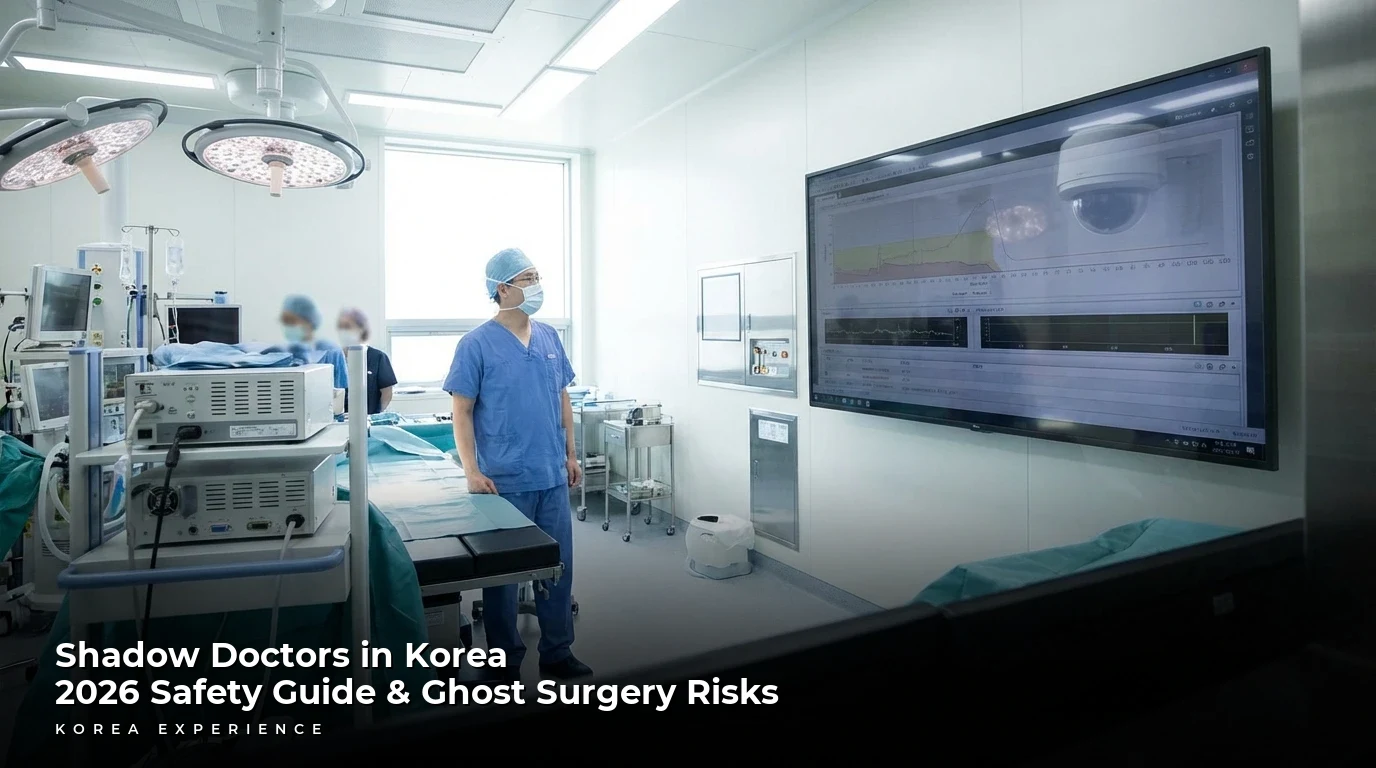
Avoid ghost surgery risks in 2026. Learn how 100,000 victims sparked new CCTV laws, why VAT refunds ended, and how to verify your surgeon.
Essential guide to avoiding ghost doctors, broker scams, and unsafe clinics in Korea. Learn the 10 red flags before booking surgery. Data updated for 2026.
Avoid 4-6 hour scams and $50+ losses. Learn to spot 2026 Korean cult recruiters in Hongdae using our guide on red flags, tactics, and safety tips.

Discover Korea's 2026 stem cell medical tourism boom. Learn how new laws unlock anti-aging and joint treatments at 50% lower costs than the US, from $8,000.
Is Seoul safe for surgery in 2026? We analyze 1.5M patient stats, new CCTV laws, and the end of the 10% VAT refund to keep your procedure secure.
Avoid the ₩50,000 ancestor ceremony scam. Learn to spot cult recruiters in Hongdae and Sinchon with our 2026 safety guide for expats and students.