Jeju Island travel guide 2026: Best time to visit and itineraries
Plan your 2026 Jeju trip with our guide on the best seasons (April/October), rental car costs (₩50,000/day), and top 10 scenic spots for nature lovers.

The best time to visit Jeju Island in 2026 is strictly during two specific windows: early April for the peak of King Cherry Blossoms and vibrant canola fields, or mid-October for the silver grass season and perfect hiking temperatures averaging 18°C (64°F). While summer offers beach weather, high humidity (85%+) and the monsoon season (Jangma) in July make it less ideal for outdoor exploration. Winter is viable only if you specifically want to hike the snowy trails of Hallasan or see the red camellia flowers.
The short answer: For the absolute best experience with low rainfall and mild temperatures (15-22°C), book your trip for the first two weeks of April or the entire month of October 2026.
Key Takeaways
- 1Best weather windows are April (Spring) and October (Autumn)
- 2Renting a car is essential; taxis cost 3x more for full-day travel
- 3Hallasan hiking requires an online reservation for summit trails
- 4Direct flights from Seoul (GMP) run every 15 minutes
- 5Budget ₩150,000 per person/day for a mid-range experience
Why visit Jeju Island in 2026?
Jeju Island, often called the "Hawaii of Korea," is a volcanic island located 64 kilometers (40 miles) south of the Korean peninsula. It is a UNESCO World Natural Heritage site known for its unique volcanic landscape, specifically the lava tubes and tuff cones. In 2026, Jeju continues to evolve from a honeymoon destination into a global hub for digital nomads, cafe hoppers, and adventure seekers.
The island is approximately 73 kilometers wide and 31 kilometers long, with the majestic Hallasan Mountain rising 1,947 meters in the center. Unlike the hyper-modern density of Seoul, Jeju operates at a slower pace. However, the travel landscape has changed significantly in recent years. Prices for local specialties like Black Pork and rental cars have fluctuated, and new reservation systems for major attractions are now strictly enforced.
📊 Jeju Tourism Stats 2026
Detailed seasonal breakdown and weather guide
Understanding Jeju's distinct four seasons is critical because the island's weather is notoriously fickle. The wind, colloquially known as Samda-do (one of the three abundances of Jeju: wind, rocks, and women), can change a sunny day into a blustery one in minutes.
Spring (March to May): The season of flowers
Spring is visually the most stunning time to visit. By late March, the temperature rises to a comfortable 13°C (55°F).
- Key Event: The King Cherry Blossoms (distinct from mainland cherry blossoms) bloom specifically in late March to early April. They are larger and more vibrant.
- Must-See: The canola flowers (Yuchae) turn the landscape yellow. The best spots are Seopjikoji and the base of Sanbangsan Mountain.
- Data Point: Average rainfall in April is around 100mm, significantly lower than the summer months.
Summer (June to August): Beaches and humidity
Summer is popular for domestic tourists hitting the beaches, but international travelers should be wary of the humidity.
- The Heat: Temperatures hover between 26°C and 30°C (79-86°F), but humidity often exceeds 85%.
- The Rain: The monsoon season (Jangma) typically hits from late June to mid-July. During this time, it can rain for days straight.
- The Upside: This is the best time for water sports at Hyeopjae Beach or surfing at Jungmun.
Autumn (September to November): Hiking heaven
This is arguably the most comfortable season. The humidity drops, and the skies turn a crisp blue.
- Foliage: While mainland Korea is famous for maple leaves, Jeju is famous for Silver Grass (Eulalia). The Sangumburi Crater becomes a sea of waving silver grass in October.
- Pink Mully: Visit Hueree Natural Park or various cafes in the southwest to see the trendy pink mully grass.
- Harvest: This is the season for harvesting Hallabong and tangerines. You can pay approximately ₩5,000 to pick your own bucket of citrus at local farms.
Winter (December to February): Snow on the volcano
Jeju is generally warmer than Seoul, rarely dropping below 0°C (32°F) in the city areas. However, the mountain is a different story.
- Hallasan: The mountain is covered in snow, making for a spectacular, albeit challenging, hike. Crampons are mandatory.
- Camellias: Red camellia flowers bloom from December through February. Camellia Hill is the prime viewing spot.
📋 Monthly Weather Averages
For a broader look at weather patterns across the entire peninsula, check out our guide on the best time to visit Korea.
Getting to Jeju: Flights and ferries
By Air
The route between Seoul Gimpo Airport (GMP) and Jeju International Airport (CJU) is famously the busiest air route in the world.
- Frequency: Flights depart roughly every 10-15 minutes from 6:00 AM to 9:00 PM.
- Carriers: Korean Air, Asiana, Jeju Air, Jin Air, T'way, and Air Busan.
- Cost: A round-trip ticket can range from ₩50,000 ($38 USD) on budget airlines during weekdays to over ₩250,000 ($190 USD) during holidays (Chuseok or Seollal).
- Flight Time: 1 hour and 10 minutes.
Airport Confusion
Do not go to Incheon International Airport (ICN) for domestic flights to Jeju unless you have a specific connecting flight. 95% of domestic flights to Jeju depart from Gimpo International Airport (GMP), which is closer to central Seoul.
By Sea
Ferries are an option if you want to bring your own vehicle or enjoy a slow travel experience, though it eats up significant time.
- From Mokpo: The Queen Mary/Queen Jenuvia takes about 4.5 hours. Cost is roughly ₩35,000 for a standard seat.
- From Busan: The ferry takes roughly 12 hours (overnight). This is less recommended for short trips.
Getting around Jeju: The transport dilemma
Transportation is the single most important logistical factor to plan for Jeju. Unlike Seoul, the subway system does not exist here.
Rental Car (Highly Recommended)
Renting a car is the gold standard for Jeju travel. It allows you to reach remote cafes, trailheads, and beaches that buses don't service frequently.
- Requirements: You MUST have an International Driving Permit (IDP) issued in your home country (Geneva Convention). A digital license or your domestic license alone will be rejected 100% of the time.
- Cost: In 2026, expect to pay between ₩40,000 and ₩80,000 per day for a mid-size sedan (like a Hyundai Avante/Elantra). Insurance usually adds ₩15,000-20,000 per day.
- Fuel: Gasoline costs roughly ₩1,650 per liter.
- EVs: Jeju is an EV paradise with chargers everywhere. Renting a Tesla or Hyundai Ioniq 5 is a popular option.
Bus System
Jeju has revamped its bus system, but it still requires patience.
- Express Buses (Red): Connect the airport to major tourist hubs (Seogwipo, Seongsan) with fewer stops. Fare is around ₩2,000 - ₩3,000.
- Local Buses (Blue/Green): Connect smaller villages. Intervals can be 30 to 60 minutes.
- Cost: Base fare is roughly ₩1,150. T-Money cards from Seoul work perfectly here.
Taxi
Taxis are plentiful in Jeju City but scarce in rural areas.
- KakaoTaxi: The app works in Jeju and is essential if you aren't driving.
- Global Taxi: You can hire a "Global Taxi" for a full day tour (8 hours), which typically costs ₩150,000 to ₩180,000 per day. This is a great option for travelers who cannot drive.
Jeju Transport Comparison
| Feature | Rental Car | Public Bus | Taxi Tour |
|---|---|---|---|
| Cost (Daily) | ₩50,000 + Fuel | ₩5,000 | ₩160,000 |
| Convenience | High | Low | High |
| IDP Required | Yes | No | No |
| Flexibility | Unlimited | Fixed Routes | Negotiable |
For those interested in alternative transport methods, read more about bicycle rental systems which are becoming increasingly popular in coastal areas.
Where to stay: Geography matters
Jeju is oval-shaped, and driving from the top (Jeju City) to the bottom (Seogwipo) takes about 1 hour via the mountain roads, or 1.5 hours via the coastal roads.
Jeju City (North)
- Best for: Short trips, late arrivals, nightlife, access to the airport.
- Vibe: Urban, busy, traffic.
- Key Spots: Dongmun Market, Iho Tewoo Beach.
Seogwipo City (South)
- Best for: Waterfalls, warmer weather, resort stays, slow travel.
- Vibe: Relaxed, tropical, scenic.
- Key Spots: Cheonjiyeon Waterfall, Olle Market, Jeongbang Waterfall.
Aewol & Hallim (West)
- Best for: Cafe hopping, sunsets, younger crowds.
- Vibe: Trendy, Instagrammable.
- Key Spots: Handam Coastal Walk, Hyeopjae Beach.
Seongsan & Gujwa (East)
- Best for: Nature lovers, sunrises, quiet exploration.
- Vibe: Rural, volcanic landscapes.
- Key Spots: Seongsan Ilchulbong, Udo Island, Bijarim Forest.
💵 Accommodation Price Estimates (Per Night)
5-star hotels like Shilla or Lotte
Dorm bed, social atmosphere
24-Hour Dualism Route: Aewol & West Coast
Experience the trendy west coast of Jeju, balancing high-end cafe culture with rugged natural beauty.
24 Hours in Aewol: Cafe Culture & Coastlines
The Dualism Concept: Experience the best of both worlds — premium luxury moments paired with authentic budget-friendly experiences in one route.
Luxury Brunch at Tribe
Soufflé pancakes with ocean view
Handam Coastal Walk
Free scenic walking trail along the cliffs
Arte Museum Media Art
Immersive digital art exhibition
Gwakji Beach Sunset
Watch the sun dip below the horizon
Start early to beat the traffic on the Aewol Coastal Road. The sunset at Gwakji is world-class and free.
Top 5 unmissable attractions
1. Hallasan Mountain
Hiking to the summit of South Korea's highest peak is a bucket-list item.
- Trails: Only the Seongpanak (9.6km) and Gwaneumsa (8.7km) trails lead to the summit (Baengnokdam).
- Reservation: You MUST reserve a slot online via the Hallasan National Park website. Slots open on the 1st of the month for the following month and fill up fast.
- Timing: Start by 7:00 AM. The hike takes 7-9 hours round trip.
2. Seongsan Ilchulbong (Sunrise Peak)
A tuff cone formed by hydrovolcanic eruptions.
- The Hike: It takes about 20-30 minutes to climb the stairs to the top.
- Entrance Fee: ₩5,000 for adults.
- Tip: If you just want to see it from the ground and visit the Haenyeo (female diver) show, there is a free walking path to the left of the ticket booth.
3. Udo Island
A smaller island off the east coast of Jeju.
- Access: Take a ferry from Seongsan Port. Ferries run every 30 minutes. Round trip cost is approx ₩10,500 (requires passport).
- Activity: Rent a small electric vehicle or bicycle to circle the island. Don't miss the peanut ice cream, a local specialty.
4. Manjanggul Lava Tube
One of the finest lava tunnels in the world.
- Experience: It is 1km long and stays a cool 11°C-18°C year-round.
- Note: The floor is uneven; wear sneakers.
- Status Check: Check if it is open before going, as periodic safety inspections occur.
5. Osulloc Tea Museum & Innisfree Jeju House
For fans of tea and K-Beauty.
- Highlights: Green tea fields for photos, fresh matcha ice cream (₩5,000), and exclusive Innisfree skincare products made with volcanic ingredients.
- Location: Seogwipo (Southwest).
Osulloc Tea Museum(오설록 티 뮤지엄)
Food guide: What to eat in Jeju
Jeju's cuisine is distinct from the mainland, focusing heavily on seafood and local livestock.
Black Pork (Heuk-dwaeji)
This is the most famous dish. The meat is chewier and richer than regular pork.
- Cost: Expect to pay a premium. A 600g serving (for 2 people) typically costs ₩60,000 to ₩70,000.
- How to eat: Dip it in Meljeot (salted anchovy sauce) that is boiled on the grill.
Seafood Delicacies
- Galchi (Hairtail Fish): Often served grilled or braised in a spicy sauce. A long, whole grilled fish can cost ₩80,000+.
- Abalone: Used in porridge (Jeonbok-juk) or served raw.
- Haemul Ramyeon: Seafood ramen packed with octopus, crab, and mussels. Cost: ₩10,000 - ₩15,000.
Tangerines and Desserts
- Hallabong: A sweet, seedless citrus variety.
- Peanut Ice Cream: Famous on Udo Island.
- Omegi Rice Cake: A millet rice cake covered in red beans.
Many "famous" Black Pork restaurants in the main tourist strips are overpriced. For an authentic experience, look for restaurants in the 'Nohyung-dong' area where locals actually dine. If the sign says 'Geun-gogi' (sold by weight/geun), it's usually high quality.
For more on regional tastes, you might find our comparison of Korean regional flavors helpful to understand the palate differences.
Practical travel tips for 2026
Connectivity
Free WiFi is available on almost all public buses and in cafes. However, for navigation (Naver Map/KakaoMap), a SIM card or eSIM is essential.
- Apps: Download Naver Map (English friendly) and Papago (for translation). Google Maps does NOT work well for navigation in Korea.
Money
While credit cards are accepted almost everywhere (99%), you need cash for:
- Street food stalls (Dongmun Market).
- T-Money card reloads.
- Some rural entrance fees.
Safety
Jeju is incredibly safe. The crime rate is very low. However, be cautious of:
- Speed Cameras: They are everywhere. The speed limit is often 50km/h (30mph) or even 30km/h in school zones. Fines are hefty.
- Typhoons: In late summer/early autumn, typhoons can ground all flights. Always have travel insurance.
📖 How to Rent a Car in Jeju
Step 1: Book in Advance
Book via Lotte Rent-a-Car or SK Rent-a-Car 1 month prior.
Step 2: Arrival
Land at CJU, exit Gate 5, and cross the street to the 'Rent-a-car Shuttle' building.
Step 3: Shuttle
Find your company's zone and board the shuttle bus (runs every 15 mins).
Step 4: Pick-up
Show your passport and International Driving Permit (IDP) at the counter.
Budgeting your trip
Jeju can be done on a budget or as a luxury escape. Here is a daily breakdown per person (excluding flights).
Budget Traveler: ₩70,000 ($52 USD)
- Accommodation: Guesthouse (₩25,000)
- Transport: Bus (₩5,000)
- Food: Convenience store & markets (₩30,000)
- Activities: Free nature spots (₩10,000)
Mid-Range Traveler: ₩150,000 ($112 USD)
- Accommodation: 3-star Hotel (₩70,000 - split cost)
- Transport: Rental Car (₩40,000 - split cost)
- Food: Nice cafes & one BBQ meal (₩60,000)
- Activities: Paid museums & entry fees (₩20,000)
Sample Itineraries
The Nature Lover (3 Days)
- Day 1 (East): Seongsan Ilchulbong hike, Udo Island (Electric bike), Seopjikoji coast.
- Day 2 (South): Hallasan Hike (Seongpanak trail), recover at a cafe in Seogwipo, Olle Market for dinner.
- Day 3 (West): Daepo Jusangjeolli Cliff, Osulloc Tea Museum, Hyeopjae Beach sunset.
The Relaxed Aesthetic (3 Days)
- Day 1: Arrive, pick up car, drive to Aewol. Visit Handam Coastal Walk and Cafe Knotted. Stay in Aewol.
- Day 2: Drive south to Camellia Hill (if winter) or Snoopy Garden (East). Visit the Snoopy Garden cafe. Dinner at a trendy pasta bar in Jeju City.
- Day 3: Visit an independent bookstore, shop for souvenirs at Dongmun Market, depart.
For a great weekend escape plan, check our guide on weekend getaways.
Frequently Asked Questions
❓ Frequently Asked Questions about Jeju Travel
Have more questions?Contact us →
Conclusion
Jeju Island in 2026 remains a jewel of East Asia, offering a blend of volcanic wonder and modern comfort. Whether you are hiking the snowy trails of Hallasan in January or enjoying the cool breeze among the silver grass in October, the island offers a distinct escape from the hustle of mainland Korea.
Remember to book your rental car and Hallasan hiking slot well in advance, and always keep an eye on the weather forecast.
For accommodation options near food hubs, read our guide on staying near traditional markets to get the most out of your culinary journey.
Jeju Travel Summary
- ✓Stunning unique volcanic landscapes
- ✓Clean air and beautiful beaches
- ✓High quality seafood and pork
- ✓Safe and easy driving infrastructure
- ✗Public transport is slow
- ✗Rental car prices can be high
- ✗Weather is unpredictable
- ✗Attractions are spread far apart
About the Author
Korea Experience Team
Written by the Korea Experience editorial team - experts in Korean medical tourism, travel, and culture with years of research and firsthand experience.
Explore more in Travel & Tourism
From Seoul's neon-lit streets to Jeju's volcanic landscapes — discover the best of Korea with insider travel tips, itineraries, and seasonal guides.
Browse All Travel & Tourism ArticlesContinue Reading
Explore more articles you might find interesting
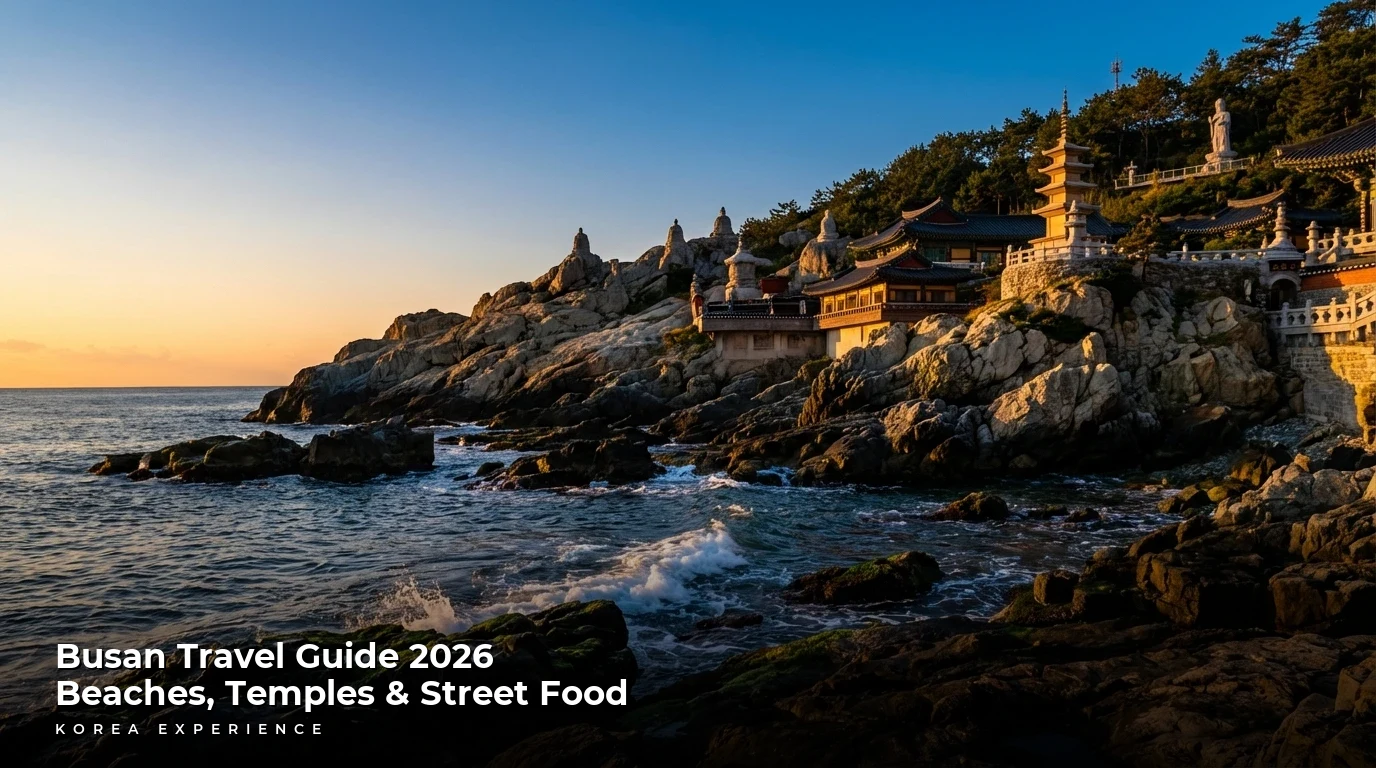
Discover the best of Busan in 2026. From Haeundae Beach to Haedong Yonggungsa Temple, explore top spots, costs, and itineraries for your trip.

Discover Korea's surfing capital with our 2026 guide to Yangyang and Sokcho. Find rental costs (₩30,000+), transport tips, and best seasons for waves.
Discover the best romantic couple getaways and honeymoon destinations in Korea for 2026. From Jeju Island luxury to Seoul city lights, plan your perfect trip.
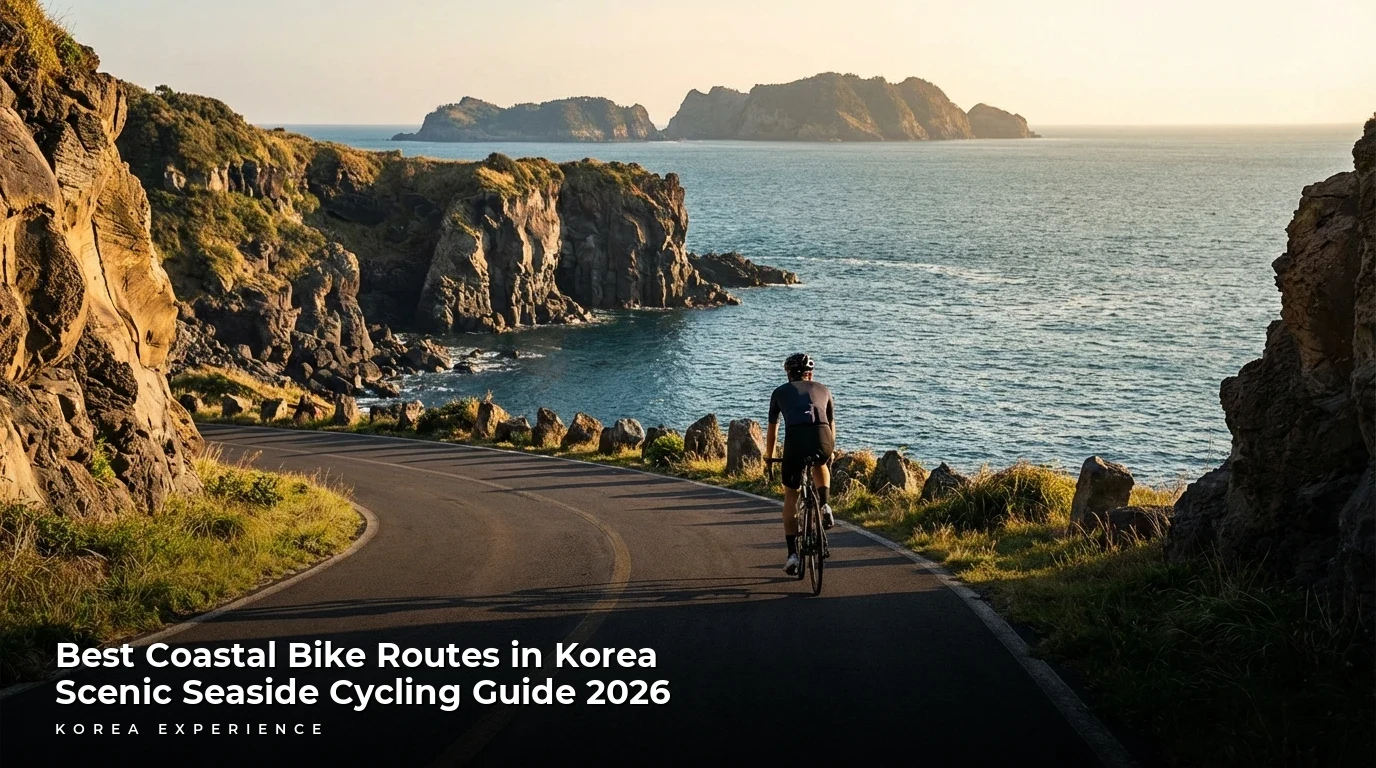
Discover Korea's top coastal cycling routes. From the 234km Jeju Fantasy Path to the East Coast trail, get maps, rental costs, and itinerary tips.
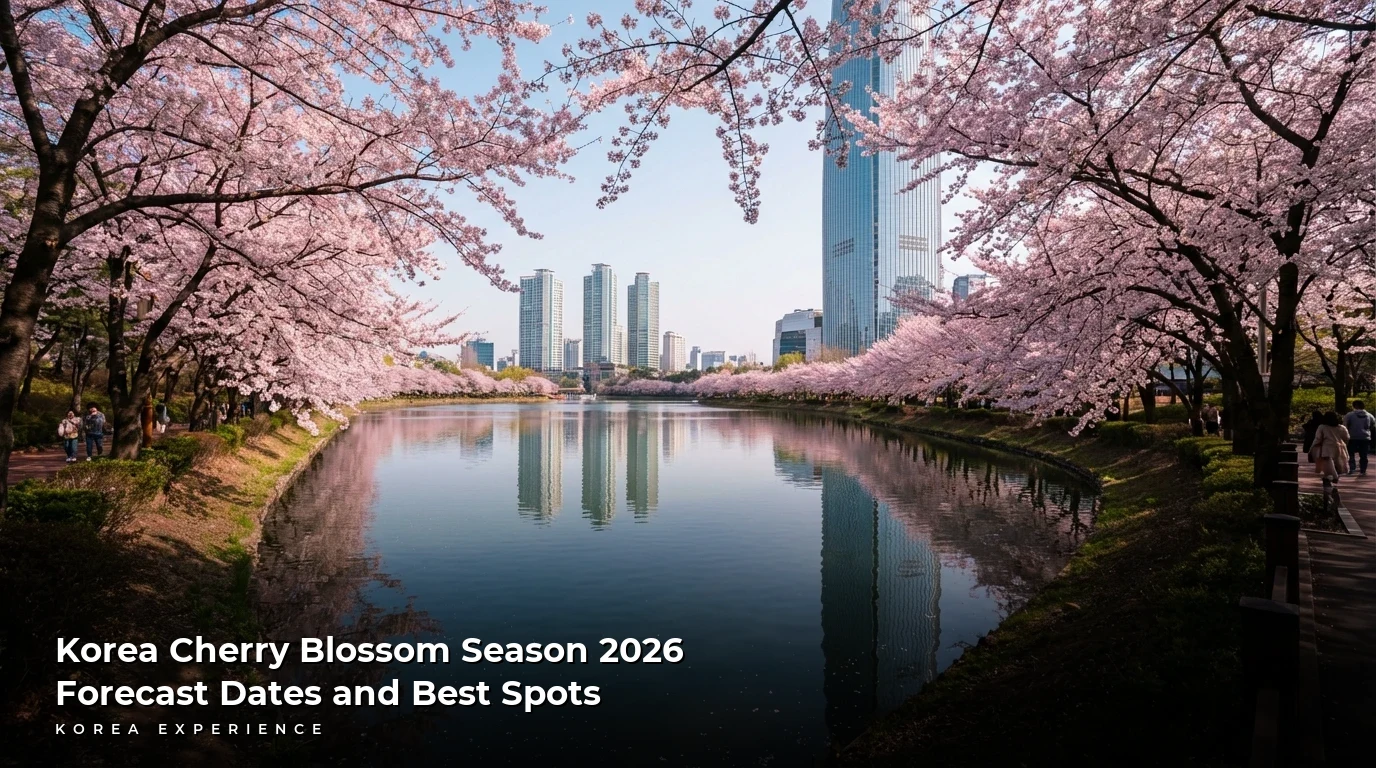
Planning a trip for Korea's 2026 cherry blossoms? Here is the full forecast, from Jeju's March 22nd bloom to Seoul's April 4th peak, plus top viewing spots.
Discover the best time to visit Korea with our 2026 guide. We break down weather, costs, and festivals month by month to help you plan the perfect trip.