Korean Architecture Tour 2026 Hanoks to Zaha Hadid
Embark on an epic Korean architecture tour in 2026, exploring ancient Hanoks, grand palaces, colonial gems, and futuristic Zaha Hadid designs across South Korea.
Unveiling Korea's Architectural Wonders: Your Ultimate 2026 Tour Guide
Imagine a journey through time, where ancient traditions gracefully intertwine with dazzling futuristic visions. South Korea's architectural landscape offers precisely this, presenting a captivating narrative etched in stone, wood, steel, and glass. For the international traveler passionate about design, history, and innovation, navigating this rich tapestry can seem daunting. Where do you begin when the options span centuries of artistic and engineering marvels?
This comprehensive guide is your essential companion for planning an unforgettable Korean Architecture Tour 2026. We’ll take you from the serene, natural harmony of traditional Hanok houses and majestic Joseon Dynasty palaces, through the intriguing layers of colonial influence and post-war reconstruction, all the way to the breathtaking contemporary masterpieces, including the iconic work of Zaha Hadid. Prepare to dive deep into the cultural, historical, and aesthetic evolution that defines Korea's diverse built environment, offering practical tips, insider insights, and specific locations to inspire your adventure.
The Enduring Charm of Hanoks: Traditional Korean Houses
Our Korean Architecture Tour 2026 begins where Korea's architectural identity truly took root: with the Hanok, the traditional Korean house. More than just buildings, Hanoks embody a philosophy of harmony with nature, practicality, and exquisite craftsmanship.
Origins and Philosophy: A Connection to Nature
Hanoks are characterized by their thoughtful integration into the natural landscape, often oriented to face south for optimal sunlight and shelter from harsh northern winds. Their design considers the natural flow of air and light, creating comfortable living spaces year-round. Key elements include the ondol (a unique underfloor heating system, traditionally warmed by wood fires) for warmth in winter, and the maru (a raised wooden floor space) for cooling ventilation in summer. These features highlight an ingenious adaptive design, developed over centuries to suit Korea's distinct climate. Materials were typically natural and locally sourced – wood, clay, stone, and rice paper – further cementing their connection to the environment.
Must-Visit Hanok Villages for Authentic Experiences
To truly appreciate the Hanok, a visit to a well-preserved village is essential.
- Bukchon Hanok Village, Seoul: Nestled between Gyeongbokgung and Changdeokgung Palaces, Bukchon is a living museum. Its narrow alleys wind past hundreds of traditional houses, many still residential, offering stunning views of modern Seoul juxtaposed against ancient rooftops. Free to explore, though cultural etiquette is important as people live here.
- Namsangol Hanok Village, Seoul: Located at the foot of Namsan Mountain, this village features five restored Hanoks from different social classes of the Joseon Dynasty, moved from their original locations. It provides a more curated experience with cultural performances, traditional craft workshops, and a tranquil setting. Entry is free, with workshops often having a small fee (e.g., 5,000-15,000 Korean Won).
- Jeonju Hanok Village, Jeonju: Further afield but highly recommended for its scale and vibrancy. Jeonju boasts over 800 traditional Hanoks, making it one of the largest and best-preserved Hanok villages in Korea. It's a hub for traditional culture, food, and art, offering numerous Hanok stays, craft shops, and local eateries.
Experiencing a Hanok Stay: More Than Just Accommodation
Spending a night in a Hanok guesthouse offers an immersive cultural experience. Many Hanoks have been modernized with Western-style bathrooms while retaining their traditional charm. Prices for a Hanok stay can range from 50,000 to 200,000 Korean Won per night, depending on location, size, and amenities. It’s an invaluable way to understand the architecture from the inside out.
| Feature | Traditional Hanok | Modern Korean Apartment |
|---|---|---|
| Philosophy | Harmony with nature, sustainable materials | Efficiency, convenience, vertical living |
| Key Materials | Wood, clay, stone, paper, tile | Concrete, steel, glass, plastic |
| Heating/Cooling | Ondol (underfloor heating), Maru (raised wooden floor) | Central heating/air conditioning |
| Layout | Courtyard-centric, low-rise, distinct rooms | Multi-story, open-plan or defined rooms, shared hallways |
| Windows | Paper screens (hanji), sliding wooden frames | Glass panes, aluminum or PVC frames |
| Cost (Stay) | Mid to high (for authentic experience) | Varies widely (budget to luxury) |
Royal Grandeur: Palaces and Joseon Dynasty Architecture
Central to any Korean Architecture Tour 2026 are the magnificent palaces of the Joseon Dynasty (1392-1897), particularly those in Seoul. These complexes showcase a distinct architectural style characterized by grand scale, vibrant ornamentation, and intricate structural details, reflecting the power and artistry of the royal court.
Gyeongbokgung Palace: The Grandest of Them All
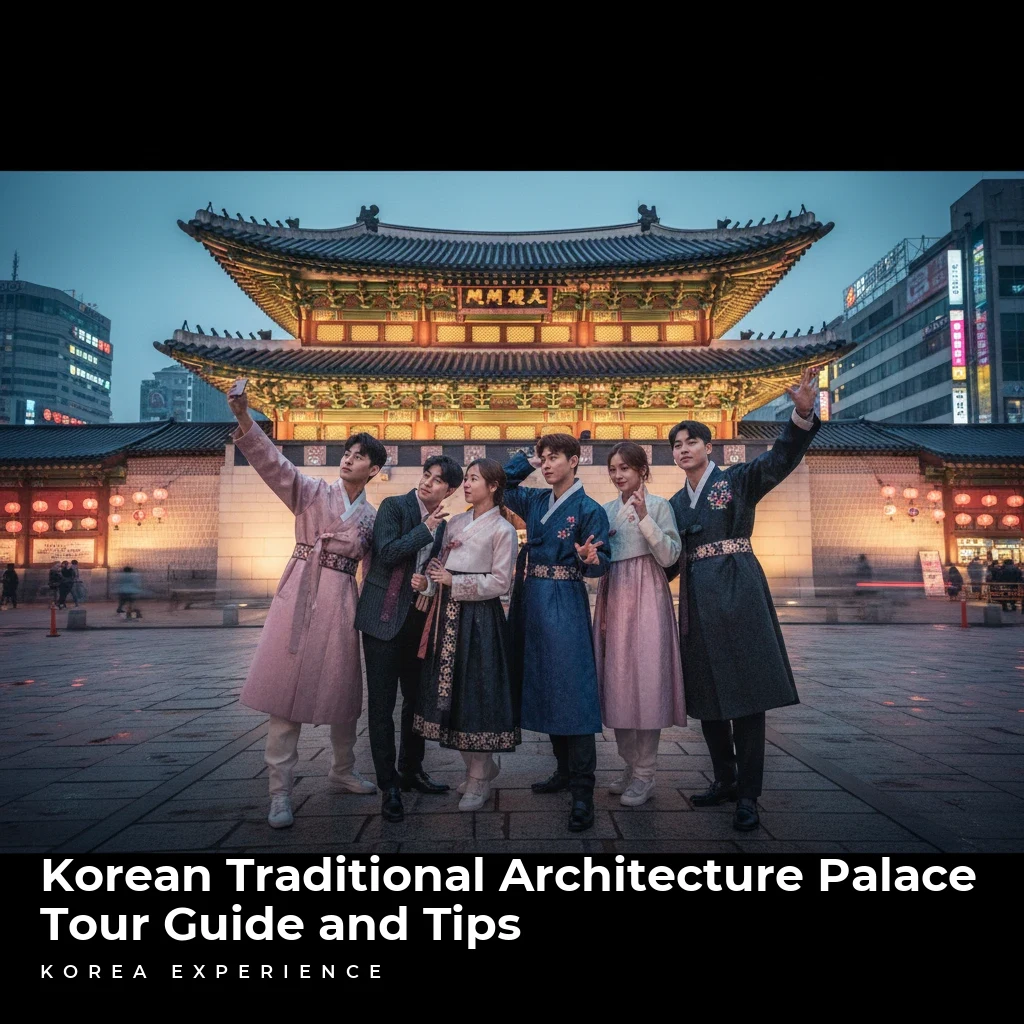
Gyeongbokgung Palace, originally built in 1395, is the largest and arguably the most beautiful of Seoul's five grand palaces. Its architecture is a testament to the Joseon Dynasty's prowess, with expansive courtyards, ornate gates like Gwanghwamun, and majestic throne halls such as Geunjeongjeon.
- Key Features: Look for the distinctive multi-tiered roofs, vibrant danchong (traditional Korean decorative coloring on wooden buildings), and the precise layout guided by feng shui principles. The Hyangwonjeong Pavilion, seemingly floating on a pond, exemplifies serene palace garden architecture.
- Practical Tip: Don't miss the Royal Guard Changing Ceremony held multiple times a day at Gwanghwamun Gate – a colorful spectacle of traditional uniforms and instruments. Entry fee: 3,000 Korean Won for adults.
Changdeokgung Palace and Huwon (Secret Garden): A UNESCO Gem
Changdeokgung Palace, a UNESCO World Heritage site, stands out for its sympathetic integration into the surrounding terrain rather than a strictly symmetrical layout. Built in 1405, it served as the primary palace for many Joseon kings.
- The Secret Garden (Huwon): This expansive royal garden is a masterpiece of Korean landscaping, designed to blend with nature. It features pavilions, ponds, and wooded areas, revealing architectural elegance within a serene natural setting. Access to Huwon is via a guided tour (approx. 5,000 Korean Won in addition to palace entry of 3,000 Korean Won).
Deoksugung Palace: Where East Meets West
Deoksugung Palace offers a unique architectural juxtaposition, featuring traditional wooden structures alongside early 20th-century Western-style buildings like Seokjojeon. This blend reflects Korea's late Joseon Dynasty period, grappling with modernization and foreign influence.
- Seokjojeon Hall: A prime example of neoclassical architecture in Korea, this stone building now houses a museum. Its presence within a traditional palace complex makes Deoksugung a fascinating site for architectural contrast. Entry fee: 1,000 Korean Won.
The Art of Temple Architecture: Spiritual Sanctuaries
Beyond palaces, Buddhist temples present another profound layer of traditional Korean architecture. Temples like Bulguksa and Seokguram Grotto in Gyeongju (both UNESCO World Heritage sites) are masterpieces of Silla Dynasty (57 BC – AD 935) design. They are characterized by tiered stone pagodas, meticulously carved stone foundations, and wooden halls adorned with intricate danchong. The architecture reflects a deep spiritual reverence and often utilizes natural slopes and dramatic landscapes for dramatic effect.
| Feature | Royal Palace Architecture | Buddhist Temple Architecture |
|---|---|---|
| Primary Purpose | Residence, administration, ceremonial | Worship, monastic living, spiritual enlightenment |
| Key Buildings | Throne halls, living quarters, gates, pavilions | Main Buddha hall, pagodas, hermitages, lecture halls |
| Layout | Often symmetrical, grand, walled complex | Integrated with natural terrain, less strict symmetry |
| Ornamentation | Elaborate danchong, dragon motifs, royal symbols | Danchong, lotus flowers, Buddhist deities, celestial beings |
| Prominent Materials | Wood, stone, clay tiles | Wood, stone (foundations, pagodas), clay tiles |
| Location | Capital city, strategically chosen | Mountains, serene natural settings |
Colonial Influences and Modern Beginnings
The early 20th century marked a significant shift in Korea's architectural trajectory. The Japanese colonial period (1910-1945) introduced a wave of new building types and construction methods, largely displacing traditional styles.
Japanese Colonial Era Buildings
Japanese architectural influence is still visible in certain parts of Seoul and other cities. These buildings often blend Japanese styles with Western architectural trends of the time, characterized by brick facades, prominent government buildings, and structured urban planning.
- Former Bank of Korea (now Money Museum): An imposing granite structure designed in a Renaissance style, it stands as a prominent example of colonial-era financial architecture.
- Seoul City Hall (old building): This grand building, now part of the Seoul Metropolitan Library, exemplifies early 20th-century Western classicism, starkly contrasting with the new Seoul City Hall next to it.
- Cultural Heritage: While many structures from this period evoke painful historical memories, their architectural significance as part of Korea's urban evolution is undeniable.
Western Missionary Architecture
Concurrently, Western missionaries introduced their own architectural styles, primarily churches and educational institutions. These often featured Gothic Revival or Romanesque elements, constructed with red brick and stained glass, distinctly different from both traditional Korean and Japanese colonial styles. Many of these churches and university buildings still stand, contributing a unique flavor to urban landscapes.
Early Modern Korean Architecture
Following liberation in 1945 and the Korean War (1950-1953), Korea faced immense challenges in reconstruction. Early modern architecture focused heavily on functionality, rapid construction, and economical solutions. This era saw the emergence of basic apartment blocks and public infrastructure designed for utility rather than elaborate aesthetics, laying the groundwork for the rapid development that would follow.
Post-War Reconstruction and Industrial Boom Architecture
The latter half of the 20th century witnessed Korea's incredible transformation from a war-torn nation into an economic powerhouse. This "Miracle on the Han River" profoundly impacted its architecture, giving rise to a cityscape defined by rapid growth, high-rise developments, and ambitious public projects.
The Rise of the Apartment City
The need to house a burgeoning urban population led to the proliferation of apartment complexes, fundamentally reshaping Seoul and other major cities. Districts like Gangnam, once agricultural land, rapidly transformed into dense residential and commercial hubs dominated by towering apartment buildings. This period emphasized efficiency, standardization, and vertical living, making apartments the dominant housing type for most Koreans. While often criticized for their uniformity, these complexes represent a crucial chapter in Korea's development story, reflecting the nation's drive for modernization and improved living standards.
Iconic Structures of the Economic Miracle
As Korea's economy boomed, so did its architectural ambition.
- 63 Building: Completed in 1985, this golden-clad skyscraper was once the tallest building outside North America. Its distinctive reflective facade made it a symbol of Korea's rising economic might and its aspiration for modernity.
- Namsan Tower (now N Seoul Tower): While dating back to 1969, its prominent position and later renovations have made it an enduring symbol of Seoul, representing both communication technology and a landmark tourist attraction.
- Olympic Park Stadium: Built for the 1988 Seoul Olympics, this and other related sports facilities showcase late 20th-century stadium design, blending functionality with a sense of national pride and grand spectacle.
Functionalism and Early Urban Planning
This era also saw significant investment in urban planning and infrastructure. Expressways, bridges, and large-scale public facilities were designed with a strong emphasis on functionalism – meeting practical needs swiftly and effectively. While perhaps not always aesthetically celebrated, these projects formed the backbone of modern Korea, enabling its economic engine to run at full speed.
Seoul's Visionary Future: Contemporary and Zaha Hadid Architecture
The 21st century has seen Korea, particularly Seoul, emerge as a global leader in cutting-edge architecture and urban design. This period is characterized by bold, innovative structures that push boundaries, often incorporating sustainable practices and redefining public spaces.
Dongdaemun Design Plaza (DDP): Zaha Hadid's Legacy
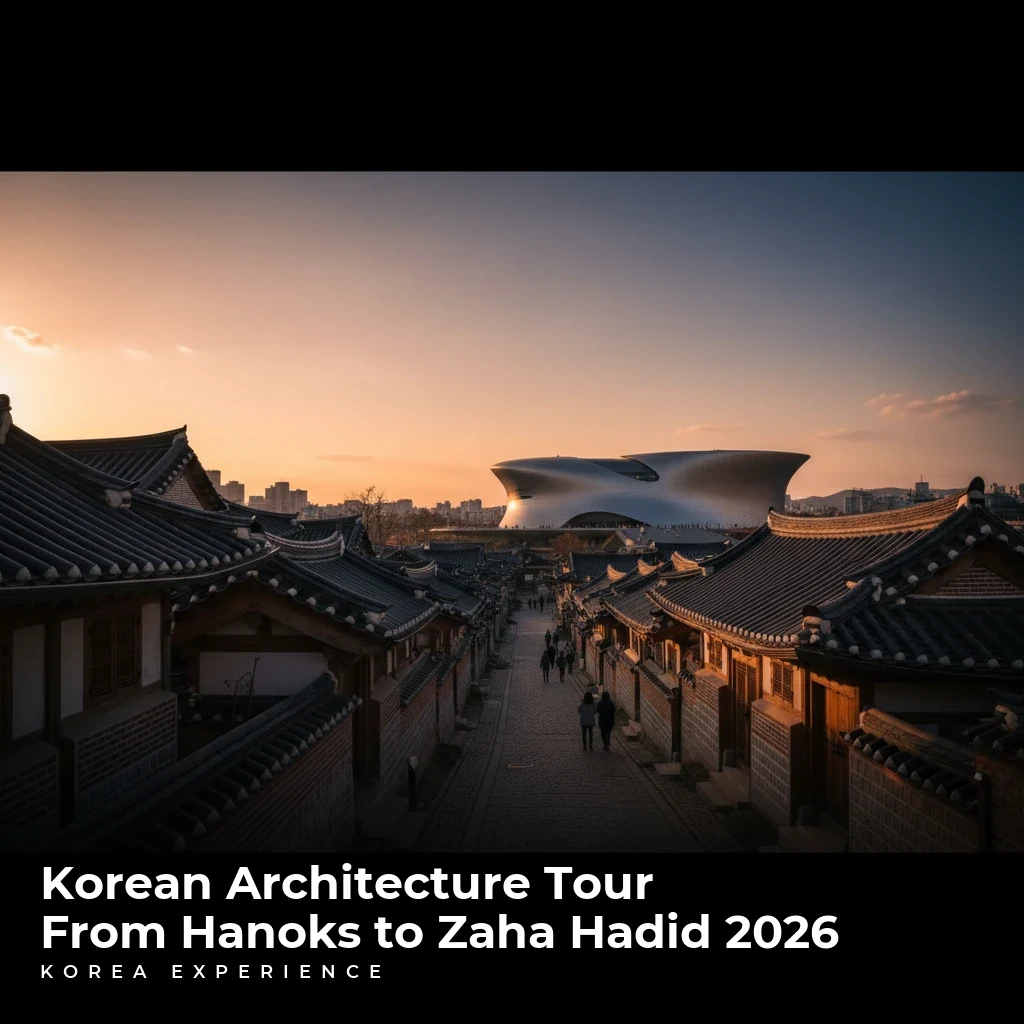
The Dongdaemun Design Plaza (DDP) is arguably the most recognizable symbol of Korea's contemporary architectural prowess, and a centerpiece of any Korean Architecture Tour 2026. Designed by the late, visionary architect Zaha Hadid, the DDP opened in 2014 and is a mesmerizing spectacle of parametric design.
- Design Philosophy: Hadid's signature fluid, neo-futuristic style is evident in the DDP's curvaceous, silver-clad exterior, which seamlessly blends into its urban context. It challenges traditional notions of architectural form, creating a sense of movement and dynamic energy.
- Functions: The complex serves as a major cultural hub, hosting art exhibitions, fashion shows, conferences, and design events. Its unconventional spaces invite exploration and interaction. It’s a must-see for anyone interested in modern architecture. Entry to the complex is free, exhibitions may have fees (e.g., 10,000-20,000 Korean Won).
Lotte World Tower: Soaring Heights
Standing at 555 meters, the Lotte World Tower is currently the tallest building in South Korea and the fifth tallest in the world. Completed in 2017, its sleek, tapering form dominates the Seoul skyline, a testament to modern engineering and ambitious development.
- Design: Inspired by traditional Korean ceramics and calligraphy brushes, the tower features a graceful, continuous curve. It houses offices, luxury residences, a hotel, and the Seoul Sky observation deck, offering panoramic views of the city. Observation deck tickets are around 27,000-30,000 Korean Won.
Innovative Public Spaces and Museums
Seoul has also invested heavily in creating innovative public spaces that blend nature, art, and urban living.
- Seoullo 7017: A former elevated highway transformed into a vibrant pedestrian skygarden, complete with cafes, diverse plant life, and stunning city views. It’s an excellent example of urban regeneration and green architecture.
- National Museum of Korea: While not ultra-modern, its immense scale and thoughtful design make it a significant contemporary structure, housing vast collections within a beautifully crafted space.
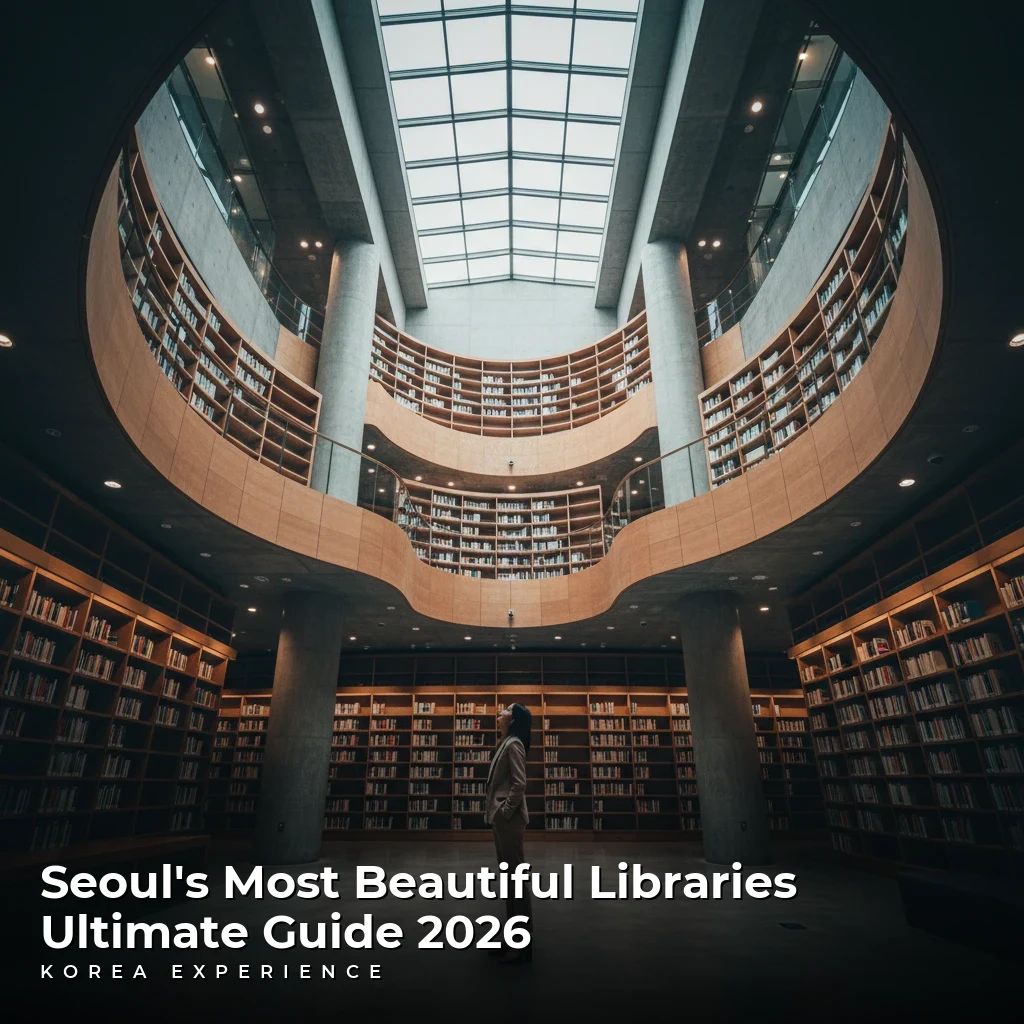
- Starfield Library (COEX Mall): A visually stunning public library within a shopping mall, featuring towering bookshelves and open, inviting spaces. It exemplifies how modern design can elevate commercial areas.
Green Architecture and Sustainable Design
Sustainability is increasingly influencing contemporary Korean architecture. New residential complexes and public buildings are incorporating green roofs, energy-efficient systems, and environmentally friendly materials, reflecting a growing consciousness towards ecological responsibility in urban development.
| Feature | Dongdaemun Design Plaza (DDP) | Traditional Korean Palace |
|---|---|---|
| Design Philosophy | Parametric, fluid, neo-futuristic, challenging forms | Harmony with nature, modularity, symbolism, order |
| Key Materials | Aluminum panels, concrete, glass | Wood, stone, clay tiles, paper |
| Primary Purpose | Cultural hub, exhibition space, urban landmark | Royal residence, administrative, ceremonial |
| Architectural Style | Deconstructivist, organic, avant-garde | Joseon Dynasty traditional, symmetrical or nature-integrated |
| Construction Era | 21st Century (opened 2014) | 14th-19th Century |
| Experience | Interactive, innovative, high-tech | Historical, serene, culturally immersive |
Beyond Seoul: Regional Architectural Gems
While Seoul is a treasure trove of architectural wonders, a true Korean Architecture Tour 2026 should extend beyond the capital to discover regional highlights that offer unique insights into Korea's diverse building heritage.
Busan's Coastal Modernity
South Korea's second-largest city, Busan, offers a distinct blend of coastal charm and modern architectural ambition.
- Busan Cinema Center: Home of the Busan International Film Festival, this stunning building features one of the world's largest cantilevered roofs, dramatically illuminated at night. Its bold, futuristic design makes it a landmark of contemporary architecture.
- Gamcheon Culture Village: A vibrant, hillside settlement often called the "Machu Picchu of Busan." While not architecturally grand, its unique terraced housing, colorful facades, and labyrinthine alleys represent an organic, community-driven urban planning that has become a major cultural attraction.
Jeonju's Preserved Heritage
As mentioned earlier, Jeonju Hanok Village is a prime example of a well-preserved traditional urban fabric, offering a broader and more comprehensive experience of Hanok architecture than Seoul's villages. Its scale allows for a deeper immersion into traditional Korean life, complete with artisan workshops, guesthouses, and a vibrant local food scene.
Gyeongju: Ancient Silla Kingdom's Architectural Legacy
Gyeongju, the ancient capital of the Silla Kingdom, is an absolute must for history and ancient architecture enthusiasts.
- Bulguksa and Seokguram Grotto: These UNESCO World Heritage sites, previously mentioned, are iconic examples of Silla Buddhist architecture and engineering. Their intricate stone artistry and harmonious design are truly remarkable.
- Cheomseongdae Observatory: The oldest existing astronomical observatory in East Asia, dating from the 7th century. Its unique bottle-shaped stone structure is a testament to Silla's advanced scientific knowledge and architectural simplicity.
- Tumuli Park (Daereungwon): A collection of large royal burial mounds, offering a glimpse into the funerary architecture and beliefs of the Silla Kingdom.
Jeju Island: Natural Beauty Meets Design
Jeju Island, a volcanic island and UNESCO World Heritage site, also offers compelling architectural sites that often blend with its unique natural landscape.
- Resort Architecture: Many luxury resorts and boutique hotels on Jeju feature contemporary designs that maximize ocean views and integrate local materials, offering a different take on modern Korean architecture.
- Museums: Unique museums like the Bonte Museum (designed by Tadao Ando, though in Korea, it has a distinct aesthetic) or the Jeju Museum of Art offer architectural experiences that complement the island's natural beauty.
Planning Your Ultimate Korean Architecture Tour 2026
Embarking on a Korean Architecture Tour 2026 requires thoughtful planning to maximize your experience across different eras and regions.
Suggested Itinerary: Blending History and Future (7-10 Days)
- Day 1-3: Seoul - Traditional & Colonial: Start with Gyeongbokgung, Bukchon Hanok Village, Changdeokgung Palace, and Namsangol. Explore Deoksugung Palace and nearby colonial buildings. Consider a Hanok stay.
- Day 4-5: Seoul - Modern & Futuristic: Dedicate time to Dongdaemun Design Plaza (DDP), Lotte World Tower (observation deck), Seoullo 7017, and the Starfield Library. Explore the Gangnam district's high-rises.
- Day 6-7: Gyeongju - Ancient Kingdoms: Take a KTX high-speed train to Gyeongju. Visit Bulguksa, Seokguram Grotto, Cheomseongdae, and Tumuli Park. Immerse yourself in Silla history.
- Day 8-9 (Optional): Jeonju or Busan: For a deeper Hanok experience, head to Jeonju. Alternatively, for coastal modernity, take a KTX to Busan, explore the Cinema Center and Gamcheon Culture Village.
- Day 10: Departure: Travel back to Incheon International Airport (ICN), perhaps marveling at its architectural design.
Transportation and Logistics
South Korea boasts an incredibly efficient and convenient public transportation system.
- Subway: Seoul and Busan have extensive subway networks, making it easy to reach most architectural sites.
- KTX (Korea Train eXpress): High-speed rail connects major cities like Seoul, Gyeongju (via Singyeongju Station), Busan, and Jeonju (via Jeonju Station), significantly reducing travel time between regions.
- Buses: Local and intercity buses are comprehensive and reliable.
- T-money Card: Purchase a rechargeable T-money card at any convenience store for seamless travel on subways, buses, and even taxis.
- Getting to/from Incheon International Airport (ICN): The AREX (Airport Railroad Express) provides direct and express services to Seoul Station. Terminal 2 (ICN T2) itself is a marvel of contemporary airport design by Gensler and Heecheon Yi, worth noting upon arrival/departure.
Accommodation Options
From traditional Hanok guesthouses to ultra-modern boutique hotels and international chains, Korea offers diverse accommodation to suit all budgets and preferences. Booking in advance, especially for Hanok stays or during peak seasons, is highly recommended.
Insider Tips for Architectural Explorers
- Guided Tours: Consider joining specialized architectural walking tours, particularly in areas like Bukchon or around the DDP, to gain deeper insights from local experts.
- Photography: Most sites permit photography, but be respectful in residential Hanok villages. Drones may have restrictions in certain areas (e.g., near palaces or airports).
- Best Time to Visit: Spring (April-May) and Autumn (September-October) offer pleasant weather for walking and outdoor exploration. Cherry blossoms in spring and vibrant foliage in autumn also add to the aesthetic appeal.
- Dress Code: While generally relaxed, dress modestly when visiting temples or specific religious sites.
- Cultural Etiquette: Show respect for elders, remove shoes when entering traditional Hanoks, and be mindful of noise levels in quiet residential areas.
- Internal Linking Opportunity: For a more comprehensive travel experience, consider combining this architectural tour with a "Korean Food Adventure" or a "Deep Dive into Korean History and Culture" which we plan to cover in future articles!
Estimated Costs (per person, excluding international flights, per day in Korean Won, 2026 estimates)
- Accommodation: 50,000 - 200,000 Korean Won (Hanok stay, mid-range hotel)
- Food: 30,000 - 70,000 Korean Won (street food to casual restaurant meals)
- Transportation (Local): 10,000 - 20,000 Korean Won
- Site Entry Fees: 10,000 - 30,000 Korean Won (depending on how many sites you visit)
- KTX (Regional Travel): 50,000 - 100,000 Korean Won (one-way, e.g., Seoul-Busan)
Frequently Asked Questions (FAQ)
1. What is the best time of year for an architecture tour in Korea?
The best times are spring (April-May) for mild weather and cherry blossoms, or autumn (September-October) for cool temperatures and vibrant fall foliage. Summers can be hot and humid, while winters are cold.
2. Are most architectural sites accessible by public transport?
Yes, overwhelmingly. Seoul has an excellent subway system, and major sites in other cities are usually close to subway stations or bus stops. KTX high-speed trains efficiently connect major cities.
3. Do I need a tour guide for these sites?
While not strictly necessary for general exploration, a knowledgeable local guide can provide invaluable historical context and architectural insights, especially for palaces and traditional villages. Many sites offer free informational pamphlets or audio guides.
4. Can I stay in a Hanok? How much does it cost?
Yes, many traditional Hanoks have been converted into guesthouses. Prices vary widely but generally range from 50,000 to 200,000 Korean Won per night, depending on location, amenities, and time of year. Booking in advance is recommended.
5. What's the best way to get around Korea for an architectural tour?
For inter-city travel, the KTX high-speed train is highly recommended for speed and comfort. Within cities like Seoul, the subway is the most efficient method. Consider purchasing a T-money card for seamless public transportation.
Conclusion: Your Architectural Journey Awaits in 2026
South Korea's architectural landscape is a dynamic chronicle of its past, present, and future. From the tranquil beauty of ancient Hanoks and the regal splendor of Joseon palaces, through the layers of colonial influence and post-war resurgence, to the audacious forms of Zaha Hadid's Dongdaemun Design Plaza and other contemporary marvels, the country offers an unparalleled journey for any architectural enthusiast.
Planning your Korean Architecture Tour 2026 is more than just sightseeing; it's an immersion into a culture that deeply respects its heritage while boldly embracing innovation. Use this guide to craft your ideal itinerary, blend historical discovery with futuristic vision, and prepare to be captivated by the stories embedded in every structure. Your extraordinary architectural adventure in Korea awaits!
About the Author
Korea Experience Team
Written by the Korea Experience editorial team - experts in Korean medical tourism, travel, and culture with years of research and firsthand experience.
Explore more in Travel & Tourism
From Seoul's neon-lit streets to Jeju's volcanic landscapes — discover the best of Korea with insider travel tips, itineraries, and seasonal guides.
Browse All Travel & Tourism ArticlesContinue Reading
Explore more articles you might find interesting
Planning your KBO Korean baseball experience for 2026? Learn how to get tickets, what delicious food to eat, and immerse yourself in Korea's vibrant stadium culture.
Planning your 2026 trip to Jeju Island? Discover the best time to visit, top attractions, practical tips, and how to make the most of your adventure.
Explore Seoul's majestic Korean palaces from Gyeongbokgung to Changdeokgung. This 2026 guide covers history, tips, and how to make the most of your visit.
Embark on an epic island hopping adventure across South Korea. Discover Jeju's natural wonders, Nami's charm, and Ulleungdo's pristine beauty with this comprehensive guide.
Discover Korea's vibrant 2026 seasonal festivals! Dive into firefly light shows, mud wrestling, ice fishing, and more unique cultural experiences beyond spring blooms.
Unlock seamless intercity bus travel in South Korea with this comprehensive guide to booking apps, popular routes, and essential tips for international visitors.