Korean breakfast culture what locals eat in the morning 2026
Discover the truth about Korean breakfast in 2026. From traditional soups to trendy toast, find out what locals eat, where to go, and how much it costs.
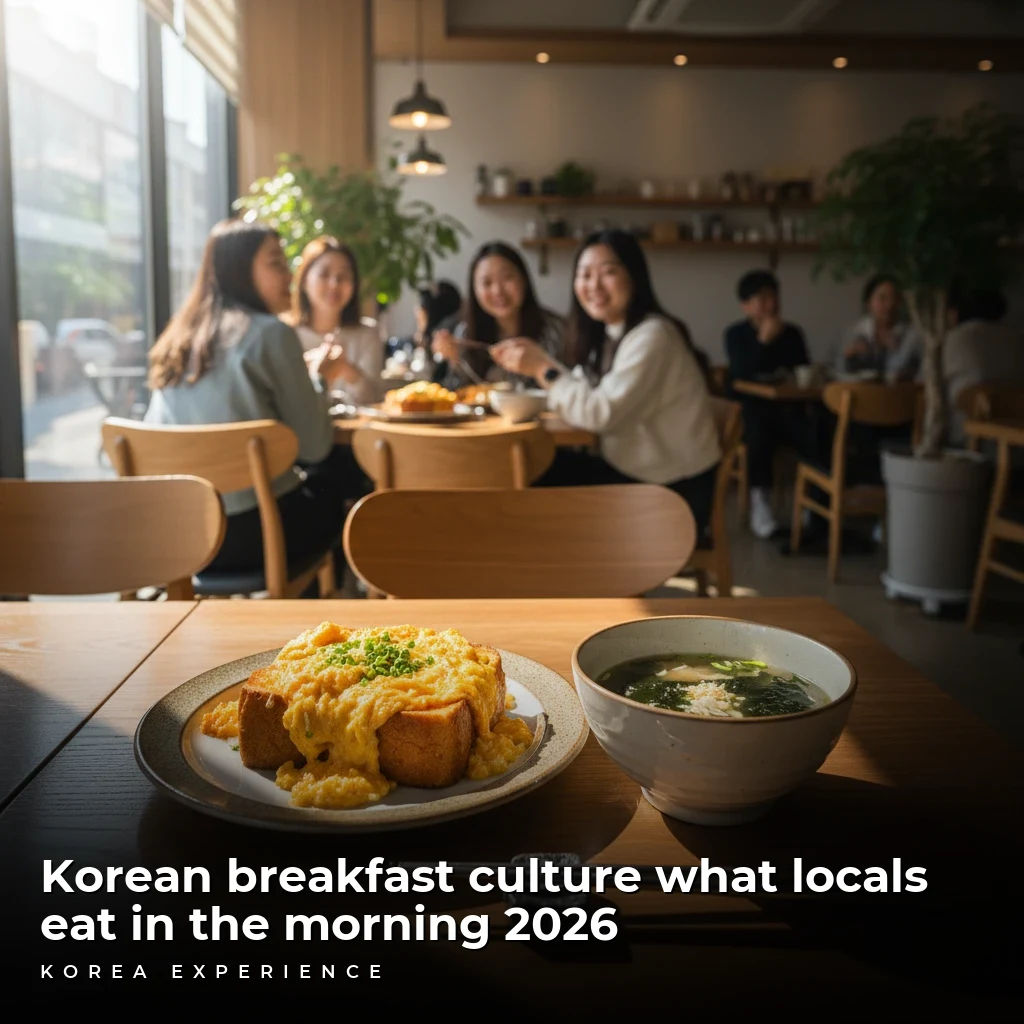
Waking up in Seoul or Busan offers a sensory experience quite different from Paris or New York. You won't smell croissants baking on every corner, nor will you find diners flipping pancakes at 7:00 AM. In South Korea, the concept of "breakfast" is undergoing a fascinating evolution, blending centuries-old traditions with a hyper-modern, fast-paced lifestyle. By 2026, the Korean breakfast landscape has solidified into a unique dichotomy: the slow, nutritious traditional meal and the lightning-fast, tech-enabled convenience culture.
For more details, check out our guide on Korean Breakfast Foods Traditional Morning Meals Guide.
Related reading: Korean Buffet Culture All You Can Eat Options Guide.
For more details, check out our guide on Korean Seasonal Fish Guide 2026 Best Seafood by Season.
Learn more in our comprehensive guide to Daegu Makchang guide the ultimate grilled intestines expe....
For international travelers, understanding this landscape is crucial to avoiding hunger pangs before 11:00 AM. The most common mistake visitors make is assuming that restaurants open early. In reality, less than 15% of standard Korean restaurants open before 10:30 AM. However, this doesn't mean you will go hungry. From steaming stone bowls of hangover soup to the famous "Gil-geori" (street) toast, breakfast in Korea is a culinary adventure if you know where to look.
Key Takeaways
- 1Traditional Korean breakfast is savory, heavy on soup and rice, often costing 9,000-₩12,000.
- 2Most standard restaurants do not open until 11:00 AM; look for '24 Hour' signs for morning meals.
- 3Convenience stores and Toast chains are the most reliable spots for quick, cheap eats under ₩5,000.
The Myth of "Breakfast Food" in Korea
To understand Korean breakfast, you must first unlearn the Western categorization of "breakfast foods." Historically, a traditional Korean breakfast was essentially a lighter version of dinner. There was no distinction such as "cereal is for mornings, steak is for evenings." It was rice, soup, and side dishes (banchan) for all three meals.
In 2026, while Western influence has brought yogurt, bagels, and coffee to the forefront, the "rice power" mentality remains strong. Statistics from the Ministry of Agriculture show that roughly 62% of Koreans still consume a rice-based meal for breakfast at least three times a week. This is largely driven by the belief that rice provides the sustained energy needed for Korea's notoriously long work and school days, which often span 12 to 14 hours.
Cultural Context
The phrase "Have you eaten rice?" (Bap meogeosseoyo?) is used as a greeting equivalent to "How are you?" This highlights the deep cultural significance of rice as the foundation of well-being, starting from the first meal of the day.
However, a demographic shift has occurred. With over 34% of households now being single-person households in 2026, the elaborate home-cooked breakfast is fading. It is being replaced by what locals call "HMR" (Home Meal Replacements) or eating out at specific types of establishments.
The Traditional Savior: Haejang-guk (Hangover Soup)
If you want a hearty, sit-down meal before 9:00 AM, you are looking for Haejang-guk. Literally translating to "soup to chase a hangover," these dishes are the pillar of Korean breakfast culture, enjoyed by teetotalers and party-goers alike. These restaurants are often open 24 hours or open as early as 5:00 AM.
The most popular variety is Kongnamul-gukbap (Bean Sprout Soup with Rice). It is light, refreshing, and incredibly cheap. A boiling hot earthen pot arrives at your table, often with a raw egg cracking into the broth to cook in the residual heat.
Hyundai Ok(현대옥)
The Economics of Soup
In 2026, a bowl of premium Gukbap typically costs between ₩9,000 and ₩11,000 (approx. $6.50 - $8.00 USD). Considering this includes kimchi, unlimited water, and often free rice refills, it remains one of the best value meals in the developed world. The service is fast; the average time from ordering to receiving food in these establishments is under 7 minutes.
📋 Gukbap Essentials
The "K-Toast" Phenomenon
If fermented cabbage soup isn't your idea of a morning starter, "K-Toast" is the answer. This is not your standard buttered bread. Korean street toast is a towering monument of cabbage, eggs, sweet kiwi sauce, ketchup, ham, and cheese, sandwiched between butter-fried white bread.
The two giants dominating this space are Isaac Toast and Egg Drop.
- Isaac Toast: The classic. It’s cheaper, messier, and uses a signature fruit-based sauce that gives it a unique sweet-savory profile.
- Egg Drop: The "Instagram" version. It features fluffy brioche bread, scrambled eggs that look like clouds, and sleek packaging.
By 2026, these chains have implemented self-ordering kiosks with full English support, making them incredibly accessible for tourists. A standard bacon and cheese toast at Isaac costs around ₩4,500 ($3.20), while a premium garlic bacon cheese sandwich at Egg Drop hovers around ₩6,800 ($4.85).
Battle of the Toasts
| Feature | Isaac Toast | Egg Drop | Street Stall |
|---|---|---|---|
| Bread Type | Standard White | Brioche | Standard White |
| Flavor Profile | Sweet & Savory | Creamy & Savory | Salty with Sugar Sprinkled |
| Average Price | ₩4,500 | ₩6,800 | ₩3,500 |
| Wait Time | 10-15 mins | 15-20 mins | 3-5 mins |
Ordering Note
When ordering "Street Toast" from a roadside stall (not a chain), the "grandmother" (Halmeoni) will often sprinkle granulated sugar directly onto the egg patty. If you do not want this, you must say "Seoltang Bbaejuseyo" (No sugar, please), though locals insist the sugar is the secret ingredient.
Convenience Store Culture: The "Pyeoneijeom" Breakfast
You cannot discuss Korean breakfast without mentioning the convenience store (CVS). With over 55,000 locations nationwide—that’s one store for every 900 people—you are never more than 200 meters from a GS25, CU, 7-Eleven, or Emart24.
For travelers on a budget or those in a rush, the CVS is a goldmine. The undisputed king of the CVS breakfast is the Samgak Gimbap (Triangle Rice Ball). Wrapped in crispy seaweed that stays separated from the moist rice until you open it, these cost between ₩1,200 and ₩1,700 ($0.85 - $1.20).
Common flavors include Tuna Mayo (the safest bet for foreigners), Jeonju Bibimbap (spicy), and Bulgogi. In 2026, health-conscious options utilizing black rice, quinoa, and reduced-sodium spam have gained significant market share.
📖 How to Open a Samgak Gimbap
Step 1: Pull the Tab
Locate the number '1' on the front tab. Pull it straight down all the way to the back to split the plastic wrapper.
Step 2: Remove Right Side
Pull the corner labeled '2' gently to the right to slide the plastic off the right half of the rice ball.
Step 3: Remove Left Side
Pull the corner labeled '3' to the left to remove the remaining plastic.
The "2+1" Economy
A crucial tip for optimizing your CVS breakfast is looking for "2+1" tags on beverages. It is rare to buy a single bottle of coffee or yogurt drink. Locals almost always buy in bulk or share with friends. A common breakfast combo—one Samgak Gimbap and a small bottle of banana milk—will cost you approximately ₩3,000 ($2.15).
📊 CVS Consumption 2026
The Western Brunch & Bakery Explosion
While traditional food remains popular, the "Bakery Cafe" trend has exploded in major cities like Seoul, Busan, and Daegu. Areas like Hannam-dong, Seongsu-dong, and Dosan Park are the epicenters of this movement.
In 2026, the obsession isn't just coffee; it's specialized pastries. Salt bread (Sio-ppang) and Bagels have seen a massive surge. Establishments like London Bagel Museum (yes, that's the real name) still command wait times of over 60 minutes on weekends, even years after opening.
These venues are not cheap. A coffee and a loaded bagel sandwich can easily run ₩18,000 to ₩22,000 ($13 - $16). However, the quality is exceptionally high, and the interiors are designed specifically for social media aesthetics.
"If you want to visit popular cafes like London Bagel Museum or Artist Bakery without the 2-hour wait, use the 'CatchTable' app. You can sometimes register for a waiting number remotely, or at least check the current wait time before you leave your hotel. Weekday mornings before 9:00 AM are your only safe bet for walking in."
💵 Breakfast Cost Comparison
Latte + Sandwich in Gangnam
Coffee + Gimbap
Fast Food Breakfasts: McDonald's and Lotteria
Sometimes, you just want something familiar. McDonald's Korea offers the "McMorning" menu until 10:30 AM. It is largely similar to the US or UK menu but often features higher quality localized ingredients, such as the "Bacon Tomato Egg Muffin."
Lotteria, the local Korean burger chain, offers a different experience. Their breakfast menu often includes rice-based options or bulgogi-flavored patties. Prices are competitive, with a set meal (combo) costing around ₩4,500 to ₩5,500.
Speed is the key factor here. Drive-thrus and mobile ordering (via apps like Coupang Eats or Baemin, though these often require a Korean phone number) make this a frictionless option. The average calorie count for these set meals is around 600-800 kcal.
Street Food: The Morning Commuter's Fuel
True street food carts (Pojangmacha) opening in the morning are becoming rarer due to urban cleanup initiatives, but they still exist near major subway stations (e.g., Sadang, Sillim, Hongdae).
The staples here are:
- Odeng (Fish Cake): Skewered fish cake in hot broth. You stand by the cart, eat the skewer, and drink the broth from a paper cup.
- Cost: ₩1,000 - ₩1,500 per stick.
- Gimbap Rolls: Often sold pre-wrapped in foil by elderly vendors ("Ajumma").
- Cost: ₩3,000 - ₩4,000 per roll.
- Banana Milk: Usually sold at a nearby stall or kiosk.
This is a "standing only" affair. It is not a place to linger. The average interaction time is less than 5 minutes.
Street Food Breakfast
- ✓Cheapest option available
- ✓Authentic local experience
- ✓Zero wait time
- ✗No seating
- ✗Cash only (usually)
- ✗Hygiene varies by stall
Practical Tips for Travelers in 2026
Navigating the morning food scene requires a few strategic apps and cultural knowledge.
1. The Map Apps: Google Maps is still unreliable for walking directions and restaurant hours in Korea. You must use Naver Map or KakaoMap. Both have improved their English interfaces significantly by 2026. Search for "Breakfast" or "Gukbap" to find open spots near you.
2. The Coffee Situation: Koreans are among the highest per-capita coffee consumers in the world. However, most independent cafes do not open until 11:00 AM or 12:00 PM. If you need caffeine at 7:00 AM, your options are:
- Starbucks (usually opens 7:00 AM)
- Mega Coffee / Compose Coffee (Budget chains, open early, ₩2,000 for a massive Americano)
- Convenience Stores
3. Water Etiquette: In almost every breakfast establishment, from Gukbap joints to Toast shops, water is "Self." Look for a stainless steel sterilization cup cabinet. Do not wait for a waiter to bring you water.
A Typical Seoul Morning Rush
Subway Stations
Commuters grab an Odeng skewer or a quick Toast near the exit.
Office Districts
Lines form at 'Mega Coffee' and 'Compose Coffee' for 1-liter iced Americanos.
Early Lunch
Restaurants fill up rapidly as the lunch rush begins early.
Conclusion: Embracing the "Bap"
While you might miss your eggs benedict or continental buffet, embracing the Korean breakfast culture is a vital part of the travel experience. There is something deeply comforting about starting a cold winter morning in Seoul with a hot bowl of Beef Bone Soup (Gomtang), or grabbing a spicy Tuna Gimbap before hiking up Bukhansan mountain.
In 2026, the options are more diverse than ever. Whether you choose the efficiency of a convenience store, the sweetness of Isaac Toast, or the tradition of a soup kitchen, you will find that Korean mornings are fueled by hearty, affordable, and delicious food. Just remember: if you want to eat like a local, be prepared to eat rice, and be prepared to eat it hot.
❓ Frequently Asked Questions
Have more questions?Contact us →
About the Author
Korea Experience Team
Written by the Korea Experience editorial team - experts in Korean medical tourism, travel, and culture with years of research and firsthand experience.
Explore more in Food & Dining
Korean BBQ, street food, Michelin restaurants, and regional specialties — your ultimate guide to eating well in Korea.
Browse All Food & Dining ArticlesContinue Reading
Explore more articles you might find interesting
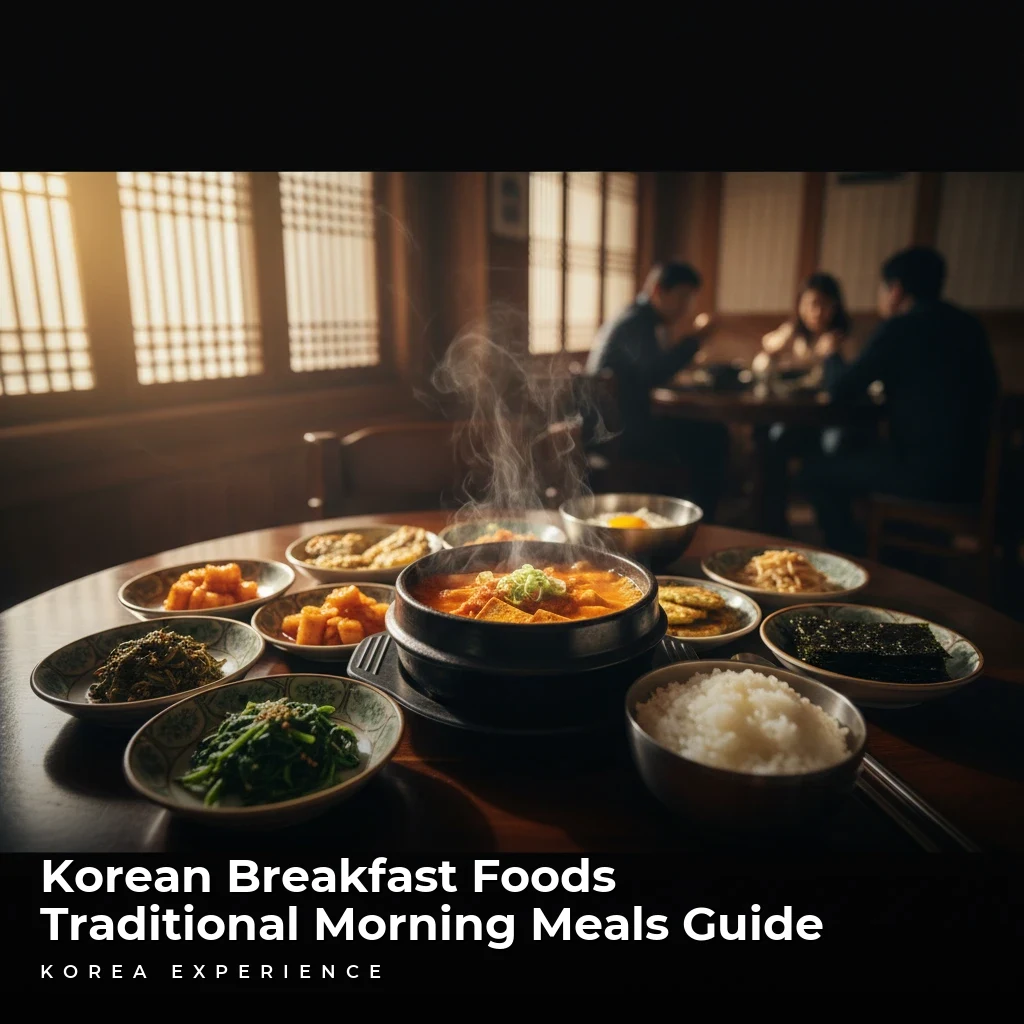
Discover the authentic flavors of Korean breakfast, from hearty soups and savory rice dishes to modern cafe culture and street food staples.
Discover the best traditional tea houses and ceremony classes in Seoul. From hidden Hanoks to temple stays, find your perfect calm.
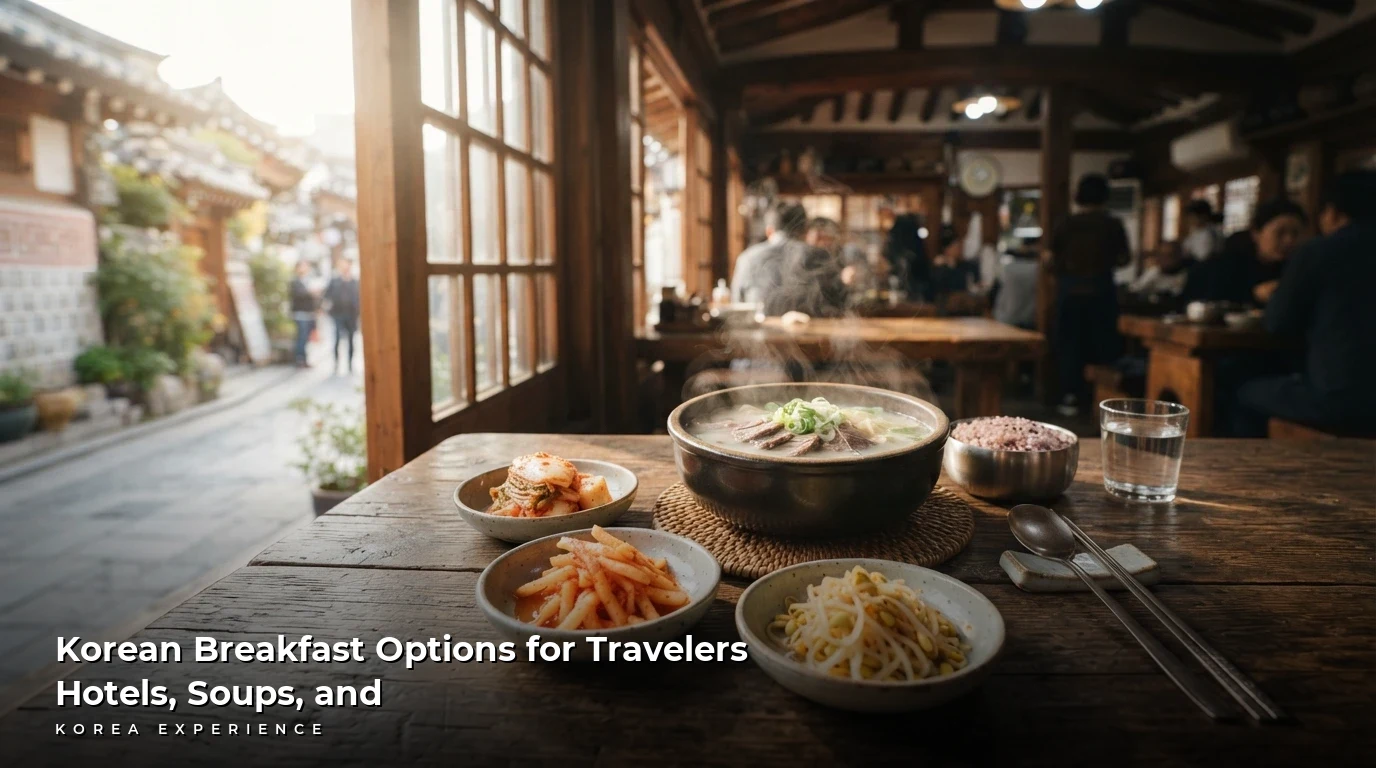
A practical guide to finding breakfast in Korea as a traveler, covering hotel buffets, traditional soup shops, and 24/7 convenience stores.
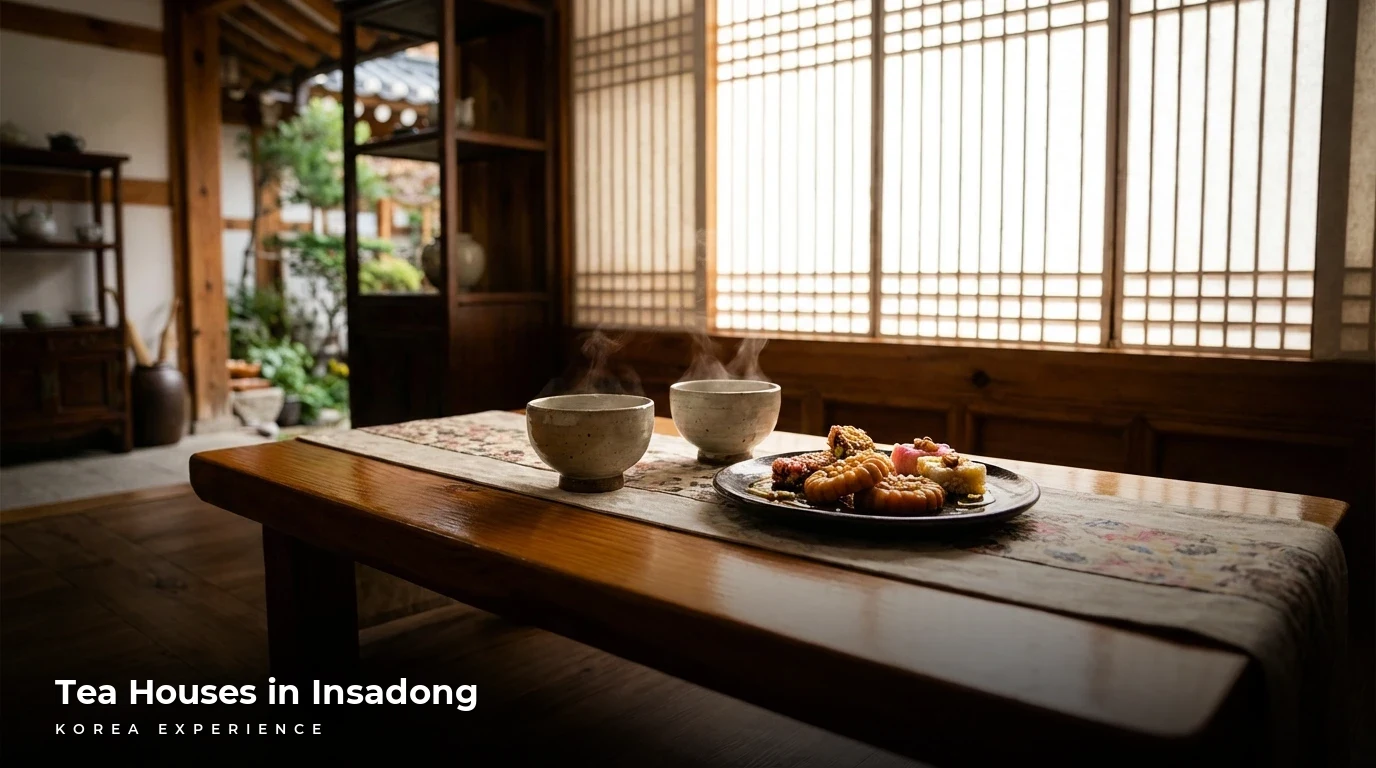
Discover Seoul's soul in 2026 with 100-year-old Hanoks and healing teas starting at 9,000 KRW. Find the best hidden spots away from the main street crowds.

Navigate Gwangjang and Namdaemun safely with this 2026 guide. Discover why 99% of red sauces contain wheat and find safe eats from $2.20.
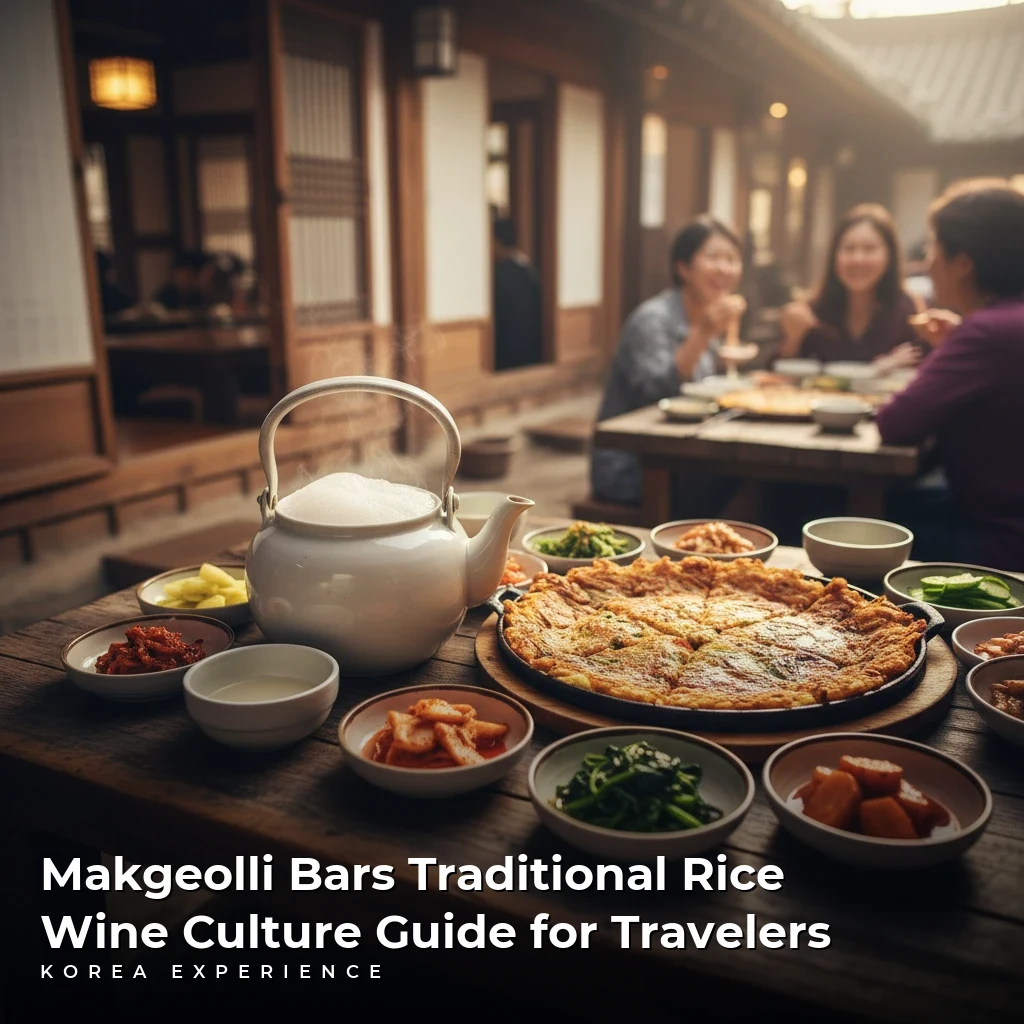
Discover the best Makgeolli bars in Seoul, understand traditional rice wine etiquette, and explore premium craft brews in this ultimate guide.