Korea Temple Stays: Best Mountain Meditation Retreats for Foreigners
Discover the best mountain temple stays in Korea for 2026. From ₩50,000 retreats to martial arts training, here is your complete guide to finding inner peace.
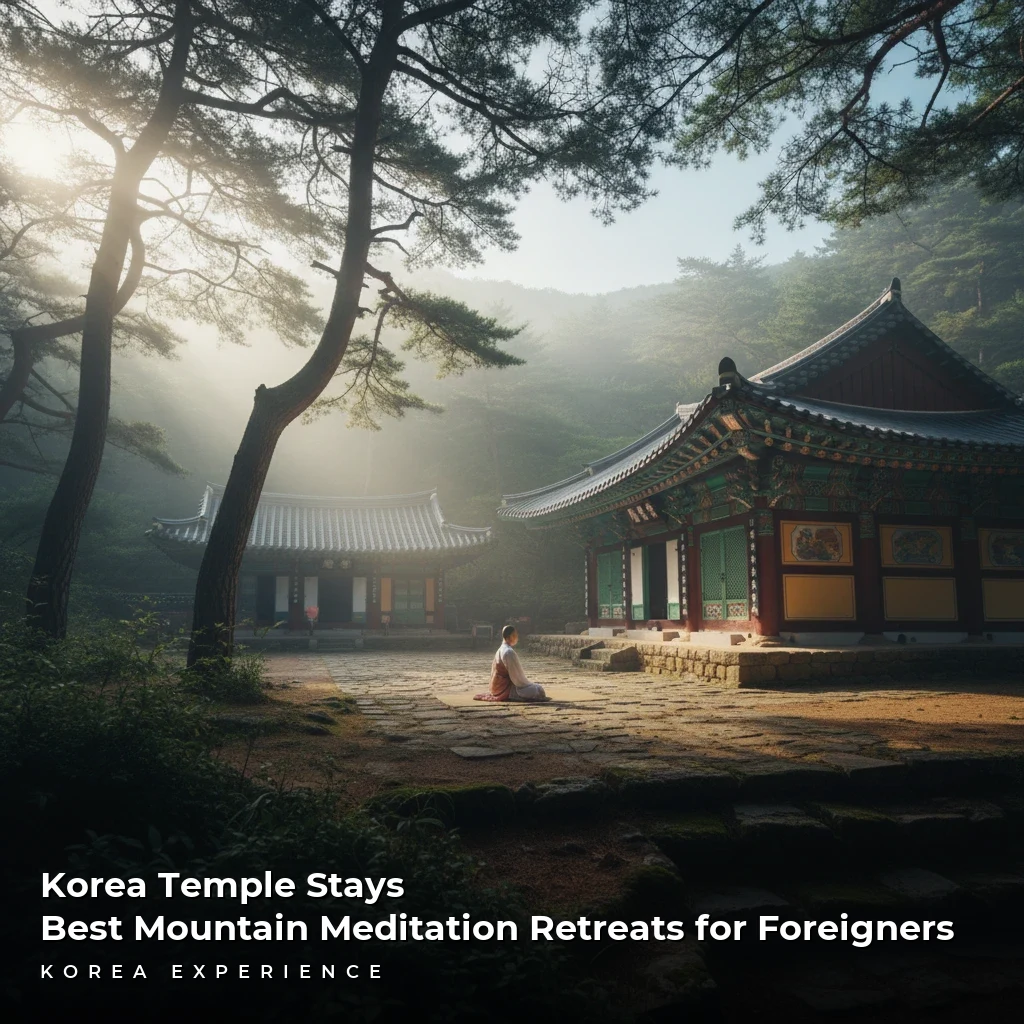
For international travelers seeking a profound escape from the hyper-connected world, Korea’s mountain temple stays (Templestay) offer a unique blend of cultural immersion, spiritual healing, and breathtaking nature. Unlike expensive wellness resorts, these government-subsidized programs allow foreigners to live alongside Buddhist monks in centuries-old monasteries for as little as ₩50,000 to ₩100,000 per night. Whether you are looking to practice 108 prostrations, engage in Sunmudo martial arts, or simply drink tea in silence while gazing at a mountain vista, there is a specific program designed for you.
The short answer: The official "Templestay" program connects foreigners with over 140 temples across Korea. Most programs cost between ₩60,000 and ₩90,000 per night, generally divided into "Experiential" (activities included) and "Relaxation" (free time) types. Reservations must be made via the official English-language portal (templestay.com) at least 1-2 weeks in advance.
Key Takeaways
- 1Reservations fill up 2-4 weeks early for popular temples like Jingwansa and Baekyangsa.
- 2The average cost is ₩70,000 ($52 USD) per night, including three vegetarian meals and a uniform.
- 3You do not need to be Buddhist; over 45% of participants identify as non-religious or other faiths.
Understanding the Korean Templestay Program
The Templestay program was officially launched in 2002 during the World Cup to accommodate the influx of international visitors when hotels were fully booked. Since then, it has evolved into one of Korea's most successful cultural tourism exports. As of 2026, over 6 million people have participated, with approximately 15% being international visitors.
The core appeal lies in its accessibility. While a meditation retreat in Bali or India might cost thousands of dollars, Korean mountain temples offer a standardized, safe, and incredibly affordable way to access mindfulness. Most temples are located in national parks or secluded mountain areas, ensuring pristine air quality and silence, yet many are reachable via public transit within 2 to 4 hours from Seoul.
📊 Templestay Statistics 2026
Experiential vs. Relaxation: Which to Choose?
Before booking, you must understand the two main categories of stays. Mixing these up is the most common mistake foreigners make.
- Experiential Program (Taem-hyeong): This is a structured schedule. You will be guided by a monk or a lay teacher through specific activities like making lotus lanterns, prayer bead threading (108 beads), tea ceremonies (Dado), and early morning chanting. This is best for first-timers who want to learn the "how" and "why" of Korean Buddhism.
- Relaxation Program (Hyusik-hyeong): This is essentially a "hall pass" to live in the temple. Aside from meal times and morning/evening ceremonial chanting (which are usually optional but encouraged), your time is your own. You can hike, read, or meditate. This is ideal for those suffering from burnout or repeat visitors.
Pro Tip: The Weekend Rule
Experiential programs geared toward English speakers are almost exclusively held on weekends (Saturday to Sunday). If you book a weekday stay, you will likely be defaulted to a "Relaxation" program due to the lack of available English-speaking staff during the work week.
Top Mountain Temples for Foreigners in 2026
While there are over 140 options, not all are created equal regarding English fluency, facility quality, and accessibility. Based on foreigner feedback and accessibility data, here are the top picks.
1. Jingwansa (Seoul/Bukhansan)
Located inside Seoul but tucked away in the Bukhansan National Park, Jingwansa feels worlds apart from the city. It is famous for its culinary heritage and is located just 40 minutes from the city center by bus/subway.
Jingwansa Temple(진관사)
Why it wins: It eliminates the travel time barrier. You can be in Gangnam in the morning and meditating in a mountain pine forest by afternoon. The temple food here is renowned, focusing on fermentation and local mountain herbs.
2. Golgulsa (Gyeongju)
For those who find sitting still difficult, Golgulsa is the answer. It is the headquarters of Sunmudo, a traditional Buddhist martial art that combines Zen yoga with dynamic martial arts movements.
- Location: 20 minutes from downtown Gyeongju by shuttle.
- Vibe: Active, physical, intense.
- Key Activity: Sunmudo training (archery and martial arts).
- Cost: Slightly higher, around ₩80,000–₩100,000 due to the training component.
Golgulsa is not for the faint of heart. You will be waking up at 4:00 AM for training. The '108 stairs' leading to the main Buddha carving are a workout in themselves. However, it's the only temple where you'll see foreign monks regularly instructing, which removes the language barrier entirely.
3. Baekyangsa (Jeolla-do)
Catapulted to global fame by Netflix's Chef's Table, this temple is home to the philosopher-chef Jeong Kwan Sunim. While getting a spot in her personal cooking class is incredibly difficult (often booked out seconds after opening), the temple itself is stunning, particularly in autumn.
- Best Time: November (Autumn foliage).
- Distance: approx. 3.5 hours from Seoul (KTX to Jeongeup + Taxi/Bus).
- Focus: Food meditation and deep nature.
If you are interested in the culinary side of these retreats, check out our guide to Korean regional flavors to understand why Jeolla-do is the food capital of Korea.
4. Woljeongsa (Pyeongchang)
Famous for its 1-kilometer-long fir tree forest path (the filming location for the K-drama Goblin), Woljeongsa offers high-altitude calmness in the mountains of Gangwon-do.
- Atmosphere: Misty, cool, and majestic.
- Program Highlight: Walking meditation through the fir forest.
- Accessibility: Accessible via the KTX-Eum line to Jinbu Station (approx. 1 hour 40 mins from Seoul).
The Cost of Inner Peace: A Price Breakdown
Is it worth the money? Compared to hotels, absolutely. Your fee generally covers accommodation (ondol style floor sleeping), three meals, and all activities.
💵 Retreat Cost Comparison (Per Night)
Private villa, spa, room service
Guided activities, meals, uniform
Free time, meals, accommodation
When budgeting, remember to factor in transportation. A round-trip KTX ticket to locations like Gyeongju or Pyeongchang will add approximately ₩60,000 to ₩100,000 to your total trip cost. If you are on a tight budget, check our guide on how to see Seoul for $50 a day for more money-saving tips.
A Day in the Life: The Temple Schedule
Do not expect to sleep in. Temple life follows the sun. While schedules vary, a typical experiential program looks like this:
Standard Templestay Itinerary
Arrival & Orientation
Check-in, change into uniform, learn temple etiquette.
Baru Gongyang
Formal monastic meal. You must eat every grain of rice.
Yebul (Evening Chanting)
Ceremonial chanting with monks and drumming.
Lights Out
Strict silence and sleep.
Wake Up
Pre-dawn awakening (the hardest part for most).
Morning Chanting
Meditation and chanting as the sun rises.
108 Bows
Physical meditation practice.
The 108 Bows (Baek-pal-bae)
This is often the most daunting physical challenge for foreigners. It involves performing 108 full prostrations (knees, elbows, and forehead touching the ground) while threading a prayer bead for each bow. It typically takes 20 to 30 minutes. It represents clearing away 108 human delusions. It is a workout; your legs will feel it the next day.
Etiquette and Rules: How Not to Be Rude
Temples are active places of worship, not theme parks. The rules are strict but simple.
- Uniforms: Upon arrival, you are given a comfortable vest and baggy pants. You must wear these at all times within the temple grounds. In winter, you can wear thermal layers underneath.
- Gender Separation: Men and women usually sleep in separate rooms, even married couples. However, some temples now offer "family rooms" for groups or couples—you must request this specifically when booking.
- The "Chasu" Posture: When walking around the temple yard, you should clasp your right hand over your left hand near your navel. This signifies humility and keeps your swinging arms from distracting others.
- Silence: "Noble Silence" is often expected after 9:00 PM.
Strict Prohibitions
Alcohol, smoking, and meat products (jerky, ham) are strictly forbidden on temple grounds. Being caught with alcohol is grounds for immediate expulsion without a refund.
What to Pack (And What to Leave Behind)
Packing for a mountain temple is different from packing for a city hotel.
Essentials:
- Slip-on shoes: You will be taking your shoes off and putting them on dozens of times a day. Lace-up boots are a nightmare here.
- Personal Toiletries: Temples usually provide soap, but rarely shampoo, conditioner, or toothbrushes. Bring a towel; the ones provided are often small hand towels.
- Socks: Even in summer, you must wear socks inside the temple halls out of respect.
- Thermals (Winter): Mountain temples are significantly colder than the city. Floor heating (ondol) is hot, but the air can be freezing.
Leave Behind:
- Strong perfume or cologne (attracts bugs and disturbs meditation).
- Revealing clothing (tank tops, shorts above the knee) for times when you aren't wearing the uniform.
How to Book: A Step-by-Step Guide
The reservation system is centralized, which makes life easier.
📖 Booking Your Templestay
Step 1: Visit the Official Site
Go to eng.templestay.com. Do not use third-party aggregators as they often markup prices.
Step 2: Choose Your Program
Filter by 'Experiential' or 'Relaxation'. Look for the 'English Available' tag.
Step 3: Select Date & Payment
Weekends sell out first. Payment is usually required upfront via credit card.
Step 4: Confirmation
Save the confirmation email/voucher on your phone. It contains the precise meeting point.
Food: The Soul of the Stay
Temple food (Sachal Eamsik) is vegan and prohibits the "five pungent spices" (garlic, green onion, leek, chives, and onion), which are believed to disturb spiritual practice by increasing libido or anger. Despite this, the food is incredibly flavorful, relying on doenjang (soybean paste), ganjang (soy sauce), and mushroom powders for umami.
Meals are communal. In strict programs, you engage in Baru Gongyang, a formal meal ritual where you use four wooden bowls and must clean them with water and a slice of radish at the end—drinking the rinse water to ensure zero waste.
📋 Temple Food Facts
For a contrast between this ascetic diet and the rich seafood culture of coastal Korea, read our comparison in the Jeolla vs. Gyeongsang regional flavors guide.
Pros and Cons of a Mountain Temple Stay
It is important to manage expectations. This is not a luxury spa; it is a cultural discipline.
Is a Templestay Right For You?
- ✓Incredible value (approx. $50/night incl. food)
- ✓Access to restricted mountain areas
- ✓Unique cultural insight you can't get in Seoul
- ✓Digital detox and mental clarity
- ✗Early wake-up times (3-4 AM)
- ✗Sleeping on the floor (thin mats)
- ✗Communal bathrooms in some older temples
- ✗Strict dietary rules (no meat/alcohol)
Suggested Itinerary: The Gyeongju Dualism Route
If you are visiting Gyeongju, the ancient capital, consider splitting your accommodation to experience both history and luxury.
Gyeongju: Asceticism Meets Comfort
The Dualism Concept: Experience the best of both worlds — premium luxury moments paired with authentic budget-friendly experiences in one route.
Golgulsa Temple Stay
Sunmudo training and stone pagoda views.
Hilton Gyeongju / Lahan Select
Lake Bomun views with a full spa recovery.
Start with the Temple Stay to exhaust your body and clear your mind, then reward yourself with a luxury hotel bed for the second night.
Frequently Asked Questions
❓ Templestay FAQ
Have more questions?Contact us →
Final Thoughts
A mountain temple stay is more than just cheap accommodation. It is a rare opportunity to step out of the "pali-pali" (hurry-hurry) culture of modern Korea and breathe. Whether you are watching the autumn leaves fall at Baekyangsa or struggling through your 50th bow at Golgulsa, the experience stays with you long after you return to the city.
For the best experience, aim for spring (April-May) or autumn (October-November) when the mountains are at their most beautiful. Just remember: bring slip-on shoes, an open mind, and a willingness to embrace the silence.
Planning your trip? Don't miss our guide on the best time to visit Korea to align your temple stay with the perfect weather.
About the Author
Korea Experience Team
Written by the Korea Experience editorial team - experts in Korean medical tourism, travel, and culture with years of research and firsthand experience.
Explore more in Travel & Tourism
From Seoul's neon-lit streets to Jeju's volcanic landscapes — discover the best of Korea with insider travel tips, itineraries, and seasonal guides.
Browse All Travel & Tourism ArticlesContinue Reading
Explore more articles you might find interesting
Discover Korea's top spiritual retreats for 2026. Compare ₩70,000 temple stays with luxury wellness resorts. Find peace in Seoul and beyond.
Discover the top 15+ English-friendly temple stays in Korea. From Seoul to mountains, learn booking tips, costs (₩50k-80k), and schedules for 2026.
Discover Korea's top 2026 hybrid retreats blending state-of-the-art medical checkups with temple stays and forest healing for under $2,000/week.
Discover the top hotels with beauty services spa and salon in Seoul. From Gangnam luxury to medical recovery stays, here is your complete 2026 guide.
Discover the tranquility of Korean Bunjae and traditional gardens. A complete 2026 guide to finding peace in Korea's lush landscapes and hidden green gems.
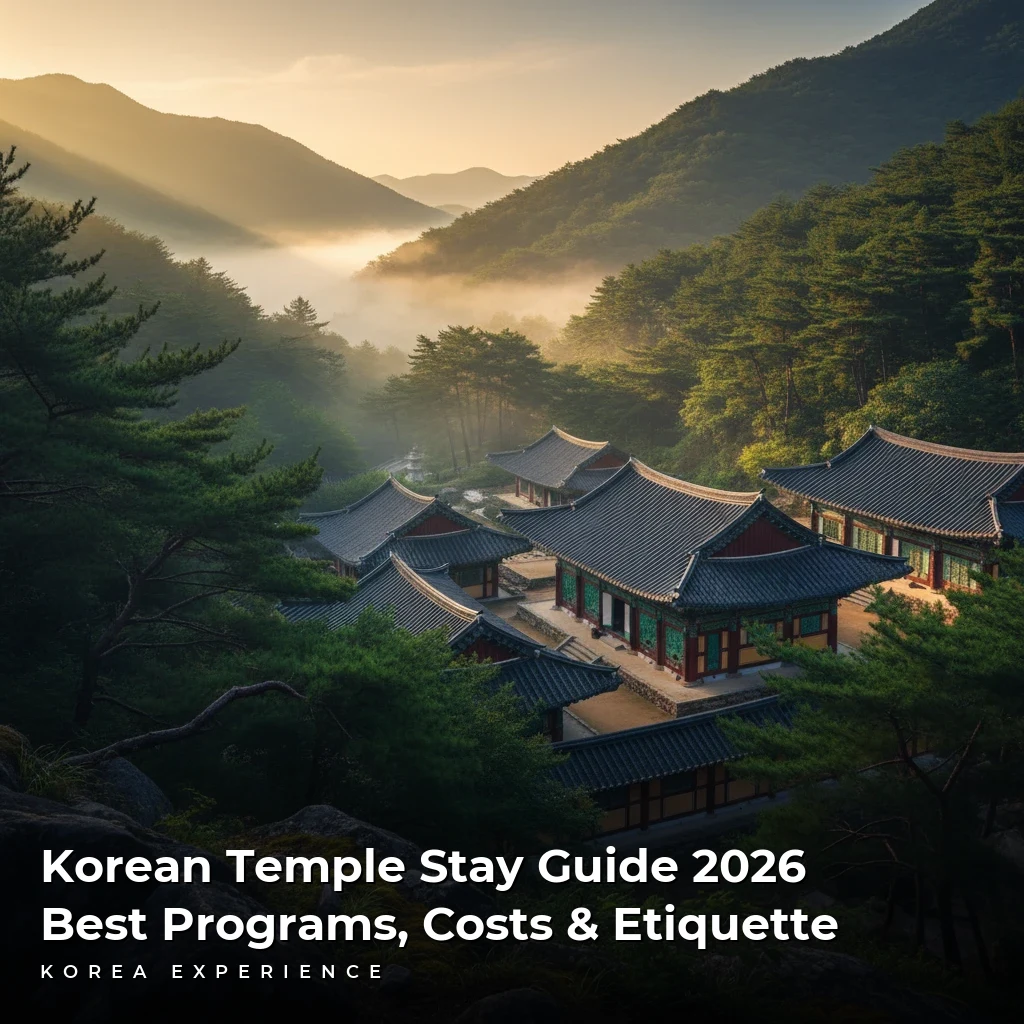
A complete guide to 2026 Korean Temple Stays. Programs cost ₩50,000-₩100,000. Learn booking tips, etiquette, and the best temples for English speakers.