Best Pet Friendly Travel Hotels And Parks For Dogs in Korea 2026
Discover the top pet friendly travel hotels and parks for dogs in Korea. Includes 2026 prices, entry fees, and amenities for your furry friend.
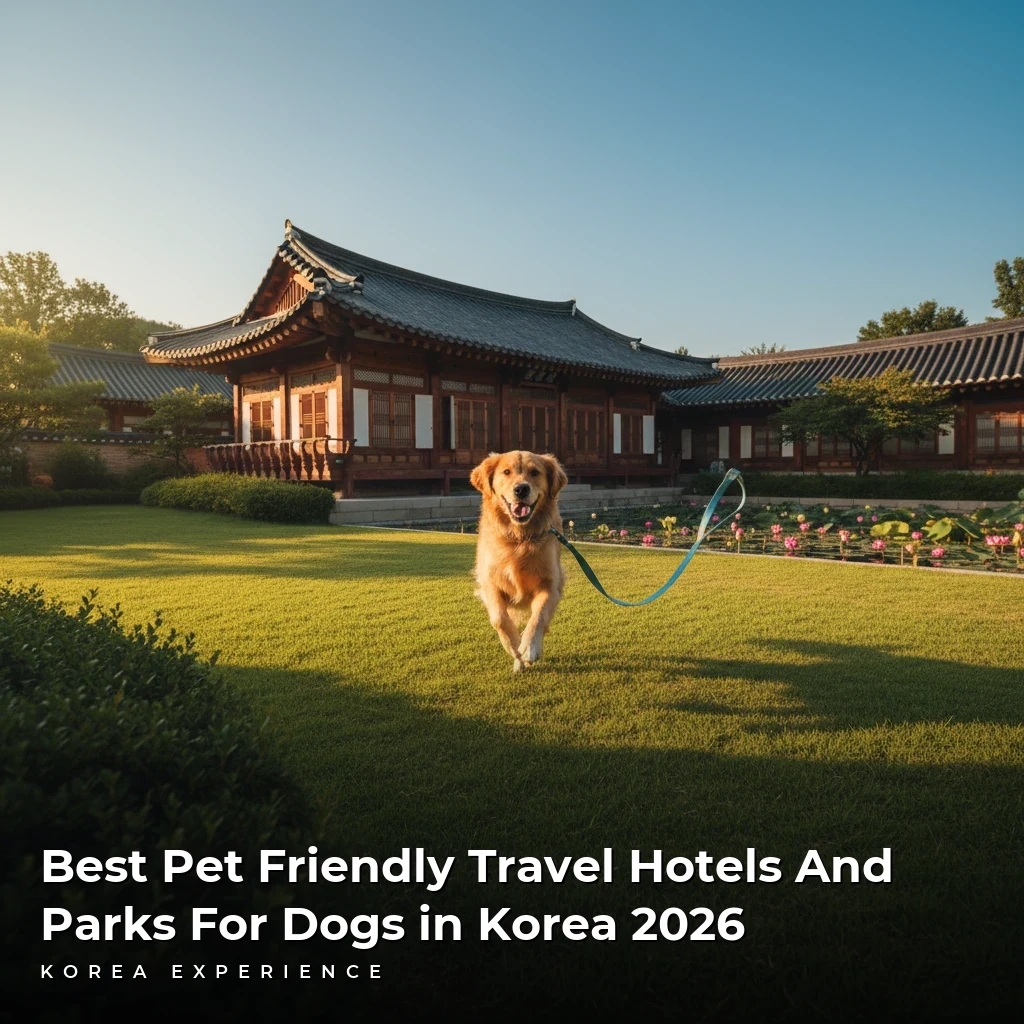
Finding pet friendly travel hotels and parks for dogs in South Korea has transitioned from a difficult challenge to a delightful variety of choices in 2026. While Korea was once restrictive regarding pets in public spaces, the rapid increase in pet ownership—now exceeding 15 million people—has forced the hospitality industry to adapt. Today, you can find everything from 5-star luxury suites with "in-room dog dining" menus to sprawling resorts dedicated entirely to canine wellness.
The short answer: The best pet friendly travel hotels and parks for dogs in Korea are concentrated in Seoul (L'Escape, Hotel Cappuccino) and Gangwon-do (Sono Pet Clubs), with prices for pet rooms averaging ₩250,000 to ₩500,000 per night. Public parks like World Cup Park and Seoul Forest offer dedicated off-leash zones for free, while private dog parks charge admission fees around ₩6,000 to ₩10,000.
Key Takeaways
- 1Luxury pet hotels charge additional cleaning fees averaging ₩33,000 to ₩110,000 per stay.
- 2Most hotels implement a 10kg weight limit, though resorts like Sono Pet welcome dogs up to 45kg.
- 3Public transport requires pets to be fully enclosed in carriers; KTX trains allow this for free.
The Evolution of Pet Travel in Korea
The landscape of traveling with dogs in Korea has shifted dramatically over the last five years. In 2026, the concept of "Pet-Fam" (Pet + Family) dominates the tourism sector. According to the Korea Tourism Organization, the number of accommodations officially registered as "pet-friendly" has tripled since 2022.
However, international travelers must understand the nuance of "pet-friendly" in Korea. Unlike in parts of Europe where dogs might walk into a café on a leash, Korea often requires dogs to be in strollers or carriers in indoor public spaces unless the venue is specifically a "dog cafe." Fines for off-leash violations in public areas have increased to ₩200,000 as of 2026, making it vital to know exactly where you can go.
📊 Korea Pet Travel Stats 2026
Top Luxury Pet Friendly Hotels in Seoul
Seoul offers the highest concentration of premium accommodations for travelers with dogs. These hotels don't just "allow" dogs; they pamper them.
L'Escape Hotel: The Parisian Palace for Pups
Located near Myeongdong, L'Escape is arguably the most famous pet-friendly hotel in the city. Designed with a 19th-century French aristocracy theme, it offers designated pet floors.
Amenities & Cost: The "Pet Package" typically starts at ₩450,000 per night. This includes a Dyson hair dryer rental, a premium air purifier, a welcome kit with toys and treats, and a custom-made dog house in the room. Uniquely, they offer a pet-friendly dining area in their Chinese restaurant, Palais de Chine, where your dog can sit with you (in a designated zone).
Restrictions: They generally accept up to two dogs per room, with a weight limit of 10kg per dog. The cleaning fee is included in the package price, but damages are charged separately.
L'Escape Hotel(레스케이프 호텔)
Hotel Cappuccino: The Hipster Choice
Situated in Gangnam, Hotel Cappuccino was one of the pioneers of the "Bark Room." It is a lifestyle hotel that appeals to younger travelers and expats.
Amenities & Cost: Rooms are more compact and affordable, averaging ₩180,000 to ₩250,000 per night. The Bark Room features a custom birch wood bed for dogs and eco-friendly toys. A portion of the proceeds from the room charge is donated to animal rescue organizations, which appeals to ethical travelers. They also provide a "Room Service" menu for dogs, featuring items like steamed chicken breast (₩8,000) and vegetable terrine (₩7,000).
Aloft Seoul Gangnam
For Marriott Bonvoy members, Aloft offers the "Arf (Animals R Fun)" program. Located near the Han River, it provides easy access to walking trails.
Amenities & Cost: Rates hover around ₩220,000 per night. They provide a bed, bowl, and a bag of treats. The weight limit is strictly 9kg. The primary advantage here is the location; it is a 10-minute walk to the Cheongdam areas where luxury pet grooming salons are abundant.
💵 Seoul Pet Hotel Price Comparison
Full luxury amenities & dining
Eco-conscious & trendy
Best Pet Resorts and Pensions Outside Seoul
If you want to let your dog run free, you need to leave the density of Seoul. Gangwon-do province, specifically the areas of Hongcheon and Chuncheon, has become the "Pet Capital" of Korea.
Sono Pet Clubs & Resorts (Vivaldi Park & Goyang)
Sono Pet is the gold standard for pet travel in Korea. Unlike city hotels with 10kg limits, Sono Pet welcomes large breeds (up to 45kg) in designated suites.
The Experience: The Vivaldi Park location in Hongcheon (about 1.5 hours from Seoul) features a massive 7,000-square-meter playground called "Thinking Dog." The rooms utilize low-profile furniture to protect dogs' joints, non-slip flooring, and enhanced ventilation systems.
Cost Breakdown:
- Silver Suite: Approx. ₩350,000 per night.
- Gold/Presidential Suite: Can exceed ₩800,000 per night.
- Playground Entry: Free for guests; approx. ₩15,000 for visitors.
Big Dog Friendly
Sono Pet is one of the very few luxury accommodations in Korea that explicitly welcomes large breeds like Golden Retrievers and Malamutes without hesitation.
Gapyeong Pool Villas
Gapyeong is famous for its "pensions" (guesthouses). Hundreds of private villas now offer private fenced yards and swimming pools specifically for dogs.
Why Choose a Pension? Privacy. You don't have to worry about other guests or leashing your dog within your rental property. Prices vary wildly, from ₩150,000 for a basic room to ₩600,000 for a luxury villa with a heated private dog pool.
Best Parks for Dogs: Where to Run Free
While hotels provide rest, parks provide the fun. Korean parks are divided into "public parks" (leash mandatory) and "dog playgrounds" (off-leash allowed).
Seoul World Cup Park Dog Playground
Located near the World Cup Stadium, this is one of the most popular off-leash areas.
Details:
- Entry: Free (Registration of the dog is technically required; bring your microchip number).
- Zones: Separated by size (Small/Medium vs. Large).
- Hours: 10:00 to 20:00 (Closed Mondays and during winter/rain).
- Requirements: Owner must be present; aggressive dogs are not allowed.
Banpo Hangang Park
While not an enclosed off-leash park, the walking trails along the Han River are the social hub of Seoul's dog community.
The Vibe: On a Friday evening, you will see hundreds of owners picnicking with their dogs. Rules: Leash length must be under 2 meters. Fines for violations are ₩50,000.
Seoul Forest
This massive park functions like the Central Park of Seoul. It does not have a large off-leash run compared to World Cup Park, but the walking trails are superior.
- Pro Tip: Visit early morning (before 9 AM) to avoid the crowds.
- Nearby: The Seongsu-dong cafe street next to the park is the most pet-friendly neighborhood in Seoul, with many cafes allowing dogs on patios.
For a great route combining a walk here with local exploration, check out our guide to 24 hours in Seongsu-dong.
Park Type Comparison
| Feature | Public Park (Han River) | Dog Playground (World Cup) |
|---|---|---|
| Leash Rule | Mandatory (<2m) | Off-leash allowed |
| Entry Fee | Free | Free (Registration required) |
| Socializing | Mixed (Public) | Dogs Only |
Practical Guide: Transportation with Dogs
Getting to these pet friendly travel hotels and parks for dogs requires navigating Korea's transport system.
Subway and Bus
- Rule: Pets must be in a fully enclosed carrier (bag or hard case). Strollers are allowed on subways if the cover is zipped shut.
- Bus Restriction: City buses are stricter; drivers can deny entry if the carrier is too bulky or if the dog is barking.
- Cost: Free.
KTX and SRT Trains
Traveling to Busan or Gangwon-do? Trains are the best option.
- Rule: Carrier required. The carrier must fit under the seat or on your lap.
- Price: If the carrier is on your lap, it's free. If you buy a separate seat for the carrier (highly recommended for comfort), you pay the child fare (approx. 50% of adult fare, e.g., ₩30,000 for Seoul to Busan).
📖 How to Take the KTX with a Dog
Step 1: Check Vaccination
Ensure rabies shots are up to date. Carry the certificate on your phone.
Step 2: Book Seat
Buy an adult ticket. If you want an extra seat for the carrier, buy a 'Child' ticket for the adjacent seat.
Step 3: Boarding
Keep dog in carrier at station. Do not take them out inside the train cabin.
Pet Taxis
For stress-free travel, dedicated Pet Taxis are booming. Services like Pet Me Up or Kakao T Pet allow you to ride without a carrier (using a seatbelt harness).
- Base Rate: Starts around ₩8,000 (higher than standard taxis).
- Booking: Must be done via apps.
Dining and Cafe Culture with Pets
Korea has a unique "Dog Cafe" culture that is distinct from "Pet-Friendly Cafes."
- Dog Cafe: A venue with resident dogs where humans pay entry to play with them. (Not for bringing your own dog usually).
- Pet-Friendly Cafe: A regular cafe that allows you to bring your dog.
Best Areas for Pet-Friendly Dining:
- Yeonnam-dong: Known as "Yeontral Park," this area is teeming with cafes that allow dogs inside or on terraces.
- Itaewon/Hannam-dong: Very expat-friendly; many brunch spots allow dogs.
- Seongsu-dong: Industrial-chic cafes often welcome pets.
"Always ask 'Aegyeon dongban ganeung-hangayo?' (Is dog accompaniment possible?) before entering. Even if you see a dog inside, it might be the owner's dog, and guests might not be allowed to bring theirs. Also, manners belts (diapers) are increasingly required in indoor cafes to prevent accidents."
Jeju Island: The Ultimate Adventure
Jeju Island is the crown jewel of Korean tourism and is incredibly pet-friendly. You can fly your dog there or take a ferry.
Flying to Jeju: Korean Air and Asiana allow pets in the cabin if the total weight (dog + soft carrier) is under 7kg.
- Cost: Approx. ₩30,000 - ₩45,000 per segment.
- Process: You must check in at the counter (no mobile check-in) at least an hour early to weigh the pet.
Ferry to Jeju: If you have a large dog (over 7kg), you cannot fly them in the cabin. The ferry from Mokpo or Yeosu is the best alternative.
- Cost: Varies, but generally cheap for the pet (₩15,000).
- Duration: 4-5 hours from the southern ports.
For general travel tips to Jeju and optimal timing, see our guide on the best time to visit Korea.
Jeju Travel: Flying vs. Ferry
- ✓Flight: Fast (1 hour from Seoul)
- ✓Ferry: No weight limit for cabin access (on specific pet-friendly ferries)
- ✓Ferry: Cheaper for the pet ticket
- ✗Flight: Strict 7kg cabin limit (cargo for larger dogs)
- ✗Ferry: Requires travel to southern port (4+ hours drive/train from Seoul) first
- ✗Flight: Stressful security checks
Important Etiquette and Rules
To ensure a smooth trip to these pet friendly travel hotels and parks for dogs, you must follow local laws.
- Microchipping: Legally required for registration, though tourists are often in a grey area. Having an external tag with your name and Korean phone number is essential.
- The 2-Meter Rule: Leashes in public places cannot exceed 2 meters. Long extendable leashes must be locked at 2 meters.
- Aggressive Breeds: Five breeds (Tosa, American Pit Bull Terrier, American Staffordshire Terrier, Staffordshire Bull Terrier, Rottweiler) and their mixes must wear a muzzle in public.
- Clean Up: Failure to pick up waste results in a ₩100,000 fine.
Seasonal Considerations
Korea has distinct seasons that affect pet travel.
- Summer (July-August): Extremely humid and hot. Asphalt burns are a risk. Do not walk dogs between 11 AM and 4 PM.
- Winter (December-February): Temperatures drop to -15°C. Small dogs need coats. Salt (calcium chloride) on roads can burn paws; boots are recommended.
- Monsoon: Heavy rains in July make outdoor parks muddy and inaccessible.
If you are looking to escape the city during these seasons, check out our recommendations for best weekend getaways for expats.
Suggested Itinerary: A Dog's Day in Seoul
24 Hours in Seoul: Canine Luxury & Nature
The Dualism Concept: Experience the best of both worlds — premium luxury moments paired with authentic budget-friendly experiences in one route.
Morning Walk
Banpo Hangang Park walk
Brunch
Pet-friendly brunch at Hotel Cappuccino
Grooming
Spa treatment in Cheongdam
Stay
Night at Aloft Gangnam
This route keeps you in the Gangnam area, minimizing travel time and maximizing comfort for your pet.
Conclusion
Korea in 2026 is a welcoming destination for travelers with dogs, provided you respect the local etiquette and plan ahead. The sheer quality of high-end pet hospitality—from the specialized air filters in L'Escape to the joint-protecting floors at Sono Pet—often exceeds what is available in Western countries.
While the city of Seoul offers convenience and luxury, the true joy for many dogs lies in the pensions of Gapyeong and the beaches of Jeju. Whether you are looking for a quick staycation or a cross-country road trip, the infrastructure for pet friendly travel hotels and parks for dogs is robust and ready for you.
Remember to book accommodations at least 2-3 weeks in advance, especially for weekend stays, as the best pet rooms sell out quickly.
❓ Frequently Asked Questions
Have more questions?Contact us →
About the Author
Korea Experience Team
Written by the Korea Experience editorial team - experts in Korean medical tourism, travel, and culture with years of research and firsthand experience.
Explore more in Travel & Tourism
From Seoul's neon-lit streets to Jeju's volcanic landscapes — discover the best of Korea with insider travel tips, itineraries, and seasonal guides.
Browse All Travel & Tourism ArticlesContinue Reading
Explore more articles you might find interesting
Discover Korea's pet-friendly scene for 2026. From KTX rules (under 10kg) to 5-star dog hotels costing ₩400,000/night. Complete guide for traveling with pets.

Discover top Korean beaches from Yangyang surfing to Jeju snorkeling. Includes 2026 prices, transport tips, and water activity costs for summer travel.

Discover Korea's top eco-friendly travel spots for 2026. From zero-waste cafes in Seoul to LEED-certified hotels, travel green with our ₩50,000 budget tips.
Discover the best senior-friendly travel routes in Korea. From barrier-free transport to 65+ free entry benefits and slow-pace itineraries for 2026.
Discover top wheelchair-accessible routes in Seoul for 2026. Includes elevator maps, transport costs, barrier-free hotels, and specialized taxi services.

Discover Seoul's best kept secrets for 2026. From Sindang-dong cocktail bars to Mullae art alleys, explore the city like a local. Prices and maps included.