Off season travel perks in Korea lower prices and fewer crowds 2026
Discover how traveling to Korea in January or July cuts costs by 40% with flight deals under $800 and luxury stays for ₩150,000.
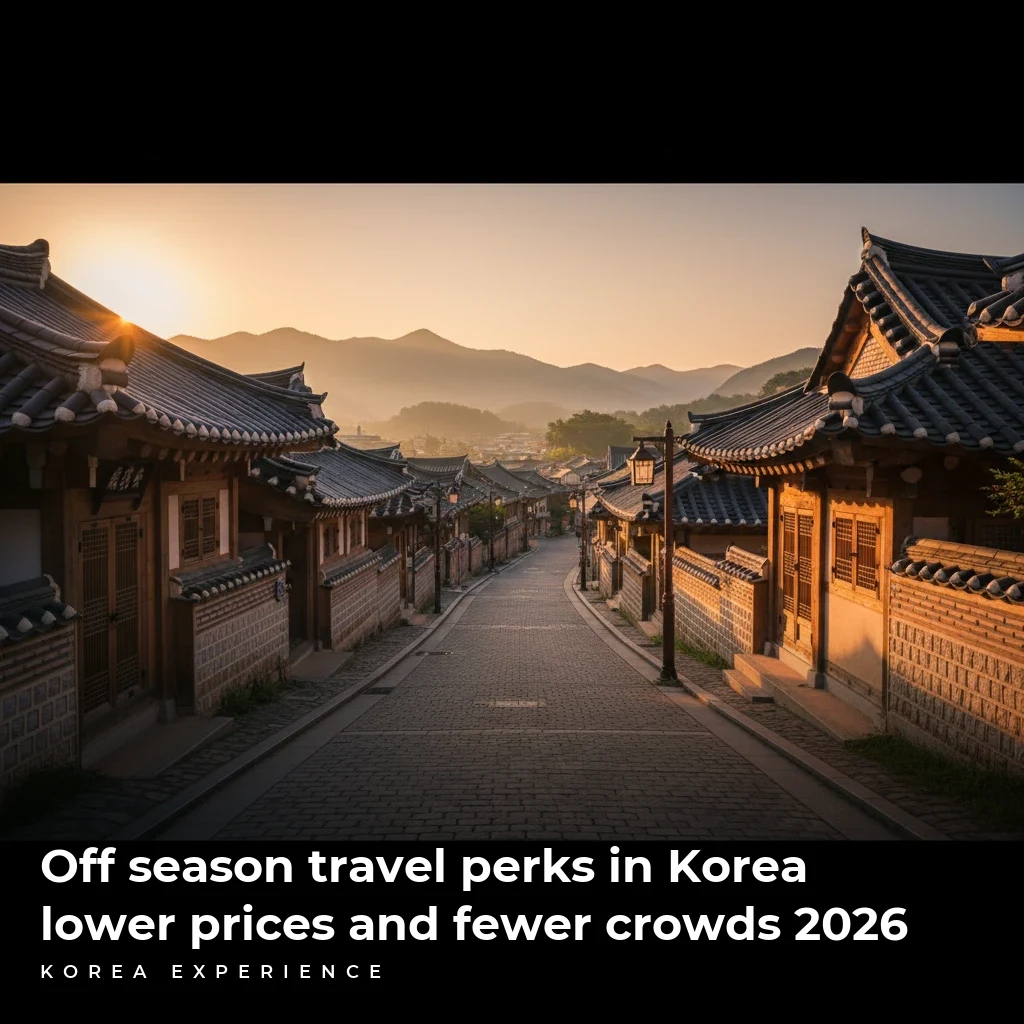
Traveling to Korea during the off-season offers significant financial advantages and a more intimate experience with local culture, primarily because demand drops sharply during the harsh winter (January-February) and humid summer (July-August) months. By visiting during these times, travelers can expect airfare prices to decrease by approximately 30-40%, accommodation rates to drop by up to 50%, and wait times at major attractions like Lotte World or famous cafes to vanish almost entirely. While the weather requires preparation—temperatures dropping to -10°C (14°F) in winter or humidity reaching 85% in summer—the trade-off provides access to luxury experiences and popular venues that are otherwise inaccessible due to crowds during the peak spring and autumn seasons.
The short answer: Visiting Korea in January/February or July/August saves you 30-50% on flights and hotels while eliminating 2+ hour queues at popular spots, provided you dress appropriately for extreme cold or humidity.
Key Takeaways
- 1Flights from North America/Europe often drop below $800 USD during Jan/Feb
- 2Luxury 5-star hotels in Gangnam can cost as little as ₩200,000 per night
- 3Famous waiting lines at 'London Bagel Museum' drop from 3 hours to 15 minutes
The Economics of Off-Season Travel
The most compelling reason to brave the elements is undoubtedly the cost. Korea has become a global hotspot, and with that popularity comes a surge in prices during the "Golden Weeks" of cherry blossoms (early April) and autumn foliage (late October). However, data from major travel aggregators in 2025 and projections for 2026 show a massive disparity in pricing between peak and off-peak seasons.
A standard round-trip economy flight from Los Angeles or London to Incheon International Airport (ICN) typically hovers around $1,400 to $1,600 USD during peak spring. In contrast, flights booked for mid-January or late August can be found for as low as $750 to $900 USD. That is an immediate saving of nearly $600 USD per person—enough to cover a week's worth of mid-range accommodation and food.
Accommodation follows a similar trend. A standard business hotel in Myeongdong that charges ₩250,000 per night in April will often drop its rate to ₩130,000 in February to maintain occupancy. For budget travelers, this opens up the possibility of upgrading their experience significantly without increasing their total spend.
💵 Peak vs. Off-Peak Price Comparison (2026 Estimates)
Flight + 7 Nights 4-Star Hotel
Flight + 7 Nights 4-Star Hotel
For those looking to stretch their budget further, check out our guide on how to see Seoul for $50 a day, which becomes infinitely easier when your base costs are slashed by half.
Winter Travel: The Cold Truth and Warm Perks
Winter in Korea, specifically January and February, is dry and bitterly cold, often influenced by Siberian winds. Temperatures frequently drop to -10°C (14°F) and can feel like -15°C (5°F) with wind chill. However, this season offers a clarity and quietness that you cannot find at any other time of year.
The "Empty Palace" Phenomenon
Visiting Gyeongbokgung Palace in April usually involves dodging hundreds of selfie sticks and tour groups. In January, you can walk through the expansive courtyards with almost no one around. The contrast of the vibrant red and green Dancheong (traditional coloring) against a layer of fresh white snow creates a visual aesthetic that is highly coveted by photographers. Furthermore, if you wear a Hanok (traditional dress), entry is free—and yes, winter Hanboks with fur linings and thermal layers are available for rent for around ₩25,000.
Pro Tip
When renting a Hanbok in winter, ask for the "Mink" (faux fur) vest and request permission to wear your own thermal leggings and heat-tech shirt underneath. It makes the -5°C temperature manageable for photos.
The Café Culture Refuge
Korea's café culture is legendary, but in peak season, popular spots in Seongsu-dong or Yeonnam-dong often have waiting lists via iPad kiosks that can stretch for 2 hours. In winter, these cafes become cozy refuges. Sitting by a window in a Hanok cafe in Ikseon-dong, sipping a ₩6,500 Black Sesame Latte while watching snow fall, is a quintessential Korean winter experience.
Winter Sales and Shopping
January is a prime month for clearance sales. Major department stores like Shinsegae and Lotte run "New Year Sales," and underground shopping malls in Gangnam and Goto Mall (Express Bus Terminal) clear out winter inventory at rock-bottom prices. You can find high-quality wool coats that usually retail for ₩200,000 selling for ₩50,000-₩70,000.
📋 Winter Travel Stats
Summer Travel: Humidity, Sales, and Nightlife
The other "off-season" is the height of summer, specifically the monsoon season (Jangma) in July and the heatwave of August. Humidity averages over 80%, and temperatures stay above 30°C (86°F) even at night. While sticky, this season transforms the city into a nocturnal playground.
The Indoor Ecosystem
Seoul is arguably the best-equipped city in the world for avoiding bad weather. The city boasts massive underground networks. You can travel from Coex Mall to the subway and into connected hotels without ever stepping outside. The COEX Mall, Lotte World Mall, and The Hyundai Seoul are not just shopping centers; they are entertainment complexes with aquariums, libraries, and art galleries.
Festivals and Nightlife
Summer is festival season. The Sinchon Water Gun Festival and the Boryeong Mud Festival (a day trip from Seoul) are massive draws. Furthermore, because it is too hot during the day, the city comes alive at night. The "Hangang Parks" are packed with locals enjoying Chimaek (Chicken and Beer) by the river after sunset when the temperature drops to a manageable 26°C. Delivery to the park is seamless, with a fried chicken set costing around ₩22,000.
If the heat gets too intense, you can retreat to one of the many air-conditioned havens featured in our guide to the best coffee shops in Seoul.
Summer Travel Analysis
- ✓Department store 'Grand Sales' (July)
- ✓Vibrant nightlife and river parks
- ✓Lush green landscapes for hiking
- ✗Intense humidity (80%+)
- ✗Heavy monsoon rains (Jangma)
- ✗Mosquitoes are active
Medical Tourism: The Hidden Off-Season Driver
Interestingly, the off-season is the peak season for a specific type of traveler: the medical tourist. Winter is widely considered the best time for dermatological treatments and plastic surgery in Korea. The cold weather reduces swelling and the risk of infection compared to the humid summer, and wearing masks, scarves, or hats to cover bandages is socially acceptable and provides warmth.
Clinics in Gangnam often offer "Winter Special" packages where treatments like laser toning or Ulthera are bundled at a 20% discount. A standard Fraxel laser treatment might cost ₩150,000 in winter compared to ₩200,000 in peak season. If you are considering treatments, read our guide to the best skin clinics in Gangnam to plan your recovery during the cozy winter months.
"January is our busiest month for domestic patients but often quieter for international ones. Foreign visitors who book in late January often get the most attentive care because the university student rush has ended."
Navigating the "No Queue" Life
The time saved during the off-season is arguably more valuable than the money saved. Time is the one non-renewable resource on a trip.
Theme Parks
Lotte World and Everland are notorious for 120-minute wait times for popular rides like the T-Express or Atlantis. In mid-January or late August (on weekdays), these wait times can drop to 15-20 minutes. While outdoor rides at Lotte World may close in extreme weather, the massive indoor section remains fully operational.
Dining Without Reservations
In 2026, dining in Seoul is competitive. Apps like CatchTable are essential for booking hot spots. However, during the off-season, walk-ins become possible at places that are usually booked out months in advance. A Michelin-guide Bib Gourmand restaurant in Mapo-gu that usually requires a 2-hour wait might seat you immediately on a Tuesday in February.
📊 Wait Time Reductions (Off-Peak)
Strategic Itineraries: Embracing the Dualism
To truly maximize off-season travel, you must embrace the concept of "Dualism"—mixing high-end indoor comfort with brief, authentic outdoor bursts.
Here is a curated route for a winter day in Seongsu-dong, often called the "Brooklyn of Seoul," designed to minimize cold exposure while maximizing experience.
Winter Day in Seongsu: Warmth & Industry
The Dualism Concept: Experience the best of both worlds — premium luxury moments paired with authentic budget-friendly experiences in one route.
Dior Seongsu
View architecture & shop indoors
Somunnan Gamjatang
Famous spicy pork bone soup to warm up
Visit Dior for the photo op, then immediately retreat to the steaming hot soup restaurant nearby which usually has a long line in spring but moves fast in winter.
Preparing for the Extremes
Traveling off-season requires better gear. You cannot "wing it" with a light jacket in January or heavy denim in August.
Winter Survival Kit
- Long Padding: The ubiquitous knee-length puffer coat. You can buy a decent one at Spao or Top Ten for ₩50,000-₩70,000.
- Heat Tech: Uniqlo or Korean brands like SPAO sell excellent thermal innerwear.
- Hot Packs (K-Hot Packs): Available at any convenience store (CU, GS25) for ₩1,000. These shake-to-activate heat packs last 12 hours and are a lifesaver for your hands.
Summer Survival Kit
- Handheld Fan: Essential. Every Korean has one. Buy one at ArtBox for ₩15,000.
- Cooling Sheets: Wipes that leave a menthol cooling sensation on your skin.
- Rain Boots: Monsoon rains are torrential. Fashionable rain boots are normal footwear in July.
📖 How to Pack for Korean Winter
Step 1: Layering Base
Pack 3-4 sets of thermal tops and leggings.
Step 2: Footwear
Bring waterproof boots. Seoul streets get slushy.
Step 3: The Outer Layer
Buy a 'Long Padding' coat upon arrival if you don't own one.
Getting Around: Transportation Hacks
The cold or heat makes walking long distances less appealing. Fortunately, Korean taxis are affordable compared to Tokyo or London. A 15-minute taxi ride in Seoul costs approximately ₩10,000-₩12,000. KakaoT is the essential app for hailing rides.
However, be warned: in heavy rain or snow, taxis become scarce. The subway is your most reliable friend. The heated seats in winter (yes, the cloth seats are heated) are a small luxury that visitors instantly fall in love with. Conversely, in summer, the air conditioning on the subway is incredibly strong—sometimes too strong, so carrying a light cardigan is advisable even in August.
For a deeper dive into transportation options, check our guide on the airport limousine bus vs AREX express train to start your trip smoothly regardless of the weather.
Accommodation: Where to Stay
In the off-season, your choice of accommodation location matters more. In winter, you want to be connected to the underground system. Hotels near Seoul Station, Gangnam Station, or Dongdaemun History & Culture Park often allow you to access the subway without stepping outside.
In summer, staying near Hongdae or Itaewon is preferable as the nightlife is walkable, and you won't be reliant on taxis that might be hard to catch during a downpour.
L7 Hongdae(L7 홍대)
The Food Factor: Seasonal Specialties
Korean cuisine is highly seasonal. Visiting in the off-season unlocks menus that spring travelers never see.
Winter Eats:
- Bungeoppang: Fish-shaped pastry filled with red bean or custard. Sold on street corners for ₩1,000 for 2-3 pieces.
- Hotteok: Sweet pancakes with brown sugar and nuts. Best eaten piping hot when it's freezing outside.
- Roasted Sweet Potatoes/Chestnuts: Sold at subway entrances.
Summer Eats:
- Naengmyeon: Cold buckwheat noodles in icy broth. The ultimate heat buster. Prices range from ₩10,000 to ₩16,000 at famous spots like Woo Lae Oak.
- Bingsu: Shaved ice dessert. While available year-round, the seasonal melon or peach bingsu in July is superior.
- Samgyetang: Ginseng chicken soup. Paradoxically eaten on the hottest days of the year (Sambok) to "fight heat with heat."
For a complete list of what to eat, refer to our 50 must-try Korean foods guide.
Comparison: Winter vs. Summer Off-Season
If you are undecided between the two off-peak options, here is a direct comparison to help you choose based on your preferences.
Off-Season Showdown: Winter vs. Summer
| Feature | Winter (Jan-Feb) | Summer (Jul-Aug) |
|---|---|---|
| Flight Cost | Lowest ($700-$900) | Low ($800-$1000) |
| Walking Comfort | Difficult (Ice/Wind) | Difficult (Sweat/Rain) |
| Shopping | Best (Coat Sales) | Good (Summer Sales) |
| Photography | Clean/Crisp/Snow | Hazy/Green/Lush |
| Air Quality | Variable (Yellow Dust) | Generally Good (Rain clears air) |
Conclusion
Traveling to Korea in the off-season is not for the faint-hearted, but it is certainly for the smart traveler. The discomfort of the cold or the humidity is a price you pay, but the return on investment is massive: flights that don't break the bank, hotels that offer luxury for less, and the rare privilege of seeing Seoul without the crushing weight of over-tourism.
Whether you choose the crisp, silent beauty of a snowy palace in January or the vibrant, rainy neon nights of July, the off-season reveals a side of Korea that is authentic, accessible, and affordable. Just remember to pack that long padding or handheld fan—you will need it.
❓ Frequently Asked Questions
Have more questions?Contact us →
About the Author
Korea Experience Team
Written by the Korea Experience editorial team - experts in Korean medical tourism, travel, and culture with years of research and firsthand experience.
Explore more in Travel & Tourism
From Seoul's neon-lit streets to Jeju's volcanic landscapes — discover the best of Korea with insider travel tips, itineraries, and seasonal guides.
Browse All Travel & Tourism ArticlesContinue Reading
Explore more articles you might find interesting
Discover the top pet friendly travel hotels and parks for dogs in Korea. Includes 2026 prices, entry fees, and amenities for your furry friend.
Discover top night markets in Seoul, Busan, and Jeonju. We compare food prices (₩3,000-15,000), opening hours, and must-try dishes for your 2026 trip.
Discover Korea's pet-friendly scene for 2026. From KTX rules (under 10kg) to 5-star dog hotels costing ₩400,000/night. Complete guide for traveling with pets.
Discover the best mountain temple stays in Korea for 2026. From ₩50,000 retreats to martial arts training, here is your complete guide to finding inner peace.
Capture stunning sunsets in Seoul with our 2026 guide. Discover top locations like Namsan and Banpo Bridge, plus timing tips for the perfect shot.
Can foreigners rent big bikes in Korea? A complete guide to licenses, the highway ban, costs (starting ₩50,000/day), and top routes for 2026.