Post surgery recovery meals best delivery options for healing in Seoul
Discover the best delivery apps and healing foods for post-surgery recovery in Seoul. From pumpkin juice to premium porridge, here is your 2026 guide.

Finding nutritious, soft, and healing food while recovering from surgery in a foreign country can be the most stressful part of the medical tourism journey. In Seoul, the most efficient way to secure post-surgery recovery meals in 2026 is through the "Big Two" delivery applications: Baedal Minjok (Baemin) and Coupang Eats. While Baemin offers the widest variety of local vendors (over 200,000 listings in Seoul), Coupang Eats provides a superior English-friendly interface and real-time GPS tracking. For patients unable to navigate apps, specialized concierge services and hotel room service remain viable, albeit more expensive, alternatives.
The short answer: For non-Korean speakers in 2026, Coupang Eats is the safest delivery option due to its English support and ability to accept international Visa/Mastercards, while "Bonjuk" (premium porridge) remains the gold standard menu choice for recovery.
Key Takeaways
- 1Coupang Eats is the most English-friendly delivery app for international patients in 2026
- 2Pumpkin juice (Hobak-jeup) is the #1 recommended item for reducing post-surgical swelling
- 3Bonjuk is the most reliable nationwide chain for soft recovery foods like abalone porridge
- 4Most deliveries in Gangnam arrive within 20-30 minutes of ordering
Medical Disclaimer
The dietary information provided in this guide is for educational purposes only. Always follow the specific dietary restrictions and instructions provided by your surgeon. Some herbal ingredients in Korean foods may interact with specific medications.
Why Delivery Culture is Vital for Medical Tourists in Seoul
Korea's delivery infrastructure is arguably the most advanced in the world, often referred to as "Baedal" culture. For a medical tourist recovering from rhinoplasty, liposuction, or facial contouring, leaving the hotel or Airbnb is often physically uncomfortable or medically inadvisable during the first 72 hours.
In 2026, the delivery ecosystem in Seoul has evolved to accommodate the influx of international patients. The average delivery time in the Gangnam district—where 70% of plastic surgery clinics are located—is approximately 24 minutes. This speed ensures that hot foods like porridge (Juk) arrive at the optimal temperature for consumption. Furthermore, the "Contactless Delivery" option, popularized in the early 2020s, is now the standard default setting, allowing patients to receive food at their doorstep without needing to interact face-to-face with drivers while wearing bandages or compression garments.
📊 Seoul Delivery Market 2026
Top Delivery Apps for Foreigners: A 2026 Comparison
Navigating Korean apps can be daunting due to language barriers and complex identity verification systems. However, the landscape has improved significantly. Here is how the major players stack up for a short-term visitor without an Alien Registration Card (ARC).
Coupang Eats: The Traveler's Choice
Coupang Eats is widely considered the best option for tourists in 2026. Unlike its competitors, it offers a substantial portion of its interface in English (if your phone's system language is English). It accepts international credit cards more reliably than other platforms.
- Average Delivery Fee: ₩2,000 to ₩4,000 ($1.50 - $3.00 USD).
- Speed: Extremely fast; "Cheetah Delivery" often arrives in under 20 minutes.
- Tracking: Real-time GPS tracking of the driver, similar to Uber Eats.
Baedal Minjok (Baemin): The Local Giant
Baemin holds the largest market share. While the UI is predominantly Korean, the sheer volume of restaurants is unmatched. If you want specific healthy juices or niche dietary meals, you will find them here.
- Listings: Over 300,000 restaurants nationwide.
- Payment: Can be difficult with foreign cards; often requires selecting "Meet and Pay" (paying the driver directly) if you don't have a Korean bank account.
- Tip: Use the image translation feature on Google Translate or Papago to navigate the menus.
Shuttle Delivery: The Fully English Option
Shuttle is a service specifically designed for the expat community. Everything is in perfect English, and their customer service speaks English.
- Coverage: Limited mostly to Seoul (Itaewon, Gangnam, Hongdae) and Pyeongtaek.
- Cost: Slightly higher menu prices and delivery fees (starting at ₩5,000).
- Reliability: 100% success rate with foreign cards.
Delivery App Comparison for Tourists
| Feature | Coupang Eats | Baemin | Shuttle |
|---|---|---|---|
| English Interface | Partial (Good) | None | Full Native |
| Intl. Card Acceptance | High | Low | 100% |
| Restaurant Variety | High | Very High | Medium |
| Avg Delivery Fee | ₩3,000 | ₩3,000 | ₩5,000+ |
The "Holy Trinity" of Recovery Foods in Korea
When ordering delivery for recovery, you aren't just looking for "food"; you are looking for healing. Korean culture has specific foods dedicated to post-illness recovery. To make the most of your recovery, understanding these three categories is essential.
1. Juk (Traditional Korean Porridge)
Juk is the cornerstone of Korean patient food. It is rice slow-cooked with water or stock until it breaks down into a smooth, easily digestible texture. It is ideal for patients who cannot chew heavily due to jaw or facial surgery.
- Abalone Porridge (Jeonbok-juk): Rich in protein and minerals, considered a stamina food. Average price: ₩12,000.
- Pumpkin Porridge (Hobak-juk): Sweet and smooth, excellent for reducing swelling. Average price: ₩9,000.
- Beef and Vegetable Porridge (Sogogi-yachae-juk): A balanced meal with iron and vitamins. Average price: ₩10,000.
Ordering Tip
When ordering Juk via apps, you can often customize the consistency. Look for options like "Grind completely" (Gal-a-juseyo) if you are on a liquid-only diet post-jaw surgery.
2. Pumpkin Juice (Hobak-jeup)
If you walk into any pharmacy in Gangnam, you will see boxes of pumpkin juice. It is famously used to reduce post-surgical swelling (edema). It is not a "juice" in the Western sense but a medicinal extract.
- Taste: Earthy, slightly sweet, distinct.
- How to buy: You can order boxes of 30 pouches via "B-Mart" (Baemin's grocery service) or Coupang Fresh for roughly ₩25,000 ($19 USD).
- Usage: Most patients drink 2-3 pouches daily.
For more insights on traditional dietary approaches, check our guide on best Korean healing foods for surgery recovery.
3. Samgyetang (Ginseng Chicken Soup)
For those in the later stages of recovery who need protein, Samgyetang is a whole young chicken stuffed with glutinous rice, ginseng, garlic, and jujube. The meat is boiled until it falls off the bone, requiring almost no chewing.
- Nutritional Value: High protein, collagen-rich broth.
- Average Price: 16,000 - ₩20,000 per serving.
Best Restaurant Chains to Search For
Instead of gambling on unknown restaurants, stick to these established chains that guarantee hygiene and consistency. You can type these English names or their Korean counterparts into the delivery apps.
Bonjuk (본죽)
The Starbucks of porridge in Korea. There is one on almost every block in Seoul.
- Why it's great: Consistent quality, hygienic packaging, and customizable salt/grind levels.
- Must-try: Premium Abalone Porridge (Teuk-Jeonbok-juk) with 2x abalone.
- Price Range: ₩10,000 - ₩24,000.
Bonjuk & Bibimbap Cafe (Gangnam Station)(본죽&비빔밥 cafe 강남역점)
Parish Baguette & Tous Les Jours
While these are bakeries, they offer excellent soup and salad options for light recovery meals.
- Menu Items: Mushroom soup, sweet pumpkin soup, soft milk bread (shokupan).
- Accessibility: Extremely high; available on all apps.
- Price Range: Soups cost roughly 4,000 - ₩6,000.
Sul-bing (For Cooling)
If your doctor recommends cold foods to reduce swelling or soothe the throat (common after tonsil or throat procedures), Sul-bing offers finely shaved milk ice.
- Recommendation: Injeolmi (Soybean powder) Sulbing or Melon Sulbing.
- Warning: Avoid the chewy rice cakes (mochi) if you have chewing restrictions.
Step-by-Step Guide: How to Order on Coupang Eats
For a foreigner arriving in 2026, setting up Coupang Eats is the highest leverage activity for food security. Here is the exact workflow.
📖 Ordering Delivery as a Tourist
Step 1: Download & Register
Download 'Coupang Eats' from the App Store. Log in using your email. You do NOT need a Korean phone number for the basic account, but having one helps with driver communication.
Step 2: Set Your Address
Use the map pin feature. It is more accurate than typing. Double-check your hotel name. Add your Room Number in the 'Details' field (e.g., Room 1204).
Step 3: Select 'Contactless'
Check the box that says 'Leave at door' (Moon-ap). This prevents the driver from ringing the bell and disturbing your rest.
Step 4: Payment
Add your international Visa or Mastercard. If it fails, try a different card. Wise and Revolut cards have high success rates in 2026.
Grocery Delivery: Stocking Up Without Leaving Your Room
Sometimes you don't need a full meal; you need water, yogurt, protein shakes, or fresh fruit. In 2026, "Quick Commerce" (Q-Commerce) allows you to get groceries delivered in under an hour.
B-Mart (via Baemin App)
B-Mart is a dark-store grocery service. It is incredibly fast (often 30-45 minutes).
- Best for: 2L Water bottles (crucial for hydration), Greek yogurt, bananas, soft tofu, and instant porridge pouches.
- Minimum Order: Usually ₩10,000.
- Delivery Fee: Free for orders over ₩30,000; otherwise ~₩3,000.
Convenience Store Delivery (CU, GS25)
Both Coupang Eats and Baemin allow you to order from local convenience stores.
- Inventory: Ice cups, electrolyte drinks (Pocari Sweat), simple refined carbohydrates like Castella cake.
- Cost: Slightly marked up compared to in-store prices, plus delivery fee.
For a curated list of what to buy, read our guide on best Korean convenience store food must try items 2026.
Overcoming the Payment Barrier
The single biggest hurdle for international visitors is payment. Korean online payment gateways often require identity verification tied to a Korean phone number and ARC.
If your international card keeps getting declined on the apps, choose the 'Meet and Pay' (Mannaseo Gyeolje) option on Baemin. You can pay the driver directly with cash or your physical card at the door. However, this negates the contactless benefit. Another trick is using the 'Shuttle' app, which processes payments via PayPal or Stripe, bypassing local Korean gateways entirely.
Premium Concierge Services vs. DIY Apps
Is it worth paying for a premium service? Some agencies specialize in delivering "Recovery Care Packages" to hotels.
💵 Delivery vs Concierge Cost
Custom low-sodium meals delivered to room + check-in
Standard restaurant prices + ₩3,000 delivery fee
DIY Delivery Apps vs Hotel Room Service
- ✓Huge variety of healing foods
- ✓Significantly cheaper (60-70% less)
- ✓Can order bulk items like water/juice
- ✗Payment glitches with foreign cards
- ✗Address entry can be tricky
- ✗Must handle your own trash disposal
Important: Managing Delivery Trash
Korea has extremely strict recycling laws. In 2026, this is enforced rigorously. When you order delivery, you will be left with plastic containers, food waste, and wrappers.
- Food Waste: Must be separated from plastic. Do not throw leftover porridge in the regular bin. In a hotel, you can usually leave sealed food waste in the designated bin or bag provided by housekeeping.
- Plastics: Rinse them out. If they are stained red with kimchi or sauce, they technically count as general waste in some districts, but rinsing is polite and prevents smells.
- Hotel Etiquette: Do not leave a mountain of delivery boxes in the hallway. Call housekeeping to request a large trash bag or ask where to deposit delivery waste.
Specific Menu Recommendations for Different Surgeries
Different procedures require different nutritional strategies. Based on 2026 medical tourism trends, here are tailored recommendations.
Rhinoplasty (Nose Job)
- Challenge: Breathing through the mouth leads to a dry throat. Chewing is fine, but vigorous chewing can vibrate the nasal area.
- Order: Naeng-myeon (Cold noodles) cut into small pieces, or cool Kong-guksu (Soy milk noodles). The cold temperature helps reduce swelling. Avoid spicy foods (Kimchi stew) that cause a runny nose.
Facial Contouring / Jaw Surgery
- Challenge: Cannot chew. Liquid diet is mandatory for the first week.
- Order: New Care (medical nutritional drink found in pharmacies/B-Mart), Pumpkin Juice, or completely blended Juk (ask for "Mieum" - thin rice gruel).
- Avoid: Anything with chunks, straws (suction can cause bleeding).
Liposuction / Body Contouring
- Challenge: Mobility is limited; high protein is needed for tissue repair. Iron levels may be low.
- Order: Seolleongtang (Ox bone soup). It is rich in calcium and minerals. Add extra meat but skip the salt to prevent water retention. Bossam (Steam pork) is also good if you select lean cuts, as it is not fried.
For more details on navigating clinics and recovery, see our article on best plastic surgery clinics for foreigners in seoul.
Understanding the "Service" (Seobisu) Culture
In Korea, restaurants often include free items called "Seobisu" (Service). If you find a small drink, a side dish, or a fried dumpling you didn't order, do not panic—it is a gift.
- Common Service Items: A small can of cola, pickled radish, yakult (yogurt drink).
- Why it matters: It is a sign of hospitality. For recovery patients, the pickled sides (Banchan) can be high in sodium, so consume them sparingly if swelling is a concern.
Emergency Contacts & Late Night Options
Recovery pain often spikes at night. Seoul is a 24-hour city, and delivery reflects that.
- Late Night Ordering: Most fried chicken and bossam (pork) places are open until 2:00 AM or later.
- Porridge: Usually closes around 9:00 PM or 10:00 PM. Plan ahead and order your evening porridge in the afternoon. Bonjuk typically closes by 9:00 PM.
- 24/7 Options: Lotteria (burgers), McDonald's, and some kimbap shops (Pomato, Gimbap Cheonguk) operate 24 hours and are available on apps.
Emergency Numbers
If you experience excessive bleeding, fever over 38°C, or severe pain that medication cannot control, contact your clinic immediately. If it is after hours and life-threatening, call 119 (Ambulance - English services available).
FAQ: Common Questions About Recovery Food Delivery
❓ Frequently Asked Questions
Have more questions?Contact us →
Conclusion
Recovering in Seoul in 2026 is more comfortable than ever thanks to the sophisticated delivery ecosystem. By utilizing Coupang Eats for its English capabilities and targeting healing foods like Bonjuk's abalone porridge and pumpkin juice, you can ensure your body gets the nutrition it needs without the stress of navigating the city.
Remember, the key to a smooth recovery is preparation. Download the apps, set up your payment methods, and bookmark your favorite porridge spots before your surgery date.
For more tips on managing your finances during your medical trip, check out our guide to credit cards in korea which banks accept foreigners. Rest well, eat well, and let Seoul's "Baedal" culture take care of you.
About the Author
Korea Experience Team
Written by the Korea Experience editorial team - experts in Korean medical tourism, travel, and culture with years of research and firsthand experience.
⚠️ Medical Disclaimer
The information provided on this website is for general informational purposes only and does not constitute medical advice. Always consult with qualified healthcare professionals before making any medical decisions.
Explore more in Medical Tourism
World-class medical procedures at competitive prices. From plastic surgery and dermatology to dental care and health checkups — your complete guide to medical tourism in Korea.
Browse All Medical Tourism ArticlesContinue Reading
Explore more articles you might find interesting
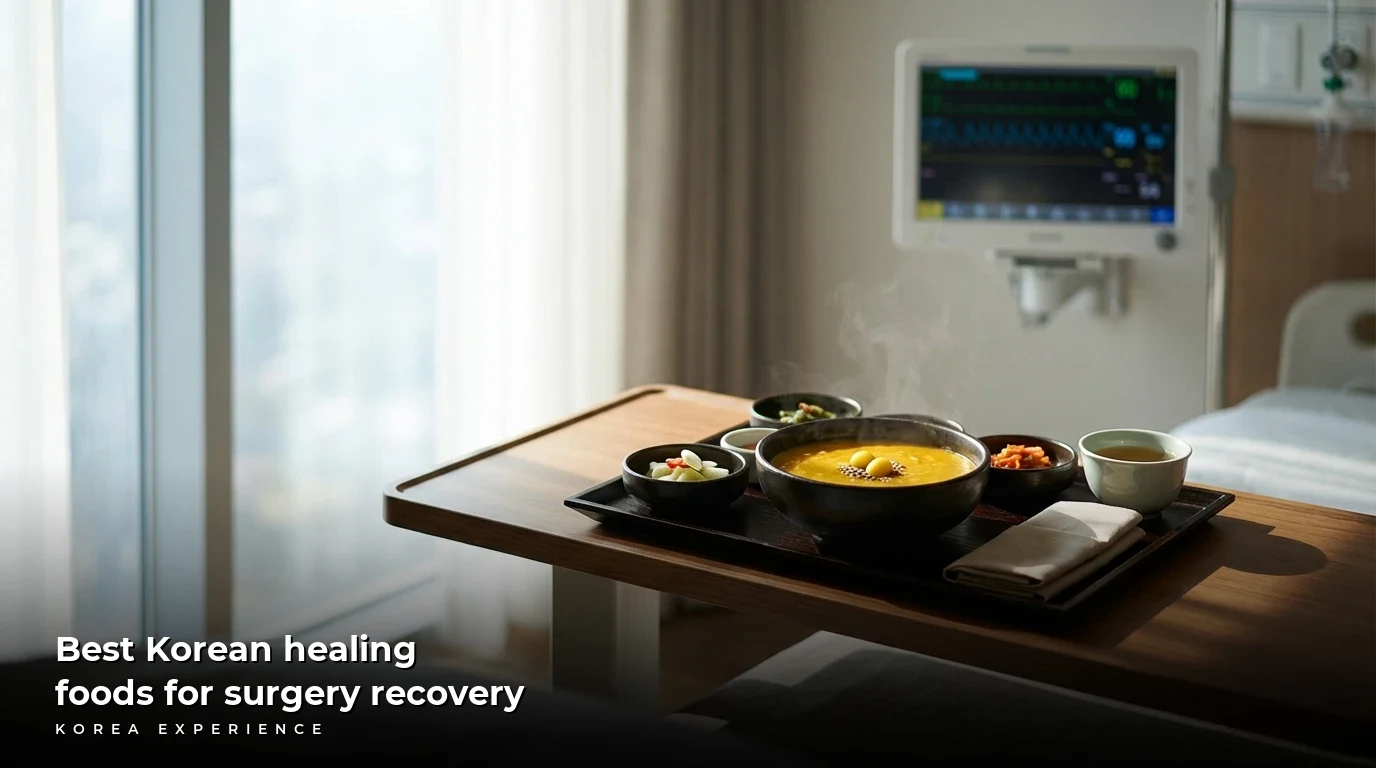
Discover the top Korean recovery foods for medical tourists. From pumpkin porridge for deswelling to abalone for stamina, including prices and locations.
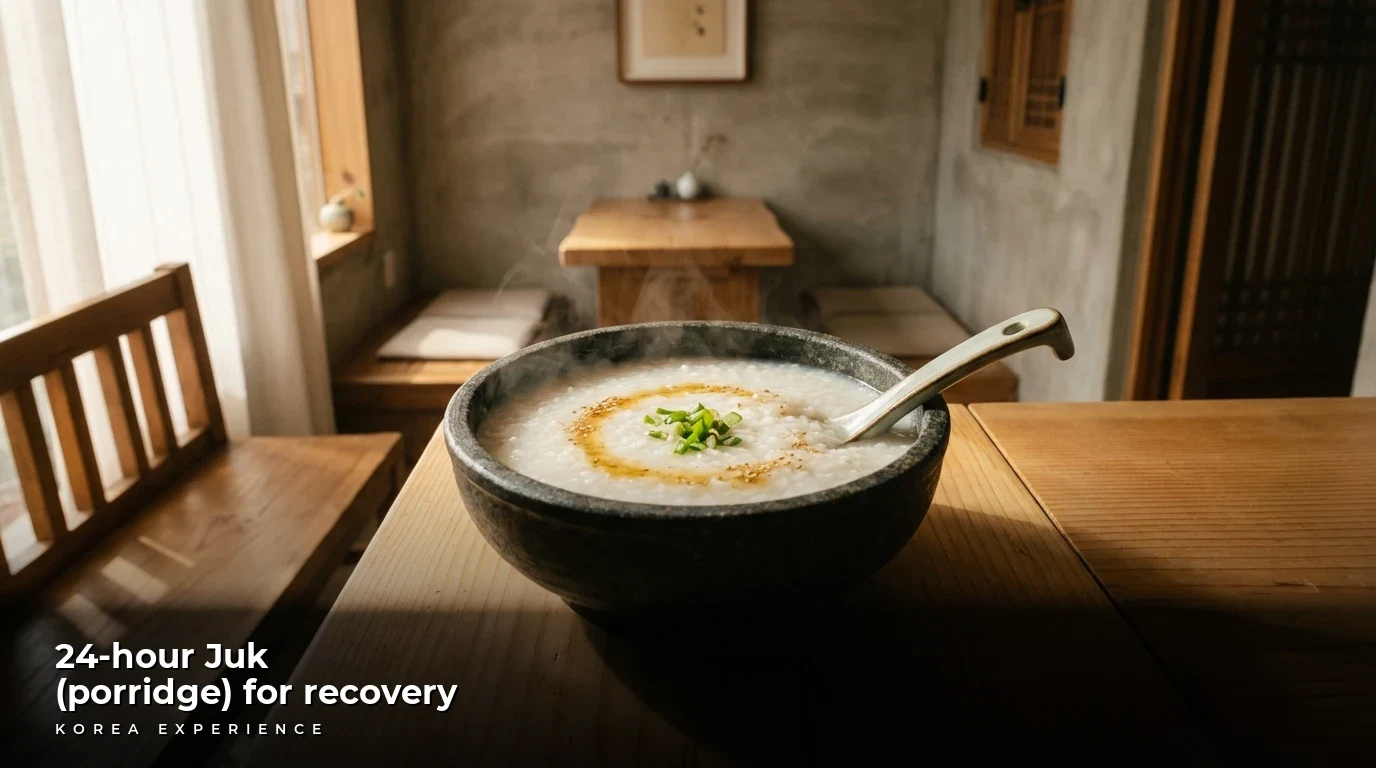
Bonjuk closes at 9 PM but 50,000 convenience stores offer premium 4,500 KRW abalone porridge for 3 AM hangovers and surgery recovery in Seoul.
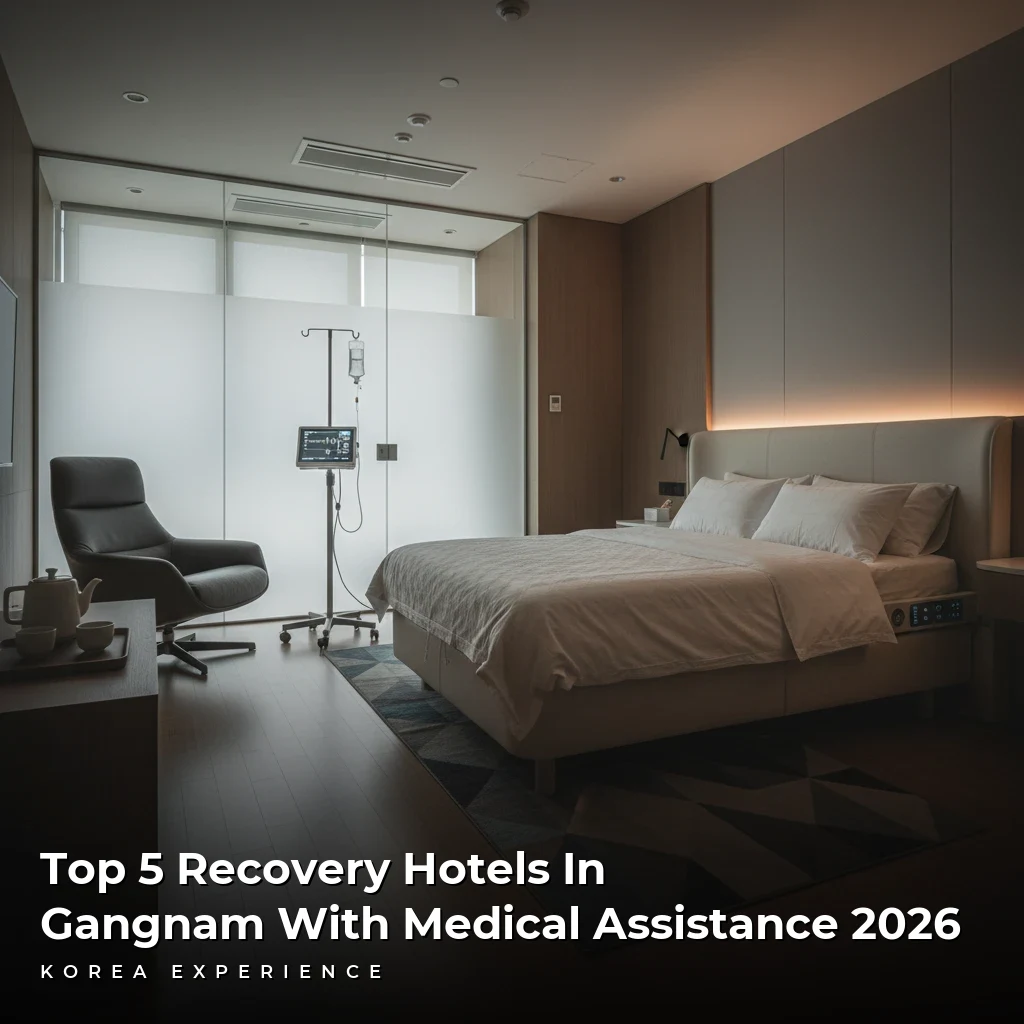
Discover the safest recovery hotels in Gangnam for post-surgery care, featuring adjustable beds, 24/7 concierge, and clinic proximity for 2026 travelers.
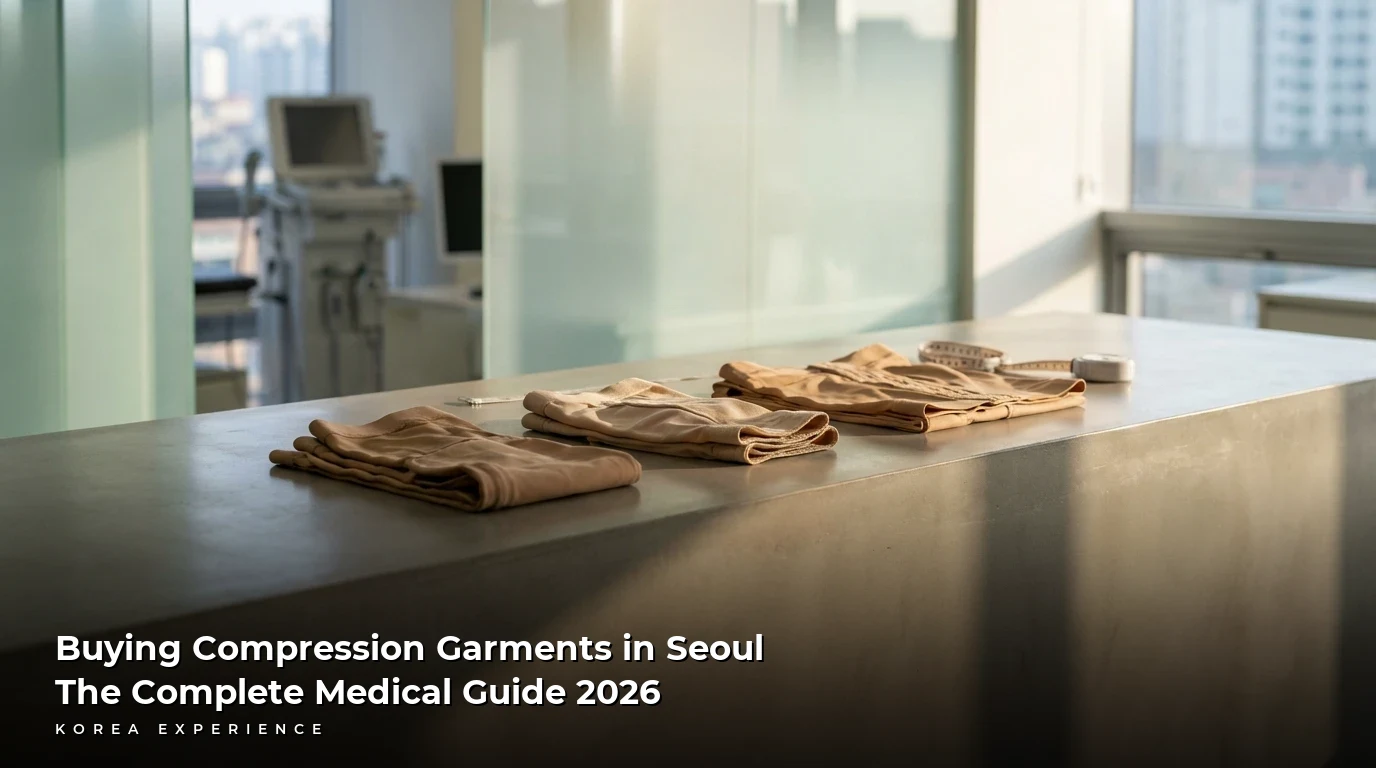
Find the best medical compression garments in Seoul for post-surgery recovery. Detailed guide on locations, prices, and sizing in Gangnam and beyond.
Compare Airbnb and recovery hotels for medical tourism in Korea. Discover costs, safety features, and amenities for your post-surgery stay.

Discover the top hotels with beauty services spa and salon in Seoul. From Gangnam luxury to medical recovery stays, here is your complete 2026 guide.