Seoul cafe culture best coffee shops and dessert cafes 2026
Discover the ultimate guide to Seoul cafe culture in 2026, featuring top coffee shops, trending dessert spots, and local insights for travelers.
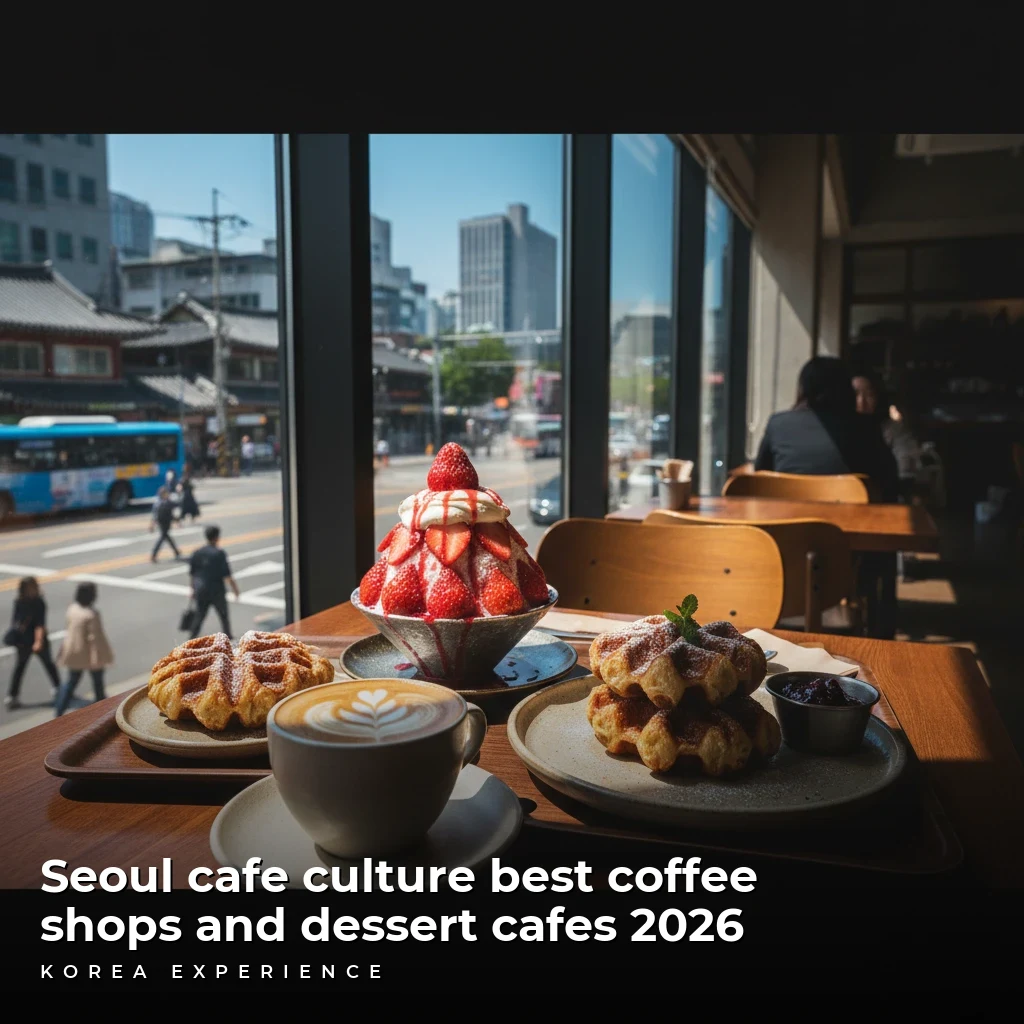
Seoul is not merely a city that drinks coffee; it is a metropolis that lives and breathes cafe culture. By 2026, the South Korean capital has solidified its reputation as the global epicenter of specialty coffee and aesthetic interiors, boasting over 18,000 cafes within the city limits alone. For international travelers, navigating this caffeinated landscape offers a window into the soul of modern Korea, where a cup of coffee is rarely just a beverage—it is a ticket to a carefully curated spatial experience.
Whether you are seeking the precision of a champion barista's pour-over, the architectural grandeur of a renovated factory, or the viral appeal of a hyper-realistic dessert, Seoul delivers with intensity. The market has evolved significantly over the last two years, moving away from purely "Instagrammable" spots to venues that prioritize substance, sustainability, and technological integration.
Related reading: Best dessert cafes in Seoul 2026 beyond Bingsu.
Key Takeaways
- 1The 2026 trend focuses on 'Space Marketing,' where cafes function as art galleries and cultural hubs.
- 2Seongsu-dong and Hannam-dong remain the top districts for premium cafe hopping experiences.
- 3The 'One Drink Per Person' rule is strictly enforced in 95% of Seoul cafes.
The Evolution of Seoul's Cafe Scene: 2026 Trends
The cafe landscape in Seoul has undergone a sophisticated transformation. While the aesthetic minimalism of the early 2020s remains popular, the current zeitgeist is defined by "Mega-Cafes" and "Micro-Roasteries." Data from the Korea Coffee Association indicates that the average cafe size in major districts has increased by 40% since 2023, while the number of independent roasters has doubled.
For more details, check out our guide on Best Korean Desserts 2026 Guide Bingsu Hotteok and Cafes.
Travelers arriving in 2026 will notice that sustainability is no longer optional. Following strict government regulations implemented in late 2025, single-use plastic cups are banned for dine-in customers, with a deposit system (usually 300 to ₩500) in place for takeout vessels.
Learn more in our comprehensive guide to Daegu Makchang guide the ultimate grilled intestines expe....
📊 Seoul Coffee Consumption 2026
The price of a standard Americano in premium districts now averages ₩6,000 (approx. $4.50 USD), reflecting a 15% increase over the last three years due to rising green bean costs and labor wages. However, the quality consistency remains remarkably high, with even budget chains utilizing high-grade Arabica blends.
For more details, check out our guide on Gangneung Coffee Street Artisan Roasters Guide.
Seongsu-dong: The Brooklyn of Seoul
Seongsu-dong continues to reign as the undisputed king of cafe culture. Once a gritty district of shoe factories and auto repair shops, it is now a sprawling canvas of industrial-chic architecture. Located just 2.5 kilometers east of the Han River, this neighborhood requires sturdy walking shoes, as the best spots are often spread out across a 1.5-square-kilometer area.
In 2026, the trend in Seongsu is "narrative spaces." Cafes here don't just serve drinks; they tell stories through immersive art installations. The average wait time for the most popular venues on weekends can range from 20 to 45 minutes, so arriving before 11:00 AM is highly recommended.
Nudake Seongsu Domain(Nudake)
Walking the Cafe Street
From Seongsu Station Exit 3, a 500-meter walk leads you to the heart of the cafe street. Here, renovated warehouses feature ceilings exceeding 5 meters in height, creating an airy atmosphere that contrasts with the dense city outside. Prices in this district are generally 10-15% higher than the Seoul average, with signature lattes costing around 7,500 to ₩9,000.
Pro Tip: The Pop-Up Culture
Seongsu is the pop-up capital of Korea. In 2026, many cafes collaborate with luxury fashion brands or K-pop idols for limited-time events. Check Instagram hashtags like #SeongsuCafe before visiting to catch these exclusive 2-week events.
Hannam-dong & Itaewon: Luxury and Diversity
Moving to the hills north of the Han River, Hannam-dong offers a stark contrast to Seongsu. This is the Beverly Hills of Seoul, where cafes are sleek, modern, and often tucked into the alleyways surrounding luxury boutiques. The terrain here is steep; expect to conquer inclines of 15 to 20 degrees as you navigate between shops.
The coffee culture in Hannam caters to a refined palate. You are more likely to find Geisha varietals and experimental fermentation processing methods here. A pour-over coffee in Hannam-dong can easily reach ₩15,000 ($11 USD), but the experience often includes tableside service and detailed flavor notes provided by English-speaking baristas.
💵 Coffee Price Comparison by District (2026)
Average Signature Latte
Average Signature Latte
The Anthracite Coffee Experience
One cannot discuss Hannam without mentioning the enduring legacy of Anthracite Coffee. Their Hannam branch, utilizing a multi-story building with a massive glass façade, allows natural light to flood the space. It is a favorite for digital nomads, though finding a seat with a power outlet can be challenging after 1:00 PM. The roastery processes over 500 kilograms of beans weekly to supply their branches, ensuring maximum freshness.
"In Hannam-dong, don't just look at the main street. The best specialty coffee bars are often located on the second floor or basement levels of residential buildings. Look for small signage standing on the street level. These 'hidden' spots usually offer a much quieter atmosphere and higher quality beans than the street-level chains."
The Rise of The "Dessert Omakase"
By 2026, the boundary between fine dining and cafes has blurred. The "Dessert Omakase" (chef's choice course) has become a massive trend. These reservations must often be made 2 weeks in advance via apps like CatchTable or Naver Booking. A typical 3-course dessert pairing with tea or coffee costs between 35,000 and ₩50,000 per person and lasts approximately 90 minutes.
Traditional Meets Modern: Yakgwa and Bingsu
While French pastries held the crown in the early 2020s, 2026 sees a resurgence of "K-Desserts." Yakgwa (honey cookies) and variations of Bingsu (shaved ice) have been reinvented. The modern Bingsu is less about size and more about premium ingredients—think Jeju matcha, Shine Muscat grapes, or apple mangoes. A premium Apple Mango Bingsu at a hotel cafe or specialty shop now averages 65,000 to ₩90,000, intended to be shared by 2-3 people.
📋 Dessert Market Snapshot
Yeonnam-dong: The Aesthetic Maze
Adjacent to the bustling Hongdae area lies Yeonnam-dong, characterized by its "Gyeongui Line Forest Park." This linear park stretches 6.3 kilometers, and the cafes lining it offer a greener, more relaxed vibe. This area is particularly popular with the 20-something demographic and couples.
Yeonnam-dong is famous for "Concept Cafes." Whether it is a cafe designed to look like a 2D comic book, a Harry Potter-themed cottage, or a space entirely pink, visual novelty drives the foot traffic here. Most cafes in this area are smaller, averaging 40 to 60 square meters, creating an intimate but sometimes cramped environment during peak hours (2:00 PM - 5:00 PM).
Yeonnam-dong Cafe Scene
- ✓Highly walkable along the park
- ✓Unique thematic concepts
- ✓Generally lower prices than Gangnam
- ✗Very crowded on weekends
- ✗Small spaces (limited seating)
- ✗Many 'No Kids Zones'
How to Order: Navigating the Technology
In 2026, human interaction at the point of sale has decreased significantly. Approximately 80% of cafes in Seoul now utilize Kiosks or Table Ordering Tablets. While most machines have an "English" language toggle, the interface can sometimes be confusing regarding customization options.
Credit cards are the absolute standard; less than 5% of transactions in Seoul cafes are made with cash. International cards (Visa/Mastercard) work seamlessly, but travel cards like WOWPASS or T-Money are also widely accepted.
📖 How to Order via Kiosk
Step 1: Select Language
Look for the flag icon or 'English' button, usually at the top right corner of the screen.
Step 2: Choose Beverage
Select 'Coffee' or 'Non-Coffee'. Note that 'Ice' and 'Hot' are often separate menu items.
Step 3: Customize
You will be asked about shot additions, syrup, and takeout vs. dine-in. You MUST select 'Store' for dine-in due to cup regulations.
Step 4: Payment and Buzzer
Insert your card. If there is a stack of vibrating buzzers next to the kiosk, the screen will ask you to input the number of the buzzer you pick up.
Specialty Coffee Roasters: For the Purists
For those who prioritize the bean over the background, Seoul competes with Melbourne and Portland. The roasting style in Seoul has shifted in 2026 towards lighter, Nordic-style roasts that highlight acidity and fruit notes.
Fritz Coffee Company
With locations in Dohwa, Wonseo, and Yangjae, Fritz remains a pillar of quality. Their unique retro-Korean branding features a seal holding a coffee cup. They bake fresh sourdough and pastries on-site twice daily, at 8:00 AM and 2:00 PM. A bag of their signature "Old Dog" blend (200g) retails for ₩16,000 and makes for an excellent souvenir.
Coffee Libre
Famous for sourcing direct-trade beans, Coffee Libre has been instrumental in Korea's specialty coffee history. Their Myeongdong Cathedral branch offers a spiritual coffee experience. Situated in the complex of the historic cathedral, it provides a quiet respite in the city center. Espresso shots are pulled using top-tier machines like the Synesso MVP Hydra, ensuring thermal stability and consistency.
Roastery Styles
| Feature | Fritz Coffee | Coffee Libre | Blue Bottle Korea |
|---|---|---|---|
| Roast Profile | Medium-Dark | Light-Medium | Medium |
| Vibe | Retro Korean | Minimalist | Modern Clean |
| Best For | Pastries & Latte | Single Origin | New Orleans Style |
Practical Tips for Travelers
Understanding local etiquette is crucial to enjoying Seoul's cafe culture without friction. The "Table Turn" time is a concept to be aware of. In popular cafes, there may be a 2-hour time limit enforced during peak times. Staff will politely inform you of this when you order.
Wi-Fi is universally available and incredibly fast, averaging speeds of 100Mbps even in small shops. The password is almost always printed on the receipt or taped to the espresso machine. Look for the hangul characters "와이파이" (Wi-Fi).
Restroom Security
Many cafes located in older buildings have restrooms located outside the main shop, in the building's stairwell. You will often need a key attached to a dedicated object (like a stuffed animal or wooden stick) or a door code printed on your receipt. Always check the receipt before throwing it away!
Safety is a unique aspect of Seoul cafes. It is standard practice to leave laptops, phones, and designer bags unattended on tables while using the restroom or ordering. The theft rate in these environments is statistically near zero. However, as a traveler, exercise reasonable caution, especially in highly touristic areas like Myeongdong.
The Ideal Cafe Day Trip
Morning Fuel
Start at a bakery cafe in Anguk-dong for salt bread and coffee.
Specialty Fix
Visit a roastery in Seongsu after lunch.
Aesthetic Hunt
Hit a concept cafe in Yeonnam-dong for photos.
Decaf Wind Down
Many cafes offer tea or decaf open until 10 PM.
Conclusion
Seoul in 2026 offers a cafe experience that is unmatched in density and diversity. It is a city where coffee is the medium through which culture, fashion, and technology intersect. From the historic hanok cafes of Bukchon to the futuristic steel labs of Seongsu, every cup tells a story of a city that never sleeps—or at least, is always well-caffeinated enough to stay awake.
Whether you are budgeting ₩5,000 or ₩50,000, there is a space curated exactly for your taste. Remember to wear comfortable shoes, keep your smartphone charged for photos, and embrace the waiting lines as part of the cultural experience.
❓ Frequently Asked Questions
Have more questions?Contact us →
About the Author
Korea Experience Team
Written by the Korea Experience editorial team - experts in Korean medical tourism, travel, and culture with years of research and firsthand experience.
Explore more in Food & Dining
Korean BBQ, street food, Michelin restaurants, and regional specialties — your ultimate guide to eating well in Korea.
Browse All Food & Dining ArticlesContinue Reading
Explore more articles you might find interesting
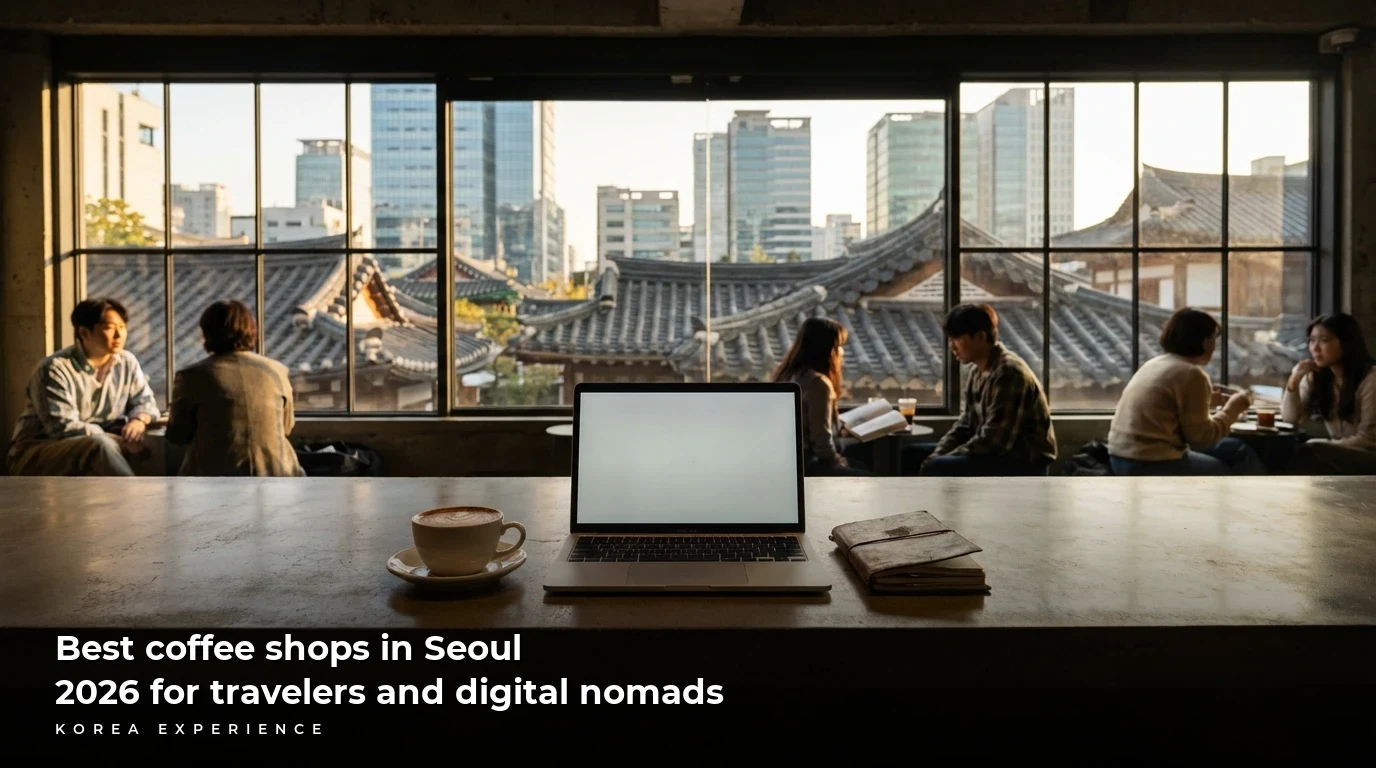
Discover the top 20 cafes in Seoul for 2026. From Seongsu warehouses to Hanok spots, find prices, wait times, and signature brews.
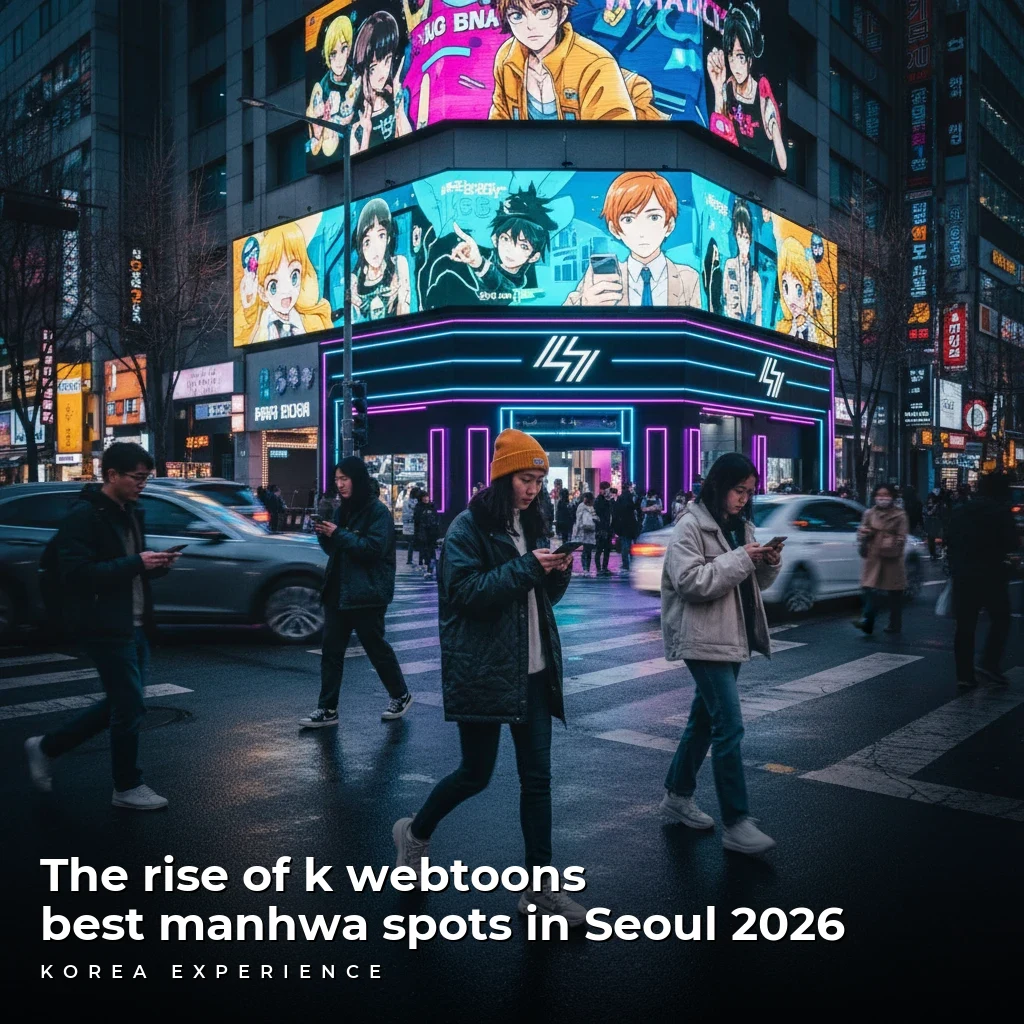
Discover the ultimate guide to K Webtoons in Seoul 2026. Explore top manhwa cafes, museums, and pop-up stores defining the new wave of Korean culture.
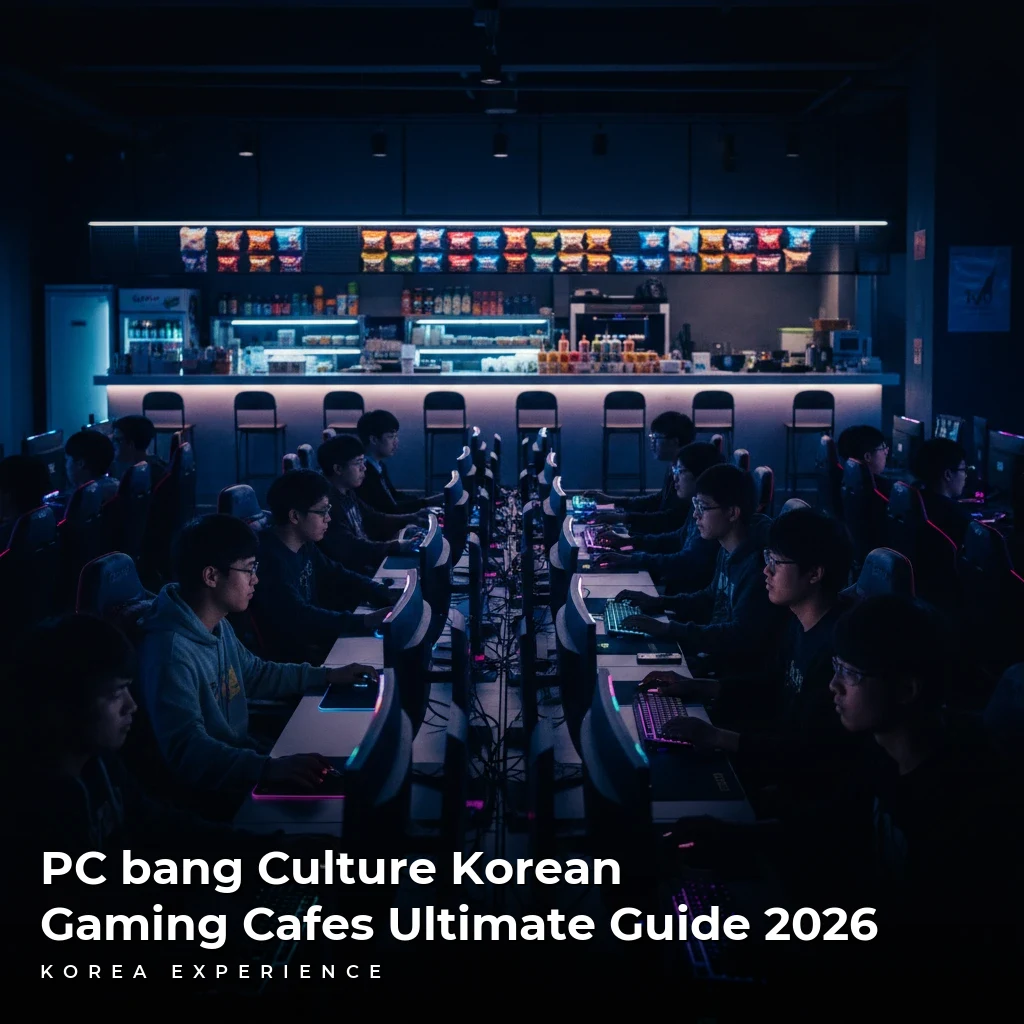
Discover the high-tech world of Korean PC Bang culture, featuring ultra-fast speeds, gourmet food ordering, and 24-hour access for travelers.
Explore the ultimate guide to K-Drama filming locations and cafe culture in Seoul. Discover iconic spots, prices, and travel tips for fans.
Discover the ultimate guide to savory pancakes and rice wine in Seoul. Top spots, craft brews, and local tips for a perfect rainy day experience.
Discover the best Makgeolli bars in Seoul, understand traditional rice wine etiquette, and explore premium craft brews in this ultimate guide.