Solo travel in Korea: Safety tips and meetup groups 2026
Solo travel in Korea is incredibly safe, with crime rates 50% lower than US cities. Discover top meetup apps, dining tips, and night safety guides for 2026.
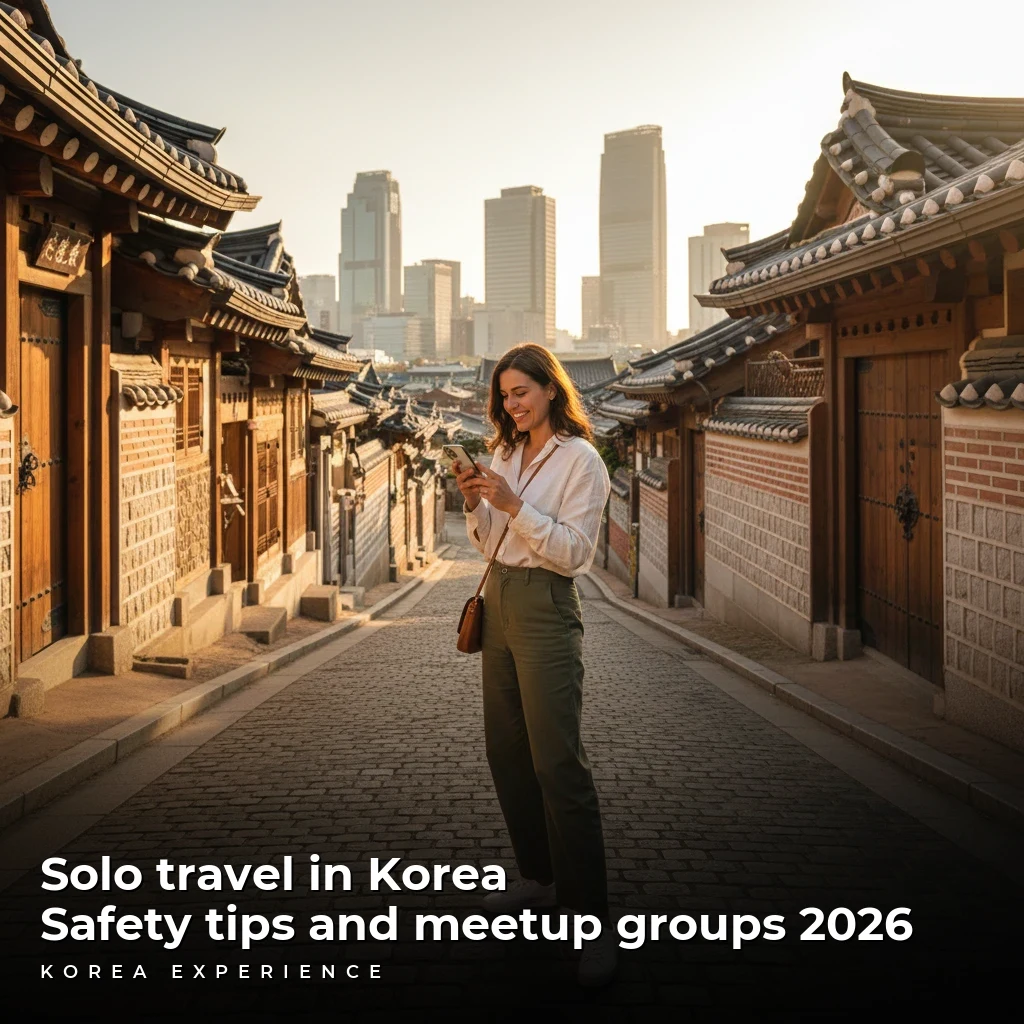
South Korea consistently ranks as one of the safest destinations in the world for solo travelers, boasting a violently low crime rate and a culture of communal responsibility that often shocks visitors from the West. For the international traveler arriving in 2026, the experience is defined by high-tech convenience, 24-hour accessibility, and a rapidly evolving social scene that is becoming increasingly welcoming to those exploring on their own. However, "safe" does not mean "perfect," and navigating the cultural nuances of dining alone (hon-bap) or understanding the digital landscape for meeting people requires specific local knowledge.
The short answer: South Korea is exceptionally safe for solo travelers, including women, due to extensive CCTV coverage and strict gun control. To meet people, use apps like Meetup.com and HelloTalk, or visit "foreigner-friendly" social hubs in Hongdae and Itaewon.
Key Takeaways
- 1Korea ranks in the top 10 safest countries globally with extensive CCTV coverage
- 2Solo dining (Hon-bap) is now mainstream, with 40% of restaurants offering single sets
- 3Avoid 'Ancestral Rites' cult recruiters near major subway stations
The Reality of Safety in Korea: By the Numbers
When we discuss safety in Korea, it is important to contextualize it with data. As of 2026, South Korea maintains a Global Peace Index ranking within the top tier. The street crime rate is remarkably low compared to Europe or North America. For instance, the robbery rate in Seoul is less than 0.7 per 100,000 people, whereas major US cities often see rates 50 to 100 times higher.
The backbone of this safety is the "CCTV Culture." Seoul alone operates over 80,000 public surveillance cameras, not counting the millions of private cameras inside convenience stores, black boxes in cars, and building entrances. This creates a digital safety net where crimes are solved rapidly.
📊 Safety Statistics 2026
A common phenomenon that illustrates this safety is the "Café Test." You can leave a laptop worth ₩2,000,000 (approx $1,500 USD) on a café table in Gangnam, go to the restroom for 10 minutes, and return to find it untouched. While we don't recommend testing fate unnecessarily, this level of trust is standard daily life here.
However, safety nuances exist. While physical violence is rare, digital crimes and scams targeting foreigners do occur. Understanding the distinction between physical safety (very high) and financial/social safety (requires vigilance) is key to a successful trip.
Solo Dining: The Rise of "Hon-bap"
A decade ago, eating alone in Korea was considered socially awkward. In 2026, the culture of hon-bap (eating alone) is fully established, driven by the increasing number of single-person households in Korea (now exceeding 35% of the population).
Solo travelers no longer need to rely solely on convenience stores. Most restaurants, including some BBQ places, have adapted.
Look for automated kiosks at the entrance. If a restaurant has a kiosk, it is 100% solo-friendly. Also, bar-seating (called 'datchi' seats) is becoming standard in K-BBQ joints in areas like Hapjeong and Seongsu.
Where to Eat Alone
If you are nervous about your first solo meal, target these specific types of establishments:
- Gimbap Cheonguk (Kimbap Heaven): Ubiquitous fast-casual diners serving everything from Ramyeon (₩4,500) to Donkatsu (₩9,000). No one will bat an eye if you eat alone here.
- Department Store Food Courts: Locations like The Hyundai Seoul or Shinsegae run massive food halls where solo seating is the norm. Prices range from ₩12,000 to ₩25,000 per dish.
- Fast Food Chains: Mom's Touch (Korean chicken burgers) and Lotteria are staples.
- Coin Karaoke (Noraebang): While not for eating, this is the ultimate solo activity. For just ₩1,000 (about $0.75 USD), you can sing 2-4 songs in a private booth.
For a deeper dive into specific locations, check our guide on best spots for solo dining hon-bap in busy districts 2026.
Meeting People: Apps and Groups
Loneliness is the primary concern for solo travelers, not safety. Fortunately, Korea has a very active "meetup" culture because many young Koreans are eager to practice English or make international friends.
Best Apps for Meeting People in Korea
| Feature | Meetup.com | HelloTalk | Bumble BFF |
|---|---|---|---|
| Primary Use | Group Activities | Language Exchange | 1-on-1 Friends |
| English Level | High | Mixed | High |
| Cost | Event dependent | Free/Freemium | Free |
1. Language Exchange Café Parties
This is the easiest way to meet people. Organizations like Global Seoul Mates (GSM) or Playground host nightly events in Hongdae and Gangnam.
- Cost: Usually ₩10,000 to ₩15,000 entrance fee.
- What you get: Two drinks and a 3-hour rotation of tables to talk to new people.
- Vibe: Very social, sometimes loud, excellent for extroverts.
2. Digital Communities
- KakaoTalk Open Chats: Search for "Seoul Hiking," "Busan Expats," or "Photography" within the KakaoTalk app. You will find anonymous group chats where people plan impromptu meetups.
- HelloTalk/Meeff: Be cautious. While intended for language exchange, Meeff in particular has developed a reputation more akin to a dating app. If you are looking strictly for platonic travel buddies, be explicit in your profile.
Dating App Safety
If you use Tinder or Bumble in Korea, always meet in public spaces like cafés or malls first. While violent crime is low, "catfishing" (using fake photos) or being pressured into expensive bars (bar scams) can happen, particularly in nightlife districts.
Scams to Watch Out For
Even in a safe country, tourists are targets for specific scams. In 2026, the "Cult Ancestral Rites" scam remains the most persistent annoyance for solo travelers.
The "Do You Know Tao?" (Daesun Jinrihoe)
You will likely encounter pairs of people (often a man and a woman, or two women) approaching you near subway stations or universities.
- The Approach: "You have a bright aura," "You look like you are going through a hard time," or simply asking for directions to a place they should know.
- The Hook: They will try to take you to a "cultural experience" or a ceremony to clear your bad luck.
- The Scam: You are led to a private room, made to perform a bowing ceremony, and then pressured to donate money (often ₩50,000 to ₩200,000) for "ancestral peace."
- The Solution: Do not engage. A firm "No" or ignoring them completely is not rude; it is necessary. If they persist, saying "Singo-hamnida" (I will report you) usually sends them running.
Taxi Scams
While rare with the advent of apps, some older taxis may try to avoid using the meter for foreigners.
- Prevention: Always use Kakao T or Uber (UT) to call taxis. This tracks the route and fixes the estimated price range.
- Data: A taxi from Incheon Airport to Gangnam should cost around ₩70,000 - ₩90,000. If a driver asks for ₩150,000 flat, walk away.
Nightlife Safety: Clubbing and Drinking
Korean nightlife is legendary. Districts like Hongdae, Itaewon, and Gangnam stay awake until 6:00 AM. For solo travelers, this is generally safe, but alcohol consumption is high, which introduces risks.
📋 Nightlife Safety Stats
Alcohol Safety
Soju is stronger than it tastes (usually 16-17% ABV in 2026). It is cheap (₩5,000 in bars, ₩1,900 in stores) and hits hard.
- Drink Spiking: While statistically lower than in the West, it is not zero. Never leave your drink unattended in clubs like those in Gangnam or Hongdae.
- The "Gold Bar" Scam: In areas like Itaewon, avoid being dragged into sketchy bars by promoters on the street. You may end up with a bill for ₩500,000 for a fruit plate and cheap whiskey.
Getting Home at Night
If you miss the subway (which usually closes around 12:30 AM - 1:00 AM), getting a taxi can be a war zone, especially in Gangnam.
- Kakao T: It may be impossible to hail a cab on the street. Use the app. If you cannot get a match, try "kakao T Blue" or "Ventti" (larger vans) which cost ₩3,000-₩5,000 more but have higher acceptance rates.
- Owl Buses (N-Buses): Seoul operates night buses that run from 11:30 PM to 6:00 AM. Fare is approx ₩2,150. Routes like the N26 traverse major party districts.
For those planning an all-nighter, check our detailed itinerary: 24 hour seoul itinerary how to survive the city that never sleeps 2026.
Accommodation: Safe Havens for Solos
Choosing where to sleep is your first line of defense. In Korea, you generally have three options, each with different safety profiles.
💵 Accommodation Comparison
24h desk, keycard access
Tiny, private, CCTV secured
-
Guesthouses/Hostels:
- Price: ₩25,000 - ₩50,000 per night.
- Safety: Very high. Most have digital door locks. Look for female-only dorms if preferred. Areas like Hongdae and Myeongdong are packed with these.
- Social: Best for meeting people. Breakfast time is the prime social hour.
-
Airbnb/Officetels:
- Price: ₩70,000 - ₩150,000 per night.
- Safety: Excellent privacy. Korean digital door locks change codes automatically or are set by the host. You rarely meet the host in person.
- Note: Check if the listing is legal. Illegal Airbnbs may not have proper fire safety equipment.
-
Jimjilbang (Saunas):
- Price: ₩15,000 - ₩20,000 per night.
- Safety: You sleep on the floor in a common room. Lockers are provided for valuables. It is safe, but theft of phones while sleeping can happen if you are careless. Keep your phone in your locker or deep in your pocket.
For budget travelers, more options are detailed in our guide to budget backpacking korea hostels street food and free activities.
Women's Safety Specifics
Korea is a great destination for solo female travelers, but specific cultural issues exist.
Illegal Filming (Molka)
"Molka" refers to spy cams. This has been a significant social issue in Korea.
- Reality: The government conducts regular sweeps of public restrooms. Most subway station bathrooms are safe.
- Precaution: When using public restrooms in older buildings or bars, check for small holes or gaps. Many Korean women carry stickers to cover suspicious holes.
- Sim Cards: Having a local number helps if you need to report anything. See our comparison here: best korea sim cards for long term travelers beyond airport rentals and prepaid limits.
Safe Return Service (Ansim Gwiga)
Seoul operates a "Safe Return Home" service where women can request a volunteer escort (usually a pair of yellow-vested monitors) to walk them home from the subway station late at night. You can access this via the "Ansimi" app, though the interface is primarily in Korean, so asking a tourist helpline (1330) for assistance is easier.
How to Get Around: Navigation & Transport
Getting lost is a safety risk. Google Maps does not work properly in Korea for walking directions due to local security laws regarding map data export.
📖 Setting Up Navigation
Step 1: Download Naver Map or KakaoMap
Both have English interfaces in 2026.
Step 2: Download Kakao T
Essential for taxis. Link your foreign credit card beforehand.
Step 3: Get a T-Money Card
Buy at any convenience store (₩4,000) and load with cash.
Subway Safety
The subway is safe until it closes. Stations are well-lit, manned, and have CCTV everywhere. Screen doors prevent falls onto tracks.
- Rush Hour: 8:00 AM - 9:00 AM and 6:00 PM - 7:00 PM are incredibly crowded (the "Hell Train" on Line 9). Personal space disappears. Keep your backpack in front of you to avoid inconveniencing others and to keep valuables in sight.
Suggested Solo Itinerary: The "Safe & Social" Route
If you have 24 hours and want to balance safety with social opportunities, try this route.
24 Hours Solo: Introvert vs Extrovert
The Dualism Concept: Experience the best of both worlds — premium luxury moments paired with authentic budget-friendly experiences in one route.
Morning: Palace Walk
Rent a premium Hanbok and stroll Gyeongbokgung. People will approach you for photos.
Evening: Coin Noraebang
Sing your heart out solo in Hongdae. Safe, cheap, stress-relieving.
Start your day at the palaces for safe, open sightseeing, and end in Hongdae where the streets are bright and populated until dawn.
Emergency Protocols
Even with the best preparation, emergencies happen. Save these numbers. They are staffed 24/7 and usually have English interpretation available (or will conference in a translator).
📋 Emergency Numbers
Pro Tip: The 1330 Korea Travel Helpline is your best friend. available on WhatsApp and phone. They can help with translation, finding lost items, or even mediating disputes with taxi drivers.
Pros and Cons of Solo Travel in Korea
To summarize your expectations, here is a balanced view of what you will face.
Solo Travel Analysis
- ✓Extremely low violent crime rate
- ✓Excellent public transport and 24h convenience
- ✓Dining culture is rapidly adapting to solo eaters
- ✓No tipping culture simplifies budgeting
- ✗Language barrier can be isolating outside Seoul
- ✗Some BBQ restaurants still require 2+ servings
- ✗Google Maps limitation requires learning new apps
- ✗Cult recruiters can be persistent annoyances
Final Thoughts
Traveling solo in Korea in 2026 is an empowering experience. The infrastructure is designed for efficiency, and the culture is pivoting to embrace individualism. The streets of Seoul at 2:00 AM feel safer than the streets of many European capitals at 2:00 PM. By downloading the right apps (Naver Map, Papago, Kakao T) and being aware of the minor social scams, you can navigate the peninsula with confidence.
Whether you are hiking the trails of Bukhansan, shopping in Myeongdong, or sitting in a quiet café in Seongsu-dong, Korea offers a unique blend of solitude and connection.
❓ Frequently Asked Questions
Have more questions?Contact us →
About the Author
Korea Experience Team
Written by the Korea Experience editorial team - experts in Korean medical tourism, travel, and culture with years of research and firsthand experience.
Explore more in Travel & Tourism
From Seoul's neon-lit streets to Jeju's volcanic landscapes — discover the best of Korea with insider travel tips, itineraries, and seasonal guides.
Browse All Travel & Tourism ArticlesContinue Reading
Explore more articles you might find interesting
Discover Korea's top spiritual retreats for 2026. Compare ₩70,000 temple stays with luxury wellness resorts. Find peace in Seoul and beyond.
Discover why Korea ranks high for safety in 2026. Complete guide to 5 best areas, emergency apps, and daily budgets starting at ₩85,000.
The ultimate 2026 guide to spring in Korea. Discover bloom dates, Jinhae and Seoul festivals, budget tips, and photo spots. Expect to spend ₩50,000 daily.
Discover Korea's surfing capital with our 2026 guide to Yangyang and Sokcho. Find rental costs (₩30,000+), transport tips, and best seasons for waves.
Discover top Korean beaches from Yangyang surfing to Jeju snorkeling. Includes 2026 prices, transport tips, and water activity costs for summer travel.
Master Seoul's 2026 transit system. From the Climate Card saving you ₩62,000 to new AREX schedules, here is everything tourists need to navigate like a local.