K-Culture & Entertainment

Unraveling Yutnori and Jegichagi: Traditional Korean Games Explained

Discover Yutnori and Jegichagi, two cherished traditional Korean games. Learn their rules, history, and where to experience these cultural treasures in Korea.

In the vibrant tapestry of Korean culture, where K-pop and K-drama often take center stage for international audiences, lies a rich heritage of traditional practices that offer an equally compelling insight into the nation's soul. Beyond the pulsating beats and gripping narratives, traditional Korean games like Yutnori and Jegichagi embody the communal spirit, historical ingenuity, and simple joys that have shaped Korean society for centuries. For international travelers and expats looking to deepen their understanding of Korea, exploring these age-old pastimes is an invaluable experience.

This comprehensive guide will unravel the mysteries of Traditional Korean Games Yutnori and Jegichagi, providing you with an in-depth look at their origins, rules, cultural significance, and practical tips on where and how to experience them firsthand. By the end of this post, you'll not only understand the mechanics of these fascinating games but also appreciate their enduring role in fostering community and preserving Korean identity.

The Heart of Korean Festivities: Yutnori (The Game of Yut)

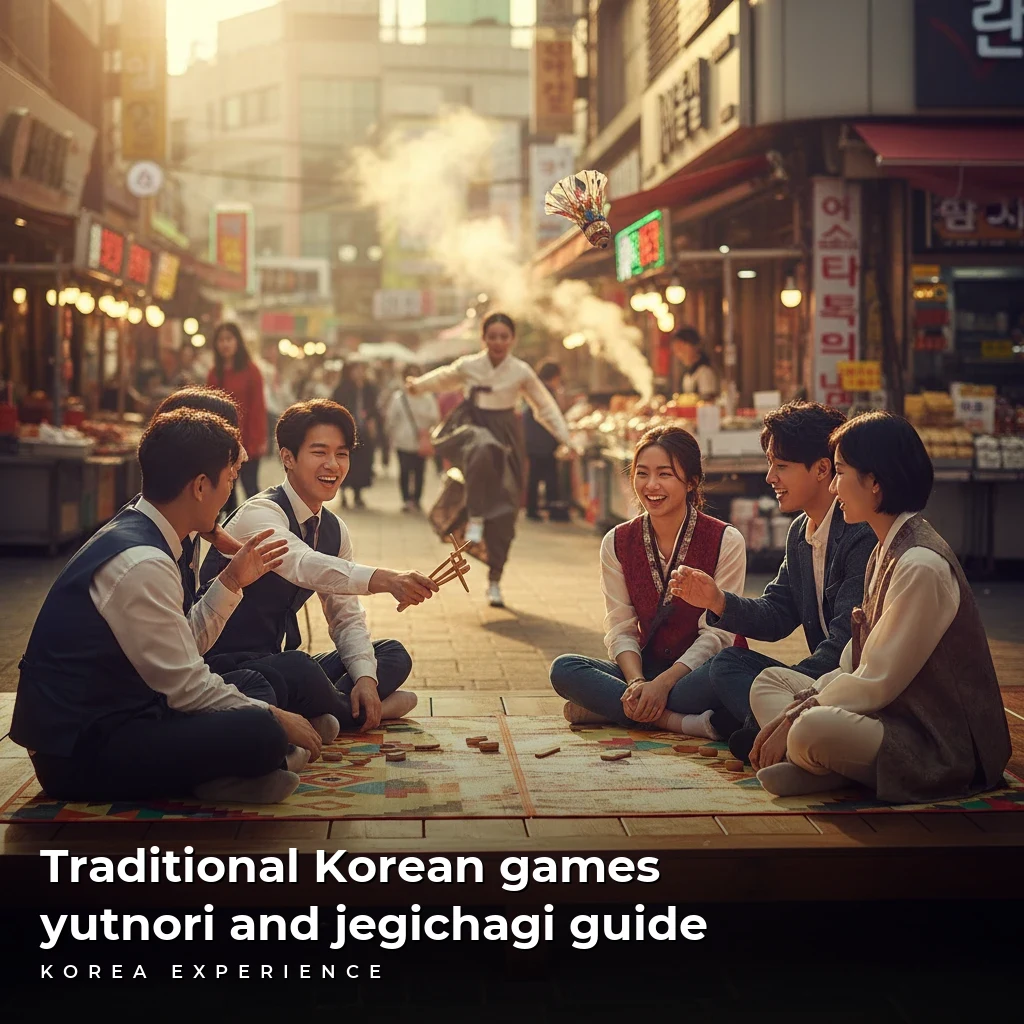
Yutnori, often simply referred to as "yut," is perhaps the most beloved and widely played traditional Korean board game. It transcends generations and social classes, bringing families and friends together, particularly during major holidays like Seollal (Lunar New Year) and Chuseok (Korean Thanksgiving). Its blend of strategy and luck makes it perpetually exciting, often culminating in boisterous celebrations or good-natured rivalries.

Origins and Cultural Significance of Yutnori

The history of Yutnori stretches back to ancient times, with some scholars suggesting its roots lie in farming communities, possibly as a tool for divination concerning harvest fortunes. Its exact origins are debated, but records indicate its popularity dates back at least to the Three Kingdoms period (1st century BCE – 7th century CE). Over time, it evolved from a simple fortune-telling ritual into a sophisticated board game enjoyed by people from all walks of life.

Today, Yutnori is synonymous with familial bonding and festive gatherings. During Seollal, it's common to see multiple generations of a family huddled around a Yutnori board, their laughter and excited shouts filling the air. It's more than just a game; it's a social ritual that strengthens community ties and provides a fun, interactive way to pass on cultural traditions. The simple act of throwing the yut sticks carries a weight of tradition, connecting modern Koreans to their ancestors in a tangible, playful way.

Understanding the Yutnori Set

A standard Yutnori set is beautifully simple yet elegantly designed. It consists of three main components:

  • Yut Sticks: These are four wooden sticks, typically about 15-20 cm long, with one side flat and the other rounded. When thrown, the combination of flat and rounded sides facing up determines the move. Traditionally, these were made from chestnut wood.
  • Game Board (Malpan): The malpan is usually a cloth mat or paper board featuring a distinctive cross-shaped pattern with 20 circles (points) and four larger circles at the corners. There is also a large circle in the center. The paths allow for different routes, adding strategic depth.
  • Markers (Mal): Each player or team uses a set of four small markers, often made of wood, plastic, or even dried beans. These are moved along the malpan according to the outcome of the yut stick throws.

You can easily purchase Yutnori sets at traditional markets like Insadong or Namdaemun Market in Seoul, cultural gift shops, and even large supermarkets (E-mart, Lotte Mart). Prices generally range from 10,000 to 30,000 Korean won, depending on the material and craftsmanship.

Decoding the Gameplay: Rules of Yutnori

Yutnori is typically played by two teams, but it can also be played individually. Each team takes turns throwing the yut sticks, and the outcome dictates how their markers move around the board.

1. The Yut Sticks and Their Outcomes: The four yut sticks can land in one of five combinations, each corresponding to a specific move:

  • Do (도): One flat side up (one rounded side up). Move one space.
  • Gae (개): Two flat sides up (two rounded sides up). Move two spaces.
  • Geol (걸): Three flat sides up (one rounded side up). Move three spaces.
  • Yut (윷): All four flat sides up. Move four spaces AND get another turn.
  • Mo (모): All four rounded sides up. Move five spaces AND get another turn.
  • Baekdo (백도): (Optional/Special Rule) One stick has a marked flat side (often white). If only this marked side is up, and the other three are rounded, it's Baekdo. Move one space backward. This adds an exciting twist!

2. Moving Markers on the Malpan: Players start their markers off the board. The goal is to move all four of your team's markers around the entire board and off again before the opposing team does.

  • You can enter the board by throwing a "Do" or higher.
  • Markers move clockwise along the outer path.
  • When a marker lands on one of the four corner circles or the center circle, it has the option to take a shortcut. For example, landing on a corner allows you to take a diagonal path across the board, significantly shortening the route.
  • If you land on a space already occupied by your own team's marker(s), you can combine them and move them together as a single unit. This is a crucial strategy for faster movement and reducing the number of markers on the board.
  • If you land on a space occupied by an opponent's marker, you "capture" it. The opponent's captured marker is removed from the board and must start over from the beginning on their next turn. Capturing an opponent's marker also grants you another turn.

3. Winning Conditions: The first team to successfully move all four of their markers off the board wins the game. The excitement often builds towards the end as teams race to get their final markers off, sometimes with last-minute captures turning the tide.

Strategies and Tips for Yutnori

While luck plays a significant role with the yut stick throws, strategy is equally important.

  • Aggressive vs. Defensive Play: Do you try to capture opponent's markers at every opportunity, or do you focus on safely moving your own pieces? An aggressive strategy can be high-risk, high-reward, potentially setting opponents back significantly.
  • Combining Markers: This is paramount. Moving multiple markers as one unit means fewer pieces to manage and a faster path to victory. It also makes them harder to capture (as all combined markers are captured together).
  • Utilizing Shortcuts: Don't forget the shortcuts! They are invaluable for shaving off turns and quickly moving markers towards the finish line.
  • Strategic Sacrifices: Sometimes, leaving a single marker exposed to be captured might be worth it if it allows your other, more advanced markers to move safely or set up a crucial capture.
  • Team Communication: When playing in teams, clear communication about who moves which marker and why is vital. Discuss potential moves before throwing.

Insider Tip for Beginners: Don't be afraid to experiment with your throws! Some players develop a particular "style" of throwing the sticks that they believe brings them better luck. While it's all random, the ritual adds to the fun!

The Agile Footwork Challenge: Jegichagi (Kick Shuttlecock)

Jegichagi is a dynamic, physical traditional Korean game that tests agility, balance, and footwork. While Yutnori is often played sitting down and indoors, Jegichagi is an outdoor game, frequently seen in parks, schoolyards, and open spaces, especially among children and sometimes adults seeking a nostalgic workout.

Historical Roots and Evolution of Jegichagi

The origins of Jegichagi can be traced back to ancient Korea, possibly evolving from a type of martial arts training involving footwork and agility. It shares similarities with shuttlecock-kicking games found across Asia, such as jianzi in China and chapteh in Malaysia. Historically, it was a common pastime for young boys, particularly during winter months, providing a way to stay active.

Over centuries, Jegichagi has remained a popular form of casual recreation. Its simplicity and minimal equipment requirements have ensured its longevity, making it accessible to virtually anyone. It's a testament to the idea that some of the best games require little more than enthusiasm and a simple, handmade object.

The Jegichagi Shuttlecock: Anatomy and Making

The "jegi" (제기), the shuttlecock used in Jegichagi, is a humble yet ingenious toy. It traditionally consists of:

  • A Coin (or Metal Washer): This provides the weight at the bottom, helping the jegi maintain its stability in the air.
  • Paper or Fabric Streamers: These are typically strips of colorful hanji (traditional Korean paper) or cloth tied around the coin, forming a plume. The streamers act like feathers on a badminton shuttlecock, catching the air and slowing its descent, making it easier to kick.

While you can purchase ready-made jegi at stationery stores, traditional markets, or souvenir shops (typically 1,000-5,000 Korean won per jegi), making one yourself is also a fun, authentic experience. All you need is a coin, some strong string or tape, and colorful paper or fabric strips. It’s a great activity to connect with the game's simple roots.

Mastering the Art of Jegichagi

The goal of Jegichagi is to kick the jegi into the air repeatedly without letting it touch the ground. There are various styles and ways to play, catering to both solo and group entertainment.

1. Basic Kicking Techniques:

  • Inside Foot Kick (Ahn-Chagi): This is the most common technique. You use the inside of your foot (the arch area) to kick the jegi upwards. The knee is bent, and the leg swings from the hip, aiming to keep the jegi in a controlled, gentle arc.
  • Outside Foot Kick (Bakkat-Chagi): A more advanced technique, using the outside edge of the foot. This requires greater balance and control.
  • Heel Kick (Dwit-Chagi): Kicking the jegi with the heel, often performed by experienced players for flair or when the jegi falls behind them.

2. Different Styles and Variations:

  • Single-Player (Honja-Chagi): The most straightforward form. A player tries to kick the jegi as many times as possible without it touching the ground. The person with the highest number of kicks wins.
  • Multiplayer (Modu-Chagi): Played with two or more people. Players stand in a circle and take turns kicking the jegi to each other. If a player fails to kick it or drops it, they might be out or receive a penalty.
  • Team Play (Seonsu-Chagi): Teams compete, with scores accumulated from individual kicks. This can involve more complex rules, like specific sequences of kicks or passing patterns.
  • Dongdaemun-Chagi: A variation where players have to kick the jegi under one leg, alternating legs. This is a very challenging and impressive style.

3. Scoring and Competitive Play: Scoring is generally based on the number of successful kicks before the jegi touches the ground. In competitive settings, judges observe the technique and adherence to rules. While often casual, serious players can achieve hundreds of consecutive kicks, demonstrating incredible leg strength and coordination.

Health Benefits and Modern Appeal of Jegichagi

Jegichagi offers numerous physical benefits. It enhances:

  • Balance and Coordination: Constantly adjusting your body to kick the jegi improves proprioception.
  • Leg Strength and Agility: The repetitive kicking motion strengthens leg muscles and improves quick reflexes.
  • Concentration: Keeping your eyes on the jegi and anticipating its trajectory sharpens focus.

Beyond the physical, Jegichagi holds a nostalgic appeal for many Koreans, reminding them of childhood play. For international visitors, it's a fantastic way to engage in a fun physical activity that's distinctly Korean, providing a lighthearted break from sightseeing while offering a window into local recreational habits.

Why These Traditional Korean Games Endure

Both Yutnori and Jegichagi are far more than mere pastimes; they are living testaments to Korean cultural resilience and ingenuity. Their continued popularity, even in a rapidly modernizing society, speaks volumes about their inherent value.

Bridging Generations and Fostering Community

One of the most powerful aspects of these games is their ability to connect people. Yutnori, with its team-based play and often boisterous atmosphere, naturally encourages intergenerational interaction. Grandparents, parents, and children all participate on an equal footing, sharing laughter and friendly competition. Similarly, Jegichagi, whether played solo or with a group, often draws spectators and impromptu participants, creating spontaneous community bonds in public spaces. These games serve as informal schools for cultural transmission, where younger generations learn not just the rules, but also the values of sportsmanship, cooperation, and respect.

Preserving Cultural Heritage

In an increasingly globalized world, traditional games play a vital role in maintaining cultural identity. They are tangible links to the past, reminding Koreans of their unique heritage and traditions. Participating in Yutnori during Seollal, for example, is an act of cultural affirmation, a way to honor ancestral customs and reinforce a sense of belonging. The simplicity of the games also underscores traditional Korean values of resourcefulness and making joy out of everyday materials.

Accessibility and Simplicity

A significant reason for their enduring appeal is their accessibility. Neither game requires expensive equipment or specialized venues. Yutnori can be played with a simple set on any flat surface, while Jegichagi needs only a handmade shuttlecock and an open space. This low barrier to entry means anyone, regardless of age, physical prowess, or economic status, can participate and enjoy, making them truly democratic forms of entertainment.

Experiencing Yutnori and Jegichagi in Korea

For international travelers and expats, experiencing these games firsthand is an excellent way to immerse yourself in Korean culture. You'll find opportunities in various settings across the country.

Cultural Villages and Museums

These locations are perhaps the best starting points for beginners, as they often offer structured programs and explanations.

  • Korean Folk Village (Yongin): Located just outside Seoul, this sprawling village is dedicated to preserving traditional Korean life. It regularly hosts demonstrations and participatory sessions for Yutnori, Jegichagi, and other traditional games. Staff are usually on hand to teach the rules in English. Entry is around 32,000 Korean won for adults.
  • Namsangol Hanok Village (Seoul): Situated at the foot of Namsan Mountain, this beautiful collection of traditional Korean houses often has areas designated for traditional games. During holidays, they organize special events where visitors can try Yutnori and Jegichagi for free.
  • National Folk Museum of Korea (Seoul): Located within the Gyeongbokgung Palace grounds, this museum frequently has interactive exhibits where visitors can try their hand at traditional games, usually free with museum admission (which itself is often free).

Parks and Public Spaces

On weekends and holidays, especially in warmer months, you might spontaneously encounter locals playing these games in public parks.

  • Yeouido Hangang Park (Seoul): You might spot groups playing Yutnori under trees or children kicking Jegichagi shuttlecocks.
  • Olympic Park (Seoul): Another large park where community gatherings and casual games often take place.
  • Look for any local park in residential areas; particularly older generations often gather to play. Don't be shy – a friendly gesture and an attempt to communicate (even with limited Korean) might get you invited to join!

Festivals and Special Events

Major holidays are prime times to experience these games in their fullest cultural context.

  • Seollal (Lunar New Year) and Chuseok (Korean Thanksgiving): Many major cultural sites, palaces, and even city halls organize special events during these holidays, featuring Yutnori and Jegichagi tournaments and free-play zones. Check local tourism office websites for schedules.
  • Local Community Festivals: Throughout the year, various regions and districts hold festivals celebrating local culture, which often include traditional games.

Where to Purchase Game Sets

If you want to take a piece of Korean culture home, or practice on your own:

  • Insadong (Seoul): This cultural street is packed with souvenir shops and traditional craft stores where you can find beautifully crafted Yutnori sets and Jegichagi shuttlecocks. Prices are generally fair for tourist areas.
  • Traditional Markets: Namdaemun Market and Gwangjang Market (Seoul) are excellent for finding more affordable, everyday versions of these games.
  • Large Supermarkets: E-mart, Lotte Mart, and Homeplus often stock Yutnori sets, especially around holidays.
  • Online Retailers: For those living abroad, some international Korean goods stores or online marketplaces might sell them.

Comparing the Two: Yutnori vs. Jegichagi

While both are traditional Korean games, Yutnori and Jegichagi offer distinct experiences. Here’s a comparison to highlight their key differences and shared cultural significance.

FeatureYutnori (The Game of Yut)Jegichagi (Kick Shuttlecock)
OriginAncient, possibly farming/divination, Three Kingdoms eraAncient, possibly martial arts training, common recreation
Type of GameBoard game, strategy and luckPhysical game, skill, agility, and coordination
EquipmentFour yut sticks, malpan (board), four markers per teamJegi (shuttlecock - coin + paper/fabric streamers)
Primary SettingIndoors, especially during family gatheringsOutdoors (parks, schoolyards, open spaces)
Players2-4 individuals or 2 teams (most common)1 to many players (solo, cooperative, competitive)
PaceMeasured, strategic, turns-basedFast-paced, continuous movement
Key SkillStrategic thinking, decision-making, luck interpretationBalance, agility, foot-eye coordination, endurance
Auditory AspectLaughter, shouts of encouragement, excited exclamationsRhythm of kicks, "thwack" of the jigi, cheers for good plays

FeatureYutnori (The Game of Yut)Jegichagi (Kick Shuttlecock)
Cultural SignificanceDeeply tied to Seollal and Chuseok, family bonding, traditionEveryday recreation, physical health, nostalgic childhood game
Social AspectPromotes team play, friendly rivalry, intergenerational interactionCan be solo meditative practice, or communal competitive fun
Modern RelevanceEnduring holiday staple, symbol of Korean family cultureContinued recreational activity, niche competitive sport, fitness tool
AccessibilityVery high, minimal physical requirements, easy to learnHigh, requires some physical agility, but basic play is easy to grasp
Common ExperienceCelebrated and ritualized during major holidaysCasual, spontaneous play, often seen in public spaces

Practical Tips for International Visitors

Embracing traditional games can be one of the most rewarding cultural experiences in Korea. Here are some tips to help you get started:

Don't Be Shy: Joining In

Koreans are generally welcoming, especially when foreigners show genuine interest in their culture. If you see people playing Yutnori or Jegichagi in a park, don't hesitate to approach them. A simple "Annyeonghaseyo" (Hello) and "Yutnori haseyo?" (Are you playing Yutnori?) or "Jegichagi haseyo?" (Are you playing Jegichagi?) can open the door. Most Koreans will be delighted to teach you the rules and let you join in. Be ready for some friendly competition and lots of laughter!

Learning Resources

Before you go, or once you're there, utilize available resources:

  • Online Videos: YouTube has countless videos demonstrating the rules and techniques for both Yutnori and Jegichagi. Search for "How to play Yutnori" or "Jegichagi tutorial."
  • Cultural Centers: Many city-run cultural centers or international cultural exchange organizations in Korea (like the Korea Foundation Cultural Center) offer introductory classes to traditional games, sometimes in English.
  • Tourist Information Centers: Staff can often direct you to places offering traditional game experiences.

Respecting Traditions

When playing with locals, a few points of etiquette can go a long way:

  • Be Patient: Learning new rules, especially with a language barrier, takes time.
  • Show Enthusiasm: Your enjoyment will be contagious.
  • Observe and Learn: Pay attention to how locals play, especially during team-based games, to understand unspoken rules or common strategies.
  • Thank Your Hosts: Express gratitude for their willingness to teach and play with you.

FAQ Section

1. Are Yutnori and Jegichagi only played during holidays? While Yutnori is most prominently played during major holidays like Seollal and Chuseok, it can be enjoyed any time of the year. Many families and friends play it casually at home or during gatherings. Jegichagi, being a more physical and outdoor game, is played year-round, especially by children in parks and schoolyards, whenever weather permits.

2. Can foreigners easily learn these games? Absolutely! Both games are relatively easy to pick up. Yutnori has simple rules for movement, though strategic depth comes with experience. Jegichagi's basic kicking motion is straightforward, though mastering it takes practice. Many cultural centers and folk villages offer English explanations, and locals are often keen to teach.

3. Where is the best place to buy a Yutnori set? For a beautiful, traditional Yutnori set, Insadong in Seoul is an excellent choice, offering various designs and quality levels. For more affordable or basic sets, traditional markets like Namdaemun or Gwangjang Market, or even large supermarkets (E-mart, Lotte Mart) around holiday seasons, are good options. Jegichagi shuttlecocks are widely available at stationery stores or souvenir shops.

4. Are there any competitive Jegichagi leagues? Yes, while often a casual pastime, Jegichagi does have competitive aspects. There are local and even national tournaments in Korea, particularly for schools and community groups. These competitions can showcase impressive skill and elaborate kicking styles. For the average international visitor, however, the casual, participatory aspect is more common.

5. What other traditional Korean games are there? Korea boasts a rich array of traditional games. Beyond Yutnori and Jegichagi, you might encounter Neolttwigi (seesaw jumping), Tuho (arrow throwing into a target pot), Gossaum (a rope pulling game), or Gonggi (a five-stone juggling game). Exploring these games offers even more insight into Korean traditional play and culture.

Conclusion

Yutnori and Jegichagi offer a captivating window into the heart of Korean culture. They are more than just games; they are vibrant expressions of history, community, and ingenuity. From the strategic throws of the yut sticks that echo ancient divinations to the agile footwork of Jegichagi that links players to generations of recreation, these pastimes embody a spirit of joy and connection.

For international travelers and expats in Korea, taking the time to learn and participate in these Traditional Korean Games Yutnori and Jegichagi is an experience that transcends mere sightseeing. It's an opportunity to engage directly with local culture, make new friends, and create lasting memories. So, next time you're in Korea, seek out a Yutnori board, pick up a jegi, and immerse yourself in the playful traditions that continue to shape this fascinating country. Your adventure into Korean culture will undoubtedly be richer for it.

About the Author

Korea Experience Team

Written by the Korea Experience editorial team - experts in Korean medical tourism, travel, and culture with years of research and firsthand experience.

⚠️ Medical Disclaimer

The information provided on this website is for general informational purposes only and does not constitute medical advice. Always consult with qualified healthcare professionals before making any medical decisions.

Continue Reading

Explore more articles you might find interesting