Traditional Korean Hanbok experience in Seoul complete guide
Discover the best traditional Korean hanbok experience in Seoul with rental tips, pricing guides, and hidden photo spots for 2026 travelers.
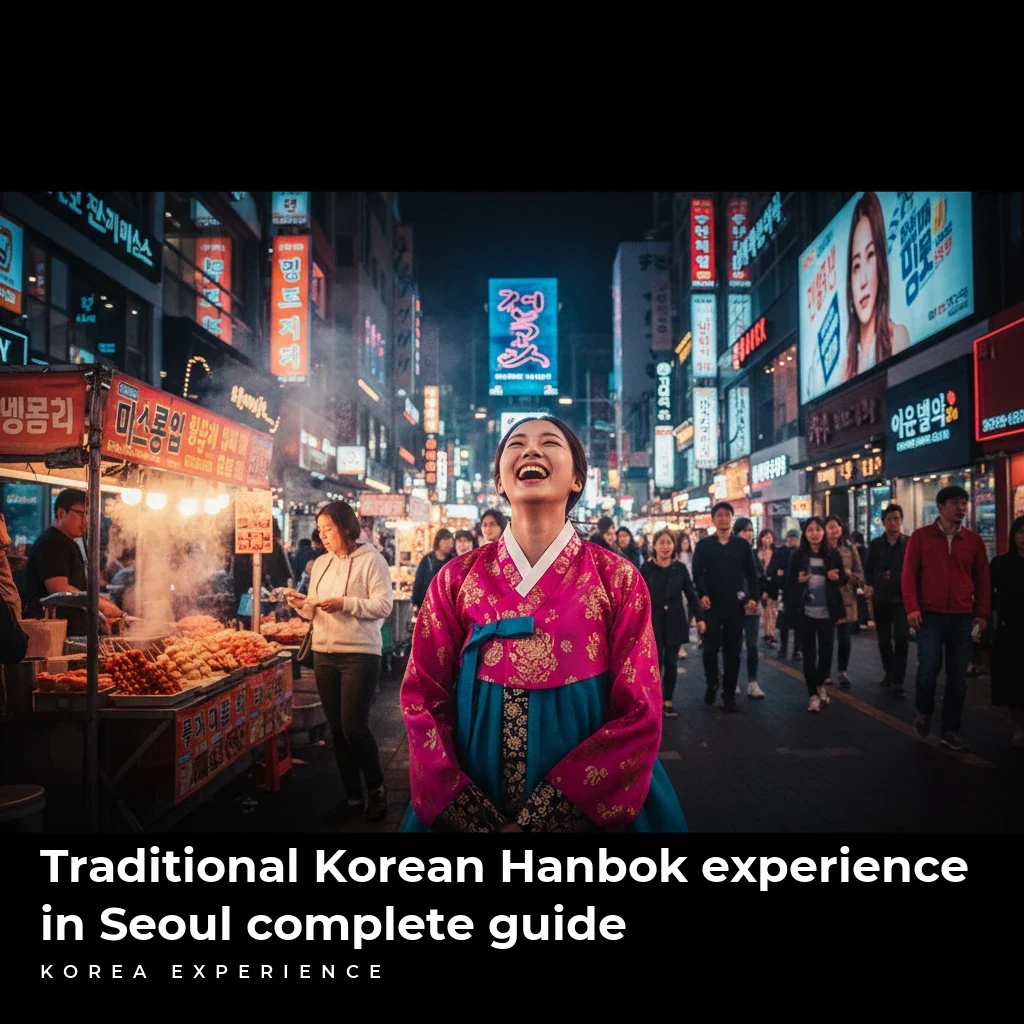
Wearing a Hanbok, the traditional Korean attire, is more than just a tourist activity; it is a rite of passage for visitors to Seoul and a deeply respectful nod to the nation's vibrant history. As you walk through the bustling streets of Jongno-gu, surrounded by skyscrapers and ancient palaces, slipping into these elegant garments transports you back to the Joseon Dynasty.
For the modern traveler, the traditional Korean hanbok experience in Seoul offers a unique blend of cultural immersion and visual storytelling. Whether you are looking to capture the perfect Instagram shot against the backdrop of Gyeongbokgung Palace or simply want to feel the elegance of silk and embroidery, navigating the rental landscape can be overwhelming. With over 100 rental shops concentrated within a 1.5-kilometer radius of the main palaces, choosing the right provider and style is essential for a seamless experience.
For more details, check out our guide on Bonsai and Zen gardens finding peace in Korea traditional....
Key Takeaways
- 1Wearers get free entry to Seoul's 5 Grand Palaces
- 2Average rental cost ranges from ₩20,000 to ₩50,000
- 3Book rentals for morning slots (9:00 AM) for best selection
This comprehensive guide will walk you through everything you need to know, from deciphering rental tiers to finding the secret photography spots that most tourists miss.
Related reading: Fortune telling in Korea saju vs tarot my experience in s....
Understanding Hanbok: History and Styles
Before you step into a rental shop, it helps to understand what you are wearing. The Hanbok (literally "Korean clothing") has a history spanning over 1,600 years. Its structure is defined by simple lines and no pockets, relying on the grace of the wearer's movement to give it shape.
You might also enjoy our article about Hanbok rental complete guide styles and pricing.
📋 Hanbok Anatomy
Traditional vs. Themed (Fusion) Hanbok
In 2026, the rental market is dominated by two distinct styles. Understanding the difference is crucial for setting your expectations and budget.
Related reading: Rainy Seoul Evenings.
Traditional Hanbok adheres to historical color palettes and cuts. The colors are often muted or use primary colors (red, blue, yellow) based on the philosophy of Yin and Yang. These are made from materials that mimic silk or ramie. If you are visiting for cultural authenticity, this is your choice. Approximately 30% of visitors opt for this classic look, which is often favored by older generations and cultural purists.
Themed or Fusion Hanbok is what you will see on 70% of tourists. These feature modern elements not found in history, such as gold foil stamping (geumbak), lace overlays, pastel tones, and hoop skirts underneath to create a voluminous, princess-like silhouette. While not historically accurate, they are incredibly photogenic and designed specifically to pop against the red and green paint of traditional Korean architecture.
Historical Note
While Fusion Hanbok is popular, some cultural experts argue it distorts history. However, the Cultural Heritage Administration officially recognizes both styles for free palace entry, provided the wearer has both a top (jeogori) and bottom (chima or baji).
Why Rent a Hanbok? The Incentives
The primary driver for the traditional Korean hanbok experience in Seoul is the "Free Palace Admission" policy. Since 2013, the South Korean government has waived entrance fees for anyone wearing a Hanbok.
Considering the standard adult admission ticket to Gyeongbokgung Palace is ₩3,000 (approx. $2.30 USD), the financial saving is modest. However, the time saved is significant. Ticket queues at the main gate (Gwanghwamun) can stretch for 20 to 40 minutes during peak seasons like spring (April) and autumn (October). Hanbok wearers can bypass the ticket booth entirely and walk straight through the express lane at the gate.
Furthermore, many traditional teahouses in the Bukchon Hanok Village area offer a 10% to 15% discount on beverages if you are dressed in traditional attire.
📊 Tourist Participation
The Rental Process: Step-by-Step
Renting a Hanbok is a streamlined process, but it can be chaotic if you visit a popular shop at 11:00 AM on a Saturday. Most shops operate on a similar system. The entire process from entering the shop to walking out usually takes 30 to 45 minutes depending on crowd levels.
📖 How to Rent a Hanbok
Step 1: Check-in & Storage
Store your shoes and street clothes. You will receive a locker key. Keep your valuables with you or in a small rental bag.
Step 2: Select Your Skirt (Chima)
Start with the skirt. The staff will help match a jacket (Jeogori) to your chosen skirt. You usually get 2 fitting chances.
Step 3: Fitting Room
Staff will help you dress. You wear the Hanbok over light innerwear. In winter, wear thermal leggings.
Step 4: Hairstyling
Sit for braiding. Basic styles are often free; premium accessories (daenggi ribbons, pearl pins) cost extra.
Step 5: Payment & Time Check
Pay the rental fee and confirm your return time. Late fees average ₩5,000 per 30 minutes.
Cost Breakdown and Budgeting
The cost of a traditional Korean hanbok experience in Seoul varies significantly based on the quality of the fabric, the duration of the rental, and the location of the shop. Shops located immediately adjacent to Gyeongbokgung Station (Exit 3 or 4) tend to be 10-15% more expensive due to convenience.
As of 2026, here is the standard pricing landscape you can expect. Note that prices are generally listed for 2-hour, 4-hour, or All-Day (until 6:00 PM) slots.
💵 Rental Price Comparison (4 Hours)
Simple designs, flat colors, no hoop skirt.
Additional Hidden Costs
Travelers often overlook the add-ons that can inflate the bill.
- Inner Skirt (Sokchima): Essential for the "puffy" look. Sometimes included in premium packages, but often a ₩3,000 - ₩5,000 surcharge for standard rentals.
- Premium Hairstyling: While a basic braid is free, intricate up-dos requiring wax and multiple pins can cost ₩5,000 to ₩10,000.
- Lockers: Usually free, but larger luggage storage may cost ₩2,000.
- Accessories: Handbags are often free, but special norigae (tassels) or shoes might be ₩3,000 extra.
Deposit Requirement
Almost every shop requires a deposit. This is either a physical passport/ID card left at the counter OR a cash deposit of roughly ₩50,000 per group. Ensure you have these ready.
Top Neighborhoods and Shop Recommendations
While you can find Hanbok shops all over Seoul, 90% of the high-quality rentals are clustered in the Jongno-gu district. The distance between the rental clusters and the photo spots is crucial because walking in traditional shoes (or even sneakers hidden under a skirt) can be tiring.
1. Gyeongbokgung Station Area
This is the epicenter. Shops here are optimized for speed and volume. They are located within 200 meters of the palace gates. The main advantage is proximity; you can be inside the palace 5 minutes after dressing.
Seohwa Hanbok(서화한복)
2. Bukchon Hanok Village Area (Anguk Station)
Located about 800 meters east of the palace, this area offers a more boutique vibe. The shops here often cater to those who want to take photos in the traditional alleyways of Bukchon before heading to the palace. The walk from Anguk Station to the main photo zone in Bukchon is uphill, with an incline of roughly 15-20 degrees.
3. Ikseon-dong
This is the trendy, hipster choice. Ikseon-dong is a maze of narrow alleys filled with vintage cafes. The Hanbok style here leans heavily toward "Kyungseong Era" (1900s modern boy/modern girl) clothes rather than Joseon Dynasty styles. It's about 1.2km from the main palaces, so it is less convenient for palace entry but perfect for café hopping.
Rental Location Comparison
| Feature | Gyeongbokgung Area | Bukchon/Anguk Area | Ikseon-dong |
|---|---|---|---|
| Palace Proximity | Very Close (<5 min) | Medium (10-15 min) | Far (20+ min) |
| Crowd Density | Very High | High | Medium |
| Vibe | Tourist Hub | Traditional upscale | Retro/Vintage |
Photography Guide: Best Spots & Timing
Once you are dressed, the clock is ticking. You likely have a 4-hour rental window. To maximize your traditional Korean hanbok experience in Seoul, you need a route.
The Gyeongbokgung Palace complex covers 410,000 square meters. Aimlessly wandering will exhaust you.
The Golden Route (2.5 Kilometers / 90 Minutes)
- Gwanghwamun Gate: The main entrance. Good for wide shots, but very crowded.
- Geunjeongjeon Hall: The main throne hall. Do not stand in the center; stand by the pillars for depth.
- Gyeonghoeru Pavilion: The banquet hall on the water. This is the most iconic shot. Go to the side facing the pond for reflections.
- Hyangwonjeong Pavilion: Located at the rear (north) of the complex. It is a 15-minute walk from the entrance, meaning fewer crowds. The bridge here was restored in 2020 and offers a perfect leading line for photos.
"Avoid the main central axis of the palace if you want clean photos. Head to the 'Jagyeongjeon' area on the east side. There are beautiful apricot blossom trees and intricate chimney walls with almost zero tourists compared to the main hall."
Best Time of Day
- Morning (9:00 AM - 10:30 AM): The light is soft, and the tour bus crowds (which usually arrive at 10:30 AM) haven't peaked.
- Late Afternoon (4:00 PM - 5:30 PM): The "Golden Hour" provides warm lighting that complements the gold foil on Fusion Hanboks.
Practical Tips for All Seasons
Korea has four distinct seasons, and your traditional Korean hanbok experience in Seoul will vary drastically depending on the month.
Winter (December - February)
Temperatures drop to -10°C (14°F).
- Pro Tip: Wear a white or beige thermal turtleneck (Heattech) underneath. It blends with the Hanbok collar.
- Footwear: Wear your own warm boots. Traditional shoes are thin cloth and your toes will freeze within 20 minutes.
- Accessory: Rent a fur vest (Baekja) from the shop. It costs an extra ₩5,000 but is essential for survival.
Summer (June - August)
Temperatures rise to 35°C (95°F) with 80% humidity.
- Pro Tip: Choose a "See-through" or summer silk style.
- Undershirt: Wear a cooling, moisture-wicking tank top.
- Fan: Carry a traditional hand fan—it serves as both a cooling device and a great prop.
Hanbok Experience Analysis
- ✓Free entry to 5 palaces saves money
- ✓Incredible cultural immersion
- ✓Highly photogenic with diverse styles
- ✗Restroom visits are difficult in hoop skirts
- ✗Weather dependent (too hot/too cold)
- ✗Crowds at popular shops can be stressful
Etiquette and Cultural Respect
While Koreans are generally very welcoming of foreigners wearing Hanbok, adhering to basic etiquette ensures a respectful experience.
- Respect the Garment: Do not drag the skirt on muddy ground. Hold it up slightly when walking or climbing stairs.
- Behavior: While wearing Hanbok, you represent the culture. Avoid smoking, spitting, or shouting while in the attire.
- The "Fusion" Debate: Don't worry too much about wearing the "wrong" type. While purists prefer traditional styles, locals understand that tourists wear Fusion styles for the fun experience. The most important thing is that you are enjoying the culture.
Perfect Hanbok Itinerary
Arrival
Arrive at shop right when it opens to get the cleanest clothes.
Palace Entry
Enter Gyeongbokgung. Watch the Changing of the Guard at 10:00.
Café Break
Walk to Bukchon for coffee. Rest your feet.
Return
Return the Hanbok before lunch rush hour crowds ensue.
Conclusion
The traditional Korean hanbok experience in Seoul is a highlight for millions of travelers for a reason. It bridges the gap between being a passive observer and an active participant in Korean culture. Whether you choose a royal queen's dress or a scholar's robe, the memories of walking through the grand gates of the Joseon palaces will last a lifetime.
By budgeting approximately ₩35,000 and allotting 3 to 4 hours, you can enjoy a premium experience without feeling rushed. Remember to book your rental in advance if you are visiting during the peak cherry blossom (April) or autumn foliage (October) seasons to guarantee your preferred size and style.
❓ Frequently Asked Questions
Have more questions?Contact us →
About the Author
Korea Experience Team
Written by the Korea Experience editorial team - experts in Korean medical tourism, travel, and culture with years of research and firsthand experience.
Explore more in K-Culture
K-Pop, K-Drama, traditional arts, and modern culture — dive deep into the cultural phenomena that have captivated the world.
Browse All K-Culture ArticlesContinue Reading
Explore more articles you might find interesting
Discover the most romantic dining spots in Seoul, from Michelin-starred venues to hidden Hanok gems, complete with reservation tips and pricing.
Discover how traditional Korean Hanbok evolved from Joseon dynasty attire to 2026 global streetwear trends, including rental tips and shopping guides.
Everything you need to know about renting traditional Korean dress in Seoul including latest 2026 prices, style comparisons, and palace entry rules.
Discover the soul of Korea through sound. A complete guide to booking and experiencing traditional Gayageum and Janggu classes in Seoul.
Explore Seouls 5 Grand Palaces with our expert guide to Korean traditional architecture. Discover hidden spots, Secret Garden tips, and Royal Pass details.
Explore the most iconic K Drama filming locations in Seoul for 2026. From Queen of Tears to Goblin, discover prices, transit tips, and photo spots.