Travel & Tourism

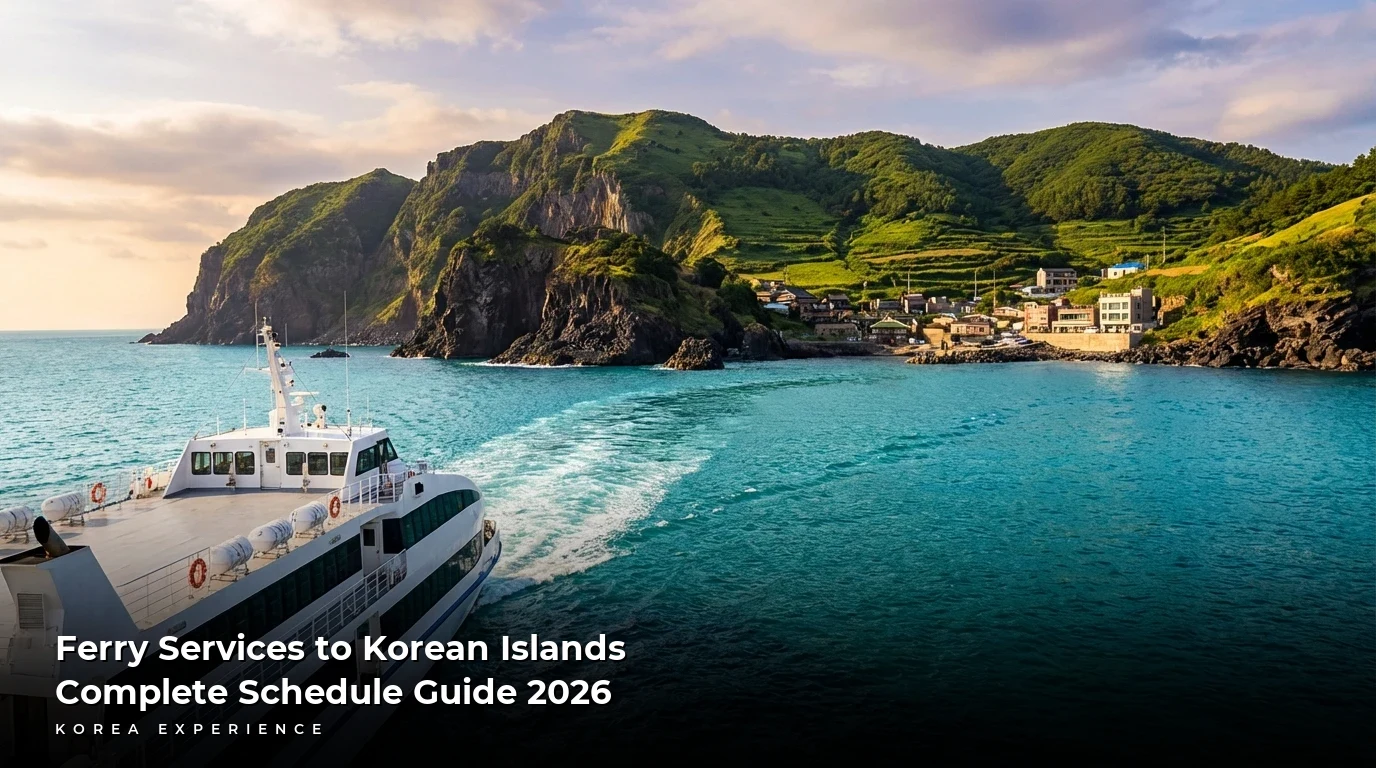
Korean Island Ferries: Complete Schedules & Guide

Unlock Korea's stunning islands! This guide covers ferry services to Jeju, Ulleungdo, Hongdo, and more, with schedules, prices, and travel tips for international visitors.

South Korea, a land celebrated for its dynamic cities and ancient traditions, also boasts a spectacular coastline dotted with thousands of captivating islands. From the volcanic wonders of Jeju Island to the mystical beauty of Ulleungdo and the serene charm of the Dadohae Haesang National Park archipelago, these islands offer unique escapes for every traveler. However, navigating the extensive network of ferry services to Korean islands can often seem daunting for international visitors. Schedules vary seasonally, booking procedures might differ, and knowing the best routes can be challenging.

This comprehensive guide is designed to demystify ferry travel in Korea, providing you with a complete overview of schedules, routes, prices, and essential tips. Whether you're planning a tranquil island retreat, an adventurous hiking trip, or a cultural exploration, this resource will equip you with all the information needed to confidently book your ferry services to Korean islands and embark on an unforgettable journey. We'll cover everything from major routes to hidden gems, ensuring your island-hopping adventure is as smooth and enjoyable as possible.

Understanding Korea's Ferry System and Booking Your Journey

South Korea's ferry network is extensive, connecting the mainland to countless islands across its three coasts: the Yellow Sea (West), the East Sea, and the South Sea. These ferry services are a vital lifeline for island communities and a popular mode of transport for tourists. Understanding how the system works and how to book your tickets effectively is the first step toward a seamless island adventure.

Types of Ferries and Their Amenities

Korean ferries range from large car ferries capable of carrying hundreds of passengers and vehicles, to smaller, faster hydrofoils and express boats. The type of ferry often depends on the route and distance.

  • Car Ferries: These are typically larger, slower vessels offering more amenities. They usually have multiple decks with seating areas, sleeping cabins (for longer routes), convenience stores, cafeterias, and sometimes even entertainment rooms. They are ideal if you plan to bring your car or simply prefer a more spacious journey.
  • Express Ferries/Hydrofoils: These are faster boats designed for quicker travel, often without vehicle capacity. They provide comfortable seating and significantly reduce travel time for popular routes. Amenities might be more limited compared to car ferries.

Most ferries offer both economy (general seating) and first-class options (more comfortable seats, sometimes with tables). On longer routes, bunk bed style sleeping rooms, known as "ondolbang" (floor heating room) or "seonbak-sil" (ship cabin), are available for an additional fee, allowing passengers to lie down and rest.

How to Book Ferry Tickets as an International Visitor

Booking ferry tickets in Korea can be done in several ways, each with its own advantages:

  1. Online Booking: The most convenient method for many major routes is through the official Korean ferry booking website, "Gohae" (Coastlink). While primarily in Korean, some sections offer English translation. You'll typically need to register and have a Korean phone number for verification, which can be a hurdle for international visitors. Some third-party travel agencies might offer booking services with an English interface. For specific popular routes like Jeju, dedicated company websites (e.g., Hanil Express) may also have English booking options.
  2. On-site Purchase at Ferry Terminals: This is a common method, especially for smaller or less popular routes. Arrive well in advance, especially during peak season, weekends, or holidays, as tickets can sell out quickly. Most major terminals have ticket counters with staff who may speak basic English.
  3. Through Travel Agencies: If you're arranging a more complex itinerary or prefer assistance, local travel agencies in Korea can book ferry tickets for you, often for a small service fee.
  4. Important Documents: Always carry your passport, as you may be required to show it when purchasing tickets or boarding the ferry, especially for popular tourist islands or remote border areas like Ulleungdo.

Practical Tips for Booking and Travel

  • Book in Advance: Especially for popular destinations like Jeju, Ulleungdo, or during national holidays (Chuseok, Lunar New Year) and peak summer season (July-August), tickets sell out rapidly.
  • Check Weather Conditions: Ferry services are highly susceptible to weather conditions. Strong winds, heavy rain, or fog can lead to delays or cancellations. Always check the weather forecast before traveling and confirm the ferry schedule with the terminal or ferry company on the day of travel.
  • Arrive Early: Aim to arrive at the ferry terminal at least 30-60 minutes before departure, especially if you need to purchase tickets or if you're traveling with a vehicle.
  • Luggage: Most ferries have ample space for luggage. However, if you have oversized items, it's wise to check with the ferry company beforehand.

Jeju Island Ferry Services: Routes, Schedules, and Tips

Jeju Island (Jeju-do), Korea's largest island and a UNESCO World Heritage site, is famous for its stunning volcanic landscapes, beautiful beaches, and unique culture. While many visitors fly to Jeju, taking a ferry offers a different perspective, often at a more relaxed pace and with the option to bring a car.

Major Ferry Routes to Jeju Island

Jeju Island is primarily served by ferries departing from several mainland ports along the southwestern coast. The journey times vary significantly depending on the departure port and ferry type.

1. Wando to Jeju (Wando-gun, Jeollanam-do)

  • Departure Port: Wando Ferry Terminal (Wando-gun)
  • Ferry Companies: Hanil Express is a prominent operator on this route.
  • Journey Time: Approximately 2 hours 30 minutes to 3 hours, making it one of the shortest routes.
  • Schedules: Typically 2-4 daily departures, with increased frequency during peak season. Morning and afternoon departures are common.
  • Key Information: This is a popular choice due to its shorter travel time. The ferries are usually large car ferries with comfortable amenities.
  • Approximate Price Range: 30,000 - 40,000 Korean Won (KRW) for economy class per adult. Vehicle transport costs vary significantly by size, starting from around 100,000 KRW.

2. Mokpo to Jeju (Mokpo, Jeollanam-do)

  • Departure Port: Mokpo International Ferry Terminal
  • Ferry Companies: Multiple operators, including 씨월드고속훼리 (Sea World Express Ferry).
  • Journey Time: Approximately 4 hours 30 minutes to 5 hours for express ferries; up to 9 hours for slower overnight car ferries.
  • Schedules: Daily departures, often including an overnight option. Day ferries usually depart in the morning.
  • Key Information: Mokpo is a larger city with good rail and bus connections, making it an accessible departure point. The overnight ferry allows you to save on a night's accommodation.
  • Approximate Price Range: 35,000 - 50,000 KRW for economy class. Overnight cabins will be extra.

3. Yeosu to Jeju (Yeosu, Jeollanam-do)

  • Departure Port: Yeosu Expo Cruise Terminal
  • Ferry Companies: Gold Star Cruise.
  • Journey Time: Approximately 5 hours 30 minutes.
  • Schedules: Less frequent than Wando or Mokpo, often one daily departure.
  • Key Information: Yeosu is a beautiful coastal city itself, known for its night views. Combining a visit to Yeosu with a ferry trip to Jeju is a great option.
  • Approximate Price Range: 40,000 - 55,000 KRW for economy class.

4. Usuyeong to Jeju (Haenam-gun, Jeollanam-do)

  • Departure Port: Usuyeong Passenger Terminal
  • Ferry Companies: Hwadong Marine.
  • Journey Time: Approximately 3 hours.
  • Schedules: Often 1-2 daily departures.
  • Key Information: A less crowded alternative to Wando, offering a similar shorter travel time. Located near Haenam, known for its historical significance.
  • Approximate Price Range: 30,000 - 40,000 KRW for economy class.

General Jeju Ferry Travel Tips

  • Consider the Season: During summer, strong winds can occasionally lead to cancellations. Always check the weather.
  • Vehicle Transport: If you plan to bring your car, book well in advance, especially during peak season. Be aware that vehicle transport adds significantly to the cost.
  • Jeju's Arrival Ports: Most ferries arrive at Jeju International Passenger Terminal (in Jeju City), which is well-connected to the rest of the island by bus and taxi.

Table 1: Major Ferry Routes to Jeju Island

Departure PortFerry Company (Example)Approximate Journey TimeApproximate Economy Price (KRW)Vehicle TransportKey Feature
WandoHanil Express2h 30m - 3h30,000 - 40,000YesShortest route, modern ferries
MokpoSea World Express Ferry4h 30m - 9h35,000 - 50,000YesOvernight option, well-connected
YeosuGold Star Cruise5h 30m40,000 - 55,000YesScenic departure city
UsuyeongHwadong Marine3h30,000 - 40,000YesLess crowded, efficient

(Prices are approximate for adult economy class, subject to change based on ferry type, season, and promotions. Vehicle transport is extra.)

Ulleungdo and Dokdo Ferry Services: Journey to Korea's Easternmost Isles

Ulleungdo, often called "Mystery Island," is a rugged volcanic island in the East Sea (Donghae), known for its dramatic cliffs, pristine waters, and unique marine life. A trip to Ulleungdo is an adventure in itself, and it's also the gateway to Dokdo, Korea's easternmost islets.

Key Departure Ports for Ulleungdo

Due to its location further out in the East Sea, ferry services to Ulleungdo are less frequent and more susceptible to weather conditions.

1. Pohang to Ulleungdo (Pohang, Gyeongsangbuk-do)

  • Departure Port: Pohang Passenger Terminal
  • Ferry Companies: Ulleung Cruise, Sun Flower Cruise.
  • Journey Time: Approximately 3 hours 30 minutes for express ferries; 6 hours for slower car ferries.
  • Schedules: 1-2 daily departures, depending on the season and ferry type. Express ferries are more common.
  • Key Information: Pohang is the most common departure point, well-connected by KTX (high-speed rail) from Seoul. The express ferries are generally smooth, but rough seas can occur.
  • Approximate Price Range: 60,000 - 75,000 KRW for economy class. Car transport is available on some ferries but limited.

2. Donghae to Ulleungdo (Donghae, Gangwon-do)

  • Departure Port: Donghae International Ferry Terminal (Mukho Port)
  • Ferry Companies: Jihun Shipping (Sea Cruise).
  • Journey Time: Approximately 2 hours 45 minutes for express ferries.
  • Schedules: Usually 1-2 daily departures.
  • Key Information: This is the shortest route to Ulleungdo in terms of travel time. Donghae is another city with good bus and rail links.
  • Approximate Price Range: 55,000 - 70,000 KRW for economy class.

3. Gangneung to Ulleungdo (Gangneung, Gangwon-do)

  • Departure Port: Gangneung Ferry Terminal (Anmok Port)
  • Ferry Companies: Jihun Shipping (Sea Cruise).
  • Journey Time: Approximately 3 hours 30 minutes for express ferries.
  • Schedules: Usually 1 daily departure, primarily during peak season.
  • Key Information: Gangneung is a popular tourist destination on the east coast, offering a convenient departure point for those exploring the region.
  • Approximate Price Range: 60,000 - 75,000 KRW for economy class.

Visiting Dokdo from Ulleungdo

To visit Dokdo, you must first travel to Ulleungdo. From Ulleungdo's Dodong Port or Jeodong Port, dedicated Dokdo sightseeing boats depart.

  • Journey Time: Approximately 1 hour 30 minutes from Ulleungdo to Dokdo.
  • Docking at Dokdo: Whether you can actually land on Dokdo depends entirely on weather and sea conditions. Landing is only possible on about 50-60 days a year. Even if landing isn't possible, the boats circle the islets, offering stunning views.
  • Schedules: Dokdo boat schedules are highly variable and decided on the day based on weather. It is advisable to book these tickets immediately upon arrival in Ulleungdo.
  • Approximate Price Range: 50,000 - 60,000 KRW per adult for the round trip from Ulleungdo.

Ulleungdo Ferry Travel Tips

  • Check Weather Relentlessly: Ulleungdo ferries are notorious for cancellations due to rough seas. Always have flexible travel plans.
  • Motion Sickness: The East Sea can be choppy. If you are prone to motion sickness, take medication before boarding.
  • Limited Capacity: Ulleungdo is less developed for mass tourism, so accommodation and ferry tickets can be limited. Book everything well in advance.
  • Main Arrival Port: Most ferries arrive at Dodong Port on Ulleungdo, which is the island's main town.

Hongdo, Heuksando, and the Dadohae Haesang National Park Ferries

The Dadohae Haesang National Park (Dadohae Archipelago Marine National Park) stretches across the southwestern coast, encompassing over 1,700 islands, making it Korea's largest national park. Among these, Hongdo (Red Island) and Heuksando (Black Island) are particularly popular for their dramatic scenery and pristine natural beauty.

Ferries to Hongdo and Heuksando

These islands are typically accessed via high-speed passenger ferries. Car ferries are generally not available for these smaller, more remote islands.

1. Mokpo to Hongdo / Heuksando (Mokpo, Jeollanam-do)

  • Departure Port: Mokpo Coastal Passenger Terminal
  • Ferry Companies: Namhae Goesok (Namhae Express), Paradise Cruise.
  • Journey Time:
    • Mokpo to Heuksando: Approximately 1 hour 40 minutes (express ferry).
    • Mokpo to Hongdo: Approximately 2 hours 30 minutes (express ferry), often stopping at Heuksando first.
  • Schedules: 2-4 daily departures for Heuksando, with some continuing to Hongdo. Schedules can be reduced in the off-season or due to weather.
  • Key Information: Mokpo is the primary gateway to these southwestern islands. Many travelers visit Heuksando first and then take a shorter inter-island ferry or continue on the same ferry to Hongdo.
  • Approximate Price Range:
    • Mokpo to Heuksando: 35,000 - 45,000 KRW.
    • Mokpo to Hongdo: 45,000 - 55,000 KRW.

Island Hopping in Dadohae Haesang National Park

For those seeking a multi-island experience, inter-island ferries connect many of the smaller islands within the Dadohae Haesang National Park.

  • From Heuksando: You can easily catch smaller ferries to nearby islands like Daecheongdo, Socheongdo, and the iconic Hongdo. These are short, scenic journeys.
  • From Hongdo: Hongdo itself offers a popular "Hongdo Coastal Tour" boat that circles the island, showcasing its stunning sea caves and red cliffs. This is a must-do experience.
  • Other Islands: Smaller ports like Jindo, Haenam, and Wando also have ferry connections to various islands within the national park, though direct routes to Hongdo or Heuksando are less common from these points compared to Mokpo.

Tips for Dadohae Haesang National Park Ferries

  • Nature Focused: These islands are about natural beauty. Be prepared for hiking, boat tours, and enjoying the serene environment.
  • Accommodation: Book accommodation in advance, especially on smaller islands, as options can be limited.
  • Island Tour Boats: Once on Hongdo or Heuksando, consider taking a local boat tour to fully appreciate the unique geology and coastal scenery. These are usually paid for separately at the island's port.

Western Coast Islands: Ganghwado, Deokjeokdo, and Muuido Ferries

The islands off Korea's western coast, particularly those closer to Seoul, offer convenient escapes, ranging from historical sites to peaceful beaches. These are often popular for day trips or weekend getaways from the capital.

1. Ganghwado Island Ferries (Incheon)

While Ganghwado is largely connected to the mainland by bridges, making road access easy, ferries are sometimes used for specific routes or to reach adjacent smaller islands.

  • Departure Port: There are no major passenger ferry routes from the mainland to Ganghwado itself. Instead, ferries operate from Ganghwado to nearby islands. For example, from Oeopo Port on Ganghwado, you can take a ferry to Seokmodo (석모도), an island renowned for Bomunsa Temple and mineral hot springs.
  • Journey Time: Short, typically 10-15 minutes.
  • Schedules: Frequent daily departures.
  • Key Information: Access to Ganghwado is usually by bus or car from Seoul/Incheon. The ferry to Seokmodo is mostly for cars and pedestrians.
  • Approximate Price Range: Very affordable, usually a few thousand KRW for pedestrians, 15,000 - 20,000 KRW for a car.

2. Deokjeokdo Island Ferries (Incheon)

Deokjeokdo is one of the larger and most popular islands in the West Sea, known for its beautiful beaches and pine forests.

  • Departure Port: Incheon Coastal Passenger Terminal (Incheon)
  • Ferry Companies: Jihun Shipping, KST Marine.
  • Journey Time: Approximately 1 hour for express ferries; 2 hours 30 minutes for car ferries.
  • Schedules: Multiple daily departures, usually 3-5 times a day, with more frequency on weekends.
  • Key Information: Easily accessible from Incheon, which is just a short subway ride from Seoul. Popular for camping and hiking.
  • Approximate Price Range: 20,000 - 30,000 KRW for economy class.

3. Muuido Island Ferries (Incheon)

Muuido is a small, picturesque island very close to Incheon International Airport, making it an ideal day trip for layovers or short visits.

  • Departure Port: Jamjindo Ferry Terminal (near Incheon International Airport)
  • Ferry Companies: Muui Ferry.
  • Journey Time: Very short, approximately 5-10 minutes.
  • Schedules: Extremely frequent, every 15-30 minutes during daylight hours.
  • Key Information: A bridge now connects Muuido directly to the mainland (actually Jamjindo, which is connected by a bridge to Yeongjongdo, where the airport is). While the ferry is still an option and a local experience, driving is now equally viable. Ferries allow for scenic views and are popular with cyclists.
  • Approximate Price Range: A few thousand KRW per person, around 20,000 KRW for a car.

Western Coast Ferry Travel Tips

  • Proximity to Seoul: These islands are great for shorter trips without extensive travel planning.
  • Beach Focused: Many western islands offer lovely beaches, especially during summer.
  • Tidal Flats: The western coast is known for its vast tidal flats (mudflats). Be aware of tidal schedules if you plan activities like clam digging.

Table 2: Western Coast Island Ferry Services

Destination IslandDeparture Port (Major)Approximate Journey TimeApproximate Economy Price (KRW)Vehicle TransportKey Feature
Ganghwado (to Seokmodo)Oeopo Port (on Ganghwado)10-15m2,000 - 3,000 (pedestrian)YesHistorical sites, hot springs
DeokjeokdoIncheon Coastal Terminal1h - 2h 30m20,000 - 30,000YesBeaches, hiking, camping
MuuidoJamjindo Ferry Terminal5-10m2,000 - 3,000 (pedestrian)YesNear Incheon Airport, easy access

(Prices are approximate for adult economy class, subject to change. Some routes now have bridge connections too.)

Ferry schedules and pricing in Korea are not static. They undergo regular adjustments based on seasonality, demand, and sometimes even specific events. Understanding these dynamics is crucial for planning your trip.

Seasonal Variations in Ferry Schedules

  • Peak Season (Summer: July-August, National Holidays):
    • Increased Frequency: Many routes, especially to popular tourist islands like Jeju and Ulleungdo, will have more daily departures to accommodate higher demand.
    • Earlier Booking Required: Tickets sell out much faster. Booking weeks or even months in advance is strongly recommended.
    • Extended Operating Hours: Some routes might offer earlier morning or later evening departures.
  • Shoulder Season (Spring: April-June, Autumn: September-October):
    • Stable Schedules: Frequencies are generally good, offering a balance between availability and fewer crowds.
    • Pleasant Weather: Often the best time to visit for comfortable temperatures and clear skies.
  • Low Season (Winter: November-March):
    • Reduced Frequency: Many routes will operate on a limited schedule, sometimes only once or twice a day, or even a few times a week for smaller islands.
    • Weather Dependent: Winter weather, especially strong winds and snow, can lead to more frequent cancellations or delays.
    • Lower Crowds: Ideal for travelers seeking solitude and lower prices on accommodation.

Pricing Structure and Factors Affecting Cost

Ferry ticket prices in Korea are determined by several factors:

  • Route and Distance: Longer routes naturally cost more.
  • Ferry Type: Express ferries are generally more expensive than slower car ferries due to their speed.
  • Class of Service: Economy (general seating) is the most affordable. First-class seats, designated cabins, or "ondolbang" (sleeping rooms) incur additional charges.
  • Seasonality: While the base fare doesn't always drastically change by season, some companies might offer promotions or slight increases during peak times.
  • Vehicle Transport: Bringing a car, motorbike, or bicycle incurs a separate, often substantial, fee based on vehicle size.
  • Port Fees/Taxes: A small port facility usage fee is often included in the ticket price.

Table 3: General Price Guide by Route Type (Adult Economy)

Route TypeJourney Time (Approx.)Approximate Price Range (KRW)
Short Inter-Island10m - 30m2,000 - 10,000
Mid-Distance Coastal1h - 2h 30m20,000 - 35,000
Long-Distance Mainland2h 30m - 5h30,000 - 55,000
Remote/Overnight5h - 9h40,000 - 70,000+
Ulleungdo/Dokdo (Express)2h 45m - 4h55,000 - 75,000

(These are general ranges for adult economy fares and can vary widely. Vehicle transport, cabins, and premium seating are extra.)

Essential Travel Tips for Ferry Travel in Korea

To ensure a smooth and enjoyable journey on Korea's ferry services, keep these practical tips in mind:

1. Stay Informed About Weather Conditions

This is perhaps the most critical tip for ferry travel in Korea. Weather can change rapidly, especially on the coasts and at sea.

  • Check Daily Forecasts: Use reliable weather apps or local Korean weather websites.
  • Contact Terminal/Ferry Company: On the day of travel, call the ferry terminal or the specific ferry company to confirm if services are running as scheduled. Many terminals have information desks where you can inquire.
  • Flexibility is Key: If your itinerary is tight, consider having a backup plan or building in extra days in case of cancellations.

2. Learn Basic Korean Phrases for Terminals

While major terminals may have English-speaking staff, smaller ones might not. Learning a few phrases can be very helpful:

  • "Pyo hanjang juseyo" (Ticket, please)
  • "Ollae?" (How much is it?)
  • "Yeong-eo doeyo?" (Do you speak English?)
  • "Chwiso doeeoss-eoyo?" (Is it cancelled?)
  • "Myeoch si-e chulbalhaeyo?" (What time does it depart?)

3. Pack Essentials for the Journey

Even short ferry trips can benefit from some preparation:

  • Snacks and Drinks: While most larger ferries have convenience stores or cafeterias, having your own snacks can be convenient.
  • Motion Sickness Medication: If you're susceptible, take it before boarding.
  • Entertainment: Books, headphones, or a fully charged device are great for longer journeys.
  • Warm Layer: Even on sunny days, the sea breeze can be chilly on deck.
  • Passport: Essential for ticketing and boarding.

4. Utilize Local Transport to and from Ferry Terminals

Korean ferry terminals are generally well-connected to local public transport networks.

  • Bus Connections: Most terminals have local bus stops nearby connecting to city centers or train stations.
  • Taxi Services: Taxis are readily available at major terminals.
  • Parking: If you drive, parking facilities are usually available at the terminals, often for a fee.

5. Research Your Destination Island Thoroughly

Each Korean island has its unique charm and infrastructure.

  • Accommodation: Book ahead, especially for popular islands or during peak season.
  • Local Transport: Some islands have good bus networks (e.g., Jeju), while others might require taxis, rented scooters, or walking.
  • Activities: Plan your activities and check opening hours, especially for attractions like Dokdo, where landing is weather-dependent.

Frequently Asked Questions About Korean Ferry Services

Q1: How can I book ferry tickets online as a foreigner without a Korean phone number?

A1: Online booking directly through official Korean ferry sites like "Gohae" (Coastlink) can be challenging without a Korean phone number for verification. Your best options are:

  1. Third-Party English Travel Agencies: Search for Korean travel agencies that offer ferry ticket booking services for international visitors.
  2. On-Site Purchase: Go directly to the ferry terminal ticket counter well in advance of your desired departure.
  3. Ask for Assistance: If you're staying at a hotel or guesthouse, ask staff if they can help you with the booking process or verify your details.

Q2: What documents do I need for ferry travel in Korea?

A2: Always carry your passport when traveling by ferry in Korea. You may be required to show it at the ticket counter for purchase and again when boarding the vessel, especially for popular tourist islands or remote areas. For domestic travel, a valid ID card is sufficient for Koreans, but foreigners should use their passport.

Q3: Can I take my car on a ferry to most Korean islands?

A3: While many major routes, especially to Jeju Island and some larger western islands like Deokjeokdo, accommodate vehicles (cars, motorbikes, bicycles), not all routes do. Smaller islands or those served by express passenger-only ferries typically do not allow vehicles. Always check the specific ferry company and route in advance. Booking vehicle space must be done well ahead of time, especially during peak season, as capacity is limited.

Q4: Are there luggage restrictions on Korean ferries?

A4: Generally, there are no strict weight or size restrictions for luggage on Korean ferries, especially larger car ferries. You can usually bring standard travel luggage, including suitcases and backpacks. However, for express ferries, there might be overhead bins or designated areas, and extremely oversized items might require prior arrangement. It's always advisable to keep your luggage consolidated and manageable.

Q5: What happens if my ferry is cancelled due to bad weather?

A5: If your ferry is cancelled due to adverse weather conditions (strong winds, high waves, fog), you are entitled to a full refund for your ticket. Contact the ferry terminal's ticket counter or the ferry company directly to process the refund. If you've booked through a third-party agency, contact them. Ferry companies usually do not provide compensation for accommodation or other travel costs incurred due to cancellations, so always factor in potential delays or cancellations into your travel plans.

Conclusion: Charting Your Course to Korea's Island Wonders

Embarking on a ferry journey to Korea's islands is more than just transportation; it's an integral part of the adventure. From the bustling mainland ports to the serene island harbors, these voyages offer unique perspectives of Korea's beautiful coastlines and marine life. By understanding the diverse ferry services to Korean islands, their schedules, and practical tips, you are now well-equipped to plan a memorable island-hopping itinerary.

Whether you dream of hiking the volcanic trails of Jeju, exploring the mystical shores of Ulleungdo, discovering the dramatic cliffs of Hongdo, or simply enjoying a tranquil day trip to an island near Seoul, the Korean ferry network makes it all possible. Remember to check the weather, book in advance, and embrace the spirit of discovery. Your island adventure awaits – bon voyage!

Internal Linking Opportunities (Future Articles):

  • "Ultimate Guide to Exploring Jeju Island"
  • "Island Hopping in Korea: Best Routes and Hidden Gems"
  • "Top 5 National Parks in Korea for Nature Lovers"
  • "A Foodie's Guide to Korean Coastal Cuisine"

About the Author

Korea Experience Team

Written by the Korea Experience editorial team - experts in Korean medical tourism, travel, and culture with years of research and firsthand experience.

⚠️ Medical Disclaimer

The information provided on this website is for general informational purposes only and does not constitute medical advice. Always consult with qualified healthcare professionals before making any medical decisions.

Continue Reading

Explore more articles you might find interesting