Gyeongju itinerary 2026: The ultimate 2-day museum without walls guide
Explore Korea's ancient capital with this 2-day Gyeongju itinerary. Discover Bulguksa, royal tombs, and hip cafes. Total cost: ~$180 USD. Updated for 2026.
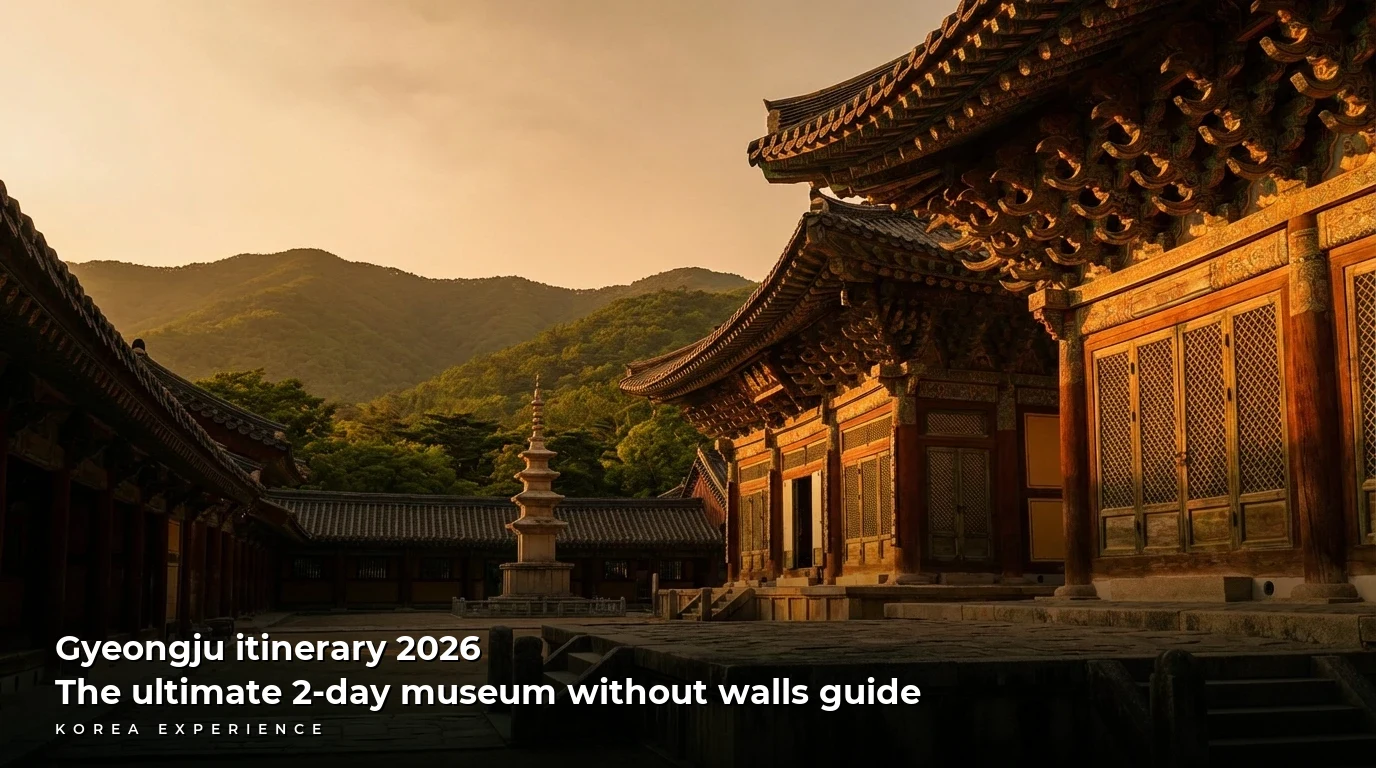
For travelers seeking the historical soul of South Korea, a 2-day itinerary in Gyeongju is the perfect duration to explore the "Museum Without Walls." In 2026, the ideal strategy is to divide your trip geographically: spend Day 1 exploring the pedestrian-friendly city center (Royal Tombs, Hwangnidan-gil, and Donggung Palace) and Day 2 venturing to the mountain heritage sites (Bulguksa Temple and Seokguram Grotto). Located just 2 hours from Seoul via KTX, Gyeongju offers a seamless blend of ancient Silla Kingdom history and modern "New-tro" cafe culture.
The short answer: To maximize a 2-day trip in 2026, take the early KTX to Singyeongju Station, stay in a Hanok near Hwangnidan-gil, and utilize the No. 10 or 11 bus loops for major sites. Budget approximately ₩250,000 ($180 USD) per person for a comfortable mid-range experience including transport, food, and entry fees.
Key Takeaways
- 1Split your trip: Day 1 for City Center walkability, Day 2 for Mountain temples
- 2Transport: The KTX takes 2 hours from Seoul; local bus fare is ₩1,500
- 3Must-do: Night view at Donggung Palace requires arrival by 7:30 PM for photos
- 4Food trend: 2026 sees a massive rise in fusion bakeries on Hwangnidan-gil
Why Gyeongju is Unmissable in 2026
Gyeongju was the capital of the Silla Kingdom for nearly 1,000 years (57 BC – 935 AD). Unlike Seoul, which has been constantly redeveloped, Gyeongju has preserved its ancient footprint. In 2026, the city has completed several renovation projects around the Woljeonggyo Bridge area, making it more accessible than ever. With a population of roughly 250,000, it feels unhurried compared to the metropolis, yet it hosts over 9 million visitors annually.
The city is a study in contrasts. You will see 1,500-year-old burial mounds towering over modern Starbucks buildings with tiled roofs. The local government has strictly enforced building height limits (usually under 5 stories in the center) to preserve the skyline, ensuring the ancient tumuli remain the dominant visual features.
The 2026 Silla Pass
New for 2026, Gyeongju has introduced a digital "Silla Heritage Pass" for foreign tourists. For ₩15,000, it covers entry to Daereungwon, Donggung Palace, and 4 other sites, plus gives a 10% discount at participating cafes in Hwangnidan-gil.
Getting There: KTX vs. Bus
Reaching Gyeongju has become significantly easier with the expansion of the KTX/SRT high-speed rail lines. Most international travelers will be coming from Seoul or Busan.
From Seoul
The most efficient route is taking the KTX from Seoul Station to Singyeongju Station.
- Duration: 2 hours to 2 hours 15 minutes.
- Cost: Approximately ₩49,300 ($36 USD) for Economy class.
- Frequency: Departures every 30-60 minutes.
Alternatively, the Express Bus from Seoul Express Bus Terminal takes about 3 hours and 50 minutes. While cheaper (roughly ₩35,000 for a premium bus), the time lost usually isn't worth the savings for a short 2-day trip.
From Busan
- KTX: Busan Station to Singyeongju takes only 30 minutes (approx. ₩11,000).
- Bus: Sasang or Nopo terminals to Gyeongju Intercity Bus Terminal take about 50-60 minutes (approx. ₩6,000).
Seoul to Gyeongju Transport Options (2026)
| Feature | KTX Train | Express Bus |
|---|---|---|
| Travel Time | 2 hours | 4 hours |
| Cost (One Way) | ₩49,300 | ₩35,000 |
| Arrival Point | Singyeongju Stn (Outskirts) | Express Terminal (City Center) |
| Comfort | High (Legroom + WiFi) | Medium (Premium seats avail) |
Crucial Logistics Note: Singyeongju Station is located about 15-20 minutes away from the city center by bus or taxi.
- Taxi to Center: ~₩15,000 (20 mins).
- Bus to Center: Buses 50, 51, 60, 61, 70 (₩1,500, 30-40 mins).
For detailed advice on navigating Korea's transport hubs before you leave Seoul, read our guide on Airport Limousine Bus vs AREX Express Train.
Where to Stay: Location Strategy
In Gyeongju, location dictates your experience. There are two main areas to consider for a 2026 visit:
- Hwangnidan-gil & City Center: Best for first-timers. You are walking distance to 70% of the sites on this itinerary. Accommodation here is mostly Hanok (traditional house) stays.
- Bomun Lake Resort Area: Located 6km east of the center. This area features large luxury hotels like the Hilton and Lahan Select. It is beautiful during cherry blossom season but requires a taxi or bus to get to historical sites.
Staying in a Hanok (Traditional House)
- ✓Immersive cultural experience
- ✓Heated floors (Ondol) are great in winter
- ✓Located in the walkable city center
- ✗Sound insulation can be poor
- ✗Sleeping on floor mats (Yo) can be hard on backs
- ✗Usually no private parking
Day 1: The Royal Walk & The Hip Street
Theme: Ancient Tombs meet Modern Cafe Culture Total Walking: ~15,000 steps Estimated Daily Cost: ₩80,000 (excluding accommodation)
Morning: The Silent Kings at Daereungwon
Start your day at 9:00 AM at Daereungwon Tomb Complex. This park contains 23 large burial mounds of Silla kings and nobles. The most famous spot is the photo zone between two large mounds, often featuring a lone magnolia tree—expect a queue of 15-30 minutes here even on weekdays in 2026.
Don't miss Cheonmachong (Heavenly Horse Tomb), the only tomb you can enter. It reveals the complex wood-and-stone structure used by the Silla people and displays replicas of the golden crowns found inside.
- Admission: Free for the park; Cheonmachong entry is ₩3,000.
- Time: 1.5 hours.
Lunch: Ssambap or Dosirak
Head across the street to the famous "Ssambap Alley." Ssambap consists of rice and meat wrapped in various leafy vegetables. It’s a Gyeongju staple.
- Cost: ~15,000 - ₩18,000 per person.
- Recommendation: Look for restaurants with "Byeolchae" in the name for traditional architecture.
Afternoon: Hwangnidan-gil & Cheomseongdae
After lunch, explore Hwangnidan-gil. This street was a slum a decade ago but is now the trendiest street in the Gyeongsang province. In 2026, it is packed with self-photo studios, fusion hanok cafes, and souvenir shops selling "Smile of Silla" bread.
Cheomseongdae Observatory(첨성대)
Cheomseongdae is a short walk away. Built in the 7th century, it is the oldest surviving astronomical observatory in Asia. It comprises 362 stones, representing the days in a lunar year. Surrounding the tower are vast flower gardens that change seasonally—yellow canola in spring, sunflowers in summer, and pink muhly in autumn.
For those interested in capturing these moments perfectly, you might want to consider renting traditional attire. Check out our Hanbok rental complete guide for tips on pricing and styles available in Gyeongju.
Evening: The Palace of Reflections
Dinner should be quick so you can reach Donggung Palace and Wolji Pond by 7:30 PM. This was the secondary palace used by the crown prince. The site is famous because the lighting is engineered to create a perfect mirror reflection of the pavilions on the pond.
- Admission: ₩3,000.
- Crowd Alert: 2026 visitor numbers peak at 8:00 PM. Arrive by 7:00 PM to catch the "blue hour" transition.
Day 1 Evening: Royal Night vs. Street Bites
The Dualism Concept: Experience the best of both worlds — premium luxury moments paired with authentic budget-friendly experiences in one route.
Luxury Dining
Hanjeongsik (Royal Course Meal) near Wolji
Street Food
10-won Bread and Hwangnam Corn on the street
If you are tired from walking, the luxury sit-down dinner provides necessary rest before the palace night walk.
Day 2: Spiritual Heights & Traditional Villages
Theme: Buddhist Masterpieces & Living History Transport: Bus No. 10 or 11 (Loop buses) or Taxi Estimated Daily Cost: ₩60,000
Morning: The Jewel of Silla, Bulguksa Temple
You must start early. Bulguksa Temple is a UNESCO World Heritage site and arguably the most important temple in Korea.
- Transport: Take Bus No. 10 or 11 from the city center (across from the Express Bus Terminal or near Gyeongju Station).
- Time: 45 minutes by bus.
- Cost: Bus fare ₩1,650 (cash) or ₩1,550 (T-money card).
- Entry: ₩6,000 (Adults).
Explore the distinct zones of the temple representing the land of Buddha. Look for the two pagodas in the main courtyard: Seokgatap (simple, masculine style) and Dabotap (ornate, feminine style). These distinctive architectural styles are national treasures.
📖 How to Visit Seokguram Grotto from Bulguksa
Step 1: Exit Bulguksa
Walk down to the parking lot bus stop.
Step 2: Take Bus No. 12
This shuttle bus runs once every hour (at :40 past the hour in 2026 schedules).
Step 3: The Short Hike
From the drop-off, walk 15 minutes along a gravel path to the Grotto.
Seokguram Grotto features a massive Buddha statue looking out toward the East Sea. It is an engineering marvel of the 8th century, assembled from hundreds of granite pieces without mortar. Photography inside the glass enclosure is strictly prohibited to preserve the sanctity and the stone.
Afternoon: Gyochon Traditional Village
Return to the city by bus (take No. 10 or 11 again; they are loop buses). Get off near Gyochon Village.
This is a "living" hanok village, famously the home of the Gyeongju Choi clan, a family known for their wealth and noblesse oblige (they fed their neighbors during famines).
- Activity: Try making Gyeongju traditional rice wine or glass blowing.
- Must-See: Woljeonggyo Bridge. This is a reconstructed covered bridge that connects the village to the south bank. It is stunningly majestic and free to walk across.
Nearby, you can find remnants of Poseokjeong, a stone channel where Silla kings would float wine cups during poetry parties. It reflects the leisure culture of the ancient elite. For context on how historical sites like this are portrayed in media, read our article on Historic Kdrama Sets and Folk Villages.
Late Afternoon: Gyeongju National Museum
If your legs allow, the Gyeongju National Museum is walkable from Gyochon.
- Why go? It houses the original gold crowns and the Divine Bell of King Seongdeok (Emille Bell).
- Admission: Free.
- Closing Time: 6:00 PM on weekdays, 7:00 PM on weekends.
📊 The Golden City
Food Guide: What to Eat in Gyeongju
Gyeongju's food scene in 2026 is a mix of traditional staples and viral Instagram treats.
- Hwangnam Bread (Gyeongju Bread): A thin pastry filled with sweet red bean paste.
- Price: ₩24,000 for a box of 20.
- Where: The official "Hwangnam-ppang" store near the Royal Tombs is the best.
- 10-Won Bread: A cheesy bread shaped like the 10-won coin (which features Dabo-tap pagoda from Bulguksa).
- Price: ₩4,000.
- Taste: Sweet batter with salty mozzarella.
- Hanwoo (Korean Beef) Water Raw Beef (Hanwoo Mulhoe): Similar to cold noodle soup but with high-quality raw beef tartare.
- Price: ~₩15,000.
- Location: Restaurants near Bomun Lake specialize in this.
If you are a foodie interested in broader Korean culinary trends, don't miss our 50 must-try Korean foods guide.
Budget Breakdown (2026 Estimates)
Gyeongju is generally 15-20% cheaper than Seoul for dining and transport, though accommodation prices can spike on weekends.
💵 Estimated Cost for 2 Days (Per Person)
Private Hanok, Taxis, Course meals, KTX
Guesthouse, Bus transport, Street food
Best Time to Visit
- Spring (End of March - Early April): The cherry blossoms in Gyeongju are legendary, specifically the "Cherry Blossom Marathon" route around Bomun Lake. However, crowds are intense.
- Autumn (Late October - Early November): The foliage at Bulguksa and the Pink Muhly near Cheomseongdae make this the most photogenic season.
- Summer: Very hot and humid (30°C+).
- Winter: Cold (-5°C), but snow on the tumuli mounds creates a serene, melancholic beauty.
For a full breakdown of weather patterns to plan your attire, refer to our Best Time to Visit Korea guide.
Expert Tips for the Perfect Trip
"Many tourists miss the 'Oreung' (Five Royal Tombs) because it's slightly south of the center. It is much quieter than Daereungwon and has a mystical bamboo forest that feels like a scene from a martial arts movie. Also, avoid driving a rental car into Hwangnidan-gil on weekends—you will be stuck in traffic for an hour. Park at the old Gyeongju Technical High School lot nearby."
Frequently Asked Questions
❓ Gyeongju Travel FAQ
Have more questions?Contact us →
Gyeongju in 2026 remains a testament to the endurance of Korean history. Whether you are cycling past 1,500-year-old tombs or sipping a flat white in a renovated hanok, the city offers a unique temporal duality that few other places in the world can match. It is not just a sightseeing stop; it is a place to breathe in the timeline of a civilization. Enjoy your journey through the Museum Without Walls.
About the Author
Korea Experience Team
Written by the Korea Experience editorial team - experts in Korean medical tourism, travel, and culture with years of research and firsthand experience.
Explore more in Travel & Tourism
From Seoul's neon-lit streets to Jeju's volcanic landscapes — discover the best of Korea with insider travel tips, itineraries, and seasonal guides.
Browse All Travel & Tourism ArticlesContinue Reading
Explore more articles you might find interesting
Discover the ultimate guide to K Webtoons in Seoul 2026. Explore top manhwa cafes, museums, and pop-up stores defining the new wave of Korean culture.
Discover the best artisan roasters on Gangneung Coffee Street. Explore Anmok Beach cafes, prices, and brewing methods in Korea's coffee capital.
Explore Gyeongju traditional cuisine historic recipes. Discover royal Silla Dynasty dishes, famous ssambap alleys.
Discover the ultimate guide to Korean desserts in 2026. From fluffy Bingsu to street-side Hotteok, explore prices, locations, and top cafes.
Explore Seoul's largest vintage market with our 2026 guide. Find luxury brands for ₩5,000, navigate 600+ stalls, and discover hidden boutiques.
Discover Korea's top winter sports spots for 2026. From Yongpyong slopes to Cheongsong ice walls, get prices, transport tips, and rental guides.