Historic Hanok Villages Beyond Bukchon: 2026 Travel Guide
Discover 5 authentic Hanok villages beyond Bukchon. Explore Eunpyeong, Jeonju, and Andong with full price guides, travel times, and stay tips for 2026.
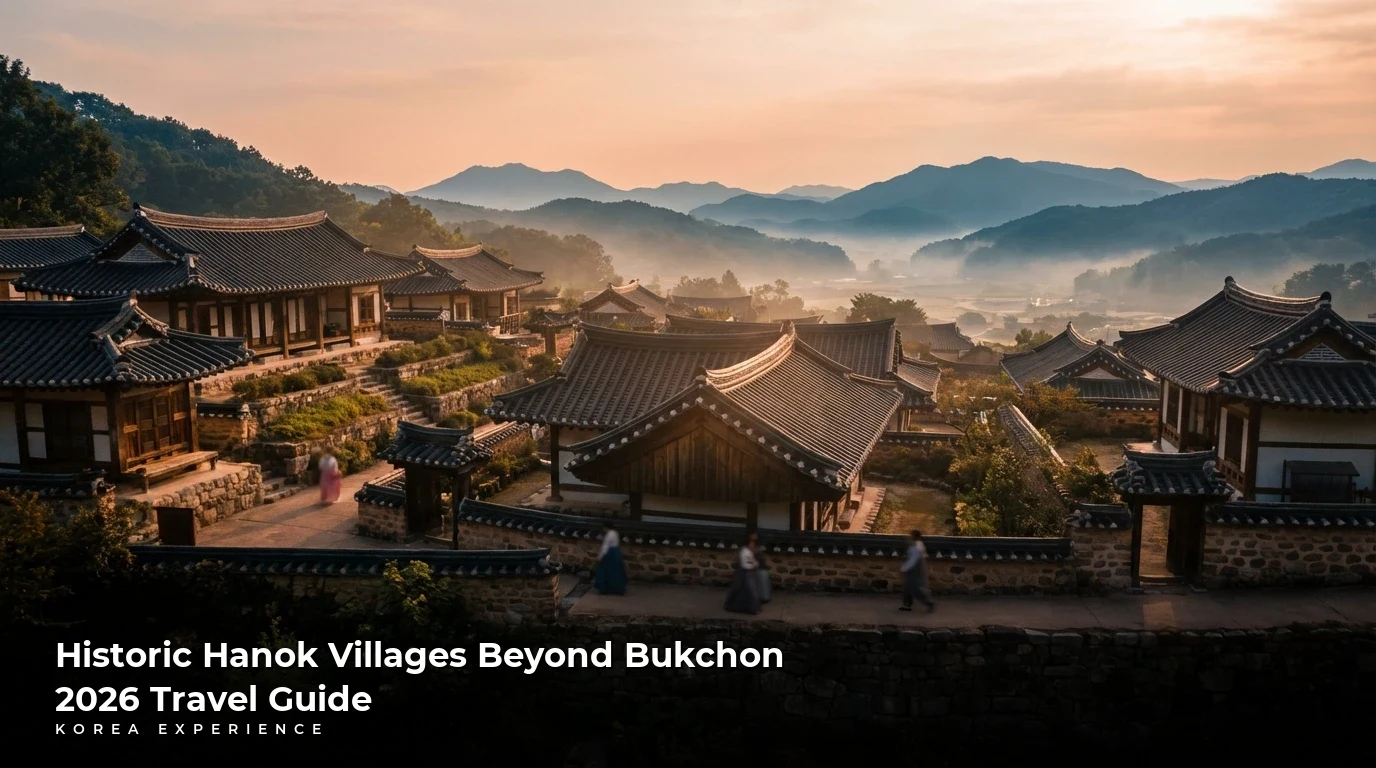
While Bukchon Hanok Village is the poster child for traditional Korean architecture, smart travelers know that the true charm of the Hanok (traditional Korean house) is often found away from the crushing crowds of northern Seoul. If you are looking for tranquility, architectural diversity, and a deeper connection to Korean history without fighting for photo angles, you must venture beyond the main tourist trail.
The short answer: The best alternatives to Bukchon are Eunpyeong Hanok Village for modern luxury and mountain views, Namsangol Hanok Village for cultural immersion, and Jeonju Hanok Village for the ultimate food and stay experience.
Key Takeaways
- 1Eunpyeong offers the best mountain backdrops and modern Hanok cafes within Seoul limits
- 2Namsangol is free to enter and hosts traditional weddings on weekends
- 3Jeonju requires a 1.5-hour KTX train ride but offers over 700 traditional houses
- 4Andong Hahoe Village provides a UNESCO-listed living heritage experience unchanged for centuries
Why Look Beyond Bukchon?
Bukchon Hanok Village remains a marvel of preservation, situated perfectly between Gyeongbokgung and Changdeokgung palaces. However, its popularity has come at a cost. In 2025, visitor numbers surged, leading to strictly enforced "quiet hours" and increased tension with local residents.
For the international traveler in 2026, looking elsewhere isn't just about avoiding crowds; it's about finding specific types of experiences. Whether you want the juxtaposition of glass and wood found in Eunpyeong, the fortress-like history of Gongju, or the aristocratic roots of Andong, Korea’s regional Hanok villages offer variety that Bukchon simply cannot.
📊 Visitor Density Stats
Eunpyeong Hanok Village: The Modern Traditionalist
Located in the northwestern foothills of Bukhansan National Park, Eunpyeong Hanok Village represents the evolution of Korean architecture. Unlike the centuries-old alleys of Bukchon, Eunpyeong was established as a special purpose district in the mid-2010s. This means the houses here are "Neo-Hanoks"—they utilize modern insulation and technology while strictly adhering to traditional aesthetic guidelines.
Getting There and Costs
Accessing Eunpyeong requires a bit more travel time than downtown spots. From Seoul Station, it takes approximately 45-50 minutes. You can take the subway to Gupabal Station (Line 3), Exit 4. From there, transfer to Bus 701 or 7211, which takes about 15 minutes to reach the village entrance (Hanok Village Stop).
📋 Eunpyeong Quick Facts
The Atmosphere
The streets here are wide and flat, making it significantly more accessible for wheelchair users or strollers compared to the steep hills of Bukchon. The backdrop is the majestic Bukhansan Mountain, which provides a stunning contrast to the tiled roofs. Because it is a residential area with many active construction projects, the vibe is quieter but feels newer.
1 In 1 Jan (1인1잔)(일인일잔)
A major draw here is the cafe culture. "1 In 1 Jan" is famous for its floor-to-ceiling windows that frame the village and mountain like a painting. Expect to pay a premium here; a signature coffee and rice cake set will cost around ₩13,000.
Hiking Opportunity
Eunpyeong Hanok Village sits at the entrance to several Bukhansan hiking trails. Pack sturdy shoes and combine your village visit with a 2-hour trek to Jingwansa Temple, one of the most serene temples in Seoul, offering free tea to hikers on weekends.
Namsangol Hanok Village: The Time Capsule
If you are short on time but want an authentic experience without the commercial hustle, Namsangol Hanok Village in the Pil-dong neighborhood of Jung-gu is your best bet. Opened in 1998, this site features five traditional Hanok houses that were moved from various parts of Seoul and restored to their original glory.
A Living Museum
Unlike residential villages, nobody lives here. It is a cultural park and museum. This means you can enter the houses (taking off your shoes, of course) and see exactly how furniture was arranged during the Joseon Dynasty.
The village is divided into zones representing different social classes, from the modest house of a commoner to the grand residence of King Cheoljong’s father-in-law.
📖 How to Experience a Traditional Tea Ceremony
Step 1: Reservation
Book online via the Namsangol website or walk in (spots limited).
Step 2: Preparation
Wash hands and sit cross-legged on the cushion.
Step 3: The Ritual
Follow the master's lead in warming the pot, steeping tea, and savoring the aroma.
Key Data Points
- Admission: Free
- Hours: April-Oct (09:00-21:00), Nov-Mar (09:00-20:00). Closed Mondays.
- Location: 200m from Chungmuro Station (Line 3/4), Exit 3 or 4.
- Time Capsule: The site hosts a time capsule buried in 1994, scheduled to be opened in the year 2394, celebrating Seoul's 600th anniversary.
For those interested in how these locations are used in media, you might recognize Namsangol from various historical dramas. For more on this topic, read our guide to historic K-Drama sets and folk villages.
Jeonju Hanok Village: The Capital of Tradition
Located about 200km south of Seoul, Jeonju is the spiritual capital of the Hanok movement. With over 700 traditional houses clustered together in the city center, it is the largest contiguous Hanok village in Korea.
How to Get There
- Train: KTX from Seoul Station to Jeonju Station takes roughly 1 hour 40 minutes.
- Cost: Approximately ₩34,600 for an Economy seat one way.
- Bus: Express bus from Central City Terminal takes about 2 hours 40 minutes and costs around ₩22,000.
💵 Jeonju Travel Costs (Per Person)
KTX First Class, Premium Hanok Stay, Fine Dining
Bus, Street Food, Free Walking Tours
The Food Capital
Jeonju is designated as a UNESCO City of Gastronomy. The village is famous for Jeonju Bibimbap, but the street food scene is equally vibrant. As you walk down the main Taejo-ro street, you will find vendors selling:
- Baguette Burgers: spicy pork and vegetables in a crispy baguette (₩5,000).
- Choco Pies: The famous PNB bakery chocolate pies (₩2,500).
- Grilled Cheese Skewers: Locally made Imsil cheese (₩4,000).
Don't just stick to the main street. The best bibimbap is found in the alleys. Look for 'Gajok Hoegwan' (가족회관) - it's where the locals actually eat. Also, try the Moju (cinnamon mother wine); it has low alcohol (1.5%) and pairs perfectly with spicy food.
While exploring, many visitors choose to rent Hanbok. The styles here range from traditional to modern "fusion" styles with lace and gold foil. For a deep dive into costs and styles, check out our Hanbok rental guide.
Andong Hahoe Village: The Aristocratic Legacy
If Jeonju is the lively commercial hub, Andong Hahoe Village is the quiet, dignified grandfather. Listed as a UNESCO World Heritage site, this village has been home to the Ryu clan of Pungsan for over 600 years.
A Living Heritage
Unlike Namsangol (museum) or Eunpyeong (modern residential), Andong Hahoe is a "living" village where descendants of the Ryu clan still reside in 300-400-year-old houses. The village is famously shaped like a lotus flower, surrounded by the Nakdong River.
Respect Privacy
Because these are real homes, many areas are off-limits. Only enter courtyards where doors are open and signage invites you in. Drone photography is strictly prohibited without a permit.
Logistics and Costs
- Transport: Take the KTX-Eum from Cheongnyangni Station (Seoul) to Andong Station (2 hours, ₩25,100). Then, take Bus 210 (45 minutes, ₩1,500) to the village entrance.
- Entry Fee: ₩5,000 for adults.
- Ferry: To get the best view, take the small ferry (₩1,000 round trip) across the river to Buyongdae Cliff. The view from the top looking down at the village is iconic.
The Mask Dance
Andong is famous for the Hahoe Byeolsingut Talnori, a traditional mask dance drama. Performances are held free of charge at the village performance hall.
- Schedule: Generally 2:00 PM on weekends (check seasonal schedules).
- Duration: 60 minutes.
This destination fits perfectly into one of our best day trips from Seoul if you start early, though an overnight stay is recommended to feel the evening peace.
Seochon Village: The Artistic Neighbor
Returning to Seoul, west of Gyeongbokgung Palace lies Seochon (literally "West Village"). While Bukchon was historically home to high-ranking officials, Seochon was the residence of artists, poets, and mid-ranking professionals.
The Vibe
Seochon feels more organic and less manicured than Bukchon. The Hanoks here are often hidden behind 1970s brick walls or converted into indie bookstores and small galleries. The intricate alleyways near Tongin Market are a maze of discovery.
Seochon vs. Bukchon
- ✓Fewer tour buses and large groups
- ✓More independent artisan shops
- ✓Immediate access to Tongin Market
- ✗Fewer 'grand' photo spots
- ✗Hilly terrain in upper sections
- ✗Less English signage
Tongin Market and the Brass Coin Lunchbox
A highlight of Seochon is Tongin Market. Here, you can participate in the "Yeopjeon" (Brass Coin) Lunchbox program.
- Buy a string of brass coins (₩10,000 for 20 coins).
- Receive a plastic tray.
- Walk through the market, exchanging coins for small portions of food (Oil Tteokbokki, Japchae, Pancakes) at participating stalls.
- Eat in the designated cafe upstairs.
This is a fantastic budget option, allowing you to sample 5-6 different dishes for under $8 USD.
Practical Guide to Staying in a Hanok
Staying overnight in a Hanok is a bucket-list item for many. However, it is essential to manage expectations regarding comfort and amenities.
The Ondol Experience
Traditional Hanoks use Ondol, an underfloor heating system. In the past, this was powered by wood smoke; today, it is hydronic or electric. The heat is delightful in winter, but it means you will be sleeping on a Yo (padded mattress) directly on the floor.
Hanok Stay Types
| Feature | Traditional Guesthouse | Modern Hanok Hotel | Luxury Resort |
|---|---|---|---|
| Bedding | Yo (Floor Mattress) | Low Bed or Thick Yo | Western King Bed |
| Bathroom | Small, often wet-room | Modern ensuite | Luxury tub, spacious |
| Insulation | Drafty in winter | Double-glazed windows | Climate controlled |
| Avg Price | ₩60,000 - ₩100,000 | ₩150,000 - ₩250,000 | ₩400,000+ |
Booking Tips for 2026
- Platform: Airbnb is popular, but local sites like Stayfolio offer curated, high-end Hanok listings.
- Lead Time: For cherry blossom season (early April) or autumn foliage (late October), book at least 3 months in advance.
- Amenities: Check if breakfast is included. A traditional Korean breakfast served in your room is a highlight of the experience.
For a broader look at exploring heritage sites, consider reading about Andong Hahoe Village specifically for accommodation recommendations in that region.
Suggested Itineraries
To help you plan, here are two distinct ways to experience Hanok culture, depending on your budget and style.
Hanok Experience: City vs. Country
The Dualism Concept: Experience the best of both worlds — premium luxury moments paired with authentic budget-friendly experiences in one route.
Luxury Eunpyeong Stay
Stay at a private villa, private tea ceremony, taxi transfers.
Budget Namsangol Visit
Free entry, subway travel, street food lunch.
If you have time, the country route to Andong offers a deeper connection to history than any Seoul-based luxury stay.
Conclusion
While Bukchon will always be a significant landmark, the magic of Korean traditional architecture is best felt when you have the space to breathe and reflect. Whether sipping an ₩8,000 latte overlooking Bukhansan in Eunpyeong or watching a mask dance in Andong, these alternatives offer a richer, more nuanced view of Korea's past and present.
As you plan your 2026 trip, consider allocating at least one night to a Hanok stay. The memory of waking up to the sunlight hitting the paper Hanji windows and the warmth of the Ondol floor is something no modern hotel can replicate.
❓ Frequently Asked Questions
Have more questions?Contact us →
About the Author
Korea Experience Team
Written by the Korea Experience editorial team - experts in Korean medical tourism, travel, and culture with years of research and firsthand experience.
Explore more in Travel & Tourism
From Seoul's neon-lit streets to Jeju's volcanic landscapes — discover the best of Korea with insider travel tips, itineraries, and seasonal guides.
Browse All Travel & Tourism ArticlesContinue Reading
Explore more articles you might find interesting
Discover the best Jeonju Bibimbap restaurants with our expert guide. Explore historic eateries, authentic flavors, and essential travel tips.
Escape the crowds with our 2026 guide to 5 secret hanok villages. Discover 6000m of historic walls and authentic stays starting at just ₩50,000 per night.

Discover Korea's best markets beyond Seoul. Explore Busan, Jeju, and Daegu with specific food prices, transport tips, and 2026 travel data.
Discover the authentic taste of Sokcho with our guide to Squid Sundae and Abai Sundae. Explore history, best restaurants, and travel tips.

The ultimate guide to Korean film festivals including BIFF, Jeonju, and Bucheon. Discover dates, ticket guides, and travel tips for international cinema lovers.

Explore the comprehensive guide to full mouth dental implants in Korea for 2026. Compare prices, understand timelines, and discover top clinics and practical tips for your medical journey.