Is the Korea Rail Pass Worth It for Short Term Travelers in 2026?
We analyze 2026 KR Pass prices versus single tickets. Find out if the ₩131,000 2-day pass saves money for your Seoul to Busan trip.

Deciding whether to purchase the Korea Rail Pass (KR Pass) used to be a simple decision for international travelers. For years, it was an automatic money-saver. However, following significant price adjustments by Korail in late 2024 and continuing into 2026, the math has changed dramatically. Travelers now face a complex landscape of ticket options, requiring a calculator rather than blind faith to ensure they aren't overspending.
The short answer: For a simple round-trip between Seoul and Busan, the Korea Rail Pass is NOT worth it in 2026, as the pass costs approximately ₩11,400 more than buying individual tickets. However, if you plan to make at least one additional stop (like Gyeongju or Daegu) or are traveling in a group of two or more using the "Saver" pass, it becomes a high-value investment.
Key Takeaways
- 1A 2-Day Select Pass costs ₩131,000, while a Seoul-Busan round trip is approx ₩119,600.
- 2The 'Saver Pass' (for groups of 2-5) offers a discount that makes the pass profitable for simple round trips.
- 3Seat reservations are limited to two per day on the pass; standing room is unlimited.
- 4The pass is exclusive to non-Korean passport holders and must be booked online.
Understanding the Korea Rail Pass in 2026
The Korea Rail Pass is a discounted ticket system available exclusively to foreign tourists and foreign residents living in Korea for less than six months. It allows for unlimited travel on almost all trains operated by Korail, including the high-speed KTX, KTX-Sancheon, and the newer KTX-Eum, as well as slower tourist trains like the ITX-Saemaeul and Mugunghwa.
However, it is crucial to understand what it does not cover. The KR Pass is not valid for the SRT (Super Rapid Train), which competes with the KTX but departs from Suseo Station in Gangnam rather than Seoul Station. It is also not valid on subways or light rail transit within cities.
Pass Types and Current Pricing
There are two main categories of the KR Pass: the Consecutive Pass and the Flexible (Select) Pass.
📋 2026 KR Pass Prices (Adult)
- Select Pass (2 or 4 Days): This is the most popular option for short-term travelers. You choose 2 or 4 days within a 10-day window to use the train. The days do not need to be consecutive. This is ideal for a traveler going Seoul → Busan (staying 2 days) → Seoul.
- Consecutive Pass (3 or 5 Days): Valid for 3 or 5 days in a row starting from the first date of travel. This is best for "grand tour" style trips where you are moving to a new city every day.
The 'Saver' Discount
Traveling with a friend or family? The Saver Pass applies to groups of 2 to 5 people traveling on the same itinerary. It reduces the per-person cost by approximately ₩10,000 to ₩15,000 depending on the pass type. This discount often tips the scale from "skip" to "buy."
The Math: Crunching the Numbers
To determine value, we must look at the standard ticket prices for 2026. The most common route for first-time visitors is the Gyeongbu Line (Seoul to Busan).
Standard KTX Ticket Costs (One Way, Economy Class):
- Seoul ↔ Busan: ₩59,800 (approx. 2.5 - 3 hours)
- Seoul ↔ Gyeongju (Singyeongju Station): ₩49,300 (approx. 2 hours)
- Seoul ↔ Jeonju: ₩34,400 (approx. 1.5 - 2 hours)
- Busan ↔ Gyeongju: ₩11,000 (approx. 30 mins)
Scenario A: The Simple Round Trip
Itinerary: Seoul to Busan, stay 3 days, return to Seoul.
- Cost without Pass: ₩59,800 x 2 = ₩119,600
- Cost with 2-Day Select Pass: ₩131,000
- Verdict: LOSE ₩11,400.
- Analysis: In this scenario, buying the pass is a financial loss. You are better off buying point-to-point tickets or looking into the SRT train, which might be slightly cheaper (approx. ₩52,000 one way) if you are staying in Gangnam.
Scenario B: The "Saver" Round Trip
Itinerary: Couple traveling Seoul to Busan, stay 3 days, return to Seoul.
- Cost without Pass: ₩119,600 per person.
- Cost with Saver 2-Day Select Pass: Approx. ₩121,000 per person.
- Verdict: Break Even / Negligible Loss.
- Analysis: Even with the Saver discount, a simple round trip barely breaks even. However, the pass offers flexibility; if you miss your train, you aren't out the cost of a ticket (you just lose a seat reservation).
Scenario C: The Multi-City Hopper
Itinerary: Seoul → Gyeongju (stay 1 night) → Busan (stay 2 nights) → Seoul.
- Cost without Pass:
- Seoul → Singyeongju: ₩49,300
- Singyeongju → Busan: ₩11,000
- Busan → Seoul: ₩59,800
- Total: ₩120,100
- Cost with 2-Day Select Pass: ₩131,000
- Verdict: LOSE ₩10,900.
- Wait, what? Yes, even adding Gyeongju doesn't always guarantee savings because the leg between Gyeongju and Busan is short and cheap. To make the pass worth it, you need a longer leg, such as a side trip to Jeonju or Yeosu.
💵 Cost Comparison: The 'Grand Tour' Scenario
Unlimited travel flexibility
Seoul -> Jeonju -> Yeosu -> Seoul
In the "Grand Tour" scenario above (Seoul to Jeonju, Jeonju to Yeosu, Yeosu to Seoul), the total ticket cost is roughly ₩198,000. Here, the 3-Day Consecutive pass at ₩175,000 saves you ₩23,000.
When the KR Pass is Absolutely Worth It
While the price hikes have narrowed the margin for error, there are specific situations where the KR Pass remains the undisputed champion of Korean travel.
1. You are engaging in "Dualism" Travel
If you are planning to mix luxury city experiences with rural heritage sites in a short period, the pass allows you to hop on trains without worrying about cumulative costs. For example, visiting the luxury districts of Seoul and then heading to the traditional Hahoe Village in Andong.
The real value of the KR Pass in 2026 isn't just the price—it's the ability to change plans. If it rains in Busan, you can hop on a KTX to Daegu for a few hours without paying extra. It turns the entire country into a hop-on-hop-off zone.
2. You are staying near Seoul Station or Yongsan
If your accommodation is near the main KTX hubs, the convenience of the KTX over the express bus is unmatched. The bus terminals (Gangnam Express Bus Terminal) can be 45 minutes away from the city center during rush hour. Seoul Station is right in the heart of the city. For tips on navigating Seoul's transport hubs, see our guide on airport transportation options.
3. You plan to make a day trip
This is the "Secret Weapon" of the KR Pass.
- Morning: Seoul → Busan (Arrival 10:00 AM)
- Lunch: Seafood at Jagalchi Market.
- Afternoon: Coffee in Yeongdo.
- Evening: Busan → Seoul (Departure 8:00 PM) Doing this as a day trip costs ~₩120,000. If this is "Day 1" of your 2-Day Select Pass, you have already nearly covered the cost of the pass (₩131,000), leaving your "Day 2" usage as practically free travel.
Pros and Cons of the KR Pass
Before you commit your travel budget, consider the operational realities of using the pass. It is not a "tap and go" card like the T-Money card used for subways; it requires digital management.
KR Pass Pros and Cons
- ✓Unlimited travel on KTX (fastest trains)
- ✓Includes tourist trains like the V-Train and Sea Train
- ✓Free seat reservations (up to 2 per day)
- ✓Flexible dates with the Select Pass
- ✗More expensive than bus or SRT options
- ✗Requires passport verification for every ticket
- ✗Must book seats in advance to guarantee sitting
- ✗Not valid during Seollal or Chuseok holidays
How to Buy and Redeem the KR Pass
The process has been digitized significantly in recent years, but it still confuses first-time visitors.
KR Pass Redemption Process
Purchase Online
Buy via official Korail site or authorized partners (Klook, Trazy). You receive an e-voucher.
Select Dates
Log into Korail website, enter voucher number, and select your travel dates.
Reserve Seats
Book specific train times online. You get a QR code ticket.
Ride
No physical exchange needed. Show passport and QR code on train if asked.
Critical Warning
You MUST bring your physical passport. Conductors carry devices that show which seats are occupied by pass holders. They frequently ask to verify your identity. A photo of your passport on your phone is often rejected and can result in a fine of up to 10x the ticket price.
Seat Reservation Limits
A common frustration for pass holders is the reservation limit.
- Reserved Seats: You can reserve specific seats for 2 trips per day.
- Unreserved/Standing: After using your 2 reservations, you can still board unlimited trains, but you must use unassigned seating or standing areas (usually cars 17-18 on KTX).
- No-Show Penalty: If you reserve a seat and don't show up, Korail may block you from making future reservations. Always cancel if your plans change.
Alternatives to the KR Pass
If the math doesn't work for your itinerary, consider these alternatives.
1. The SRT (Super Rapid Train)
The SRT is a competitor to Korail's KTX. It runs on the same high-speed tracks once outside Seoul but departs from Suseo Station in Gangnam.
- Speed: Same as KTX (300km/h).
- Price: Generally 10% cheaper than KTX (approx ₩52,000 Seoul-Busan).
- Best for: Travelers staying in Gangnam, Jamsil, or Songpa areas.
- Downside: Not covered by KR Pass; tickets sell out very fast.
2. Express Buses (KoBus)
For budget travelers, the "Premium" buses in Korea are incredibly comfortable—fully reclining seats, privacy curtains, and individual screens.
- Price: ~₩40,000 - ₩46,000 for Premium; ~₩25,000 for Excellent.
- Time: 4 hours to Busan (vs 2.5 on train).
- Best for: Budget travelers with flexible time.
Transport Options: Seoul to Busan
| Feature | KR Pass (KTX) | SRT | Express Bus (Premium) |
|---|---|---|---|
| Cost (One Way) | Included in Pass | ₩52,000 | ₩46,000 |
| Time | 2.5 Hours | 2.5 Hours | 4+ Hours |
| Departure | Seoul Station | Suseo (Gangnam) | Express Bus Terminal |
| Comfort | Standard Legroom | Good Legroom | Lie-flat Seats |
Strategic Itineraries for KR Pass Holders
To maximize the value of your ₩131,000+ investment, try these routes.
The Coastal Loop (3-Day Consecutive)
This route focuses on the ocean views and utilizes the faster KTX lines.
- Seoul to Gangneung: Take the KTX-Eum to the east coast. Visit the BTS bus stop and coffee street.
- Gangneung to Seoul (stopover) to Busan: A long travel day, but covered by the pass.
- Busan to Seoul: Return trip.
- Estimated Value: ~₩160,000 in tickets for a ₩175,000 pass (Close, but great for convenience).
The History & Food Tour (2-Day Select)
- Day 1: Seoul to Jeonju. Eat bibimbap, explore the Hanok village. Then Jeonju to Yeosu for the night sea views.
- (Gap days to explore Yeosu and Suncheon)
- Day 2: Yeosu to Seoul. Direct KTX.
- Estimated Value: ~₩145,000 in tickets for a ₩131,000 pass. (Winner!)
For more food inspiration on this route, check our guide to regional Korean flavors.
Practical Tips for 2026 Travelers
- Book Early: Even with a pass, seats on popular routes (Seoul-Busan on Friday nights or Sunday afternoons) sell out 2-3 weeks in advance. Buying the pass does not guarantee a seat exists.
- Standing Tickets: If a train is "Sold Out," you can still board with your pass, but you must stand in the vestibule or find a fold-down seat in the aisle.
- Wifi: All KTX trains offer free, high-speed Wi-Fi.
- Power: Most newer KTX-Sancheon and KTX-Eum trains have power outlets under the seats. Older KTX-I trains often only have them near the window seats or end of cars.
📖 How to Reserve Seats with KR Pass
Step 1: Login to Korail
Go to 'My Reservation' on the Let's Korail website.
Step 2: Select 'Rail Pass'
Choose the pass you have purchased and active dates.
Step 3: Search Train
Input your departure/arrival stations and time.
Step 4: Select Seat
Choose Economy class. First class requires a 50% surcharge even with the pass.
Conclusion: Should You Buy It?
In 2026, the Korea Rail Pass has transitioned from a "must-buy" to a "strategic-buy."
- DON'T BUY if you are just going Seoul ↔ Busan once.
- BUY if you are doing a multi-city loop (Seoul -> Jeonju -> Busan -> Seoul).
- BUY if you are traveling in a group of 2+ (Saver Pass) and want flexibility.
- BUY if you want to make spontaneous day trips without worrying about ticket costs.
For travelers looking to explore beyond the main cities, the pass encourages you to stop in places like Andong or Daegu. For a deeper dive into Korea's traditional side, read our experience in Andong Hahoe Village.
Travel smart, do the math, and enjoy the incredible efficiency of Korea's rail network.
❓ Frequently Asked Questions about KR Pass
Have more questions?Contact us →
📊 Korea Rail Network Stats
About the Author
Korea Experience Team
Written by the Korea Experience editorial team - experts in Korean medical tourism, travel, and culture with years of research and firsthand experience.
Explore more in Travel & Tourism
From Seoul's neon-lit streets to Jeju's volcanic landscapes — discover the best of Korea with insider travel tips, itineraries, and seasonal guides.
Browse All Travel & Tourism ArticlesContinue Reading
Explore more articles you might find interesting

Discover 10 secret autumn spots in Korea away from crowds. Includes 2026 peak foliage dates, transport costs, and specific hiking routes for the perfect trip.
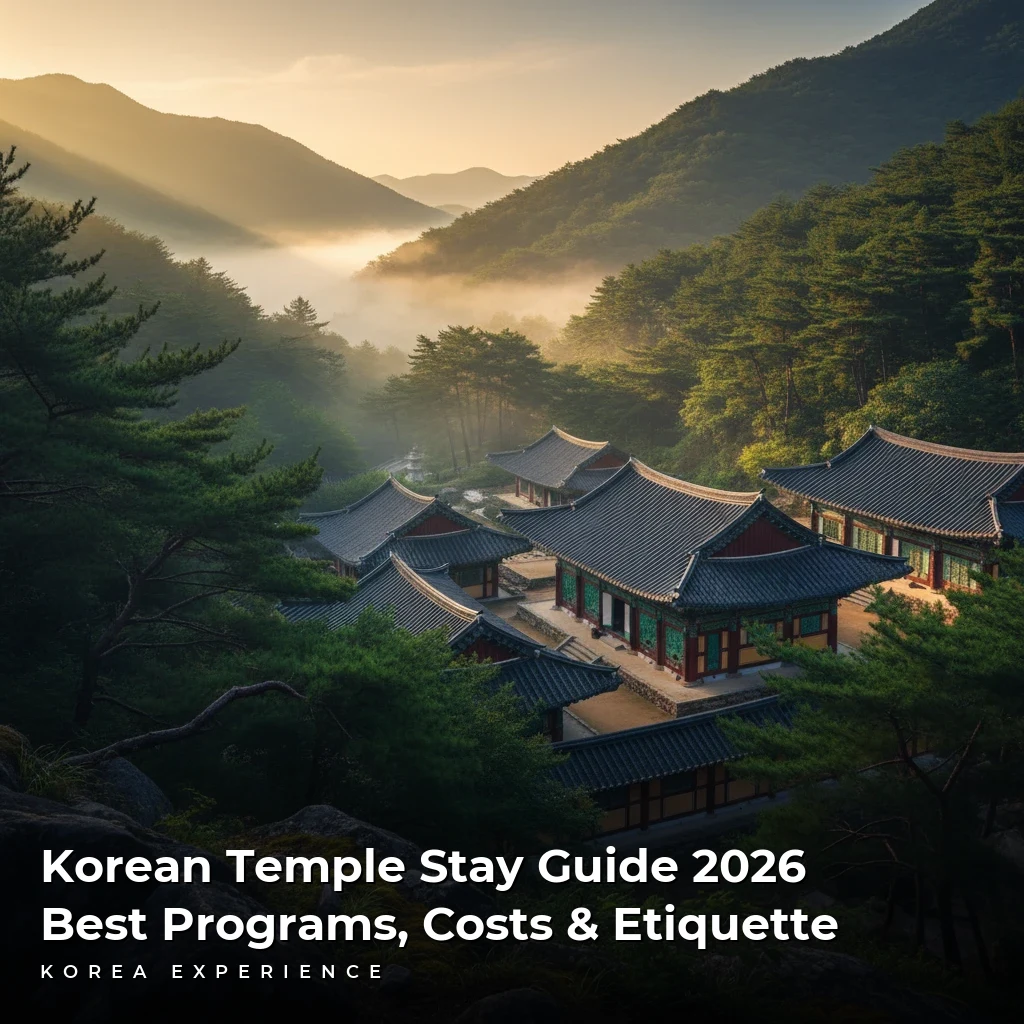
A complete guide to 2026 Korean Temple Stays. Programs cost ₩50,000-₩100,000. Learn booking tips, etiquette, and the best temples for English speakers.

Discover the top 7 Korean hot spring towns and luxury spas. From Onyang's 1,300-year history to Busan's mega-saunas starting at ₩12,000. Full guide inside.

The ultimate guide to street food in Seoul for 2026. Discover prices, best markets like Gwangjang, and must-eat snacks from hotteok to tteokbokki.

Discover the best spots for tulips, roses, and cosmos in Korea. Complete 2026 guide with dates, entry fees, and transport tips for spring and autumn blooms.

Complete 2026 guide to Korean jjimjilbangs. Learn naked spa etiquette, scrub prices (₩25,000+), sleeping tips, and top 5 Seoul spas for relaxation.