Korean royal court cuisine where to try hanjeongshik
Discover the elegance of Korean Royal Court Cuisine. Our guide covers top Hanjeongshik restaurants, menus, and dining etiquette for 2026 travelers.
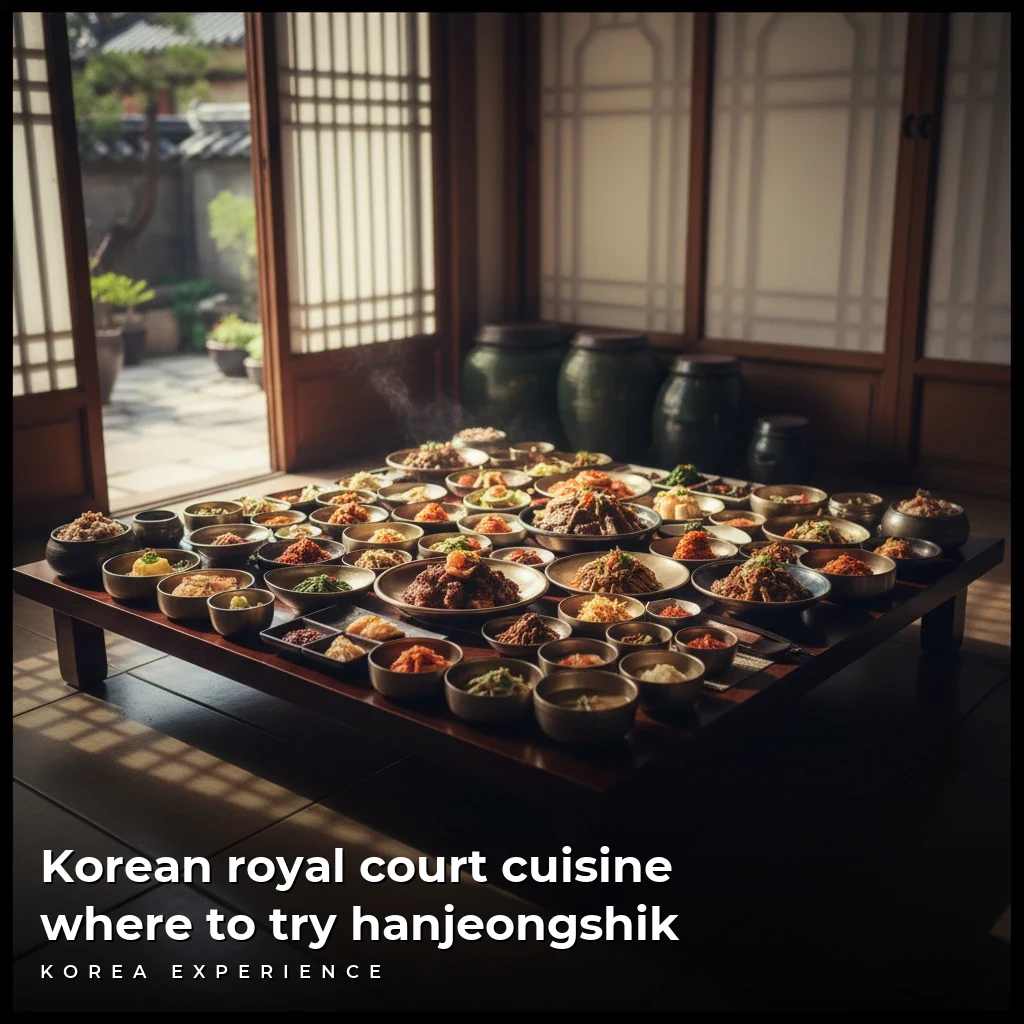
Experience the culinary majesty of the Joseon Dynasty through Korean Royal Court Cuisine, known locally as Hanjeongshik. This is not merely a meal; it is a meticulously choreographed cultural performance that spans over 500 years of history, bringing the King's table to your palate.
For international travelers, navigating the world of Hanjeongshik can be daunting. From understanding the symbolic "12 Cheop" (12 side dishes) setting to securing reservations at Michelin-starred establishments in Seoul, this guide provides the essential roadmap. Whether you are looking for a $30 lunch special or a $300 full-course gastronomic journey, we interpret the menu, the etiquette, and the locations to ensure your dining experience is flawless.
Related reading: Korean royal court cuisine where to try authentic dishes.
Key Takeaways
- 1Hanjeongshik represents the Joseon Dynasty's royal table, featuring 12+ dishes served simultaneously or in courses.
- 2Expect to pay between ₩50,000 ($37) for casual sets to ₩300,000 ($225) for Michelin-starred experiences.
- 3Reservations are critical; book 2-4 weeks in advance for top-tier venues like Jihwaja or Korea House.
What is Korean Royal Court Cuisine (Surasang)?
To truly appreciate Hanjeongshik, one must understand its origins in Surasang, the royal table set for the King. Unlike the spicy, red-pepper-heavy dishes often associated with modern Korean street food, Royal Court Cuisine is subtle, emphasizing the natural flavors of ingredients. It was established during the Joseon Dynasty (1392–1910) and follows a philosophy of balance.
For more details, check out our guide on 50 Must Try Korean Foods Complete Guide.
📊 The Royal Table
The meal is built around the philosophy of Obangsaek, utilizing five cardinal colors—red, yellow, white, black, and blue/green—representing the five elements of the universe. Historically, the King received this table three times a day, with the main meal served at 10:00 AM and 5:00 PM. Today, modern interpretations condense this into a singular, luxurious dining event lasting between 90 to 120 minutes.
Related reading: Best Korean Convenience Store Food Must Try Items.
The Significance of Regional Tributes
The ingredients used in royal cuisine were not sourced from a single market. They were tributes sent from the eight provinces of the Korean peninsula. This meant the King's table was a literal map of his kingdom.
Related reading: Gyeongju Traditional Cuisine Historic Recipes and Dining ....
- Seafood arrived from the coastal provinces, traveling over 300 kilometers to reach Hanyang (modern-day Seoul).
- Grains came from the fertile Jeolla province, roughly 200 kilometers south.
- Mountain herbs were harvested from the Gangwon region, at elevations exceeding 1,000 meters.
This logistical feat ensured the freshest seasonal ingredients, a standard that premium Hanjeongshik restaurants maintain today by sourcing 90% of their produce domestically.
Pro Tip
When eating Royal Cuisine, do not expect the intense heat of Chili powder (Gochugaru). Royal food predates the widespread use of chili peppers in Korea (introduced in the 17th century) or intentionally avoids strong spices to protect the King's stomach. The flavor profile is savory, nutty, and delicate.
The Anatomy of a Hanjeongshik Meal
A full-course Hanjeongshik meal is a marathon, not a sprint. The sheer volume of food can be overwhelming, with calorie counts for a full dinner course often ranging between 1,200 to 1,500 calories, though it is comprised largely of vegetables and fermented foods which aid digestion.
The Course Progression
Appetizers (Jeonchae)
Dried snacks (Bugak), Porridge (Juk), and Water Kimchi to stimulate appetite.
Main Dishes (Yori)
Hot and cold dishes served: Gujeolpan (platter of nine delicacies), Japchae, and seasoned sashimi.
The Royal Table (Bansang)
Rice, soup, stew (Jjigae), and grilled short ribs (Galbi) or fish.
Dessert (Huchik)
Traditional tea (Omija) and Rice Cakes (Tteok).
Key Dishes You Will Encounter
1. Gujeolpan (Platter of Nine Delicacies): This is the visual centerpiece. An octagonal wooden box divided into nine sections. Eight outer sections hold seasoned vegetables and meats cut into thin julienne strips (approx. 4cm in length), while the center holds tiny wheat crepes (Jeonbyeong). You wrap the ingredients in the crepe and dip it in mustard sauce.
2. Sinseollo (Royal Hot Pot): A silver pot with a central chimney for charcoal, maintaining the broth at a steady 80-90°C. It contains up to 25 different ingredients, including meatballs, ginkgo nuts, walnuts, and mushrooms, meticulously arranged to display the five cardinal colors.
3. Galbijjim (Braised Short Ribs): Beef short ribs slow-cooked for 4 to 6 hours in a soy-based sauce with chestnuts, jujubes, and carrots. The meat should be tender enough to fall off the bone with chopsticks.
📋 Dining Data
Where to Try Hanjeongshik in Seoul: Luxury Tier
For those willing to spend between ₩150,000 to ₩350,000 ($110 - $260 USD) per person, Seoul offers world-class dining that rivals Michelin-starred French or Japanese cuisine. These venues are typically located in the Gangnam or Jongno districts, requiring reservations at least 3 weeks in advance.
1. Jihwaja – The Living History
Jihwaja is unique because it was founded by Hwang Hye-seong, a designated master of Intangible Cultural Property. The recipes here are directly derived from the last kitchen of the Joseon Dynasty.
Jihwaja(지화자)
Located just 800 meters from Gyeongbokgung Palace, this is the most historically accurate experience available. Their signature "Gungjung Manchan" course features over 15 distinct items and costs approximately ₩220,000 per person.
2. Korea House – Dining with Performance
If you want entertainment with your meal, Korea House is the premier choice. It is a cultural complex operated by the Korea Cultural Heritage Foundation.
At Korea House, aim for the dinner slot that aligns with the traditional performance. The theater is in a separate building within the compound. You usually dine from 17:00 to 18:30, then move to the theater for the 19:00 show. It's a seamless cultural evening.
The architecture is a traditional Hanok built in the style of the Jagyeongjeon Hall of Gyeongbokgung Palace. The courtyard spans over 7,000 square meters, providing excellent photo opportunities before dinner.
Mid-Range & Modern Hanjeongshik
Not every Royal Cuisine experience requires a royal budget. There are excellent "fusion" or "modern" Hanjeongshik spots where lunch menus average 40,000 to ₩70,000 ($30 - $52 USD). These venues often streamline the traditional courses into a faster, 60-minute service.
💵 Menu Price Comparison (Seoul Average)
Full 12-cheop surasang experience
Condensed 7-course set menu
1. Yongsusan (Myeong-dong or Biwon Branch)
Specializing in Kaesong-style cuisine (from the Koryo Dynasty capital, now in North Korea), Yongsusan offers a slightly different flavor profile—generally milder and very elegant. The Biwon branch is located right next to the Changdeokgung Palace complex, making it a convenient stop after a palace tour (approx. 5 minutes walking distance).
2. Philkyungjae
This restaurant is housed in a 500-year-old Hanok that was the home of a royal descendant. Located in the Suseo district, it is about 15 kilometers from central Seoul but accessible via Subway Line 3. The garden here is protected as a cultural asset. Lunch courses start at roughly ₩88,000, making it a high-value option for the atmosphere provided.
Dining Atmosphere Comparison
| Feature | Jihwaja | Korea House | Philkyungjae |
|---|---|---|---|
| Primary Focus | Historical Accuracy | Performance/Scale | Architecture/Garden |
| English Support | Excellent | Excellent | Good |
| Seating Style | Table/Chair | Table/Chair | Floor & Table |
How to Eat Hanjeongshik: Etiquette and Tips
Dining like a King requires acting the part. While foreigners are given some leeway, following basic etiquette enhances the respect shown to the chef and the culture.
📖 How to Enjoy the Ssam (Wrap)
Step 1: Select the Leaf
Take a lettuce or sesame leaf in your left hand.
Step 2: Layer the Base
Place a small amount of rice and Ssamjang (soybean paste) on the leaf.
Step 3: Add the Main
Add a piece of Galbi (meat) or fish.
Step 4: The One-Bite Rule
Wrap it into a ball. You must eat the entire wrap in one bite; biting it in half is considered impolite.
Key Table Manners
- Soup and Rice placement: The rice bowl is placed on the left, and the soup bowl on the right. This is the opposite of the setup for ancestral rites (for the deceased), so never swap them.
- Utensils: Do not hold your spoon and chopsticks in the same hand simultaneously. Use the spoon for rice and soup, and chopsticks for side dishes.
- Drinking: If you are drinking Soju or Makgeolli, never pour your own glass. Pour for your neighbor, and hold your glass with two hands when receiving.
Shoe Etiquette
Many traditional Hanjeongshik restaurants, especially those in Hanok buildings, may require you to remove your shoes. Ensure you are wearing clean socks without holes. Some luxury venues provide slippers, but it is best to be prepared.
Regional Variations: Beyond Seoul
While Seoul is the heart of Royal Court Cuisine, the city of Jeonju, located 200 kilometers south of Seoul, offers a famous variation.
Jeonju Hanjeongshik
Jeonju is a UNESCO City of Gastronomy. Here, the style is less about courses and more about "Sang-dari huieojinda"—a phrase meaning "the table legs are bending."
- Serving Style: 30 to 40 dishes are placed on a table in the kitchen, and the entire table is carried out to the customer by two strong servers.
- Cost: significantly cheaper than Seoul, averaging 25,000 to ₩40,000 ($19 - $30 USD) per person.
- Travel: It takes roughly 1 hour and 40 minutes by KTX train from Yongsan Station to Jeonju Station.
Seoul vs. Jeonju Hanjeongshik
- ✓Seoul: Higher ingredient quality and historical accuracy
- ✓Jeonju: Massive variety and better value for money
- ✓Seoul: Fine dining service standards
- ✗Seoul: Significantly more expensive
- ✗Jeonju: Can feel chaotic/less private
- ✗Jeonju: Requires inter-city travel
Planning Your Visit: Reservations and Dietary Needs
Booking Your Table
For high-end venues, rely on apps like CatchTable (the Korean equivalent of OpenTable) which now has an English interface, or request your hotel concierge to book.
- Lead Time: 2-4 weeks for weekends.
- Deposits: Most fine dining spots require a deposit of 30,000 to ₩50,000 per person upon booking to prevent no-shows.
Dietary Restrictions
- Vegetarian/Vegan: Traditional Temple Cuisine (Sachal Eumsik) is a better bet for strict vegans, as Royal Cuisine uses fish sauce and meat stocks extensively. However, places like Balwoo Gongyang (Michelin 1-star Temple Cuisine) offer a Hanjeongshik-style course that is fully vegan.
- Halal: True Halal Hanjeongshik is rare due to the use of pork and alcohol in cooking wines. However, some venues in Itaewon or specialized tourist restaurants offer pork-free sets.
For Solo Travelers
Hanjeongshik is traditionally a communal meal served for a minimum of 2 people. However, newer modern restaurants like Parc in Hannam-dong offer single-serving tray sets (Bansang) that capture the essence of the meal for solo diners, costing around ₩25,000.
FAQ: Your Questions Answered
❓ Frequently Asked Questions
Have more questions?Contact us →
By understanding the history, etiquette, and options available, you transform a simple dinner into a cultural immersion. Whether you choose the historical accuracy of Jihwaja in Seoul or the abundant tables of Jeonju, Hanjeongshik remains the ultimate expression of Korean hospitality.
About the Author
Korea Experience Team
Written by the Korea Experience editorial team - experts in Korean medical tourism, travel, and culture with years of research and firsthand experience.
Explore more in Food & Dining
Korean BBQ, street food, Michelin restaurants, and regional specialties — your ultimate guide to eating well in Korea.
Browse All Food & Dining ArticlesContinue Reading
Explore more articles you might find interesting
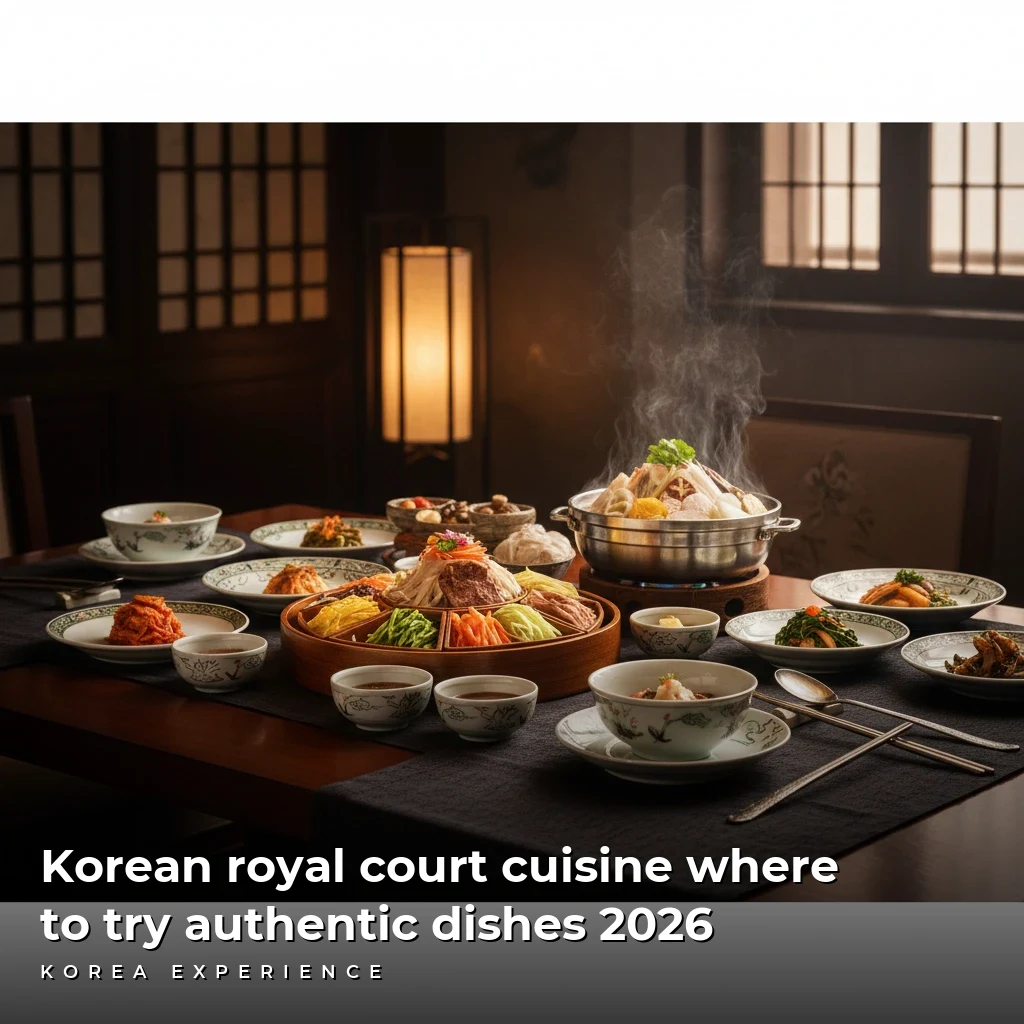
Experience the culinary heritage of the Joseon Dynasty. Our 2026 guide covers top-tier Royal Court Cuisine restaurants, reservation tips, and menu essentials.
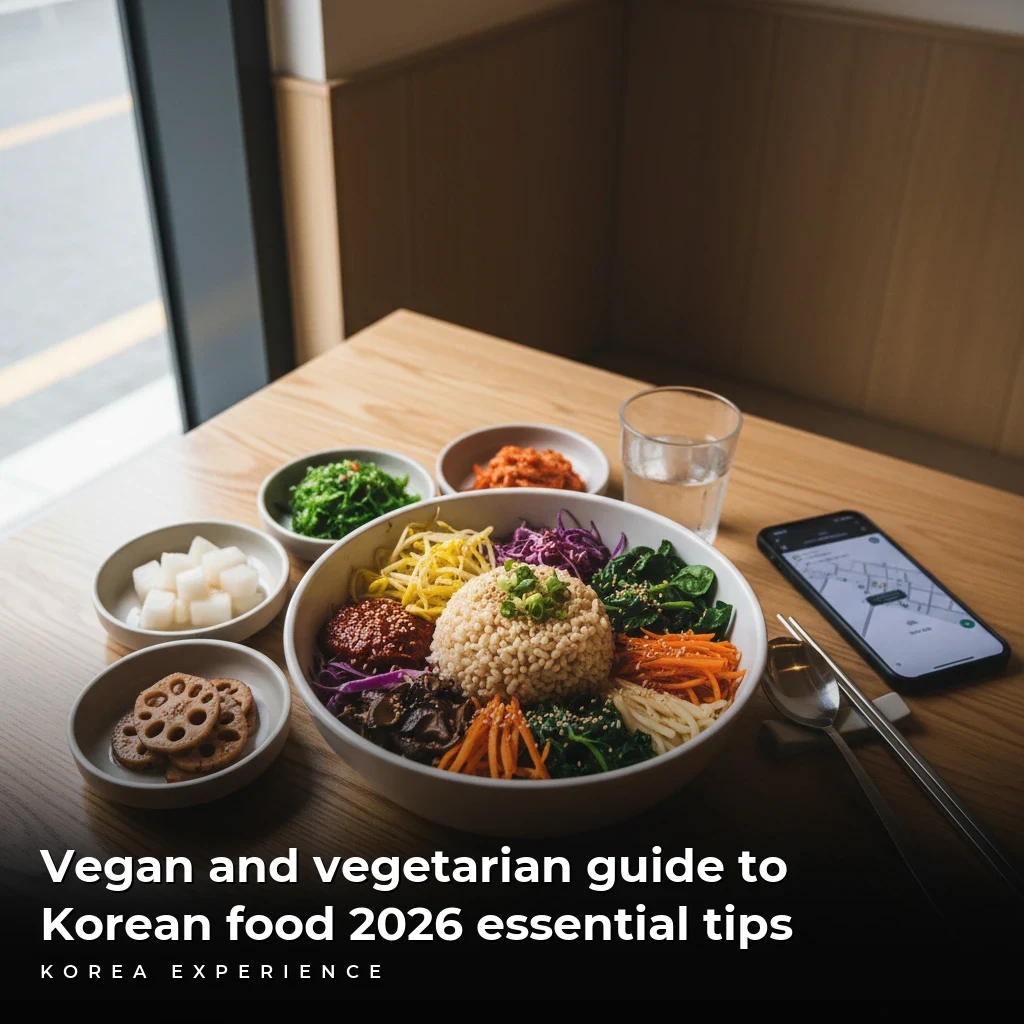
Discover the ultimate 2026 guide to vegan and vegetarian dining in Korea. Includes vocabulary, top restaurants, and survival tips for travelers.
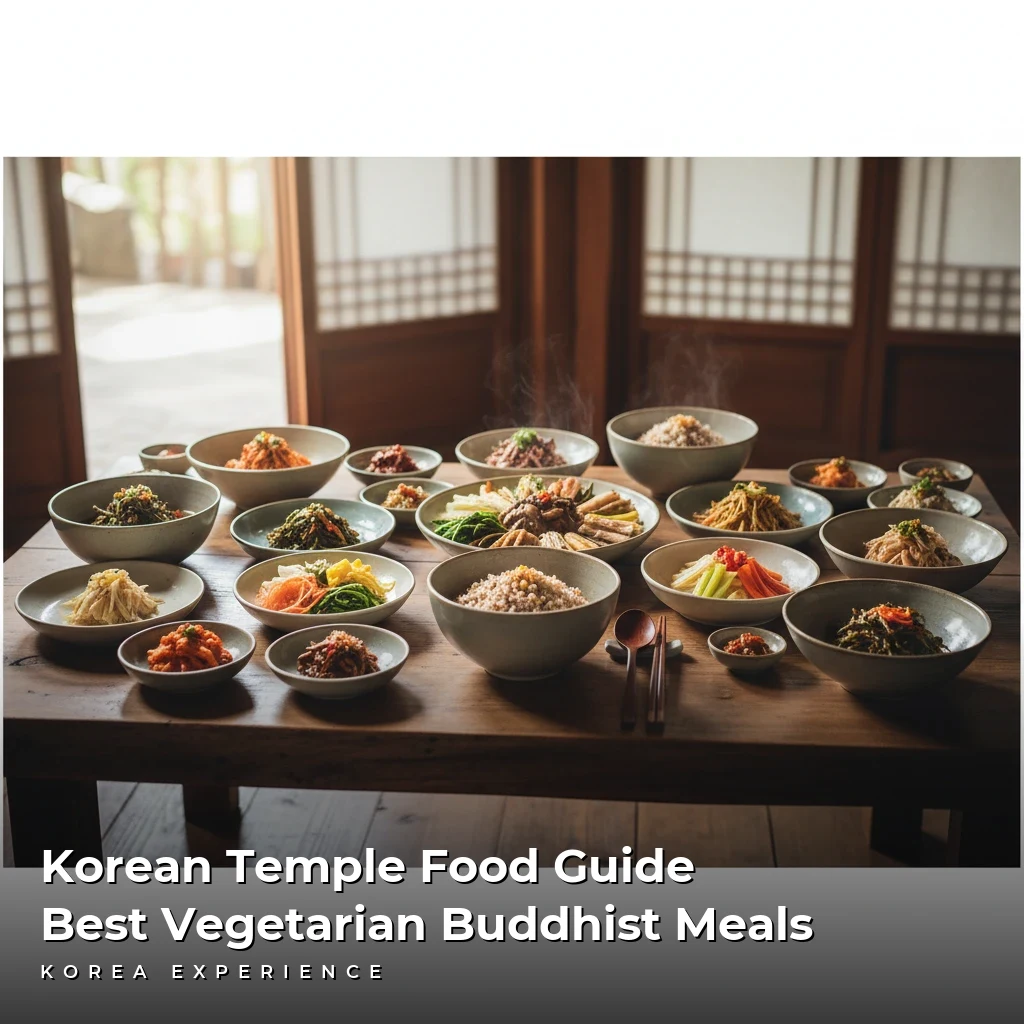
Discover the serenity of Korean temple food. A complete guide to vegetarian Buddhist cuisine, Michelin-starred restaurants, and etiquette.
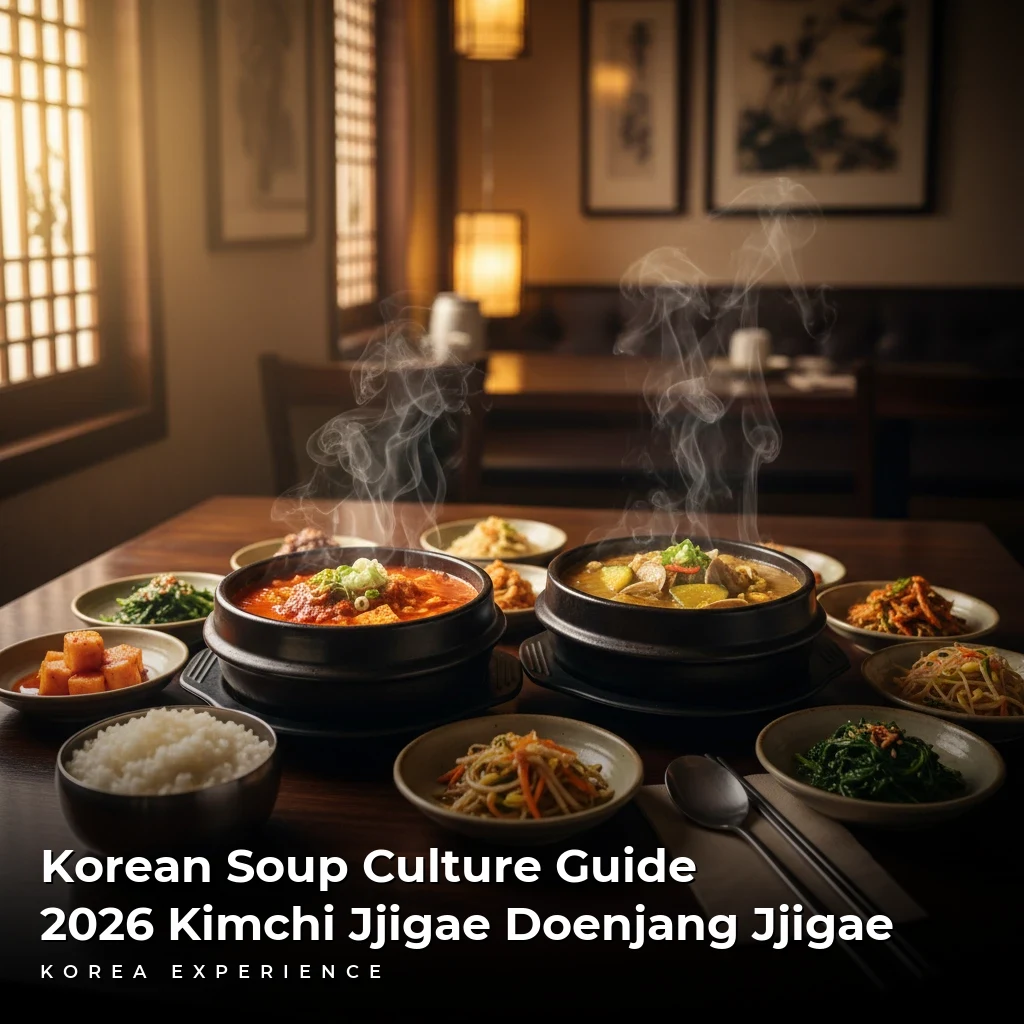
Discover the soul of Korean cuisine through its soups. A complete 2026 guide to Kimchi Jjigae, Doenjang Jjigae, and essential dining etiquette.
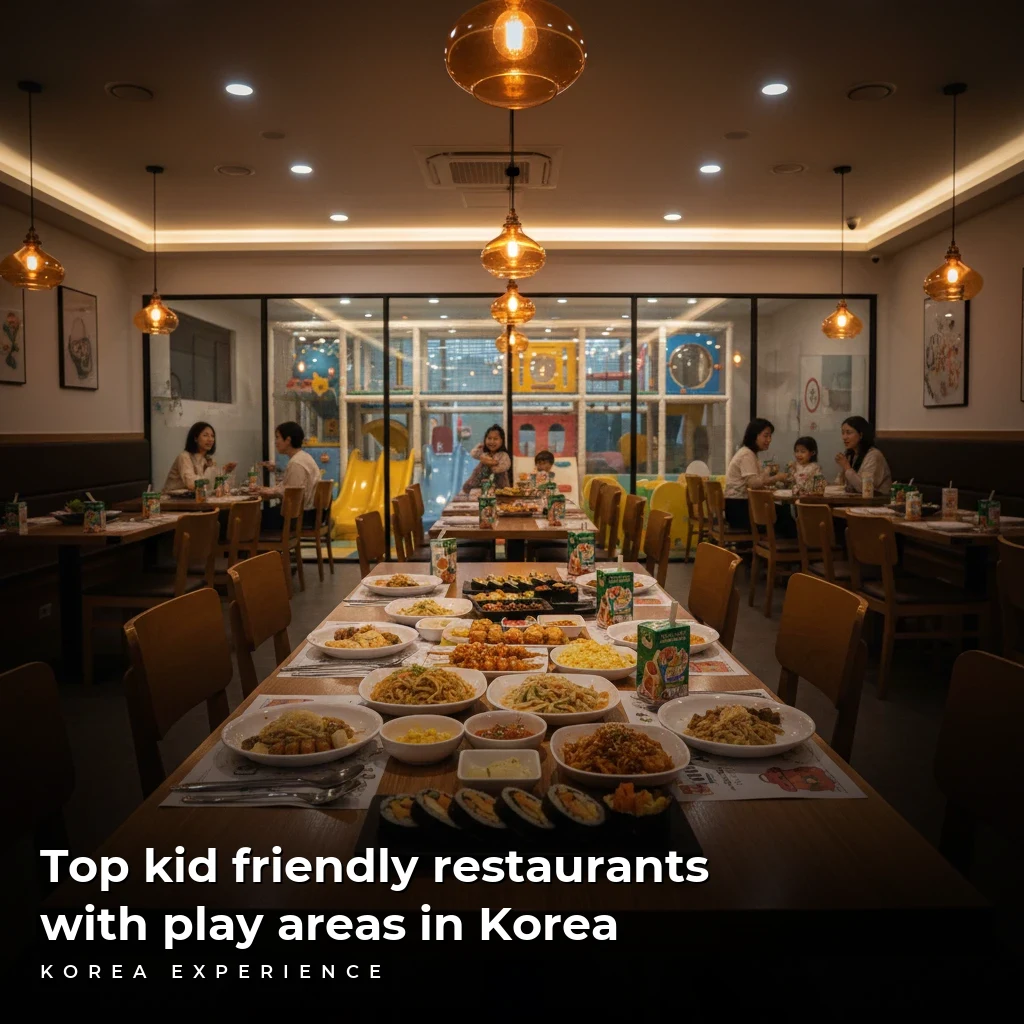
Discover the best family dining spots in Korea featuring large playrooms, safe menus, and verified facilities for stress-free meals with children.
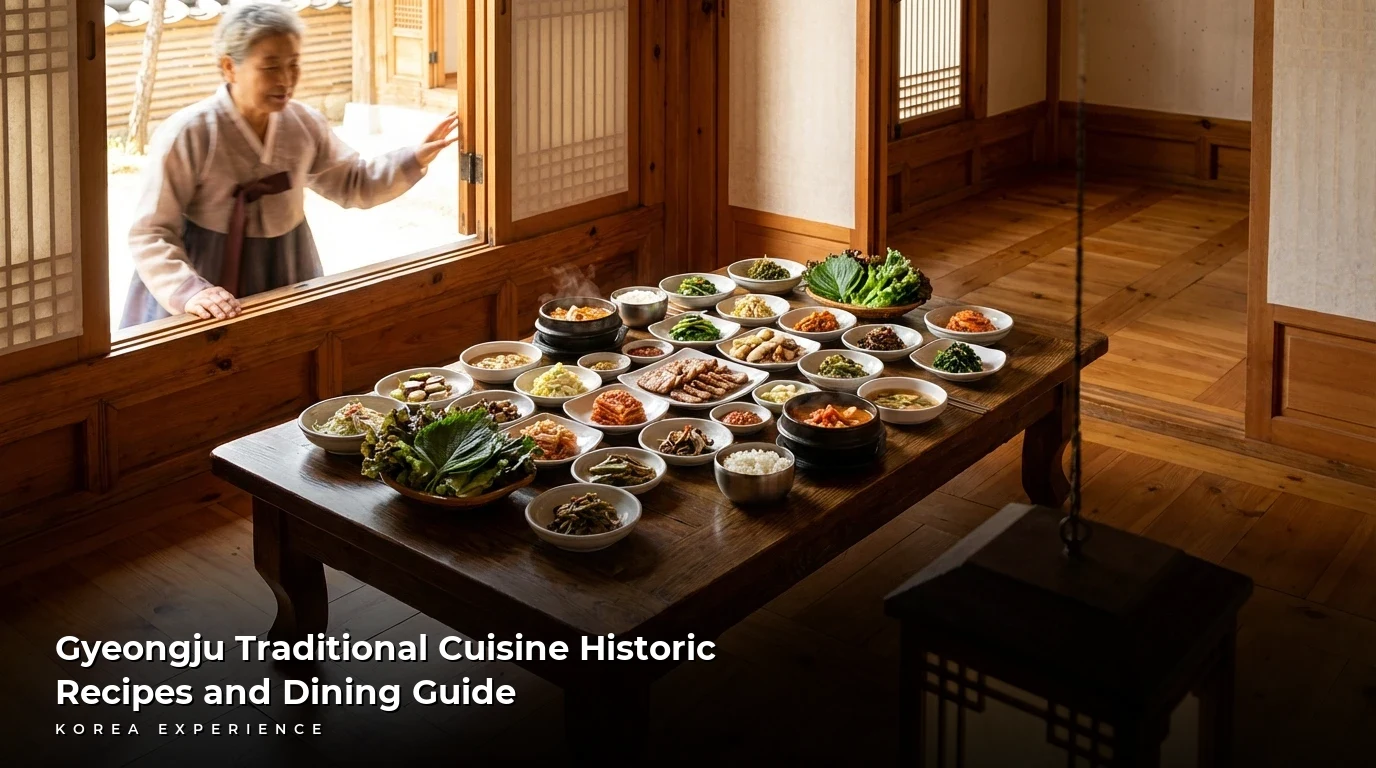
Explore Gyeongju traditional cuisine historic recipes. Discover royal Silla Dynasty dishes, famous ssambap alleys.