Managing bruising and scarring Korean skincare approach after surgery
A complete guide to Korean post-procedure care, featuring top pharmacy creams, deswelling treatments, and recovery protocols with 2026 pricing data.
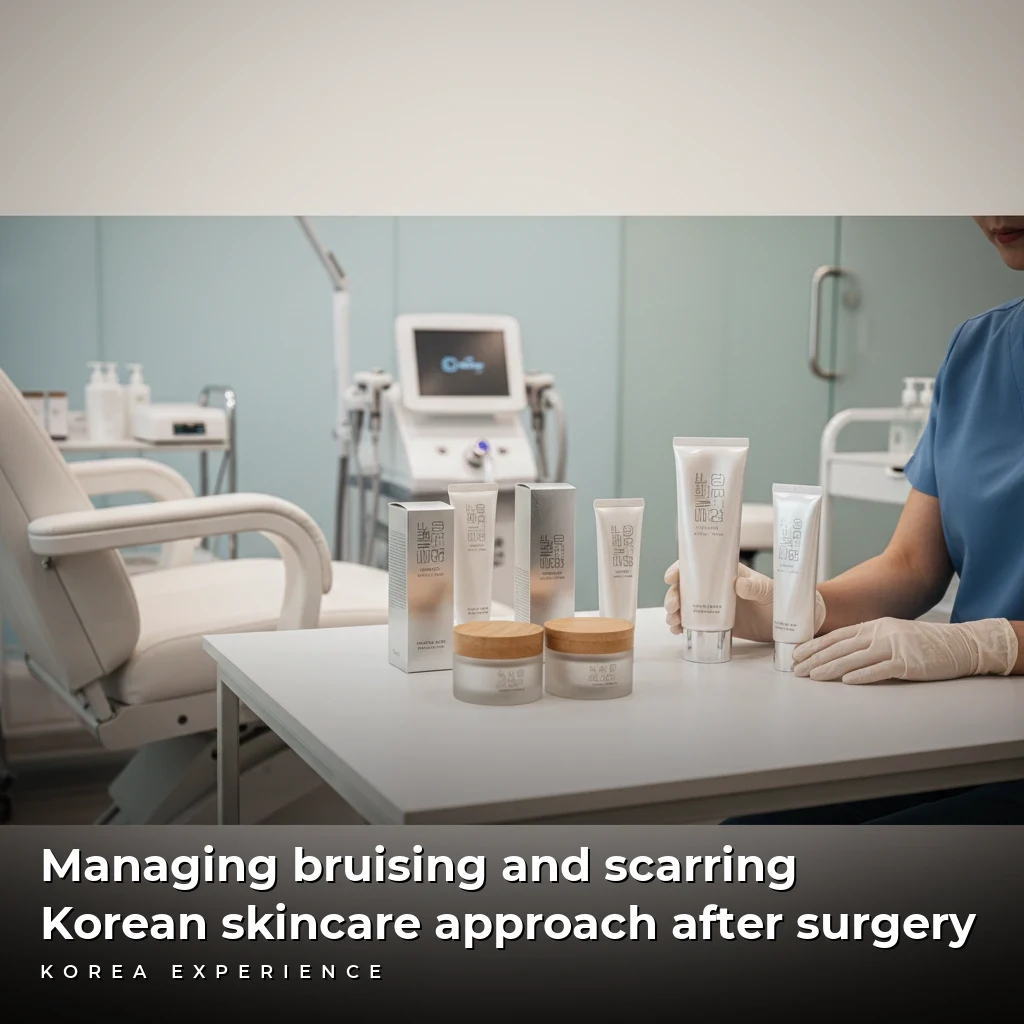
The Korean approach to managing bruising and scarring differs significantly from Western methods because it is proactive rather than reactive, utilizing a combination of pharmaceutical-grade ointments, specialized "deswelling" diets, and in-clinic LED therapies immediately after a procedure. While many Western patients are told to simply "wait it out" with an ice pack, Korean medical culture treats the recovery phase as an active extension of the surgery itself, employing a multi-step regimen to reduce downtime by up to 50% compared to natural healing.
The short answer: The Korean method combines oral pumpkin juice for fluid drainage, topical heparin-based creams (like Venalisa and Noscarana) applied 3-4 times daily, and professional Smartlux LED treatments to accelerate cellular regeneration.
Key Takeaways
- 1Korean pharmacies sell over-the-counter 'bruise creams' like Venalisa for under ₩15,000
- 2Pumpkin juice is the #1 consumed recovery drink in Korea to reduce facial swelling
- 3Most Gangnam clinics include 1-2 complimentary deswelling laser sessions in surgery packages
The "Golden Time" Philosophy in Korean Recovery
In Korean medical aesthetics, there is a concept known as "Golden Time" (Gol-deun Ta-im), which refers to the critical 72-hour window immediately following a procedure. Whether you have undergone double eyelid surgery, rhinoplasty, or aggressive laser resurfacing, how you manage this specific window dictates the longevity of your bruising and the texture of your scars.
Unlike the passive "rest and wait" approach, Korean patients are encouraged to mobilize specifically to aid lymphatic drainage. Statistics from major clinics in Gangnam-gu show that patients who follow the active "K-Recovery" protocol report a 40% reduction in visible swelling by day 5 compared to those who do not.
Pro Tip
Don't rely solely on the ice packs provided by the clinic. Korean pharmacies sell specific "cooling eye masks" (Gel An-dae) for roughly ₩5,000 that conform better to facial contours than standard medical ice packs.
The Three Pillars of K-Recovery
- Chemical: Topical ointments and oral medication.
- Physical: Elevation, compression, and laser therapy.
- Nutritional: Deswelling foods and avoidance of sodium.
Essential Korean Pharmacy Items for Bruising
If you are visiting Korea for medical tourism, your first stop after the clinic (or even before) should be a local pharmacy (Yak-guk). Korean pharmacists are highly knowledgeable about post-op care, as they serve thousands of medical tourists monthly. You do not need a prescription for the most effective bruising and scarring treatments.
1. The Bruise Erasers: Amorphous Aescin
The gold standard for bruising in Korea involves gels containing Amorphous Aescin (derived from horse chestnut) or Heparin Sodium. These ingredients work to break down coagulated blood beneath the skin and accelerate absorption.
- Venalisa (Beneurisa): This is perhaps the most famous gel among Korean women. It strengthens capillary walls and reduces inflammation. A 20g tube typically costs between 10,000 and ₩12,000.
- Mung-S (Bruise-S): A popular alternative often found in smaller pharmacies. It specifically targets the yellow/green phase of bruising.
2. The Scar Faders: Heparin and Silicone
Once the wound has closed and stitches are removed (usually day 5-7), the focus shifts immediately to scar prevention.
- Noscarana Gel: This is ubiquitous in Korea. It contains heparin sodium, allantoin, and dexpanthenol. Unlike standard antibiotic ointments, this is specifically designed to flatten hypertrophic scars and reduce redness. It retails for approximately ₩20,000 for a 20g tube.
- Dermatix Ultra: While an international brand, the formulation sold in Korea is often preferred by surgeons here for its silicone content. It creates a barrier that hydrates the scar tissue, preventing it from raising.
💵 Pharmacy Recovery Essentials Cost (2026)
Best for raised scars (keloids)
Best for immediate bruising
The "Deswelling Diet": Why Pumpkin is King
If you walk into any Olive Young (Korea's Sephora/drugstore hybrid) or a traditional market in Seoul, you will see pouches of orange liquid. This is Hobak-jeup (Pumpkin Juice), and it is the holy grail of Korean post-surgery nutrition.
Pumpkin is rich in potassium, which helps counteract sodium retention—a major cause of prolonged swelling. In 2026, the market for "beauty pumpkin juice" has evolved. You can now find "Pure Pumpkin" (100% extract) or "Sweet Pumpkin" (mixed with apple or honey for taste).
Do not buy the sugary pumpkin drinks from convenience stores (CVS). Go to a pharmacy or Olive Young and look for 'Old Pumpkin' (Neul-geun Ho-bak) extract. The taste is earthy and savory, almost like a cold soup, but it works twice as fast as the sweet varieties. Drink 3 pouches a day.
Foods to Avoid
The Korean approach is strict about diet. For at least 14 days post-procedure, you are advised to avoid:
- Ramyeon: A single package contains nearly 1,800mg of sodium, which can cause your face to puff up significantly the next morning.
- Spicy Foods (Capsaicin): While delicious, spicy food induces sweating and vasodilation, which can exacerbate redness and throbbing in healing tissues.
For more on what to eat, check our guide to best Korean healing foods for surgery recovery.
Professional In-Clinic Aftercare Treatments
One of the major value propositions of Korean medical tourism is that aftercare is often included in the surgery price, or available at a fraction of the cost in the West.
Smartlux and Omega Light (LED Therapy)
Almost every clinic in Gangnam utilizes LED light therapy.
- Yellow Light (580-590nm): Specifically used for bruising and swelling. It stimulates lymphatic activity.
- Red Light (630-660nm): Used for skin regeneration and wound healing.
- Blue Light: Used if there is any risk of acne or infection near the surgical site.
Sessions usually last 15-20 minutes. If you are paying out of pocket, a session costs roughly 30,000 to ₩50,000, but most surgical packages include 2-3 sessions for free.
Hyperbaric Oxygen Therapy
For larger procedures like liposuction or facelifts, premium clinics offer Hyperbaric Oxygen Chambers. Sitting in these pressurized capsules increases the oxygen saturation in your blood, speeding up tissue repair. A 30-minute session costs between 100,000 and ₩150,000.
📋 Aftercare Treatment Data
Timeline of Scar Management: The Korean Schedule
Managing a scar in Korea is a marathon, not a sprint. The timeline is adhered to strictly to ensure "Porcelain Skin" results.
Week 1: Protection and Hygiene
- Goal: Prevent infection and minimize crusting.
- Action: Keep the area moist with prescribed antibiotic ointment. Do not pick scabs.
- Korean Method: Use "Duoderm" or mild hydrocolloid patches if stitches are removed, to keep the wound airtight.
Month 1-3: The Redness Phase
- Goal: Flatten tissue and reduce vascularity.
- Action: Apply Noscarana or Dermatix twice daily.
- Clinic Option: If the scar remains red, Koreans will undergo "V-Beam" or "Genesis" laser treatments. These vascular lasers target the hemoglobin in the red scar, collapsing the vessels and returning the skin to a normal color.
- Cost: Approx 100,000 - ₩200,000 per small area (5cm).
Month 3-6: Texture and Pigmentation
- Goal: Address Hyperpigmentation (PIH).
- Action: Strict UV protection.
- Korean Method: "Laser Toning" (Q-Switched Nd:YAG) is used to break up brown pigment that forms around incision lines. This is gentle and can be done weekly.
- Cost: Extremely affordable in Korea, often 30,000 - ₩50,000 per session as part of a package.
📖 Daily Scar Care Routine (Post-Stitch Removal)
Step 1: Cleanse
Gently wash area with mild, non-exfoliating foam.
Step 2: Massage
Apply Venalisa (if bruised) or Noscarana. Massage for 2 mins to break scar tissue.
Step 3: Protect
Apply silicone sheet or high SPF sunscreen.
Lifestyle Adjustments: Walking and Sleeping
In Korea, seeing someone with a bandaged nose or a compression garment walking down the street is completely normal. In districts like Gangnam (Sinsa, Apgujeong), it is so common that locals do not even glance twice.
The Walking Prescription
Korean doctors will prescribe "Walking" just as they prescribe antibiotics. Walking increases heart rate slightly, improving circulation without raising blood pressure dangerously.
- Recommendation: 30 to 60 minutes of slow-paced walking daily.
- Best Spots: The Han River parks or Cheonggyecheon Stream are flat, well-paved, and safe.
- Warning: Avoid heavy cardio or gym workouts for at least 3 weeks.
Sleeping Upright
To reduce morning swelling, Korean patients often rent or buy wedge pillows. Many recovery centers and specialized hotels provide these. You aim to keep your head at a 45-degree angle above your heart.
If you are looking for accommodation that caters to this, read our comparison on Airbnb vs recovery hotels for medical tourists.
Sun Protection: The Ultimate Scar Defense
You cannot talk about Korean skincare without mentioning sun protection. UV rays are the enemy of healing skin. Exposure causes scars to turn dark brown (Hyperpigmentation), which can be permanent.
Korean sunscreens are world-famous for their cosmetic elegance and high protection factors (PA++++). For fresh scars, physical blockers (mineral sunscreens containing Zinc Oxide or Titanium Dioxide) are preferred over chemical filters because they are less irritating to sensitized skin.
- Stick Sunscreens: These are massive in Korea right now (2026 trends). They allow for hands-free reapplication directly over the scar area without touching your face with dirty fingers.
- UV Patches: For golfers and hikers, you will see flesh-colored patches applied to cheeks. These block 99% of UV rays and are excellent for covering cheek scars or laser marks.
For specific product recommendations, check our best Korean sunscreen guide.
Advanced Treatments: Skin Boosters for Recovery
Beyond creams and lasers, injectable treatments specifically for healing are gaining traction in 2026.
Rejuran Healer (Salmon DNA)
Rejuran is a polynucleotide (PN) derived from salmon DNA. While often used for anti-aging, it is excellent for repairing the skin barrier and reducing inflammation in scar tissue.
- Process: Injected into the dermis.
- Pain: High (unless done under sedation).
- Result: Improves skin thickness and elasticity, helping scars blend better with surrounding tissue.
- Cost: Approx 250,000 - ₩350,000 for 2cc.
Exosomes
Exosomes are cell-signaling molecules that tell damaged cells to regenerate. In 2026, topical exosome application immediately after laser treatments is standard in high-end clinics to reduce downtime from 7 days to 3 days.
If you are dealing with texture issues from past acne rather than surgery, you might want to look into acne scar treatment options in Korea.
Recovery Aids Comparison
| Treatment | Cost | Pain Level | Best For |
|---|---|---|---|
| Smartlux LED | ₩50,000 | None | General Swelling |
| Hyperbaric Oxygen | ₩120,000 | None | Deep Tissue Healing |
| Rejuran Healer | ₩300,000 | High | Scar Texture Repair |
The Psychological Aspect: 'Ppalli-Ppalli' Culture
Korea's Ppalli-Ppalli (Hurry-Hurry) culture extends to medical recovery. The goal is to return to work and social life as fast as possible. This drives the innovation in bruise-hiding makeup and rapid-healing technologies.
However, this pressure can be stressful for foreigners who are used to taking weeks off. It is important to balance the Korean tools (effective creams, lasers) with your own body's need for rest. Do not force yourself to go sightseeing at Gyeongbokgung Palace two days after surgery just because you feel you "should."
📊 Recovery Efficiency
Managing Expectations: When to Worry
While Korean techniques are advanced, complications can happen. It is vital to distinguish between normal healing and infection.
- Normal: Asymmetrical swelling (one side is always more swollen), yellow bruising moving down the neck (gravity), itching (histamine release during healing).
- Abnormal: Heat radiating from the site, pus, fever over 38°C, or sudden sharp pain after day 3.
Emergency Contacts in Korea:
- 119: Ambulance/Fire (Free, English available).
- 1339: Korea Disease Control (Medical advice/Hospital finder).
Medical Disclaimer
This article is for informational purposes only and does not constitute medical advice. Always follow the specific post-op instructions provided by your surgeon. If symptoms worsen, contact your clinic's emergency line immediately.
FAQ: Common Concerns for Travelers
❓ Frequently Asked Questions
Have more questions?Contact us →
Conclusion
Managing bruising and scarring in Korea is an integrated lifestyle choice rather than a passive waiting game. By combining the "Golden Time" philosophy with high-quality pharmacy products like Venalisa and Noscarana, utilizing clinic-based technologies like Smartlux, and adhering to dietary restrictions, you can significantly reduce your social downtime.
The Korean approach empowers the patient to take charge of their healing. Whether you are here for a simple dermatological procedure or complex surgery, adopting these local protocols will ensure your results settle beautifully and your scars fade into memory.
For more insights on the best clinics to visit, consider reading our guide to best Korean skin clinics in Gangnam.
Korean Aftercare Approach
- ✓Proactive treatments speed up healing significantly
- ✓Pharmacy products are affordable and high-quality
- ✓Cultural acceptance of recovery gear (masks/hats)
- ✗Can be cost-intensive if treatments aren't included
- ✗Dietary restrictions (no spicy food) can be hard for tourists
- ✗Strict adherence to routine requires discipline
About the Author
Korea Experience Team
Written by the Korea Experience editorial team - experts in Korean medical tourism, travel, and culture with years of research and firsthand experience.
⚠️ Medical Disclaimer
The information provided on this website is for general informational purposes only and does not constitute medical advice. Always consult with qualified healthcare professionals before making any medical decisions.
Explore more in Medical Tourism
World-class medical procedures at competitive prices. From plastic surgery and dermatology to dental care and health checkups — your complete guide to medical tourism in Korea.
Browse All Medical Tourism ArticlesContinue Reading
Explore more articles you might find interesting
A comprehensive guide to Korea's strict medical cannabis laws and advanced alternative pain management treatments available to foreigners in 2026.
Explore 2026 male plastic surgery trends in Korea for jawline definition and gynecomastia. Discover top clinics, costs, and recovery insights for international patients interested in medical tourism.

We analyze agency fees, safety benefits, and hidden savings for medical tourism in Korea. See if paying 15-20% extra is worth the peace of mind.
Explore liposuction and Coolsculpting in Korea for body contouring Compare procedures costs recovery for international patients make informed decisions

Navigating Korea's healthcare system in 2026? We analyze costs (₩50k-150k/hr), hospital tiers, and when you absolutely need a certified medical interpreter.
Considering LASIK or LASEK eye surgery in Korea? Discover world-class clinics, advanced technology, costs, and a step-by-step guide for your vision correction journey.