Medical cannabis and pain management in Korean hospitals 2026
A comprehensive guide to Korea's strict medical cannabis laws and advanced alternative pain management treatments available to foreigners in 2026.
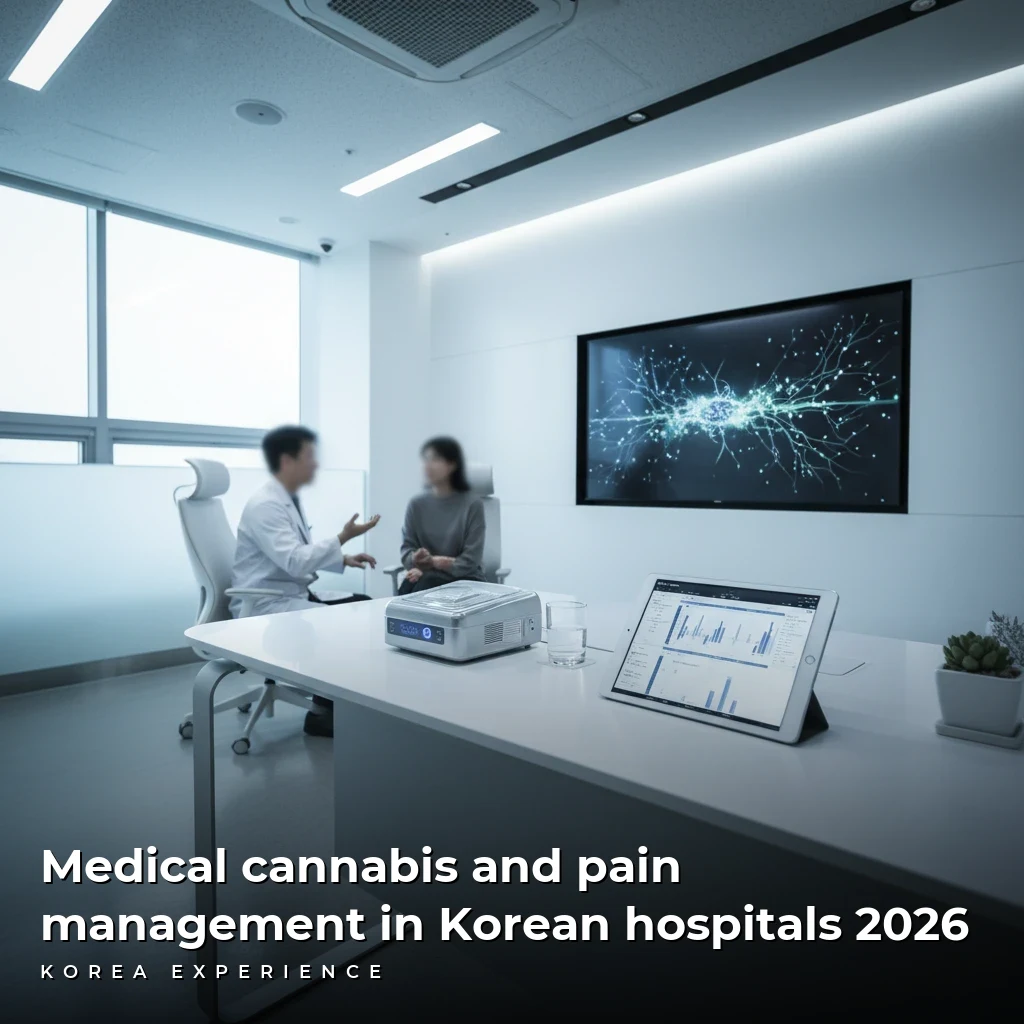
For international travelers and expatriates accustomed to the increasingly liberal cannabis laws in North America and Europe, navigating the medical landscape in South Korea can be a jarring experience. If you are searching for information on accessing medical marijuana for chronic pain, anxiety, or post-surgical recovery in Seoul, the reality is strictly regulated and vastly different from Western standards. While South Korea became the first country in East Asia to legalize medical cannabis in late 2018, the implementation of this law is exceptionally narrow.
The short answer: Medical cannabis is legal in Korea but restricted strictly to patients with rare, incurable diseases (like Lennox-Gastaut syndrome) and requires approval from the Korea Orphan & Essential Drug Center (KOEDC). It is generally not prescribed for chronic pain, insomnia, or anxiety.
However, this does not mean you are left to suffer if you experience pain while in Korea. The country boasts one of the most advanced, efficient, and affordable pain management systems in the world, utilizing a mix of high-tech Western interventions and traditional Eastern therapies.
Key Takeaways
- 1Medical cannabis is only legal for rare diseases like epilepsy and strictly controlled by the KOEDC.
- 2Prescriptions for chronic pain or sleep issues using cannabis are illegal and unavailable.
- 3Korean Pain Clinics (Tongjeung Euihak-gwa) offer affordable nerve blocks and injections as alternatives.
- 4Bringing personal CBD oil or THC products into Korea is a serious crime without prior MFDS approval.
Medical Disclaimer
The information provided in this article is for educational purposes only and does not constitute medical advice. South Korean drug laws are among the strictest in the world. Always consult with the Ministry of Food and Drug Safety (MFDS) or a qualified legal professional before attempting to bring any controlled substances into the country. Emergency Medical Information Center: 1339.
The legal reality of medical cannabis in Korea
To understand pain management in Korea, you must first understand the legal framework surrounding cannabis. In November 2018, the South Korean National Assembly amended the Act on the Management of Narcotic Drugs, allowing for the import and use of medical cannabis. This law officially went into effect in March 2019.
However, "legalization" in Korea does not mean dispensaries or doctor-recommended usage for general ailments. The law was specifically designed to help patients with rare, intractable diseases for which no other treatment exists.
What is actually approved?
As of 2026, the approved medications are largely limited to:
- Epidiolex: Used for Dravet syndrome and Lennox-Gastaut syndrome.
- Sativex: Used for multiple sclerosis spasticity.
- Marinol (Dronabinol): Used for severe nausea in chemotherapy patients (rarely approved).
The distribution is exclusively handled by the Korea Orphan & Essential Drug Center (KOEDC). You cannot walk into a pharmacy (Yak-guk) or a standard hospital and request these medications.
📊 Medical Cannabis Accessibility
The approval process
For the rare few who do qualify, the process involves obtaining a doctor’s diagnosis from a Korean university hospital, stating that there is no substitute medicine available. Following this, the patient applies to the KOEDC. The center then imports the drug directly. This process can take 2 to 4 weeks and is often prohibitively expensive due to the lack of insurance coverage for these specific imports.
Bringing your own medication: The Narcotic Declaration
If you are a medical tourist or an expat moving to Korea who relies on prescription narcotics (opioids, ADHD medication, or medical cannabis approved in your home country), you cannot simply pack them in your suitcase.
South Korea strictly enforces its drug laws at the border. Bringing in substances containing THC or CBD without prior approval is considered drug smuggling, punishable by imprisonment (minimum 5 years for smuggling) or deportation and permanent bans.
How to apply for a permit
To bring any controlled substance, you must email the Narcotics Control Division of the MFDS (Ministry of Food and Drug Safety) at least 2 to 3 weeks before your travel date.
📖 MFDS Narcotics Application Process
Step 1: Gather Documents
You need a prescription, a doctor's letter detailing the diagnosis and dosage, and a flight itinerary.
Step 2: Complete Application
Fill out the application form for bringing narcotics into Korea for personal treatment.
Step 3: Submit via Email
Send all files to [email protected]. Do not use ZIP files; attach PDFs directly.
Step 4: Receive Permit
If approved, you will receive a permit PDF. Print 2 copies: one for customs, one to keep with the medication.
Note on CBD Oil: Even CBD oil with 0% THC is often scrutinized. Unless you have the specific MFDS permit, do not bring it. "Hemp-derived" products sold in the US often exist in a legal grey area in Korea and are best avoided to prevent airport detention.
Korean Pain Management Clinics: The superior alternative
Since medical cannabis is essentially unavailable for pain management, what do medical tourists do? They turn to Korea's highly advanced Pain Management Clinics (Tongjeung Euihak-gwa).
Korea has a massive infrastructure for treating pain because the population is aging rapidly, and there is a cultural preference for quick, effective treatment over long-term medication. Instead of prescribing heavy opioids (which doctors are reluctant to do) or cannabis, Korean specialists utilize interventional procedures.
Nerve Blocks (Singyeong-chadan-sul)
This is the gold standard of Korean pain management. It involves injecting an anesthetic and steroid mixture directly around the specific nerve causing pain.
- Guidance: Almost all injections are done under C-Arm (fluoroscope) or Ultrasound guidance for 100% accuracy.
- Time: The procedure takes 10 to 20 minutes.
- Recovery: Patients usually rest for 30 minutes and walk out.
- Cost: For those with National Health Insurance (NHI), a nerve block might cost 10,000 to ₩20,000 ($7-$15 USD). For foreigners without insurance, it typically ranges from 100,000 to ₩150,000 ($75-$115 USD)—still a fraction of US costs.
Prolotherapy and DNA Injections
For joint pain and ligament damage, clinics often use Prolotherapy (sugar water injection to stimulate healing) or PDRN (DNA injections derived from salmon sperm). These are regenerative treatments popular among Korean athletes and seniors.
📋 Pain Clinic Visits
If you are planning a trip specifically for treatment, determining where to stay is crucial. You might want to compare options in our guide to Airbnb vs. recovery hotels for medical tourists to ensure you have a comfortable place to rest after these procedures.
Integrative Medicine: Where East meets West
One of the unique aspects of pain management in Korea is the seamless integration of Western orthopedics and Traditional Korean Medicine (TKM). Many large hospitals, known as "Cooperative Care Centers," offer both under one roof.
Chuna Manual Therapy
Similar to chiropractic adjustments but more focused on soft tissue and meridian alignment, Chuna is a staple for back and neck pain. In 2019, Chuna was added to the National Health Insurance coverage, validating its medical efficacy in the eyes of the government.
Pharmacopuncture (Yak-chim)
This involves injecting herbal extracts directly into acupuncture points. The most famous variant is Bee Venom therapy, used for inflammation and arthritis. While effective, it requires allergy testing.
"Many foreigners are scared of acupuncture, but in Korea, we often combine it with low-frequency electrical stimulation (Electro-acupuncture). It feels like a deep tissue massage from the inside out and is incredibly effective for acute muscle spasms and travel fatigue."
For travelers with mobility issues due to chronic pain, navigating the city to get to these clinics can be a concern. We recommend reading our guide on accessible Seoul routes for wheelchair and limited mobility to make your journey easier.
Top hospitals for pain management in Seoul
If you are seeking treatment, the level of care varies between neighborhood clinics and university hospitals. For severe pain requiring MRI or surgery, university hospitals are best. For routine back pain or "traveler's back," local clinics are faster and cheaper.
1. Severance Hospital (International Health Care Center)
Located in Sinchon, Severance is one of the oldest and most prestigious hospitals. Their pain center is world-renowned.
- Pros: Full English fluent staff, direct billing with international insurance companies.
- Cons: Higher costs, requires appointment weeks in advance.
2. Jaseng Hospital of Korean Medicine
Jaseng is the leading hospital for non-surgical spine treatment. They specialize in integrating MRI diagnostics with herbal medicine and Chuna therapy.
- Specialty: Herniated discs and spinal stenosis.
- Location: Gangnam (main branch).
Jaseng Hospital of Korean Medicine(자생한방병원)
3. Asan Medical Center
Consistently ranked as Korea's top hospital, Asan has a massive anesthesiology and pain medicine department dealing with cancer pain and complex regional pain syndrome (CRPS).
If you are unsure how to secure an appointment at these major institutions, our article on booking medical consultations in Korea breaks down the differences between using medical concierge services and booking directly.
Cost breakdown: Managing pain on a budget
One of the biggest advantages of medical tourism in Korea is cost transparency. Unlike the US, where you receive a surprise bill months later, you pay immediately after treatment in Korea.
Below is a comparison of estimated costs for common pain management procedures for a foreigner without Korean National Health Insurance. Note that prices vary by clinic tier.
💵 Pain Management Costs (Non-Insured)
Full scan with reading
Per injection site
Payment Tip
Most clinics accept international credit cards (Visa/Mastercard). However, some smaller neighborhood clinics (Dongne Byeongwon) may prefer cash or local cards. Always ask "Card okay?" (Kadeu dwaeyo?) before treatment.
Opioids and prescription culture in Korea
Travelers are often surprised to find that Korean doctors are extremely conservative with opioid prescriptions. Strong painkillers like Vicodin, Percocet, or OxyContin are rarely prescribed for outpatient chronic pain. They are typically reserved for cancer patients, palliative care, or immediate post-surgical recovery in the hospital.
What will you be prescribed?
If you visit a doctor for back pain or a migraine, expect:
- NSAIDs: Aceclofenac or Naproxen are very common.
- Muscle Relaxants: Often prescribed alongside NSAIDs.
- Digestion Medicine: Korean doctors almost always prescribe a stomach protector (like an antacid) with pain meds to prevent gastric distress.
Do not expect to receive a refillable prescription for strong narcotics. If you require these for a pre-existing condition, you must bring your supply from home using the MFDS Narcotic Declaration process described earlier.
Over-the-counter (OTC) pain relief options
For minor aches, headaches, or menstrual pain, Korean pharmacies (Yak-guk) are excellent. You do not need a prescription for basic painkillers. Pharmacies are identified by a large "약" (Yak) sign.
Korean OTC Painkillers vs Western Brands
| Condition | Western Brand | Korean Equivalent | Active Ingredient |
|---|---|---|---|
| Headache/Fever | Tylenol | Tylenol / Tasyfen | Acetaminophen |
| Muscle Pain | Advil/Motrin | E-Z-N 6 (Eve) | Ibuprofen |
| Menstrual Pain | Midol | Geworin / Tak-sen | Naproxen/Ibuprofen |
| Patches | Salonpas | Ketotop / Sinsin Pas | Ketoprofen |
"Pas" (pain patches) are a cultural phenomenon in Korea. They come in hot (hot-pas) and cool (cool-pas) varieties. They are cheap, effective, and available at every pharmacy and convenience store.
Conclusion: Adapting to the Korean system
While the unavailability of medical cannabis may be a hurdle for some, the efficiency and affordability of Korea's alternative pain management options often surprise visitors. The key is to shift expectations from "medication-based management" (pills) to "intervention-based management" (therapy, injections, and physical treatment).
By utilizing nerve blocks, advanced physiotherapy, and traditional treatments, many medical tourists find relief they couldn't find at home—even without cannabis. Recovery is also about holistic health; consider exploring Korean healing foods to support your body naturally during your stay.
❓ Frequently Asked Questions
Have more questions?Contact us →
About the Author
Korea Experience Team
Written by the Korea Experience editorial team - experts in Korean medical tourism, travel, and culture with years of research and firsthand experience.
⚠️ Medical Disclaimer
The information provided on this website is for general informational purposes only and does not constitute medical advice. Always consult with qualified healthcare professionals before making any medical decisions.
Explore more in Medical Tourism
World-class medical procedures at competitive prices. From plastic surgery and dermatology to dental care and health checkups — your complete guide to medical tourism in Korea.
Browse All Medical Tourism ArticlesContinue Reading
Explore more articles you might find interesting
We analyze agency fees, safety benefits, and hidden savings for medical tourism in Korea. See if paying 15-20% extra is worth the peace of mind.
A complete guide to Korean post-procedure care, featuring top pharmacy creams, deswelling treatments, and recovery protocols with 2026 pricing data.
Navigating Korea's healthcare system in 2026? We analyze costs (₩50k-150k/hr), hospital tiers, and when you absolutely need a certified medical interpreter.
Explore 2026 male plastic surgery trends in Korea for jawline definition and gynecomastia. Discover top clinics, costs, and recovery insights for international patients interested in medical tourism.
A comprehensive guide to FFS, VFS, and top surgery in Seoul for 2026. Includes costs, recovery times, and clinic recommendations for international patients.
Explore liposuction and Coolsculpting in Korea for body contouring Compare procedures costs recovery for international patients make informed decisions