Medical interpreter services in Korean clinics do you need one
Navigating Korea's healthcare system in 2026? We analyze costs (₩50k-150k/hr), hospital tiers, and when you absolutely need a certified medical interpreter.
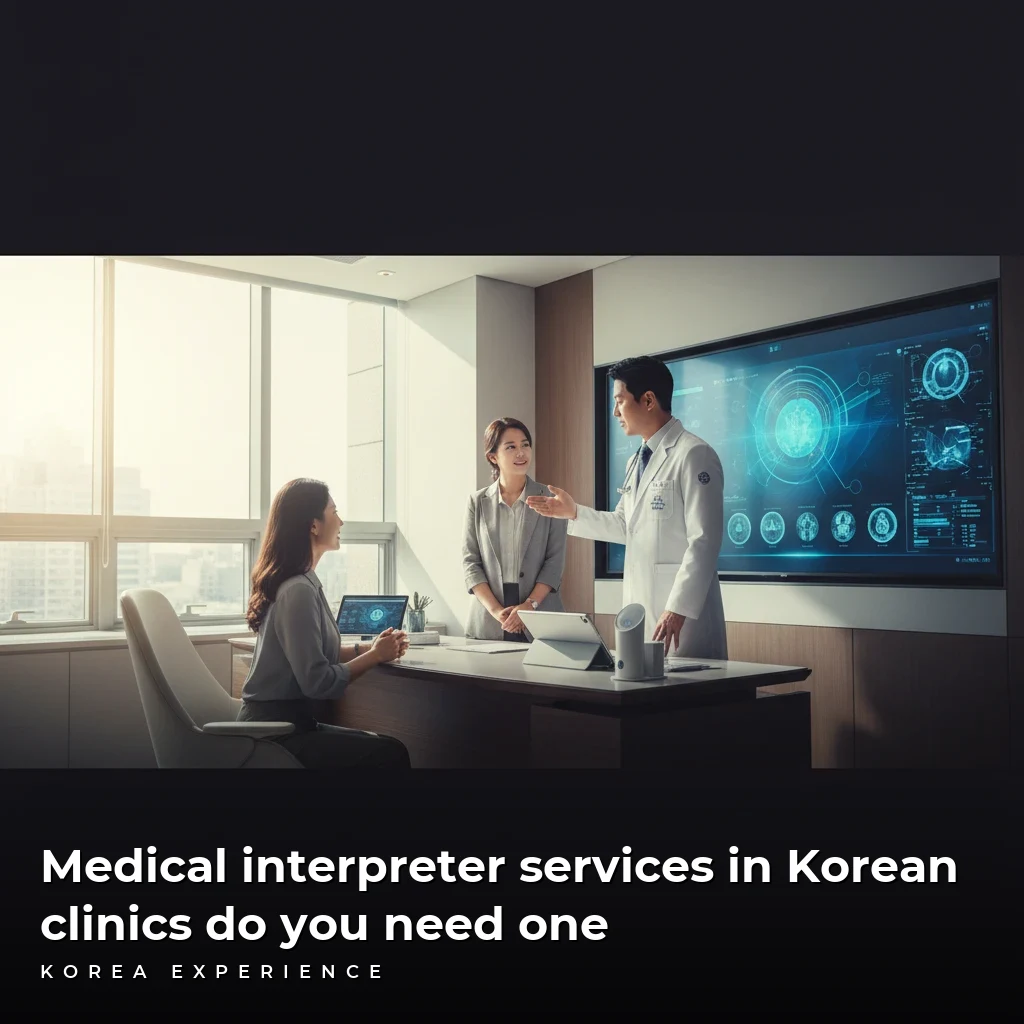
When planning a medical trip to South Korea or seeking treatment as an expat, the language barrier is often the single biggest source of anxiety. While South Korea boasts some of the most advanced medical technology in the world—ranking 4th globally in the sheer number of MRI units per capita and hosting over 300,000 medical tourists annually—English proficiency varies drastically depending on where you go.
The short answer: If you are visiting a major university hospital (Tier 1) or a large plastic surgery clinic in Gangnam, in-house interpretation is standard and often free. However, for local specialist clinics, dental work, or smaller dermatology centers, you absolutely need to hire a professional medical interpreter or coordinator to ensure safety and consent accuracy.
Key Takeaways
- 1University hospitals (Tier 1) have dedicated International Health Centers with English staff included in the higher consultation fees (approx. ₩50,000 surcharge).
- 2Freelance medical interpreters typically charge between ₩50,000 and ₩100,000 per hour, with a minimum booking of 2 hours.
- 3Relying on Papago or Google Translate is dangerous for pre-surgery consent forms and anesthesia consultations.
- 4Certified Medical Tourism Coordinators hold government licenses; ask for credentials to avoid illegal brokers.
Understanding the Korean medical landscape for foreigners
To determine if you need an interpreter, you first need to understand the hierarchy of Korean medical facilities. The level of English support is directly correlated to the size and target demographic of the institution.
Tier 1: Tertiary University Hospitals
Institutions like Severance Hospital (Sinchon), Samsung Medical Center (Gangnam), and Asan Medical Center (Jamsil) are effectively "cities within cities." These hospitals are geared towards serious illnesses, major surgeries, and comprehensive check-ups.
- English Support: High. They have dedicated "International Health Centers" (IHC).
- Cost: Higher than local clinics. You generally pay a premium for using the IHC, often around 150% to 200% of the standard national health insurance rate (if you are uninsured).
- Interpreter Need: Low. The hospital assigns a coordinator who walks you through the process. However, the doctor themselves may speak excellent English, or they may rely on the coordinator to translate specific medical jargon.
Tier 2: Specialized Clinics (Plastic Surgery & Dermatology)
Located predominantly in Gangnam-gu and Seocho-gu, these clinics aggressively market to foreigners.
- English Support: Variable. The "consultant" (who discusses price and design) usually speaks fluent English. The surgeon might speak basic English. The nursing staff often speaks zero English.
- Interpreter Need: Moderate. While they provide translation, keep in mind their interpreters work for the clinic. Their goal is to close the sale. For objective medical advice, an independent interpreter is superior.
Tier 3: Local Clinics (The "Dongne" Clinic)
These are the small clinics on every street corner—ENTs, internal medicine, orthopedics, and small dentists.
- English Support: Non-existent to Low. Receptionists rarely speak English.
- Interpreter Need: Critical. You will not be able to register, explain symptoms, or understand prescription dosage without help.
📊 Foreign Patient Statistics 2026
The risks of going without an interpreter
Many travelers assume that because young Koreans speak English well, medical staff will too. This is a dangerous assumption. In a 2025 survey of local clinics in Seoul, only 12% of front-desk staff felt confident checking in a foreign patient in English.
Misdiagnosis and Nuance
Medical Korean is highly specific. The word for a "throbbing" pain differs from a "stinging" pain or a "dull" ache. If you tell a doctor your stomach hurts using a translation app, they might miss the nuance that suggests appendicitis versus simple indigestion.
The Anesthesia Risk
Never sign an anesthesia consent form that hasn't been fully translated line-by-line. Standard Korean forms include waivers regarding allergies and emergency protocols. If you cannot read it, do not sign it without a trusted interpreter present.
Medication Errors
Korean pharmacists (yaksa) are incredibly knowledgeable, but instructions are printed in Korean on the packet. A study showed that 1 in 5 foreigners in Korea has taken medication incorrectly due to language barriers—such as taking a "before meal" pill after a meal, which can reduce efficacy by up to 40%.
Types of interpretation services available
If you decide you need support, you have three main options. Understanding the difference between a "Coordinator" and an "Interpreter" is vital for your wallet and your health.
1. The Hospital's In-House Coordinator
Most large plastic surgery clinics in areas like Sinsa-dong and Apgujeong employ full-time coordinators.
- Pros: Free (included in surgery cost), knows the specific doctor's style perfectly.
- Cons: They are sales-oriented. They may downplay recovery times or risks to secure the booking.
- Best for: Standard procedures like Botox, fillers, or simple double eyelid surgery.
2. Professional Medical Interpreters (Freelance)
These are independent professionals, often hired through agencies or specialized platforms.
- Pros: Unbiased. They work for you, not the doctor. They can help negotiate prices in some cases.
- Cons: Expensive. You pay hourly or daily rates.
- Best for: complex surgeries, second opinions, or visiting local specialist clinics that don't market to foreigners.
3. Government-Certified Medical Tourism Coordinators
South Korea has a specific national certification for Medical Tourism Coordinators. These individuals have passed exams on medical terminology, hospital administration, and tourism laws.
- Pros: Highly trained and legally recognized.
- Cons: Harder to find independently; usually attached to agencies.
Interpreter Options Comparison
| Feature | In-House Staff | Freelance Pro | Translation App |
|---|---|---|---|
| Cost | Included/Free | ₩50k-100k/hr | Free |
| Medical Accuracy | High | Very High | Low/Risky |
| Bias | High (Sales) | None (Client-focused) | N/A |
| Liability | Clinic | Contracted | User Risk |
Cost analysis: Budgeting for language support
If you are hiring a freelance medical interpreter in Seoul for 2026, you need to budget accordingly. Prices vary based on the interpreter's experience and the complexity of the medical procedure.
Hourly Rates vs. Day Rates
- Standard Medical Interpretation: ₩50,000 – ₩70,000 ($35–$50 USD) per hour.
- Surgery Accompaniment: ₩300,000 – ₩500,000 ($215–$360 USD) per day (up to 8 hours). This usually includes pre-op consulting, waiting during surgery, and post-op recovery instructions.
- Simple Clinic Visit (Dental/Derma): Flat fee of ₩100,000 ($70 USD) for a 2-hour block is common.
Most professional interpreters will require a minimum booking of 2 hours because they have to travel to the clinic. Considering Seoul's transit times—it takes about 45 minutes to cross from Hongdae to Gangnam—this minimum is standard industry practice.
💵 Estimated Interpreter Costs (2026)
Standard interpretation for internal medicine or dentistry.
Includes admission, surgery wait, and recovery room support.
How to book a reliable interpreter
Finding a trustworthy interpreter requires more than a Google search. The market has many "illegal brokers" who operate without a license. Under Korean Medical Law, only registered facilitators can profit from introducing patients to hospitals. However, hiring an interpreter purely for language services (paid by you, not a commission from the hospital) is a gray area but generally accepted if they are not negotiating medical fees.
📖 How to Hire a Medical Interpreter
Step 1: Identify Your Needs
Determine if you are going to a Tier 1 hospital (no external hire needed) or a local clinic.
Step 2: Search Certified Platforms
Use platforms like Medical Korea or reputable expat forums. Avoid random Instagram DMs unless they show certification.
Step 3: Confirm the Scope
Clarify if they will interpret simply what is said, or if they will help with pharmacy runs and taxi hailing afterwards.
Step 4: Agree on Fees Upfront
Do not pay commission based on surgery price. Pay a flat hourly or daily rate for their time.
For those looking into specific procedures, we have detailed guides on how to navigate bookings. For example, if you are looking into skin treatments, read our guide on booking medical consultations in Korea to understand how the appointment flow works.
Specialized Fields: When interpretation is non-negotiable
Not all medical appointments carry the same weight. Getting a flu prescription is different from getting a nose job.
Plastic Surgery & invasive procedures
If you are undergoing Rhinoplasty or Blepharoplasty, you need 100% clarity. During the consultation, the doctor will simulate the new nose shape or eyelid crease. If you say "natural" but the doctor hears "defined," you will wake up with a result you didn't want.
- Resource: Read about rhinoplasty clinics in Gangnam to see which offer the best English support.
Dermatology and Skincare
This is the most popular category for tourists. Treatments like Ultherapy or Potenza involve significant pain and aftercare. While many clinics have English menus, the aftercare instructions (no alcohol for 7 days, no saunas, how to wash your face) are often rattled off quickly in Korean.
- Resource: Check our list of best dermatology clinics in Seoul for foreigners where language barriers are minimal.
Dentistry
Korean dentistry is affordable and high quality. However, dental terminology is notoriously difficult. Explaining "sensitivity to cold" vs "throbbing nerve pain" requires precise language. Most local dentists do not speak English.
"If you go to a local dentist for a cleaning (scaling), you can get by with Papago. But if you need a root canal or an implant, bring an interpreter. I've seen patients accidentally agree to extractions because they thought the doctor said 'treatment' when he said 'removal' (balchi)."
Can I just use Papago or Google Translate?
In 2026, AI translation has improved massively. Naver's Papago app is the gold standard in Korea, far outperforming Google Translate for English-to-Korean accuracy, especially with honorifics.
The "Honorifics" Trap
Korean language is built on hierarchy. Papago usually defaults to polite formal language. However, medical terms are often technical Sino-Korean words (Hanja).
- Success Scenario: Showing a pharmacist a translated screen saying "I have a headache" works 99% of the time.
- Failure Scenario: Using the voice conversation mode during a consultation. The ambient noise of a hospital, combined with the doctor's mask and rapid speaking speed, often results in "hallucinations" by the AI.
📋 Papago vs. Real Life
If you rely on apps, use the Image Translation feature to read prescription bags or written instructions. Do not trust the voice feature for medical consent.
Legal and Safety Considerations
Using an interpreter also protects you legally. If a medical error occurs, the first defense a clinic will use is "informed consent." If you signed a Korean form without an interpreter's signature alongside it, proving that you didn't understand the risks is incredibly difficult in Korean court.
Emergency Numbers
If you are in a medical emergency and have no interpreter:
- 119: Ambulance and Fire (Available 24/7, translation available).
- 1339: Korea Disease Control & Prevention Agency Call Center. They provide specific medical advice and hospital recommendations in English.
- 1330: Korea Travel Hotline (can interpret over the phone for simple situations).
Medical Disclaimer
This article is for informational purposes only and does not constitute medical advice. KoreaExperience is not a medical provider. Always verify the credentials of any medical professional or interpreter you hire.
DIY: Tips for visiting clinics without an interpreter
If you are brave (or broke) and want to visit a local clinic for a minor issue like a cold or allergy, here is how to survive.
- Preparation is Key: Write down your symptoms in Korean using Papago before you leave your hotel. Do not try to type it at the counter.
- Passport: You strictly need your physical passport to register at any clinic in Korea.
- The "Yeongsujeung" (Receipt): Always ask for a detailed receipt and a "Medical Certificate" (Jindanseo) in English if you need to claim travel insurance later. This costs extra (usually ₩20,000).
For specific treatments like acne, you might not need a full interpreter if you choose the right clinic. See our guide on acne scar treatment options in Korea for clinics that specialize in foreign skin types.
The rise of "Concierge" Medical Apps
In 2026, several apps have bridged the gap between patients and clinics. Apps like Gangnam Unni (mostly plastic surgery) and DocDoc allow you to chat with clinics in English before you arrive. The chat is often handled by an AI or a human coordinator using translation tools, but it allows you to set expectations before you walk in the door.
Using Medical Apps vs. Human Interpreters
- ✓Instant access to prices
- ✓Reviews from other foreigners
- ✓No hourly fee
- ✗Limited to cosmetic procedures
- ✗Cannot help during actual surgery
- ✗Reviews can be manipulated
Conclusion: Is it worth the cost?
Navigating the Korean healthcare system is a journey of dualism—high-tech efficiency mixed with traditional language barriers.
If you are coming for cosmetic surgery in Gangnam, you likely do not need to hire an external interpreter, as the clinic will provide one. However, you must remain critical of their advice as they are employees of the clinic.
If you are coming for serious medical treatment at a university hospital, use the International Health Center. It is worth the extra surcharge for the peace of mind.
If you are an expat needing dental work, specialized dermatology, or complex internal medicine at a local level, hiring a freelance medical interpreter is not just a luxury—it is a safety necessity. The ₩100,000 you spend on an interpreter could save you from months of recovery from a misunderstood procedure.
Ready to book your consultation? Make sure you check out our comprehensive guide on anti-aging treatments in Korea to familiarize yourself with the terminology before you go.
❓ Frequently Asked Questions
Have more questions?Contact us →
Severance Hospital International Health Care Center(세브란스병원 국제진료센터)
About the Author
Korea Experience Team
Written by the Korea Experience editorial team - experts in Korean medical tourism, travel, and culture with years of research and firsthand experience.
⚠️ Medical Disclaimer
The information provided on this website is for general informational purposes only and does not constitute medical advice. Always consult with qualified healthcare professionals before making any medical decisions.
Explore more in Medical Tourism
World-class medical procedures at competitive prices. From plastic surgery and dermatology to dental care and health checkups — your complete guide to medical tourism in Korea.
Browse All Medical Tourism ArticlesContinue Reading
Explore more articles you might find interesting
A complete guide to pediatric healthcare in Seoul for international families, covering top clinics, costs, and emergency protocols in 2026.
A complete guide to handling medical emergencies and surgical complications in Korea, including 119 services, translation help, and hospital costs.
A complete guide to South Korea's National Health Insurance (NHI) for expats. Covers premiums, enrollment, hospital visits, and 2026 cost updates.
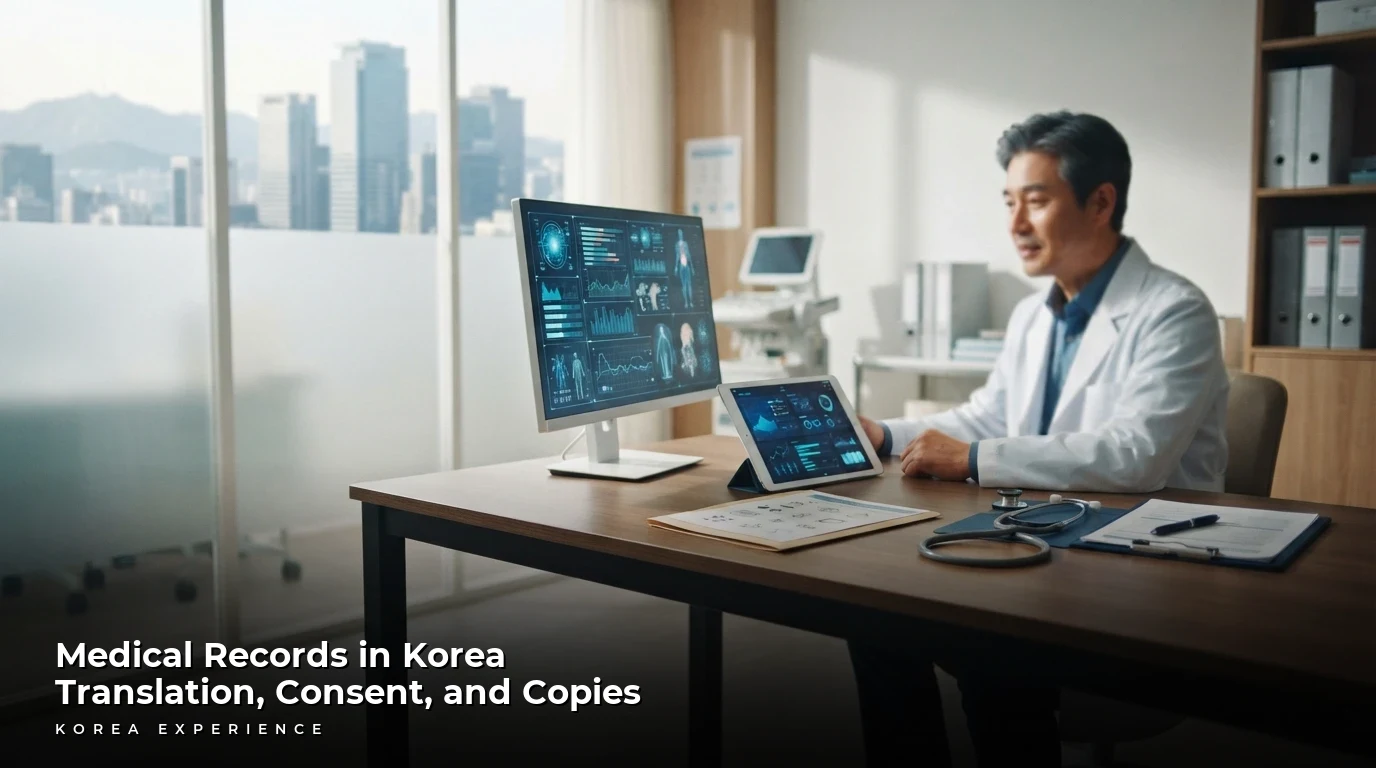
Learn the general patient-access rule in Korea, what representatives may need, and why fees and English translation vary by hospital.
Discover Korea's 2026 stem cell medical tourism boom. Learn how new laws unlock anti-aging and joint treatments at 50% lower costs than the US, from $8,000.
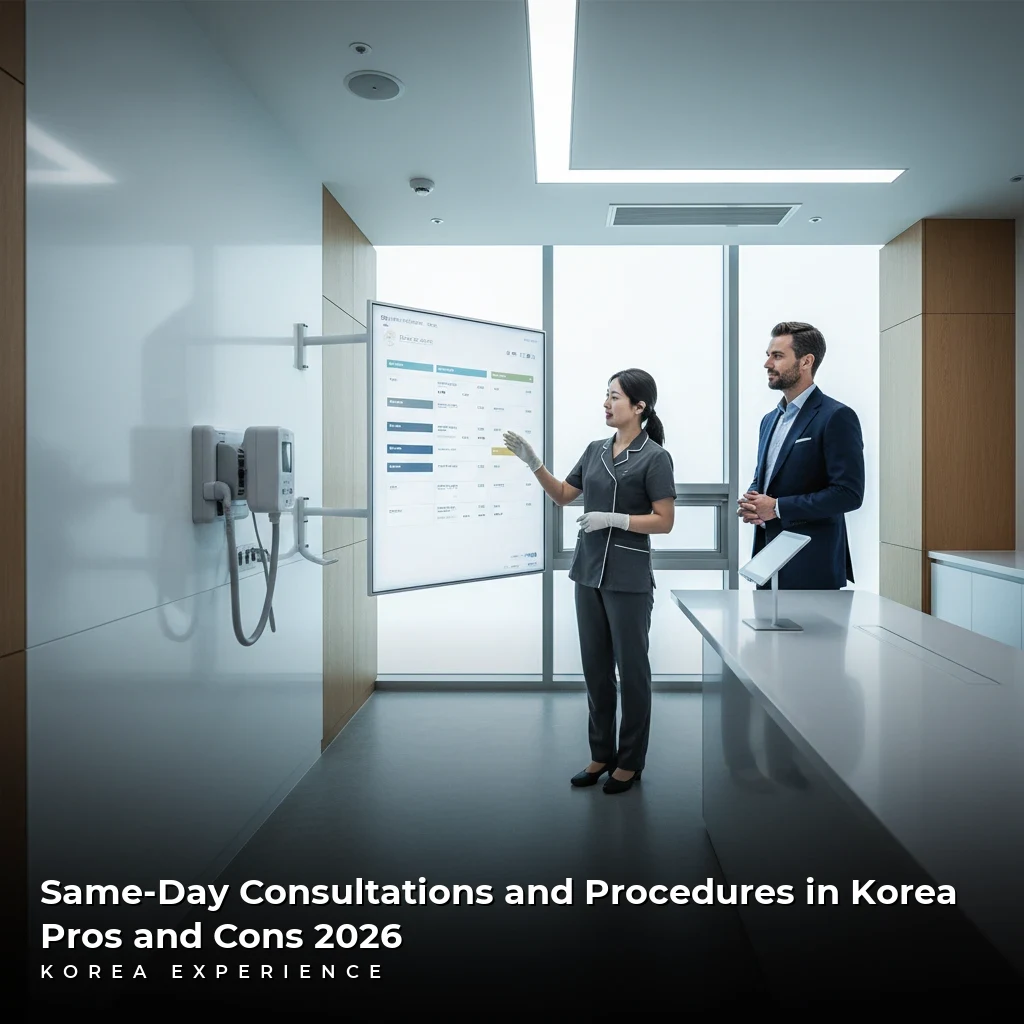
A complete guide to same-day medical treatments in Seoul. We analyze safety, costs (saving up to 40%), and efficiency for travelers in 2026.