Medical Concierge Services Are They Worth The Extra Cost 2026
We analyze agency fees, safety benefits, and hidden savings for medical tourism in Korea. See if paying 15-20% extra is worth the peace of mind.
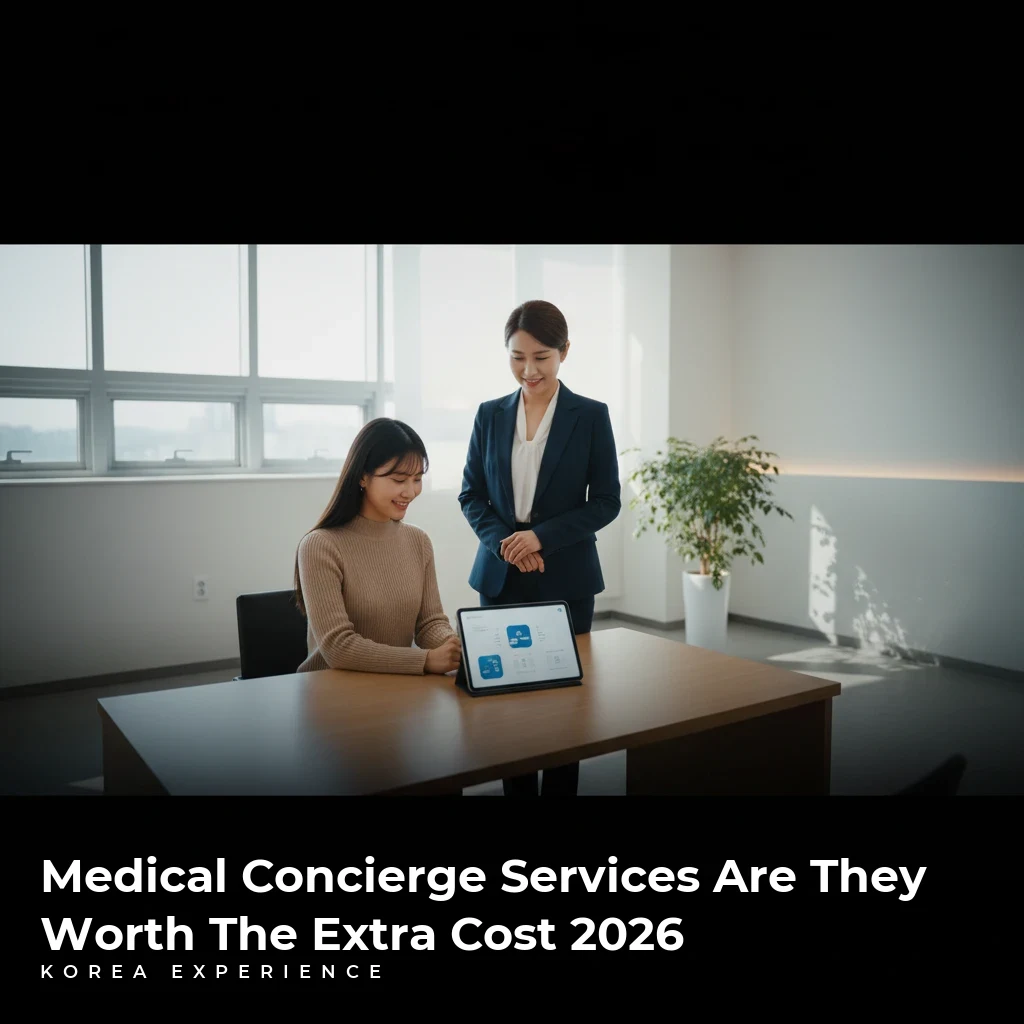
For many international travelers arriving at Incheon International Airport in 2026, the prospect of navigating a foreign healthcare system—even one as advanced as South Korea's—is daunting. Whether you are visiting for complex plastic surgery, cancer treatment, or a comprehensive health check-up, the question inevitably arises: Should you book directly with the clinic, or hire a medical concierge service? While booking directly can ostensibly save money on agency fees, medical concierge services offer a layer of logistical support, translation, and advocacy that can be crucial when you are vulnerable during recovery.
The short answer: For major surgeries (rhinoplasty, body contouring) or complex treatments requiring general anesthesia, a medical concierge is worth the investment in 2026, often securing better recovery care and negotiating power. For simple non-invasive procedures like Botox or facials, the extra cost—typically 15-20% of the total bill or a flat fee starting at ₩300,000 ($225 USD)—is usually unnecessary if you speak basic English.
Key Takeaways
- 1Concierge services typically charge 15-20% commission or flat fees from $250-$1,000 depending on complexity
- 2Agencies provide critical advocacy, preventing 'shadow doctor' risks and ensuring proper aftercare
- 3DIY booking saves money but requires managing your own transport, pharmacy runs, and tax refunds
- 4Government-registered agencies (checking KHIDI registration is mandatory) offer legal protection
Medical Disclaimer
The information provided in this article is for educational purposes only and does not constitute medical advice. Always consult with qualified healthcare professionals for medical decisions. In case of emergency in Korea, dial 119 for ambulance services or 1339 for medical help in English.
Understanding the Korean Medical Concierge Landscape in 2026
South Korea's medical tourism industry has matured significantly. By 2026, the market has split into two distinct categories: direct-to-clinic digital platforms and full-service human concierge agencies. With over 2,500 registered medical facilitators operating in Seoul alone, the competition has driven service quality up, but it has also made the landscape more confusing for the average traveler.
A medical concierge is not just a translator. In the premium sector, they act as your local guardian. Their duties range from pre-arrival consultations and visa issuance support (C-3-3 medical visas) to airport pickups, hotel bookings, and—most critically—being present in the operating room or recovery room when you wake up.
The Scope of Services
Standard concierge packages in 2026 typically include:
- Pre-trip: coordinating video consultations with 3-5 top clinics.
- Arrival: Limousine pickup from Incheon (ICN) or Gimpo (GMP) airports.
- Procedure: In-person translation during consultation and surgery (ensuring your specific desires are communicated accurately, not just translated word-for-word).
- Recovery: Food delivery (pumpkin juice is a staple for swelling), pharmacy runs, and transportation to follow-up appointments.
- Departure: Assisting with the 7-9% VAT tax refund process at the airport.
📊 Industry Growth
Cost Breakdown: Agency Fees vs. Direct Booking
The biggest hesitation for travelers is the cost. There is a persistent myth that agencies always charge the patient a massive premium. In reality, the financial structure is more nuanced.
Legitimate, government-registered agencies often operate on a commission basis paid by the hospital, not the patient. This fee is standard marketing spend for the clinic. In this model, the price you see on the invoice should be identical to the walk-in price. However, "Premium" or "VIP" concierge services that offer dedicated 24/7 staff often charge a separate service fee to the patient.
Here is a realistic look at the pricing models you will encounter in Gangnam and Seocho districts in 2026:
💵 Service Cost Comparison 2026
Includes dedicated guide, transport, 24/7 support. Surgery cost is separate.
Free translation, but they work for the clinic, not you. Limited after-hours help.
The Hidden Costs of Going Solo
If you choose the DIY route to save the agency fee, you must account for the "hassle tax."
- Transport: A taxi from Incheon Airport to Gangnam costs approximately ₩70,000 to ₩100,000 ($50-$75 USD). If you are bandaged post-surgery, navigating the subway is impossible, and hailing a taxi during rush hour (5 PM - 7 PM) can take 40 minutes.
- Pharmacy: Post-op prescriptions are not included in surgery fees. A concierge will fetch these for you. If you are alone, you must walk to the pharmacy, often while in pain or sedated.
- Communication: Hiring a freelance medical interpreter costs roughly ₩50,000 to ₩80,000 per hour ($35-$60 USD). For a 4-hour surgery day and two follow-ups, this quickly adds up to over ₩400,000.
For a deeper dive into how to prepare for your trip expenses, check out our guide on booking medical consultations in Korea.
The Safety Factor: Why "Advocacy" Matters More Than Translation
The most compelling argument for hiring a reputable medical concierge is safety. While rare, "shadow doctors" (where a different doctor performs the surgery than the one you consulted with) remain a concern in the global plastic surgery industry.
A concierge acts as your witness. They are often permitted to stay until you are anesthetized and are the first to see you in recovery. Because agencies send volume business to clinics, they hold leverage. A clinic is far less likely to cut corners with an agency client because they risk losing a steady stream of future referrals.
Warning: Illegal Brokers
Beware of unregistered brokers (often found on social media or messaging apps). In Korea, it is illegal to arrange medical services for a fee without registering with the Ministry of Health and Welfare. Illegal brokers have no legal recourse if something goes wrong. Always ask for their Medical Tourism Agency Registration Certificate.
Furthermore, if complications arise post-surgery—such as excessive bleeding or infection—at 2:00 AM, having a concierge's emergency line is invaluable. The clinic's English coordinator goes home at 6:00 PM. Your concierge (or their 24/7 line) bridges that terrifying gap between 6:00 PM and 9:00 AM.
Procedure-Specific Verdicts: When to Hire Help
Not every medical tourist needs a handler. The necessity scales with the invasiveness of the procedure.
1. The "Must-Have" Tier
- Procedures: Two-Jaw Surgery, Rhinoplasty, Full-Body Liposuction, Cancer Treatment.
- Reason: You will likely be under general anesthesia. You may have vision obstruction (rhinoplasty/blepharoplasty swelling) or mobility issues.
- Concierge Value: High. They handle discharge, hotel check-in, and food delivery when you physically cannot.
2. The "Nice-to-Have" Tier
- Procedures: Breast Augmentation, Hair Transplant, Vision Correction (LASIK/SMILE).
- Reason: Recovery is uncomfortable but manageable. You are usually ambulatory immediately.
- Concierge Value: Medium. Good for comfort and transport, but not strictly "medical" necessity.
3. The "DIY" Tier
- Procedures: Botox, Fillers, Skin Lasers (Thermage/Ulthera), Dental Cleaning.
- Reason: These are "lunchtime procedures." You walk in, get treated, and walk out.
- Concierge Value: Low. Most skin clinics in Gangnam have fluent English staff.
For those looking into non-invasive options, read our analysis of anti-aging treatments in Korea to see if you can manage these appointments solo.
📋 Recovery Timelines & Logistics
The Concierge Process: A Step-by-Step Journey
If you decide to engage a service, here is what the timeline typically looks like in 2026. This process usually begins 2-3 months before your flight.
The Concierge Journey
Digital Consultation
Send photos/records to agency. They gather quotes from 3-5 specialized clinics.
Itinerary Finalization
Select clinic, book surgery slot (10% deposit), arrange hotel and airport pickup.
Arrival
VIP pickup at Incheon Airport. Private transfer to hotel. Handover of local SIM/WiFi.
Consultation & Surgery
Face-to-face with surgeon. Concierge translates nuances. Surgery performs.
Recovery Support
Daily check-ins via KakaoTalk. Delivery of porridge/medicine. Deswelling treatments.
Departure
Final check-up. Concierge escorts to airport and assists with tax refund.
Navigating Logistics: Accommodation and Transport
One area where concierges shine is securing accommodation that is "recovery-friendly." Not all hotels in Seoul are suitable for post-op patients. You need adjustable beds, proximity to the clinic (to avoid bumpy taxi rides), and room service options.
A good concierge will book you into hotels specifically catering to medical tourists, such as those near Sinnonhyeon or Apgujeong stations. These hotels are accustomed to guests with bandages and often have humidifiers (crucial for nose surgery recovery) available upon request.
If you are handling this yourself, you need to ensure your hotel is within 5-10 minutes walking distance of your clinic. Traffic in Gangnam is notoriously gridlocked; a 2km taxi ride can take 25 minutes.
Hotel Peyto Gangnam(호텔 페이토 강남)
Managing Nutrition During Recovery
A surprising challenge for medical tourists is food. After facial surgery, you cannot chew solids. After body surgery, you cannot walk far to get food. Korean delivery apps like Baedal Minjok (Baemin) or Coupang Eats are excellent, but the interfaces are largely in Korean, and they require a Korean phone number or credit card.
Concierge services handle this entirely, ordering specialized "healing foods" like pumpkin porridge (hobak-juk), which is famous in Korea for reducing swelling. If you are on your own, you will need to rely on Uber Eats (limited selection) or hotel room service (expensive).
"Many patients underestimate the emotional toll of recovery. It is not just about physical pain; it is the isolation. Being alone in a hotel room with a swollen face can be depressing. A good concierge acts as a temporary friend—someone who checks on you not just medically, but emotionally. We often bring clients their favorite coffee or just sit and chat during deswelling treatments. That human connection is what you are really paying for."
For more on what to eat, read our guide to best Korean healing foods for surgery recovery.
The Financial Argument: Tax Refunds and Insurance
One tangible way a concierge can save you money is through the VAT refund system. South Korea offers a refund on the Value Added Tax (10%) for cosmetic procedures performed on foreign tourists. The actual refund amount usually equates to about 7-9% of the surgical cost after processing fees.
For a ₩10,000,000 facelift, that is a refund of nearly ₩800,000 ($600 USD). While you can do this yourself at the airport kiosks, if you make a mistake with the paperwork (Certificate of Medical Service Training) provided by the clinic, you lose the refund. Concierges ensure this paperwork is flawless and sometimes have special fast-track counters they can guide you to.
Do Agencies Get Better Prices?
Sometimes. High-volume agencies have negotiated rates with clinics. While they might take a commission, the discount they secure off the "list price" might offset that commission. For example, a clinic might quote a walk-in foreigner ₩5,000,000 for a procedure. An agency might get a quote of ₩4,000,000, take ₩500,000 as a fee, and pass ₩4,500,000 to you. You still save ₩500,000 compared to the walk-in price.
However, this varies wildly. It is essential to get a direct quote from a clinic (via email) and compare it to the agency's "all-inclusive" quote to see the real margin.
Booking Method Comparison
| Feature | Direct Booking (DIY) | Registered Agency | Illegal Broker |
|---|---|---|---|
| Price Transparency | High | Medium | Low |
| Aftercare Support | Clinic Hours Only | 24/7 Support | None |
| Legal Protection | Standard | High (Bonded) | Zero |
| Language Barrier | Variable | None | None |
Communication Tools for the DIY Traveler
If you decide that the extra cost isn't worth it—perhaps you are just getting specialized rhinoplasty at a clinic known for English support—you need to prepare your digital toolkit.
- Papago: Far superior to Google Translate for Korean/English. Use the "Honorifics" toggle.
- KakaoTalk: The ubiquitous messaging app. All clinics use this for communication.
- Naver Maps: Google Maps does not work well for walking directions in Korea.
- Local Connectivity: You must have a working phone number. See our advice on best Korea SIM cards.
Case Studies: Is It Worth It For You?
Case A: The seasoned traveler getting double eyelid surgery.
- Profile: Has visited Korea before, familiar with the subway, budget-conscious.
- Verdict: Skip the Concierge. The surgery is minor (local anesthesia), recovery is easy, and mobility is unimpaired. Direct booking is efficient.
Case B: First-time visitor getting V-line jaw surgery.
- Profile: Does not speak Korean, traveling alone, nervous about anesthesia.
- Verdict: Hire the Concierge. Jaw surgery requires a strict liquid diet, creates significant swelling affecting speech, and carries higher medical risks. The $500-$1,000 service fee is a necessary insurance policy for safety and basic quality of life during the first 5 days.
Case C: Group of friends getting skin treatments.
- Profile: Staying in an Airbnb, looking for "glass skin" facials.
- Verdict: Skip. You can support each other. Most skin clinics are set up like factories with efficient English processing.
Pros and Cons Summary
To help finalize your decision, here is a balanced look at the trade-offs involved in hiring a medical concierge in 2026.
Medical Concierge Services
- ✓Advocacy in the operating room (anti-shadow doctor)
- ✓24/7 emergency support during recovery
- ✓Streamlined logistics (transport, hotel, pharmacy)
- ✓Negotiating power with clinics for better dates/rates
- ✓Emotional support for solo travelers
- ✗Additional cost (15-20% or flat fees)
- ✗Risk of being steered to clinics paying high commissions rather than best quality
- ✗Less autonomy over your schedule
- ✗Not necessary for minor, non-invasive procedures
Final Verdict
In 2026, the value of a medical concierge service in Korea is not found in the access to care—you can easily email clinics yourself—but in the quality of the experience and risk mitigation.
If you view the extra cost not as a "booking fee" but as "recovery insurance," the math changes. For invasive surgery, being alone in a hotel room unable to speak the language or order food is a terrifying experience that can hinder healing. In these cases, the concierge is absolutely worth the extra cost. For everything else, save your money for shopping and dining in Seoul's vibrant districts.
📖 How to Verify a Concierge Agency
Step 1: Check Registration
Ask for their 'Medical Tourism Agency Registration Certificate' issued by KHIDI.
Step 2: Verify Online
Visit the VisitMedicalKorea website and search their agency name in the authorized database.
Step 3: Review Contracts
Ensure the contract clearly states the refund policy and specific services included (e.g., how many hours of translation?).
Frequently Asked Questions
❓ Frequently Asked Questions
Have more questions?Contact us →
About the Author
Korea Experience Team
Written by the Korea Experience editorial team - experts in Korean medical tourism, travel, and culture with years of research and firsthand experience.
⚠️ Medical Disclaimer
The information provided on this website is for general informational purposes only and does not constitute medical advice. Always consult with qualified healthcare professionals before making any medical decisions.
Explore more in Medical Tourism
World-class medical procedures at competitive prices. From plastic surgery and dermatology to dental care and health checkups — your complete guide to medical tourism in Korea.
Browse All Medical Tourism ArticlesContinue Reading
Explore more articles you might find interesting
Navigating Korea's healthcare system in 2026? We analyze costs (₩50k-150k/hr), hospital tiers, and when you absolutely need a certified medical interpreter.
A comprehensive guide to Korea's strict medical cannabis laws and advanced alternative pain management treatments available to foreigners in 2026.
A comprehensive guide to FFS, VFS, and top surgery in Seoul for 2026. Includes costs, recovery times, and clinic recommendations for international patients.
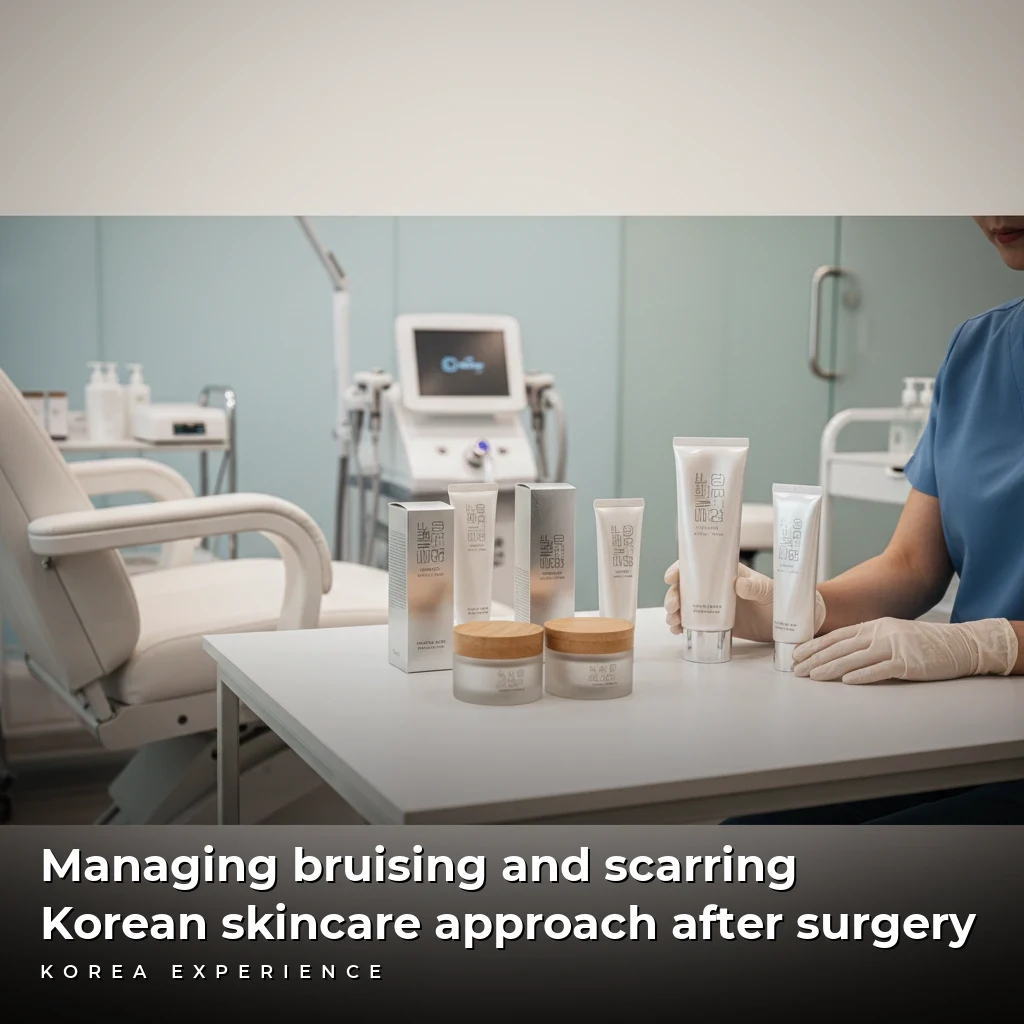
A complete guide to Korean post-procedure care, featuring top pharmacy creams, deswelling treatments, and recovery protocols with 2026 pricing data.
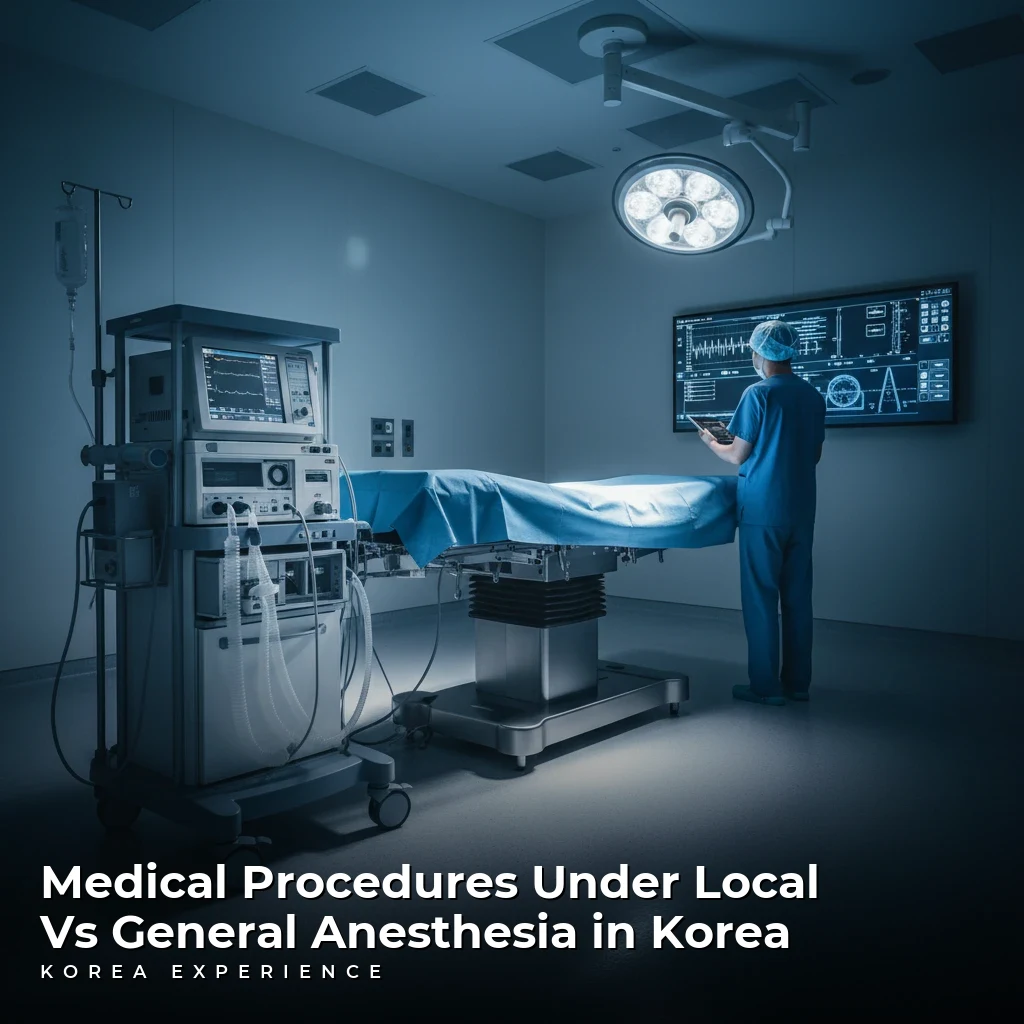
A comprehensive guide to anesthesia types in Korean medical tourism, costs, safety protocols, and what to expect during surgery. Average read time 15 mins.
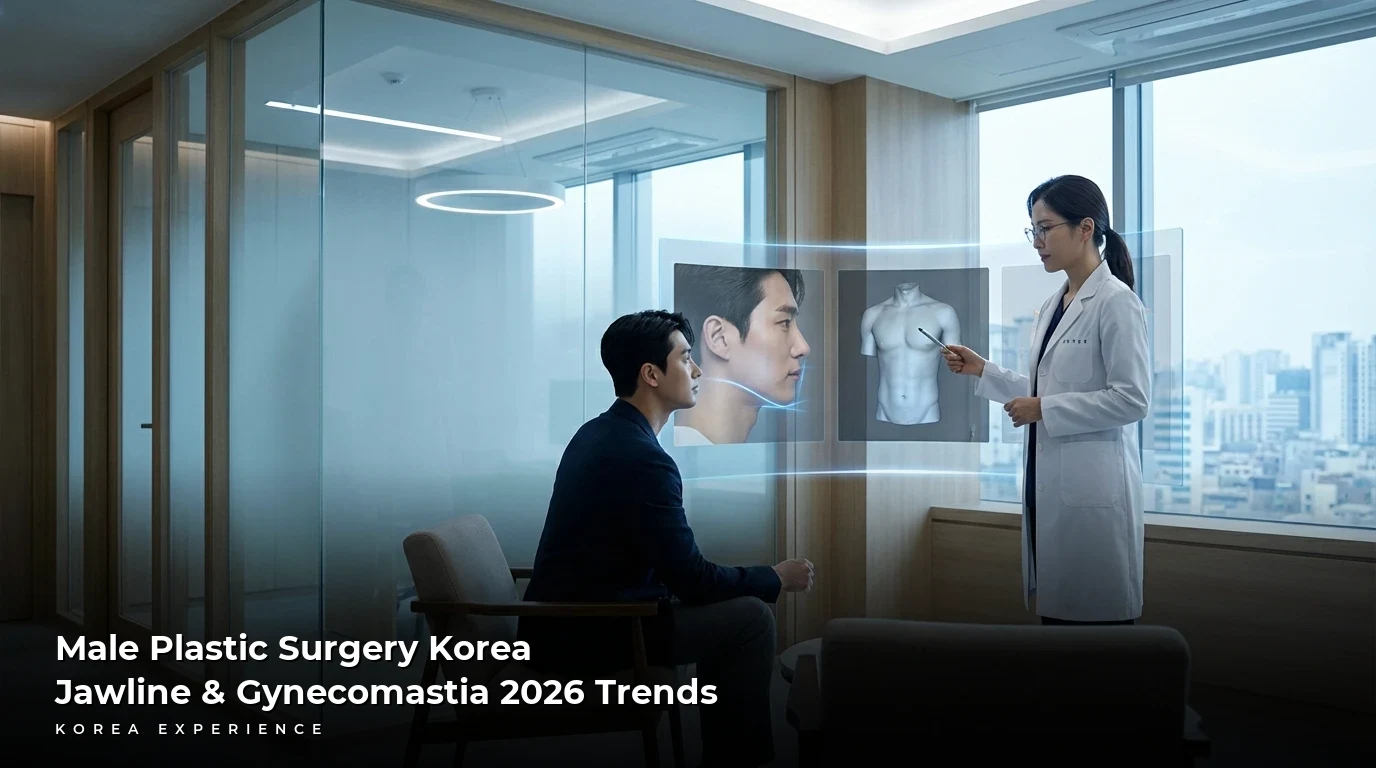
Explore 2026 male plastic surgery trends in Korea for jawline definition and gynecomastia. Discover top clinics, costs, and recovery insights for international patients interested in medical tourism.