Medical Procedures Under Local Vs General Anesthesia in Korea
A comprehensive guide to anesthesia types in Korean medical tourism, costs, safety protocols, and what to expect during surgery. Average read time 15 mins.
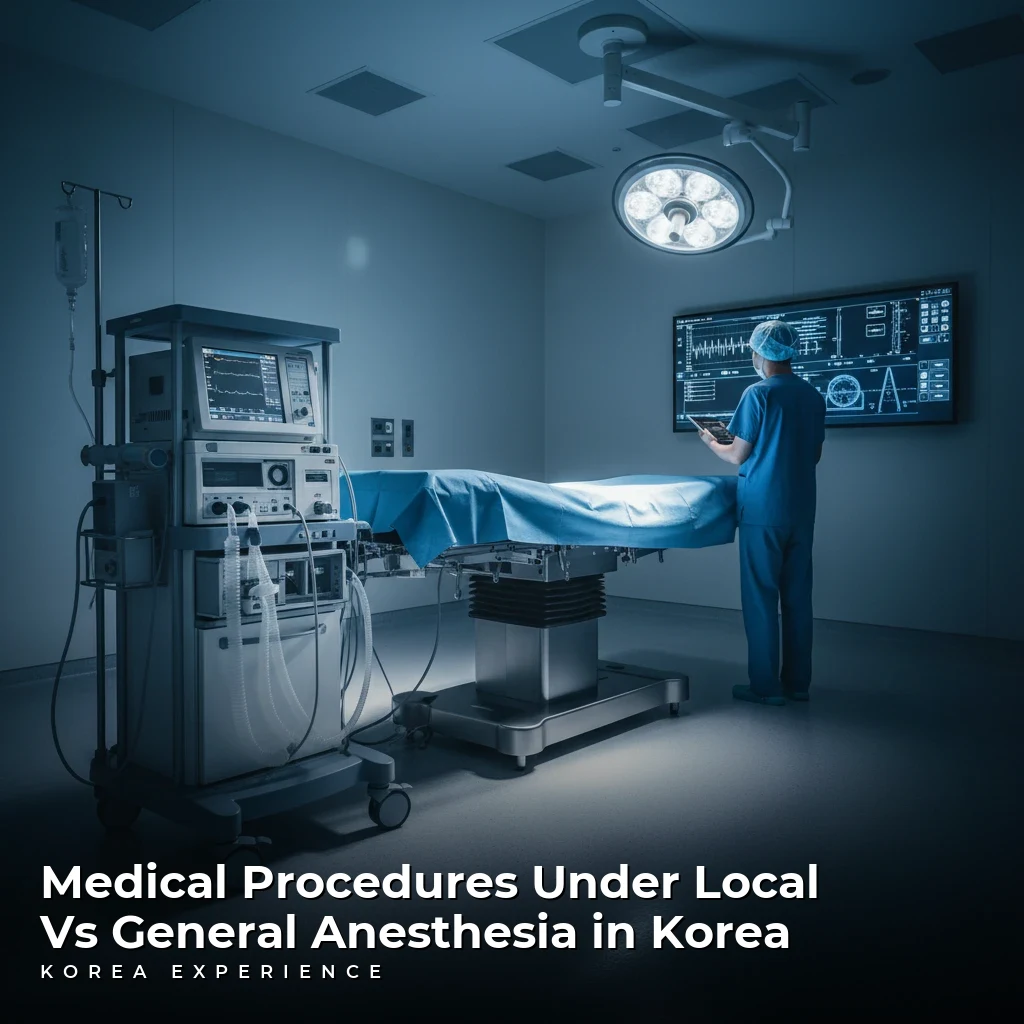
Deciding on a medical procedure in South Korea involves more than just selecting a surgeon or a clinic; understanding the type of anesthesia used is crucial for your safety, comfort, and recovery speed. In the context of Korean medical tourism, the choice between local anesthesia, sedation (often called "sleep anesthesia" locally), and general anesthesia is determined by the invasiveness of the surgery, the duration of the procedure, and patient anxiety levels. While minor treatments like thread lifts or simple blepharoplasty are almost exclusively performed under local anesthesia, major skeletal surgeries like jaw contouring mandate general anesthesia with intubation.
The short answer: Local anesthesia is used for minor skin and eye procedures with zero downtime, while general anesthesia is reserved for major bone and body contouring surgeries requiring complete unconsciousness. However, Korea is famous for its extensive use of "Sleep Anesthesia" (IV Sedation), which bridges the gap for procedures like rhinoplasty and liposuction, offering a pain-free experience without the heavy recovery of general anesthesia.
Key Takeaways
- 1Local anesthesia is standard for double eyelid surgery and skin treatments, costing significantly less than sedation options.
- 2Sleep anesthesia (IV Sedation) is the preferred method for rhinoplasty and liposuction in 90% of Korean clinics.
- 3General anesthesia requires a board-certified anesthesiologist to be present throughout the entire surgery.
- 4Fast at least 8 hours before general anesthesia and 4-6 hours before sleep anesthesia to prevent complications.
Understanding the Three Tiers of Anesthesia in Korea
When browsing medical tourism packages or consulting with clinics in Gangnam or Busan, you will frequently encounter three specific terms. Understanding the distinction is vital because it affects your cost, your pre-operative preparation, and your post-operative logistical needs (such as whether you need a guardian to escort you home).
1. Local Anesthesia (Guk-so Machwi)
This is the numbing of a specific small area. You remain fully awake, alert, and can converse with the doctor. In Korea, this is standard for non-invasive treatments. The doctor injects Lidocaine directly into the target area. It stings for about 15 to 30 seconds, after which the area becomes completely insensate.
- Common Use: Simple double eyelid surgery, thread lifts, mole removal, scar treatments.
- Recovery: Immediate. You can usually walk out and take the subway or bus immediately.
2. IV Sedation / Sleep Anesthesia (Su-myeon Machwi)
This is significantly more common in Korea than in many Western countries for intermediate procedures. Drugs like Propofol or Midazolam are administered through an IV line. You breathe on your own without a machine, but you fall into a deep sleep. You will feel no pain and, crucially, will have no memory of the surgery.
- Common Use: Rhinoplasty, facelifts, liposuction, complex eye revisions, hair transplants (during the extraction phase).
- Recovery: Requires 30 to 60 minutes in a recovery room. You will feel groggy and "drunk" for several hours. You cannot drive.
3. General Anesthesia (Jeon-shin Machwi)
This is a state of controlled unconsciousness affecting the entire body. It paralyzes your muscles, meaning you cannot breathe on your own and require a breathing tube (intubation) connected to a ventilator. This is the most serious form of anesthesia and carries the highest risk and cost.
- Common Use: Orthognathic surgery (Two-jaw), facial bone contouring (V-line, cheekbone reduction), breast augmentation (implants), tummy tucks.
- Recovery: Requires several hours in a recovery room and often an overnight hospital stay. Side effects like nausea, sore throat, and shivering are common.
Anesthesia Types Comparison
| Feature | Local | Sleep (Sedation) | General |
|---|---|---|---|
| Consciousness | Awake/Alert | Sleeping/Grogy | Unconscious |
| Breathing | Natural | Natural | Machine Assisted |
| Recovery Time | None | 1-2 Hours | 24+ Hours |
| Fasting Required | No | 4-6 Hours | 8-12 Hours |
The Pre-Operative Assessment Process
Before undergoing any procedure involving Sleep or General anesthesia, Korean clinics enforce strict safety protocols. In 2026, the standard for safety has risen significantly due to government regulations on patient safety in the medical tourism sector.
If you are undergoing a procedure under Local Anesthesia, the preparation is minimal. You typically only need a consultation to ensure you don't have allergies to Lidocaine.
However, for General Anesthesia, the workup is extensive. Most Tier-1 plastic surgery hospitals in Seoul (those with hospital-grade facilities) operate their own internal laboratories to process these tests quickly, often within 2 hours.
📖 Pre-Op Medical Examination Workflow
Step 1: Blood Collection
Comprehensive blood panel (CBC) to check for anemia, clotting ability, and infection markers. Usually 3-4 vials.
Step 2: Electrocardiogram (ECG)
A heart rhythm check to ensure your heart can withstand the stress of anesthesia. Essential for patients over 40.
Step 3: Chest X-Ray
Checks lung function and shape. Crucial for general anesthesia to ensure safe intubation.
Step 4: 3D CT Scan
For bone surgeries, a high-resolution CT scan maps nerve pathways to prevent damage during surgery.
It is critical to be honest about your medical history. If you are taking supplements (like Omega-3, Ginseng, or Vitamin E) or medications (aspirin, birth control), you must disclose this, as they can increase bleeding risks. Most clinics will ask you to stop these 1,400 to 2,000 minutes (roughly 1 to 2 weeks) before surgery.
Procedure-Specific Anesthesia Breakdown
To help you plan your medical trip to Korea, here is a breakdown of common procedures and the anesthesia typically paired with them.
Double Eyelid Surgery (Blepharoplasty)
- Primary Method: Local Anesthesia with Short Sedation.
- The Process: Most surgeons will administer a very light sedative for 5 minutes to inject the local anesthetic into the eyelid without pain. Once the injection is done, they wake you up. Why? Because during eyelid surgery, the doctor needs you to open and close your eyes to check for symmetry. If you are completely asleep, they cannot verify the aesthetic result in real-time.
- Data Point: Over 85% of eyelid surgeries in Gangnam use this hybrid method.
For more on eye surgery techniques, read our guide on blepharoplasty techniques.
Rhinoplasty (Nose Surgery)
- Primary Method: Deep Sleep Anesthesia (Sedation) or General Anesthesia.
- The Process: Simple bridge augmentation usually uses Sleep Anesthesia. However, complex rib-cartilage harvesting or reconstruction often requires General Anesthesia to protect the airway from blood or fluids.
- Duration: 2 to 4 hours.
Facial Contouring (V-Line, Zygoma)
- Primary Method: General Anesthesia (Mandatory).
- The Process: Because these surgeries involve cutting bone and significant vibration near the airway, General Anesthesia is non-negotiable for safety. The airway must be secured with an endotracheal tube.
- Safety Note: Ensure the clinic has a backup power generator and a Dantrolene kit (the antidote for malignant hyperthermia) on-site.
Anti-Aging & Dermatological Treatments
- Primary Method: Topical Numbing Cream or Local Anesthesia.
- The Process: For Ultherapy, Thermage, or laser treatments, a strong numbing cream is applied for 30-40 minutes. For more invasive procedures like deep chemical peels or extensive filler work, local injections are used.
- Pain Level: Manageable discomfort.
For details on non-surgical options, check our article on anti-aging treatments in Korea.
📋 Anesthesia by Procedure
The Cost of Anesthesia in Korea
One aspect that often surprises international patients is how anesthesia is billed. In the US or Europe, the anesthesiologist's fee is often a separate, hefty bill. In Korea, it is typically bundled into the surgical package, but this varies by clinic tier.
Integrated Pricing vs. Line Item Pricing
- Plastic Surgery Clinics: The quote you receive usually includes the anesthesia cost, pre-op testing, and post-op care.
- University Hospitals: You will likely see a separate line item for anesthesia, calculated by the minute or hour.
If you request Sleep Anesthesia for a procedure usually done under Local Anesthesia (e.g., you are terrified of needles and want to sleep through a thread lift), you will likely be charged an extra fee.
💵 Estimated Anesthesia Surcharges (2026)
If upgrading from sedation (rare)
For minor procedures where local is standard
Note: Exchange rate approx. ₩1,450 = 1 USD (2026 estimate).
Safety Standards: The "Shadow Doctor" Concern & CCTV
A major topic in Korean medical tourism discussions is the fear of "Ghost Surgery" or "Shadow Doctors"—where a famous surgeon consults, but a junior doctor or dentist performs the surgery while the patient is under anesthesia.
How Anesthesia Relates to Ghost Surgery
Ghost surgery is impossible under Local Anesthesia because you are awake. The risk exists primarily under General or deep Sleep Anesthesia.
To combat this, the Korean government passed laws requiring CCTV installation in operating rooms for surgeries involving unconscious patients. As of 2026, reputable clinics promote their safety transparency aggressively.
📊 Safety Statistics 2026
Red Flags to Watch For
If a clinic refuses to show you their CCTV monitoring capabilities or if the anesthesiologist is "on call" rather than "resident" (Sang-ju), consider looking elsewhere. The safest clinics have a dedicated Department of Anesthesiology on-site 24/7.
The Patient Experience: What Does It Feel Like?
Under Local Anesthesia
You will feel pressure, pulling, and tugging, but no sharp pain. The environment might be noisy—you’ll hear the radio, the doctors talking, and instruments clicking.
- Pro Tip: Bring headphones. Many doctors allow you to listen to music or podcasts during local anesthesia surgeries to distract you.
Under Sleep Anesthesia (Sedation)
The experience is often described as "time travel." One moment the nurse is injecting the IV, and the next moment you are waking up in the recovery room. You might have vivid dreams.
- The "Truth Serum" Effect: Patients often say funny or embarrassing things as they wake up from Propofol. It acts as a disinhibitor.
Under General Anesthesia
This is a total blackout. Upon waking, you will likely feel very cold (shivering is a common side effect) and thirsty. Your throat will be sore from the breathing tube. You will feel heavy and likely nauseous.
- The First Hour: This is the hardest part. You must breathe deeply to clear the anesthetic gases from your lungs to prevent pneumonia (atelectasis). Nurses will encourage you not to sleep immediately after waking up.
"Many foreign patients fear General Anesthesia, but in modern Korean hospitals, we use TIVA (Total Intravenous Anesthesia) techniques that significantly reduce post-op nausea compared to older gas-based methods. If you are prone to motion sickness, tell us beforehand, and we can administer anti-nausea prophylaxis."
Preparing for Anesthesia: The "NPO" Rule
NPO stands for Nil Per Os (Nothing by Mouth). This is the single most critical rule for your safety.
- Why? If your stomach has food or liquid, you could vomit while unconscious. Since your gag reflex is paralyzed, the vomit could enter your lungs (aspiration), which is life-threatening.
- Strictness: Korean nurses are very strict about this. If you chew gum or drink water within the prohibited window, your surgery will be cancelled.
Fasting Rules (NPO)
General Anesthesia: STRICT 8 hours fasting (no food, no water). Sleep Anesthesia: 4 hours fasting for liquids, 6 hours for food. Local Anesthesia: No fasting required (a light meal is actually recommended to prevent fainting).
Recovery and Discharge Logistics
The type of anesthesia dictates your discharge plan.
Transportation
- Local Anesthesia: You can take the subway or a taxi alone.
- Sleep/General: You cannot take public transit alone. You should take a taxi, and ideally, have a friend or a hired medical concierge accompany you. The drugs stay in your system for 24 hours, impairing judgment and balance.
Accommodation
If you undergo General Anesthesia, stay within 20 minutes of the clinic for the first 48 hours. Many clinics in Sinsa-dong and Apgujeong have partnerships with nearby hotels or guesthouses.
For tips on booking consultations and managing your schedule, read our guide on booking medical consultations in Korea.
Surgery Day Timeline (General Anesthesia)
Arrival & Change
Wash face, change into gown, final consultation.
Anesthesia Induction
Move to OR, IV line established, drift off.
Surgery Ends
Move to PACU (Recovery Room). Waking up process.
Observation
Monitor vitals, drink water test, remove IV.
Discharge
Prescriptions filled, taxi called, head to hotel.
Pros and Cons of Anesthesia Choices
Sometimes, you have a choice (e.g., for Liposuction or a Mini-Facelift). Here is how to weigh your options.
Local vs. General Anesthesia
- ✓Local: Lower cost and zero recovery time
- ✓Local: No risk of nausea or sore throat
- ✓General: Complete comfort and zero memory of trauma
- ✓General: Allows surgeon total control for precise work
- ✗Local: Can be psychologically stressful to hear surgical sounds
- ✗Local: Limited to smaller surface areas
- ✗General: Higher risk profile and physical toll on the body
- ✗General: Requires strict fasting and guardian for discharge
Post-Anesthesia Diet and Healing
After the anesthesia wears off, your body needs to flush out the toxins. Korean medical culture places high emphasis on "healing foods."
- Pumpkin Porridge (Hobak-juk): The #1 food for surgery recovery in Korea. It is believed to reduce swelling.
- Water: Hydration is key to clearing anesthesia drugs from your liver and kidneys.
- Avoid: Spicy food (triggers stomach upset after anesthesia) and alcohol (dangerous interaction with painkillers).
Check out our full list of best Korean healing foods for surgery recovery.
Conclusion: Making the Right Choice
The choice of anesthesia in Korea is generally dictated by safety protocols, but for "gray area" procedures, your preference matters. If you are highly anxious, discussing Sleep Anesthesia options for minor procedures is worth the extra cost. Conversely, if you want to save money and avoid the "hangover" feeling, sticking to Local Anesthesia for eye surgeries or localized lipo is a smart move.
Always verify that your clinic has a resident anesthesiologist (ask for "Machwi-gwa Jeon-mun-ui" - Anesthesiology Specialist) if you are going under sedation or general anesthesia. Korea's medical infrastructure is world-class, and with the right preparation, your procedure can be smooth, safe, and effective.
❓ Frequently Asked Questions
Have more questions?Contact us →
About the Author
Korea Experience Team
Written by the Korea Experience editorial team - experts in Korean medical tourism, travel, and culture with years of research and firsthand experience.
⚠️ Medical Disclaimer
The information provided on this website is for general informational purposes only and does not constitute medical advice. Always consult with qualified healthcare professionals before making any medical decisions.
Explore more in Medical Tourism
World-class medical procedures at competitive prices. From plastic surgery and dermatology to dental care and health checkups — your complete guide to medical tourism in Korea.
Browse All Medical Tourism ArticlesContinue Reading
Explore more articles you might find interesting
A comprehensive guide to FFS, VFS, and top surgery in Seoul for 2026. Includes costs, recovery times, and clinic recommendations for international patients.
A complete guide to high-BMI surgery in Korea. Discover specialized clinics, safety protocols for BMI 30+, and realistic cost estimates for 2026.
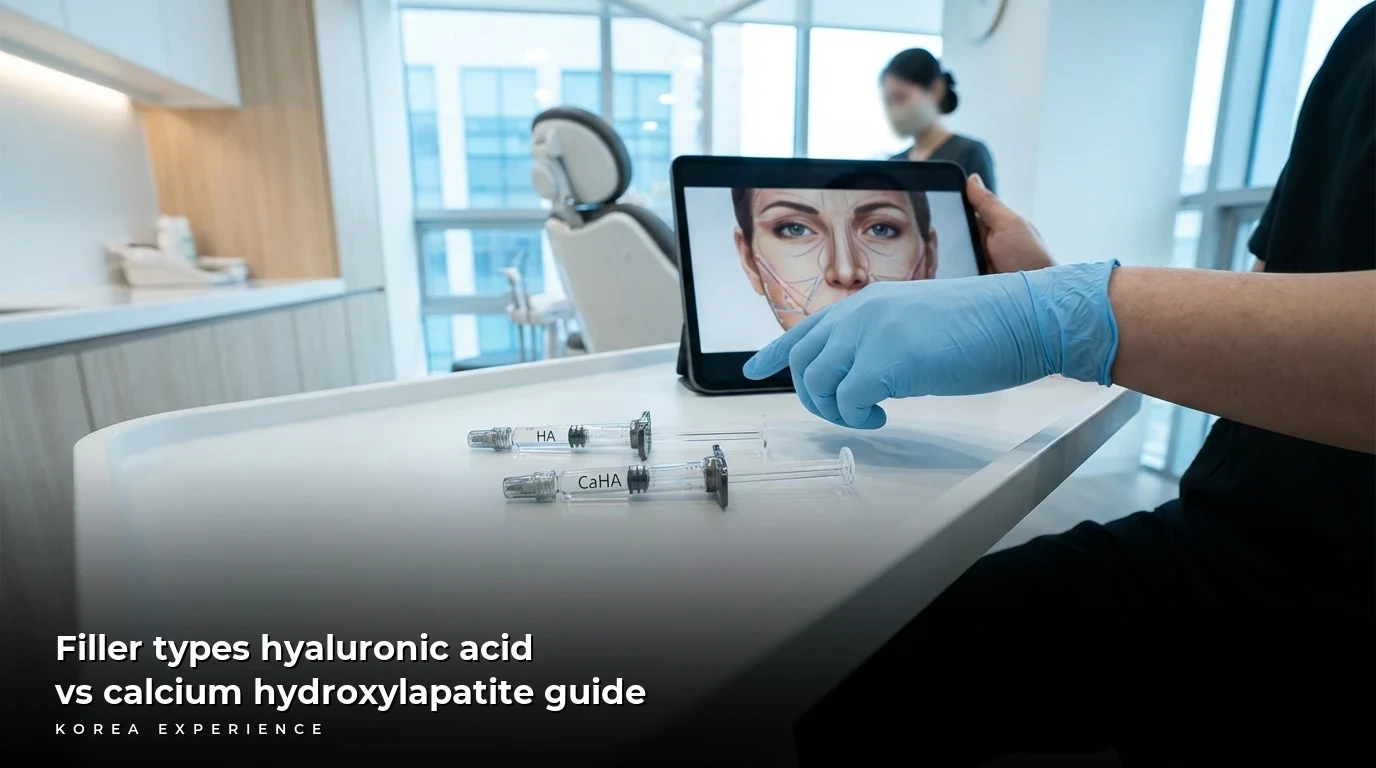
Compare HA and CaHA fillers for your medical tourism trip to Korea. Discover costs, longevity, and expert advice for procedures in Seoul.
Compare Airbnb and recovery hotels for medical tourism in Korea. Discover costs, safety features, and amenities for your post-surgery stay.
Is Seoul safe for surgery in 2026? We analyze 1.5M patient stats, new CCTV laws, and the end of the 10% VAT refund to keep your procedure secure.
A complete guide to same-day medical treatments in Seoul. We analyze safety, costs (saving up to 40%), and efficiency for travelers in 2026.