Medical second opinions how to get them in Seoul for international...
A complete guide to securing medical second opinions in Seoul's top hospitals. Costs, required documents, and booking steps for 2026 travelers.
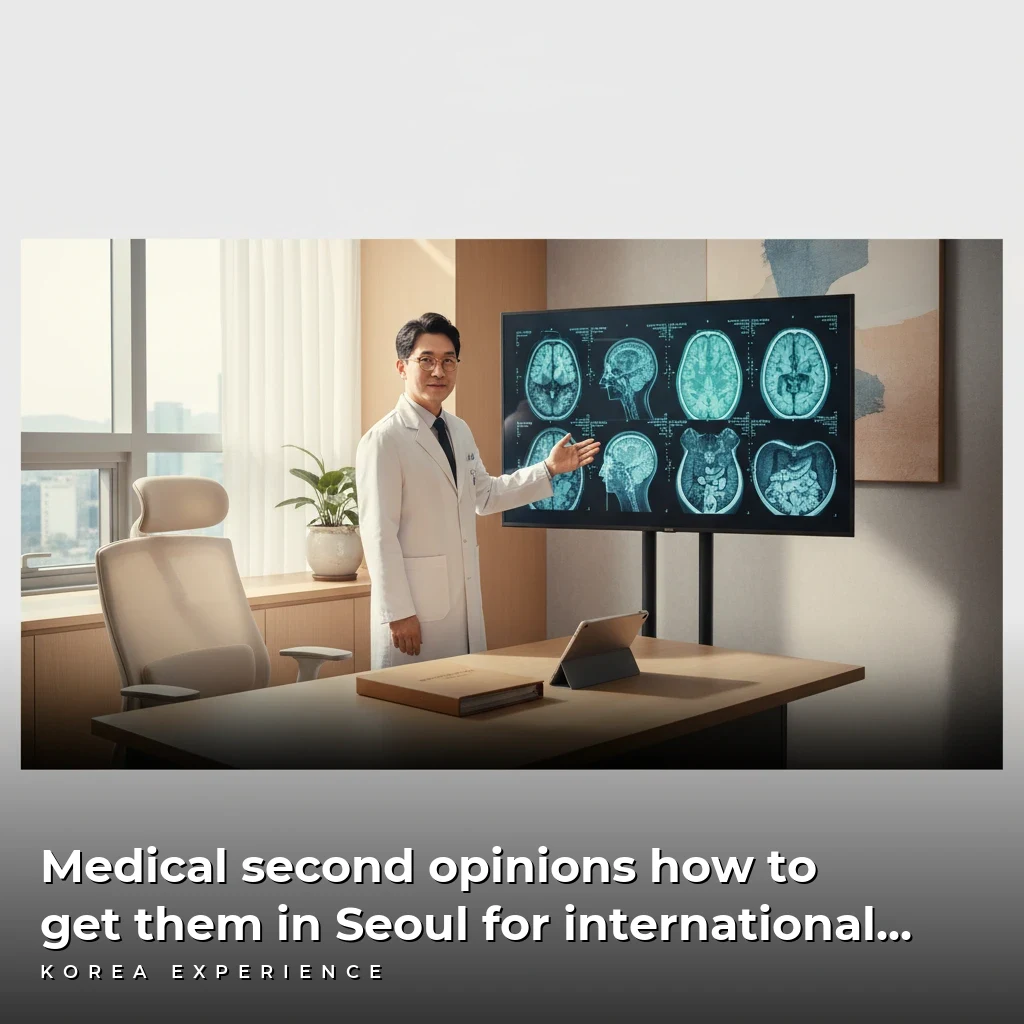
Getting a medical second opinion in Seoul involves contacting the International Healthcare Center (IHC) of a tertiary hospital, submitting your existing medical records (specifically DICOM files for imaging and a doctor's referral letter), and scheduling a consultation which can often be arranged within 1 to 2 weeks. Seoul's medical infrastructure allows international patients to bypass standard domestic wait times through dedicated tracks, utilizing top-tier institutions like Asan Medical Center or Samsung Medical Center where English, Russian, Arabic, and Chinese interpretation services are integrated into the booking process.
The short answer: You must book through an International Healthcare Center at a major university hospital, bring your medical records on a USB drive (DICOM format), and expect to pay between ₩150,000 and ₩350,000 ($110-$260 USD) for the initial consultation.
Key Takeaways
- 1International patients have priority access via dedicated International Healthcare Centers (IHC)
- 2Consultations typically happen within 7-14 days, significantly faster than Western averages
- 3You must bring original pathology slides and medical imaging on a CD or USB in DICOM format
Why Choose Seoul for a Medical Second Opinion?
In 2026, Seoul remains one of the world's premier destinations for medical tourism, particularly for complex diagnoses involving oncology, cardiology, and orthopedics. The city's medical infrastructure is defined by its "Big 5" hospitals, which collectively handle over 30% of the nation's severe cancer cases. For an international traveler or expat, the primary value proposition of seeking a second opinion here is the intersection of speed, technology, and cost-efficiency.
Unlike the United States or the UK, where specialist appointments can take months to secure, the system in Korea is designed for high volume and rapid turnover without sacrificing quality. The average wait time for a specialized cancer consultation for an international patient in Seoul is approximately 7 to 10 days from the initial inquiry. Furthermore, the diagnostic equipment availability is staggering; Korea has one of the highest densities of MRI and CT scanners per capita in the OECD, meaning additional testing, if required, can often be done on the same day as your consultation.
📊 Seoul Medical Efficiency
The financial aspect is also compelling. While not "cheap" in the sense of budget tourism, the cost of top-tier medical care in Korea is often 20-30% of the cost for equivalent procedures in the US. A comprehensive review of your medical history by a professor-level specialist typically costs between $150 and $300 USD, a fraction of the out-of-pocket cost in many Western private systems.
The "Big 5" Hospitals: Where to Go
When seeking a second opinion for serious conditions, you should focus on tertiary hospitals. In Seoul, the medical landscape is dominated by five major institutions known as the "Big 5." These hospitals possess the most advanced technology, including Proton Therapy centers and Da Vinci robotic surgical systems.
Asan Medical Center (AMC)
Located in eastern Seoul, AMC is frequently ranked as Korea's top hospital. It is massive, with over 2,700 beds. Their International Healthcare Center is highly accustomed to complex cases, particularly in organ transplantation and oncology. They see over 20,000 international outpatients annually.
- Best for: Cancer, Organ Transplants, Cardiology.
- Location: Songpa-gu, near the Han River.
Samsung Medical Center (SMC)
Located in the Gangnam district, SMC is known for its paperless, high-tech environment. It is extremely popular with expats due to its seamless integration with Samsung's technological ecosystem. They operate a dedicated Proton Therapy Center for cancer treatment.
- Best for: Proton Therapy, Neurosurgery, Personalized Medicine.
- Location: Gangnam-gu (Irwon-dong).
Samsung Medical Center IHC(삼성서울병원 국제진료센터)
Severance Hospital (Yonsei University)
One of the oldest Western-style hospitals in Korea, Severance is located in Sinchon. It has a very strong reputation for Robotic Surgery and serves a large diplomatic community due to its proximity to embassies and foreign schools.
- Best for: Robotic Surgery, Gastroenterology, International friendly atmosphere.
- Location: Seodaemun-gu (Sinchon).
Seoul National University Hospital (SNUH)
As the leading public hospital, SNUH is deeply integrated with national research. It is located in the historic center of Seoul (Jongno). It is often the final authority on rare diseases in Korea.
- Best for: Rare diseases, Pediatric conditions, Clinical trials.
- Location: Jongno-gu (Daehangno).
Seoul St. Mary's Hospital
Located in Seocho-gu, this hospital is renowned for Hematology (blood cancers) and Ophthalmology. It is part of the Catholic University of Korea network and has a dedicated floor for international VIPs.
- Best for: Leukemia/Lymphoma, Eye surgery, Kidney transplantation.
- Location: Seocho-gu (Banpo).
For those already in the city, knowing where these hospitals are is crucial. If you are staying in the southern district, Samsung or St. Mary's are accessible. For a detailed guide on accommodations that support recovery or long-term stays near these areas, you might find our article on Airbnb vs recovery hotels for medical tourists helpful for planning your logistics.
The Step-by-Step Process
Navigating a foreign medical system can be daunting, but Korean hospitals have standardized the pathway for international patients. Here is exactly how to proceed.
📖 How to Secure a Medical Second Opinion
Step 1: Gather Records
Collect all medical records in English. Crucially, get your Radiology images (MRI/CT/X-ray) on a CD or USB in DICOM format. JPGs are not accepted for diagnosis.
Step 2: Contact IHC
Email the International Healthcare Center of your chosen hospital. Attach your medical summary (in English). Do not walk in; appointments are mandatory for professors.
Step 3: Pre-Consultation Review
The coordinator will forward your documents to the relevant specialist to confirm they can offer a meaningful second opinion. They may request more data.
Step 4: Appointment & Visa
Once confirmed, you will receive an appointment slip. If you need a Medical Visa (C-3-3), the hospital will issue an invitation letter.
Step 5: The Consultation
Arrive 30 minutes early for registration. You will meet the doctor, often with a coordinator interpreting. They will review your DICOM files on the spot.
The Crucial Role of DICOM Files
Many patients make the mistake of bringing printed scans or standard image files. Korean hospitals operate on fully digital PACS (Picture Archiving and Communication Systems). You must request the "DICOM" files from your home hospital. These files contain the metadata and layers required for a radiologist to re-analyze the scan. Without these, the doctor in Seoul cannot give a second opinion on the imaging and will order new scans, costing you an additional $400 to $1,000 USD.
Cost Breakdown: What to Expect
Financial transparency is a hallmark of the Korean medical system. Unlike the US system where billing can be opaque, Korean hospitals generally provide a clear estimate before you arrive. However, international pricing differs from domestic National Health Insurance pricing.
International patients typically pay 100% of the medical fees, sometimes with a slight surcharge for the IHC administrative support. However, this total is still significantly lower than uninsured rates in the US.
💵 Estimated Costs for Second Opinions
Senior Professor + Record Review
Standard specialist review
Payment Methods
Most major hospitals accept international credit cards (Visa, Mastercard, Amex). However, verify your daily transaction limit with your bank before travel, as medical bills can trigger fraud alerts.
If you are budget-conscious, understanding the broader cost of living in the city is important. While medical costs are fixed, your accommodation and food costs can vary wildly depending on whether you base yourself in Gangnam or Gangbuk. See our comparison on cost of living in Seoul vs Busan to gauge daily expenses.
Understanding International Healthcare Centers (IHC)
Every major hospital in Seoul is required by law to have infrastructure to support foreign patients if they wish to market to them. The IHC is your gateway. It is a "hospital within a hospital."
When you enter an IHC, you are not waiting in the general population waiting room, which can be chaotic and crowded. The IHC usually has its own lounge, registration desk, and billing counter. The staff here are fluent in English, Russian, Arabic, Chinese, and increasingly Mongolian and Vietnamese.
Coordinator vs. Translator
It is important to distinguish between a coordinator and a medical translator.
- Coordinator: Handles your booking, billing, pharmacy guidance, and accommodation tips. They are your concierge.
- Medical Interpreter: A qualified professional who sits in the room with the doctor. In the Big 5 hospitals, the doctors often speak excellent English (many trained in the US), but an interpreter is legally required or strongly recommended to ensure no nuance is lost in medical terminology.
"Always ask for your 'Medical Certificate' and 'Receipt' in English before you leave the payment desk. You will need these for your insurance reimbursement back home. Korean hospitals generate these automatically, but you must ask for the English version specifically."
Specialized Clinics vs. University Hospitals
Not every second opinion requires a massive university hospital. In Korea, there is a tier of "Specialized General Hospitals" (2nd tier) that focus entirely on specific body parts. These can be faster, cheaper, and more luxurious in terms of service, though they may lack the multi-disciplinary approach of a university hospital.
Spine and Joint Clinics: Korea is a world leader in spine treatments. Clinics like Wooridul Spine Hospital are globally famous. If your second opinion is regarding a herniated disc or knee replacement, a specialized clinic might offer a more focused opinion than a general university hospital.
Ophthalmology and Plastic Surgery: For eye conditions or reconstructive needs, specialized clinics in Gangnam often have better equipment than general hospitals.
University Hospital vs. Specialized Clinic
| Feature | University Hospital (Big 5) | Specialized Clinic |
|---|---|---|
| Wait Time | 1-2 Weeks | 1-3 Days |
| Cost | $$$ | $$ |
| Severity | Life-threatening/Complex | Orthopedic/Specific |
| English Fluency | High (IHC) | Variable (Check first) |
For those visiting specialized clinics in the Gangnam area, you can easily combine your medical trip with some local exploration. Even if you are on a tight schedule, knowing how to book appointments efficiently is key. For more on booking strategies, read our guide on booking medical consultations in Korea.
Required Documents: The Checklist
To ensure your trip isn't wasted, preparation is vital. Korean doctors rely heavily on data. Subjective descriptions of pain are important, but objective data drives the diagnosis.
- Referral Letter (Sogyunseo): In the Korean medical system, you cannot strictly access a tertiary hospital without a referral, although international patients paying 100% out of pocket sometimes bypass this strict rule. However, a letter from your home doctor summarizing your condition is essential for the Korean doctor to understand your history.
- Imaging (DICOM): As mentioned, CDs or USBs. Cloud links (Dropbox/Google Drive) are often blocked on hospital internal networks due to security firewalls. Bring physical media.
- Pathology Slides: If you have cancer, bringing the actual glass slides (not just the written report) allows the Korean pathologist to re-examine the cells. This is often where "second opinions" change the diagnosis—pathology interpretation varies.
- List of Current Medications: Bring the actual bottles or a pharmacy printout. Brand names differ by country, so the chemical/generic name is required.
Pharmacy Regulations
Narcotic painkillers and certain psychotropic drugs are strictly regulated in Korea. If you are bringing your own supply, you must carry your prescription. If you need a refill in Korea, a Korean doctor may not be legally allowed to prescribe the exact same dosage or brand without a fresh diagnosis.
Remote Second Opinions: Telemedicine
As of 2026, the landscape of telemedicine in Korea has evolved. While strict laws previously prohibited remote treatment, regulations have relaxed for consultation only services for international patients who are not physically in Korea.
Several major hospitals now offer "Remote Second Opinion" services via video call.
- The Process: You upload your DICOM files to a secure hospital portal.
- The Cost: Slightly lower than in-person, typically around ₩150,000 - ₩250,000.
- The Deliverable: A written report in English and a 15-20 minute video call with the professor.
This is an excellent option if you are unsure whether travel to Korea is necessary. You can pay for the remote opinion first; if the doctor suggests a treatment that is only available in Seoul, you can then plan the trip.
Remote vs. In-Person
- ✓No travel costs
- ✓Quick turnaround
- ✓Written English report provided
- ✗Cannot perform physical exam
- ✗Cannot do new imaging if files are unclear
- ✗Less personal interaction
Visa and Legal Considerations
Most tourists enter Korea on a 90-day visa-free waiver (K-ETA required). This is sufficient for consultations and minor treatments. However, if your second opinion leads to a surgery requiring a long recovery, you may need a Medical Visa (G-1-10 or C-3-3).
- C-3-3 (Medical Tourist): For treatments less than 90 days. The hospital issues an invitation.
- G-1-10 (Medical Treatment): For long-term treatment (e.g., chemotherapy) up to 1 year.
Insurance: Does your insurance cover this? Generally, international travel insurance covers emergencies, not elective second opinions. However, some premium global health plans (Cigna Global, Bupa, etc.) do have networks in Korea. You must check with your provider for "Direct Billing" capabilities. If direct billing is not available, you must pay upfront and claim reimbursement later.
📋 Visa Quick Facts
Logistics: Where to Stay and How to Move
Medical appointments can be exhausting. Choosing the right base of operations is strategic.
- Gangnam Area (Samsung / St. Mary's / Severance Gangnam): Stay near Gangnam Station or Express Bus Terminal. It is expensive but convenient.
- Songpa Area (Asan Medical Center): Stay near Jamsil Station. It is quieter, near Lotte World Tower, and has great walking paths near the lake for recovery.
- Sinchon Area (Severance Main): This is a university district. Vibrant, younger energy, and cheaper accommodation.
For recovery periods, diet is essential. Korean food is generally healthy, but hospital food can be bland. Exploring local options like Juk (rice porridge) or Samgyetang (ginseng chicken soup) is highly recommended for recovering patients. Check our guide on best Korean healing foods for surgery recovery for specific recommendations.
What Happens After the Consultation?
Once the consultation is over, you will receive a diagnosis.
- Agreement: If the Korean doctor agrees with your home doctor, you have peace of mind.
- Divergence: If they disagree, they will explain why. Is it a different pathology interpretation? A new technology available here?
- Treatment Offer: They will provide a treatment plan with cost estimates. You are under no obligation to treat in Korea.
Pharmacy: If prescribed medication, you will fill it at a pharmacy outside the hospital. Major hospitals have "Pharmacy Streets" right outside their gates. The pharmacists there are used to hospital prescriptions and often have simple English instructions.
Frequently Asked Questions
❓ Frequently Asked Questions
Have more questions?Contact us →
Final Thoughts
Getting a medical second opinion in Seoul is a streamlined, professional experience in 2026. The combination of cutting-edge diagnostics, speed of access, and relatively lower costs compared to the US makes it a prudent choice for those facing difficult medical decisions.
The key to a successful visit lies in preparation: having your DICOM files ready, booking through the official IHC channels, and understanding that you are entering a high-volume, high-efficiency system. Whether you choose the sprawling campus of Asan or the high-tech corridors of Samsung, you are accessing some of the best medical minds in Asia.
Emergency Numbers
If you experience a medical emergency while in Seoul, dial 119 for an ambulance (interpreters available) or 1339 for the KDCA Medical Call Center for non-emergency health advice.
While you are in Seoul, try to take advantage of the safe and accessible city. Even if you are dealing with health issues, brief changes of scenery can be therapeutic. For low-impact exploration, consider visiting accessible Seoul routes for limited mobility.
Disclaimer: This article is for informational purposes only and does not constitute medical advice. Always consult with a qualified healthcare provider for diagnosis and treatment.
About the Author
Korea Experience Team
Written by the Korea Experience editorial team - experts in Korean medical tourism, travel, and culture with years of research and firsthand experience.
⚠️ Medical Disclaimer
The information provided on this website is for general informational purposes only and does not constitute medical advice. Always consult with qualified healthcare professionals before making any medical decisions.
Explore more in Medical Tourism
World-class medical procedures at competitive prices. From plastic surgery and dermatology to dental care and health checkups — your complete guide to medical tourism in Korea.
Browse All Medical Tourism ArticlesContinue Reading
Explore more articles you might find interesting
The complete 2026 guide to emergency medical care in Seoul. Find the best international hospitals, ER costs, and English-speaking services for travelers.
A complete guide to same-day medical treatments in Seoul. We analyze safety, costs (saving up to 40%), and efficiency for travelers in 2026.
A complete guide to pediatric healthcare in Seoul for international families, covering top clinics, costs, and emergency protocols in 2026.
A comprehensive guide to FFS, VFS, and top surgery in Seoul for 2026. Includes costs, recovery times, and clinic recommendations for international patients.
A complete guide to requesting English medical records in Korea. Costs, processing times, and legal requirements for travelers and expats in 2026.
A complete guide to barrier-free hospitals and medical tourism in Korea for travelers with disabilities, featuring the top 5 accessible facilities.